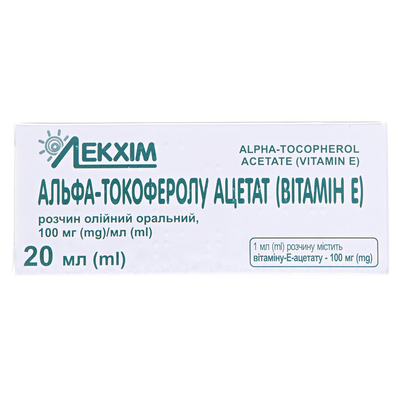

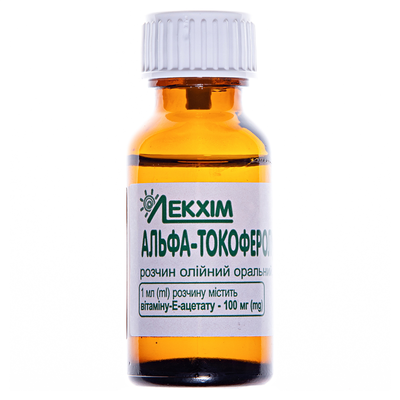
Alpha-tocopherol acetate (vitamin E), oil solution, 100 mg/mL, 20 mL per bottle.
Ingredients
Active ingredient: vitamin E acetate;
1 mL of the preparation contains vitamin E acetate, calculated as 100% active ingredient, 50 mg, 100 mg, or 300 mg;
excipient: sunflower oil.
Dosage Form
Oral oil solution.
Main physical and chemical properties: a clear, oily liquid ranging in color from light yellow to dark yellow, without a rancid odor. A greenish tint is permissible.
Pharmacotherapeutic group
Other simple vitamin preparations. Tocopherol (vitamin E).
ATC code A11H A03.
Pharmacological Properties
Pharmacodynamics.
Vitamin E is an antioxidant that protects various endogenous substances in the body from oxidation. It slows down lipid peroxidation, which is activated in many diseases. It participates in tissue respiration, the biosynthesis of heme and proteins, the metabolism of fats and carbohydrates, and cell proliferation. Vitamin E deficiency leads to degenerative changes in the muscles, capillary permeability and fragility increase, the epithelium of the seminiferous tubules and testicles undergoes degeneration, and degenerative processes are observed in nervous tissue and hepatocytes. Vitamin E deficiency may cause hemolytic jaundice in newborns, malabsorption syndrome, and steatorrhea.
Pharmacokinetics.
The drug is absorbed in the intestine in the presence of fat and bile acids; the mechanism of absorption is passive diffusion. It is transported by β-lipoproteins in the blood, and peak blood levels are reached 4 hours after administration. It is excreted in the feces; conjugates and tocopherol acid are excreted in the urine.
Indications
As part of a comprehensive treatment regimen for:
- muscular dystrophies of various types and origins;
- joint and tendon-muscle contractures (Dupuytren’s contracture);
- spinal cord lesions (amyotrophic lateral sclerosis);
- systemic connective tissue diseases (rheumatoid arthritis, dermatomyositis, rheumatism, and fibrositis);
- disorders of male reproductive gland function and the menstrual cycle, including threatened miscarriage;
- peripheral vascular disorders, atherosclerosis, myocardial dystrophy, and hypertension;
- allergic and ulcerative skin lesions, psoriasis;
- endocrine disorders of the thyroid gland, diabetes mellitus;
- periodontitis;
- conditions requiring antioxidant therapy.
- For children—for the treatment of hemolytic jaundice in infants, increased capillary permeability in infants, malnutrition, rickets, developmental disorders, systemic connective tissue diseases (scleroderma, juvenile rheumatoid arthritis), and hypochromic anemia;
Contraindications
Hypersensitivity to any component of the drug, severe cardiosclerosis, myocardial infarction, vitamin E hypervitaminosis, thyrotoxicosis.
Interactions with Other Medications and Other Types of Interactions
Vitamin E should not be taken orally in combination with iron or silver preparations, alkaline agents, or indirect-acting anticoagulants.
Vitamin E facilitates the absorption and utilization of retinol, thereby preventing the development of vitamin A deficiency.
Vitamin E and its metabolites have an antagonistic effect on vitamin K. Vitamin E enhances the effects of steroidal and nonsteroidal anti-inflammatory drugs (diclofenac sodium, ibuprofen, prednisolone, etc.); it reduces the toxic effects of cardiac glycosides (digitoxin, digoxin, etc.) and vitamins A and D.
Vitamin E may increase the effectiveness of anticonvulsants in patients with epilepsy who have elevated blood levels of lipid peroxidation products.
Cholestyramine, colestipol, and mineral oils reduce the absorption of vitamin E.
Special Considerations for Use
Use with caution in patients with atherosclerosis or an increased risk of thromboembolism.
When using this medication, it is essential to adhere to the dosage and duration of treatment prescribed by a physician to prevent overdose and the development of vitamin E toxicity.
During long-term use of high doses of the drug, blood clotting time must be monitored.
Use During Pregnancy or Breastfeeding.
During pregnancy or breastfeeding, this medication should be used only as directed by a doctor.
Effect on reaction time when driving or operating machinery.
If dizziness or blurred vision occurs, refrain from driving or operating machinery.
Dosage and Administration
Alpha-tocopherol acetate (vitamin E) is administered orally.
Each 1 mL of solution contains 50 mg, 100 mg, or 300 mg of vitamin E, respectively (1 mL of solution contains 25 drops from the dropper cap).
| Indications | Daily dose, mg | Daily dose in drops, 300 mg/mL solution | Daily dose in drops, 100 mg/mL solution | Daily dose in drops, 50 mg/mL solution | Notes |
| For muscular dystrophies, amyotrophic lateral sclerosis, and other diseases of the neuromuscular system | 50–100 mg | 4–8 drops | 13–25 drops | – | Take for 30–60 days, repeating the course after 2–3 months. |
| For disorders of spermatogenesis and erectile dysfunction in men | 100–300 mg | 8–25 drops | - | – | When used in combination with hormone therapy, take for 30 days |
| In cases of threatened miscarriage | 100–150 mg | 8–13 drops | 25–37 drops | – | Take for 7–14 days. |
| In cases of miscarriage and impaired fetal development | 100–150 mg | 8–13 drops | 25–37 drops | – | Daily or every other day during the first 2–3 months of pregnancy. |
| For atherosclerosis, myocardial dystrophy, and peripheral vascular diseases | 100 mg | 8 drops | 25 drops | – | Treatment course: 20–40 days, with the possibility of repeating treatment in 3–6 months. |
| For the treatment of cardiovascular diseases | 50–100 mg | 4–8 drops | 13–25 drops | – | Take 1–2 times a day. The treatment course is 1–3 weeks. |
| For dermatological conditions | 50–100 mg | 4–8 drops | 13–25 drops | – | The course of treatment is 20–40 days. |
| For hemolytic jaundice in infants, increased capillary permeability in infants, malnutrition, rickets, developmental disorders, systemic connective tissue diseases (scleroderma, juvenile rheumatoid arthritis), hypochromic anemia. | 5–10 mg | – | 1–2 drops | 2–5 drops | The duration of treatment is determined by the physician on an individual basis. |
Children.
This medication may be used in children from birth only as prescribed and under a doctor’s supervision.
Overdose
No adverse reactions occur when the recommended doses are taken. Taking high doses of vitamin E (400–800 mg per day over a long period) may cause visual disturbances, diarrhea, dizziness, headache, nausea, or abdominal cramps, as well as extreme fatigue or weakness.
Very high doses (more than 800 mg per day over a long period) may increase the risk of bleeding in patients with vitamin K deficiency; disruption of thyroid hormone metabolism and an increased risk of thrombophlebitis and thromboembolism in susceptible patients, elevated creatine kinase levels, increased serum cholesterol, serum triglycerides, and increased levels of estrogens and androgens in urine.
Treatment: discontinuation of the drug, symptomatic therapy.
Side Effects
Allergic reactions (including itching, skin flushing). With prolonged use of high doses of vitamin E, the following may occur: decreased blood clotting, gastrointestinal bleeding, hepatomegaly, creatinuria, fatigue, weakness, headache, nausea, dizziness, and blurred vision.
Shelf life
2 years.
Storage Conditions
Store in the original packaging at a temperature not exceeding 25 °C.
Keep out of reach of children.
Packaging
20 mL in a glass vial, sealed with a dropper stopper and a screw-on cap. One vial per cardboard package.
Dispensing Category
Available without a prescription.
Manufacturer
PJSC “Technolog.”