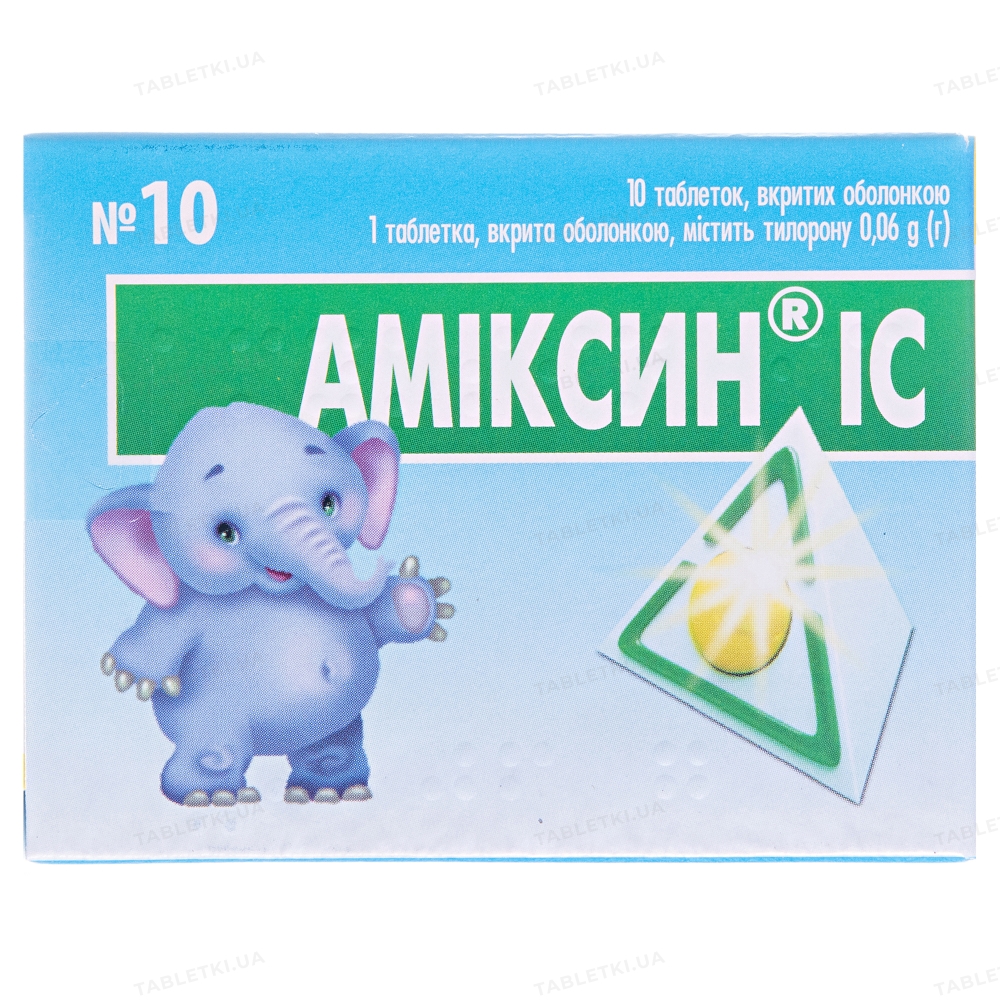
Amiksin IC tablets, enteric-coated, 0.06 g each, No. 10 (5 x 2)
Active ingredient: tilorone;
1 tablet contains 0.06 g (60 mg) or 0.125 g (125 mg) of tilorone;
Inactive ingredients:
60 mg tablets: calcium hydrogen phosphate dihydrate, hypromellose (hydroxypropyl methylcellulose), microcrystalline cellulose, povidone, croscarmellose sodium, potato starch, polyethylene glycol (macrogol), talc, colloidal anhydrous silicon dioxide, calcium stearate, titanium dioxide (E 171), candurin (titanium dioxide (E 171), potassium aluminosilicate (E 555)), synthetic mixed red dye (hypromellose (hydroxypropyl methylcellulose), microcrystalline cellulose, titanium dioxide (E 171), Ponso 4R lake (E 124), indigo carmine lake (E 132), sunset yellow FCF (E 110));
125 mg tablets: calcium hydrogen phosphate dihydrate, hypromellose (hydroxypropyl methylcellulose), microcrystalline cellulose, povidone, croscarmellose sodium, potato starch, polyethylene glycol (macrogol), talc, colloidal anhydrous silicon dioxide, calcium stearate, titanium dioxide (E 171), candurin (titanium dioxide (E 171), potassium aluminosilicate (E 555)), sunset yellow FCF (E 110).
Dosage Form
Film-coated tablets.
Main physical and chemical properties: round tablets with a biconvex surface, film-coated, dark pink (for 60 mg tablets) and orange (for 125 mg tablets) in color; with two layers visible on the break.
Pharmacotherapeutic group
Immunostimulants. ATX code L03A X.
Pharmacological properties
Pharmacodynamics.
AMIXIN® IS (tilorone) is an immunomodulatory and antiviral agent. It stimulates the production of α, β, and γ-interferons in the body. The main producers of interferon in response to administration of the drug are intestinal epithelial cells, hepatocytes, T-lymphocytes, neutrophils, and granulocytes. After oral administration, peak interferon production is observed in the “intestine-liver-blood” sequence within 4–24 hours. It stimulates bone marrow stem cells, increases antibody production, reduces the degree of immunosuppression, and restores the T-suppressor/T-helper ratio. It is effective against a wide range of viral infections, including influenza viruses, other acute respiratory viral infections, hepatitis A, B, and C, and herpes viruses. The mechanism of antiviral action involves the inhibition of the translation of virus-specific proteins in infected cells, which results in the suppression of viral replication.
In animal studies (chicken and duck embryos), the drug demonstrated high antiviral activity against the H5N1 strain of highly pathogenic avian influenza (HPAI), as well as (in experiments on chicks) significant immunostimulatory and adjuvant activity against HPAI antigens.
Pharmacokinetics.
When administered orally, tilorone is rapidly absorbed from the gastrointestinal tract. Bioavailability is 60%. Approximately 80% of the drug binds to plasma proteins.
The drug is not biotransformed and does not accumulate in the body. It is excreted virtually unchanged in feces and urine in a 7:1 ratio. The half-life is 48 hours.
Indications
Adults: treatment of viral hepatitis A, B, and C; herpes infection; cytomegalovirus infection; as part of complex therapy for infectious-allergic and viral encephalomyelitis (multiple sclerosis, leukoencephalitis, uveoencephalitis, and meningoencephalitis), urogenital and respiratory chlamydiosis; for the treatment and prevention of influenza and acute respiratory viral infections (ARVI). To reduce the degree of immunosuppression as part of complex therapy for diseases accompanied by secondary acquired immunodeficiencies (caused by exposure to X-rays, cytostatic drugs, surgical interventions, etc.) and require immunocorrection.
Children 7 years of age and older: treatment of influenza and acute respiratory viral infections.
Contraindications
Hypersensitivity to any of the drug’s components.
Interactions with other medications and other forms of interaction
It is compatible with antibiotics and conventional treatments for viral and bacterial diseases.
Special considerations
The drug contains dyes that may cause allergic reactions.
Pregnancy and lactation
There is no experience with the use of this medication during pregnancy and lactation; therefore, it should not be used during these periods.
Effect on the ability to operate vehicles and machinery
This has no effect.
Dosage and Administration
Take the medication by mouth after meals.
Adults
- Prevention of viral hepatitis A: 125 mg once a week for 6 weeks.
- Treatment of viral hepatitis A: on the first day, 125 mg twice, then 125 mg every 48 hours. The total course dose is 1.25 g.
- Treatment of acute hepatitis B: 125 mg on each of the first 2 days of treatment, followed by 125 mg every 48 hours. The total course dose is 2 g. In cases of prolonged disease, the total course dose may be increased to 2.5 g.
- For chronic hepatitis B: 250 mg on the first 2 days of treatment, followed by 125 mg every 48 hours. The initial course dose is 2.5 g. Subsequently, the drug is taken at a dose of 125 mg per week. Overall, the course dose ranges from 3.75 g to 5 g.
- For acute hepatitis C: 125 mg on the first 2 days of treatment, followed by 125 mg every 48 hours. The total course dose is 2.5 g.
- For chronic hepatitis C: 250 mg on the first 2 days of treatment, followed by 125 mg every 48 hours. The course dose at the start of treatment is 2.5 g. Subsequently, the drug is taken at a dose of 125 mg per week. The total course dose is 5 g.
- For the treatment of influenza and acute respiratory viral infections (ARVI): 125 mg on the first 2 days of treatment, followed by 125 mg every 48 hours. The total course dose is 750 mg.
- For the prevention of influenza and acute respiratory viral infections (ARVI): 125 mg once a week for 6 weeks.
- For the treatment of herpes and cytomegalovirus infections: 125 mg on the first 2 days of treatment, followed by 125 mg every 48 hours. The total course dose is 2.5 g.
- To reduce the degree of immunosuppression as part of complex therapy for diseases accompanied by secondary-induced immunodeficiencies and requiring immunocorrection: 125–250 mg per week for 6 weeks. The maximum total dose is 1.5 g. Depending on immunological parameters and the course of the disease, the treatment course may be repeated with a 4-week interval between courses.
- For urogenital and respiratory chlamydiosis: 125 mg on the first 2 days of treatment, followed by 125 mg every 48 hours. The course dose is 1.25 g.
- In the complex therapy of neuroviral infections—including infectious-allergic and viral encephalomyelitis (multiple sclerosis, leukoencephalitis, uveoencephalitis, and meningoencephalitis): during the first 2 days of treatment—125 mg, followed by 125 mg every 48 hours. The total course dose ranges from 1.5 to 1.75 g.
Children 7 years of age and older
- For uncomplicated cases of influenza or acute respiratory viral infections (ARVI), take 60 mg once daily on the 1st, 2nd, and 4th days from the start of treatment. The total course dose is 180 mg.
- For complications of influenza or acute respiratory viral infections (ARVI), take 60 mg once daily on the 1st, 2nd, 4th, and 6th days from the start of treatment. The total course dose is 240 mg.
Children
This medication should not be used in children under 7 years of age.
Overdose
There are no known cases of AMIXIN® IS overdose.
Side Effects
Skin and subcutaneous tissue: allergic reactions, including itching and rash (including hives).
Gastrointestinal tract: dyspeptic symptoms (in particular, nausea, heartburn).
Other: transient fever.
Shelf life
5 years.
Storage conditions
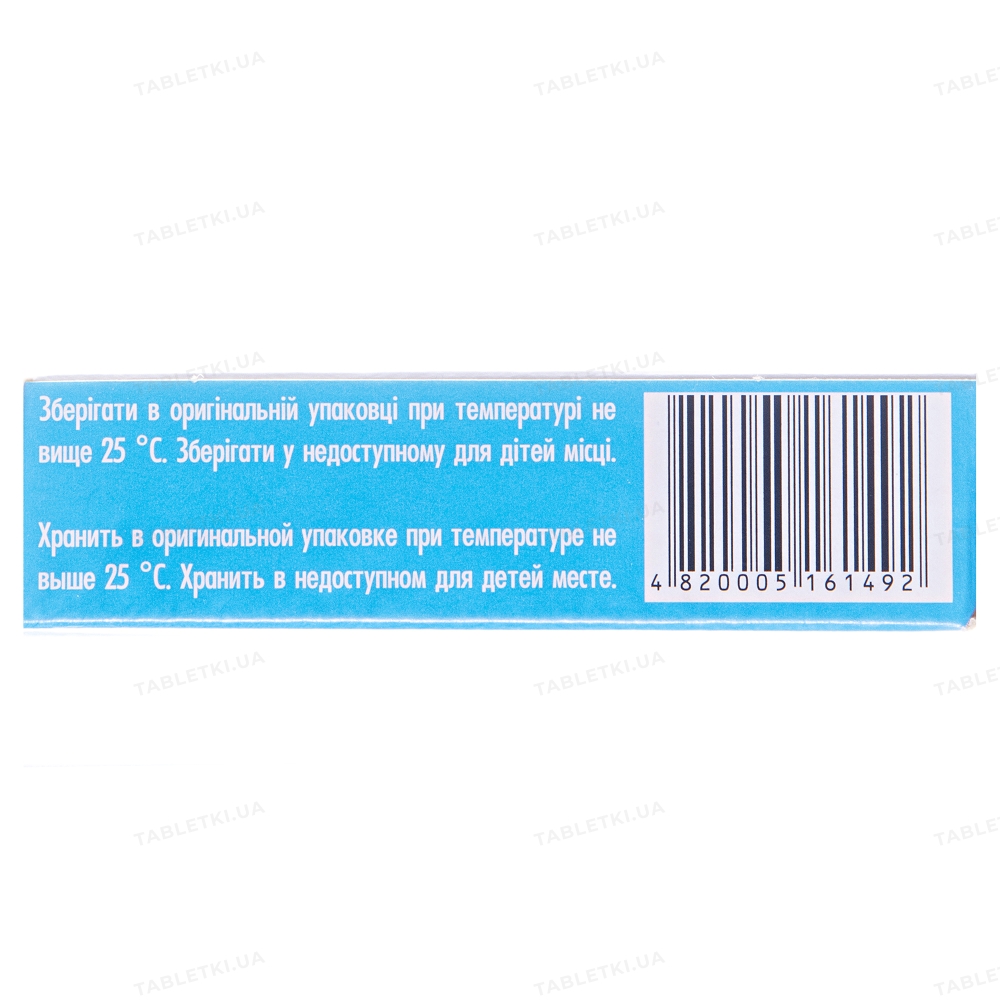
Store in the original packaging at a temperature not exceeding 25 °C.
Keep out of reach of children.
Packaging
3 tablets per blister; one, two, or three blisters per pack. 5 tablets per blister; two blisters per pack.
Sales Conditions
Available without a prescription.
Manufacturer
INTERCHIM Limited Liability Company.