
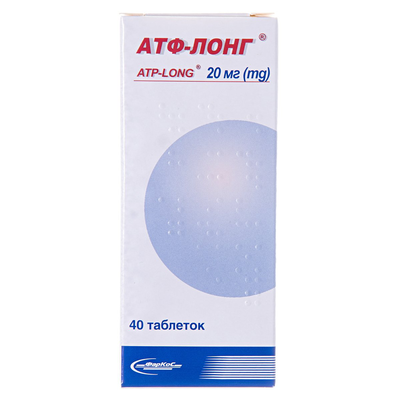
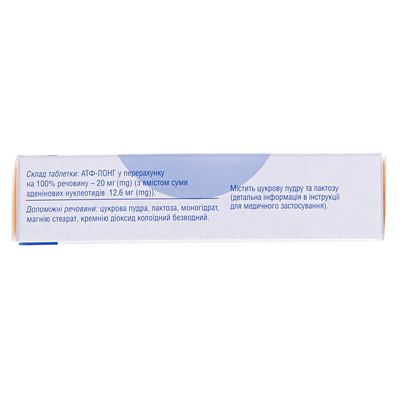
ATF-Long 20 mg tablets, No. 40 (10 x 4) 4823006402205
Composition
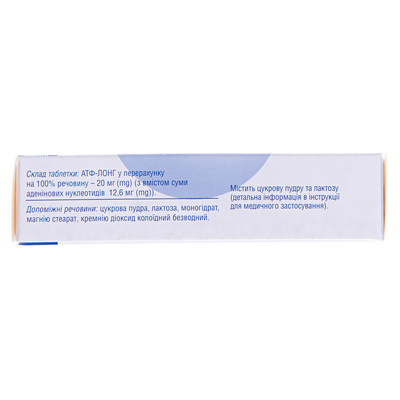
Active ingredients: 1 tablet contains 20 mg of ATP-LONG on a 100% active ingredient basis (with a total of 12.6 mg of adenine nucleotides);
Inactive ingredients: powdered sugar; lactose monohydrate; magnesium stearate; colloidal anhydrous silicon dioxide.
Dosage Form
Tablets.
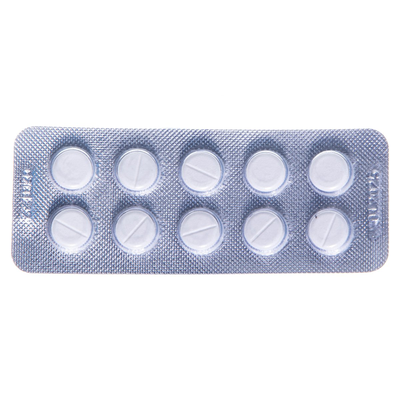
Main physical and chemical properties: round tablets with a flat surface and beveled edges, featuring a bevel and a score line on one side, white in color.
Pharmacotherapeutic group
Cardiovascular drugs. ATX code 01E B10.
Pharmacological properties
Pharmacodynamics.
ATP-LONG® is a drug belonging to a new class of substances—multiligand coordination compounds with macroergic phosphates—whose molecule consists of adenosine-5'-triphosphate (ATP), the amino acid histidine, and magnesium and potassium salts—and exhibits a pharmacological effect unique to it, which is not characteristic of any single chemical component (ATP, histidine, K+, Mg++).
ATP-LONG® influences metabolic processes in the myocardium, normalizes energy metabolism, the activity of ion-transport systems in cell membranes, and the lipid composition of membranes, the activity of membrane-bound enzymes, improves the myocardial antioxidant defense system, and exerts anti-ischemic, membrane-stabilizing, and antiarrhythmic effects in cases of supraventricular tachycardia.
The drug has an energy-saving effect by inhibiting the activity of the enzyme 5'-nucleotidase, which is responsible for the rate of hydrolysis of energy substrates. ATP-LONG® prevents structural and functional damage to the plasma membranes of cardiomyocytes by preserving the quantitative and qualitative composition of membrane lipids and inhibiting the activity of membrane-bound phospholipases. ATP-LONG®® inhibits the intensity of lipid peroxidation (LPO) processes, thereby reducing the accumulation of hydrolyzed and peroxidized phospholipids and fatty acids, as well as lysophospholipids, which are characterized by pronounced detergent properties and the ability to cause disturbances in the contractile and rhythmic activity of the heart during ischemia. In cases of experimental myocardial ischemia, the drug increases the activity of Na⁺-K⁺-ATPase and Ca²⁺, Mg²⁺-ATPase, as well as the calcium-binding potential of the membrane. ATP-LONG® improves central and peripheral hemodynamics and coronary blood flow, and normalizes myocardial contractility, leading to increased physical performance. Under ischemic conditions, the drug reduces myocardial oxygen consumption, improves cardiac function, and increases cardiac output, leading to a reduction in the frequency of angina attacks and shortness of breath during physical exertion.
ATP-LONG® restores normal sinus rhythm in patients with paroxysmal supraventricular tachycardia, atrial fibrillation, and atrial flutter, and also reduces the activity of ectopic rhythm sources (atrial and ventricular extrasystoles).
ATP-LONG® normalizes potassium and magnesium concentrations in tissues and reduces uric acid levels.
Pharmacokinetics.
When administered, ATP-LONG® is slowly broken down to form adenosine.
Indications
Use in combination therapy:
- ischemic heart disease, stable and unstable angina, exertional angina, and angina with documented vasospasm;
- previous myocardial infarction, post-myocardial infarction syndrome (diffuse and focal cardiosclerosis), ischemic cardiomyopathy;
- cardiac arrhythmias;
- neurocirculatory asthenia, cardiogenic neurosis;
- cardiomyopathies;
- myocarditis;
- fatigue syndrome.
Contraindications
- Hypersensitivity to the drug or its components;
- acute myocardial infarction;
- cardiogenic and other types of shock;
- obstructive diseases of the bronchopulmonary system;
- severe forms of bronchial asthma;
- sinoatrial block;
- second- and third-degree atrioventricular block;
- hyperkalemia, hypermagnesemia;
- hemorrhagic stroke.
Drug Interactions and Other Interactions
ATP-LONG® should not be used concomitantly with cardiac glycosides due to an increased risk of atrioventricular block.
Concomitant use with potassium-sparing diuretics, potassium supplements, and ACE inhibitors increases the risk of hyperkalemia; concomitant use with Magnorot and other magnesium-containing medications increases the risk of hypermagnesemia.
Dipyridamole enhances the therapeutic effect of ATP-LONG®, while xanthinol lunicotinate, caffeine, theophylline, and aminophylline reduce it.
ATP-LONG® may enhance the antianginal effects of alpha- and beta-blockers, calcium channel blockers, and nitrates.
Special Considerations
Use with caution in cases of severe arterial hypotension; when used concomitantly with cardiac glycosides (due to an increased risk of atrioventricular block); and in patients prone to bronchospasm.
During long-term use, monitor blood potassium and magnesium levels.
This medication contains powdered sugar and lactose; therefore, patients with diabetes should use it with caution. Patients with hereditary intolerance to glucose-galactose or sucrose-isomaltose should not take this medication. Limit consumption of foods and beverages containing caffeine (coffee, tea, cola drinks).
Pregnancy and lactation.
There are no clinical data on the safety and efficacy of this medication during pregnancy; therefore, its use is contraindicated in pregnant women. Breastfeeding should be discontinued for the duration of treatment.
Effects on the ability to drive and operate machinery.
If dizziness or a drop in blood pressure occurs during treatment with this medication, you should refrain from driving or operating machinery.
Dosage and Administration
ATP-LONG® tablets should be taken sublingually (under the tongue) and held there until completely absorbed. The single dose is 10*–40 mg 3–4 times daily, regardless of meals.
In acute cardiac conditions (angina attack, arrhythmia), ATP-LONG® tablets should be taken at a dose of 10*–80 mg until the condition improves. The maximum daily dose is 160 mg.
The duration of treatment is determined by the doctor; on average, it is 20–30 days. If necessary, repeat the course after 10–15 days.
* Use the appropriate dosage.
Children.
Do not use in children.
Overdose
Symptoms: Bradycardia, atrioventricular block, arterial hypotension, and fainting associated with a sudden drop in blood pressure may occur. Treatment: Discontinue the medication and initiate symptomatic therapy. In cases of bradycardia, administer atropine sulfate.
Side Effects
Skin and subcutaneous tissue: skin rashes, itching, facial flushing, angioedema.
Respiratory system: bronchospasm.
Cardiovascular disorders: decreased blood pressure, tachycardia, atrioventricular block.
Gastrointestinal disorders: nausea, epigastric discomfort, increased gastrointestinal motility.
Urinary system: increased diuresis.
Nervous system disorders: headache, dizziness.
Vascular disorders: sensation of heat.
Immune system disorders: allergic reactions, including skin rashes, itching, and angioedema.
With prolonged and uncontrolled use—hyperkalemia or hypermagnesemia.
Shelf life
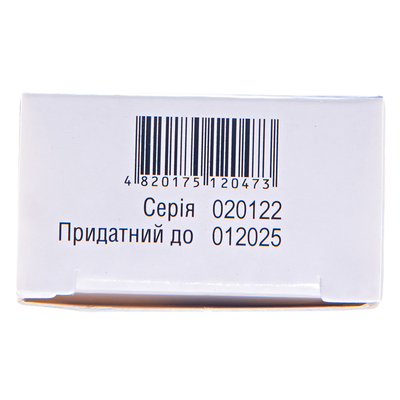
3 years.
Do not use this medication after the expiration date printed on the package.
Storage conditions
Store in the original packaging at a temperature not exceeding +25 °C.
Keep out of reach of children.
Packaging
10 tablets per blister pack; 3 or 4 blister packs per box labeled in Ukrainian and Russian; 1 blister pack without outer packaging.
Sales Conditions
Available without a prescription.
Manufacturer
FarCoS Pharmaceutical Company, LLC.
Address
Ukraine, 03162, Kyiv, 50-A Zodchykh St.
Applicant
FarCoS Pharmaceutical Company LLC.







