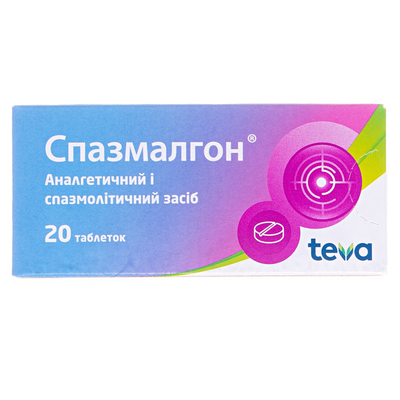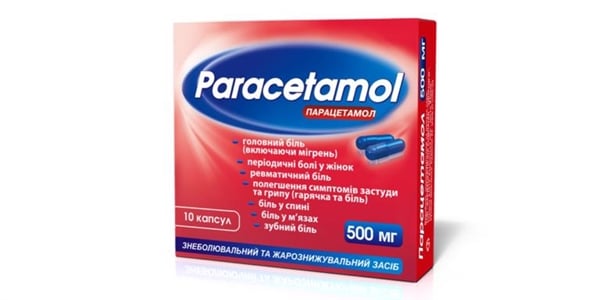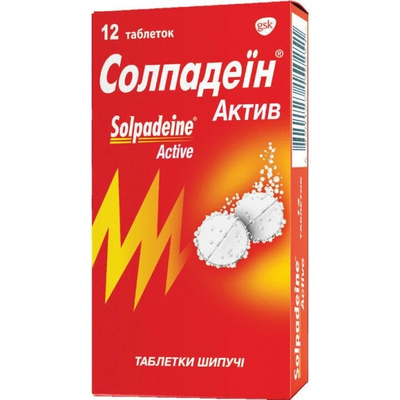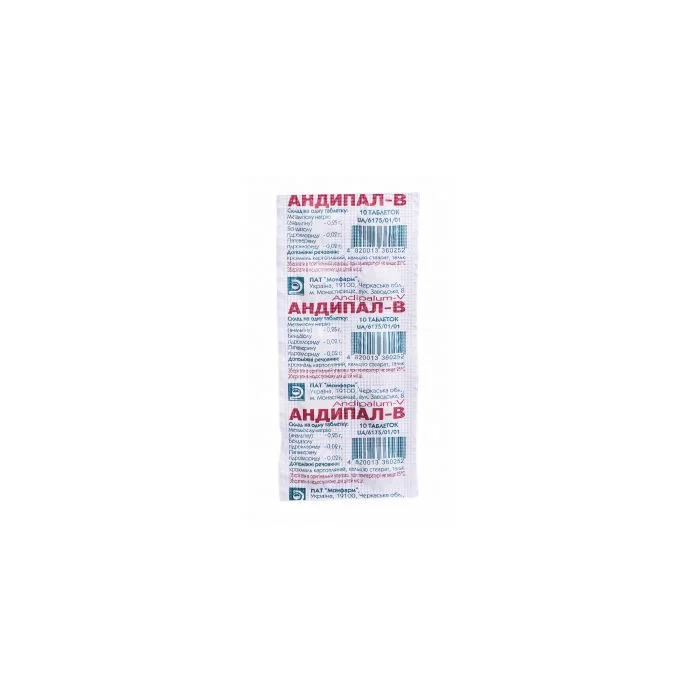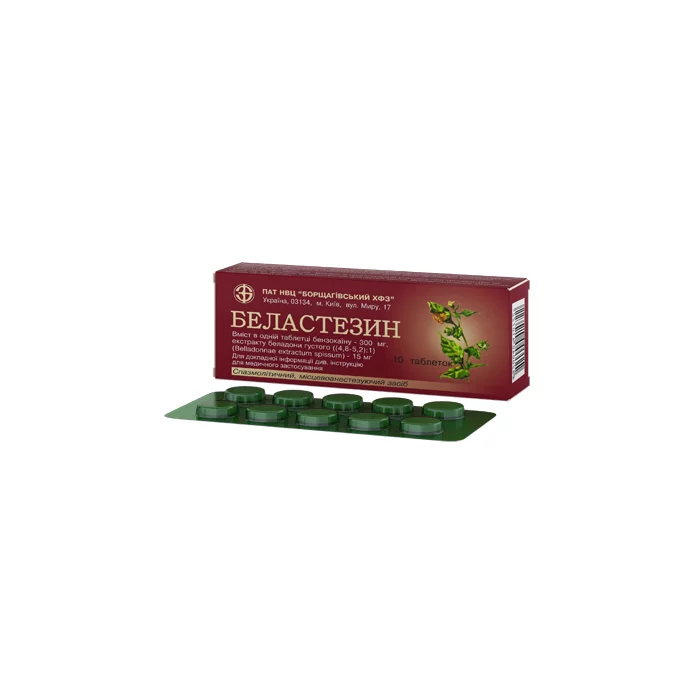
Belastezin Tablets No. 10
Instructions
Bellasthesinum: Instructions for Use
Composition
Active ingredients: benzocaine, concentrated belladonna extract;
1 tablet contains:
- benzocaine – 300 mg, thick belladonna extract (Belladonnae extractum spissum) – water-alcohol ((4.8–5.2):1) (extractant: 20% (v/v) ethanol) containing 1.5% total alkaloids, calculated as atropine base (hyoscyamine), and dry matter – 15 mg;
excipients: microcrystalline cellulose, croscarmellose sodium, mannitol (E 421), calcium stearate, copovidone.
Dosage Form
Tablets.
Main physical and chemical properties:
Round, brown tablets with a marbled surface and light and brown speckles of varying intensity, with beveled edges and a score line, and a characteristic faint, specific odor.
Pharmacotherapeutic group
Agents used in functional gastrointestinal disorders. Antispasmodics in combination with analgesics. A mixture of belladonna alkaloids in combination with analgesics. ATC code A03D B.
Pharmacological Properties
Belastezin is a combination drug containing belladonna extract and benzocaine (anesthesin). It exerts analgesic and antispasmodic effects. The analgesic effect is due to the action of benzocaine—a local anesthetic—while the antispasmodic effect is due to the action of belladonna.
Indications
- Spasms of the smooth muscles of the gastrointestinal tract;
- spasms of the biliary tract;
- hypersecretory gastritis;
- hypersalivation (excessive salivation).
Contraindications for Belastezin
- Hypersensitivity to belladonna, benzocaine, other amide anesthetics, or other components of the drug;
- cardiovascular diseases in which an increase in heart rate may be undesirable: atrial fibrillation, tachycardia, chronic heart failure, ischemic heart disease, mitral stenosis, severe hypertension;
- glaucoma;
- urinary retention or a predisposition to it;
- gastrointestinal disorders accompanied by obstruction;
- myasthenia gravis;
- hyperthermia;
- thyrotoxicosis;
- acute bleeding;
- thromboembolic disease, granulocytopenia (the drug contains benzocaine).
Interactions with other medications and other types of interactions.
If the patient is taking any other medications, be sure to inform the doctor!
When using Belastezin:
- with amantadine, antiarrhythmic anticholinergic drugs (including quinidine), tricyclic antidepressants, or glutethimide—the anticholinergic effects of Belastezin are enhanced;
- with opioid analgesics and drugs that depress the central nervous system (including phenothiazines)—dangerous central nervous system depression occurs;
- with butyrophenones (haloperidol) and organic nitrates—intraocular pressure increases;
- with corticosteroids for systemic use—the effect of corticosteroids is reduced, and an increase in intraocular pressure is possible;
- with pilocarpine—its effect in the treatment of glaucoma is reduced;
- with M-cholinolytics—anticholinergic effects are potentiated;
- with furosemide—orthostatic hypotension may occur;
- with reserpine, MAO inhibitors, guanethidine, antacids, ascorbic acid, or atapulgite—the effect of Belastezin is reduced;
- with levodopa—systemic levodopa concentrations are reduced; therefore, its dosage should be adjusted;
- with certain antihistamines (including meclizine)—the antihistamine effect is enhanced;
- with beta-adrenergic receptor blockers—their effect is reduced;
- with hormonal contraceptives—the contraceptive effect is reduced;
- with non-selective monoamine reuptake inhibitors—the sedative effect is enhanced;
- with nonsteroidal anti-inflammatory drugs, griseofulvin, digitoxin, doxycycline, metoclopramide, and metronidazole—the effect of these drugs is reduced;
- with ketoconazole—Belastezin increases the pH of gastric juice, which reduces the absorption of ketoconazole; therefore, Belastezin should be taken no earlier than 2 hours after taking ketoconazole;
- with sulfonamides—their antibacterial activity is reduced;
- with indapamide, nizatidine—their effects are enhanced;
- with potassium chloride—possible damage to the gastrointestinal mucosa.
Special Considerations for Use
Consult a doctor before starting treatment with Belastezin.
In the event of persistent or worsening pain of unknown origin in the abdominal region, accompanied by symptoms such as fever, nausea, vomiting, changes in bowel movements, low blood pressure, loss of consciousness, or blood in the stool, consult a doctor immediately.
Do not exceed the recommended doses of the medication. Use the lowest effective dose.
Avoid consuming alcoholic beverages while taking this medication.
Use with caution in patients:
- vegetative (autonomic) neuropathy;
- with benign prostatic hyperplasia without urinary tract obstruction;
- with Down syndrome, cerebral palsy, or brain damage;
- liver and kidney failure;
- with chronic lung diseases accompanied by low sputum production and difficulty in expectoration, especially in debilitated patients;
- with reflux esophagitis or hiatal hernia combined with reflux esophagitis;
- with inflammatory bowel diseases, including nonspecific ulcerative colitis and Crohn’s disease;
- megacolon;
- with xerostomia (dry mouth), in elderly or debilitated patients;
- in cases of hyperthermia, especially in the elderly or debilitated patients—hyperthermia may be exacerbated;
- in high ambient temperatures (risk of heatstroke due to suppression of sweat gland activity).
In patients with undiagnosed and therefore untreated angle-closure glaucoma, an increase in intraocular pressure may occur when using anticholinergic agents, such as belladonna-based medications. Therefore, if the patient experiences eye pain or redness accompanied by blurred vision or vision loss, they should consult an ophthalmologist.
There is a risk of methemoglobinemia when using benzocaine-containing medications, primarily in patients with congenital disorders such as glucose-6-phosphate dehydrogenase deficiency, NADH-methemoglobin reductase deficiency, pyruvate kinase deficiency, and hemoglobin M. Symptoms such as cyanosis of the skin, lips, and nail beds, headache, dizziness, shortness of breath, weakness, and tachycardia may indicate methemoglobinemia, which is potentially life-threatening and requires immediate medical attention.
Belladonna alkaloids may affect the results of the following laboratory tests:
- gastric acidity test (may counteract the effects of pentagastrin and histamine; discontinue the medication 24 hours before the test);
- radioisotope study of gastric emptying (may slow gastric emptying);
- phenolsulfonphthalein urine secretion test (may slow the excretion of phenolsulfonphthalein in the urine).
This medication contains benzocaine, which may cause a positive result on a doping test in athletes.
Do not use this medication for longer than the prescribed duration without consulting a doctor!
If symptoms do not begin to subside, or if, conversely, your health worsens or side effects occur, you must stop taking the medication and consult a doctor regarding its further use.
Use during pregnancy or breastfeeding.
Use during pregnancy is permitted only if, in the doctor’s opinion, the expected benefit to the mother outweighs the potential risk to the fetus.
If use of the medication is necessary, breastfeeding should be discontinued.
Effect on reaction time when driving or operating machinery.
While taking this medication, you should refrain from driving or operating machinery due to possible side effects affecting the nervous system and vision.
Dosage and Administration of Belastezin
Adults should take 1 tablet orally 3 times daily. Swallow the tablet whole without chewing and take it with a sufficient amount of water.
Belastezin is intended for short-term use. If symptoms do not resolve within 3–5 days, consult a doctor regarding continued use of the medication.
Children.
There are no clinical data on the efficacy and safety of use in children; therefore, the drug should not be administered to children.
Overdose
Symptoms: increased severity of side effects, nausea, vomiting, tachycardia, decreased blood pressure, agitation, irritability, tremor, convulsions, insomnia, drowsiness, hallucinations, hyperthermia, central nervous system depression, and depression of respiratory and vasomotor centers.
There have been reports that the use of medications containing benzocaine may cause methemoglobinemia. Symptoms such as cyanosis of the skin, lips, and nail beds, headache, dizziness, shortness of breath, weakness, and tachycardia may indicate methemoglobinemia, which is potentially life-threatening and requires immediate medical intervention.
Treatment: gastric lavage, parenteral administration of cholinergic agents and anticholinesterases. Do not use phenothiazines. If methemoglobinemia develops, administer methylene blue intravenously. Treatment is symptomatic.
In case of overdose, seek medical help immediately!
Side Effects of Belastezin
Gastrointestinal tract:
- dry mouth,
- thirst,
- altered sense of taste,
- dysphagia,
- constipation,
- decreased intestinal motility up to atony, decreased tone of the biliary tract and gallbladder.
Urinary system:
- difficulty and delay in urination.
Cardiovascular system:
- facial flushing,
- hot flashes,
- palpitations,
- arrhythmia, including extrasystoles,
- myocardial ischemia.
Nervous system:
- headache,
- dizziness.
Eyes:
- dilated pupils,
- photophobia,
- accommodation paralysis,
- increased intraocular pressure.
Respiratory system and mediastinal organs:
- decreased secretory activity and bronchial tone, leading to the formation of viscous sputum that is difficult to cough up.
Skin and subcutaneous tissue:
- skin rashes,
- itching,
- hives,
- erythema,
- exfoliative dermatitis.
Immune system:
- anaphylactic reactions,
- anaphylactic shock.
Other:
- decreased sweating,
- dry skin,
- dysarthria.
Methemoglobinemia may occur with use of this medication (cyanosis of the skin, lips, and nail beds; headache; dizziness; shortness of breath; weakness; tachycardia) (this medication contains benzocaine).
If any adverse reactions occur, stop taking the medication and be sure to consult a doctor.
Shelf life
3 years.
Do not use after the expiration date printed on the package.
Storage Conditions
Store in the original packaging at a temperature not exceeding 25 °C.
Keep out of reach of children.
Packaging
10 tablets per blister pack, 1 blister pack per package.
Pharmacy Dispensing Category
Over-the-counter.