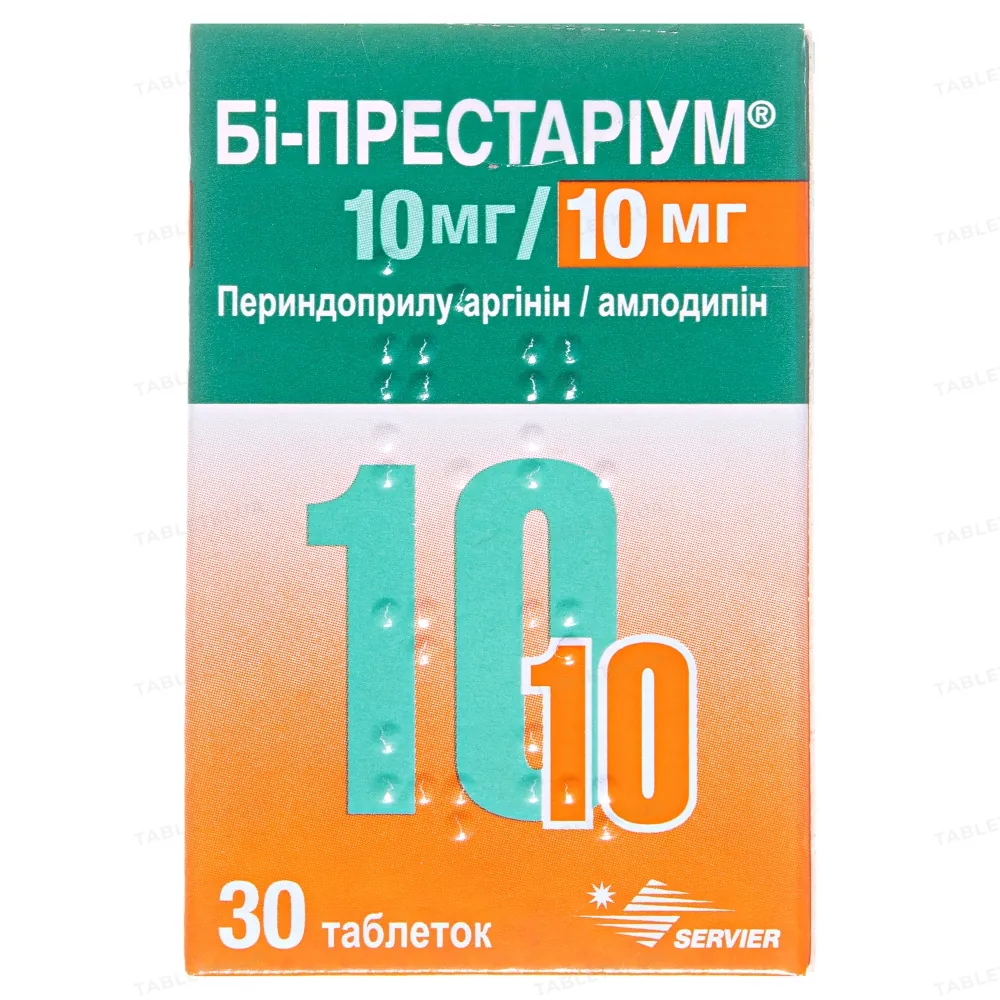
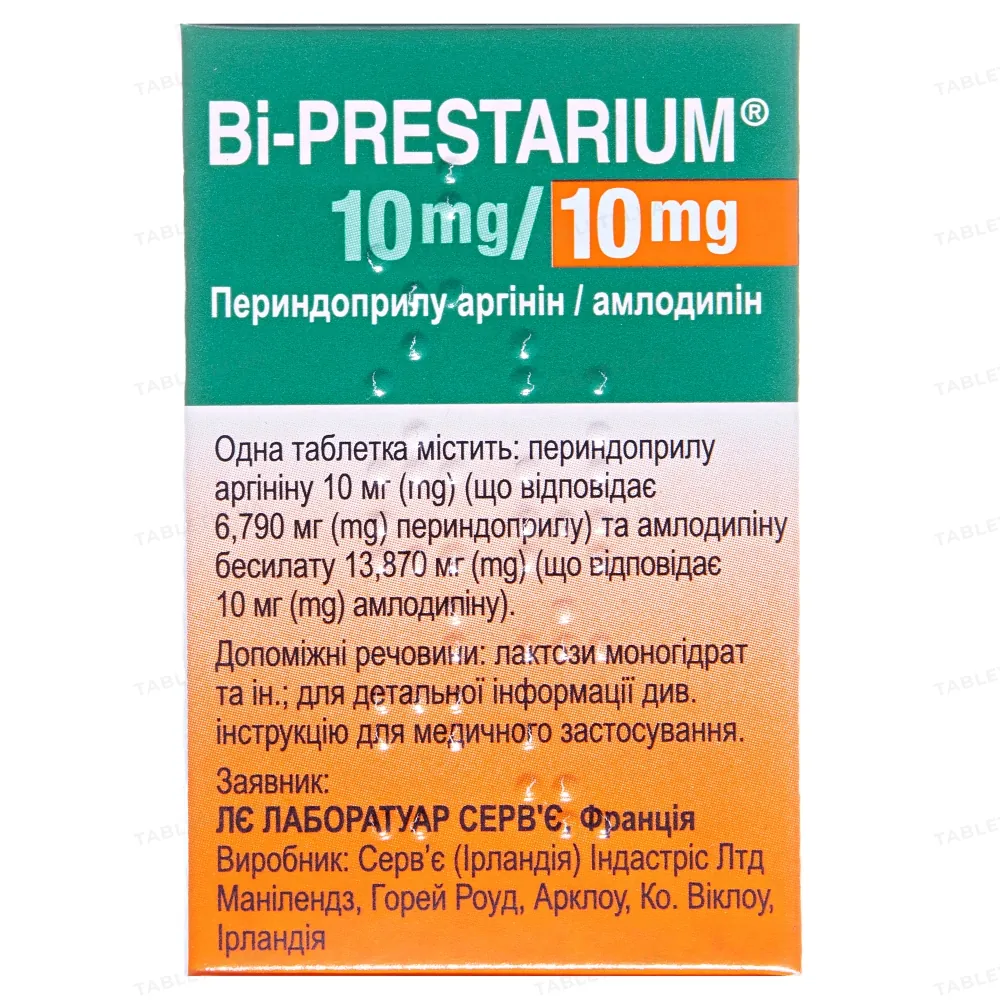
Bi-Prestarium 10 mg/10 mg tablets, 10 mg/10 mg, No. 30 in a container.
Composition
Bi-PRESTARIUM® 5 mg/5 mg
active ingredients: perindopril arginine/amlodipine;
1 tablet contains 5 mg of perindopril arginine (equivalent to 3.395 mg of perindopril) and 6.935 mg of amlodipine besylate (equivalent to 5 mg of amlodipine);
Bi-PRESTARIUM® 5 mg/10 mg
active ingredients: perindopril arginine/amlodipine;
Each tablet contains 5 mg of perindopril arginine (equivalent to 3.395 mg of perindopril) and 13.870 mg of amlodipine besylate (equivalent to 10 mg of amlodipine);
Bi-PRESTARIUM® 10 mg/5 mg
active ingredients: perindopril arginine/amlodipine;
1 tablet contains 10 mg of perindopril arginine (equivalent to 6.790 mg of perindopril) and 6.935 mg of amlodipine besylate (equivalent to 5 mg of amlodipine);
Bi-PRESTARIUM® 10 mg/10 mg
active ingredients: perindopril arginine/amlodipine;
Each tablet contains 10 mg of perindopril arginine (equivalent to 6.790 mg of perindopril) and 13.870 mg of amlodipine besylate (equivalent to 10 mg of amlodipine);
Excipients: lactose monohydrate, magnesium stearate (E 470B), microcrystalline cellulose (E 460), colloidal anhydrous silicon dioxide (E 551).
Dosage Form
Tablets.
Main physical and chemical properties:
Bi-PRESTARIUM® 5 mg/5 mg: a white, oblong tablet embossed with “5/5” on one side and  on the other.
Bi-PRESTARIUM® 5 mg/10 mg: a white, square tablet embossed with “5/10” on one side and on the other.
Bi-PRESTARIUM® 10 mg/5 mg: a white, triangular tablet embossed with “10/5” on one side and on the other.
Bi-PRESTARIUM® 10 mg/10 mg: a white, round tablet embossed with “10/10” on one side and on the other.
Pharmacotherapeutic group
ACE inhibitors, combinations. ACE inhibitors and calcium channel blockers. Perindopril and amlodipine. ATC code C09B B04.
Pharmacological Properties
Pharmacodynamics.
Perindopril
Mechanism of action
Perindopril is an inhibitor of the enzyme that converts angiotensin I to angiotensin II (angiotensin-converting enzyme, ACE). The converting enzyme, or kinase, is an exopeptidase that enables the conversion of angiotensin I into the vasoconstrictor angiotensin II and also causes the breakdown of the vasodilator bradykinin into an inactive heptapeptide. Inhibition of ACE leads to a decrease in the concentration of angiotensin II in blood plasma, which increases plasma renin activity (by inhibiting the negative feedback mechanism of renin release) and reduces aldosterone secretion. Since ACE inactivates bradykinin, ACE inhibition also leads to an increase in the activity of the circulating and local kallikrein-kinin system (and thus also leads to activation of the prostaglandin system). This mechanism of action accounts for the blood pressure-lowering effect of ACE inhibitors and is partly responsible for the occurrence of certain side effects (such as cough).
Perindopril acts through its active metabolite, perindoprilat. Other metabolites do not exhibit ACE-inhibitory activity under experimental conditions.
Clinical Efficacy and Safety
Hypertension.
Perindopril effectively lowers blood pressure in all stages of hypertension: mild, moderate, and severe; reductions in systolic and diastolic blood pressure are observed in both the supine and standing positions.
Perindopril reduces peripheral vascular resistance, which leads to a decrease in blood pressure. As a result, peripheral blood flow increases without affecting heart rate.
Renal blood flow generally increases, while the glomerular filtration rate (GFR) usually remains unchanged.
The maximum antihypertensive effect develops 4–6 hours after a single dose and persists for at least 24 hours: the T/P ratio (efficacy before the next dose / maximum efficacy) of perindopril is 87–100%.
Blood pressure decreases rapidly. In patients who respond to treatment, blood pressure normalizes within one month and remains stable without the development of tachyphylaxis.
No withdrawal effect occurs upon discontinuation of perindopril.
Perindopril reduces left ventricular hypertrophy.
Clinical studies have shown that perindopril has vasodilatory properties. It improves the elasticity of large arteries and reduces the wall-to-lumen ratio in small arteries.
Prevention of cardiovascular complications in patients with documented stable coronary artery disease.
EUROPA was an international, multicenter, randomized, double-blind, placebo-controlled clinical trial that lasted 4 years. 12,218 adult patients were randomized into the following groups: 6,110 patients received 8 mg of perindopril tert-butylamine (equivalent to 10 mg of perindopril arginine), and 6,108 patients received a placebo. The study included patients with confirmed ischemic heart disease and no clinically confirmed heart failure. Overall, 90% of patients had a history of myocardial infarction and/or revascularization surgery. Most patients in the study received perindopril in addition to standard therapy with antiplatelet agents, lipid-lowering drugs, and beta-blockers.
The primary efficacy endpoint was a composite of cardiovascular mortality, nonfatal myocardial infarction, and/or cardiac arrest followed by successful resuscitation. Treatment with perindopril tert-butylamine at a dose of 8 mg (equivalent to 10 mg of perindopril arginine) once daily resulted in a statistically significant absolute reduction in the primary endpoint of 1.9% (a 20% reduction in relative risk, 95% CI [9.4; 28.6] – p<0.001).
Amlodipine
Mechanism of Action
Amlodipine is a calcium channel blocker belonging to the dihydropyridine group (a slow calcium channel blocker or calcium ion antagonist) and blocks the transmembrane influx of calcium ions into the smooth muscle cells of the myocardium and blood vessels.
The antihypertensive mechanism of amlodipine is due to its direct relaxing effect on vascular smooth muscle. The exact mechanism by which amlodipine reduces the symptoms of angina has not been fully elucidated, but amlodipine reduces total ischemia during exercise through the following actions:
- Amlodipine dilates peripheral arterioles and thereby reduces total peripheral resistance (afterload). Since the heart rate remains unchanged, the reduced workload on the heart decreases myocardial energy consumption and its oxygen demand.
- Amlodipine also partially contributes to the dilation of the main coronary arteries and coronary arterioles in both unaffected and ischemic areas of the myocardium. This dilation increases oxygen delivery to the myocardium in patients with vasospastic angina (Prinzmetal angina or variant angina).
Clinical Efficacy and Safety
In patients with hypertension, once-daily administration of amlodipine provides a clinically significant reduction in blood pressure over a 24-hour period in both the supine and standing positions. Due to its slow onset of action, amlodipine does not cause acute hypotension.
In patients with angina, once-daily administration of amlodipine increases the total duration of physical exertion, the time to the onset of an angina attack, and the time to the onset of a 1-mm ST-segment depression, reduces the frequency of angina attacks, and decreases the need for nitroglycerin.
No adverse metabolic effects or changes in plasma lipid levels are associated with amlodipine use; therefore, it can be used in patients with asthma, diabetes mellitus, and gout.
Coronary Artery Disease (CAD)
The efficacy of amlodipine in preventing clinical events in patients with ischemic heart disease (IHD) was evaluated in an independent, multicenter, randomized, double-blind, placebo--controlled trial involving 1,997 patients—Comparison of Amlodipine to Enalapril for the Prevention of Thrombosis (CAMELOT). Over a 2-year period, 663 patients received amlodipine at a dose of 5–10 mg, 673 patients received enalapril at a dose of 10–20 mg, and 655 patients received a placebo in addition to standard therapy with statins, beta-blockers, diuretics, and aspirin. The main efficacy results are presented in the table below. The results indicate that treatment with amlodipine was associated with fewer hospitalizations for angina and fewer revascularization procedures in patients with coronary heart disease.
Number of significant clinical events in the CAMELOT study
| Incidence of cardiovascular events, number (%) | Amlodipine vs. placebo | ||||
| Results | Amlodipine | Placebo | Enalapril | Relative risk (95% CI) | p-value |
| Primary endpoint
Adverse cardiovascular events |
110 (16.6) |
151 (23.1) |
136 (20.0) |
0.69 (0.54–0.88) |
0.003 |
| Individual components
Coronary revascularization Hospitalizations for angina Nonfatal myocardial infarction Stroke or transient ischemic attack Cardiovascular mortality Hospitalizations for congestive heart failure Cardiac arrest followed by resuscitation Newly diagnosed peripheral vascular disease |
78 (11.8)
51 (17.7)
14 (2.1)
6 (0.9)
5 (0.8)
3 (0.5)
0
5 (0.8) |
103 (15.7)
84 (12.8)
19 (2.9)
12 (1.8)
2 (0.3)
5 (0.8)
4 (0.6)
2 (0.3) |
95 (14.1)
86 (12.8)
11 (1.6)
8 (1.2)
5 (0.7)
4 (0.6)
1 (0.1)
8 (1.2) |
0.73 (0.54–0.98)
0.58 (0.41–0.82)
0.73 (0.37–1.46)
0.50 (0.19–1.32)
2.46 (0.48–12.7)
0.59 (0.14–2.47)
̶
2.6 (0.5–13.4) |
0.03
0.002
0.37
0.15
0.27
0.46
0.04
0.24 |
Heart failure
Hemodynamic studies and clinical studies with exercise testing involving patients with heart failure, NYHA functional class II–IV, showed that amlodipine did not lead to clinical deterioration as measured by exercise tolerance, left ventricular ejection fraction, and clinical symptoms.
The goal of the placebo-controlled PRAISE study was to evaluate the effect of amlodipine on patients with heart failure, NYHA functional class III–IV, who were taking digoxin, diuretics, and ACE inhibitors. The study showed that the use of amlodipine did not increase the risk of mortality or the risk of morbidity/mortality related to heart failure.
PRAISE-2 was a long-term, placebo-controlled study. The objective of the study was to evaluate the effect of amlodipine on patients with heart failure, NYHA functional class III–IV, without clinical symptoms or objective evidence confirming or underlying ischemic heart disease. Patients enrolled in the study had been taking ACE inhibitors, digitalis preparations, and diuretics for a long time. The study showed that amlodipine does not affect overall cardiovascular mortality. In this study, amlodipine use was associated with an increase in the number of reports of pulmonary edema.
ALLHAT – A Study of Different Types of Treatment for Preventing Heart Attacks
The ALLHAT (Antihypertensive and Lipid-Lowering Therapy for the Prevention of Heart Attacks) was conducted in patients with mild to moderate hypertension to compare the following current therapeutic agents: amlodipine at a dose of 2.5–10 mg/day (calcium channel blocker) or lisinopril at a dose of 10–40 mg/day (ACE inhibitor) as first-line therapy, along with the thiazide diuretic chlorthalidone at a dose of 12.5–25 mg/day.
The study included 33,357 patients with hypertension aged 55 years or older, who were followed for an average of 4.9 years. Patients had at least one additional cardiovascular risk factor, including: a previous myocardial infarction or stroke occurring > 6 months prior to study enrollment or confirmed other atherosclerotic cardiovascular disease (51.5% overall), type 2 diabetes (36.1%), dyslipidemia with HDL (high-density lipoproteins) < 35 mg/dL (11.6%), left ventricular hypertrophy detected on an electrocardiogram or during echocardiography (20.9%), and smoking (21.9%).
The primary endpoint of the study was a composite endpoint consisting of fatal complications of coronary heart disease or nonfatal myocardial infarction. No statistically significant difference in the primary endpoint was observed between amlodipine-based therapy and chlorthalidone-based therapy: relative risk 0.98, 95% CI (0.90–1.07), p = 0.65. Regarding secondary endpoints, the incidence of heart failure (a component of the composite cardiovascular endpoint) was significantly higher in the amlodipine group compared with the group receiving chlorthalidone (10.2% vs. 7.7%, relative risk 1.38, 95% CI [1.25–1.52], p < 0.001). However, no statistically significant difference in all-cause mortality was observed between amlodipine-based therapy and chlorthalidone-based therapy (relative risk 0.96, 95% CI [0.89–1.02], p = 0.20).
Properties common to perindopril and amlodipine
The ASCOT-BLPA (Anglo-Scandinavian Study of Cardiovascular Outcomes — antihypertensive arm) was conducted with 19,257 patients aged 40 to 79 years with hypertension and at least 3 of the following cardiovascular risk factors: left ventricular hypertrophy (detected by ECG or echocardiography), other abnormalities detected on an electrocardiogram, type 2 diabetes, peripheral artery disease, a history of stroke or transient ischemic attack, male gender, age 55 years or older, microalbuminuria or proteinuria, smoking, a ratio of total plasma cholesterol to high-density lipoprotein (HDL) cholesterol of 6 or higher, and a family history of early-onset coronary heart disease.
The primary objective of the study was to evaluate and compare the long-term effects of two antihypertensive therapy regimens on a composite endpoint—nonfatal myocardial infarction (including asymptomatic myocardial infarction) and fatal complications of ischemic heart disease (IHD)—specifically, amlodipine in combination with perindopril, which was added when blood pressure reduction was necessary, compared with therapy with atenolol in combination with the diuretic bendroflumethiazide, which was added as needed to lower blood pressure.
At the end of the study, the majority of patients (78%, 14,974 out of 19,242) were receiving at least two antihypertensive agents, and only 15% (1,401 of 9,634) and 9% (857 of 9,608) were receiving monotherapy with amlodipine and atenolol, respectively.
The study was terminated early after an average of 5.5 years of follow-up by decision of the Data Safety Monitoring Board (DSMB), as significantly higher mortality was observed in the atenolol-treated group compared with the amlodipine-treated group.
The study results showed a non-significant reduction in the primary endpoint, which consisted of non-fatal myocardial infarction (including asymptomatic myocardial infarction) and fatal complications of ischemic heart disease (CHD) by 10% in the group of patients receiving the amlodipine/perindopril combination compared with the atenolol/bendroflumethiazide group. However, a statistically significant reduction in all secondary endpoints (with the exception of fatal and nonfatal heart failure) was observed in the group of patients receiving amlodipine/perindopril.
Endpoints:
| Secondary endpoints | Relative risk reduction | 95% CI | p |
| Nonfatal myocardial infarction (excluding asymptomatic) + fatal coronary heart disease | 13% | 0.76 – 1.00 | 0.0458 |
| Overall coronary endpoint | 13% | 0.79 – 0.96 | 0.007 |
| Coronary events and interventions | 16% | 0.78 – 0.90 | <0.0001 |
| All-cause mortality | 11% | 0.81 – 0.99 | 0.0247 |
| Cardiovascular mortality | 24% | 0.65 – 0.90 | 0.0010 |
| Fatal and non-fatal stroke | 23% | 0.66 – 0.89 | 0.0003 |
| Fatal and non-fatal heart failure | 16% | 0.66 – 1.05 | 0.1257 |
Pharmacokinetics.
The rate and extent of absorption of perindopril and amlodipine, both as single agents and as part of the fixed-dose combination Bi-PRESTARIUM®, do not differ significantly.
Perindopril
Absorption
After oral administration, perindopril is rapidly absorbed, with peak plasma concentrations reached within 1 hour. The half-life of perindopril in plasma is 1 hour.
Perindopril is a prodrug. 27% of the total dose of perindopril reaches the bloodstream as the active metabolite—perindoprilat. In addition to the active metabolite perindoprilat, the drug forms five inactive metabolites. The maximum concentration of perindoprilat in plasma is reached 3–4 hours after administration.
Food intake reduces the conversion of perindopril to perindoprilat, thereby decreasing its bioavailability; therefore, it is recommended to take the daily dose of perindopril arginine as a single dose in the morning before a meal.
Distribution
There is a linear relationship between the dose of perindopril and its concentration in plasma. The volume of distribution of unbound perindoprilat is approximately 0.2 L/kg. Plasma protein binding of perindoprilat is 20%, primarily to angiotensin-converting enzyme, but this value is dose-dependent.
Elimination
Perindoprilat is excreted in the urine. The terminal half-life of the unbound fraction is approximately 17 hours. Steady-state plasma concentrations are reached 4 days after the start of treatment.
The elimination of perindoprilat is slowed in elderly patients, as well as in patients with heart or kidney failure (see the “Special Considerations” section). Therefore, routine medical monitoring should include frequent monitoring of creatinine and potassium levels.
Hepatic impairment
The dialysis clearance of perindoprilat is 70 mL/min.
The pharmacokinetics of perindoprilat are altered in patients with liver cirrhosis: hepatic clearance of perindopril is reduced by half. However, the amount of perindoprilat formed is not reduced. Therefore, no dose adjustment is required in these patients (see the “Special Considerations for Use” section).
Amlodipine
Absorption, Distribution, and Plasma Protein Binding
Following oral administration of therapeutic doses of amlodipine, it is well absorbed and reaches peak plasma concentrations 6–12 hours after administration. Absolute bioavailability ranges from 64% to 80%. The volume of distribution is approximately 21 L/kg. In vitro studies have shown that approximately 97.5% of amlodipine circulating in the blood is bound to plasma proteins.
Food intake does not affect the bioavailability of amlodipine.
Biotransformation/Elimination
The plasma half-life is approximately 35–50 hours, allowing for once-daily dosing.
Amlodipine is primarily metabolized in the liver to form inactive metabolites. 60% of the metabolites are excreted in the urine, and 10% are excreted unchanged.
Elderly patients. The time to reach peak plasma concentrations of amlodipine is the same in elderly and younger patients. In elderly patients, there is a tendency toward reduced amlodipine clearance and, consequently, increased AUC and half-life. The increase in AUC and half-life in patients with congestive heart failure was consistent with the age-related characteristics of the study population.
Hepatic impairment
There is very limited clinical data on the use of amlodipine in patients with impaired liver function. In patients with hepatic insufficiency, the clearance of amlodipine is reduced, leading to a prolongation of the half-life and an increase in AUC by approximately 40–60%.
Indications
Hypertension and/or ischemic heart disease (if treatment with perindopril and amlodipine is indicated).
Contraindications
Related to perindopril:
- hypersensitivity to the active ingredient or to any other ACE inhibitors;
- history of angioedema associated with previous treatment with ACE inhibitors;
- congenital or idiopathic angioedema;
- pregnancy or planning to become pregnant (see the section “Use During Pregnancy or Breastfeeding”);
- concomitant use with medications containing the active ingredient aliskiren in patients with diabetes mellitus or renal insufficiency (glomerular filtration rate < 60 mL/min/1.73 m²) (see the section “Interactions with Other Medications and Other Types of Interactions”);
- concomitant use with sacubitril/valsartan. Do not administer Bi-PRESTARIUM® earlier than 36 hours after the last dose of sacubitril/valsartan (see sections “Special Considerations for Use” and “Interactions with Other Medications and Other Types of Interactions”);
- extracorporeal treatments that result in blood coming into contact with negatively charged surfaces (see the section “Interactions with Other Medications and Other Types of Interactions”);
- significant bilateral renal artery stenosis or stenosis of the artery supplying a single functioning kidney (see the “Special Considerations” section).
Related to amlodipine:
- severe hypotension;
- Hypersensitivity to the active ingredient or to dihydropyridine derivatives;
- shock, including cardiogenic shock;
- left ventricular outflow tract obstruction (e.g., severe aortic stenosis);
- heart failure following an acute myocardial infarction with unstable hemodynamics.
Contraindications related to Bi-PRESTARIUM®:
All of the above contraindications associated with each of the drug’s components apply to the fixed-dose combination Bi-PRESTARIUM®.
- Hypersensitivity to any excipient.
Interactions with Other Medications and Other Types of Interactions
Interactions related to perindopril
Data from clinical studies indicate that dual blockade of the renin-angiotensin-aldosterone system (RAAS) through the concomitant use of ACE inhibitors, angiotensin II receptor blockers, or aliskiren is associated with a higher incidence of adverse reactions, such as hypotension, hyperkalemia, and decreased renal function (including acute renal failure), compared with the use of a single drug that affects the RAAS (see the “Contraindications” and “Special Precautions for Use” sections).
Medications that increase the risk of angioedema. Concomitant use of ACE inhibitors with sacubitril/valsartan is contraindicated, as it increases the risk of angioedema. Treatment with sacubitril/valsartan should not be initiated until at least 36 hours after the last dose of perindopril. Treatment with perindopril should be initiated no sooner than 36 hours after the last dose of sacubitril/valsartan (see the “Contraindications” and “Special Precautions for Use” sections).
Concomitant use of ACE inhibitors with racecadotril, mTOR inhibitors (e.g., sirolimus, everolimus, temsirolimus), and gliptins (e.g., linagliptin, saxagliptin, sitagliptin, vildagliptin) may increase the risk of angioedema (see the “Special Precautions for Use” section).
Medications that cause hyperkalemia. Serum potassium levels usually remain within the normal range, but some patients taking Bi-PRESTARIUM® may develop hyperkalemia. Certain medications or therapeutic classes of medications may cause hyperkalemia, namely: aliskiren, potassium salts, potassium-sparing diuretics (e.g., spironolactone, triamterene, or amiloride), ACE inhibitors, angiotensin II receptor antagonists, nonsteroidal anti-inflammatory drugs (NSAIDs), heparins, immunosuppressants such as cyclosporine or tacrolimus, trimethoprim and co-trimoxazole (trimethoprim/sulfamethoxazole), since trimethoprim acts as a potassium-sparing diuretic, similar to amiloride. Concomitant use of these medications increases the risk of hyperkalemia. Therefore, concomitant use of Bi-PRESTARIUM® with the above-mentioned medications is not recommended. If concomitant use of these agents is necessary, they should be used with caution and serum potassium levels should be monitored frequently.
Concomitant use is contraindicated (see the “Contraindications” section).
Aliskiren. In patients with diabetes mellitus or impaired renal function, the risk of hyperkalemia, worsening renal function, and cardiovascular morbidity and mortality is increased.
Extracorporeal therapies. Extracorporeal therapies that result in blood contact with negatively charged surfaces, such as dialysis or hemofiltration using certain membranes with high hydraulic permeability (e.g., polyacrylonitrile) and low-density lipoprotein apheresis using dextran sulfate, increase the risk of severe anaphylactoid reactions (see the “Contraindications” section). If such treatment is necessary, consider using a different type of dialysis membrane or a different class of antihypertensive agents.
Concomitant use is not recommended (see the “Special Considerations for Use” section).
Aliskiren. In all other patients, as well as in those with diabetes mellitus or impaired renal function, the risk of hyperkalemia, worsening renal function, and cardiovascular morbidity and mortality is increased.
Published data indicate that in patients with established atherosclerosis, heart failure, or diabetes mellitus with target organ damage, the concomitant use of ACE inhibitors and angiotensin receptor blockers was associated with an increased incidence of hypotension, syncope, hyperkalemia, and worsening renal function (including acute renal failure) compared with monotherapy with drugs that affect the renin-angiotensin-aldosterone system. Dual blockade (i.e., the combination of an ACE inhibitor with angiotensin II receptor antagonists) may be used in individual cases with careful monitoring of renal function, potassium levels, and blood pressure.
Estramustine. There is a risk of an increased incidence of adverse reactions, such as angioedema.
Potassium-sparing diuretics (e.g., triamterene, amiloride, and others), potassium salts. Hyperkalemia (potentially fatal) may occur, particularly in patients with renal insufficiency (additive hyperkalemic effect). These medications are not recommended for concomitant use with perindopril (see the “Special Considerations for Use” section). However, if concomitant administration of these agents is necessary, they should be used with caution and plasma potassium levels should be monitored frequently. For information on the use of spironolactone in heart failure, see the section “Drugs Whose Concomitant Use Requires Special Attention.”
Lithium. Concomitant use of lithium and ACE inhibitors is not recommended due to the possibility of a reversible increase in serum lithium concentrations and, consequently, an increase in its toxicity (severe neurotoxicity). However, if the need for such a combination is justified, it is recommended to monitor serum lithium concentrations (see the section “Special Considerations for Use”).
Drugs Whose Concomitant Use Requires Special Attention
Antidiabetic agents (insulin, oral antidiabetic agents). Epidemiological studies suggest that the concomitant use of ACE inhibitors and antidiabetic agents (insulin, oral hypoglycemic agents) may lead to an enhanced hypoglycemic effect with a risk of hypoglycemia. This phenomenon is most likely to occur during the first weeks of combination therapy and in patients with renal insufficiency.
Diuretics. In patients taking diuretics, and especially in those with impaired water-electrolyte balance, an excessive decrease in blood pressure may occur after initiation of treatment with an ACE inhibitor. The likelihood of a hypotensive effect is reduced if the diuretic is discontinued, circulating blood volume is increased, or salt intake is increased prior to starting perindopril therapy, which should be initiated at low doses and gradually titrated upward. In cases of hypertension where a previously prescribed diuretic may have caused water/electrolyte depletion, it must be discontinued before starting treatment with an ACE inhibitor (in such cases, the diuretic may be resumed later) or an ACE inhibitor should be prescribed at a low dose, gradually increasing it. In cases of congestive heart failure while taking a diuretic, treatment with an ACE inhibitor should be initiated at the lowest possible dose, possibly after reducing the diuretic dose. In any case, renal function (creatinine levels) must be monitored during the first few weeks of treatment with an ACE inhibitor.
Potassium-sparing diuretics (eplerenone, spironolactone). Special attention is required when eplerenone or spironolactone is administered concomitantly at doses ranging from 12.5 mg to 50 mg per day with low doses of an ACE inhibitor. Failure to follow the recommendations for prescribing this combination carries a risk of hyperkalemia (possibly fatal) during treatment of patients with NYHA Class II–IV heart failure and an ejection fraction < 40% who were previously treated with an ACE inhibitor and a loop diuretic. Before prescribing this combination, ensure that the patient does not have hyperkalemia or impaired renal function. It is recommended to carefully monitor serum potassium and creatinine levels weekly during the first month of treatment and monthly thereafter.
Nonsteroidal anti-inflammatory drugs (NSAIDs), including acetylsalicylic acid ≥ 3 g per day. The antihypertensive effect may be reduced when ACE inhibitors are used concomitantly with NSAIDs, such as: acetylsalicylic acid at anti-inflammatory doses, COX-2 inhibitors, and nonselective NSAIDs. Concomitant use of ACE inhibitors and NSAIDs may increase the risk of renal impairment, including the likelihood of acute renal failure, and elevated plasma potassium levels, particularly in patients with a history of renal impairment. This combination should be prescribed with caution, particularly in elderly patients. Patients should be rehydrated, and renal function should be monitored at the start of treatment with this combination and periodically throughout treatment.
Drugs requiring caution when co-administered
Sympathomimetics may attenuate the antihypertensive effect of ACE inhibitors.
Gold. When ACE inhibitors, including perindopril, are used concomitantly with injectable gold preparations (sodium aurothiomalate), reactions similar to those caused by nitrates may rarely occur (facial flushing, hot flashes, nausea, vomiting, and hypotension).
Interactions related to amlodipine
Concomitant use is not recommended
Dantrolene (infusion). In experimental studies, following intravenous administration of verapamil and dantrolene, fatal ventricular fibrillation and cardiovascular collapse associated with hyperkalemia were observed. Given the potential for hyperkalemia, it is recommended to avoid the concurrent administration of calcium channel blockers, such as amlodipine, to patients with malignant hyperthermia and to patients in whom malignant hyperthermia is suspected.
Drugs with which concomitant use requires special caution
CYP3A4 inducers. When used concomitantly with known CYP3A4 inducers, the plasma concentration of amlodipine may change. Therefore, blood pressure should be monitored and the dose adjusted during and after concomitant use with CYP3A4 inducers, particularly when used with potent CYP3A4 inducers (e.g., rifampin, St. John’s wort (Hypericum perforatum)).
CYP3A4 inhibitors. Concomitant use of amlodipine with potent or moderate CYP3A4 inhibitors (protease inhibitors, azole antifungals, macrolides such as erythromycin or clarithromycin, verapamil, or diltiazem) may lead to increased amlodipine concentrations. The clinical manifestation of the aforementioned pharmacokinetic changes may be more pronounced in elderly patients. In such cases, clinical monitoring is necessary, and the dose should be adjusted. There is an increased risk of hypotension in patients taking clarithromycin in combination with amlodipine. Close monitoring is recommended for such patients.
Drugs Whose Concomitant Use Requires Caution
When amlodipine is used with other medications that have antihypertensive properties, an additive antihypertensive effect is possible.
Tacrolimus. When administered concomitantly with amlodipine, there is a risk of increased tacrolimus blood levels. To avoid toxic effects of tacrolimus, its blood levels must be monitored, and, if necessary, the dose should be adjusted for patients receiving amlodipine.
Mechanistic target of rapamycin (mTOR) inhibitors. mTOR inhibitors such as sirolimus, temsirolimus, and everolimus are substrates of CYP3A. Amlodipine is a weak CYP3A inhibitor. When used concomitantly with mTOR inhibitors, amlodipine may increase the concentration of mTOR inhibitors.
Cyclosporine. No studies on the interaction between cyclosporine and amlodipine have been conducted in healthy volunteers or other populations. An exception is patients who have undergone kidney transplantation, in whom fluctuations in cyclosporine concentrations were observed, with an average increase ranging from 0% to 40%. Patients who have undergone kidney transplantation and are taking amlodipine and cyclosporine should have their blood cyclosporine levels monitored, and the cyclosporine dose should be reduced if necessary.
Simvastatin. Administration of amlodipine at a dose in multiples of 10 mg in combination with 80 mg of simvastatin resulted in a 77% increase in simvastatin concentrations compared with simvastatin monotherapy. Patients should limit their simvastatin dose to 20 mg per day.
Other combinations
Clinical interaction studies have shown that amlodipine does not affect the pharmacokinetics of atorvastatin, digoxin, or warfarin.
It is not recommended to take amlodipine with grapefruit or grapefruit juice, as bioavailability may increase in some patients, leading to an enhanced hypotensive effect.
Interactions Associated with the Bi-PRESTARIUM® Fixed-Dose Combination
Medications requiring special caution when used concomitantly
Baclofen potentiates the antihypertensive effect. Blood pressure should be monitored, and the dose adjusted if necessary.
Medications requiring attention when used concomitantly
- Antihypertensive agents (such as beta-blockers) and vasodilators:
Concomitant use of these agents may enhance the hypotensive effect of perindopril and amlodipine.
Concomitant use with nitroglycerin and other nitrates or with other vasodilators may cause a further decrease in blood pressure; therefore, they should be prescribed with caution.
- Corticosteroids and tetracosactide weaken the antihypertensive effect (due to water and salt retention caused by corticosteroids).
- Alpha-blockers (prazosin, alfuzosin, doxazosin, tamsulosin, terazosin) enhance the antihypertensive effect and increase the risk of orthostatic hypotension.
- Amifostine may enhance the antihypertensive effect of amlodipine.
- Tricyclic antidepressants, antipsychotics, and anesthetics enhance the antihypertensive effect and increase the risk of orthostatic hypotension.
Special Instructions for Use
All warnings associated with each component of the drug apply to the fixed-dose combination Bi-PRESTARIUM®.
Special precautions related to perindopril
Hypersensitivity/Angioedema. Rare cases of angioedema of the face, extremities, lips, mucous membranes, tongue, glottis, and/or larynx have been reported during treatment with ACE inhibitors, including perindopril (see the “Adverse Reactions” section). This may occur at any time during treatment. In such cases, administration of Bi-PRESTARIUM® must be discontinued immediately, and the patient must be closely monitored until symptoms have completely resolved. When swelling is limited to the face and lips, the patient’s condition usually improves without treatment; antihistamines may be helpful in reducing symptoms.
Angioedema associated with laryngeal edema can be fatal. If the swelling extends to the tongue, the glottis, or the larynx—with the potential for airway obstruction—urgent emergency treatment is required, which may include the administration of epinephrine and/or maintenance of airway patency. The patient must remain under constant medical supervision until symptoms have completely and permanently resolved.
Patients with a history of angioedema not associated with ACE inhibitor use may be at increased risk of developing angioedema while taking ACE inhibitors (see the “Contraindications” section).
Rare cases of intestinal angioedema have been reported in patients receiving ACE inhibitors. These patients presented with abdominal pain (with or without nausea and vomiting); in some cases, there was no prior history of facial angioedema, and C-1 esterase levels were normal. The diagnosis of intestinal angioedema was established during computed tomography or ultrasound examination, or during surgical intervention. After discontinuation of the ACE inhibitor, the symptoms of angioedema resolved. When conducting a differential diagnosis of abdominal pain occurring in patients taking ACE inhibitors, the possibility of intestinal angioedema must be considered (see the “Adverse Reactions” section).
Concomitant use of perindopril with sacubitril/valsartan is contraindicated due to an increased risk of angioedema (see the “Contraindications” section). Treatment with sacubitril/valsartan should not be initiated until at least 36 hours after the last dose of perindopril. If treatment with sacubitril/valsartan is discontinued, therapy with perindopril should be initiated no sooner than 36 hours after the last dose of sacubitril/valsartan (see the “Contraindications” and “Drug Interactions and Other Interactions” sections).
Concomitant use of ACE inhibitors with neutral endopeptidase (NEP) inhibitors (e.g., racecadotril), mTOR inhibitors (e.g., sirolimus, everolimus, temsirolimus), and gliptins (e.g., linagliptin, saxagliptin, sitagliptin, vildagliptin) may increase the risk of angioedema (e.g., swelling of the airways or tongue, with or without impaired respiratory function) (see the section “Interactions with Other Medications and Other Interactions”). Caution should be exercised when initiating treatment with racecadotril, mTOR inhibitors (e.g., sirolimus, everolimus, temsirolimus) and gliptins (e.g., linagliptin, saxagliptin, sitagliptin, vildagliptin) should be initiated with caution in patients already taking ACE inhibitors.
Anaphylactoid reactions during low-density lipoprotein (LDL) apheresis. Rare cases of life-threatening anaphylactoid reactions have been reported in patients taking ACE inhibitors during low-density lipoprotein (LDL) plasmapheresis using dextran sulfate. The development of anaphylactoid reactions can be avoided by temporarily discontinuing treatment with ACE inhibitors prior to each plasmapheresis procedure.
Anaphylactoid reactions during desensitization therapy. There have been reports of anaphylactoid reactions in patients taking ACE inhibitors during desensitization therapy with preparations containing bee venom. These reactions can be avoided by temporarily discontinuing ACE inhibitors, but they may recur if treatment is resumed carelessly.
Neutropenia/agranulocytosis/thrombocytopenia/anemia. Cases of neutropenia/agranulocytosis, thrombocytopenia, and anemia have been reported in patients taking ACE inhibitors. In patients with normal renal function and in the absence of other risk factors, neutropenia occurs rarely. Perindopril should be prescribed with extreme caution to patients with collagenoses, during therapy with immunosuppressants, allopurinol, or procainamide, or in the presence of a combination of these risk factors, especially if renal function is impaired. Some of these patients have developed serious infectious diseases, sometimes resistant to intensive antibiotic therapy. If perindopril is prescribed to such patients, periodic monitoring of white blood cell counts is recommended. Patients should also be aware that they must report any signs of an infectious disease (sore throat, fever).
Renovascular hypertension. In patients with bilateral renal artery stenosis or stenosis of the artery to a single functioning kidney, treatment with ACE inhibitors increases the risk of hypotension and renal failure (see the “Contraindications” section). The use of diuretics may be a contributing factor. Decreased renal function may be accompanied by only minor changes in serum creatinine levels, even in patients with unilateral renal artery stenosis.
Dual blockade of the renin-angiotensin-aldosterone system (RAAS). There is evidence that the concomitant use of ACE inhibitors, angiotensin II receptor blockers, or aliskiren increases the risk of hypotension, hyperkalemia, and impaired renal function (including acute renal failure). Therefore, dual RAAS blockade through the simultaneous use of ACE inhibitors, angiotensin II receptor blockers, or aliskiren is not recommended (see the section “Interactions with Other Medications and Other Types of Interactions”). If treatment with two RAAS blockers simultaneously is considered absolutely necessary, it may only be administered under the supervision of a specialist and subject to frequent, careful monitoring of renal function, electrolyte levels, and blood pressure. ACE inhibitors and angiotensin II receptor blockers should not be used concomitantly in patients with diabetic nephropathy.
Primary aldosteronism. Patients with primary hyperaldosteronism generally do not respond to treatment with antihypertensive drugs that act by inhibiting the renin-angiotensin system. Therefore, use of this drug is not recommended in such patients.
Precautions associated with perindopril
Hypotension. ACE inhibitors may cause a sudden drop in blood pressure. Symptomatic hypotension is rarely observed in patients with uncomplicated hypertension and occurs more frequently in patients with hypovolemia, such as those receiving diuretic therapy, following a salt-restricted diet, during hemodialysis, diarrhea, or vomiting, or in patients with severe renin-dependent hypertension (see the sections “Interactions with Other Medications and Other Interactions” and “Adverse Reactions”). Patients at high risk of symptomatic hypotension, as well as patients with ischemic heart disease or cerebrovascular disease, in whom an excessive decrease in blood pressure may lead to myocardial infarction or stroke, blood pressure, renal function, and serum potassium levels should be carefully monitored during treatment with Bi-PRESTARIUM® blood pressure, renal function, and serum potassium levels should be carefully monitored. If hypotension occurs, the patient should be placed in a supine position and, if necessary, administered an intravenous infusion of 0.9% sodium chloride solution. Transient hypotension at the start of treatment is not a contraindication for continued use of the drug, which can usually be resumed after restoration of circulating blood volume and normalization of blood pressure.
Aortic and mitral valve stenosis/hypertrophic cardiomyopathy. ACE inhibitors should be prescribed with caution to patients with mitral valve stenosis and left ventricular outflow tract obstruction (aortic stenosis or hypertrophic cardiomyopathy).
Renal impairment. In patients with renal insufficiency (creatinine clearance < 60 mL/min), individualized dosing of each component of the drug is recommended (see the “Dosage and Administration” section). Routine monitoring of serum potassium and creatinine levels is part of standard medical practice for patients with impaired renal function (see the “Adverse Reactions” section). While taking ACE inhibitors, some patients with bilateral renal artery stenosis or stenosis of the artery to a single functioning kidney may experience a reversible increase in blood urea and serum creatinine levels. This is more common in patients with renal insufficiency. The presence of renovascular hypertension increases the risk of severe hypotension and renal failure. In some patients with hypertension who had no history of renovascular disease prior to treatment, elevations in blood urea and serum creatinine developed; usually mild and transient, especially when perindopril was administered concomitantly with a diuretic. This is more common in patients with pre-existing renal impairment.
Hepatic insufficiency. Rarely, the use of ACE inhibitors has been associated with a syndrome that begins with cholestatic jaundice and progresses to transient hepatic necrosis, sometimes with a fatal outcome. The mechanism underlying this syndrome is unknown. Patients who develop jaundice or a significant increase in liver enzyme levels while taking an ACE inhibitor should discontinue the ACE inhibitor and undergo appropriate medical evaluation and treatment (see the “Adverse Reactions” section).
Racial considerations. ACE inhibitors are more likely to cause angioedema in African American patients than in patients of other races. Like other ACE inhibitors, perindopril is less effective at lowering blood pressure in African American patients with hypertension than in patients of other races, which may be due to low plasma renin levels in these patients.
Cough. Cough has been reported during treatment with ACE inhibitors. This cough is nonproductive, persistent, and resolves upon discontinuation of the drug. A cough caused by ACE inhibitors should be considered as part of the differential diagnosis of cough.
Surgery/Anesthesia. During surgery or anesthesia, especially when using an anesthetic that lowers blood pressure, Bi-PRESTARIUM® may block the formation of angiotensin II following a compensatory release of renin. The drug should be discontinued one day prior to surgery. If hypotension develops and is believed to be caused by this mechanism, the patient’s condition can be normalized by increasing circulating blood volume.
Hyperkalemia. In some patients receiving ACE inhibitors, including perindopril, an increase in serum potassium levels has been observed; ACE inhibitors may cause hyperkalemia because they inhibit the release of aldosterone. In patients with normal renal function, this effect is usually minor. Risk factors for hyperkalemia include renal insufficiency or impaired renal function, age (over 70 years), diabetes mellitus, intercurrent conditions such as dehydration, acute cardiac decompensation, metabolic acidosis, and concomitant use with potassium-sparing diuretics (spironolactone, eplerenone, triamterene, or amiloride), with dietary supplements containing potassium or potassium-containing salt substitutes; or the use of other medications that cause an increase in serum potassium levels (heparin, co-trimoxazole, also known as trimethoprim/sulfamethoxazole) and, in particular, aldosterone antagonists or angiotensin receptor blockers. The use of dietary supplements containing potassium, potassium-sparing diuretics, or potassium-containing salt substitutes, especially in patients with impaired renal function, may lead to a significant increase in serum potassium levels. Hyperkalemia may cause serious, sometimes fatal, arrhythmias. Patients taking ACE inhibitors should use potassium-sparing diuretics and angiotensin receptor blockers with caution, and serum potassium levels and renal function should be closely monitored. If concomitant use of perindopril and any of the above-mentioned substances is deemed appropriate, they should be used with caution and serum potassium levels should be monitored frequently (see the section “Interactions with Other Medications and Other Types of Interactions”).
Patients with diabetes mellitus who are taking oral hypoglycemic agents or receiving insulin should have their blood glucose levels closely monitored during the first month of therapy with ACE inhibitors (see the section “Interactions with Other Medications and Other Types of Interactions”).
Precautions related to amlodipine
The safety and efficacy of amlodipine in hypertensive crisis have not been established.
Heart failure. Amlodipine should be prescribed with caution to such patients. In a long-term, placebo-controlled study involving patients with severe heart failure (NYHA functional classes III–IV), the incidence of pulmonary edema was higher with amlodipine than with placebo (see the “Pharmacodynamics” section). Calcium channel blockers, including amlodipine, should be used with caution in patients with congestive heart failure, as they may increase the risk of future cardiovascular events and mortality.
Hepatic impairment. In patients with impaired liver function, the half-life of amlodipine is prolonged and the AUC is high; specific dosing recommendations have not been established. Therefore, treatment with amlodipine should be initiated at the lowest possible dose and administered with caution both at the start of treatment and when increasing the dose. Patients with severe hepatic impairment may require gradual dose titration and careful monitoring.
Elderly patients. Dose increases in elderly patients should be made with caution (see the “Pharmacodynamics” and “Dosage and Administration” sections).
Renal impairment. Amlodipine may be administered to such patients at the usual doses. Plasma concentrations of amlodipine do not vary with the degree of renal impairment. Amlodipine is not removed during dialysis.
Precautions related to the Bi-PRESTARIUM® fixed-dose combination
Excipients. The product contains lactose; therefore, it is not recommended for patients with congenital galactose intolerance, glucose-galactose malabsorption syndrome, or total lactase deficiency.
Drug Interactions. Concomitant use of lithium, potassium-sparing medications, dietary supplements containing potassium, or dantrolene with Bi-PRESTARIUM® is not recommended (see the section “Interactions with Other Medications and Other Types of Interactions”).
Use During Pregnancy or Breastfeeding
Use of Bi-PRESTARIUM® is contraindicated during pregnancy.
The use of Bi-PRESTARIUM® is not recommended during breastfeeding. If use of the drug is necessary, breastfeeding should be discontinued.
Pregnancy
Perindopril. The use of ACE inhibitors is contraindicated during pregnancy. There is no conclusive epidemiological evidence of a teratogenic risk associated with the use of ACE inhibitors during the first trimester of pregnancy; however, a slight increase in this risk cannot be ruled out. If continued treatment with ACE inhibitors is considered essential, patients planning a pregnancy should be switched to alternative antihypertensive medications with established safety data for use during pregnancy. If pregnancy is confirmed during treatment, treatment with ACE inhibitors should be discontinued immediately and, if necessary, replaced with another medication approved for use in pregnant women. It is known that taking ACE inhibitors during the second and third trimesters of pregnancy leads to fetal toxicity (impaired renal function, oligohydramnios, delayed skull bone formation) and to neonatal toxicity (renal failure, hypotension, hyperkalemia). If ACE inhibitors were taken starting in the second trimester of pregnancy, an ultrasound examination of the newborn’s renal function and skull structure is recommended. Newborns whose mothers took ACE inhibitors during pregnancy should be monitored for the timely detection and treatment of hypotension.
Amlodipine. The safety of amlodipine use in pregnant women has not been established. In animal studies, toxic effects on reproduction were observed with high doses. Use of the drug during pregnancy is recommended only if there is no safer alternative treatment and when the disease poses a greater risk to the pregnant woman and the fetus.
Breastfeeding
Perindopril. The use of perindopril during breastfeeding is not recommended due to a lack of data. During breastfeeding, it is preferable to prescribe an alternative treatment with a better-established safety profile, especially when breastfeeding a newborn or premature infant.
Amlodipine. Amlodipine passes into breast milk. The dose received by the infant was estimated on an interquartile basis and ranges from 3% to 7%, with a maximum of 15% of the dose taken by the mother. The effects of amlodipine on infants are unknown. The decision to continue or discontinue breastfeeding, or to continue or discontinue treatment with amlodipine, should be made by weighing the benefits of breastfeeding for the infant against the benefits of amlodipine treatment for the mother.
Fertility
Perindopril. There is no effect on reproductive function or fertility.
Amlodipine. Reversible biochemical changes in the sperm head have been reported in some patients treated with calcium channel blockers. Clinical data regarding the potential effect of amlodipine on fertility are insufficient. It is known that a study in rats revealed an adverse effect on male fertility.
Effect on the ability to drive or operate machinery
No studies have been conducted on the effect of Bi-PRESTARIUM® on the ability to drive or operate machinery. Amlodipine may have a minor or moderate effect on the ability to drive and operate machinery. A driver’s reaction time may be impaired in the event of dizziness, headache, weakness, fatigue, or nausea. Caution is advised, especially at the start of treatment.
Dosage and Administration
For oral use.
Adults should be prescribed 1 tablet once daily, preferably in the morning before a meal. The tablet should not be split.
The dose should be individualized for each patient, taking into account the indication for use, the course of the disease, and blood pressure readings. The maximum daily dose is 1 tablet of Bi-PRESTARIUM® 10 mg/10 mg per day.
For patients in high-risk groups, see the “Special Considerations for Use” section.
Patients with impaired renal function and elderly patients (see the “Special Considerations for Use” and “Pharmacokinetics” sections). The clearance of perindoprilat is reduced in patients with renal impairment and in elderly patients; therefore, frequent monitoring of creatinine and potassium levels is necessary during treatment.
Bi-PRESTARIUM® may be prescribed to patients with a creatinine clearance of ≥ 60 mL/min and should not be prescribed to patients with a creatinine clearance of < 60 mL/min. For such patients, individualized dosing of each component of the drug separately is recommended.
Provided the drug is well tolerated, the amlodipine dosage is the same for younger patients and elderly patients. The usual dosing regimen is recommended for elderly patients, but dose increases should be made with caution.
Plasma concentrations of amlodipine are not affected by the degree of renal impairment.
Amlodipine is not removed during dialysis.
Hepatic impairment (see sections “Special Considerations for Use” and “Pharmacokinetics”). There are no dosage recommendations for patients with mild to moderate hepatic impairment; therefore, the dose should be titrated with caution, and therapy should be initiated at the lowest possible dose (see the sections “Special Considerations for Use” and “Pharmacokinetics”). To select the optimal initial and maintenance doses of the drug for patients with hepatic impairment, the doses of amlodipine and perindopril must be titrated separately. No pharmacokinetic studies of amlodipine have been conducted in patients with severe hepatic impairment. In patients with severe hepatic impairment, amlodipine therapy should be initiated at the lowest possible dose and titrated upward gradually.
Children
Bi-PRESTARIUM® is not recommended for use in children due to the lack of studies involving this patient population.
Overdose
No cases of overdose with Bi-PRESTARIUM® have been reported. Data on intentional overdose with amlodipine are limited. Symptoms: Available data suggest that taking very high doses may lead to excessive peripheral vasodilation and the possible onset of reflex tachycardia. Severe, possibly prolonged systemic hypotension and shock with fatal outcomes have been reported.
Rare cases of non-cardiogenic pulmonary edema have been reported as a result of amlodipine overdose, which may manifest with a delayed onset (24–48 hours after administration) and require mechanical ventilation. Early resuscitation measures (including fluid overload) to maintain perfusion and cardiac output may be precipitating factors.
Treatment: Clinically significant hypotension caused by amlodipine overdose requires active cardiovascular support, including frequent monitoring of cardiac and respiratory function, placing the patient in a supine position with the lower extremities elevated, and requires careful monitoring of circulating blood volume and urine output.
Administration of a vasoconstrictor may be helpful in restoring vascular tone and blood pressure, provided there are no contraindications. Intravenous administration of calcium gluconate may help reverse the effects of calcium channel blockade.
In some cases, gastric lavage is indicated. A study involving volunteers demonstrated that taking activated charcoal 2 hours after ingesting 10 mg of amlodipine reduces the rate of amlodipine absorption in the body. In the systemic circulation, amlodipine has a high degree of binding to plasma proteins; therefore, hemodialysis is not effective.
Information on perindopril overdose is limited. Overdose with ACE inhibitors may cause hypotension, circulatory shock, electrolyte imbalance, renal failure, hyperventilation, tachycardia, palpitations, bradycardia, dizziness, anxiety, and cough.
In case of overdose, intravenous administration of a 0.9% sodium chloride solution is recommended. If hypotension occurs, the patient should be placed in a supine position. Consider administering an infusion of angiotensin II and/or intravenous catecholamines. Perindopril can be removed from the systemic circulation by hemodialysis (see the “Special Considerations for Use” section). If treatment-resistant bradycardia occurs, an artificial pacemaker may be used. Continuous monitoring of vital signs, electrolyte levels, and serum creatinine is required.
Side Effects
The most common adverse reactions reported with the separate use of perindopril and amlodipine are: edema, drowsiness, dizziness, headache (especially at the start of treatment), taste disturbance (dysgeusia), paresthesia, visual disturbances (including double vision), tinnitus, vertigo, palpitations, hot flashes, hypotension (and associated symptoms), shortness of breath, cough, abdominal pain, nausea, vomiting, dyspepsia, changes in bowel habits, diarrhea, constipation, itching, rash, exanthema, joint swelling (ankle swelling), muscle spasms, increased fatigue, asthenia.
During clinical trials and/or postmarketing use of perindopril or amlodipine alone, the following adverse reactions were observed, which are classified according to the MedDRA standardized medical terminology dictionary by body system with the following frequencies of occurrence: very common (≥1/10); common (≥1/100 to <1/10); uncommon (>1/1,000 to <1/100); rare (>1/10,000 to <1/1,000); very rare (<1/10,000); frequency unknown (cannot be estimated from the available data).
Infections and infestations: rhinitis (uncommon—amlodipine; very rare—perindopril).
Endocrine system disorders: syndrome of inappropriate antidiuretic hormone secretion (SIADH) (rare—perindopril).
Blood and lymphatic system disorders: eosinophilia (uncommon*—perindopril); leukopenia/neutropenia (very rare—amlodipine and perindopril) (see the “Special Considerations for Use” section); agranulocytosis or pancytopenia (very rare—perindopril) (see the “Special Considerations for Use” section); thrombocytopenia (very rare—amlodipine and perindopril) (see the “Special Considerations for Use” section); enzyme-specific hemolytic anemia in patients with congenital glucose-6-phosphate dehydrogenase deficiency (very rare—perindopril) (see the “Special Precautions for Use” section).
Immune system disorders: hypersensitivity (very rare—amlodipine; uncommon—perindopril).
Metabolism and nutrition disorders: hypoglycemia (uncommon*—perindopril) (see sections “Special Precautions for Use” and “Drug Interactions and Other Interactions”); hyperkalemia, which resolves after discontinuation of the drug (uncommon*—perindopril) (see the “Special Precautions for Use” section); hyponatremia (uncommon*—perindopril); hyperglycemia (very rare—amlodipine).
Psychiatric disorders: insomnia (uncommon—amlodipine); mood disorders (including anxiety) (uncommon—amlodipine and perindopril); depression (uncommon—amlodipine, uncommon*—perindopril); sleep disturbances (uncommon—perindopril).
Nervous system disorders: drowsiness (especially at the start of treatment) (common—amlodipine; uncommon*—perindopril); dizziness (especially at the start of treatment) (common—amlodipine and perindopril); headache (especially at the start of treatment) (common—amlodipine and perindopril); taste disturbance (dysgeusia) (uncommon—amlodipine; common—perindopril); tremor (uncommon—amlodipine); hypoesthesia (uncommon—amlodipine); paresthesia (uncommon—amlodipine; common—perindopril); syncope (uncommon—amlodipine; uncommon*—perindopril); confusion (rare—amlodipine; very rare—perindopril); hypertonia (very rarely—amlodipine); peripheral neuropathy (very rarely—amlodipine); cerebrovascular events may occur as a result of excessive blood pressure reduction in high-risk patients (very rarely—perindopril) (see the “Special Considerations for Use” section); extrapyramidal disorders (extrapyramidal syndrome) (frequency unknown—amlodipine).
Ocular disorders: visual disturbances (common—amlodipine and perindopril); double vision (common—amlodipine).
Ear and vestibular system disorders: tinnitus (uncommon—amlodipine; common—perindopril); vertigo (common—perindopril).
Cardiac disorders: palpitations (common—amlodipine; uncommon*—perindopril); tachycardia (uncommon*—perindopril); angina pectoris (very rare—perindopril) (see the “Special Considerations for Use” section); Myocardial infarction may occur as a result of excessive blood pressure reduction in high-risk patients (very rare—amlodipine and perindopril) (see the “Special Considerations for Use” section); arrhythmia (including bradycardia, ventricular tachycardia, and atrial fibrillation) (uncommon—amlodipine; very rare—perindopril).
Vascular disorders: hot flashes (common—amlodipine); hypotension (and associated symptoms) (uncommon—amlodipine; common—perindopril); hot flashes (rare*—perindopril); vasculitis (very rare—amlodipine; uncommon*—perindopril); Raynaud’s phenomenon (frequency unknown—perindopril).
Respiratory, thoracic, and mediastinal disorders: shortness of breath (common—amlodipine and perindopril); cough (uncommon—amlodipine; common—perindopril); bronchospasm (uncommon—perindopril); eosinophilic pneumonia (very rare—perindopril).
Gastrointestinal system: gingival hyperplasia (very rare—amlodipine); abdominal pain (common—amlodipine and perindopril); nausea (common—amlodipine and perindopril); vomiting (uncommon—amlodipine; common—perindopril); dyspepsia (common—amlodipine and perindopril); changes in bowel habits (common—amlodipine); dry mouth (uncommon—amlodipine and perindopril); diarrhea (common—amlodipine and perindopril); constipation (common—amlodipine and perindopril); pancreatitis (very rare—amlodipine and perindopril); gastritis (very rare—amlodipine).
Hepatobiliary system disorders: hepatitis, jaundice (very rare—amlodipine); cytolytic or cholestatic hepatitis (very rare—perindopril) (see the “Special Considerations for Use” section); elevated liver enzyme levels (primarily caused by cholestasis) (very rare—amlodipine).
Skin and subcutaneous tissue disorders: angioedema (very rare—amlodipine); angioedema of the face, extremities, lips, mucous membranes, tongue, glottis, and/or larynx (very rare—amlodipine; uncommon—perindopril) (see the “Special Considerations for Use” section); erythema multiforme (very rare—amlodipine and perindopril); alopecia (uncommon—amlodipine); purpura (uncommon—amlodipine); skin discoloration (uncommon—amlodipine); hyperhidrosis (uncommon—amlodipine and perindopril); pruritus (uncommon—amlodipine; common—perindopril); rash, exanthema (uncommon—amlodipine; frequently—perindopril); urticaria (uncommon—amlodipine and perindopril) (see the “Special Considerations for Use” section); photosensitivity reactions (very rare—amlodipine; uncommon*—perindopril); pemphigoid (uncommon*—perindopril); worsening of psoriasis symptoms (rare—perindopril); Stevens–Johnson syndrome (very rare—amlodipine); exfoliative dermatitis (very rare—amlodipine); toxic epidermal necrolysis (frequency unknown—amlodipine).
Musculoskeletal and connective tissue disorders: joint swelling (ankle swelling) (common—amlodipine); arthralgia (uncommon—amlodipine; uncommon*—perindopril); myalgia (uncommon—amlodipine; uncommon*—perindopril); muscle spasms (common—amlodipine and perindopril); back pain (uncommon—amlodipine).
Urinary system: difficulty urinating, nocturia, pollakiuria (frequent urination) (uncommon—amlodipine); renal failure (uncommon—perindopril); acute renal failure (rare—perindopril); anuria/oliguria (rare*—perindopril).
Reproductive system and breast disorders: erectile dysfunction (uncommon—amlodipine and perindopril); gynecomastia (uncommon—amlodipine).
General disorders and administration site conditions: edema (very common—amlodipine); peripheral edema (uncommon*—perindopril); fatigue (common—amlodipine); chest pain (uncommon—amlodipine; uncommon*—perindopril); asthenia (common—amlodipine and perindopril); pain (uncommon—amlodipine); malaise (uncommon—amlodipine; uncommon*—perindopril); hyperthermia (uncommon*—perindopril).
Laboratory test results: weight gain, weight loss (uncommon—amlodipine); elevated blood urea nitrogen (uncommon*—perindopril); increased blood creatinine levels (uncommon*—perindopril); increased blood bilirubin levels (rare—perindopril); elevated liver enzyme levels (rare—perindopril); decreased hemoglobin and hematocrit levels (very rare—perindopril).
Injuries, poisoning, and complications during procedures: falls (uncommon*—perindopril).
*Frequency was calculated based on data from spontaneous reports of adverse reactions identified during clinical trials.
Reporting Suspected Adverse Reactions
Reporting adverse reactions after a drug’s approval is of great importance. It allows for monitoring the benefit-risk ratio of this drug’s use. Healthcare and pharmaceutical professionals, as well as patients or their legal representatives, should report all cases of suspected adverse reactions and lack of efficacy of the drug through the automated pharmacovigilance information system at the following link: https://aisf.dec.gov.ua.
Shelf life
3 years.
Storage conditions
Store the tablets in a tightly closed container. No special storage temperature conditions are required.
Packaging
30 tablets per tablet container; 1 tablet container per cardboard box.
Dispensing Category
By prescription only.
Manufacturer
Servier Industrie Laboratories/
Les Laboratoires Servier Industrie.
Manufacturer’s location and address of its place of business.
905 Route de Saran, 45520 Gidy, France/
905 route de Saran, 45520 Gidy, France.
Manufacturer
Servier (Ireland) Industries Ltd./
Servier (Ireland) Industries Ltd.
Manufacturer’s location and address of its place of business.
Gorey Road, Arklow, Co. Wicklow, Y14 E284, Ireland/
Gorey Road, Arklow, Co. Wicklow, Y14 E284, Ireland.
Manufacturer
ANPHARM Pharmaceutical Enterprise JSC/
ANPHARM Pharmaceutical Enterprise S.A.
Manufacturer’s location and address of its place of business.
6B Annopol St., Warsaw, 03-236, Poland/
ul. Annopol 6B, Warsaw, 03-236, Poland.
If you have any questions, please contact Servier Ukraine LLC at (044) 490 3441.
Applicant
LES LABORATOIRES SERVIE/
Les Laboratoires Servier.
Applicant’s address.
50 rue Carnot, 92284 Suresnes Cedex, France/
50 rue Carnot, 92284 Suresnes Cedex, France.