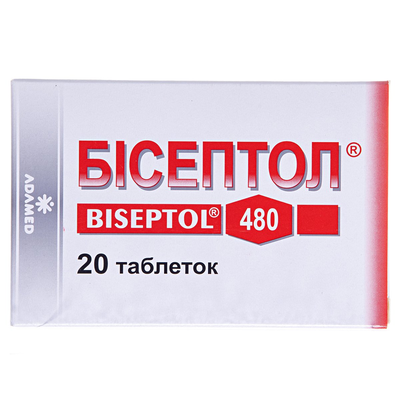
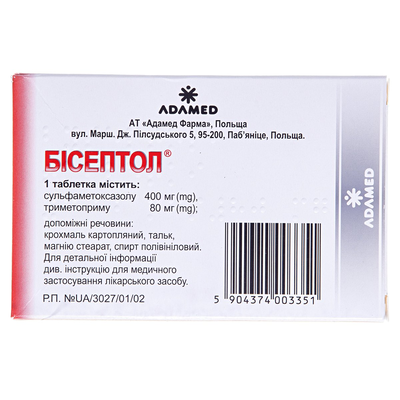
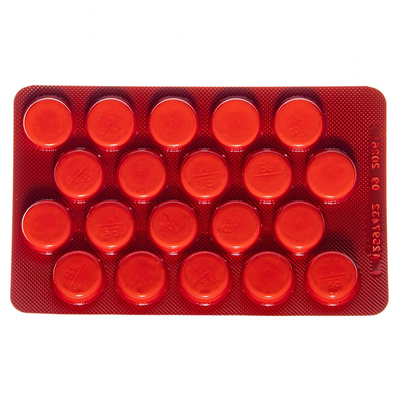
Biseptol 400 mg/80 mg tablets, No. 20
Composition
Active ingredients: sulfamethoxazole, trimethoprim (co-trimoxazole);
1 tablet of 100 mg/20 mg contains 100 mg of sulfamethoxazole and 20 mg of trimethoprim;
1 tablet of 400 mg/80 mg contains 400 mg of sulfamethoxazole and 80 mg of trimethoprim;
Excipients: potato starch, talc, magnesium stearate, polyvinyl alcohol.
Dosage Form
Tablets.
Main physical and chemical properties:
100 mg/20 mg tablets—white tablets with a yellowish tint, round in shape, flat on both sides, with a smooth surface, intact edges, and a bevel; engraved with the letters “Bs” on one side;
400 mg/80 mg tablets—white tablets with a yellowish tint, round in shape, flat on both sides, with a smooth surface, straight edges, and a bevel; engraved on one side with a dash “-” above the letters “Bs.”
Pharmacotherapeutic group
Antimicrobial agents for systemic use.
ATC code J01E E01.
Pharmacological properties
Pharmacodynamics.
A combined bactericidal drug containing sulfamethoxazole — a sulfanilamide with moderate duration of action that inhibits folic acid synthesis through competitive antagonism with para-aminobenzoic acid, and trimethoprim—an inhibitor of bacterial dihydrofolic acid reductase, which is responsible for the synthesis of biologically active tetrahydrofolic acid. A mixture of these substances in a 5:1 ratio is called co-trimoxazole.
The combination of components acting on a single biochemical pathway promotes synergistic antibacterial activity and slows the development of bacterial resistance.
Co-trimoxazole is active in vitro against E. coli (including enteropathogenic strains), indole-positive strains of Proteus spp. (including P. vulgaris), Morganella morganii, Klebsiella spp., Proteus mirabilis, Enterobacter sp., Haemophilus influenzae, Streptococcus pneumoniae, Shigella flexneri, Shigella sonnei, Neisseria gonorrhoeae, and Pneumocystis jirovecii.
Pharmacokinetics.
Both components of the drug are rapidly absorbed into the bloodstream from the gastrointestinal tract. Maximum serum concentrations of both components are reached 1–4 hours after oral administration. Trimethoprim is 70% bound to serum proteins, while sulfamethoxazole is 44–62% bound.
The distribution of the two components differs: sulfamethoxazole is distributed exclusively in the extracellular space, while trimethoprim is distributed throughout all body fluids.
High concentrations of trimethoprim are found in bronchial secretions, the prostate gland, and bile. The concentration of sulfamethoxazole in body fluids is slightly lower. Both compounds appear in high concentrations in sputum, vaginal secretions, and middle ear fluid.
The volume of distribution for sulfamethoxazole is 0.36 L/kg, and for trimethoprim, 2.0 L/kg.
Both components are metabolized in the liver: sulfamethoxazole through acetylation and conjugation with glucuronic acid, and trimethoprim through oxidation and hydroxylation.
They are excreted primarily by the kidneys via filtration and active tubular secretion.
The concentration of active compounds in urine is significantly higher than in blood. Within 72 hours, 84.5% of the administered dose of sulfamethoxazole and 66.8% of trimethoprim are excreted in the urine.
The half-life is 10 hours for sulfamethoxazole and 8–10 hours for trimethoprim. In cases of renal insufficiency, the half-life of both components is prolonged.
Sulfamethoxazole and trimethoprim pass into breast milk and enter the fetal circulation.
Children and Adolescents
The pharmacokinetics of both components of the Biseptol® medication (trimethoprim and sulfamethoxazole) in children and adolescents with normal renal function depend on age. A decrease in the elimination rate of trimethoprim and sulfamethoxazole has been observed in infants during the first two months of life; however, thereafter, the elimination rate and total clearance of both trimethoprim and sulfamethoxazole increase, while the half-life decreases. These pharmacokinetic changes are most pronounced in children aged 1.7 to 24 months and decrease with age when comparing younger children (aged 1 to 3.6 years), children aged 7.5 to 10 years, and adults (see the “Dosage and Administration” section).
Indications
Use for the treatment of infections caused by pathogenic microorganisms susceptible to the drug, provided that the benefits of such treatment outweigh the potential risks; the possibility of using a single antibacterial agent should be considered. When deciding to prescribe Biseptol®, official recommendations regarding the appropriate use of antibacterial agents must be taken into account.
Infections of the ENT organs and respiratory tract: acute and chronic bronchitis, bronchiectasis, pneumonia (including that caused by Pneumocystis jirovecii), pharyngitis, tonsillitis (in infections caused by group A β-hemolytic streptococci, the eradication rate is not entirely sufficient), sinusitis, otitis media.
Infections of the kidneys and urinary tract: acute and chronic cystitis, pyelonephritis, urethritis, prostatitis, chancroid.
Gastrointestinal tract infections: typhoid and paratyphoid fever, shigellosis (caused by susceptible strains of Shigella flexneri and Shigella sonnei, if antibiotic therapy is indicated), traveler’s diarrhea caused by enterotoxigenic strains of Escherichia coli, cholera (in addition to fluid and electrolyte replacement).
Other bacterial infections: acute and chronic osteomyelitis, brucellosis, nocardiosis, actinomycosis, toxoplasmosis, South American blastomycosis.
Contraindications
- Hypersensitivity to trimethoprim and sulfamethoxazole (including sulfanilamide derivatives, sulfonylurea antidiabetics, and thiazide diuretics) and the drug’s excipients.
- Acute hepatitis, impaired liver function, severe hepatic insufficiency, including diagnosed damage to the liver parenchyma, porphyria.
- Blood disorders, hematopoietic disorders, severe hematological disorders, megaloblastic anemia caused by folic acid deficiency, glucose-6-phosphate dehydrogenase deficiency (risk of hemolysis);
- Severe renal insufficiency characterized by a creatinine clearance of less than 15 mL/min, if it is not possible to determine the drug concentration in plasma (except in cases of hemodialysis).
- This drug is contraindicated in patients undergoing chemotherapy.
- This drug must not be administered in combination with dofetilide.
- Children under 6 years of age (for this dosage form).
Interactions with Other Medications and Other Types of Interactions
Laboratory tests: Trimethoprim may affect the results of serum/plasma creatinine measurements using the alkaline picrate reaction. This may result in a 10% increase in serum/plasma creatinine concentrations. Creatinine clearance is reduced: renal tubular secretion of creatinine decreases from 23% to 9%, while glomerular filtration remains unchanged.
Nonsteroidal anti-inflammatory drugs, sulfonylurea antidiabetics, diphenin, indirect anticoagulants, and barbiturates increase the risk of side effects.
Ascorbic acid increases crystalluria.
In patients taking Biseptol® and cyclosporine following a kidney transplant, reversible renal impairment may occur, manifested by elevated creatinine levels and likely caused by trimethoprim.
Trimethoprim has low affinity for human dihydrofolate reductase, but it may increase the toxicity of methotrexate, especially in the presence of other risk factors: advanced age, hypoalbuminemia, impaired renal function, or bone marrow suppression. This adverse drug reaction may be particularly pronounced when methotrexate is administered in high doses. It is recommended that such patients be treated with folic acid or calcium folinate to prevent effects on hematopoiesis.
Cases of pancytopenia have been reported in patients receiving trimethoprim and methotrexate.
Cotrimoxazole increases the concentration of the free fraction of methotrexate in serum by displacing it from its protein-bound state.
Biseptol® may potentiate the effects of drugs metabolized by CYP2C8 (e.g., pioglitazone, repaglinide, rosiglitazone, paclitaxel, amiodarone, dapsone, repaglinidine, rosiglitazone, and pioglitazone) or CYP2C9 (e.g., glipizide and glyburide) or that are excreted by the kidneys via OCT2 (e.g., metformin), which increases the risk of hypoglycemia. Additional monitoring of blood glucose levels may be necessary.
Paclitaxel and amiodarone have a narrow therapeutic index. If a patient is receiving paclitaxel or amiodarone, consideration should be given to prescribing an alternative antibiotic.
Both dapsone and Biseptol® can cause methemoglobinemia. Patients receiving dapsone in combination with Biseptol® should be monitored for methemoglobinemia. Alternative treatments should be considered whenever possible.
Zidovudine: In some cases, the concomitant use of co-trimoxazole and zidovudine increases the risk of hematologic abnormalities caused by co-trimoxazole. If concomitant use of co-trimoxazole and zidovudine is necessary, blood parameters should be monitored.
Warfarin: It has been shown that co-trimoxazole potentiates the anticoagulant activity of warfarin by stereoselective inhibition of its metabolism. Sulfamethoxazole may displace warfarin from its binding to plasma albumin in vitro. Therefore, careful monitoring of anticoagulant therapy is recommended during treatment with co-trimoxazole.
In patients taking indomethacin, blood concentrations of sulfamethoxazole may increase. One case of toxic delirium has been reported following concomitant use of Biseptol® and amantadine.
When co-trimoxazole is used concomitantly with drugs that form cations at physiological pH and are partially excreted by the kidneys via active secretion (e.g., procainamide, amantadine), competitive inhibition of this process may occur, which may lead to increased plasma concentrations of one or both drugs.
Rifampicin: It has been observed that when co-trimoxazole and rifampicin are used concomitantly for one week, the half-life of trimethoprim is shortened. However, this has no significant clinical relevance.
Trimethoprim must not be used in combination with dofetilide. Administration of trimethoprim 260 mg and sulfamethoxazole 800 mg twice daily in combination with dofetilide 500 mg twice daily for 4 days results in an increase in the maximum concentration of dofetilide, which leads to serious ventricular arrhythmias.
In elderly patients, the combination of co-trimoxazole with certain diuretics, particularly thiazides, increases the risk of thrombocytopenia with or without purpura.
Co-trimoxazole may increase serum digoxin concentrations, especially in elderly patients.
When the drug is used concomitantly with tricyclic antidepressants, the activity of the latter is reduced.
This medication reduces the effectiveness of oral contraceptives; therefore, patients should be advised to use additional contraceptive measures during treatment with Biseptol®.
This medication inhibits the metabolism of phenytoin: in patients taking both medications, the half-life of phenytoin increases by approximately 39%, and phenytoin clearance decreases by approximately 27%.
When this drug is co-administered with pyrimethamine—used for malaria prophylaxis at a dose exceeding 25 mg/week—patients may develop megaloblastic anemia.
Lamivudine: Administration of trimethoprim and sulfamethoxazole at a dose of 800 mg + 160 mg (cotrimoxazole) increases the effect of lamivudine on the body by 40% due to the trimethoprim content. Lamivudine does not affect the pharmacokinetics of trimethoprim or sulfamethoxazole.
Hyperkalemia: Caution should be exercised in patients taking any other medications that may cause hyperkalemia, such as angiotensin-converting enzyme (ACE) inhibitors, angiotensin receptor blockers, and potassium-sparing diuretics such as spironolactone. Concomitant use of trimethoprim-sulfamethoxazole (cotrimoxazole) with these agents may lead to clinically significant hyperkalemia.
Folinic acid: It has been shown that the concomitant use of folinic acid affects the antimicrobial efficacy of trimethoprim-sulfamethoxazole. This has been observed in the prevention and treatment of pneumonia caused by Pneumocystis jirovecii.
Azathioprine: There have been conflicting clinical reports of an interaction between azathioprine and trimethoprim-sulfamethoxazole, which resulted in serious hematologic abnormalities.
Special Considerations for Use
Rare cases of life-threatening complications associated with the use of sulfonamides have been reported, including Stevens-Johnson syndrome, toxic epidermal necrolysis, fulminant hepatic necrosis, aplastic anemia, agranulocytosis, other blood disorders, and respiratory hypersensitivity.
Life-threatening skin reactions—Stevens-Johnson syndrome and toxic epidermal necrolysis—have been reported in association with the use of sulfamethoxazole.
Patients should be informed about the subjective and objective symptoms of skin reactions and the need for careful monitoring. The highest risk of serious skin reactions (Stevens-Johnson syndrome and toxic epidermal necrolysis) occurs during the first weeks of treatment.
Treatment with Biseptol® should be discontinued if subjective or objective symptoms of Stevens-Johnson syndrome or toxic epidermal necrolysis (such as the sudden onset of a skin rash, often with blisters, or mucosal involvement) (see the “Adverse Reactions” section).
The best outcomes in the treatment of Stevens-Johnson syndrome or toxic epidermal necrolysis are observed when early diagnosis is made and the drug that caused the reaction is discontinued immediately. Immediate discontinuation of the drug improves the prognosis.
If a patient develops Stevens-Johnson syndrome or toxic epidermal necrolysis during treatment with Biseptol®, this medication should not be prescribed in the future.
If a skin rash or any other adverse reaction occurs (including sore throat, fever, joint pain, pallor, purpura, or jaundice that cannot be explained by other causes), the drug should be discontinued. Cough, shortness of breath, and the development of pulmonary infiltrates may also be signs of a hypersensitivity reaction. Caution should be exercised when administering this medication to patients with a history of severe allergic reactions or bronchial asthma.
Except in exceptional cases, Biseptol® should not be prescribed to patients with serious, persistent changes in blood cell counts. Occasionally, the drug has been administered to patients receiving cytotoxic agents for the treatment of leukemia, and no signs of adverse effects on the bone marrow or peripheral blood were observed.
Given the risk of hemolysis, Biseptol® should not be prescribed to patients with certain hemoglobinopathies (Hb-Zurich, Hb-Cologne), except in cases of urgent need and only at the lowest possible doses.
Long-term treatment with this drug is not recommended. Treatment of elderly patients should not be prolonged. In elderly patients, treatment with Biseptol® increases the risk of kidney or liver damage, severe skin reactions, bone marrow suppression (including blood cell production), as well as thrombocytopenia with or without purpura. Concomitant use of diuretics increases the risk of bleeding.
The use of co-trimoxazole for streptococcal pharyngitis relatively often results in an unsatisfactory outcome, as it fails to eliminate the bacteria. Co-trimoxazole is not indicated for the treatment of pharyngitis and tonsillitis of streptococcal etiology.
Trimethoprim disrupts phenylalanine metabolism, but with an appropriate diet, it does not affect patients with phenylketonuria.
As with the use of any sulfonamides, caution is advised in patients with porphyria and thyroid dysfunction. Patients whose metabolism is characterized by slow acetylation are more prone to developing idiosyncratic reactions to sulfonamides. Use with caution due to a possible effect on antimicrobial efficacy (see the “Interactions with Other Medications and Other Types of Interactions” section).
Biseptol® should be used with caution in patients with impaired liver or kidney function, folic acid deficiency (e.g., elderly patients, patients with alcoholism, those receiving anticonvulsants, those with malabsorption syndrome, or malnourished patients) and in cases of hematopoietic dysfunction. For elderly patients, as well as patients with a suspected folic acid deficiency, the additional administration of folic acid should be considered during treatment with this medication.
To prevent crystalluria and renal tubular obstruction, patients should consume an adequate amount of fluid (at least 1.5 L per day). The risk of crystalluria increases in cases of malnutrition.
During prolonged treatment, blood counts, liver function, and kidney function must be closely monitored. To mitigate hematologic effects during treatment, folic acid (5–10 mg/day) may be added without risk of any reduction in the drug’s antibacterial effects.
Caution should be exercised when prescribing Biseptol® to patients with X-linked intellectual disability, as folic acid deficiency may lead to an exacerbation of psychomotor disorders associated with the condition.
In patients with AIDS who are taking Biseptol® for Pneumocystis infection, the following symptoms occur more frequently: rash, fever, leukopenia, elevated aminotransferase levels, hyperkalemia, and hyponatremia.
Concomitant use of medications that cause hyperkalemia, including co-trimoxazole, in combination with spironolactone, may lead to severe hyperkalemia.
During treatment, direct sunlight should be avoided, or protective clothing and/or sunscreen should be used due to photosensitivity.
Pseudomembranous colitis may develop during treatment with co-trimoxazole (as with other antibacterial agents).
The course of the disease can range from mild to life-threatening. Therefore, accurate diagnosis of this condition is crucial in patients who develop diarrhea while taking an antibacterial agent. Treatment with antibacterial agents alters the normal flora of the colon and may lead to an excessive increase in the number of anaerobic bacilli. Toxins produced by Clostridium difficile are one of the main causes of colitis.
In mild cases of pseudomembranous colitis, discontinuing the medication is usually sufficient. In moderate and severe cases, patients require fluid, electrolytes, protein, and antibiotics active against Clostridium difficile (metronidazole or vancomycin). Do not administer medications that inhibit peristalsis or other antidiarrheal drugs.
Prolonged treatment may lead to overgrowth of non-susceptible microorganisms and fungi. In the event of superinfection, appropriate treatment should be initiated immediately.
Provided that other possible causes have been ruled out, use of this medication is associated with metabolic acidosis. If metabolic acidosis is suspected, close monitoring of the patient is recommended.
Combination therapy with antibiotics and co-trimoxazole should be used only when, in the physician’s judgment, the benefit of treatment outweighs the potential risk. The possibility of using a single effective antibacterial drug should be considered.
Effect on Laboratory Test Results. Trimethoprim may affect the results of enzymatic assays for serum methotrexate concentrations but does not affect them in radioimmunoassays.
Cotrimoxazole may increase the results of the Jaffe test with primary picrate for creatinine by approximately 10%.
Respiratory Toxicity
Very rare severe cases of respiratory toxicity, sometimes progressing to acute respiratory distress syndrome (ARDS), have been reported during treatment with sulfamethoxazole/trimethoprim. The onset of pulmonary symptoms, such as cough, fever, and shortness of breath, in combination with radiographic signs of pulmonary infiltrates and worsening pulmonary function, may be early signs of ARDS. In such circumstances, sulfamethoxazole/trimethoprim should be discontinued and appropriate treatment initiated.
Hemophagocytic Lymphohistiocytosis (HLH)
Very rare cases of hemophagocytic lymphohistiocytosis have been reported in patients receiving sulfamethoxazole/trimethoprim. Hemophagocytic lymphohistiocytosis (HLH) is a life-threatening syndrome of pathological immune activation characterized by clinical signs and symptoms of excessive systemic inflammation (e.g., fever, hepatosplenomegaly, hypertriglyceridemia, hypofibrinogenemia, elevated serum ferritin levels, cytopenia, and hemophagocytosis). Patients who develop early signs of pathological immune activation should be evaluated immediately. If a diagnosis of hemophagocytic lymphohistiocytosis is confirmed, treatment with sulfamethoxazole/trimethoprim should be discontinued.
Use During Pregnancy or Breastfeeding.
Biseptol® must not be used during pregnancy or while breastfeeding.
Use during pregnancy
There are no reliable data on the use of trimethoprim and sulfamethoxazole in pregnant women. Case-control studies have shown a possible association between the action of folic acid antagonists and the occurrence of fetal malformations.
Trimethoprim is a folic acid antagonist, and in animal studies, both active ingredients caused fetal developmental abnormalities.
Co-trimoxazole should not be used during pregnancy, especially during the first trimester, unless absolutely necessary. If co-trimoxazole must be used in pregnant women, the possibility of additional folic acid supplementation should be considered.
Sulfamethoxazole competes with bilirubin for binding sites on plasma albumin. When the drug is administered to the mother prior to delivery, significant concentrations of the drug derived from the mother persist in the newborn for several days, and there is also a risk of bilirubin precipitation or exacerbation of hyperbilirubinemia, which is theoretically associated with a risk of developing kernicterus. This is particularly true for newborns at increased risk of hyperbilirubinemia, such as premature infants and infants with glucose-6-phosphate dehydrogenase deficiency.
Use During Breastfeeding
The components of co-trimoxazole (trimethoprim and sulfamethoxazole) pass into breast milk. Co-trimoxazole should be avoided during late pregnancy and while breastfeeding, as well as in mothers or infants with hyperbilirubinemia or at risk of developing it. In addition, co-trimoxazole should be avoided in infants under eight weeks of age due to the risk of neonatal hyperbilirubinemia.
Cotrimoxazole should not be used in infants during the first 6 weeks of life.
Effect on reaction time when driving or operating machinery.
This medication does not cause a decrease in psychophysical activity or the ability to operate vehicles or machinery.
If side effects affecting the nervous system develop during treatment (dizziness, headache, convulsions, nervousness, or fatigue) that may lead to a decrease in psychomotor reaction time, driving and operating complex machinery should be avoided.
Dosage and Administration
Adults and children 12 years of age and older. The usual starting dose is 2 Biseptol® 400 mg/80 mg tablets or 8 Biseptol® 100 mg/20 mg tablets twice daily (morning and evening). Take after meals with plenty of liquid. For severe infections, higher daily doses may be prescribed—up to 3 Biseptol® 400 mg/80 mg tablets or 12 Biseptol® 100 mg/20 mg tablets twice daily. For maintenance therapy lasting more than 14 days, it is recommended to take 1 Biseptol® 400 mg/80 mg tablet or 4 Biseptol® 100 mg/20 mg tablets twice daily.
Children 6–12 years of age. The recommended daily dose for children is 6 mg of trimethoprim and 30 mg of sulfamethoxazole per 1 kg of body weight. This dose should be divided into two doses.
The recommended daily dose for children aged 6 to 12 years is 1 Biseptol® 400 mg/80 mg tablet or 4 Biseptol® 100 mg/20 mg tablets twice daily.
For children under 6 years of age, other dosage forms of co-trimoxazole (suspension) are recommended.
The duration of treatment for acute infections, with the exception of gonorrhea, should be at least 5 days or an additional 2 days after the symptoms have resolved. A 3-day course of treatment may be sufficient for women with uncomplicated acute cystitis. However, for children with this condition, it is recommended to use the medication for 5–7 days. For acute brucellosis, the duration of treatment should be at least 4 weeks, and for nocardiosis, even longer (6–8 tablets of Biseptol® 400 mg / 80 mg daily for 3 months).
Treatment of pneumonia caused by Pneumocystis jirovecii in adults and children:
The recommended dose of co-trimoxazole for patients with confirmed infection is 90–120 mg/kg of body weight per day, to be taken every 6 hours for 21 days.
Table 1. Maximum doses of Biseptol® based on body weight for patients with pneumonia caused by Pneumocystis jirovecii.
| Body weight
[kg] |
Dose administered every 6 hours
(mg of co-trimoxazole) |
| 16
24 32 40 48 64 80 |
480
720 960 1200 1440 1920 2,400 |
For the prevention and treatment of toxoplasmosis, the dosing regimen for the treatment of pneumonia caused by Pneumocystis jirovecii (see above) may be used.
For uncomplicated gonorrhea, a one-day course of treatment is possible—5 Biseptol® 400 mg/80 mg tablets twice daily (morning and evening)—or a two-day course of treatment—4 Biseptol® 400 mg/80 mg twice daily.
Prevention of infections caused by Pneumocystis jirovecii
Adults and children 12 years of age and older: 960 mg of co-trimoxazole (8 Biseptol® 120 tablets or 2 Biseptol® 480 tablets) once daily for 7 days. If the medication is poorly tolerated, reducing the daily dose to 480 mg may be considered.
Children 6–12 years of age: 900 mg of co-trimoxazole per square meter of body surface area per day, administered in two equal doses every 12 hours for 3 consecutive days.
Table 2. Recommended doses of Biseptol® for children for the prevention of pneumonia caused by Pneumocystis jirovecii
| Body surface area
[m²] |
Dose administered every 12 hours
(mg of co-trimoxazole) |
| 0.53
1.06 |
240
480 |
Special patient groups
For patients with impaired renal function, the dose may be adjusted according to the following schedule (adults and children 12 years of age and older):
| Serum creatinine level | Daily dose (% of the usual dose) | Frequency of administration | |
| Creatinine clearance, mL/min | Creatinine clearance, mmol/L | ||
| > 25 | Men: < 265
Women: < 175 |
100 | Every 12 hours |
| 15–25 | Men: 265–620
Women: 175–400 |
50 | Every 12 or 24 hours |
| < 15 | Men: > 620
Women: > 400 |
Use of the drug should be avoided unless hemodialysis is being performed. | |
It is recommended to measure the plasma concentration of sulfamethoxazole 2–3 days after starting treatment (12 hours after taking the medication). If the plasma concentration of sulfamethoxazole reaches 150 μg/mL, treatment should be suspended until the concentration of sulfamethoxazole decreases to 120 μg/mL.
Patients undergoing regular hemodialysis should receive 50% of the usual dose of the drug before hemodialysis and half of the administered dose after the procedure is completed. Hemodialysis lasts 4 hours, during which 44% of trimethoprim and 57% of sulfamethoxazole are removed from the body. The drug is not recommended for use on days when hemodialysis is not performed.
Biseptol® should be used with particular caution in elderly patients, as adverse reactions are more likely to occur in this patient population, especially in those with renal or hepatic insufficiency or when other medications are being used concomitantly.
Children
The tablet form of the drug is used to treat children aged 6 years and older. For children under 6 years of age, other dosage forms of the drug (suspension) should be used if necessary.
Overdose
It is unknown what dose of Biseptol® may be life-threatening. In cases of sulfonamide overdose, symptoms may include loss of appetite, colic-like pain, nausea, vomiting, diarrhea, dizziness, headache, drowsiness, and loss of consciousness. Fever, hematuria, and crystalluria may occur; in cases of chronic overdose, bone marrow suppression and hepatitis may develop.
In cases of acute trimethoprim overdose, nausea, vomiting, dizziness, headache, mental depression, confusion, and bone marrow suppression may occur.
If symptoms of overdose appear, discontinue the medication, induce vomiting, and drink plenty of fluids if urine output is insufficient but kidney function is normal. Acidifying the urine will accelerate the excretion of trimethoprim but may increase the risk of sulfanilamide crystallization in the kidneys. The patient’s blood count, serum electrolytes, and other biochemical parameters should be monitored. If bone marrow damage or symptoms of hepatitis occur, standard treatment for such cases should be initiated. Hemodialysis is of limited effectiveness. Peritoneal dialysis is ineffective.
In cases of chronic poisoning, spinal cord dysfunction is observed, manifesting as thrombocytopenia, leukopenia, or megaloblastic anemia. In such cases, leucovorin (5–15 mg per day) should be administered.
Side Effects
For the most part, relevant data to assess the incidence of adverse reactions were not available. Furthermore, the incidence depends on the medical condition for which the drug is prescribed.
Data on adverse reactions ranging in frequency from “very common” to “rare” are included in published large-scale clinical studies. Very rare adverse reactions have been observed primarily during postmarketing surveillance.
The following scale is used to classify adverse reactions by frequency of occurrence: very common ≥ 1/10, common ≥ 1/100 and < 1/10, uncommon ≥ 1/1,000 and < 1/100, rare ≥ 1/10,000 and < 1/1,000, very rare < 1/10,000, frequency unknown—the frequency cannot be estimated based on available data.
The most common adverse reactions during treatment with Biseptol® are gastrointestinal (nausea, vomiting, loss of appetite) and skin allergic reactions (rash, hives).
Life-threatening symptoms may rarely occur: Stevens-Johnson syndrome, toxic epidermal necrolysis (Lyell’s syndrome), and acute liver necrosis.
Fungal infections, such as candidiasis, may occur during treatment with this medication.
In addition, adverse effects include:
Infections and parasitic diseases: common: fungal infections; very rare: pseudomembranous colitis.
Blood and lymphatic system disorders: very rare: hemolytic or aplastic anemia, megaloblastic anemia, eosinophilia, methemoglobinemia, leukopenia, neutropenia, and thrombocytopenia; agranulocytosis; pancytopenia or purpura; hemolysis in patients with glucose-6-phosphate dehydrogenase deficiency; hypoprothrombinemia.
Immune system disorders: very rare: allergic myocarditis, chills, photophobia, anaphylactic reactions (including severe, life-threatening ones), allergic vasculitis resembling Henoch–Schönlein purpura, angioedema, allergic skin reaction, generalized skin reactions, exfoliative dermatitis, rash, serum sickness, nodular periarteritis, systemic lupus erythematosus.
Respiratory hypersensitivity symptoms, conjunctival and scleral hyperemia. Severe hypersensitivity reactions during treatment for Pneumocystis pneumonia, rash, pyrexia, neutropenia, thrombocytopenia, elevated liver enzymes, hyperkalemia, hyponatremia, rhabdomyolysis.
Gastrointestinal system: common: diarrhea, nausea (with or without vomiting); uncommon: vomiting; very rare: glossitis, stomatitis, pancreatitis; frequency unknown: abdominal pain, loss of appetite, isolated cases of pseudomembranous enterocolitis, pseudodiphtheritic enteritis, elevated bilirubin levels, elevated serum liver enzyme levels.
Hepatobiliary system: very rare: elevated levels of aminotransferases and bilirubin in the blood, cholestatic jaundice, liver necrosis; frequency unknown: hepatitis, biliary atresia, fulminant hepatitis.
Renal and urinary tract disorders: increased urine output, crystalluria, renal failure, interstitial nephritis, nephrotoxic syndrome with oliguria or anuria, increased serum nonprotein nitrogen and creatinine.
Metabolism and metabolic disorders: very common: hyperkalemia; very rare: hyponatremia, decreased appetite, hypoglycemia, metabolic acidosis.
Psychiatric disorders: very rare: depression, hallucinations, acute psychosis, delirium, and psychosis in elderly patients; frequency unknown: psychotic disorder.
Nervous system disorders: common: headache; very rare: aseptic meningitis*, seizures, peripheral neuropathy, ataxia, apathy, dizziness; frequency unknown: nervousness, tinnitus, peripheral neuritis, paresthesias, uveitis.
Ear and vestibular system disorders: very rare: vertigo, tinnitus.
Eye disorders: very rare: uveitis.
Endocrine system: Sulfonylureas are chemically related to certain antithyroid drugs, diuretics (acetazolamide and thiazides), as well as oral antidiabetic drugs, which may cause cross-allergy.
Skin and subcutaneous tissue disorders: common: rash; very rare: photosensitivity, angioedema, exfoliative dermatitis, persistent drug rash, polymorphic erythema, Stevens-Johnson syndrome*, toxic epidermal necrolysis*; frequency unknown: urticaria, pruritus, desquamative dermatitis.
Musculoskeletal and connective tissue disorders: very rare: arthralgia, myalgia; frequency unknown: isolated cases of rhabdomyolysis.
Respiratory, thoracic, and mediastinal disorders: very rare: dyspnea*, cough*, pulmonary infiltrates*.
Renal and urinary system disorders: very rare: renal dysfunction (sometimes renal failure), tubulointerstitial nephritis, uveitis, renal tubular acidosis.
General disorders: weakness, fatigue, insomnia.
* See the description of individual adverse reactions
Descriptions of individual adverse reactions are provided below.
Aseptic meningitis
Symptoms of aseptic meningitis were reversible after discontinuation of the drug but recurred upon re-administration of trimethoprim or sulfamethoxazole alone.
Pulmonary hypersensitivity reactions
Cough, shortness of breath, and pulmonary infiltrates may be early symptoms of respiratory hypersensitivity, which very rarely resulted in death.
Hepatobiliary disorders
Cholestatic jaundice and hepatic necrosis may be fatal.
Severe cutaneous adverse reactions (SCARs)
Cases of Stevens-Johnson syndrome (SJS) and toxic epidermal necrolysis (TEN) have been reported (see the “Special Precautions for Use” section).
Adverse Reactions in the Treatment of Pneumocystis Pneumonia (PCP)
Very rare: severe hypersensitivity reactions, rash, pyrexia, neutropenia, thrombocytopenia, elevated liver enzymes, hyperkalemia, hyponatremia, rhabdomyolysis.
When high doses were used in the treatment of PCP, severe hypersensitivity reactions were observed, requiring discontinuation of the drug. Severe hypersensitivity reactions have been observed in patients with PBC who were re-treated with co-trimoxazole, sometimes after an interval of several days. If signs of bone marrow suppression appear, the patient should be given calcium folate (5–10 mg/day) to correct the deficiency.
Rhabdomyolysis has been observed in HIV-positive patients taking co-trimoxazole for prophylaxis or for the treatment of PCP.
Adverse reactions in patients with AIDS: the incidence of adverse reactions, particularly rash, fever, leukopenia, and elevated serum aminotransferase levels, is significantly higher in patients with AIDS than in other patients.
HIV-infected patients with frequent comorbidities usually receive long-term prophylaxis or treatment for pneumonia caused by Pneumocystis carinii (Pneumocystis jirovecii), using high doses of Biseptol®. Aside from a small number of additional side effects, the side effect profile in these patients is similar to that in the non-HIV-infected patient population. However, some adverse effects occur more frequently (in approximately 65% of patients) and are often more severe, necessitating discontinuation of Biseptol® treatment in 20–25% of patients. In particular, the adverse reactions listed below were observed additionally or with higher frequency.
Blood and lymphatic system disorders: primarily neutropenia, but also anemia, leukopenia, granulocytopenia, thrombocytopenia, and agranulocytosis.
Immune system disorders: fever, usually associated with skin rashes; allergic reactions, such as angioedema, anaphylactoid reactions, and serum sickness; hypersensitivity reactions.
Metabolic and nutritional disorders: hyperkalemia. HIV-infected patients require careful monitoring of serum potassium levels; hyponatremia, hypoglycemia.
Psychiatric disorders: acute psychosis.
Nervous system disorders: neuropathy (including peripheral neuritis and paresthesias), hallucinations, uveitis. Aseptic meningitis or meningitis-like symptoms, ataxia, convulsions, resting tremor resembling Parkinson’s disease, sometimes accompanied by apathy, foot spasms, and a shuffling gait, vertigo, tinnitus.
Respiratory system: pneumonitis with eosinophilic infiltration.
Gastrointestinal system: anorexia, nausea with or without vomiting, as well as diarrhea, stomatitis, glossitis, and pancreatitis.
Hepatobiliary system: elevated liver enzymes/transaminases, cholestatic jaundice, severe hepatitis.
Skin and subcutaneous tissue disorders: maculopapular rashes that resolve rapidly after discontinuation of the drug, usually accompanied by pruritus, photosensitivity, erythema multiforme, Stevens-Johnson syndrome, toxic epidermal necrolysis (Lyell’s syndrome), Henoch-Schönlein purpura.
Musculoskeletal system: arthralgia, myalgia, rhabdomyolysis.
Renal and urinary tract disorders: renal dysfunction, azotemia, elevated serum creatinine levels, crystalluria; sulfonamides, including Biseptol®, may increase diuresis, particularly in patients with edema caused by cardiovascular diseases.
Shelf life
5 years.
Storage conditions
Store at a temperature not exceeding 25 °C. Keep out of the reach of children.
Packaging
100 mg/20 mg tablets.
20 tablets per blister pack, 1 blister pack per cardboard box; 1,000 tablets per container.
400 mg/80 mg tablets.
20 tablets per blister pack, 1 blister pack per cardboard box; 14 tablets per blister pack, 1 blister pack per cardboard box; 1,000 tablets per container.
Dispensing category
By prescription.
Manufacturer
Adamed Pharma S.A., Poland