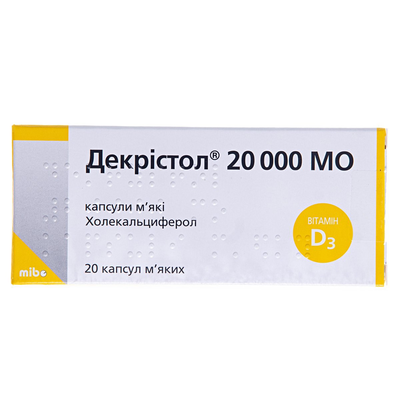
Decristol 20,000 IU Soft Capsules, 20,000 IU each, No. 20 (10 x 2)
Ingredients
Active ingredient: cholecalciferol;
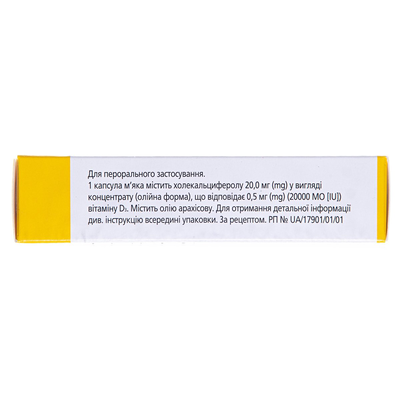
1 soft capsule contains 20.0 mg of cholecalciferol (as a concentrate of 1.0 mMO/g [oil form]), equivalent to 0.5 mg, or 20,000 IU of vitamin D3;
excipients: peanut oil, gelatin, glycerin 85%, medium-chain triglycerides, purified water, alpha-tocopherol.
Dosage Form
Soft capsules.
Main physical and chemical properties: round, transparent, soft capsules of a light yellow color.
Pharmacotherapeutic group
Vitamins. Vitamin D and analogs. Cholecalciferol.
ATC code A11C C05.
Pharmacological properties
Pharmacodynamics.
Cholecalciferol (vitamin D3) is synthesized in the skin from 7-dehydrocholesterol under the influence of ultraviolet radiation and is converted into its biologically active form (1,25-dihydroxycholecalciferol) through two stages of hydroxylation: first in the liver (at position 25), and then in kidney tissue (at position 1). Together with parathyroid hormone and calcitonin, 1,25-dihydroxycholecalciferol plays a significant role in regulating the balance of calcium and phosphate levels. In its biologically active form, vitamin D3 stimulates calcium absorption in the intestine, calcium uptake into the osteoid, and the release of calcium from bone tissue. In the small intestine, it promotes both immediate and delayed calcium absorption. Additionally, it stimulates the passive and active transport of phosphate. In the kidneys, it inhibits the excretion of calcium and phosphate by stimulating tubular reabsorption. The biologically active form of cholecalciferol directly inhibits the production of parathyroid hormone in the parathyroid glands. Parathyroid hormone secretion is further inhibited due to increased calcium absorption in the small intestine under the influence of biologically active vitamin D3.
So-called vitamin D3, in terms of its formation, physiological regulation, and mechanism of action, can be considered a precursor to a steroid hormone. In addition to its physiological production in the skin, cholecalciferol can enter the body through food or as a medication. This latter method can lead to overdose and toxicity, since it does not inhibit the physiological production of vitamin D, such as its synthesis in the skin.
Natural Occurrence and Meeting Requirements
The recommended daily intake of vitamin D for adults is 20 μg, which corresponds to 800 IU per day. Healthy adults can meet their vitamin D needs through endogenous synthesis, provided there is sufficient sunlight. Obtaining vitamin D through diet is of secondary importance but may be crucial under certain critical conditions (climate, lifestyle).
Fish liver oil and fish are particularly rich in vitamin D, although small amounts are also found in meat, eggs, egg yolks, milk, dairy products, and avocados.
Signs of Vitamin D Deficiency
Signs of vitamin D deficiency may appear, for example, in premature newborns, in infants who are exclusively breastfed for more than 6 months without calcium supplementation, or in children on a strict vegetarian diet. Rare cases of vitamin D deficiency in adults may be caused by insufficient dietary intake, lack of adequate ultraviolet exposure, malabsorption and digestive disorders, liver cirrhosis, and kidney failure.
In cases of vitamin D deficiency, skeletal calcification does not occur (leading to the development of rickets) or bone decalcification occurs (leading to the development of osteomalacia). Calcium and/or vitamin D deficiency causes a reversible increase in parathyroid hormone secretion. This secondary hyperparathyroidism increases bone metabolism, which can lead to bone fragility and fractures.
Pharmacokinetics.
Absorption
Vitamin D, in the amounts found in food, is almost completely absorbed from the diet. It is absorbed along with dietary lipids and bile acids; therefore, taking vitamin D with the main meal of the day may promote better absorption.
Distribution and Biotransformation
The metabolic conversion of cholecalciferol occurs in the liver via microsomal hydroxylase, resulting in the formation of 25-hydroxycolecalciferol (25(OH)D3). It is then converted in the kidneys to 1,25-dihydroxycholecalciferol, which is the biologically active form.
Following a single oral dose of cholecalciferol, peak serum concentrations of 25(OH)D3—the primary storage form—are reached in approximately one week. Thereafter, 25(OH)D3 is slowly eliminated with an apparent half-life in serum of approximately 50 days. After administration of high doses of vitamin D, the serum concentration of 25-hydroxycolecalciferol may remain elevated for several months. Hypercalcemia caused by an overdose may persist for several weeks (see the “Overdose” section).
Excretion
Metabolites bound to specific α-globin and circulating in the blood are excreted primarily in bile and feces.
Special Patient Populations
In patients with impaired renal function, the metabolic clearance rate is reduced by 57% compared to healthy volunteers.
In cases of malabsorption, the absorption of vitamin D3 is reduced and its elimination is increased. Obese individuals have a reduced ability to maintain vitamin D3 levels through sun exposure and may require higher oral doses of vitamin D3 to correct a deficiency.
Indications
- Treatment of clinically confirmed vitamin D deficiency in adults.
- Prevention of vitamin D deficiency in high-risk patients
- As an adjunct to specific therapy for osteoporosis in patients with vitamin D deficiency or at high risk of vitamin D deficiency.
Contraindications
- Hypersensitivity to the active ingredient, peanuts, soy, or any of the other excipients contained in the medication.
- Hypercalcemia.
- Hypercalciuria.
- Vitamin D toxicity.
- Pseudohypoparathyroidism (the need for vitamin D may be lower than during periods of normal sensitivity to the vitamin, with a risk of prolonged overdose).
- Nephrolithiasis (kidney stones).
- Renal insufficiency.
- Sarcoidosis.
- Tuberculosis.
- Additional vitamin D supplementation (may lead to overdose).
Interactions with other medications and other types of interactions
Concomitant use of anticonvulsants (such as phenytoin and phenobarbital) or barbiturates (and possibly other drugs that induce liver enzymes) may reduce the effect of vitamin D3 due to metabolic inactivation.
Rifampicin may reduce the efficacy of cholecalciferol due to the induction of liver enzymes.
Isoniazid may reduce the effectiveness of cholecalciferol by inhibiting its metabolic activation.
Ion exchange resins, laxatives, and orlistat may reduce the absorption of vitamin D in the gastrointestinal tract.
The cytotoxic agent actinomycin and imidazole-class antifungal agents reduce the activity of vitamin D3 by inhibiting the conversion of 25-hydroxycholecalciferol to 1,25-dihydroxycholecalciferol by renal enzymes via the action of 25-hydroxyvitamin D-1-hydrolase.
Glucocorticoids increase vitamin D metabolism, which may lead to a reduction in the effectiveness of vitamin D.
Concomitant administration of benzothiadiazine derivatives (thiazide diuretics) increases the risk of hypercalcemia due to reduced renal excretion of calcium. Therefore, plasma and urinary calcium levels must be monitored.
The use of Decristol® 20,000 IU in combination with vitamin D metabolites or analogs should be avoided. Concomitant administration of vitamin D3 with metabolites or analogs of vitamin D is permissible only in exceptional cases and only with monitoring of serum calcium levels (increases the risk of toxic effects).
Oral administration of vitamin D while taking cardiac glycosides may increase the efficacy and toxicity of digoxin due to elevated calcium levels (risk of cardiac arrhythmias). In such patients, ECGs should be performed regularly, and plasma and urinary calcium levels should be monitored; digoxin or digitoxin concentrations should also be measured, if possible.
Concomitant use of this medication with antacids containing aluminum or magnesium may cause aluminum toxicity to the bones and hypermagnesemia in patients with renal insufficiency.
Ketoconazole may reduce the biosynthesis and catabolism of 1,25(OH)2-cholecalciferol.
Concomitant use with medications containing high doses of calcium and phosphorus increases the risk of hyperphosphatemia.
Vitamin D may antagonize medications prescribed for hypercalcemia, such as calcitonin, etidronate, and pamidronate.
Special Considerations for Use
Decristol® 20,000 IU is not recommended for individuals prone to the formation of calcium-containing kidney stones.
Decristol® 20,000 IU should be used with extreme caution in patients with impaired renal function during treatment with benzothiadiazine derivatives, as well as in immobilized patients (due to the risk of hypercalcemia and hypercalciuria). In such patients, calcium and phosphate levels must be monitored. The risk of soft-tissue calcification must be taken into account. In patients with severe renal insufficiency, the normal metabolic conversion of cholecalciferol is impaired; therefore, other forms of vitamin D should be used (see the “Contraindications” section).
Decristol® 20,000 IU should not be used in patients with sarcoidosis due to the risk of accelerated conversion of vitamin D into its active metabolites. In such patients, plasma and urinary calcium levels must be monitored.
When administering the drug at an equivalent daily dose exceeding 1,000 IU of vitamin D, serum and urine calcium levels must be monitored, and renal function must be assessed by measuring serum creatinine concentrations. Such monitoring is particularly important for elderly patients and during concomitant treatment with cardiac glycosides or diuretics (see the section “Interactions with Other Medications and Other Types of Interactions”). This also applies to patients prone to the formation of calcium-containing kidney stones.
For some patients, it is recommended to consider the possibility of supplemental calcium administration. Dietary supplements containing calcium should be used under close medical supervision to prevent hypercalcemia.
Before starting treatment with vitamin D, a physician must thoroughly assess the patient’s condition and take into account the additional amount of vitamin D the patient consumes through certain foods.
Older Adults (aged > 65 years)
In a recent study of older adults with a history of falls, an increased risk of falling was observed with monthly administration of 60,000 IU of vitamin D. Therefore, the use of Decristol® 20,000 IU in older adults is recommended only after a careful analysis of the benefits and risks and only when there are clear indications. In such cases, the dose should not exceed 24,000 IU per month (one capsule). For elderly patients with a history of falls, it is recommended to consider the possibility of daily supplementation with additional vitamin D.
For older adults aged > 70 years
When treating with vitamin D using a loading-dose protocol, serum 25(OH)D3 levels must also be monitored regularly. Treatment should be discontinued when levels reach ≥ 50 ng/mL.
This medication contains peanut oil. If you are allergic to peanuts or soy, do not take this medication.
Use during pregnancy or breastfeeding.
Pregnancy
During pregnancy, Decristol® 20,000 IU may be prescribed only if there are clear indications and should be used only when it is absolutely necessary to correct a vitamin D deficiency.
During pregnancy, vitamin D overdose should be avoided, as prolonged hypercalcemia may lead to delayed physical and mental development in the child, as well as supravalvular aortic stenosis and retinopathy.
Breastfeeding
Vitamin D and its metabolites pass into breast milk. No cases of overdose have been observed in breastfed newborns. However, this should be taken into account when prescribing supplemental vitamin D to a child. Women who are breastfeeding are not recommended to take high-dose vitamin D, such as 20,000 IU capsules.
Fertility
In studies of the effects of cholecalciferol on reproductive function and fertility in animals, no effects were observed. The balance of potential benefits and risks for humans remains unknown.
Effect on reaction time when operating motor vehicles or other machinery.
Decristol® 20,000 IU has no or negligible effect on the ability to drive or operate machinery.
Dosage and Administration
Method of administration.
For oral use.
Adults should take one capsule whole with a sufficient amount of water, preferably with the main meal of the day.
Dosage.
The dosage of vitamin D depends on the severity of the condition as well as the patient’s response to treatment. Depending on the patient’s needs, circumstances, and preferences, daily, weekly, or monthly dosing regimens may be recommended. Lower-dose forms (e.g., 400 IU, 500 IU, 800 IU, and 1,000 IU) are suitable for daily supplemental use of vitamin D, whereas higher-dose forms, such as 20,000 IU capsules, contain amounts equivalent to weekly and monthly doses of vitamin D, which should be taken into account. The dose is prescribed by a doctor on a case-by-case basis.
Certain patient groups are at higher risk of vitamin D deficiency and may require higher doses and monitoring of serum 25-hydroxycolecalciferol (25(OH)D3) levels:
- individuals residing in specialized facilities or those who are hospitalized;
- people with dark skin;
- people with limited exposure to sunlight due to wearing protective clothing or the constant use of sunscreen;
- patients with osteoporosis;
- obese individuals;
- people taking certain concomitant medications (e.g., anticonvulsants, glucocorticoids);
- individuals who have recently undergone treatment for vitamin D deficiency and require maintenance therapy;
- patients with malabsorption, including inflammatory bowel disease and celiac disease.
Dosage Recommendations:
Initial treatment of vitamin D deficiency:
40,000 IU per week for 6–12 weeks.
Treatment of vitamin D deficiency and maintenance of vitamin D levels:
60,000 to 120,000 IU per month for up to 6 months.
Prevention of vitamin D deficiency:
20,000 IU per week regardless of baseline levels from November through April.
As an adjunct to specific osteoporosis therapy in patients with vitamin D deficiency or in patients at risk of vitamin D deficiency:
Adults and the elderly:
20,000 to 40,000 IU per month in combination with a calcium supplement, if necessary.
Elderly patients with a history of falls should avoid doses exceeding 24,000 IU per month (see also the “Special Considerations” section).
Patients with impaired renal function or hypercalcemia
If hypercalcemia or signs of impaired renal function are present, the dose should be reduced or treatment discontinued. If hypercalciuria develops (greater than 7.5 mmol, corresponding to 300 mg of calcium per 24 hours), the dose should be reduced or treatment discontinued.
Children.
Use of this medication is not recommended for children and adolescents (under 18 years of age) due to a lack of data on the dosing regimen and the risk of choking when children swallow capsules. Instead, it is advisable to use drops or dissolvable tablets.
Overdose
Vitamin D3 regulates calcium and phosphate metabolism; overdose can lead to hypercalcemia, hypercalciuria, renal calcifications, and bone damage, as well as cardiovascular complications. Hypercalcemia occurs after taking 50,000–100,000 IU of vitamin D3 per day.
Symptoms of Overdose
Acute and chronic vitamin D3 overdose can cause hypercalcemia, which may become persistent and life-threatening. Symptoms may be nonspecific and manifest as cardiac arrhythmia, thirst, dehydration, adynamia, and altered consciousness. In addition, chronic overdose can lead to calcium deposits in blood vessels and tissues.
In addition to increased phosphorus levels in serum and urine, overdose may also cause hypercalcemic syndrome, which subsequently leads to calcium deposition in tissues, particularly in the kidneys (nephrolithiasis, nephrocalcinosis, renal failure), as well as in blood vessels.
Symptoms of intoxication are not very specific and manifest as muscle weakness, loss of appetite, nausea, vomiting, initial frequent diarrhea followed by constipation, anorexia, shortness of breath, headache, myalgia, arthralgia, muscle weakness, and persistent drowsiness, arrhythmia, azotemia, polydipsia, and polyuria, as well as (in the pre-terminal stage) dehydration, photosensitivity, pancreatitis, rhinorrhea, hyperthermia, decreased libido, conjunctivitis, hypercholesterolemia, elevated transaminase levels, hypertension, and uremia. Common symptoms include muscle and joint pain.
Renal dysfunction develops, characterized by albuminuria, erythrocyturia, and polyuria, increased potassium loss, hyposthenuria, nocturia, and moderate elevation of blood pressure.
In severe cases, corneal opacity may occur; less commonly, optic disc edema, iritis, and even the development of cataracts may occur.
Kidney stones and calcification of soft tissues—such as blood vessels, the heart, lungs, and skin—may develop.
Cholestatic jaundice rarely develops.
Characteristic biochemical abnormalities include hypercalcemia, hypercalciuria, and elevated serum 25-hydroxycalciferol levels.
Treatment. The onset of symptoms of chronic vitamin D overdose may require forced diuresis, as well as the administration of glucocorticoids and calcitonin.
In the event of an overdose, measures must be taken to correct hypercalcemia, which is often chronic and potentially life-threatening.
As a primary measure, vitamin D intake must be discontinued; normalization of calcium levels in hypercalcemia resulting from vitamin D intoxication takes several weeks.
Depending on the severity of hypercalcemia, a calcium-free or low-calcium diet may be prescribed, along with recommendations for increased fluid intake, forced diuresis with furosemide, and the administration of glucocorticoids and calcitonin.
With normal kidney function, calcium levels can be reduced with a high degree of certainty by infusing an isotonic sodium chloride solution (3–6 liters over 24 hours) with the addition of furosemide; in some cases, the administration of sodium edetate at a dose of 15 mg/kg body weight/hour is also recommended under constant monitoring of calcium levels and the ECG. However, in cases of oligoanuria, hemodialysis must be performed (using a calcium-free dialysate).
There is no known specific antidote.
Patients undergoing long-term treatment with vitamin D at higher doses are advised to report symptoms of a possible overdose (nausea, vomiting, initial frequent diarrhea followed by constipation, anorexia, dizziness, headache, myalgia, arthralgia, muscle weakness, drowsiness, azotemia, polydipsia, and polyuria).
Side Effects
As a rule, no adverse reactions are observed when taken at the recommended doses.
In cases of individual sensitivity to the drug—which is rare—or as a result of taking very high doses over a long period, hypervitaminosis D may occur.
The following lists adverse reactions by system organ class, ordered by frequency of occurrence.
|
Organ system
(according to the MedDRA classification system)
|
Frequency of Adverse Reactions
|
||
|
Uncommon
(≥1/1,000 to <1/100)
|
Rare
(≥1/10,000 to <1/1,000)
|
Frequency unknown
(cannot be estimated from the available data)
|
|
|
Cardiovascular system
|
Arrhythmia, hypertension
|
||
|
Gastrointestinal system
|
Constipation, flatulence, nausea, abdominal pain, diarrhea, loss of appetite, vomiting, dry mouth, dyspepsia
|
||
|
Nervous system
|
Headache, drowsiness, mental disturbances, depression
|
||
|
Urinary system
|
Elevated calcium levels in the blood and/or urine, kidney stones and tissue calcification, uremia, polyuria
|
||
|
Skin
|
Hypersensitivity reactions, including hives, rash, and itching
|
||
|
Musculoskeletal system
|
Myalgia, arthralgia, muscle weakness
|
||
|
Eye disorders
|
Conjunctivitis, photosensitivity
|
||
|
Metabolic disorders
|
Hypercalcemia and hypercalciuria
|
Hypercholesterolemia, weight loss, polydipsia, increased sweating, pancreatitis
|
|
|
Immune system disorders
|
Severe allergic reactions to peanut oil
|
Hypersensitivity reactions, such as angioedema or laryngeal edema
|
|
|
Hepatobiliary system
|
Elevated aminotransferase levels
|
||
|
Psychiatric
|
Decreased libido
|
||
There have also been reports of rhinorrhea and hyperthermia.
Reporting Suspected Adverse Reactions
Reports of suspected adverse reactions are very important. Healthcare professionals and patients should report any suspected adverse reactions through the national reporting system.
Shelf life
3 years.
Storage conditions
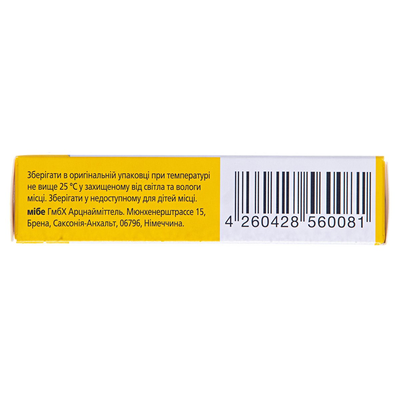
Store in the original packaging at a temperature not exceeding 25 in a place protected from light and moisture. Keep out of reach of children.
Packaging
10 capsules per blister pack. 1, 2, or 5 blister packs per package.
20 capsules per blister pack. 1 blister pack per package.
25 capsules per blister pack. 2 blister packs per package.
Dispensing Category
By prescription.
Manufacturer
mibe GmbH Arzneimittel.