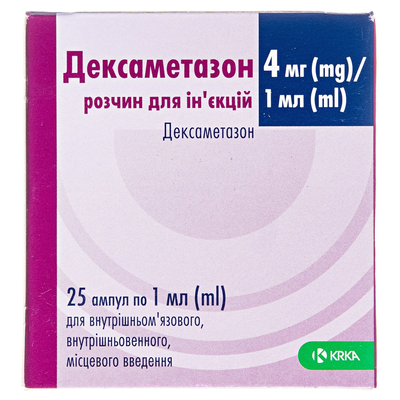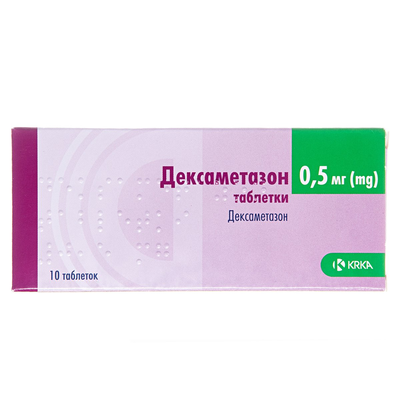
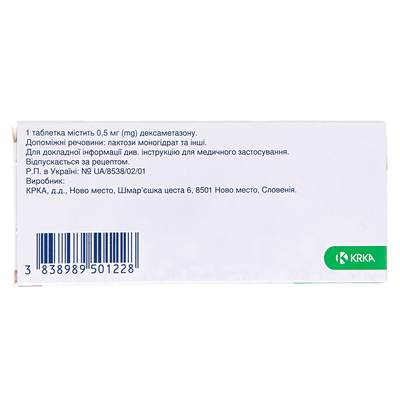
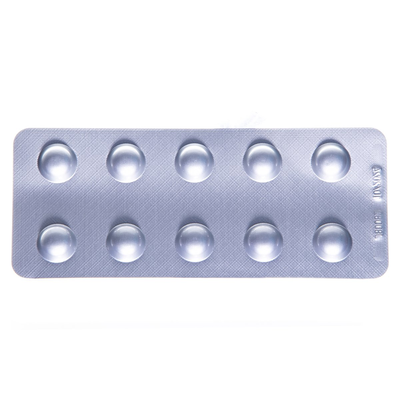
Dexamethasone 0.5 mg tablets, No. 10 (10 x 1) 3582910090212
Composition
Active ingredient: dexamethasone;
1 tablet contains 0.5 mg of dexamethasone;
inactive ingredients: lactose monohydrate, pregelatinized starch, magnesium stearate, colloidal anhydrous silicon dioxide.
Dosage Form
Tablets.
Main physical and chemical properties: round, white or almost white tablets with beveled edges.
Pharmacotherapeutic group
Corticosteroids for systemic use, glucocorticoids.
ATC code H02A B02.
Pharmacological properties
Pharmacodynamics.
Dexamethasone is a semisynthetic adrenal hormone (corticosteroid) with glucocorticoid activity. It exerts anti-inflammatory and immunosuppressive effects, and also influences energy metabolism, glucose metabolism, and (via negative feedback) the secretion of the hypothalamic activating factor and the trophic hormone of the anterior pituitary.
The mechanism of action of glucocorticoids has not yet been fully elucidated. There are now sufficient reports on the mechanism of action of glucocorticoids to confirm that they act at the cellular level. There are two well-defined receptor systems in the cytoplasm of cells. By binding to glucocorticoid receptors, glucocorticoids exert anti-inflammatory and immunosuppressive effects and regulate glucose metabolism, and, through binding to mineralocorticoid receptors, they regulate sodium and potassium metabolism as well as water-electrolyte balance.
Glucocorticoids are lipid-soluble and easily penetrate target cells through the cell membrane. Binding of the hormone to the receptor leads to a conformational change in the receptor, which increases its affinity for DNA. The hormone-receptor complex enters the cell nucleus and binds to a regulatory region of the DNA molecule, also known as the glucocorticoid response element (GRE). The activated receptor, bound to the GRE or to specific genes, regulates mRNA transcription, which may be increased or decreased. The newly synthesized mRNA is transported to the ribosome, where new proteins are synthesized. Depending on the target cells and the processes occurring within them, protein synthesis may be enhanced (for example, the production of tyrosine transaminase in liver cells) or reduced (for example, the production of IL-2 in lymphocytes). Since glucocorticoid receptors are present in all types of tissues, it can be assumed that glucocorticoids act on most cells in the body.
Effects on Energy Metabolism and Glucose Homeostasis
Dexamethasone, together with insulin, glucagon, and catecholamines, regulates energy storage and consumption. In the liver, glucose production from pyruvate or amino acids and glycogen synthesis are increased. In peripheral tissues, particularly in muscles, glucose consumption and the mobilization of amino acids (from proteins)—which serve as substrates for gluconeogenesis in the liver—are reduced. A direct effect on fat metabolism is the central distribution of adipose tissue and an increased lipolytic response to catecholamines.
Through receptors in the proximal renal tubules, dexamethasone increases renal blood flow and glomerular filtration, inhibits the formation and secretion of vasopressin, and improves the kidneys’ ability to excrete acids from the body.
By increasing the number of β-adrenoreceptors and through its affinity for β-adrenoreceptors—which mediate the positive inotropic effect of catecholamines—dexamethasone directly increases cardiac contractility and peripheral vascular tone.
When administered in high doses, dexamethasone inhibits fibroblast production of type I and III collagen and the formation of glycosaminoglycans. Thus, by inhibiting the formation of extracellular collagen and the extracellular matrix, wound healing is delayed. Long-term administration in high doses causes progressive bone resorption through an indirect mechanism and reduces osteogenesis through a direct mechanism (increased secretion of parathyroid hormone and decreased secretion of calcitonin), and also causes a negative calcium balance by reducing calcium absorption in the intestine and increasing its excretion in the urine. This usually leads to secondary hyperparathyroidism and phosphaturia.
Effects on the Pituitary Gland and Hypothalamus
Dexamethasone is 30 times more potent than cortisol. Thus, it is a more potent inhibitor of corticotropin-releasing factor (CRF) and pituitary adrenocorticotropic hormone (ACTH) secretion compared to endogenous cortisol. This leads to a decrease in cortisol secretion and, following prolonged suppression of CRF and ACTH secretion, to adrenal gland atrophy. Adrenal insufficiency may develop as early as the 5th–7th day of dexamethasone administration at a dose equivalent to 20–30 mg of prednisone per day, or after 30 days of low-dose therapy. After discontinuation of short-term therapy (up to 5 days) with high doses, adrenal cortex function should recover within one week; after prolonged therapy, normalization takes longer, usually up to 1 year. Some patients may develop irreversible adrenal atrophy.
The anti-inflammatory and immunosuppressive effects of glucocorticoids are based on their molecular and biochemical actions. The molecular anti-inflammatory effect results from binding to glucocorticoid receptors and altering the expression of a number of genes that regulate the formation of various signaling molecules, proteins, and enzymes involved in the inflammatory response. The biochemical anti-inflammatory action of glucocorticoids results from the inhibition of the formation and function of humoral mediators of inflammation: prostaglandins, thromboxanes, cytokines, and leukotrienes. Dexamethasone reduces leukotriene formation by decreasing the release of arachidonic acid from cellular phospholipids through the inhibition of phospholipase A2 activity. The effect on phospholipase A2 is not achieved through direct action but rather as a result of increased concentrations of lipocortin (macrocortin), which is an inhibitor of phospholipase A2. Dexamethasone inhibits the formation of prostaglandins and thromboxane by reducing the formation of specific mDNA and, consequently, the production of cyclooxygenase. Dexamethasone also reduces the production of platelet-activating factor (PAF) by increasing the concentration of lipocortin. Other biochemical anti-inflammatory effects include a reduction in the production of tumor necrosis factor (TNF) and interleukin-1 (IL-1).
Pharmacokinetics.
Dexamethasone is rapidly and almost completely absorbed after oral administration. The bioavailability of dexamethasone tablets is approximately 80% (various sources in the literature report bioavailability ranging from 53% to 112%). Peak plasma concentrations following oral administration are reached after 1–2 hours; the duration of action after a single dose is approximately 2.75 days.
In plasma, approximately 77% of dexamethasone is bound to plasma proteins, primarily albumin. Only a small amount of dexamethasone binds to other proteins. Dexamethasone is fat-soluble, so it freely penetrates cells and the intercellular space. In the central nervous system (hypothalamus, pituitary gland), it binds to and acts through membrane receptors. In peripheral tissues, it binds to and acts through cytoplasmic receptors. It is broken down at the site of action, that is, within the cell itself. Dexamethasone is primarily metabolized in the liver, and possibly also in the kidneys and other tissues. It is primarily excreted in the urine.
Indications
Endocrine disorders:
- replacement therapy for primary or secondary (pituitary) adrenal insufficiency (except for acute adrenal insufficiency, for which hydrocortisone or cortisone are the drugs of choice, given their more pronounced hormonal effect); congenital adrenal hyperplasia; thyroiditis, subacute form, and severe forms of radiation-induced thyroiditis.
Rheumatic diseases:
- rheumatoid arthritis, including juvenile rheumatoid arthritis and extra-articular manifestations of rheumatoid arthritis (rheumatic lung disease, cardiac and ocular changes, cutaneous vasculitis), as adjunctive therapy during the period when basic therapy has not yet taken effect, and in cases where the analgesic and anti-inflammatory effects of nonsteroidal anti-inflammatory drugs (NSAIDs) have been inadequate.
Systemic connective tissue diseases, vasculitic syndromes, and amyloidosis (supportive and symptomatic treatment in certain cases during the course of the underlying disease):
- systemic lupus erythematosus (treatment of polyserositis and internal organ involvement); Sjögren’s syndrome (treatment of pulmonary, renal, and cerebral involvement);
- systemic sclerosis (treatment of myositis, pericarditis, and alveolitis);
- polymyositis, dermatomyositis;
- systemic vasculitides;
- amyloidosis (replacement therapy for adrenal insufficiency).
Skin diseases:
- pemphigus;
- bullous herpetiform dermatitis;
- exfoliative dermatitis;
- exudative erythema (severe forms);
- nodular erythema;
- seborrheic dermatitis (severe forms);
- psoriasis (severe forms);
- tinea;
- urticaria that does not respond to standard treatment;
- fungoid mycosis;
- scleroderma;
- Quincke’s edema.
Allergic diseases (that do not respond to standard treatment):
- asthma, contact dermatitis, atopic dermatitis, serum sickness, allergic rhinitis, drug allergy, urticaria following a blood transfusion.
Diseases of the eyes:
- inflammatory eye diseases (acute central choroiditis, optic neuritis), allergic diseases (conjunctivitis, uveitis, scleritis, keratitis, iritis);
- systemic immune disorders (sarcoidosis, temporal arteritis);
- proliferative changes in the orbit (endocrine ophthalmopathy, pseudotumor);
- sympathetic ophthalmia;
- immunosuppressive therapy following corneal transplantation.
Gastrointestinal diseases:
- ulcerative colitis (severe flare-up), Crohn’s disease (severe flare-up), chronic autoimmune hepatitis, rejection reaction following liver transplantation.
Respiratory tract diseases:
- acute toxic bronchiolitis, chronic bronchitis, allergic bronchopulmonary aspergillosis, exogenous allergic alveolitis, idiopathic fibrosing alveolitis, sarcoidosis, eosinophilic infiltration, focal or disseminated pulmonary tuberculosis (in conjunction with appropriate antituberculosis therapy), tuberculous pleurisy (along with appropriate antituberculosis therapy), pleurisy associated with systemic connective tissue diseases, pulmonary vasculitis, berylliosis (granulomatous inflammation);
- obliterative bronchitis caused by toxic gas poisoning;
- radiation or aspiration pneumonitis.
Hematological disorders:
- acquired or congenital chronic aplastic anemia, autoimmune hemolytic anemia, secondary thrombocytopenia in adults, erythroblastopenia, acute lymphoblastic leukemia (induction therapy), myelodysplastic syndrome, angioimmunoblastic malignant T-cell lymphoma (in combination with cytostatic agents), plasmacytoma (in combination with cytostatic agents), severe anemia following myelofibrosis with myeloid metaplasia or with lymphoplasmacytic immunocytoma, systemic histiocytosis (systemic form).
Kidney diseases:
- primary and secondary glomerulonephritis (Goodpasture syndrome), renal failure associated with systemic connective tissue diseases (systemic lupus erythematosus, Sjögren’s syndrome), systemic vasculitis (usually in combination with cyclophosphamides), glomerulonephritis associated with nodular polyarthritis, Cherg-Strauss syndrome, Wegener’s granulomatosis, Henoch-Schönlein purpura, mixed cryoglobulinemia, renal failure associated with Takayasu arteritis, interstitial nephritis, immunosuppressive therapy following kidney transplantation, induction of diuresis and reduction of proteinuria in idiopathic nephrotic syndrome (without uremia), and renal failure in systemic lupus erythematosus.
Oncological diseases:
- palliative treatment of leukemia and lymphoma in adults, acute leukemia in children, and hypercalcemia associated with malignant diseases.
Cerebral edema:
- cerebral edema resulting from primary or metastatic brain tumors, craniotomy, and traumatic brain injury.
Other indications:
- tuberculous meningitis with subarachnoid block (in conjunction with appropriate antituberculous therapy), trichinosis with neurological symptoms or myocardial trichinosis, diagnostic testing for adrenal hyperfunction.
Contraindications
Hypersensitivity to dexamethasone or to any other ingredient in the medication. Acute viral, bacterial, or systemic fungal infections (unless appropriate therapy is being administered), Cushing’s syndrome, vaccination with a live vaccine, and breastfeeding (except in emergency situations).
Interactions with Other Medications and Other Types of Interactions
Concomitant use of dexamethasone and NSAIDs increases the risk of gastrointestinal bleeding and ulcer formation.
The effect of dexamethasone is reduced when used concomitantly with drugs that induce the CYP 3A4 enzyme (phenytoin, phenobarbital, carbamazepine, primidone, rifabutin, rifampicin) or increase the metabolic clearance of glucocorticoids (ephedrine and aminoglutethimide); in these cases, the dose of dexamethasone should be increased. Interactions between dexamethasone and all of the aforementioned medications may distort the dexamethasone suppression test. This should be taken into account when evaluating the test results.
Concomitant use of dexamethasone and drugs that inhibit CYP 3A4 enzyme activity (ketoconazole, macrolides) may lead to increased serum concentrations of dexamethasone. Dexamethasone is a moderate inducer of CYP 3A4. Concomitant use with drugs metabolized by CYP 3A4 (indinavir, erythromycin) may increase their clearance, resulting in decreased serum concentrations.
By inhibiting CYP 3A4 enzyme activity, ketoconazole may increase the concentration of dexamethasone in serum. On the other hand, ketoconazole may inhibit adrenal glucocorticoid synthesis; thus, adrenal insufficiency may develop as a result of decreased dexamethasone concentrations.
Dexamethasone reduces the therapeutic effect of antidiabetic and antihypertensive agents, praziquantel, and diuretics (therefore, the dose of these medications should be increased), but it increases the activity of heparin, albendazole, and potassium-sparing diuretics (the dose of these drugs should be reduced if necessary).
Dexamethasone may alter the effects of coumarin anticoagulants; therefore, prothrombin time should be monitored more frequently when using this combination.
Concomitant use of high doses of glucocorticoids and β2-adrenergic receptor agonists increases the risk of hypokalemia. In patients with hypokalemia, cardiac glycosides are more likely to cause arrhythmias and exhibit greater toxicity.
Dexamethasone reduces the therapeutic effect of anticholinesterase agents used to treat myasthenia gravis.
Antacids reduce the absorption of dexamethasone in the stomach. The effect of dexamethasone when taken with food or alcohol has not been studied; however, concomitant use of the drug with foods high in sodium is not recommended. Smoking does not affect the pharmacokinetics of dexamethasone.
Glucocorticoids increase the renal clearance of salicylate, so it is sometimes difficult to achieve therapeutic serum concentrations of salicylates. Caution is advised in patients whose corticosteroid dose is being gradually reduced, as this may lead to increased serum salicylate concentrations and toxicity.
If oral contraceptives are used concurrently, the half-life of glucocorticoids may be prolonged, which enhances their biological effect and may increase the risk of side effects.
Concomitant use of ritordine and dexamethasone is contraindicated during labor, as it may lead to the death of the parturient due to pulmonary edema. There have been reports of the parturient’s death due to the development of this condition.
Concomitant use of dexamethasone and thalidomide may cause toxic epidermal necrolysis.
Interactions with therapeutic benefits: Concomitant administration of dexamethasone with metoclopramide, diphenhydramine, prochlorperazine, or 5-HT3 receptor antagonists (serotonin or 5-hydroxytryptamine receptors, type 3, such as ondansetron or granisetron) is effective for the prevention of nausea and vomiting caused by chemotherapy with cisplatin, cyclophosphamide, methotrexate, or fluorouracil.
Concomitant use with CYP3A inhibitors, including medications containing cobicistat, is expected to increase the risk of systemic side effects. This combination should be avoided unless the benefit of its use outweighs the risk of systemic side effects from corticosteroids. In this case, patients should be monitored for systemic effects of corticosteroids.
Special Considerations for Use
Systemic use of corticosteroids may be accompanied by severe psychiatric reactions. Symptoms usually appear several days or weeks after the start of treatment. The risk of these symptoms increases with high doses. Most reactions resolve upon dose reduction or discontinuation of the drug. It is necessary to monitor and promptly identify changes in mental status, particularly depressive mood, suicidal thoughts, and intentions. Corticosteroids should be used with particular caution in patients with a history of affective disorders, particularly those with allergic reactions to any other medications, as well as those with such reactions in close relatives. Adverse effects can be prevented by using the lowest effective dose for the shortest possible period or by administering the required daily dose once, in the morning.
In patients undergoing long-term treatment with dexamethasone, discontinuation of therapy may result in a withdrawal syndrome (without apparent signs of adrenal insufficiency) with the following symptoms: fever, runny nose, redness of the conjunctiva, headache, dizziness, drowsiness or irritability, muscle and joint pain, vomiting, weight loss, general weakness, and seizures are also common. Therefore, the dose of dexamethasone should be reduced gradually. Abrupt discontinuation may be fatal.
If a patient experiences severe stress (due to trauma, surgery, or a serious illness) during therapy, the dose of dexamethasone should be increased; if this occurs during discontinuation of treatment, hydrocortisone or cortisone should be administered.
Patients who have been treated with dexamethasone for a long time and who experience severe stress after discontinuation of therapy should resume dexamethasone treatment, as the adrenal insufficiency caused by it may persist for several months after discontinuation. Treatment with dexamethasone or natural glucocorticoids may mask the symptoms of an existing or new infection, as well as the symptoms of intestinal perforation.
Dexamethasone may exacerbate systemic fungal infections, latent amoebiasis, and pulmonary tuberculosis.
Patients with active pulmonary tuberculosis should receive dexamethasone (in combination with antituberculosis drugs) only in cases of rapidly progressive or severe disseminated pulmonary tuberculosis. Patients with inactive pulmonary tuberculosis who are being treated with dexamethasone, or patients who are tuberculin-positive, should receive chemoprophylaxis.
Caution and medical supervision are recommended for patients with osteoporosis, hypertension, heart failure, tuberculosis, glaucoma, hepatic or renal insufficiency, diabetes, active peptic ulcer, recent intestinal anastomosis, ulcerative colitis, and epilepsy. Special care is required for patients during the first few weeks following a myocardial infarction, patients with thromboembolism, myasthenia gravis, glaucoma, hypothyroidism, psychosis, or psychoneurosis, as well as elderly patients.
During treatment, diabetes may worsen or progress from a latent phase to clinical manifestations of diabetes.
During long-term treatment, serum potassium levels should be monitored.
Vaccination with a live vaccine is contraindicated during treatment with dexamethasone. Vaccination with an inactivated viral or bacterial vaccine does not result in the expected antibody production and does not provide the expected protective effect. Dexamethasone should generally be administered 8 weeks prior to vaccination and should not be initiated earlier than 2 weeks after vaccination.
Patients who are undergoing long-term treatment with high doses of dexamethasone and have never had measles should avoid contact with infected individuals; in the event of accidental contact, prophylactic treatment with immunoglobulin is recommended.
Caution is advised for patients recovering from surgery or bone fractures, as dexamethasone may slow wound healing and bone formation.
The effects of glucocorticoids are enhanced in patients with liver cirrhosis or hypothyroidism.
Corticosteroids may distort the results of skin allergy tests.
In a postmarketing study of patients with hematologic malignancies, tumor lysis syndrome (TLS) was observed following the use of dexamethasone alone or in combination with other chemotherapeutic agents. Patients at high risk for TLS, such as those with a high rate of proliferation, large tumor mass, and high sensitivity to cytotoxic agents, should be closely monitored, and appropriate precautions should be taken.
Visual Disturbances
Systemic and topical treatment with glucocorticoids may lead to visual disturbances. If blurred vision or other visual disturbances occur, the patient should be referred for an ophthalmologic examination to determine the cause, which may include cataracts, glaucoma, or the rare condition choroidoretinopathy, which have been reported with both systemic and topical use of corticosteroids.
Special Precautions Regarding Excipients
This medication contains lactose and should not be taken by patients with rare hereditary galactose intolerance, Lapp lactase deficiency, or glucose-galactose malabsorption.
Use during pregnancy or breastfeeding.
Pregnancy
Adverse effects on the fetus and newborn cannot be ruled out. The drug inhibits the intrauterine development of the fetus. Dexamethasone may be prescribed to pregnant women only in rare, urgent cases when the expected benefit to the mother outweighs the potential risk to the fetus. Particular caution is recommended in cases of preeclampsia. In accordance with general recommendations for the use of glucocorticoids during pregnancy, the lowest effective dose should be used to control the underlying disease. Infants whose mothers took glucocorticoids during pregnancy should be carefully monitored for adrenal insufficiency.
Glucocorticoids cross the placenta and reach high concentrations in the fetus. Dexamethasone is metabolized less extensively in the placenta than, for example, prednisone. Consequently, high concentrations of dexamethasone may be detected in fetal serum. According to some reports, even therapeutic doses of glucocorticoids may increase the risk of placental insufficiency, oligohydramnios, fetal growth restriction, or intrauterine fetal death, as well as an increase in fetal white blood cell (neutrophil) count and adrenal insufficiency. There is no evidence to support a teratogenic effect of glucocorticosteroids. Administration of corticosteroids to pregnant female animals has resulted in fetal malformations, including cleft lip, intrauterine growth restriction, and effects on brain growth and development. There is no evidence that corticosteroids increase the incidence of congenital anomalies in humans, such as cleft lip/cleft palate.
It is recommended to administer supplemental doses of glucocorticosteroids during labor to women who have been taking glucocorticosteroids during pregnancy. In cases of prolonged labor or when a cesarean section is planned, intravenous administration of 100 mg of hydrocortisone every 8 hours is recommended.
Breastfeeding
A small amount of glucocorticoids passes into breast milk; therefore, women being treated with dexamethasone are not recommended to breastfeed, especially when the drug is used in doses exceeding physiological norms (approximately 1 mg). This may lead to slowed growth in the infant and reduced secretion of endogenous corticosteroids.
Effect on reaction time when driving or operating machinery.
Dexamethasone does not affect the ability to drive a car or operate other machinery.
Dosage and Administration
The dose should be determined individually based on the patient’s specific condition, the anticipated duration of treatment, tolerance to corticosteroids, and the body’s response.
Treatment
The recommended initial dose for adults is 0.5–9 mg per day. The maintenance dose is usually 0.5–3 mg per day. The daily dose may be divided into 2–4 doses.
Initial doses of dexamethasone are administered until a clinical response is observed, after which the dose should be gradually reduced to the lowest clinically effective dose. If high-dose oral treatment continues for more than a few days, the dose should be gradually reduced over several consecutive days or even over a longer period (usually by 0.5 mg every three days). The maximum daily dose is usually 15 mg; the minimum effective dose is 0.5–1 mg per day.
During long-term treatment with high doses, it is recommended to take dexamethasone with food and to use antacids between meals.
Dosage for Children
The recommended oral dose for replacement therapy is 0.02 mg/kg of body weight, or 0.67 mg/m² of body surface area, per day, divided into 3 doses.
For all other indications, the initial dose range is 0.08–0.3 mg/kg per day or 2.5–10 mg/m² of body surface area per day, divided into 3–4 doses.
Diagnostic testing for adrenal hyperfunction
The dexamethasone test (Liddle test) is performed as a short-term and long-term test.
During the short test, dexamethasone is administered at a dose of 0.5 mg every 6 hours for 48 hours (specifically: at 8:00 a.m., 2:00 p.m., 8:00 p.m., and 2:00 a.m.). Before and after dexamethasone administration, the levels of 17-hydroxycorticosteroid or free cortisol in the 24-hour urine sample are measured. These doses of dexamethasone suppress corticosteroid production in nearly all healthy volunteers. Six hours after the last dose of dexamethasone, the plasma cortisol level is less than 135–138 nmol/L (4.5–5 μg/100 mL). A decrease in 17-hydroxycorticosteroid excretion to less than 3 mg/day, and a decrease in free cortisol to less than 54–55 nmol/day (19–20 μg/day) rules out adrenal hyperfunction. In individuals with Cushing’s disease or syndrome, corticosteroid excretion remains unchanged during a short test.
During the full-dose test, dexamethasone is administered at a dose of 2 mg every 6 hours for 48 hours (i.e., 8 mg of dexamethasone per day). Urine is also collected to measure 17-hydroxycorticosteroid or free cortisol (if necessary, free cortisol is measured in plasma). In Cushing’s disease, there is a 50% or greater decrease in the excretion of 17-hydroxycorticosteroids or free cortisol, whereas in adrenal tumors or ACTH ectopic (or corticoliberin ectopic) syndrome, corticosteroid excretion remains unchanged. In some patients with ACTH ectopic syndrome, a decrease in corticosteroid excretion is not observed even after administration of dexamethasone at a dose of 32 mg/day.
Equivalent doses of corticosteroids
| Dexamethasone 0.75 mg | Prednisone 5 mg |
| Cortisone 25 mg | Methylprednisolone 4 mg |
| Hydrocortisone 20 mg | Triamcinolone 4 mg |
| Prednisolone 5 mg | Betamethasone 0.75 mg |
These dosage ratios apply only to oral or intravenous administration of these drugs. When these drugs or their derivatives are administered intramuscularly or intra-articularly, their relative properties may vary significantly.
Children.
Use in children from birth only when absolutely necessary. During treatment with dexamethasone, careful monitoring of the growth and development of children and adolescents is necessary. Preterm newborns: available data indicate long-term neurological side effects following early treatment (up to 96 hours) of premature infants with chronic lung disease when an initial dose of 0.25 mg/kg twice daily is administered.
Overdose
There have been isolated reports of acute overdose or fatal outcomes due to acute overdose.
Overdose, usually only after several weeks of taking excessive doses, may cause most of the adverse effects listed in the “Adverse Reactions” section, particularly Cushing’s syndrome.
A single intake of a large number of tablets does not lead to clinically significant intoxication. There is no specific antidote. Treatment of overdose should be supportive and symptomatic. Hemodialysis is not an effective method for accelerating the elimination of dexamethasone from the body.
Side Effects
Side effects during short-term treatment with dexamethasone
Immune system: hypersensitivity reactions.
Endocrine system: transient suppression of adrenal function.
Metabolism and nutrition: decreased carbohydrate tolerance, increased appetite and body weight, hypertriglyceridemia.
Psychiatric disorders: psychiatric disorders.
Gastrointestinal system: peptic ulcer and acute pancreatitis.
Side effects associated with long-term treatment with dexamethasone
Immune system: decreased immune response and increased susceptibility to infections.
Endocrine system: persistent suppression of adrenal gland function, growth retardation in children and adolescents, premature closure of the epiphyseal growth plates.
Metabolism and nutrition: obesity.
Ocular: cataracts, glaucoma, chorioretinopathy.
Vascular system: hypertension; telangiectasia.
Skin and subcutaneous tissue disorders: skin thinning.
Musculoskeletal and connective tissue disorders: muscle atrophy, osteoporosis, aseptic bone necrosis, fractures of long bones.
Adverse events that may also occur in specific organs and systems during treatment with dexamethasone:
Blood and lymphatic system: thromboembolic complications; decreased monocyte and/or lymphocyte counts; leukocytosis; eosinophilia (as with other glucocorticosteroids); thrombocytopenia and non-thrombocytopenic purpura.
Immune system disorders: rash, bronchospasm, anaphylactic reactions, development of opportunistic infections.
Cardiac: multifocal ventricular extrasystoles, transient bradycardia, heart failure, cardiac arrest, myocardial perforation following a previous myocardial infarction.
Vascular system: hypertensive encephalopathy.
Respiratory, thoracic, and mediastinal disorders: recurrence of inactive tuberculosis.
Nervous system: optic nerve edema and increased intracranial pressure (benign intracranial hypertension) after discontinuation of treatment; dizziness; vertigo; headache; seizures.
Psychiatric disorders: changes in personality and behavior most commonly manifest as euphoria; insomnia, irritability, hyperkinesis, depression, nervousness, restlessness, manic-depressive psychosis, delirium, disorientation, hallucinations, paranoia, mood lability, suicidal thoughts, psychoses, sleep disturbances, confusion, amnesia, worsening of schizophrenia, worsening of epilepsy.
Endocrine system: adrenal suppression and adrenal atrophy (decreased response to stress), Cushing’s syndrome, menstrual cycle disorders, hirsutism.
Metabolism and nutrition: progression from a latent form to clinical manifestations of diabetes; increased need for insulin and oral antidiabetic medications in patients with diabetes mellitus; sodium and water retention; increased potassium loss; hypokalemic alkalosis; negative nitrogen balance caused by protein catabolism; hypocalcemia.
Gastrointestinal: dyspepsia, vomiting, nausea, hiccups, peptic ulcer of the stomach or duodenum, esophagitis, perforations and bleeding in the gastrointestinal tract (bloody vomiting, melena), pancreatitis, gallbladder perforation, and intestinal perforation (especially in patients with inflammatory bowel disease).
Musculoskeletal and connective tissue disorders: muscle weakness, steroid myopathy (muscle weakness caused by muscle catabolism), compression fractures of the spine, tendon ruptures (especially when used concomitantly with certain quinolines), damage to articular cartilage, and osteonecrosis (with frequent intra-articular injections).
Skin and subcutaneous tissue disorders: delayed wound healing, striae, petechiae and bruises, increased sweating, acne, suppression of skin tests, angioedema, allergic dermatitis, urticaria, and pruritus.
Ocular disorders: increased intraocular pressure; exophthalmos; exacerbation of bacterial, fungal, or viral eye infections; corneal thinning; blurred vision.
Genitourinary and breast disorders: impotence, amenorrhea.
General disorders and administration site conditions: transient burning and stinging sensations in the perineum following intravenous administration or administration of high doses; edema, hyper- or hypopigmentation of the skin, atrophy of the skin and subcutaneous tissue, sterile abscess, and skin redness.
Signs of glucocorticoid withdrawal syndrome
In patients who have been treated with dexamethasone for a prolonged period, withdrawal syndrome may occur if the dose is reduced too rapidly, potentially leading to adrenal insufficiency, hypotension, or death. In some cases, the signs of withdrawal syndrome may resemble those of a worsening or recurrence of the underlying condition for which the patient was being treated. If severe adverse reactions develop, treatment must be discontinued.
Shelf life
3 years.
Storage Conditions
Store in the original packaging to protect from light and moisture. No special storage temperature conditions are required for this medication.
Keep out of the reach of children.
Packaging
10 tablets in a blister pack made of aluminum foil / OPP/Al/PVC film, with 1, 2, 3, 5, 6, 9, or 10 blisters (with or without perforations) in a cardboard box.
Dispensing Category
By prescription.