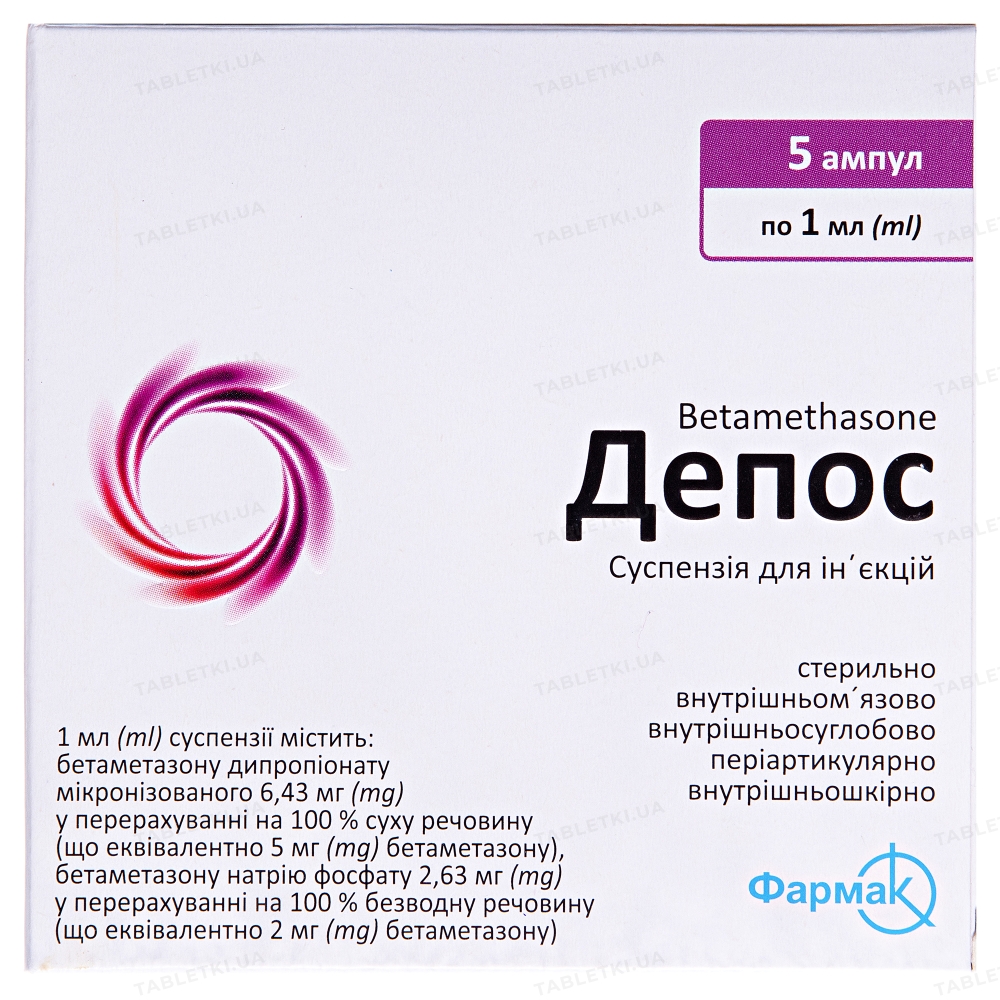
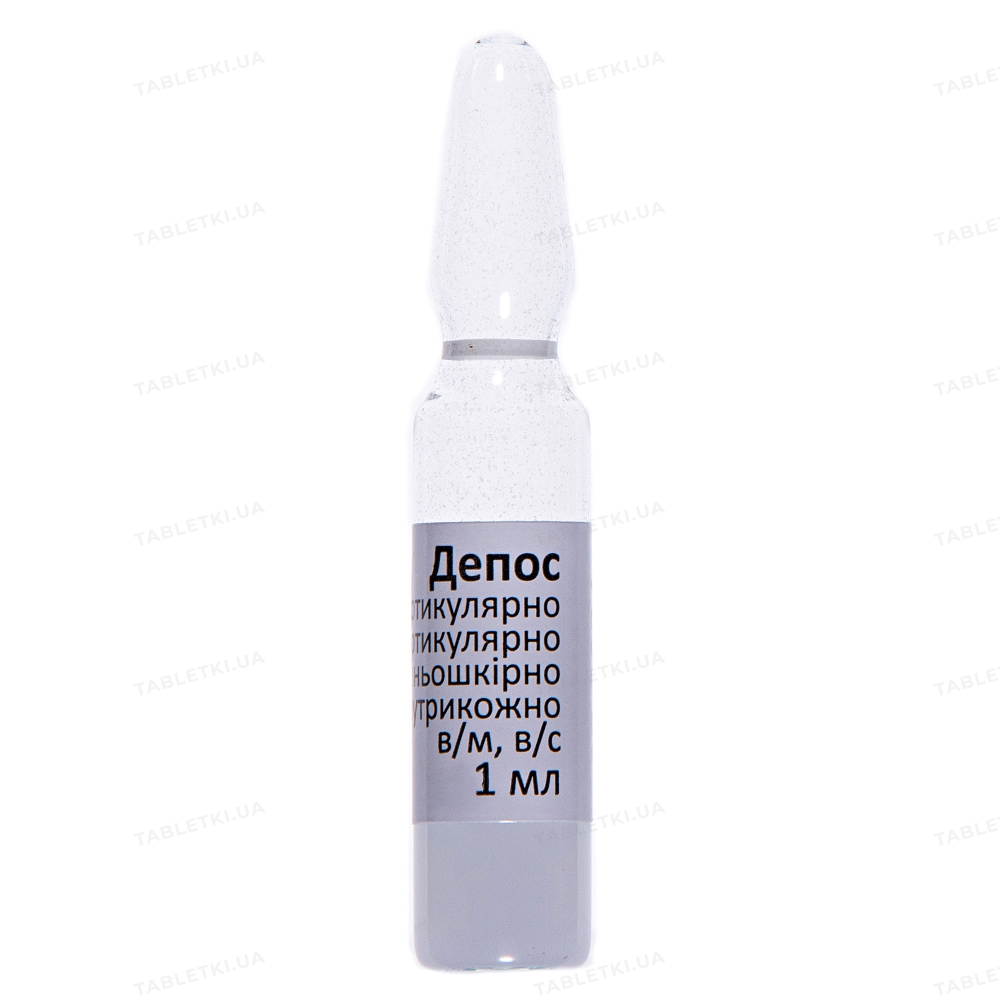
Depos Suspension for Injection, 1 mL, No. 5, in ampoules
Active ingredient: betamethasone;
1 mL of suspension contains 6.43 mg of micronized betamethasone dipropionate, calculated as 100% dry weight (equivalent to 5 mg of betamethasone), 2.63 mg of betamethasone sodium phosphate, calculated as 100% anhydrous substance (equivalent to 2 mg of betamethasone);
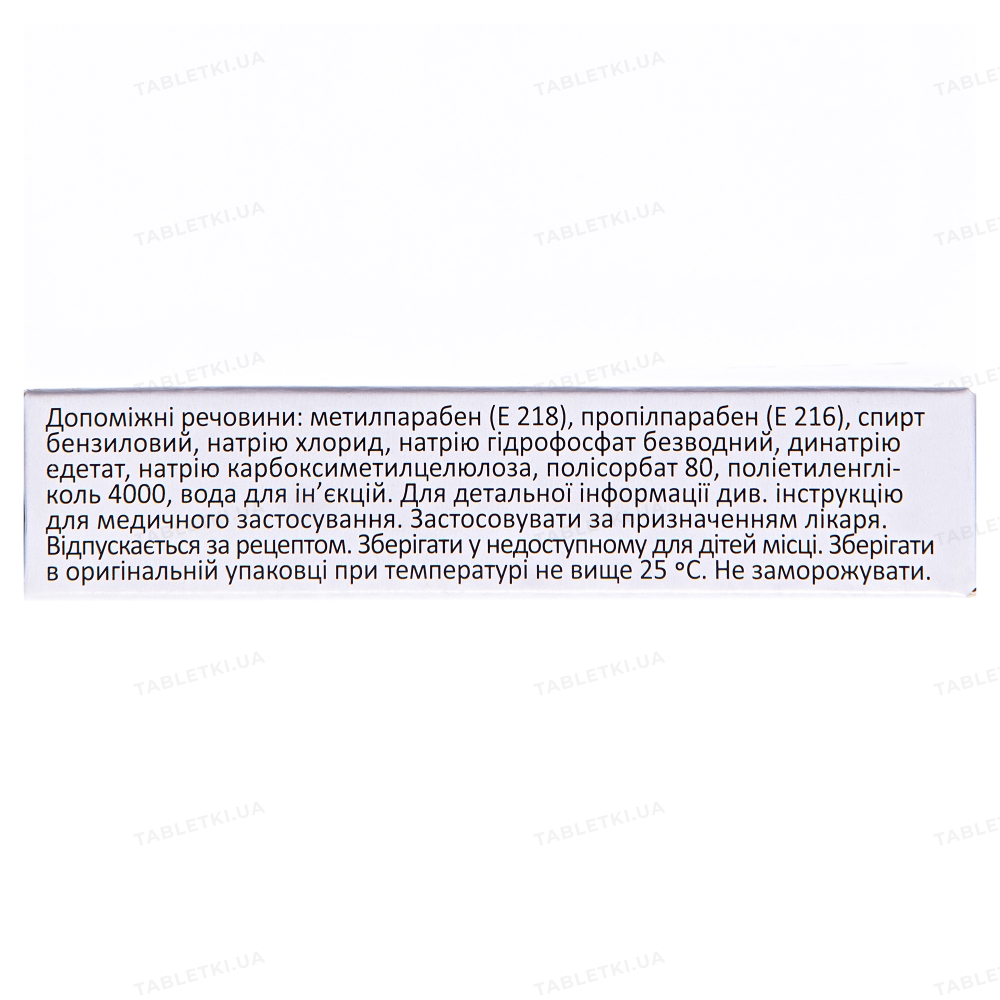
excipients: methylparaben (E 218), propylparaben (E 216), benzyl alcohol, sodium chloride, anhydrous sodium hydrophosphate, disodium edetate, sodium carboxymethylcellulose, polysorbate 80, polyethylene glycol 4000, water for injection.
Dosage Form
Suspension for injection.
Main physicochemical properties: a clear, colorless or yellowish liquid, slightly viscous, containing white or off-white particles that are easily suspended.
Pharmacotherapeutic group
Corticosteroids for systemic use.
ATC code H02A B01.
Pharmacological properties
Pharmacodynamics.
Depos is a combination of soluble and slightly soluble betamethasone esters for intramuscular, intra-articular, periarticular, intra-synovial, and intradermal injections, as well as for injections directly into the site of the lesion. Depos has high glucocorticosteroid activity and negligible mineralocorticosteroid activity.
Betamethasone has potent anti-inflammatory, antiallergic, and immunosuppressive effects.
Glucocorticosteroids diffuse across cell membranes and form complexes with specific cytoplasmic receptors. These complexes then enter the cell nucleus, bind to DNA (chromatin), and stimulate the transcription of messenger RNA and the subsequent synthesis of various enzyme proteins. These enzymes are ultimately responsible for the effects observed with the systematic use of glucocorticoids. In addition to their significant effects on inflammatory and immune processes, glucocorticoids also affect carbohydrate, protein, and lipid metabolism, the cardiovascular system, skeletal muscle, and the central nervous system.
Effects on Inflammatory and Immune Processes.
It is precisely the anti-inflammatory, immunosuppressive, and antiallergic properties of glucocorticoids that form the basis for their use in therapeutic practice. The main aspects of these properties are as follows: a reduction in the number of immune cells at the site of inflammation, a reduction in vasodilation, stabilization of lysosomal membranes, inhibition of phagocytosis, and a decrease in the production of prostaglandins and related compounds.
The anti-inflammatory effect is approximately 25 times greater than that of hydrocortisone and 8–10 times greater than that of prednisolone (by weight).
Effects on carbohydrate and protein metabolism.
Glucocorticoids stimulate protein catabolism. In the liver, the released amino acids are converted into glucose and glycogen through gluconeogenesis. Glucose absorption by peripheral tissues is reduced, leading to hyperglycemia and glucosuria, especially in patients predisposed to diabetes mellitus.
Effects on lipid metabolism.
Glucocorticoids have a lipolytic effect. This lipolysis is more pronounced in the extremities. In addition, they promote lipogenesis, which is particularly evident in the trunk, neck, and head. The complex effects of glucocorticoids are manifested through the redistribution of fat deposits.
The maximum pharmacological effect of corticosteroids occurs later than the peaks in serum levels, indicating that the action of these drugs consists primarily not of a direct pharmacological effect but of a modification of enzyme activity.
Pharmacokinetics.
Betamethasone sodium phosphate is a highly soluble component that is rapidly absorbed from the injection site, ensuring a rapid onset of therapeutic action.
Micronized betamethasone dipropionate is a poorly soluble component that is slowly absorbed from the depot formed at the injection site, resulting in the drug’s prolonged action.
| Blood Concentration | Intramuscular injection | |
| Betamethasone | ||
| Sodium phosphate | Dipropionate
Micronized |
|
| Maximum plasma concentration
Half-life in plasma after a single dose
Excretion
Biological half-life |
1 hour after administration
3 to 5 hours
24 hours
36–54 hours |
Slow absorption
Progressive metabolism
More than 10 days |
Plasma protein binding is 62.5%. Metabolized in the liver. Excreted primarily by the kidneys; a small portion is excreted in the bile.
Indications
Dermatological conditions
Atopic dermatitis (numular eczema), neurodermatitis, contact dermatitis, severe solar dermatitis, urticaria, lichen planus, insulin-induced lipodystrophy, alopecia areata, discoid lupus erythematosus, psoriasis, keloid scars, pemphigus vulgaris, herpetic dermatitis, cystic acne.
Rheumatic Diseases
Rheumatoid arthritis, osteoarthritis, bursitis, tenosynovitis, tendinitis, peritendinitis, ankylosing spondylitis, epicondylitis, radiculitis, coccydylitis, radiculitis, lumbago, torticollis, ganglion cyst, exostosis, fasciitis, acute gouty arthritis, synovial cysts, Morton’s disease, inflammation of the cuboid bone, foot disorders, bursitis associated with a hard callus, heel spurs, and stiffness of the big toe.
Allergic Conditions
Bronchial asthma, status asthmaticus, hay fever, severe allergic bronchitis, seasonal and non-seasonal allergic rhinitis, angioedema, contact dermatitis, atopic dermatitis, serum sickness, hypersensitivity reactions to medications or insect bites.
Collagen diseases
Systemic lupus erythematosus, scleroderma, dermatomyositis, nodular periarteritis.
Oncological diseases
Palliative treatment of leukemias and lymphomas in adults; acute leukemia in children.
Other conditions
Adrenogenital syndrome. Ulcerative colitis, Crohn’s disease, sprue. Pathological changes in the blood requiring corticosteroid therapy. Nephritis, nephrotic syndrome.
Primary and secondary adrenal insufficiency (requiring concomitant administration of mineralocorticoids).
Contraindications
Hypersensitivity to betamethasone, other components of the drug, or other glucocorticosteroids. Systemic mycoses. Intramuscular administration to patients with idiopathic thrombocytopenic purpura.
Drug Interactions and Other Interactions
Concomitant use of phenobarbital, rifampicin, phenytoin, or ephedrine may increase the drug’s metabolism, thereby reducing its therapeutic activity.
Patients receiving glucocorticosteroids should not be vaccinated against smallpox. Patients receiving corticosteroids (especially in high doses) should not receive any other immunizations due to the risk of neurological complications and a low immune response (failure to produce antibodies). In cases of replacement therapy (e.g., for Addison’s disease), immunization is possible.
Combination with diuretics, such as thiazides, may increase the risk of glucose intolerance.
Concomitant use of glucocorticosteroids and estrogens may require dose adjustment (due to the risk of overdose).
Concomitant use of Depos with diuretics that promote potassium excretion increases the likelihood of developing hypokalemia. Concomitant use of glucocorticosteroids and cardiac glycosides increases the risk of arrhythmia or digitalis intoxication (due to hypokalemia). Depos may enhance the potassium excretion induced by amphotericin B. In all patients receiving one of these drug combinations, serum electrolytes—particularly serum potassium—should be carefully monitored.
Concomitant use of Depo and indirect anticoagulants may alter blood clotting times, requiring dose adjustment.
Concomitant use of glucocorticosteroids with nonsteroidal anti-inflammatory drugs (NSAIDs) or ethanol and ethanol-containing medications may increase the frequency or severity of erosive and ulcerative lesions of the gastrointestinal tract.
When used concomitantly, glucocorticosteroids may reduce the plasma concentration of salicylates. When the dose of corticosteroids is reduced or treatment is discontinued, patients should be monitored for possible salicylic acid toxicity. The combination of corticosteroids with salicylates may increase the frequency and severity of gastrointestinal ulcers.
For patients with diabetes mellitus, it is sometimes necessary to adjust the dosage of oral antidiabetic medications or insulin, given that corticosteroids can cause hyperglycemia.
Concomitant use of glucocorticosteroids and somatotropin may slow the absorption of the latter. Doses of betamethasone exceeding 300–450 μg (0.3–0.45 mg) per 1 m² of body surface area per day should be avoided during somatotropin therapy.
Interactions with Laboratory Tests.
Corticosteroids may interfere with the nitro tetrazolium reduction test and produce false-negative results.
When a patient is undergoing treatment with corticosteroids, this must also be taken into account when interpreting biological parameters and test results (skin tests, thyroid hormones, etc.).
Special Considerations for Use
Serious neurological disorders, some of which were fatal, have been reported following epidural injection of corticosteroids. Other disorders included reports of spinal cord infarction, paraplegia, quadriplegia, cortical blindness, and stroke. These serious neurological disorders have been observed both with and without fluoroscopy. Since the safety and efficacy of epidural anesthesia have not been established, corticosteroids are not recommended for epidural anesthesia.
Depos suspension is not intended for intravenous or subcutaneous administration.
Strict adherence to aseptic techniques is mandatory when using this medication.
Any injection of the drug (into soft tissues, lesions, intra-articularly, etc.) may result in systemic effects accompanied by pronounced local effects.
Abrupt discontinuation or dose reduction during continuous use (in the case of very high doses, after a short period of use) or an increased need for corticosteroids (due to stress: infection, trauma, or surgery) may exacerbate adrenal insufficiency. In this case, the dose must be tapered gradually. During periods of stress, it may sometimes be necessary to resume corticosteroid therapy or increase the dose. The dose should be tapered under strict medical supervision, and in some cases, the patient’s condition must be monitored for up to one year after discontinuation of long-term treatment or use of high doses.
Rare cases of anaphylactoid reactions have been observed in patients receiving parenteral corticosteroids; Therefore, appropriate precautions should be taken before administering the drug, particularly if the patient has a history of allergy to any of the drug’s components.
During long-term corticosteroid therapy, the possibility of switching from parenteral to oral administration should be considered after evaluating the potential benefits and risks.
Intramuscular injections of glucocorticosteroids should be administered deep into the muscle to prevent local tissue atrophy.
Intra-articular injections should be performed only by medical personnel. Analysis of the synovial fluid is necessary to rule out a septic process. The drug should not be administered in the presence of an intra-articular infection. Marked increase in pain, swelling, elevated temperature of the surrounding tissues, and subsequent limitation of joint mobility are indicative of septic arthritis. If the diagnosis is confirmed, antibiotic therapy should be prescribed. Glucocorticosteroid injections should not be administered into unstable joints, infected areas, or intervertebral spaces. Repeated injections into a joint in cases of osteoarthritis may increase the risk of joint destruction. Corticosteroid injections should be avoided directly into tendons, as minor tears may occur later. After successful intra-articular therapy, the patient should avoid overloading the joint.
A corticosteroid injection into soft tissues, the site of the lesion, or around the joint may cause systemic and local effects.
Special Patient Populations
In patients with diabetes mellitus, betamethasone may be used only for a short period and only under strict medical supervision, given its glucocorticoid properties (conversion of proteins to glucose).
The effects of glucocorticosteroids are enhanced in patients with hypothyroidism or liver cirrhosis. The use of Depo-Medrol should be avoided in patients with herpetic eye lesions (due to the risk of corneal perforation).
Psychiatric disorders may occur during treatment (especially in patients with emotional instability or a predisposition to psychosis).
Precautions are necessary in the following cases: ulcerative colitis, risk of perforation, abscess, or other purulent infections; diverticulitis; intestinal anastomoses; gastric and duodenal ulcers; renal failure; hypertension; osteoporosis; severe myasthenia gravis; glaucoma; acute psychosis; viral and bacterial infections; growth retardation; tuberculosis; Cushing’s syndrome; diabetes; heart failure; in cases of complex, treatable epilepsy; predisposition to thromboembolism or thrombophlebitis; during pregnancy.
Patients receiving glucocorticosteroids should not be vaccinated against smallpox. Patients receiving corticosteroids (especially in high doses) should not receive any other vaccinations due to the risk of neurological complications and a weak immune response (failure to produce antibodies). In cases of replacement therapy (e.g., for Addison’s disease), immunization is possible.
Patients, particularly children, receiving Depo in doses that suppress the immune system should avoid contact with individuals who have chickenpox or measles.
Corticosteroids may mask certain signs of infectious disease. New infections may occur due to reduced resistance during treatment.
Prescribing this medication for active tuberculosis is permitted only in cases of transient or disseminated tuberculosis, in combination with adequate antituberculosis therapy. If corticosteroids are prescribed to patients with latent tuberculosis or those who test positive for tuberculin, special monitoring is required, as a recurrence of the disease is possible. During long-term corticosteroid therapy, patients should also receive chemoprophylaxis. If rifampin is used in a chemoprophylaxis regimen, the dosage of corticosteroids may need to be adjusted because rifampin can increase the drug’s metabolism.
Long-term use of glucocorticosteroids may lead to the development of posterior subcapsular cataracts (especially in children) and glaucoma with possible optic nerve damage, and may contribute to the development of secondary ocular infections (fungal or viral). Regular ophthalmological examinations are necessary, especially in patients receiving Depos for more than six weeks.
Moderate and high doses of corticosteroids may cause an increase in blood pressure, fluid and sodium retention in tissues, and increased potassium excretion (which may manifest as edema or cardiac abnormalities). A low-salt diet and supplemental potassium preparations are recommended.
Caution should be exercised when taking acetylsalicylic acid in combination with this medication in cases of hypoprothrombinemia due to the potential for increased bleeding.
It is also important to be aware of the possibility of secondary adrenal insufficiency developing within several months after the end of therapy.
Cases of pheochromocytoma crisis, including fatal outcomes, have been reported. Patients with confirmed or suspected pheochromocytoma should be prescribed corticosteroids only after an appropriate assessment of the benefit-risk ratio.
The use of glucocorticosteroids may alter sperm motility and count.
This medication contains less than 1 mmol (23 mg) of sodium per dose, i.e., it is essentially sodium-free.
The excipients methylparaben (E 218) and propylparaben (E 216) may cause allergic reactions (possibly delayed) and, in rare cases, bronchospasm.
Pregnancy and lactation.
Due to the lack of controlled safety studies in pregnant women, breastfeeding women, and women of childbearing age, the drug should be prescribed only after a careful assessment of the balance between the benefit to the mother and the potential risk to the fetus or infant.
In some cases, it may be necessary to administer a course of corticosteroid treatment during pregnancy or even to increase the dosage (for example, in the case of corticosteroid replacement therapy).
Intramuscular administration of betamethasone results in a significant reduction in the incidence of fetal dyspnea if the drug is administered more than 24 hours before delivery (up to the 32nd week of pregnancy).
Corticosteroids should not be prescribed for the treatment of hyaline membrane disease after birth.
In the case of prophylactic treatment of hyaline membrane disease in preterm newborns, there is no need to prescribe corticosteroids to pregnant women with preeclampsia and eclampsia or with placental abnormalities.
Studies have shown an increased risk of neonatal hypoglycemia following a short antenatal course of betamethasone in women at risk for late preterm delivery.
Infants born to mothers who received high doses of corticosteroids during pregnancy should be monitored for early signs of adrenal insufficiency.
Corticosteroids cross the placental barrier and pass into breast milk.
Because corticosteroids cross the placenta, newborns and infants whose mothers received corticosteroids during most or part of their pregnancy should be carefully examined for possible congenital cataracts.
If Depos must be prescribed during lactation, discontinuation of breastfeeding should be considered, taking into account the importance of the therapy for the mother (due to possible adverse side effects in infants).
Women who received corticosteroids during pregnancy should be monitored during labor for adrenal insufficiency due to the stress of childbirth.
Affects the ability to operate vehicles and machinery.
Depos generally does not affect a patient’s reaction time while driving or operating machinery.
However, in rare cases, muscle weakness, seizures, visual disturbances, dizziness, headache, mood changes, depression (with severe psychotic reactions), and increased irritability may occur; therefore, it is recommended to refrain from driving or operating machinery during treatment with this medication.
Administration and Dosage
Depos is recommended for intramuscular administration when systemic delivery of a glucocorticosteroid is necessary; directly into affected soft tissues or as intra-articular and periarticular injections for arthritis; as intradermal injections for various skin conditions; or as local injections into the affected area for certain foot conditions.
The dosing regimen and method of administration are determined by the physician on an individual basis, depending on the indications, the severity of the disease, and the patient’s response to treatment. The dose should be as low as possible, and the duration of treatment should be as short as possible.
The dose should be adjusted to achieve a satisfactory clinical effect. If a satisfactory clinical effect is not observed within a certain period of time, treatment with the drug should be discontinued by gradually reducing the dose, and another appropriate therapy should be initiated.
In the event of a positive response, the appropriate dose should be determined by gradually reducing the initial dose at appropriate intervals until the lowest dose producing an adequate clinical response is reached.
Depos Suspension is not intended for intravenous or subcutaneous administration.
Systemic Use
The initial dose of the drug is 1–2 mL in most cases. If necessary, the dose may be repeated, depending on the patient’s condition. The drug should be administered deep intramuscularly into the buttock:
- in severe conditions (lupus erythematosus and status asthmaticus) requiring emergency treatment, the initial dose may be 2 mL;
- for various dermatological conditions, 1 mL of the drug is usually sufficient;
- For diseases of the respiratory system, the drug’s effect begins within a few hours after intramuscular administration. For bronchial asthma, hay fever, allergic bronchitis, and allergic rhinitis, significant improvement is achieved after administration of 1–2 mL of the drug;
- For acute and chronic bursitis, the dose for intramuscular administration is 1–2 mL of the drug. If necessary, several repeat injections are administered.
Topical Use
Concomitant use of a local anesthetic is necessary only in rare cases (the injection is virtually painless). If concurrent administration of an anesthetic is required, use a 1% or 2% solution of procaine hydrochloride or lidocaine, or similar local anesthetics, using formulations that do not contain parabens. Do not use anesthetics containing methylparaben, propylparaben, phenol, or other similar substances. When using an anesthetic in combination with Depos, first draw the required dose of the drug into the syringe from the vial, then draw the required amount of local anesthetic from the ampoule into the same syringe and shake the syringe briefly.
In cases of acute bursitis (subdeltoid, subscapular, olecranon, and anterior patellar), an injection of 1–2 mL of Depos into the synovial bursa relieves pain and fully restores mobility within a few hours.
Treatment of chronic bursitis should be carried out with lower doses of the drug after the acute attack has been relieved.
In cases of acute tendovaginitis, tendinitis, and peritendinitis, a single injection of Depos alleviates the patient’s condition; in cases of chronic tendovaginitis, the injection should be repeated depending on the patient’s response. Injection directly into the tendons must be avoided.
In cases of rheumatoid polyarthritis and osteoarthritis, intra-articular administration of the drug at a dose of 0.5–2 mL reduces pain, tenderness, and joint stiffness within 2–4 hours after administration. The duration of the drug’s therapeutic effect varies significantly and may last 4 weeks or longer.
The recommended doses for injection into large joints are 1–2 mL; into medium-sized joints, 0.5–1 mL; and into small joints, 0.25–0.5 mL.
For dermatological conditions, an intradermal injection of the drug directly into the affected area is effective. Inject 0.2 mL/cm² of Depos into the skin (not under the skin) using a tuberculin syringe and a needle with a diameter of approximately 0.9 mm. The total amount of the drug injected into the injection site should not exceed 1 mL.
For foot conditions responsive to corticosteroids. Bursitis under a callus can be treated with two consecutive injections of 0.25 mL each. For conditions such as stiffness of the big toe, varus deformity of the little toe, and acute gouty arthritis, relief may occur very quickly.
Recommended single doses of Depos (with a 1-week interval between injections): for a hard callus—0.25–0.5 mL; for a heel spur—0.5 mL; for stiffness of the big toe—0.5 mL; for a varus-deformed little toe—0.5 mL; for a synovial cyst—0.25 to 0.5 mL; for tendovaginitis—0.5 mL; for inflammation of the cuboid bone—0.5 mL; for acute gouty arthritis—0.5 to 1 mL. For administration, it is recommended to use a tuberculin syringe with a needle approximately 1 mm in diameter.
If a stressful situation (not related to the disease) arises or is imminent, an increase in the dose of the drug may be required.
Discontinuation of the drug after long-term therapy should be carried out by gradually reducing the dose. Monitoring of the patient’s condition should continue for at least one year after the end of long-term therapy or after use of the drug in high doses.
Children.
There is insufficient clinical data on the use of this medication in children; therefore, its use in this age group is not recommended (growth retardation and the development of secondary adrenal insufficiency are possible).
Overdose
Acute overdose with betamethasone does not pose a life-threatening risk. Taking high doses of glucocorticosteroids for several days does not lead to adverse effects (except in cases of very high doses or when used in patients with diabetes mellitus, glaucoma, exacerbation of erosive or ulcerative lesions of the gastrointestinal tract, or when used in patients concurrently receiving cardiac glycosides, indirect anticoagulants, or potassium-depleting diuretics).
Treatment. Close medical monitoring of the patient’s condition is required. Optimal fluid intake must be maintained, and plasma and urine electrolytes (especially sodium and potassium balance) must be monitored. If an imbalance of these ions is detected, appropriate therapy should be administered.
Side Effects
Side effects, as with other glucocorticosteroids, depend on the dose and duration of treatment. These reactions are generally reversible and can be reduced by lowering the dose.
Fluid and electrolyte imbalances: sodium retention, increased potassium excretion, hypokalemic alkalosis, increased calcium excretion, fluid retention in tissues.
Cardiovascular disorders: congestive heart failure in patients predisposed to this condition; hypertension.
Musculoskeletal disorders: muscle weakness, myopathy, loss of muscle mass, worsening of myasthenic symptoms in severe pseudoparalytic myasthenia gravis, osteoporosis, sometimes accompanied by severe bone pain and spontaneous fractures (vertebral compression fractures), aseptic necrosis of the femoral or humeral heads, pathological fractures of long bones, tendon ruptures, joint instability (following repeated injections).
Gastrointestinal system: hiccups, erosive and ulcerative lesions of the stomach with possible perforation and bleeding, esophageal ulcers, pancreatitis, flatulence, intestinal perforation, nausea, vomiting.
Skin and subcutaneous tissue disorders: impaired wound healing, skin atrophy, thinning and weakening of the skin, petechiae and ecchymoses, bruises, facial erythema, increased sweating, skin reactions such as allergic dermatitis, urticaria, angioedema.
Neurological disorders: seizures, increased intracranial pressure with optic disc edema (pseudo-cerebral edema), usually after completion of treatment, dizziness, headache, migraine, euphoria, mood changes, personality changes, and severe depression, increased irritability, insomnia, psychotic reactions—particularly in patients with a history of psychiatric disorders—and depression.
Endocrine disorders: menstrual cycle disorders, clinical symptoms of Cushing’s syndrome, intrauterine growth restriction or growth retardation in children, impaired carbohydrate tolerance, manifestations of latent diabetes mellitus, increased need for insulin injections or oral antidiabetic agents in patients with diabetes mellitus.
Ocular: posterior subcapsular cataract, increased intraocular pressure, glaucoma, exophthalmos.
Metabolic disorders: negative nitrogen balance due to protein catabolism; lipomatosis, including mediastinal and epidural lipomatosis, which may lead to neurological complications; weight gain.
Immune system disorders: Corticosteroids may suppress skin tests, mask symptoms of infection, and activate latent infections, as well as reduce resistance to infections such as mycobacteria, Candida albicans, and viruses.
Lymphatic system disorders: anaphylactic reaction or hypersensitivity reaction to administration of the drug and hypotensive reaction.
General and injection-related disorders: isolated cases of blindness associated with local application to the face and head, hyper- or hypopigmentation, subcutaneous and cutaneous atrophy, aseptic abscesses, exacerbation following injection (intra-articular administration), and Charcot arthropathy. Secondary suppression of the pituitary gland and adrenal cortex during stress (trauma, surgery, or illness).
Joint damage is possible following repeated intra-articular administration. There is a risk of infection.
Shelf life
2 years.
Do not use the drug after the expiration date indicated on the package.
Storage conditions
Store in the original packaging at a temperature not exceeding 25 °C. Do not freeze.
Keep out of reach of children.
Incompatibility
This medication may be mixed in the same syringe with local anesthetics (see the “Dosage and Administration” section); however, compatibility should always be verified.
Packaging
1 mL per ampoule. 1 or 5 ampoules per blister pack. 1 blister pack per package. 1 mL in a pre-filled syringe. 1 pre-filled syringe, complete with 2 needles, in a blister pack. 1 blister pack per package.
Manufacturer
Farmak JSC.
Manufacturer’s location and business address.
Ukraine, 04080, Kyiv, 74 Kyrylovska St.