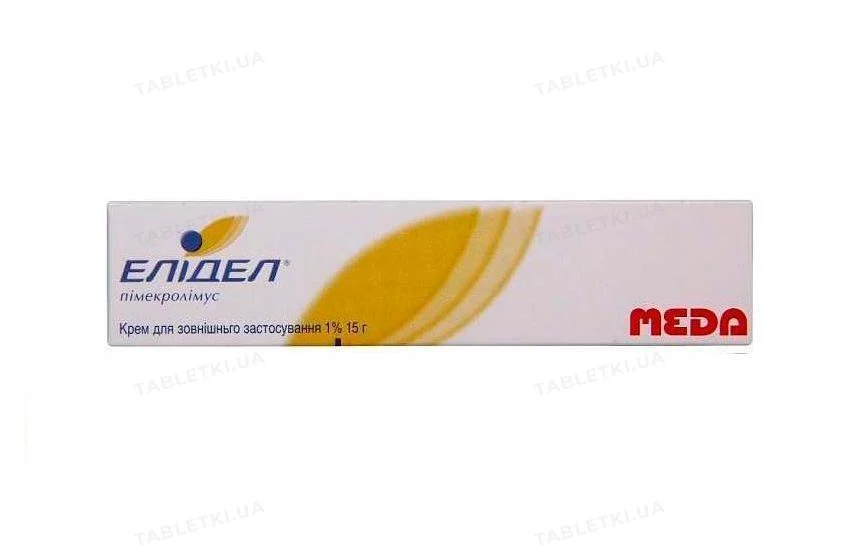
Elidel Cream for External Use, 10 mg/g, 15 g per tube
Composition
Active ingredient: pimecrolimus;
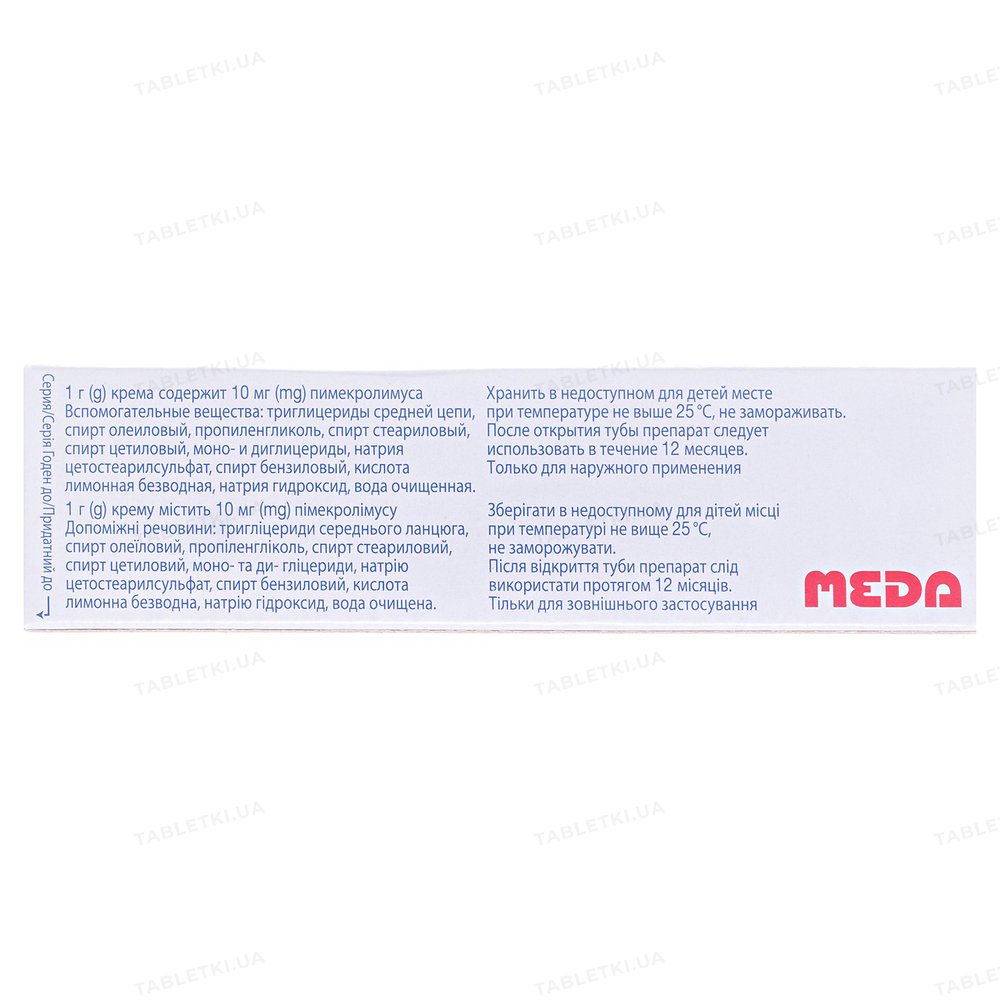
1 g of cream contains 10 mg of pimecrolimus;
excipients: sodium hydroxide, anhydrous citric acid, benzyl alcohol, sodium cetostearyl sulfate, mono- and di-glycerides, cetyl alcohol, stearyl alcohol, propylene glycol, oleyl alcohol, medium-chain triglycerides, purified water.
Dosage Form
Cream for external use.
Main physical and chemical properties: a whitish, homogeneous cream.
Pharmacotherapeutic group
Dermatological agents. Agents used in atopic dermatitis, excluding corticosteroids.
ATC code D11A H02.
Pharmacological properties
Pharmacodynamics.
Mechanism of action
Pimecrolimus is a lipophilic derivative of the anti-inflammatory compound ascomycin macrolactam and a selective inhibitor of the formation and release of cytokines, which are mediators of inflammation.
Pimecrolimus binds highly specifically to macrophilin-12 and inhibits the calcium-dependent phosphatase calcineurin. As a result, it blocks the synthesis of inflammatory cytokines in T-lymphocytes.
Pharmacodynamic Action
Pimecrolimus has demonstrated high anti-inflammatory activity in animal models of skin inflammation following topical and systemic administration. In a model of allergic contact dermatitis in pigs, pimecholimus was as effective as potent corticosteroids when applied topically. Unlike corticosteroids, pimecrolimus does not cause skin atrophy in pigs, nor does it affect Langerhans cells in the skin of mice.
Pimecrolimus does not suppress the primary immune response and does not affect lymph nodes when used to treat allergic contact dermatitis in mice. When applied topically, it also penetrates human skin, although much less deeply than corticosteroids, indicating that pimecrolimus has a very low potential for systemic absorption.
Thus, the pharmacological action of pimecrolimus is selective for the skin and distinct from that of corticosteroids.
Clinical Efficacy and Safety
The efficacy and safety profile of Elidel® was evaluated in over 2,000 patients, including children aged ≥ 3 months and adults, who participated in Phase II and III studies. More than 1,500 of these patients used Elidel®, and more than 500 used a control treatment, i.e., either the Elidel® vehicle and/or topical corticosteroids.
Short-term therapy
Children aged 2–17 years: Two 6-week placebo-controlled studies were conducted, involving a total of 403 patients aged 2–17 years. Patients applied Elidel® twice daily. Data from both studies were pooled.
Children aged 3–23 months: A similar study was conducted involving 186 patients aged 3–23 months.
The results of the efficacy evaluation in these three six-week studies and the endpoints are shown in the table below.
|
Endpoint |
Criterion |
Children aged 2–17 years | Children aged 3–23 months | ||||
| Elidel® 1%
(N = 267) |
Placebo
(N = 136) |
|
Elidel® 1%
(N = 123) |
Placebo
(N = 63) |
|
||
| ZOD* | Complete or nearly complete clearance¹ | 34.8% | 18.4% | < 0.001 | 54.5% | 23.8% | < 0.001 |
| ZOD* | Improvement2 | 59.9% | 33% | Not evaluated | 68% | 40% | Did not rate |
| Itching | None or mild | 56.6% | 33.8% | < 0.001 | 72.4% | 33.3% | < 0.001 |
| IUTE° | Overall assessment (mean % change)3 |
|
|
< 0.001 |
|
+7.35 | < 0.001 |
| IUT° | Head/neck (mean % change)3 |
|
+0.6 | < 0.001 |
|
+31.48 | < 0.001 |
| * Overall assessment provided by the investigator (OAI).
° Eczema Area and Severity Index (EASI): mean % change in the severity of clinical signs (erythema, infiltration, excoriation, lichenification) and affected body area. 1 The p-value is based on the Cochrane–Mantel–Henszel (CMH) test with center-stratified analysis. 2 That is, the ZOD is lower than before enrollment in the study. 3 The p-value is based on a model of analysis of covariance (ANCOVA) for EASI scores on Day 43, taking the study center and treatment type as factors and the baseline ITC score (on Day 1) as a covariate. |
|||||||
A statistically significant reduction in itch intensity was observed during the first week of treatment in 44% of children aged 2–17 years and in 70% of children aged 3–23 months.
Adults: Elidel® was less effective than 0.1% betamethasone-17-valerate in short-term therapy (3 weeks) for adults with moderate-to-severe atopic dermatitis.
Long-term therapy
Two double-blind studies were conducted to evaluate the long-term treatment of atopic dermatitis, involving 713 children aged 2–17 years and 251 children aged 3–23 months. Patients applied Elidel® twice daily. Data from both studies were pooled. Elidel® was used as a first-line treatment.
Elidel® was initiated at the first signs of itching and redness to prevent progression to a flare-up of atopic dermatitis. Only in cases of a severe flare-up that could not be controlled with Elidel® was treatment initiated with moderate-potency topical corticosteroids. Once treatment with corticosteroids was initiated due to an exacerbation, further use of Elidel® was discontinued. Patients in the control group used the Elidel® vehicle to ensure data masking.
Both studies demonstrated a statistically significant reduction in the frequency of flare-ups (p < 0.001) with the use of 1% pimecrolimus cream; treatment with 1% pimecrolimus cream was more effective across all secondary endpoints (area and severity index of eczema, investigator’s global assessment, and patient’s global assessment);; with the use of 1% pimecrolimus cream, itch control was achieved within one week. A greater number of patients treated with 1% pimecrolimus cream remained relapse-free for 6 months (children aged 2–11 years [61% in the Elidel® group compared with 34% in the control group], children aged 3–23 months [70% in the Elidel® group compared with 33% in the control group]), and 12 months (children aged 2–11 years [51% in the Elidel® group compared with 28% in the control group], children aged 3–23 months [57% in the Elidel® group compared with 28% in the control group]).
Elidel® reduces the need for topical corticosteroids: a greater number of patients treated with 1% pimecrolimus cream did not require corticosteroids for 12 months (children aged 2–11 years [57% in the Elidel® group compared with 32% in the control group], children aged 3–23 months [64% in the Elidel® group compared with 35% in the control group]). The efficacy of 1% pimecrolimus cream remained consistent over time.
A 6-month randomized, double-blind, parallel-group, placebo-controlled study with the same design was conducted involving 192 adults with moderate-to-severe atopic dermatitis. Topical corticosteroids were required on 14.2 ± 24.2% of the days during the 24-week treatment period in the Elidel® group and on 37.2 ± 34.6% of the days in the control group (p < 0.001). Overall, 50.0% of patients using 1% pimecrolimus cream experienced no flare-ups, compared with 24.0% of patients randomized to the control group.
A one-year double-blind study involving adults with moderate-to-severe atopic dermatitis was conducted to compare the results of treatment with Elidel® and 0.1% triamcinolone acetonide cream (for the trunk and extremities) plus 1% hydrocortisone acetate cream (for the face, neck, and areas of skin contact). Both 1% pimecrolimus cream and topical corticosteroids were used without restrictions. Half of the patients in the control group used topical corticosteroids on more than 95% of the days they participated in the study. The efficacy of 1% pimecrolimus cream was lower than that of 0.1% triamcinolone acetonide cream (for the trunk and extremities) plus 1% hydrocortisone acetate cream (for the face, neck, and areas of skin contact) in long-term therapy (52 weeks) of adults with moderate-to-severe atopic dermatitis.
Safety with Long-Term Use
A 5-year, open-label, randomized, active-controlled study involving 2,418 children aged 3 to less than 12 months at the time of enrollment with mild to moderate atopic dermatitis (AD). The primary objective was to compare safety as assessed by adverse events (AEs), as well as the effect of therapy on immune system development and growth rate. Children aged 3–23 months were randomized to the Elidel® group (n = 1,205; short-term use of topical corticosteroids (TCS) for disease flare-ups) or to the low-/moderate-potency topical corticosteroids (TCS; n = 1,213) group.
Elidel® was well tolerated by patients with mild to moderate AD aged 3 to 12 months at the start of the study. The profile and frequency of adverse events were similar in both treatment groups. No deterioration in systemic immune parameters was observed in patients with AD treated with 1% pimecrolimus cream or MCS; a normal immune response was observed, and vaccination using vaccine antigens was also effective for them. There was no apparent difference in growth rates.
Specialized Studies
Tolerability studies demonstrated that Elidel® does not cause sensitization upon contact, does not have phototoxic or photosensitizing effects, and does not cause cumulative irritation.
The atrophogenic potential of Elidel® during therapeutic use was evaluated in comparison with moderate- and potent-strength topical steroids (betamethasone-17-valerate, 0.1% cream, triamcinolone acetonide, 0.1% cream) and a cream base in a four-week study involving 16 healthy volunteers. Both topical corticosteroids caused a statistically significant reduction in skin thickness, as measured by ultrasound, compared with 1% pimecrolimus cream and the cream vehicle, which did not cause a reduction in skin thickness.
Children
The results of relevant studies conducted in children aged 3–23 months and 2–17 years are described in detail above in the “Pharmacodynamics” section.
Pharmacokinetics.
Data obtained in humans
Absorption in Adults
The systemic absorption parameters of pimecrolimus were studied in 12 adults with atopic dermatitis who applied Elidel® twice daily for three weeks. The body surface area (BSA) affected by the disease ranged from 15% to 59%. In 77.5% of samples, the concentration of pimecrolimus in the blood was less than 0.5 ng/mL, and in 99.8% of all samples, it was less than 1 ng/mL. The highest blood concentration of pimecrolimus was 1.4 ng/mL in one patient.
In 40 adult patients who used Elidel® for one year, with 14–62% of the body surface area prior to treatment, the concentration of pimecrolimus in the blood was below 0.5 ng/mL in 98% of samples. The maximum blood concentration, 0.8 ng/mL, was observed in only two patients after six weeks of therapy. Over the course of 12 months of therapy, no increase in blood concentration was observed in any patient. In eight adult patients with atopic dermatitis for whom it was possible to quantify the AUC, the AUC(0–12 h) values ranged from 2.5 to 11.4 ng·h/mL.
Absorption in Pediatric Patients
Systemic exposure parameters of pimecrolimus were studied in 58 children aged 3 months to 14 years, of whom 41 were under 2 years of age. The affected body surface area ranged from 10–92%. Elidel® was administered to these children twice daily for three weeks. Five (8.6%) of the 58 patients received treatment for up to one year as needed; two of these patients were aged ³ 3 to ≤ 6 months, and three others were aged > 6 to ≤ 2 months.
Pimecrolimus blood concentrations remained consistently low regardless of the affected body surface area or duration of treatment. The values were within the range established for adult patients.
In approximately 67% of samples, the blood concentration of pimecrolimus was less than 0.5 ng/mL, and in 93% of all samples collected from children aged 3 to 23 months, it was below 2 ng/mL.
In children aged ³ 3 – ≤ 6 months, the concentration of pimecrolimus was below 0.5 ng/mL in 31% of blood samples and below 2.0 ng/mL in 90% of samples; the highest blood concentration was 4.14 ng/mL in one sample, but contamination during venipuncture is suspected.
In children aged > 6 – ≤ 12 months, the concentration of pimecrolimus was below 0.5 ng/mL in 66% of blood samples and below 2.0 ng/mL in 90% of samples; with the highest blood concentration being 2.6 ng/mL in one sample.
In children aged > 12–< 24 months, the concentration of pimecholimus was below 0.5 ng/mL in 80% of blood samples and below 2.0 ng/mL in 97% of samples; the highest pimecholimus concentration in the blood of patients in this age group was 2.0 ng/mL in one sample.
In five children who received treatment for one year—two of whom were aged ³ 3 – ≤ 6 months and three of whom were aged > 6 to ≤ 12 months—blood concentrations remained consistently low; with the maximum blood concentration being 1.94 ng/mL in a single sample collected from a child aged ³ 3 – ≤ 6 months. There was no increase in blood concentration over time in any of the patients during the 12 months of therapy.
In children aged 2 to 14 years, pimecholimus blood concentrations were below 0.5 ng/mL in 68% of samples and below 2.0 ng/mL in 99% of all samples; with the highest blood concentration, measured in one patient, being 2.0 ng/mL.
In eight children aged 2–14 years, AUC(0–12 h) values ranged from 5.4 to 18.8 ng·h/mL. AUC values in patients with < 40% of the body surface area affected prior to treatment were comparable to those in patients with ³ 40% of the body surface area affected.
The maximum body surface area treated was 92% in clinical pharmacology studies and up to 100% in Phase III studies.
Distribution
Due to its selective cutaneous action upon topical application, the concentration of pimecrolimus in the blood is very low. Therefore, the metabolic conversion of pimecrolimus upon topical application cannot be assessed.
In vitro studies of plasma protein binding indicate that 99.6% of pimecholimus in plasma is bound to proteins. The majority of pimecholimus in plasma is bound to various lipoproteins.
Biotransformation
Following a single oral dose of radionuclide-labeled pimecrolimus in adult patients, unchanged pimecrolimus was the major component associated with the active substance in the blood; and numerous minor metabolites of moderate polarity were also detected, which are presumed to be products of O-demethylation and oxidation. No metabolic conversion of pimecrolimus was observed in human skin in vitro.
Elimination
Following oral administration, radioactivity associated with the active substance was excreted predominantly in the feces (78.4%) and only a small fraction (2.5%) in the urine. The total mean recovery of radioactivity was 80.9%. The parent compound was not detected in urine, and less than 1% of the radioactivity in feces was attributable to pimecholimus in its unchanged form.
Indications
Treatment of patients aged 3 months and older with mild to moderate atopic dermatitis when treatment with topical corticosteroids is undesirable or not possible. This may include:
- intolerance to topical corticosteroids;
- insufficient response to topical corticosteroids;
- the need for use on the face and neck, where prolonged intermittent use of corticosteroids may be inappropriate.
Contraindications
Hypersensitivity to pimecrolimus, other macrolactams, or any other components of the drug.
Drug Interactions and Other Interactions
Possible interactions of pimecrolimus with other medications have not been systematically evaluated. Pimecrolimus is metabolized exclusively by CYP4503A4. Given the minimal absorption of Elidel®, its interaction with systemically administered drugs is unlikely.
These data indicate that pimecrolimus can be used concomitantly with antibiotics, antihistamines, and corticosteroids (oral, nasal, or inhaled).
Given the minimal absorption of Elidel®, systemic interactions with vaccination are unlikely. For patients with extensive or disseminated forms of the disease, vaccination is recommended during treatment-free periods.
The use of pimecrolimus at vaccination sites while local reactions persisted has not been studied and is therefore not recommended. A 5-year study was conducted involving children with mild to moderate atopic dermatitis who were between 3 months and less than 12 months of age at the time of enrollment. In patients with atopic dermatitis who received Elidel® cream or topical corticosteroids, a normal immune response and the development of effective immunization against vaccine antigens were observed.
There are no data on the concomitant use of immunosuppressive agents prescribed for atopic eczema, such as ultraviolet B (UVB) and ultraviolet A (UVA) radiation, PUVA therapy (psoralen and ultraviolet A irradiation), azathioprine, and cyclosporine A.
When used in animals, pimecrolimus did not demonstrate photocarcinogenic potential. However, since the effects in humans are unknown, excessive exposure of the skin to ultraviolet radiation (including the use of tanning beds, ultraviolet B and A radiation therapy, and PUVA therapy) should be avoided during treatment with pimecrolimus.
Rare cases of redness, rash, burning sensation, itching, or swelling have been observed immediately after alcohol consumption in patients using pimecrolimus cream (see the “Adverse Reactions” section).
Special Considerations for Use
Pimecrolimus cream is not recommended for patients with congenital or acquired immunodeficiency or for patients receiving treatment with immunosuppressive agents.
The long-term effects on the local immune response of the skin and the incidence of malignant skin diseases are unknown. Pimecrolimus should not be applied to potentially malignant lesions or areas of skin affected by precancerous conditions.
Pimecrolimus should not be applied to skin areas affected by acute viral infections (herpes simplex, chickenpox).
The efficacy and safety of Elidel® have not been evaluated in the treatment of clinically infected atopic dermatitis. Before starting treatment with Elidel®, infected areas must be treated.
Since patients with atopic dermatitis are prone to superficial skin infections, including herpetic eczema (Kaposi’s herpetiform eczema), treatment with pimecrolimus may increase the risk of herpes simplex virus infection or the development of herpetic eczema. In such cases, treatment with Elidel® should be discontinued until the viral infection has resolved.
Patients with acute atopic dermatitis are at increased risk of developing bacterial skin infections (impetigo) during treatment with pimecrolimus.
Use of Elidel® may cause mild, transient reactions at the application site, such as a sensation of warmth and/or burning (see the “Adverse Reactions” section). Patients should inform their doctor if reactions at the application site are too severe.
Avoid contact with the eyes and mucous membranes. If the product accidentally comes into contact with these areas, it should be thoroughly wiped off and/or rinsed with water.
The doctor should advise the patient on appropriate measures to protect against sun exposure, such as limiting time in the sun, using sunscreen, and covering the skin with clothing (see the “Interactions with Other Medications and Other Interactions” section).
Elidel® contains the active ingredient pimecrolimus, a calcineurin inhibitor. In patients who have undergone transplantation and in those who have received long-term systemic immunosuppressants, systemic use of calcineurin inhibitors is associated with an increased risk of lymphomas and malignant skin diseases.
Cases of malignancies, including cutaneous and other forms of lymphoma and malignant skin tumors, have also been reported in patients using pimecrolimus cream (see the “Adverse Reactions” section). However, no significant systemic levels of pimecrolimus have been detected in patients with atopic dermatitis treated with Elidel®.
In clinical studies, 14 out of 1,544 (0.9%) cases of lymphadenopathy were reported with the use of Elidel® cream, 10 mg/g (see the “Adverse Reactions” section). These cases of lymphadenopathy were generally associated with infections and were noted to resolve following appropriate antibiotic therapy. In most of these 14 cases, the lymphadenopathy had a clear etiology and, as noted above, resolved. In patients receiving Elidel® cream, 10 mg/g, who develop lymphadenopathy, the etiology of the lymphadenopathy should be investigated. In the absence of a clear cause for the lymphadenopathy or in the presence of acute infectious mononucleosis, treatment with pimecrolimus should be discontinued. Patients who develop lymphadenopathy should be monitored to ensure that the lymphadenopathy resolves.
Patient groups with a potentially higher risk of systemic effects. No studies have been conducted on the use of Elidel® in patients with Neserton syndrome. Due to the possibility of increased systemic absorption of pimecrolimus, the use of Elidel® in patients with Neserton syndrome is not recommended.
Since the safety of pimecrolimus in patients with erythroderma has not been evaluated, the use of Elidel® in this patient group is not recommended.
The use of Elidel® under an occlusive dressing has not been studied. It is not recommended to apply the medication under an occlusive dressing.
In patients with acute inflammatory skin conditions and/or skin damage, systemic concentrations may be higher.
Elidel® contains cetyl and stearyl alcohols, which may cause local skin reactions (e.g., contact dermatitis). Elidel® also contains 10 mg of benzyl alcohol per 1 g of cream, which may cause allergic reactions and mild local irritation. Elidel® also contains 50 mg of propylene glycol (E 1520) per 1 g of cream, which may cause skin irritation.
Use During Pregnancy or Breastfeeding. There are insufficient data on the use of pimecrolimus in pregnant women. Animal studies with topical application of pimecrolimus did not show any direct or indirect adverse effects on embryonic/fetal development. Animal studies with oral administration of pimecrolimus have shown reproductive toxicity.
Given the minimal absorption of pimecrolimus following topical application, the potential risk to humans is considered negligible. However, pimecrolimus should not be used during pregnancy.
No animal studies have been conducted with topical application, and the use of pimecrolimus in breastfeeding women has not been studied. It is unknown whether pimecrolimus is excreted in breast milk following topical application. However, given the minimal absorption of pimecrolimus following topical application, the potential risk to humans is considered negligible.
Elidel® should be prescribed with caution to breastfeeding women.
Breastfeeding women may use Elidel®, but should not apply it to the breast area to avoid accidental ingestion by newborns.
There are no clinical data regarding the effect of Elidel® cream on female or male fertility.
Effect on the ability to drive or operate machinery. No effect of Elidel® on the ability to drive or operate machinery has been established.
Dosage and Administration
Treatment with Elidel® should be initiated under the supervision of a physician experienced in the diagnosis and treatment of atopic dermatitis.
Elidel® may be used for a short period to treat the signs and symptoms of atopic eczema and periodically over a long period to prevent disease flare-ups.
Treatment should begin at the first signs and symptoms of atopic dermatitis. Elidel® should be applied only to areas affected by atopic dermatitis. Pimecrolimus should be used for the shortest possible duration during a flare-up of the disease. The patient or caregiver should discontinue use of pimecrolimus once signs or symptoms have resolved. Treatment should be intermittent and short-term.
If no improvement is observed after 6 weeks or the patient’s condition worsens, treatment should be discontinued. In this case, the diagnosis of atopic dermatitis should be reevaluated, and further therapeutic measures should be considered.
Adults. A thin layer of Elidel® should be applied to the affected skin twice daily and gently rubbed in until fully absorbed. Each affected area should be treated with pimecrolimus until symptoms resolve, at which point treatment should be discontinued.
Elidel® may be applied to all areas of the skin, including the head, face, neck, and intertriginous areas (the groin folds and genital area), except for mucous membranes. Elidel® should not be used under occlusive dressings (see the “Interactions with Other Medications and Other Interactions” section).
For long-term treatment of atopic dermatitis (eczema), treatment with Elidel® should be initiated at the first signs and symptoms of atopic dermatitis to prevent the spread and further exacerbation of the disease. Elidel® should be applied twice daily. Emollients should be applied immediately after applying Elidel®.
Children. For children aged 3–23 months and 2–17 years, the dosage and method of application are the same as for adults.
Elderly patients. Cases of atopic dermatitis (eczema) are rare in patients aged 65 years and older. Clinical studies of Elidel® did not include a sufficient number of patients in this age group to determine whether their response to treatment differs from that of younger patients.
Children
Use in children 3 months of age and older.
Overdose
There have been no reports of Elidel® overdose.
Side Effects
The most common adverse reactions were reactions at the application site, reported by approximately 19% of patients treated with Elidel® and 16% of patients in the control groups. These reactions typically occurred at the start of treatment, were mild to moderate in severity, and were short-lived.
Adverse effects were observed during clinical trials with 1% pimecrolimus cream and are known from spontaneous reports.
Adverse reactions are classified by frequency in descending order: very common (≥ 1/10); common (≥ 1/100, < 1/10); uncommon (≥ 1/1,000, < 1/100); rare (≥ 1/10,000, < 1/1,000); very rare (< 1/10,000); unknown (cannot be estimated from the available data).
| Infections and infestations | |
| Uncommon | contagious mollusk |
| Immune system disorders | |
| Very rare | Anaphylactic reactions, including severe forms |
| Metabolism and dietary considerations | |
| Rare | Alcohol intolerance (in most cases, flushing, rash, burning sensation, itching, or swelling occurring immediately after alcohol consumption) |
| Skin and subcutaneous tissue | |
| Common | Skin infections (folliculitis) |
| Uncommon | boils, impetigo, herpes simplex, herpes zoster, herpetic dermatitis (herpetic eczema), skin papillomas, and worsening of the condition |
| Rare | Allergic reactions, including rash, hives, angioedema, and skin discoloration (hypopigmentation, hyperpigmentation) |
| General disorders and administration site conditions | |
| Very common | Burning sensation at the application site |
| Common | Reactions at the application site (irritation, itching, erythema) |
| Uncommon | reactions at the application site (rash, pain, paresthesia, scaling, dryness, swelling) |
Postmarketing period: Cases of malignant neoplasms, including cutaneous and other types of lymphoma, as well as skin cancer, have been reported in patients treated with pimecrolimus cream (see the “Special Considerations for Use” section).
Cases of lymphadenopathy have been reported during postmarketing use and in clinical trials; however, a causal relationship with pimecrolimus treatment has not been established (see the “Special Precautions for Use” section).
Children
The clinical safety database for children aged 3 months and older who received pimecrolimus 1% cream is extensive and includes data on long-term safety over a 5-year period. The safety profiles in children aged 3–23 months and 2–17 years were comparable in terms of the nature and frequency of observed adverse events. The most common adverse reactions observed were reactions at the application site.
Postmarketing reporting of adverse reactions is important. It allows for monitoring the benefit-risk balance of this medication. Healthcare and pharmaceutical professionals, as well as patients or their legal representatives, should report all cases of suspected adverse reactions and lack of efficacy of the drug through the Automated Pharmacovigilance Information System at the following link: https://aisf.dec.gov.ua
Shelf Life
2 years.
Storage Conditions
Store out of the reach of children at a temperature not exceeding 25 °C; do not freeze. Once the tube is opened, the product should be used within 12 months.
Packaging
15, 30, 60, or 100 g of 1% cream for external use in a tube; 1 tube along with the prescribing information for the medicinal product in a cardboard package.
Manufacturer
MEDA Manufacturing.
Address
Avenue JF Kennedy, 33700 Mérignac, France.