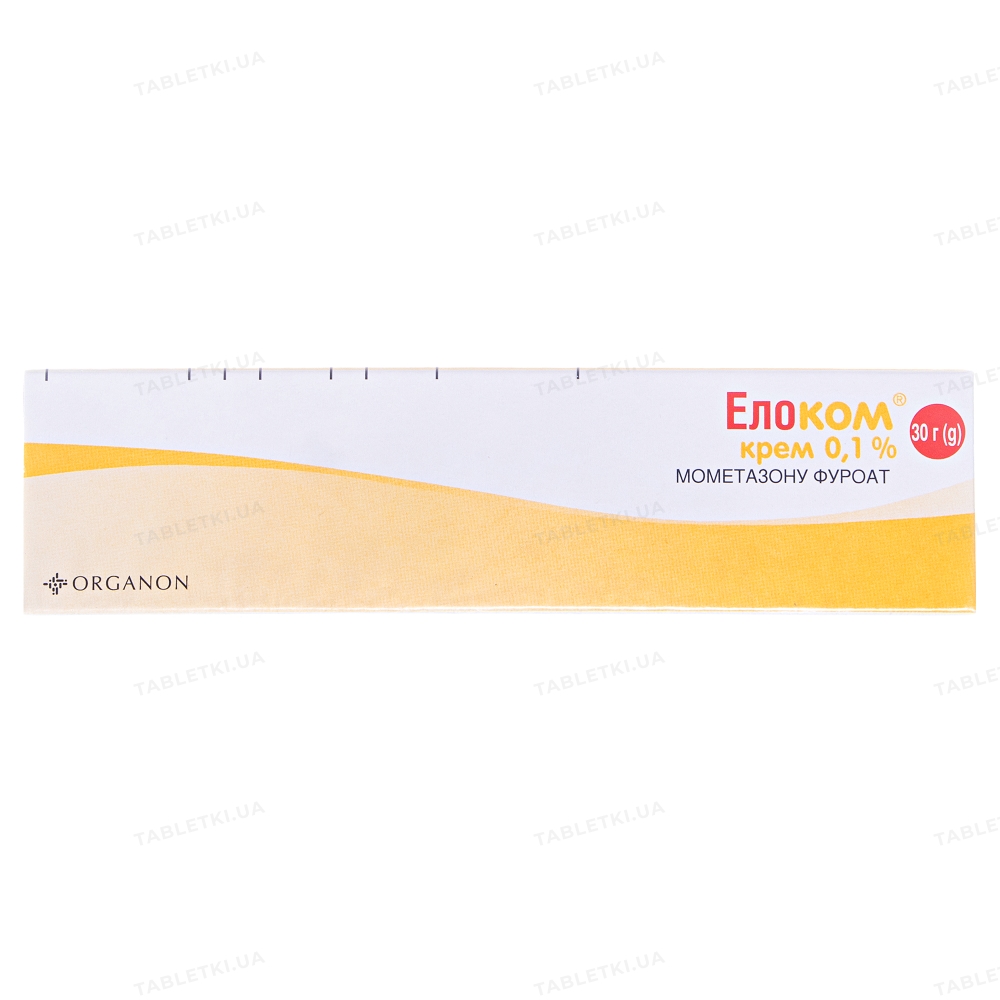
Elocom 0.1% cream, 15 g in tubes
Ingredients
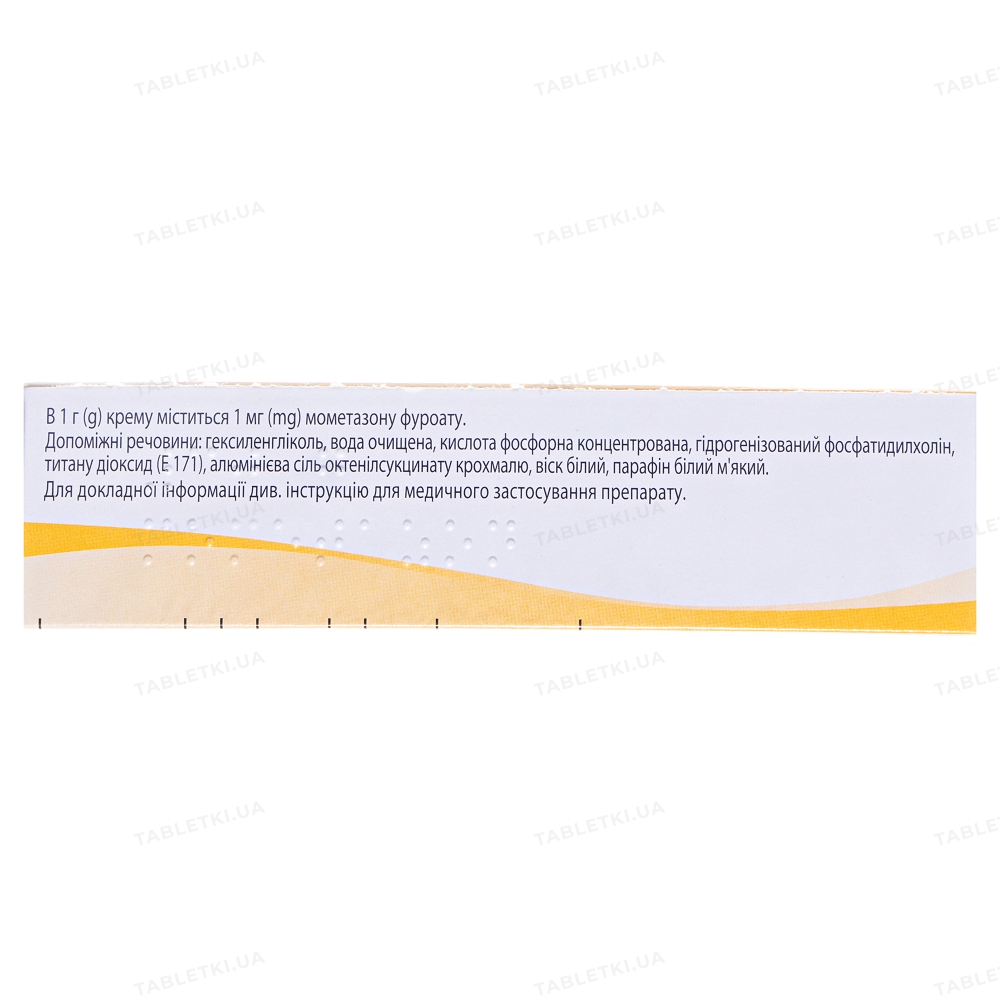
Active ingredient: mometasone furoate;
1 g of ointment contains 1 mg of mometasone furoate;
excipients: hexylene glycol, purified water, dilute phosphoric acid, propylene glycol stearate, white wax, soft white paraffin.
Dosage Form
Ointment.
Main physical and chemical properties: an opaque ointment that is white or nearly white in color, free of foreign particles.
Pharmacotherapeutic group
Corticosteroids for dermatological use.
ATC code D07A C13.
Pharmacological properties
Pharmacodynamics.
Mometasone furoate is a synthetic glucocorticosteroid for topical use with anti-inflammatory, antipruritic, and anti-exudative effects.
Pharmacokinetics.
Pharmacokinetic studies have shown that systemic absorption following topical application of 0.1% mometasone furoate is minimal; approximately 0.4% of the applied dose is excreted from the body within 72 hours after application. It was practically impossible to determine the nature of the metabolites due to their low concentration in blood plasma and secretions.
Indications
Inflammation and itching associated with dermatoses responsive to corticosteroid therapy, including psoriasis (except for widespread plaque psoriasis) and atopic dermatitis, in adults and children aged 2 years and older.
Contraindications
Elocom® is contraindicated in rosacea, acne vulgaris, skin atrophy, perioral dermatitis, perianal and genital pruritus, diaper rash, bacterial (e.g., impetigo, pyoderma), viral (e.g., herpes simplex, herpes zoster, and chickenpox, common warts, genital warts, molluscum contagiosum), parasitic and fungal (e.g., Candida or dermatophytes) infections, tuberculosis, syphilis, or post-vaccination reactions. Elocom® should not be applied to open wounds or skin covered with ulcers. The drug is contraindicated in patients with hypersensitivity to any of the drug’s components or to other glucocorticosteroids.
Interactions with Other Medications and Other Types of Interactions
None identified.
Special Considerations for Use
If irritation or sensitization occurs, treatment should be discontinued and appropriate therapy initiated.
If a concomitant skin infection develops, an appropriate antifungal or antibacterial medication should be used. If no improvement is observed within a short period of time, use of Elocom® ointment should be discontinued until the infection is completely resolved.
Systemic absorption following topical application of various glucocorticosteroids may cause reversible suppression of the hypothalamic-pituitary-adrenal axis, with possible glucocorticoid insufficiency following discontinuation of treatment. Some patients may develop symptoms of Cushing’s syndrome, hyperglycemia, and glucosuria.
Patients using a topical steroid on large areas of skin or with occlusive dressings should be periodically monitored for suppression of the hypothalamic-pituitary-adrenal axis. This assessment can be performed by conducting an ACTH stimulation test or by measuring morning cortisol levels in plasma and other bodily fluids, excluding urine.
Any side effects associated with the use of systemic corticosteroids, including adrenal suppression, may also occur with the topical application of glucocorticosteroids, especially in infants and children.
Occlusive dressings should not be used on children or on the face. Avoid contact with mucous membranes.
Topical steroids may be dangerous in cases of psoriasis for many reasons, including relapses following the development of tolerance, the risk of generalized pustular psoriasis, and the development of local or systemic toxicity due to impaired skin barrier function. When using this medication for psoriasis, it is very important to closely monitor patients.
Sudden discontinuation of long-term treatment may result in a rebound effect characterized by dermatitis with intense redness, irritation, and a burning sensation. This can be prevented by gradually tapering off the medication, for example, through intermittent treatment, until complete discontinuation.
Glucocorticoids may alter the appearance of certain skin lesions and complicate the establishment of an accurate diagnosis, which may also delay recovery.
Elocom® ointment contains propylene glycol, which may cause skin irritation.
Elocom® is not intended for ophthalmic use, including application to the eyelids. Avoid contact with the eyes.
Vision problems may occur with the use of systemic and topical corticosteroids (including intranasal, inhaled, and intraocular administration). If symptoms such as blurred vision or other visual disturbances occur, the patient should be examined by an ophthalmologist to assess possible causes of the visual disturbances, which may include cataracts, glaucoma, or rare conditions such as central serous chorioretinopathy, which have been reported following the use of systemic and topical corticosteroids.
Use During Pregnancy or Breastfeeding.
During pregnancy or breastfeeding, treatment with this medication should be administered only as directed by a physician. However, even in such cases, the use of the medication on large areas of skin or for prolonged periods should be avoided. There is insufficient evidence regarding the safety of this medication for women during pregnancy. As with other topically applied glucocorticosteroids, Elocom® should be prescribed to pregnant women only if the potential benefit to the mother outweighs the potential risk to the fetus.
It is unknown whether topical application of corticosteroids can result in significant systemic absorption, leading to levels of the drug that may be detectable in breast milk. Elocom® should be used during breastfeeding only after a careful analysis of the benefit-risk ratio. If high doses are prescribed or the drug is used for an extended period, breastfeeding should be discontinued.
Effect on the ability to drive or operate machinery.
Not established.
Dosage and Administration
Apply a thin layer of Elocom® ointment to the affected areas of the skin once daily. The duration of treatment depends on the severity and course of the disease and is determined on an individual basis.
The use of topical corticosteroids in children and on the face should be limited to the minimum amount necessary to achieve an effective therapeutic response, and the duration of treatment should not exceed 5 days.
Children.
For children aged 2 years and older, use the medication only as directed by a doctor.
Because children have a higher body surface area-to-body weight ratio than adults, children are at greater risk of hypothalamic-pituitary-adrenal axis suppression and Cushing’s syndrome when using anytopical corticosteroids, a risk that increases when applied to areas covering more than 20% of the body surface area.
It is recommended to use the lowest possible dose of glucocorticosteroids necessary to achieve a therapeutic effect, especially in children. The course of treatment should not exceed 5 days. Long-term treatment with glucocorticosteroids may delay a child’s growth and development.
The safety of using Elocom® in children for more than 6 weeks has not been studied.
There are only limited data regarding the treatment of children under 2 years of age.
Mometasone should not be used to treat diaper rash.
The ointment should not be applied under occlusive dressings unless directed by a doctor, nor should it be applied to areas covered by diapers or moisture-impermeable underwear.
Overdose
Excessive or prolonged use of topical corticosteroids may suppress the function of the hypothalamic-pituitary-adrenal axis, which may result in secondary adrenal insufficiency, which is usually reversible.
If suppression of this system occurs, the interval between applications should be increased, a less potent corticosteroid should be used, or the medication should be discontinued.
The steroid content in each container is so low that, in the unlikely event of accidental ingestion, any toxic effect would be negligible or absent.
Side Effects
The following adverse reactions have been reported in association with the use of Elocom®, listed by organ system and frequency: very common (≥1/10); common (≥1/100, <1/10); uncommon (≥1/1,000, <1/100); rare (≥1/10,000, <1/1,000); very rare (<1/10,000); unknown (cannot be estimated from the available data).
Infections and infestations: very rare—folliculitis; unknown—infections, boils.
Nervous system disorders: very rare – burning sensation; unknown – paresthesia.
Skin and subcutaneous tissue disorders: very rare – pruritus; unknown – contact dermatitis, skin hypopigmentation, hypertrichosis, atrophic skin streaks, acne-like dermatitis, skin atrophy.
General disorders and administration site conditions: unknown – pain at the application site, reactions at the application site.
Ocular disorders: unknown – blurred vision (see also the “Special Precautions for Use” section).
Propylene glycol, which is a component of the drug, may cause skin irritation.
Local adverse reactions that have been infrequently reported in association with the use of topical dermatological corticosteroids include: dryness and skin irritation, dermatitis, perioral dermatitis, skin maceration, enlargement of the affected area, exacerbation of allergic reactions, erythema, striae, miliaria, and telangiectasia, papular and pustular rashes, and a tingling sensation.
Shelf life
3 years.
Storage conditions
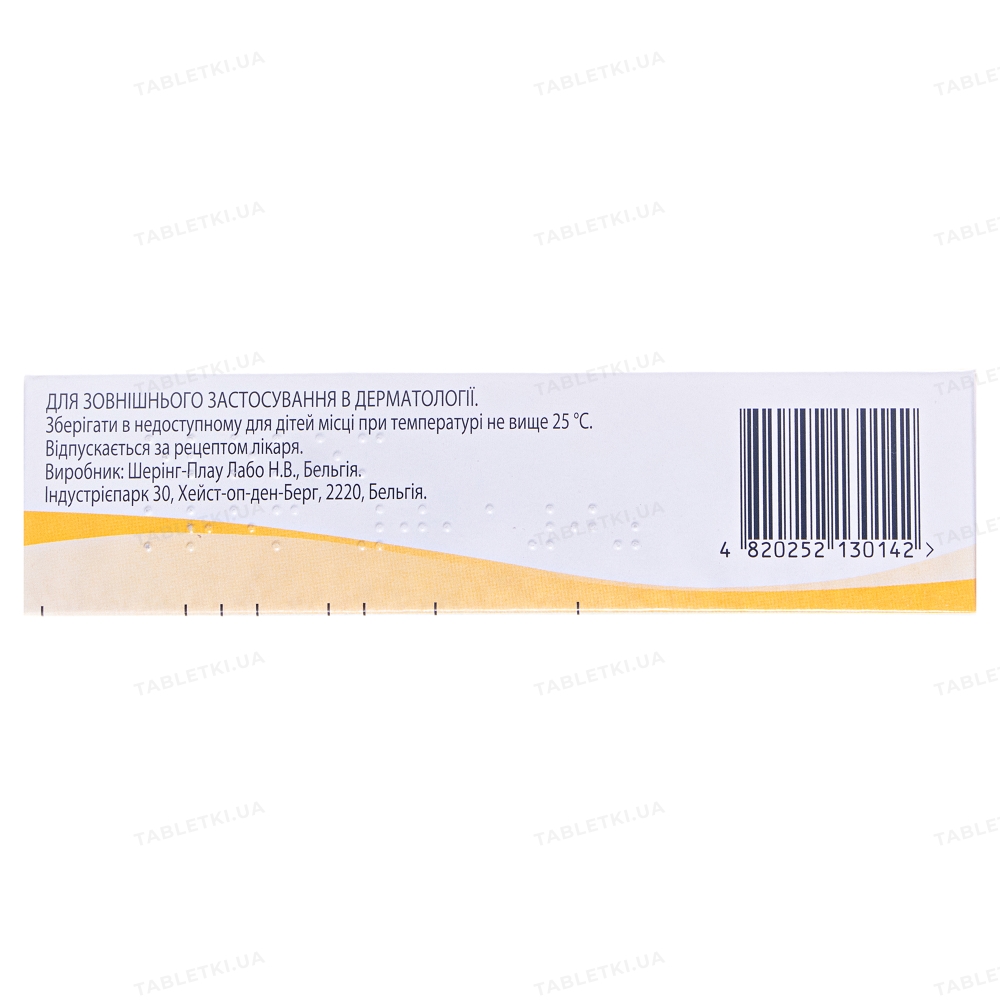
Store out of the reach of children at a temperature not exceeding 25 °C.
Packaging
15-g or 30-g tubes, No. 1, in a cardboard box.
Manufacturer
Organon Heist bv, Belgium/
Organon Heist bv, Belgium.
Manufacturer’s location and address of its place of business.
Industriepark 30, 2220, Heist-op-den-Berg, Belgium/
Industriepark 30, 2220, Heist-op-den-Berg, Belgium.