
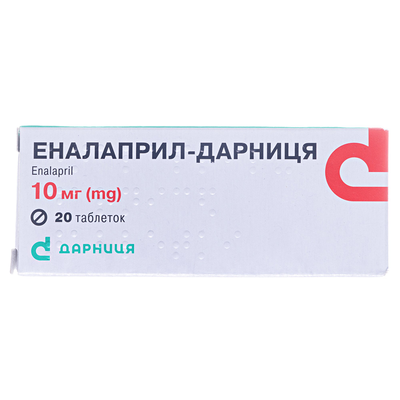
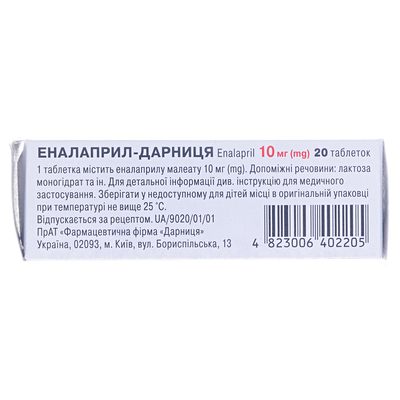
Enalapril-Darnitsa 10 mg tablets, No. 30 (10 x 3)
Ingredients
Active ingredient: enalapril;
1 tablet contains 10 mg of enalapril maleate;
inactive ingredients: microcrystalline cellulose, potato starch, lactose monohydrate, calcium stearate.
Dosage Form
Tablets.
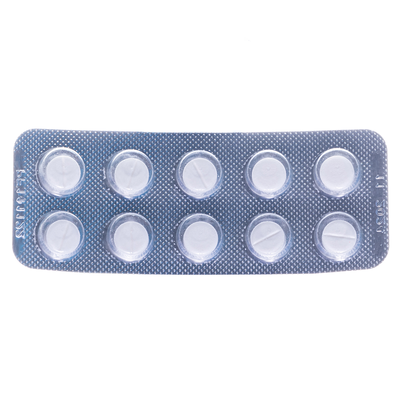
Main physical and chemical properties: white, flat-cylindrical tablets with a bevel and a score line.
Pharmacotherapeutic group
Angiotensin-converting enzyme inhibitors.
ATC code C09A A02.
Pharmacological properties
Pharmacodynamics.
Enalapril maleate is a salt of maleic acid and enalapril, a derivative of two amino acids: L-alanine and L-proline. Angiotensin-converting enzyme (ACE) is a peptidyl dipeptidase that catalyzes the conversion of angiotensin I into the vasopressor angiotensin II. After absorption, enalapril is hydrolyzed to enalaprilat, which inhibits ACE. ACE inhibition leads to a decrease in plasma angiotensin II, resulting in increased plasma renin activity (due to the elimination of negative feedback on renin release) and decreased aldosterone secretion.
ACE is identical to kininase II. Thus, enalapril may also block the breakdown of bradykinin, a potent vasodepressor peptide. However, the significance of this phenomenon for the therapeutic effect of enalapril remains unclear.
The mechanism by which enalapril lowers blood pressure is primarily associated with the inhibition of the renin-angiotensin-aldosterone system; enalapril may exert an antihypertensive effect even in patients with low-renin hypertension.
The use of enalapril in patients with hypertension leads to a reduction in blood pressure both while lying down and while standing, without an increase in heart rate.
Symptomatic postural hypotension is rare. In some patients, it may take several weeks of therapy to achieve an optimal reduction in blood pressure. Abrupt discontinuation of enalapril has not been associated with a rapid increase in blood pressure.
Effective inhibition of ACE activity usually occurs 2–4 hours after oral administration of an individual dose of enalapril. The onset of antihypertensive activity is usually observed after 1 hour, and the peak reduction in blood pressure is reached 4–6 hours after administration. The duration of the effect is dose-dependent. However, when administered at recommended doses, the antihypertensive and hemodynamic effects have been shown to be sustained for at least 24 hours.
In hemodynamic studies of enalapril in patients with hypertension, the reduction in blood pressure was accompanied by a decrease in peripheral arterial resistance with an increase in cardiac output and, occasionally, a slight change in heart rate. Following administration of enalapril, renal blood flow increased; the glomerular filtration rate remained unchanged. There was no evidence of sodium or water retention. However, in patients with a low glomerular filtration rate prior to treatment, the rate usually increases.
In short-term clinical studies in patients with or without diabetes mellitus and with kidney disease, a reduction in proteinuria and in the urinary excretion of immunoglobulin G and total urinary protein was observed following administration of enalapril.
When administered concomitantly with thiazide-like diuretics, the blood pressure-lowering effects of enalapril at least complemented those of the diuretics. Enalapril may reduce or prevent the development of thiazide-induced hypokalemia. In patients with heart failure who are taking cardiac glycosides and diuretics, enalapril reduces peripheral resistance and blood pressure. Cardiac output increases, and heart rate (which is usually elevated in patients with heart failure) decreases. Pulmonary capillary wedge pressure decreases. Treatment with enalapril improves exercise tolerance and reduces the severity of heart failure according to the New York Heart Association criteria. These effects persisted throughout long-term therapy with enalapril. In patients with mild to moderate heart failure, enalapril slows the progression of cardiac enlargement and heart failure (reduction in left ventricular end-diastolic and systolic pressures and improvement in ejection fraction).
In patients with left ventricular dysfunction, enalapril reduces the risk of serious ischemic complications, the incidence of myocardial infarction, and the number of hospitalizations due to unstable angina.
There is limited experience regarding the efficacy and safety of use in children with hypertension aged 6 years and older. A clinical trial enrolled 110 children with hypertension aged 6 to 16 years, weighing ≥ 20 kg, and with a glomerular filtration rate > 0.5 mL/s/1.73 m². Children weighing < 50 kg received 0.625 mg, 2.5 mg, or 20 mg of enalapril once daily, while children weighing ≥ 50 kg received 1.25 mg, 5 mg, or 40 mg of enalapril once daily. The reduction in blood pressure was dose-dependent; the effect was consistent across all dosing subgroups (by age, Tanner stage, sex, and race). The study results indicate that the lowest doses—0.625 mg and 1.25 mg, corresponding to an average dose of 0.02 mg/kg per day—do not provide therapeutic efficacy. The maximum dose is 0.58 mg/kg (40 mg) once daily. The adverse event profile in children did not differ from that in adult patients.
Pharmacokinetics.
Absorption.
Enalapril is rapidly absorbed from the gastrointestinal tract, with peak serum concentrations occurring within one hour. The extent of absorption is approximately 60%; food intake does not affect absorption. After absorption, enalapril is rapidly and extensively hydrolyzed to enalaprilat, a potent ACE inhibitor. Peak serum concentrations of enalaprilat occur 4 hours after oral administration of a dose of enalapril. The effective half-life for enalaprilat accumulation following repeated administration of enalapril is 11 hours. In individuals with normal renal function, steady-state serum concentrations of enalaprilat are reached after 4 days of treatment.
Distribution.
Across the entire range of therapeutic concentrations, 60% of enalaprilat is bound to serum proteins.
Metabolism.
With the exception of hydrolysis to enalaprilat, there is no further evidence of significant metabolism of enalapril.
Excretion.
Enalaprilat is excreted primarily by the kidneys. The main components in urine are enalaprilat, accounting for approximately 40% of the dose, and unchanged enalapril (approximately 20%).
Renal impairment.
In patients with renal insufficiency, the exposure to enalapril and enalaprilat is increased. In patients with mild to moderate renal insufficiency (creatinine clearance 40–60 mL/min), the steady-state AUC of enalaprilat was approximately twice that in patients with normal renal function following a 5-mg once-daily dose. In patients with severe renal insufficiency (creatinine clearance ≤ 30 mL/min), the AUC increased approximately 8-fold. At this level of renal insufficiency, the effective half-life of enalaprilat is prolonged, and the attainment of steady state is delayed.
Enalaprilat can be removed from the systemic circulation by hemodialysis. The clearance of enalaprilat during dialysis is 62 mL/min.
Children and adolescents.
A pharmacokinetic study of repeated dosing was conducted in 40 boys and girls aged 2 months to 16 years who had hypertension and received 0.07–0.14 mg/kg of enalapril maleate orally daily. There was no difference in the pharmacokinetic parameters of enalaprilat in children compared with those in adults. The data indicated an increase in AUC (normalized to dose per body weight) with increasing age; however, no increase in AUC was observed when the data were normalized by body surface area. At steady state, the mean effective half-life for enalaprilat accumulation is 14 hours.
Lactation.
Following administration of a single 20-mg oral dose to five postpartum women, the mean peak concentration of enalapril in breast milk was 1.7 μg/L (range 0.54–5.9 μg/L) 4–6 hours later. The mean peak concentration of enalaprilat was 1.7 μg/L (range 1.2–2.3 μg/L); peaks were reached at various times over a 24-hour period. Using data on peak levels in breast milk, the maximum intake by exclusively breastfed infants was calculated to be approximately 0.16% of the maternal dose, adjusted for body weight. Women who took 10 mg of enalapril orally once daily for 11 months had peak enalapril levels in breast milk of 2 μg/L 4 hours after dosing, and peak levels of enalaprilat of 0.75 μg/L approximately 9 hours after dosing. The total amount of enalapril and enalaprilat measured in breast milk over a 24-hour period was 1.44 μg/L and 0.63 μg/L of milk, respectively. Enalaprilat levels in breast milk could not be detected (< 0.2 μg/L) 4 hours after administration of a single dose of 5 mg of enalapril to one mother and 10 mg to two mothers.
Indications
- Treatment of hypertension.
- Treatment of clinically evident heart failure.
- Prevention of clinically evident heart failure in patients with asymptomatic left ventricular dysfunction (ejection fraction ≤ 35%).
Contraindications
- Hypersensitivity to enalapril, to any excipient, or to any other ACE inhibitor.
- A history of angioedema associated with the use of ACE inhibitors.
- Hereditary or idiopathic angioedema.
- Contraindicated in pregnant women and women planning to become pregnant (see “Use During Pregnancy or Breastfeeding”).
- Enalapril should not be used with medications containing aliskiren, in patients with diabetes mellitus or impaired renal function (glomerular filtration rate (GFR) < 60 mL/min/1.73 m²).
Interactions with Other Medications and Other Types of Interactions
Potassium-sparing diuretics, potassium supplements. ACE inhibitors reduce potassium loss caused by diuretic use. Potassium-sparing diuretics (e.g., spironolactone, triamterene, or amiloride), potassium supplements, or potassium-containing salt substitutes may lead to hyperkalemia. When prescribed concomitantly in the presence of hypokalemia, they should be used with great caution, and serum potassium levels should be monitored frequently.
Diuretics (thiazides or loop diuretics). Prior treatment with high-dose diuretics may lead to a reduction in circulating blood volume and an increased risk of excessive hypotension. The hypotensive effect can be reduced by discontinuing diuretics, increasing salt and fluid intake, or initiating therapy with a low dose of enalapril.
Other Antihypertensive Medications. Concomitant use of enalapril and other antihypertensive medications may increase the antihypertensive effect of enalapril. Enalapril may be used in combination with any other medications for the treatment of hypertension. Concomitant use with nitroglycerin, other nitrates, or other vasodilators may further lower blood pressure.
Lithium. Concomitant use of ACE inhibitors and lithium may cause a temporary increase in serum lithium levels and lithium toxicity. Concomitant use of ACE inhibitors and thiazide diuretics may further increase serum lithium levels and raise the risk of lithium toxicity. The use of enalapril with lithium is not recommended. If this combination is necessary for a patient, serum lithium levels should be carefully monitored.
Tricyclic antidepressants/neuroleptics/anesthetics/narcotics. Concomitant use of certain anesthetics, tricyclic antidepressants, and neuroleptics with ACE inhibitors may result in an additional decrease in blood pressure.
Nonsteroidal anti-inflammatory drugs (NSAIDs). Nonsteroidal anti-inflammatory drugs, including selective cyclooxygenase-2 (COX-2) inhibitors, may reduce the effect of diuretics and other antihypertensive medications. Therefore, the antihypertensive effect of angiotensin II receptor antagonists or ACE inhibitors may be attenuated by nonsteroidal anti-inflammatory drugs, including selective COX-2 inhibitors. Long-term use of nonsteroidal anti-inflammatory drugs may reduce the antihypertensive effect of ACE inhibitors. ACE inhibitors and nonsteroidal anti-inflammatory drugs, including selective cyclooxygenase-2 inhibitors, have an additive effect on increasing serum potassium levels, which may lead to impaired renal function and/or heart failure. This effect is usually reversible. Acute renal failure may rarely occur, particularly in patients with impaired renal function (elderly patients or patients with reduced circulating blood volume, including those taking diuretics). Patients should be provided with adequate fluid intake, and renal function should be monitored after initiation of combination therapy and periodically throughout treatment.
Gold. Reactions similar to those caused by nitrites (symptoms include facial flushing, nausea, vomiting, and hypotension) have rarely been reported in patients receiving gold injections (sodium aurothiomalate) and concomitant use of ACE inhibitors, including enalapril.
Antidiabetic medications. Epidemiological studies indicate that concomitant use of ACE inhibitors and antidiabetic medications (insulin or oral antidiabetic medications) may cause hypoglycemia. This symptom is more likely to occur during the first few weeks of combination therapy and in patients with impaired renal function.
Ethanol. Ethanol potentiates the hypotensive effect of ACE inhibitors.
Sympathomimetics. Sympathomimetics may reduce the antihypertensive effect of ACE inhibitors.
Acetylsalicylic acid, thrombolytics, and β-blockers. Enalapril can be safely used concomitantly with acetylsalicylic acid (at doses indicated for cardiovascular conditions), thrombolytics, and β-blockers.
An increased risk of angioedema has been reported in patients who were taking ACE inhibitors concomitantly with alteplase.
Cyclosporine. Cyclosporine should be used with caution when administered concomitantly with enalapril, and renal function should be monitored.
Dual blockade of the renin-angiotensin-aldosterone system. Dual blockade (e.g., when an ACE inhibitor is added to an angiotensin II receptor antagonist) should be limited to individual cases only, with careful monitoring of blood pressure, renal function, and electrolyte levels. Several studies have reported that in patients with established atherosclerotic vascular disease, heart failure, or diabetes with end-organ damage, dual blockade of the renin-angiotensin-aldosterone system was associated with a higher incidence of hypotension, syncope, hyperkalemia, and worsening renal function (including acute renal failure) compared with treatment with a single drug that affects the renin-angiotensin-aldosterone system. Enalapril should not be used in combination with aliskiren in patients with diabetes mellitus or impaired renal function (eGFR < 60 mL/min/1.73 m²).
Concomitant therapy with an ACE inhibitor and an angiotensin receptor blocker. It has been reported that in patients with confirmed atherosclerotic disease, heart failure, or diabetes mellitus with end-organ damage, concomitant therapy with an ACE inhibitor and an angiotensin receptor blocker is associated with a higher incidence of hypotension, syncope, hyperkalemia, and worsening renal function (including acute renal failure) compared with the use of drugs that affect the renin-angiotensin-aldosterone system alone. Dual blockade (for example, a combination of an ACE inhibitor with an angiotensin II receptor antagonist) should be limited to individually determined cases and accompanied by careful monitoring of renal function, potassium levels, and blood pressure.
mTOR inhibitors. Concomitant use with mTOR inhibitors (such as temsirolimus, sirolimus, everolimus) increases the risk of angioedema.
Combination of trimethoprim and sulfamethoxazole. Patients taking the combination drug trimethoprim and sulfamethoxazole concurrently are at increased risk of hyperkalemia.
Special Considerations for Use
Symptomatic hypotension. Symptomatic hypotension is very rarely observed in patients with uncomplicated hypertension. It is more likely to occur in patients with hypertension who have reduced blood volume, for example, due to diuretic therapy, salt restriction, dialysis, diarrhea, or vomiting. Symptomatic hypotension may occur in patients with heart failure, with or without concomitant renal insufficiency. It is more likely to occur in patients with more severe forms of heart failure due to high doses of loop diuretics, hyponatremia, or impaired renal function. Treatment of such patients should be initiated under medical supervision, and they should be closely monitored, even if the dose of enalapril and/or the diuretic is adjusted. This also applies to patients with ischemic heart disease or cerebrovascular disease, in whom an excessive decrease in blood pressure may lead to a myocardial infarction or stroke.
If hypotension develops, the patient should be placed in a supine position and, if necessary, the plasma volume should be increased by administering a 0.9% sodium chloride solution. Transient hypotension is not a contraindication for treatment with enalapril. Once blood pressure and plasma volume have normalized, patients generally tolerate subsequent doses well.
In some patients with heart failure who have normal or low blood pressure, taking enalapril may cause a further decrease in blood pressure. This effect is expected and usually does not warrant discontinuation of treatment. If hypotension becomes resistant to treatment, the dose should be reduced and/or diuretic therapy and/or enalapril should be discontinued.
Aortic or mitral valve stenosis/hypertrophic cardiomyopathy. As with all vasodilators, ACE inhibitors should be used with extreme caution in patients with left ventricular outflow tract obstruction and should be avoided in cases of cardiogenic shock and hemodynamically significant left ventricular outflow tract obstruction with generalized aatherosclerosis. In such patients, an excessive decrease in blood pressure may lead to hypoperfusion and ischemia of the heart, brain, or kidneys.
Renal impairment. Patients with renal impairment (creatinine clearance < 1.33 mL/s) require dosage adjustment based on creatinine clearance and, subsequently, based on the response to treatment. Serum creatinine and potassium levels should be monitored regularly.
In patients with severe heart failure or kidney disease, including renal artery stenosis, renal failure may occur during treatment with enalapril. If detected early and treated appropriately, it is usually reversible.
In some patients without kidney disease, a slight and transient increase in serum urea and creatinine levels may occur when enalapril is administered concomitantly with diuretics. It may be necessary to reduce the dose of ACE inhibitors and/or discontinue diuretics. This situation may indicate the presence of renal artery stenosis.
Renovascular hypertension. In patients with bilateral renal artery stenosis or stenosis of the artery to a single kidney who are taking ACE inhibitors, transient hypotension or renal failure may occur. Renal failure may occur with only very slight changes in serum creatinine levels. Treatment of such patients should be initiated under medical supervision with low doses; careful titration and monitoring of renal function are necessary throughout treatment.
Kidney Transplantation. There is no experience with the use of enalapril in patients who have recently undergone kidney transplantation; therefore, enalapril is not recommended for such patients.
Hepatic insufficiency. During treatment with ACE inhibitors, a syndrome may rarely occur that begins with cholestatic jaundice, progresses to acute necrotizing hepatitis, and (sometimes) leads to death. The mechanism of this syndrome is unclear. If jaundice or a marked increase in liver enzymes occurs during treatment with ACE inhibitors, treatment should be discontinued immediately, the patient should be closely monitored, and appropriate treatment should be initiated if necessary.
Neutropenia/agranulocytosis. There have been reports of neutropenia/agranulocytosis, thrombocytopenia, and anemia in patients taking ACE inhibitors. In patients with normal renal function and in the absence of other complications, neutropenia occurs rarely. Enalapril should be used with extreme caution in patients with vascular collagenosis (e.g., systemic lupus erythematosus, scleroderma) who are receiving concomitant therapy with antidepressants, allopurinol, or procainamide, or a combination of these factors, especially if renal impairment is already present. Some of these patients may develop a serious infection that sometimes does not respond to intensive antibiotic therapy. If enalapril is used in such patients, periodic monitoring of white blood cell count is recommended. Patients should immediately notify their doctor of any signs of infection.
Hypersensitivity/angioedema. Rarely, during treatment with ACE inhibitors, including enalapril, angioedema of the face, extremities, lips, tongue, glottis, and/or larynx may occur. This can occur at any time during treatment with the drug. In such cases, treatment should be discontinued completely, and appropriate monitoring should be initiated to ensure that all symptoms have completely resolved.
Even if only swelling of the tongue is observed without airway obstruction, patients may require prolonged observation, as treatment with antihistamines and corticosteroids may be insufficient. Very rare cases of death due to angioedema of the larynx and tongue have been reported.
In cases of angioedema of the tongue, glottis, or larynx, which may cause airway obstruction, especially in patients with a history of surgery, epinephrine (0.3–0.5 mL of epinephrine solution for subcutaneous injection in a 1:1000 ratio) should be administered immediately and ensure the patient has an open airway.
Patients with a history of angioedema not related to ACE inhibitor therapy are at increased risk of developing angioedema while taking ACE inhibitors.
African American patients taking ACE inhibitors experienced angioedema more frequently than patients of other races.
Anaphylactoid reactions may occur during desensitization with wasp or bee venom allergens.
Patients taking ACE inhibitors during desensitization to wasp or bee venom may rarely experience life-threatening, allergy-like (pseudoanaphylactic) reactions. Such reactions can be avoided by temporarily discontinuing ACE inhibitor therapy before each desensitization session.
Anaphylactoid reactions during low-density lipoprotein apheresis. In patients taking ACE inhibitors during low-density lipoprotein apheresis with dextran sulfate, life-threatening, allergy-like (pseudoanaphylactic) reactions may rarely occur. Such reactions can be avoided by temporarily suspending ACE inhibitor therapy before each apheresis session.
Patients undergoing hemodialysis. There have been reports of hypersensitivity reactions resembling allergic (pseudoanaphylactic) reactions in patients undergoing dialysis with polyacrylonitrile membranes (e.g., AN 69) while concurrently taking ACE inhibitors. For such patients, consideration should be given to using other types of dialysis membranes or a different class of antihypertensive agents.
Hypoglycemia. Patients with diabetes mellitus who are taking oral antidiabetic medications or insulin require careful glycemic control, especially during the first few months of concomitant treatment with ACE inhibitors.
Cough. Cough has been reported during treatment with ACE inhibitors. The cough is usually nonproductive and persistent and resolves after discontinuation of the drug. Cough resulting from treatment with an ACE inhibitor should be considered in the differential diagnosis of cough.
Surgery/Anesthesia. In patients undergoing major surgery or anesthesia with drugs that cause arterial hypotension, enalapril may block the formation of angiotensin II due to a compensatory release of renin. If hypotension occurs and is believed to have developed through this mechanism, correction should be achieved by increasing blood volume.
Hyperkalemia. During treatment with ACE inhibitors, including enalapril, blood potassium levels may increase in some patients. Risk factors for hyperkalemia include renal failure or impaired renal function, age over 70 years, diabetes mellitus, hypoaldosteronism, and intercurrent conditions such as dehydration, acute heart failure, metabolic acidosis, and concomitant use of potassium-sparing diuretics (e.g., spironolactone, eplerenone, triamterene, or amiloride), dietary supplements containing potassium, potassium-containing salt substitutes, or other medications that cause an increase in serum potassium levels (e.g., heparin). The use of dietary supplements containing potassium, potassium-sparing diuretics, or potassium-containing salt substitutes—especially in patients with impaired renal function—may lead to a significant increase in serum potassium levels. Hyperkalemia may cause serious, sometimes fatal, arrhythmias. If concomitant use of the aforementioned medications is deemed necessary, regular monitoring of serum potassium levels is recommended.
Lithium. The combination of lithium and enalapril is generally not recommended.
Concomitant therapy with an ACE inhibitor and an angiotensin II receptor antagonist.
The combination of an ACE inhibitor with an angiotensin II receptor antagonist should be limited to individually determined cases, provided that renal function, potassium levels, and blood pressure are carefully monitored (see the section “Interactions with Other Medications and Other Interactions”).
Ethnic/Racial Considerations. Like all ACE inhibitors, enalapril is less effective at lowering blood pressure in African Americans than in Caucasians, possibly due to a higher prevalence of low-renin states among African Americans with hypertension.
Special warnings regarding inactive ingredients. Enalapril-Darnitsa contains lactose; therefore, patients with rare hereditary forms of galactose intolerance, lactase deficiency, or glucose-galactose malabsorption should not take this medication.
Use during pregnancy or breastfeeding.
Pregnancy.
This medication should not be used by pregnant women or women planning to become pregnant. If pregnancy is confirmed during treatment with this medication, its use must be discontinued immediately and replaced with another medication approved for use in pregnant women.
Women of childbearing age who are prescribed ACE inhibitors must be informed of the adverse effects of these medications on the fetus and the need to consult a physician immediately upon confirmation of pregnancy.
Breastfeeding.
Some pharmacokinetic data indicate very low concentrations in breast milk (see the “Pharmacokinetics” section). Although such concentrations are considered clinically insignificant, use of the drug is not recommended while breastfeeding premature infants and newborns during the first few weeks after birth due to the hypothetical risk of cardiovascular and renal effects, as well as insufficient experience with such use. For older infants, the use of enalapril during breastfeeding may be considered if treatment is necessary for the mother, and the infant should be monitored for any adverse effects.
Effect on the ability to drive or operate machinery.
It should be noted that dizziness or hypotension may occasionally occur, which could affect reaction time when driving or operating machinery.
Dosage and Administration
Take the tablets whole with a small amount of water, regardless of meals. Enalapril-Darnitsa should be taken at the same time each day, and the prescribed dose should not be exceeded.
The 10 mg tablet may be split; if a 5 mg dose is prescribed, use ½ tablet.
In patients with a highly activated renin-angiotensin-aldosterone system (e.g., those with renovascular hypertension, impaired salt and/or fluid balance, decompensated heart function, or severe hypertension), an excessive drop in blood pressure may occur after taking the initial dose. For such patients, an initial dose of 5 mg or less is recommended, and treatment should be initiated under medical supervision.
Essential hypertension.
The initial dose for adults is 5 mg, 10 mg, or 20 mg once daily, depending on the severity of hypertension. For mild hypertension, the recommended initial dose is 5–10 mg per day. For moderate and severe hypertension, the initial dose is 20 mg once daily. The maintenance dose is 10 mg twice daily. The dosage should be individualized for each patient, but the dose should not exceed 40 mg per day.
Renovascular hypertension.
In adult patients in this group, therapy should be initiated with a low starting dose, such as 5 mg, using ½ tablet under medical supervision. If a dose of less than 5 mg is prescribed, use an appropriate enalapril dosage form that allows for such dosing. The dosage should then be adjusted individually for each patient. It can be expected that for most patients, Enalapril-Darnitsa will be effective when taken daily at a dose of 20 mg per day. Caution should be exercised when treating patients with enalapril who have recently been taking diuretics.
Concomitant treatment of hypertension with diuretics.
Hypotension may occur after the first dose of the drug. This effect is most likely in patients receiving diuretic therapy. In this case, Enalapril-Darnitsa should be prescribed with caution, as these patients may have fluid or sodium depletion.
The usual maintenance dose is 20 mg once daily. The maximum maintenance dose is 40 mg per day. Treatment with diuretics should be discontinued 2–3 days before starting treatment with enalapril. If this is not possible, the initial dose should be reduced to 5 mg or less, using an appropriate dosage form of enalapril that allows for such dosing, in order to determine the drug’s initial effect on blood pressure. Renal function and serum potassium levels should be monitored. The dosage should then be titrated individually for each patient.
Renal insufficiency.
In general, the interval between doses of enalapril should be increased and/or the dose of the drug should be reduced.
| Renal function | Creatinine clearance (mL/min) | Initial dose
(mg/day) |
| Mild impairment | < 80 > 30 mL/min | 5–10 mg |
| Moderate impairment | £ 30 > 10 mL/min | 2.5 mg |
| Severe impairment. Such patients are usually on hemodialysis* | £ 10 mL/min | 2.5 mg on dialysis days** |
*See the section “Special Considerations for Use: Patients Undergoing Hemodialysis.”
**Enalapril is removed by hemodialysis. Dosage adjustment on days when hemodialysis is not performed should be based on blood pressure levels.
Heart failure/asymptomatic left ventricular dysfunction.
The initial dose of enalapril for adult patients with heart failure is 2.5 mg (use an appropriate enalapril dosage form that allows for this dosage); and the drug must be administered under close medical supervision to assess its initial effect on blood pressure. Enalapril-Darnitsa may be used to treat symptomatic heart failure, in combination with diuretics and, if necessary, digitalis preparations and beta-blockers. If there is no effect or after appropriate correction of symptomatic hypotension resulting from treatment with enalapril, the dose should be gradually increased to the target dose of 20 mg, which should be administered either as a single dose or divided into two doses, depending on which is better tolerated by the patient. Dose titration may be carried out over 2–4 weeks or in a shorter period. This treatment regimen effectively reduces mortality rates in patients with clinically significant heart failure.
The maximum daily dose of enalapril is 40 mg, which should be divided into two doses.
Dose titration of enalapril for patients with heart failure/asymptomatic left ventricular dysfunction
| Weeks | Dose, mg/day |
| Week 1 | Days 1–3: 2.5 mg/day* in a single dose
Days 4 through 7: 5 mg/day in two divided doses |
| Week 2 | 10 mg/day in 1 or 2 doses |
| Weeks 3 and 4 | 20 mg/day in 1 or 2 doses |
*If enalapril is prescribed at a dose less than 5 mg, use an appropriate enalapril dosage form that allows for such dosing. Enalapril-Darnitsa should be used with caution in patients with impaired renal function or those taking diuretics.
Both before and after initiating treatment with this medication in patients with heart failure, blood pressure and renal function should be carefully monitored (see the “Special Considerations for Use” section). The development of hypotension after the initial dose does not mean that hypotension will persist during long-term treatment, nor does it indicate the need to discontinue the drug. During treatment with enalapril, serum potassium levels should also be monitored (see the “Drug Interactions and Other Interactions” section).
Elderly patients.
The dose should be adjusted based on renal function (see the “Special Considerations for Use” section).
Children with hypertension aged 6 years and older.
Clinical experience with this medication in children with hypertension is limited.
Enalapril-Darnitsa may be used in children aged 6 years and older. The dosage depends on the patient’s condition, the degree of blood pressure reduction, and the child’s body weight. For patients weighing 20 to 50 kg, the initial dose is 2.5 mg of enalapril per day; for patients weighing 50 kg or more, the initial dose is 5 mg per day. The maximum dose studied in children is 0.58 mg/kg (up to 40 mg) once daily (see the “Children” section).
The maximum daily dose of 20 mg should not be exceeded for patients weighing 20 kg to 50 kg, and 40 mg for patients weighing more than 50 kg.
Enalapril-Darnitsa is not recommended for use in newborns and children with a glomerular filtration rate < 30 mL/min/1.73 m² due to a lack of data.
Children.
This medication is intended only for children with hypertension but is not recommended for use in children for other indications.
Enalapril-Darnitsa is indicated for use in children 6 years of age and older.
Due to a lack of data, enalapril is not recommended for the treatment of children with a glomerular filtration rate of less than 30 mL/min/1.73 m².
Overdose
Data on overdose in humans are limited.
Symptoms. The most likely manifestation of overdose is hypotension, which begins 6 hours after taking the tablets, accompanied by blockade of the renin-angiotensin system and stupor. Symptoms characteristic of overdose include cardiovascular shock, electrolyte imbalance, renal failure, pulmonary hyperventilation, tachycardia, palpitations, bradycardia, dizziness, anxiety, and cough. Serum enalapril levels exceed those observed after therapeutic doses by 100 and 200 times, following administration of 300 mg and 440 mg of enalapril, respectively.
Treatment. An intravenous infusion of a 0.9% sodium chloride solution is recommended. If hypotension occurs, the patient should be placed in a horizontal position. If necessary, an infusion of angiotensin II and/or intravenous administration of catecholamines should be administered. If ingestion occurred recently, measures should be taken to eliminate enalapril (induction of vomiting, gastric lavage, administration of sorbents and sodium sulfate).
Enalapril can be removed from the systemic circulation by hemodialysis.
In cases of bradycardia resistant to therapeutic measures, pacemaker therapy is indicated. Vital signs, electrolyte concentrations, and serum creatinine levels should be monitored continuously.
Side Effects
Ocular: blurred vision.
Ear and vestibular system: tinnitus, vertigo.
Respiratory system, thoracic, and mediastinal disorders: cough, shortness of breath, rhinorrhea, pharyngitis, dysphonia, sore throat, hoarseness, bronchospasm/asthma, pulmonary infiltrate, rhinitis, allergic alveolitis/eosinophilic pneumonia.
Gastrointestinal system: nausea, diarrhea, abdominal pain, altered taste, intestinal obstruction, pancreatitis, vomiting, dyspepsia, constipation, anorexia, gastric irritation, dry mouth, peptic ulcers, stomatitis/aphthous ulcers, glossitis, angioedema of the gastrointestinal tract.
Liver and biliary tract disorders: liver failure; hepatitis—hepatocellular or cholestatic; hepatonecrosis; cholestasis, including jaundice.
Renal and urinary system disorders: renal dysfunction, renal failure, proteinuria, oliguria.
Endocrine system: syndrome of impaired antidiuretic hormone secretion.
Metabolism and nutrition disorders: hypoglycemia.
Nervous system disorders: headache, depression, dizziness, confusion, drowsiness, insomnia, nervousness, paresthesia, sleep disturbances, abnormal dreams.
Cardiovascular system: arterial hypotension (including orthostatic hypotension), syncope, chest pain, cardiac arrhythmias, angina pectoris, tachycardia, palpitations, myocardial infarction, or cerebrovascular stroke (possibly secondary to excessive hypotension in high-risk patients), Raynaud’s syndrome.
Blood and lymphatic system disorders: anemia (including aplastic and hemolytic), neutropenia, decreased hemoglobin, decreased hematocrit, thrombocytopenia, agranulocytosis, bone marrow suppression, pancytopenia, lymphadenopathy, autoimmune diseases.
Skin and subcutaneous tissue disorders: rash, hypersensitivity/angioedema: cases of angioedema of the face, extremities, lips, tongue, glottis, and/or larynx have been reported; increased sweating, pruritus, urticaria, alopecia, erythema multiforme, Stevens-Johnson syndrome, exfoliative dermatitis, toxic epidermal necrolysis, pemphigus, erythroderma.
A syndrome has been reported that may include the following symptoms: fever, serositis, vasculitis, myalgia/myositis, arthralgia/arthritis, a positive antinuclear antibody test, elevated erythrocyte sedimentation rate (ESR), eosinophilia, and leukocytosis. A rash, photosensitivity, or other dermatological manifestations may occur.
Reproductive system and breast function: impotence, gynecomastia.
General disorders: asthenia, increased fatigue, muscle spasms, muscle cramps, hot flashes, discomfort, fever.
Laboratory parameters: hyperkalemia, elevated levels of creatinine, urea, liver enzymes, and serum bilirubin; hyponatremia.
If severe adverse reactions occur, treatment should be discontinued.
Shelf life
2 years.
Storage Conditions
Store out of the reach of children in the original packaging at a temperature not exceeding 25 °C.
Packaging
10 tablets per blister pack; 2 blister packs per package.
Dispensing Category
By prescription only.
Manufacturer
PJSC “Darnitsa Pharmaceutical Company.”







