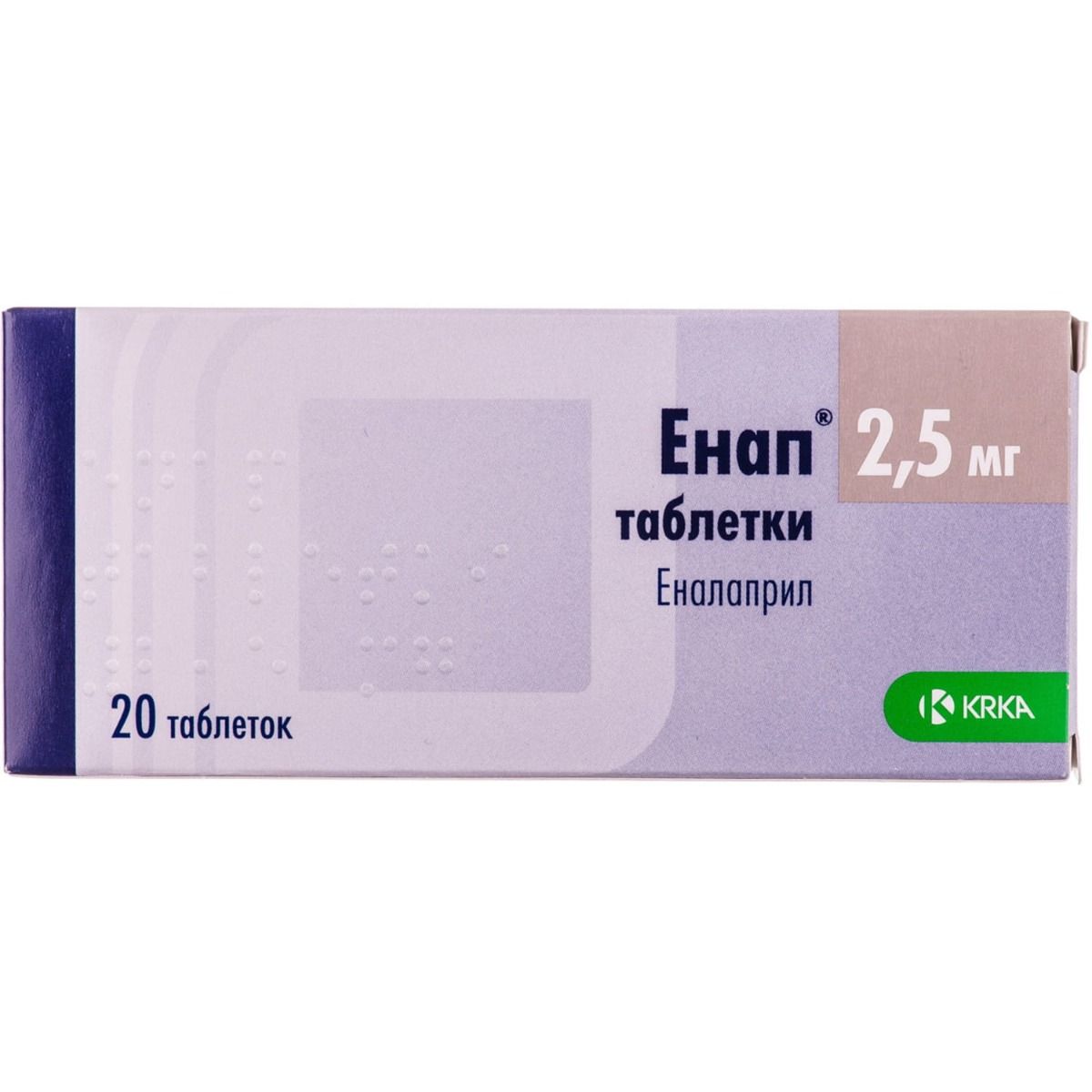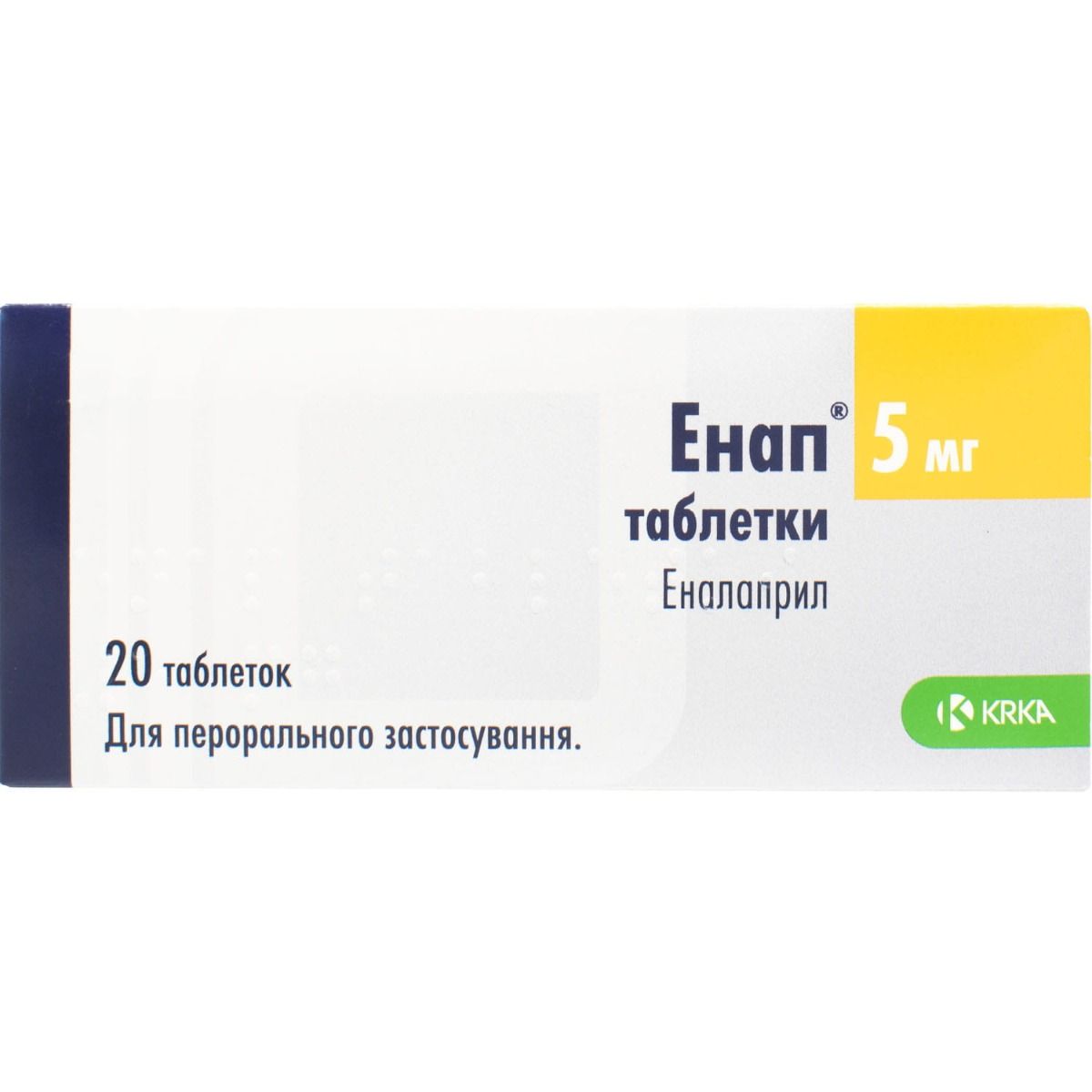
Enap 5 mg tablets, No. 20
Composition
Active ingredient: enalapril maleate;
- 1 tablet contains 2.5 mg, 5 mg, 10 mg, or 20 mg of enalapril maleate;
Inactive ingredients:
- 2.5 mg and 5 mg tablets: sodium bicarbonate, lactose monohydrate, corn starch, hydroxypropyl cellulose, talc, magnesium stearate;
- 10 mg and 20 mg tablets: sodium bicarbonate, lactose monohydrate, corn starch, talc, magnesium stearate, red iron oxide (E 172), yellow iron oxide (E 172) – only for 20 mg tablets.
Dosage Form
Tablets.
Main physical and chemical properties:
- 2.5 mg tablets: round, biconvex, white tablets with a beveled edge;
- 5 mg tablets: round, flat, white tablets with a beveled edge and a score line on one side;
- 10 mg tablets: round, flat, reddish-brown tablets with a beveled edge and a score line on one side, with white specks on the surface and throughout the tablet;
- 20 mg tablets: round, flat, light orange tablets with a beveled edge and a score line on one side, with white specks on the surface and throughout the tablet.
Pharmacotherapeutic group
Agents acting on the renin-angiotensin system. Angiotensin-converting enzyme inhibitors. ATC code C09A A02.
Pharmacological Properties
Pharmacodynamics.
Enalapril maleate is a salt of maleic acid and enalapril, a derivative of two amino acids—L-alanine and L-proline.
Mechanism of action
Angiotensin-converting enzyme (ACE) is a peptidyl dipeptidase that catalyzes the conversion of angiotensin I into the pressor substance angiotensin II. After absorption, enalapril is hydrolyzed to enalaprilat, which inhibits ACE. ACE inhibition causes a decrease in plasma angiotensin II levels, leading to an increase in plasma renin activity (due to inhibition of the negative feedback loop between angiotensin II activity and renin release) and a decrease in aldosterone secretion.
ACE is identical to kininase II. Thus, enalapril may also block the cleavage of bradykinin, a potent vasodilator peptide. However, the significance of this effect on the drug’s therapeutic action remains unclear.
The mechanism by which enalapril lowers blood pressure is primarily associated with the inhibition of the renin-angiotensin-aldosterone system (RAAS). Enalapril may exert an antihypertensive effect even in patients with low-renin hypertension.
The use of Enap for the treatment of hypertension results in a reduction in blood pressure in patients in both the supine and standing positions without a significant increase in heart rate.
Symptomatic postural hypotension occurs infrequently. In some patients, achieving an optimal reduction in blood pressure may require several weeks of therapy. Sudden discontinuation of Enap has not been associated with a rapid increase in blood pressure.
Effective inhibition of ACE activity is usually achieved 2–4 hours after oral administration of a single dose of enalapril. The onset of antihypertensive activity is usually observed after 1 hour, and the peak reduction in blood pressure is reached 4–6 hours after administration. The duration of the effect depends on the dose. However, when administered at the recommended doses, the antihypertensive and hemodynamic effects persisted for at least 24 hours.
In hemodynamic studies of patients with essential hypertension, the reduction in blood pressure is usually accompanied by a decrease in peripheral arterial resistance with an increase in cardiac output and a slight increase in heart rate or none at all. Following administration of enalapril, renal blood flow increases, while the glomerular filtration rate remains unchanged. No signs of sodium or water retention were observed. However, in patients with low baseline glomerular filtration rates, these rates typically increased.
In short-term clinical studies in patients with impaired renal function, with or without diabetes mellitus, a reduction in albuminuria, urinary IgG excretion, and total urinary protein was observed following administration of enalapril.
When co-administered with thiazide diuretics, the antihypertensive effects of Enap are at least additive. Enalapril may reduce or prevent the development of thiazide-induced hypokalemia.
In patients with heart failure who are taking cardiac glycosides and diuretics, administration of Enap (either orally or by injection) was associated with a reduction in peripheral resistance and blood pressure. Cardiac output increased, and heart rate (which is usually elevated in patients with heart failure) decreased. Pulmonary capillary wedge pressure also decreased. Exercise tolerance improved, and the severity of heart failure, as assessed by NYHA (New York Heart Association) criteria, decreased. These effects persisted during long-term treatment.
In patients with mild to moderate heart failure, enalapril slowed the progression of myocardial dilation/enlargement and heart failure, as evidenced by reduced left ventricular end-diastolic and systolic volumes and improved ejection fraction.
Antihypertensive therapy with Enap leads to significant regression of left ventricular hypertrophy while preserving left ventricular systolic function.
There is limited experience with the effective and safe use of this drug in children with hypertension aged 6 years and older. A clinical study included 110 children with hypertension aged 6 to 16 years with a body weight of ≥ 20 kg and a glomerular filtration rate of > 0.5 mL/sec/1.73 m². Children weighing < 50 kg received 0.625 mg, 2.5 mg, or 20 mg of enalapril once daily, while children with a body weight of ≥ 50 kg received 1.25 mg, 5 mg, or 40 mg of enalapril once daily. The reduction in blood pressure was dose-dependent; the effect was consistent across all dosing subgroups (by age, Tanner stage, sex, and race). The study results indicate that the lowest doses of 0.625 mg and 1.25 mg—an average of 0.02 mg/kg per day—do not provide therapeutic efficacy. The maximum dose was 0.58 mg/kg (40 mg) once daily. The adverse event profile in children did not differ from that in adult patients.
Pharmacokinetics.
Absorption
Enalapril is rapidly absorbed from the gastrointestinal tract, reaching peak serum concentrations within 1 hour. The extent of absorption is approximately 60%; absorption is not affected by food intake. After absorption, enalapril is rapidly and extensively hydrolyzed to enalaprilat, a potent ACE inhibitor. Peak serum concentrations of enalaprilat are reached 4 hours after oral administration of a dose of enalapril. The effective half-life for enalaprilat accumulation following repeated administration of enalapril is 11 hours. In patients with normal renal function, steady-state serum concentrations of enalaprilat are reached after four days of treatment.
Distribution
Across the entire range of therapeutic concentrations, 60% of enalaprilat is bound to serum proteins.
Metabolism
With the exception of conversion to enalaprilat, there are no data on significant metabolism of enalapril.
Excretion
Enalaprilat is excreted primarily by the kidneys. The main components in urine are enalaprilat, accounting for approximately 40% of the dose, and unchanged enalapril (approximately 20%).
Renal Impairment
In patients with renal impairment, the exposure to enalapril and enalaprilat is increased. Following a 5-mg once-daily dose in patients with mild to moderate renal impairment (creatinine clearance 0.6–1 mL/sec), the steady-state AUC of enalaprilat was approximately 2 times higher than in patients with normal renal function. In severe renal insufficiency (creatinine clearance 0.5 mL/sec), the AUC increased approximately 8-fold. At this level of renal insufficiency, the effective half-life of enalaprilat is prolonged, and the time to reach steady state is increased.
Enalaprilat can be removed from the systemic circulation by hemodialysis. The clearance of enalaprilat during dialysis is 1.03 mL/s.
Clinical Characteristics.
Indications
- Treatment of hypertension;
- Treatment of clinically evident heart failure;
- Prevention of clinically evident heart failure in patients with asymptomatic left ventricular dysfunction (ejection fraction ≤ 35%).
Contraindications for Enapu
- Hypersensitivity to enalapril or to any other ingredients of the drug, or to other ACE inhibitors.
- A history of angioedema associated with previous treatment with ACE inhibitors.
- Hereditary or idiopathic angioedema.
- Pregnancy or planning to become pregnant (see the section “Use During Pregnancy or Breastfeeding”).
- Enap should not be used in combination with aliskiren-containing medications in patients with diabetes mellitus or impaired renal function (GFR < 60 mL/min/1.73 m²).
- Concomitant use with neprilysin inhibitors (e.g., sacubitril) is contraindicated due to an increased risk of angioedema. The drug should not be administered within 36 hours after the last dose of sacubitril/valsartan—a drug containing a neprilysin inhibitor—or after switching from it to another drug (see the sections “Special Considerations for Use” and “Interactions with Other Medications and Other Types of Interactions”).
Interactions with Other Medications and Other Types of Interactions.
Potassium-sparing diuretics, potassium supplements, or potassium salt substitutes
Although serum potassium levels usually remain within the normal range, hyperkalemia may occur in some patients receiving enalapril. The use of potassium-sparing diuretics (e.g., spironolactone, eplerenone, triamterene, or amiloride), as well as the use of dietary supplements or salt substitutes containing potassium, may lead to a significant increase in serum potassium levels. Caution should also be exercised when enalapril is used concomitantly with other drugs that increase serum potassium levels, such as trimethoprim and co-trimoxazole (trimethoprim/sulfamethoxazole), since trimethoprim is known to act as a potassium-sparing diuretic similar to amiloride. Therefore, the combination of enalapril with the aforementioned drugs is not recommended. If the above-mentioned agents are indicated for hypokalemia, they should be used with caution, with regular monitoring of serum potassium levels (see the “Special Considerations for Use” section).
Diuretics (thiazide or loop diuretics)
Prior treatment with high doses of diuretics may lead to a reduction in circulating blood volume and an increased risk of hypotension at the start of enalapril therapy (see the “Special Considerations for Use” section). Hypotensive effects can be reduced by discontinuing the diuretic, increasing salt intake, or starting therapy with a low dose of enalapril.
Other Antihypertensive Agents
Combining enalapril with other antihypertensive agents may enhance the hypotensive effect of enalapril. Concomitant use with nitroglycerin, other nitrates, or other vasodilators may further lower blood pressure.
Antidiabetic drugs
Epidemiological studies have shown that the concomitant use of ACE inhibitors and antidiabetic drugs (e.g., insulin, oral hypoglycemic agents) may cause a decrease in blood glucose levels with a risk of hypoglycemia. This phenomenon is most likely to occur during the first few weeks of combined therapy and in patients with renal insufficiency (see the sections “Special Considerations for Use” and “Adverse Reactions”).
Lithium
Reversible increases in serum lithium levels and toxicity have been reported with the concomitant use of ACE inhibitors and lithium. Concomitant use of ACE inhibitors and thiazide diuretics may further increase serum lithium levels and raise the risk of lithium toxicity. The use of enalapril with lithium is not recommended; however, if this combination is necessary for a patient, serum lithium levels should be carefully monitored (see the “Special Considerations for Use” section).
Tricyclic Antidepressants/Neuroleptics/Anesthetics/Hypnotics
Concomitant use of certain anesthetics, tricyclic antidepressants, and neuroleptics with ACE inhibitors may result in an additional decrease in blood pressure (see the “Special Considerations for Use” section).
Nonsteroidal anti-inflammatory drugs (NSAIDs), including selective cyclooxygenase-2 inhibitors
Nonsteroidal anti-inflammatory drugs (NSAIDs), including selective cyclooxygenase-2 inhibitors (COX-2 inhibitors), may reduce the effect of diuretics and other antihypertensive agents. Therefore, the antihypertensive effect of angiotensin receptor antagonists (ARBs) or ACE inhibitors may be attenuated by NSAIDs, including selective COX-2 inhibitors.
Concomitant use of NSAIDs, including COX-2 inhibitors, and ARBs or ACE inhibitors results in an additive effect on serum potassium elevation and may lead to impaired renal function. These effects are usually reversible.
Acute renal failure may rarely occur, particularly in certain patients with impaired renal function (e.g., elderly patients or patients with reduced circulating blood volume, including those taking diuretics). Therefore, this combination should be used with caution in patients with impaired renal function. Patients should consume adequate amounts of fluid; renal function should be closely monitored at the start of concomitant therapy and periodically throughout treatment.
Dual blockade of the renin-angiotensin-aldosterone system.
Dual blockade (e.g., when an ACE inhibitor is added to an ARB) should be limited to select cases only, with careful monitoring of blood pressure, renal function, and electrolyte levels. Several studies have reported that in patients with established atherosclerotic vascular disease, heart failure, or diabetes mellitus with end-organ damage, dual RAAS blockade isassociated with a higher incidence of hypotension, syncope, hyperkalemia, and worsening renal function (including acute renal failure) compared with the use of a single agent that affects the RAAS. ACE inhibitors and ARB should not be used concomitantly in patients with diabetic nephropathy.
Enap should not be used with aliskiren in patients with diabetes mellitus or impaired renal function (eGFR < 60 mL/min/1.73 m²) (see the “Contraindications” or “Special Precautions for Use” sections).
Gold-containing preparations
Rare cases of nitrite-like reactions (symptoms including facial swelling, nausea, vomiting, and hypotension) in patients treated with injectable gold preparations (sodium aurothiomalate) in combination with an ACE inhibitor, including enalapril.
Drugs that increase the risk of angioedema
Concomitant use with neprilysin inhibitors (e.g., sacubitril) is contraindicated due to an increased risk of angioedema (see the “Contraindications” and “Special Precautions for Use” sections).
mTOR inhibitors
Concomitant use with racecadotril, mTOR inhibitors (such as temsirolimus, sirolimus, everolimus), and vildagliptin may lead to an increased risk of angioedema (see the “Special Considerations” section).
Sympathomimetics
Sympathomimetics may reduce the antihypertensive effects of ACE inhibitors.
Alcohol
Alcohol potentiates the hypotensive effect of ACE inhibitors.
Acetylsalicylic acid, thrombolytics, and beta-blockers
Enalapril can be safely used concomitantly with acetylsalicylic acid (at cardiological doses), thrombolytics, and β-blockers.
Cotrimoxazole (trimethoprim/sulfamethoxazole)
In patients receiving cotrimoxazole (trimethoprim/sulfamethoxazole) concomitantly, there is an increased risk of hyperkalemia (see the “Special Considerations” section).
Cyclosporine
Hyperkalemia may occur with the concomitant use of ACE inhibitors and cyclosporine. Monitoring of serum potassium levels is recommended.
Heparin
Hyperkalemia may occur when ACE inhibitors are used concomitantly with heparin. It is recommended to monitor serum potassium levels.
Special Considerations for Use
Symptomatic hypotension
Symptomatic hypotension is rarely observed in patients with uncomplicated hypertension. In patients with hypertension receiving enalapril, symptomatic hypotension is more likely to develop in the presence of hypovolemia, which may result, for example, from diuretic therapy, salt restriction, in patients undergoing hemodialysis, as well as in patients with diarrhea or vomiting (see the sections “Interactions with Other Medications and Other Interactions” and “Adverse Reactions”). Symptomatic hypotension has also been observed in patients with heart failure, with or without concomitant renal insufficiency. Symptomatic hypotension occurred more frequently in patients with more severe forms of heart failure who were receiving higher doses of loop diuretics, as well as in those with hyponatremia or impaired renal function. Such patients should begin treatment with Enap under medical supervision. Close monitoring is particularly important when adjusting the dose of Enap and/or a diuretic. Similarly, patients with ischemic heart disease or cerebrovascular disease should be monitored, as an excessive decrease in blood pressure in these patients may lead to myocardial infarction or stroke.
If hypotension develops, the patient should be placed in a supine position and, if necessary, administered intravenous normal saline. Transient hypotension while taking enalapril is not a contraindication for continued use; treatment can usually be resumed without complications once blood pressure has normalized through fluid resuscitation.
In some patients with heart failure who have normal or low blood pressure, enalapril may further lower blood pressure. This response to the medication is expected and usually does not warrant discontinuation of treatment. If hypotension becomes resistant to treatment, the dose should be reduced and/or treatment with the diuretic and/or enalapril should be discontinued.
Aortic or mitral stenosis/hypertrophic cardiomyopathy
As with all vasodilators, ACE inhibitors should be used with caution in patients with left ventricular outflow tract obstruction and should be avoided in cases of cardiogenic shock and hemodynamically significant obstruction.
Renal impairment
For patients with renal impairment (creatinine clearance < 1.33 mL/s), the initial dose of enalapril should be adjusted according to creatinine clearance (see the “Dosage and Administration” section) and subsequently based on the response to treatment. For such patients, regular monitoring of potassium and creatinine levels is standard medical practice.
Renal impairment has been reported in association with enalapril therapy, primarily in patients with severe heart failure or renal disease, including renal artery stenosis. When detected early and treated appropriately, renal failure associated with enalapril therapy is usually reversible.
In some patients with hypertension who had no evidence of kidney disease prior to treatment, enalapril in combination with diuretics has caused, generally, a slight and transient increase in blood urea and serum creatinine levels. In such cases, it may be necessary to reduce the dose and/or discontinue the diuretic. This situation increases the likelihood of existing renal artery stenosis (see the “Special Considerations” section: Renovascular Hypertension).
Renovascular Hypertension
There is an increased risk of hypotension and renal failure when patients with bilateral renal artery stenosis or stenosis of the artery to a single functioning kidney are treated with ACE inhibitors. Renal dysfunction may occur even with minimal changes in serum creatinine levels. In such patients, treatment should be initiated at low doses under close medical supervision, with careful titration and monitoring of renal function.
Kidney Transplantation
There is no experience with the use of Enap in patients who have recently undergone kidney transplantation. Therefore, treatment with Enap is not recommended for these patients.
Hepatic insufficiency
Rarely, ACE inhibitors have been associated with a syndrome that begins with cholestatic jaundice or hepatitis and progresses to fulminant hepatic necrosis and (sometimes) death. The mechanism of this syndrome remains unclear. Patients taking ACE inhibitors who develop jaundice or marked elevations in liver enzymes should discontinue the ACE inhibitor and be placed under appropriate medical supervision.
Neutropenia/Agranulocytosis
Cases of neutropenia/agranulocytosis, thrombocytopenia, and anemia have been reported in patients taking ACE inhibitors. In patients with normal renal function and in the absence of other complicating factors, neutropenia occurred rarely. Enalapril should be prescribed with extreme caution to patients with vascular collagenosis who are undergoing immunosuppressive therapy, are being treated with allopurinol or procainamide, or have a combination of these risk factors, especially if renal impairment is already present. Some of these patients developed serious infections that sometimes did not respond to intensive antibiotic therapy. When prescribing enalapril to such patients, periodic monitoring of white blood cell count is recommended. Patients should report any signs of infection.
Hypersensitivity/Angioedema
With the use of ACE inhibitors, including enalapril, isolated cases of angioedema of the face, extremities, lips, tongue, the glottis, and/or the larynx, occurring at various stages of treatment. In such cases, enalapril therapy should be discontinued immediately, and the patient should be kept under close observation until symptoms have completely resolved. Only after this observation may treatment be discontinued. Even in cases of edema limited to the tongue without respiratory distress, patients may require prolonged observation, as treatment with antihistamines and corticosteroids may be insufficient.
Fatal outcomes from angioedema of the larynx or tongue have been reported very rarely. If the swelling is localized to the tongue, glottis, or larynx—especially in patients with a history of airway surgery—airway obstruction may develop. When the tongue, pharynx, or larynx are involved and this may cause airway obstruction, appropriate therapy should be initiated immediately, which may include subcutaneous administration of a 1:1000 epinephrine solution (0.3–0.5 mL) and/or measures to ensure airway patency.
Black patients taking ACE inhibitors have experienced angioedema more frequently than patients of other races.
Patients with a history of angioedema not associated with ACE inhibitor use may be at increased risk of developing it during treatment with an ACE inhibitor (see “Contraindications”).
Concomitant use of ACE inhibitors with sacubitril/valsartan is contraindicated due to an increased risk of angioedema. Treatment with sacubitril/valsartan must not be initiated within 36 hours after the last dose of enalapril. Treatment with enalapril must not be initiated within 36 hours after the last dose of sacubitril/valsartan (see the “Contraindications” and “Special Precautions for Use” sections).
Concomitant use of ACE inhibitors with racecadotril, mTOR inhibitors (e.g., sirolimus, everolimus, temsirolimus), and vildagliptin may lead to an increased risk of angioedema, such as swelling of the airways or tongue, with or without respiratory distress (see the section “Interactions with Other Medications and Other Types of Interactions”).
Caution should be exercised when initiating treatment with racecadotril, mTOR inhibitors (e.g., sirolimus, everolimus, temsirolimus), and vildagliptin in patients already taking an ACE inhibitor.
Anaphylactoid reactions during desensitization with hymenoptera venom allergen
Rarely, patients receiving ACE inhibitors during hyposensitization with hymenoptera venom allergens have developed anaphylactoid reactions that could be life-threatening. Such reactions can be avoided by temporarily discontinuing the ACE inhibitor prior to the start of desensitization.
Anaphylactoid reactions during low-density lipoprotein apheresis
Rarely, patients receiving ACE inhibitors during low-density lipoprotein apheresis with dextran sulfate have experienced life-threatening anaphylactoid reactions. Such reactions can be avoided by temporarily discontinuing ACE inhibitors before each apheresis session.
Patients on hemodialysis
Anaphylactoid reactions have occasionally occurred in patients undergoing dialysis with high-flux membranes (e.g., AN 69) who are concurrently taking an ACE inhibitor. Therefore, for such patients, it is recommended to consider using a different type of dialysis membrane or a blood pressure-lowering medication from a different class.
Hypoglycemia
Patients with diabetes who are taking oral antidiabetic medications or insulin and are starting therapy with an ACE inhibitor should be advised to monitor their blood glucose levels carefully, especially during the first few months of concomitant use (see the section “Interactions with Other Medications and Other Types of Interactions”).
Cough
Cough has been reported during treatment with ACE inhibitors. The cough is usually nonproductive and persistent and resolves upon discontinuation of the drug. Cough resulting from treatment with an ACE inhibitor should be considered in the differential diagnosis of cough.
Surgery/Anesthesia
During major surgical procedures or under anesthesia with the use of agents that cause arterial hypotension, enalapril blocks the formation of angiotensin II secondary to compensatory renin release. If hypotension develops in this context and can be explained by these mechanisms of interaction, it is corrected by increasing fluid volume.
Hyperkalemia
Elevated serum potassium levels have been observed in some patients receiving ACE inhibitors, including enalapril. The risk of hyperkalemia is increased in patients with renal insufficiency, hypoaldosteronism, impaired renal function, in patients aged > 70 years, patients with diabetes mellitus, transient conditions such as dehydration, acute cardiac decompensation, metabolic acidosis, and in patients concurrently taking potassium-sparing diuretics (e.g., spironolactone, eplerenone, triamterene, or amiloride); when using dietary supplements or salt substitutes containing potassium; and when taking other medications that may cause an increase in blood potassium (such as heparin, trimethoprim, or co-trimoxazole—also known as trimethoprim/sulfamethoxazole—and, in particular, aldosterone antagonists or angiotensin receptor blockers). In particular, the use of potassium-sparing diuretics, dietary supplements, or salt substitutes containing potassium in patients with impaired renal function may lead to a significant increase in blood potassium levels. Hyperkalemia can cause serious, sometimes fatal, arrhythmias. Potassium-sparing diuretics and angiotensin receptor blockers should be used with caution in patients receiving ACE inhibitors, and serum potassium levels should be monitored regularly (see the section “Interactions with Other Medications and Other Types of Interactions”).
Lithium
The combination of lithium and enalapril is generally not recommended (see the section “Interactions with Other Medications and Other Types of Interactions”).
Concomitant therapy with an ACE inhibitor and an angiotensin receptor antagonist
The combination of an ACE inhibitor with an ARB should be limited to individually determined cases accompanied by careful monitoring of renal function, potassium levels, and blood pressure (see the section “Interactions with Other Medications and Other Types of Interactions”).
Use in Children
Experience regarding the efficacy and safety of use in children with hypertension aged 6 years and older is limited; however, there is no experience with other indications. Limited pharmacokinetic data are available for use in children older than 2 months (see the sections “Dosage and Administration,” “Pharmacodynamics,” and “Pharmacokinetics”).
Enalapril is not recommended for children for indications other than hypertension.
Due to a lack of safety data, enalapril is not recommended for newborns and pediatric patients with a glomerular filtration rate < 30 mL/min/1.73 m².
Pregnancy/Breastfeeding
ACE inhibitors should not be initiated during pregnancy. Patients planning a pregnancy should be switched to alternative antihypertensive medications with an established safety profile for use during pregnancy. If pregnancy is confirmed, treatment with ACE inhibitors should be discontinued immediately and, if necessary, alternative therapy should be initiated (see the sections “Contraindications” and “Use During Pregnancy or Breastfeeding”).
Race
Enalapril, like other ACE inhibitors, is less effective at lowering blood pressure in patients with hypertension of African descent than in patients of other races, which may be due to lower plasma renin levels in these patients.
Special warnings regarding inactive ingredients
Enap contains lactose. Patients with rare hereditary disorders of galactose intolerance, lactose deficiency, or glucose-galactose malabsorption should not take this medication.
Use During Pregnancy or Breastfeeding.
Pregnancy
ACE inhibitors are contraindicated in pregnant women and women planning to become pregnant (see the “Contraindications” section).
Patients planning to become pregnant should be switched to an alternative antihypertensive treatment with an established safety profile for use during pregnancy. If pregnancy is confirmed, treatment with ACE inhibitors should be discontinued immediately and, if possible, alternative therapy should be initiated.
Epidemiological findings regarding the risk of teratogenicity following exposure to ACE inhibitors during the first trimester of pregnancy are inconclusive; however, a slight increase in risk cannot be ruled out. It is known that the use of ACE inhibitors during the second and third trimesters of pregnancy may lead to the development of fetal toxicity (decreased renal function, oligohydramnios, delayed ossification of the skull) and neonatal toxicity (renal failure, hypotension, hyperkalemia).
If ACE inhibitors were used during the second trimester of pregnancy, an ultrasound examination of renal and cranial function is recommended.
Infants whose mothers took ACE inhibitors should be carefully monitored for hypotension, oliguria, and hyperkalemia (see the “Contraindications” and “Special Precautions for Use” sections).
Breastfeeding
Limited pharmacokinetic data indicate very low concentrations in breast milk. Although such concentrations are considered clinically insignificant, the use of Enap is not recommended during breastfeeding of preterm infants and infants in the first few weeks after birth, as there is a hypothetical risk of cardiovascular and renal effects, and due to insufficient experience with such use. For older infants, the use of Enap during breastfeeding may be considered if treatment is necessary for the mother, provided the infant is monitored for any adverse effects.
Effect on reaction time when driving or operating machinery.
When driving or operating machinery, the possible development of dizziness or increased fatigue should be taken into account.
Dosage and Administration of Enap
Tablets should be taken whole with a small amount of water, regardless of meals. The medication should be taken at the same time each day. Do not take two doses at the same time.
The dosage should be adjusted individually, based on each patient’s condition (see the “Special Considerations for Use” section) and the resulting blood pressure response.
Hypertension
The dose ranges from an initial 2.5 mg to a maximum of 20 mg once daily, depending on the severity of hypertension and the patient’s condition. For mild hypertension, the recommended starting dose is 5–10 mg.
In patients with a highly activated RAA system (e.g., those with renovascular hypertension, impaired salt and/or fluid balance, decompensated heart function, or severe hypertension), an excessive decrease in blood pressure may occur after administration of the initial dose. For such patients, an initial dose of 5 mg or less is recommended, and the patient should be monitored by a physician at the start of treatment.
Prior therapy with high doses of diuretics may lead to fluid depletion and an increased risk of hypotension at the start of enalapril therapy. For such patients, an initial dose of 5 mg or less is recommended. If possible, diuretic therapy should be discontinued 2–3 days before starting treatment with Enap. For patients who cannot discontinue diuretics before starting treatment with Enap, the initial dose is 2.5 mg as a single dose. Renal function and serum potassium levels should be monitored.
The usual maintenance dose is 20 mg once daily. The maximum maintenance dose is 40 mg per day, administered as a single dose or in two divided doses.
Heart Failure/Asymptomatic Left Ventricular Dysfunction
For the treatment of clinically evident heart failure, enalapril should be used in combination with diuretics and, if necessary, with digitalis preparations or beta-blockers. The initial dose of Enap for patients with clinically evident heart failure or asymptomatic left ventricular dysfunction is 2.5 mg; and the drug must be administered under close medical supervision to assess its initial effect on blood pressure. If there is no effect or after appropriate correction of symptomatic hypotension that occurred at the start of treatment for heart failure with enalapril, the dose should be gradually increased to the usual maintenance dose of 20 mg, which may be taken as a single dose or divided into two doses, depending on what the patient tolerates better. Dose titration is recommended over a period of 2–4 weeks. This treatment regimen effectively reduces mortality in patients with clinically significant heart failure. The maximum dose is 40 mg per day, divided into two doses.
Table 1.
Recommended dose titration of enalapril for patients with heart failure/asymptomatic left ventricular dysfunction
| Week | Dose, mg/day |
| Week 1 | Days 1–3: 2.5 mg/day* as a single dose
Days 4–7: 5 mg/day in two divided doses |
| Week 2 | 10 mg/day in 1 or 2 doses |
| Weeks 3 and 4 | 20 mg/day in 1 or 2 doses |
*This medication should be used with caution in patients with impaired renal function and in those taking diuretics (see the “Special Considerations” section).
Both before and after starting treatment with enalapril, blood pressure and renal function should be closely monitored (see the “Special Considerations” section), as cases of hypotension and (more rarely) subsequent renal failure have been reported. For patients taking diuretics, the dose should be reduced, if possible, before starting treatment with Enap. The development of hypotension following the initial dose of enalapril does not imply that hypotension will persist during long-term treatment and does not indicate the need to discontinue the drug. Serum potassium levels and renal function should also be monitored.
Dosage in Renal Impairment
In patients with renal insufficiency, the intervals between enalapril doses should be extended and/or the doses reduced.
Table 2.
| Renal Function | Creatinine clearance (CrCL), mL/min | Initial dose, mg/day |
| Mild impairment | 30 < CrCL < 80 mL/min | 5–10 mg |
| Moderate impairment | 10 < CrCL ≤ 30 mL/min | 2.5 mg |
| Severe impairment (such patients are usually on hemodialysis) | CrCL ≤ 10 mL/min | 2.5 mg on dialysis days* |
*See the section “Special Considerations for Use (Patients on Hemodialysis).”
Enalapril is removed by hemodialysis. Dosage adjustment on days when hemodialysis is not performed should be based on blood pressure levels.
Elderly patients
The dose should be adjusted based on renal function (see the “Special Considerations” section).
Children with hypertension aged 6 years and older
Experience with the clinical use of Enap in children with hypertension is limited (see the “Pharmacodynamics,” “Pharmacokinetics,” and “Special Considerations for Use” sections).
For children who can swallow tablets, the dose should be individualized based on the patient’s condition, blood pressure response to treatment, and body weight. The recommended starting dose is 2.5 mg once daily for patients weighing 20 kg to 50 kg and 5 mg once daily for patients weighing ≥ 50 kg. The dose should be adjusted as needed up to a maximum dose of 20 mg/day for patients weighing 20 to 50 kg and 40 mg/day for patients weighing ≥ 50 kg (0.58 mg of the drug per kg of body weight) (see the “Special Considerations for Use” section).
Enap is not recommended for newborns and children with a glomerular filtration rate of < 30 mL/min/1.73 m², due to a lack of data.
Children.
Use in children aged 6 years and older.
Enap is not recommended for newborns and children with a glomerular filtration rate of < 30 mL/min/1.73 m² due to a lack of data.
Overdose
There are limited data on overdose in humans. According to available data, the main signs of overdose are severe hypotension, which begins approximately 6 hours after administration and is consistent with RAAS blockade, and stupor. Symptoms associated with an overdose of ACE inhibitors may include circulatory shock, electrolyte imbalance, renal failure, hyperventilation, tachycardia, palpitations, bradycardia, dizziness, anxiety, and cough. Plasma enalaprilat levels exceeding 100- and 200-fold the maximum levels achieved with therapeutic doses have been reported following administration of 300 mg and 440 mg of enalapril, respectively.
Intravenous infusions of isotonic solution are recommended for the treatment of overdose. If hypotension occurs, the patient should be placed in a horizontal position. If possible, intravenous infusion of angiotensin II and/or catecholamines should be administered. If the drug was taken recently, measures to eliminate enalapril maleate (such as induced vomiting, gastric lavage, administration of absorbents, and sodium sulfate) are recommended. Enalaprilat can be removed from the systemic circulation by hemodialysis (see the “Special Considerations for Use” section). In cases of bradycardia resistant to therapeutic measures, treatment with a pacemaker is indicated. Vital signs, electrolyte concentrations, and serum creatinine levels should be monitored continuously.
Adverse Reactions to Enap
Adverse reactions are classified by frequency: very common (≥ 1/10), common (≥ 1/100, < 1/10), uncommon (≥ 1/1,000, < 1/100), rare (≥ 1/10,000, < 1/1,000), very rare (< 1/10,000), unknown (isolated reports).
Within each frequency group, adverse reactions are listed in order of decreasing severity.
Blood and lymphatic system disorders:
- uncommon: anemia (including aplastic and hemolytic);
- rare: neutropenia, decreased hemoglobin, decreased hematocrit, thrombocytopenia, agranulocytosis, bone marrow suppression, pancytopenia, lymphadenopathy, autoimmune diseases.
Endocrine system:
- unknown: syndrome of antidiuretic hormone secretion disorder.
Metabolism and digestion:
- Unknown: hypoglycemia in patients with diabetes mellitus who are taking oral hypoglycemic agents or insulin*.
Psychiatric disorders:
- common: depression;
- uncommon: confusion, nervousness, insomnia
- rare: abnormal dreams, sleep disturbances.
Nervous system disorders:
- very common: dizziness;
- common: headache, fainting, change in taste;
- uncommon: drowsiness, paresthesia, vertigo.
Eye disorders:
- very common: blurred vision.
Ear and vestibular system disorders
- Uncommon: ringing in the ears.
Cardiac disorders:
- common: chest pain, arrhythmia, angina, tachycardia;
- uncommon: palpitations, myocardial infarction, or cerebrovascular accident, possibly secondary to excessive arterial hypotension in high-risk patients**
Vascular system:
- Common: hypotension (orthostatic hypotension);
- Uncommon: hot flashes;
- rare: Raynaud’s phenomenon.
Respiratory, thoracic, and mediastinal disorders:
- very common: cough;
- common: shortness of breath;
- uncommon: rhinorrhea, sore throat and hoarseness, pharyngitis, bronchospasm/asthma;
- Rare: pulmonary infiltrates, rhinitis, allergic alveolitis/eosinophilic pneumonia.
Gastrointestinal system:
- very common: nausea;
- common: diarrhea, abdominal pain, altered taste;
- uncommon: intestinal obstruction, pancreatitis, vomiting, dyspepsia, constipation, anorexia, gastric irritation, dry mouth, peptic ulcer;
- Rare: stomatitis/aphthous ulcers, glossitis;
- very rarely: angioedema of the gastrointestinal tract when used concomitantly with ACE inhibitors, including enalapril.
Hepatic and biliary tract disorders:
- Rare: liver failure, hepatitis—hepatocellular or cholestatic, hepatonecrosis, cholestasis, including jaundice.
Skin and subcutaneous tissue disorders:
- common: rash, hypersensitivity/angioedema of the face, extremities, lips, tongue, glottis, and/or larynx*;
- uncommon: sweating, pruritus, urticaria, alopecia;
- rare: polymorphic erythema, Stevens-Johnson syndrome, exfoliative dermatitis, toxic epidermal necrolysis, pemphigus, erythroderma.
A syndrome has been reported that included some or all of the following manifestations: fever, serositis, vasculitis, myalgia/myositis, arthralgia/arthritis, a positive antinuclear antibody test, elevated erythrocyte sedimentation rate, eosinophilia, and leukocytosis. Rashes, photosensitivity, or other dermatological manifestations may occur.
Musculoskeletal, connective tissue, and bone disorders:
- uncommon: muscle cramps.
Renal and urinary tract disorders:
- uncommon: renal dysfunction, renal failure, proteinuria;
- rare: oliguria.
Reproductive system and breast disorders:
- Uncommon: impotence;
- rarely: gynecomastia.
General disorders:
- very common: asthenia;
- common: increased fatigue;
- uncommon: discomfort, fever.
Laboratory findings:
- common: hyperkalemia, elevated serum creatinine;
- uncommon: elevated blood urea, hyponatremia;
- Rare: elevated liver enzymes, elevated serum bilirubin.
These changes are usually reversible and return to normal after discontinuation of enalapril. Since the drug has been in widespread clinical use, isolated cases of neutropenia, thrombocytopenia, and bone marrow suppression have been reported, in which a connection with the use of Enap could not be ruled out.
*See the “Special Considerations for Use” section
**The incidence rate was comparable to that in the placebo and active-control groups in clinical trials.
If severe adverse reactions occur, treatment should be discontinued.
Reporting of Suspected Adverse Reactions.
Reporting suspected adverse reactions after a drug has been approved is of great importance. This allows for continuous monitoring of the benefit-risk balance associated with the use of the drug. Healthcare professionals should report any suspected adverse reactions through the national reporting system.
Shelf life
3 years.
Storage Conditions
Store at a temperature not exceeding 25 °C in the original packaging to protect from moisture. Keep out of reach of children.
Packaging
Tablets of 2.5 mg, 5 mg, or 20 mg: 10 tablets per blister pack; 2 blister packs per cardboard box.
10 mg tablets: 10 tablets per blister; 2, 6, or 9 blisters per cardboard box.