
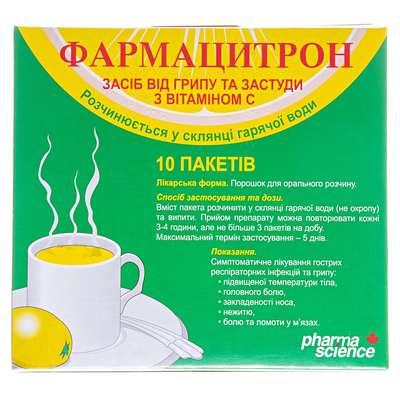
Pharmacytron powder for oral solution, 23 g each, No. 10 per package
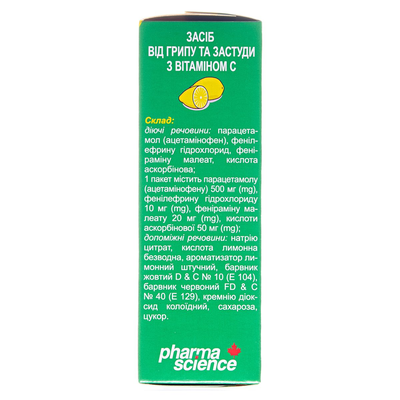
Ingredients
Active ingredients: paracetamol (acetaminophen), phenylephrine hydrochloride, phenyramine maleate, ascorbic acid;
1 packet contains 500 mg of paracetamol (acetaminophen), 10 mg of phenylephrine hydrochloride, 20 mg of pheniramine maleate, and 50 mg of ascorbic acid;
inactive ingredients: sodium citrate, anhydrous citric acid, artificial lemon flavor, D&C Yellow No. 10 (E 104), FD&C Red No. 40 (E 129), colloidal silicon dioxide, sucrose, sugar.
Dosage Form
Powder for oral solution.
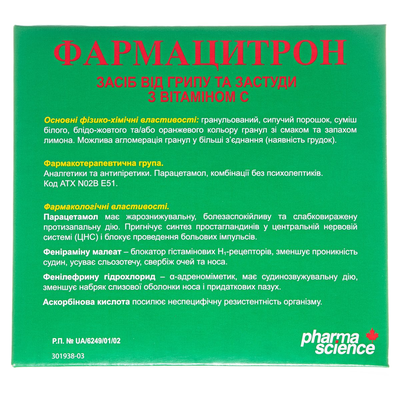
Main physical and chemical properties: granular, free-flowing powder; a mixture of white, pale yellow, and/or orange granules with a lemon taste and odor. Agglomeration of the granules into larger clusters (presence of lumps) is possible.
Pharmacotherapeutic group
Analgesics and antipyretics. Paracetamol, combinations without psycholeptics.
ATC code N02B E51.
Pharmacological Properties
Pharmacodynamics.
Paracetamol has antipyretic, analgesic, and mild anti-inflammatory effects. It inhibits prostaglandin synthesis in the central nervous system (CNS) and blocks the transmission of pain impulses.
Pheniramine maleate—an H1-histamine receptor antagonist—reduces vascular permeability and relieves watery eyes, itchy eyes, and an itchy nose.
Phenylephrine hydrochloride is an α-adrenomimetic; it has a vasoconstrictive effect and reduces swelling of the nasal mucosa and paranasal sinuses.
Ascorbic acid enhances the body’s nonspecific resistance.
Pharmacokinetics.
Paracetamol is well absorbed, crosses the placental barrier, passes into breast milk to a negligible extent, is metabolized by the cytochrome P450 system, is excreted by the kidneys, and has a half-life of 1–4 hours. Duration of action: 3–4 hours.
Pheniramine maleate is well absorbed from the gastrointestinal tract. It is metabolized in the liver by the cytochrome P450 system; its half-life is 16–18 hours, and 70–83% is excreted by the kidneys.
The effect of phenylephrine hydrochloride begins rapidly and lasts for about 20 minutes. It is metabolized in the liver or in the gastrointestinal tract and excreted by the kidneys.
Ascorbic acid is rapidly absorbed from the gastrointestinal tract, metabolized in the liver, and excreted by the kidneys.
Indications
Symptomatic treatment of acute respiratory infections and influenza:
- fever,
- headache,
- stuffy nose,
- runny nose,
- muscle aches and soreness.
Contraindications
Hypersensitivity to any of the drug’s components; severe liver and/or kidney dysfunction; congenital hyperbilirubinemia; glucose-6-phosphate dehydrogenase deficiency; phenylketonuria; alcoholism; blood disorders; leukopenia; anemia; severe forms of arrhythmia, hypertension, atherosclerosis, ischemic heart disease; hyperthyroidism; acute pancreatitis; prostatic hypertrophy with urinary retention; bladder neck obstruction; pyloroduodenal obstruction; bronchial asthma; angle-closure glaucoma; pheochromocytoma; thrombosis; thrombophlebitis; diabetes mellitus; epilepsy; states of increased agitation; sleep disorders, concomitant treatment with tricyclic antidepressants, β-blockers, other sympathomimetics, drugs that suppress or increase appetite, and amphetamine-like psychostimulants; concomitant treatment with and 2 weeks following the use of MAO inhibitors.
Drug Interactions and Other Interactions
The rate of paracetamol absorption may increase when taken with metoclopramide and domperidone and decrease when taken with cholestyramine (this effect is negligible if cholestyramine is administered 1 hour later). With prolonged use of paracetamol, the anticoagulant effect of warfarin and other coumarin derivatives may be enhanced, and the risk of bleeding may increase. With occasional use of acetaminophen, this effect is not pronounced. Barbiturates reduce the antipyretic effect of acetaminophen. Hepatotoxic drugs increase the likelihood of acetaminophen accumulation and overdose. The risk of paracetamol hepatotoxicity increases when taken with drugs that induce hepatic microsomal enzymes (barbiturates; anticonvulsants—phenytoin, phenobarbital, carbamazepine; and antituberculosis drugs—rifampicin, isoniazid). Paracetamol: reduces the effectiveness of diuretics; may prolong the half-life of chloramphenicol; may induce the metabolism of lamotrigine in the liver, thereby reducing its bioavailability and effectiveness. With regular use of paracetamol and zidovudine, neutropenia and an increased risk of liver damage are possible. When taking probenecid, the paracetamol dose should be reduced, as probenecid affects the metabolism of paracetamol. Paracetamol may affect the results of uric acid level determinations using the phosphotungstic acid method. The hepatotoxicity of paracetamol may be exacerbated by prolonged or excessive alcohol consumption. Do not use concomitantly with alcohol.
The interaction of phenylephrine with MAO inhibitors causes a hypertensive effect; with tricyclic antidepressants (amitriptyline), it increases the risk of cardiovascular side effects; with digoxin and cardiac glycosides—it leads to arrhythmias and myocardial infarction; with other sympathomimetics, it increases the risk of cardiovascular side effects and hypertension; may reduce the effectiveness of β-blockers and other antihypertensive drugs (reserpine, methyldopa, debrisoquine, guanethidine), increasing the risk of hypertension and cardiovascular side effects. Concomitant use of phenylephrine with ergot alkaloids (ergotamine and metysergide) may increase the risk of ergotism.
When taken orally, ascorbic acid enhances iron absorption; increases blood levels of ethinyl estradiol, penicillins, and tetracyclines; reduces blood levels of antipsychotic drugs and phenothiazine derivatives; it reduces the effectiveness of heparin and indirect anticoagulants; it increases the risk of crystalluria during treatment with salicylates and the risk of glaucoma during treatment with glucocorticosteroids; high doses reduce the effectiveness of tricyclic antidepressants. Ascorbic acid should be taken only 2 hours after a deferoxamine injection, as their concurrent use increases iron toxicity, particularly in the myocardium, which may lead to cardiac decompensation. Long-term use of high doses during disulfiram therapy inhibits the disulfiram-alcohol reaction. The absorption of ascorbic acid is reduced when taking oral contraceptives, fruit or vegetable juices, or alkaline beverages.
Pheniramine potentiates the anticholinergic effects of atropine, antispasmodics, tricyclic antidepressants, and antiparkinsonian drugs, and inhibits the action of anticoagulants. Concomitant use of pheniramine with hypnotics, barbiturates, sedatives, neuroleptics, tranquilizers, anesthetics, narcotic analgesics, or alcohol may significantly increase its depressant effect.
Special Instructions for Use
Do not exceed the recommended doses. If symptoms do not improve within 5 days or are accompanied by a high fever, a fever lasting more than 3 days, a rash, or a persistent headache, consult a doctor, as these may be symptoms of a more serious condition.
Due to the risk of severe liver damage in case of overdose, do not use this medication concurrently with other drugs for the symptomatic treatment of colds and the common cold (vasoconstrictors, paracetamol-containing products). Use with caution in patients with Raynaud’s disease, hypertension, heart disease, arrhythmias, bradycardia, thyroid, liver, or kidney disease, acute hepatitis, glaucoma, chronic lung diseases, and prostatic hypertrophy (due to the risk of urinary retention), in the elderly, in cases of increased blood clotting, hemolytic anemia, chronic malnutrition, dehydration, or stenotic peptic ulcer. The risk of hepatotoxicity is increased in individuals with alcohol-induced liver damage and those who abuse alcohol.
The medication contains: phenylephrine, which may cause angina attacks; and sucrose, which is contraindicated in patients with intolerance or malabsorption of fructose, glucose-galactose, or sucrose-isomaltose. If a patient has been diagnosed with an intolerance to certain sugars, they should consult a doctor before taking this medication; use with caution in patients with diabetes. May be harmful to teeth.
Before using this medication, consult a doctor if you have: liver or kidney disease; are taking warfarin or similar anticoagulants; daily use of analgesics for mild arthritis; or respiratory diseases (asthma, emphysema, chronic bronchitis).
This medication may affect the results of laboratory tests for blood glucose, uric acid, creatinine, and inorganic phosphate levels. It may also result in a false-negative result on a fecal occult blood test.
In patients with severe infections (sepsis), in which glutathione levels are reduced, taking acetaminophen increases the risk of metabolic acidosis; whose symptoms include deep, rapid, or labored breathing, nausea, vomiting, and loss of appetite; in such cases, seek medical attention immediately.
It is not recommended to take this medication at the end of the day, as ascorbic acid in high doses has a mild stimulating effect. Due to the stimulating effect of ascorbic acid on the production of corticosteroid hormones, monitoring of kidney function and blood pressure is required.
Use with extreme caution in patients with iron metabolism disorders (hemosiderosis, hemochromatosis, thalassemia), or a history of nephrolithiasis (risk of hyperoxaluria and oxalate precipitation in the urinary tract following administration of high doses of ascorbic acid).
Long-term use of high doses of ascorbic acid may accelerate its own metabolism, which may lead to paradoxical hypovitaminosis after discontinuation of treatment. Do not use concurrently with other medications containing vitamin C. Absorption of ascorbic acid may be altered in cases of impaired intestinal motility, enteritis, or reduced gastric secretion.
Use during pregnancy or breastfeeding.
This medication is contraindicated during pregnancy or breastfeeding. The effect of this medication on fertility has not been specifically studied. Preclinical studies have not revealed any specific effect of acetaminophen on fertility when used at therapeutic doses. No adequate studies have been conducted on the reproductive toxicity of phenylephrine and pheniramine in animals.
Ability to affect reaction time when driving or operating machinery.
Since this medication may cause drowsiness and other adverse reactions affecting the nervous system and vision, driving or operating complex machinery is not recommended while taking this medication.
Directions for Use and Dosage
Dissolve the contents of one packet in a glass of hot water (not boiling water) and drink. The medication may be taken every 3–4 hours, but no more than 3 packets per day.
The maximum duration of use is 5 days.
Children.
This medication is contraindicated in children under 14 years of age.
Overdose
Paracetamol: Within the first 24 hours, symptoms such as pale skin, nausea, vomiting, loss of appetite, and abdominal pain may occur. When taken in large doses, disorientation, psychomotor agitation, dizziness, sleep disturbances, heart rhythm disturbances, pancreatitis, and hepatic necrosis may occur. The first sign of liver damage may be abdominal pain, which does not always manifest within the first 12–48 hours but may occur later, up to 4–6 days after taking the medication. Liver damage typically occurs no later than 72–96 hours after taking the drug. Glucose metabolism disorders, metabolic acidosis, and hemorrhages may occur. With prolonged use of high doses, aplastic anemia, pancytopenia, agranulocytosis, neutropenia, leukopenia, and thrombocytopenia may occur.
In rare cases, acute renal failure with tubular necrosis has been reported; this can occur even in the absence of severe liver damage and is manifested by severe lower back pain, hematuria, and proteinuria. Nephrotoxicity is possible: renal colic, interstitial nephritis, and capillary necrosis.
Ingestion of 10 g or more of acetaminophen by an adult, or more than 150 mg/kg of body weight by a child, especially when combined with alcohol, may lead to hepatocellular necrosis with the development of encephalopathy, hemorrhages, hypoglycemia, hepatic coma, and death. In patients with risk factors (long-term treatment with carbamazepine, phenobarbital, phenytoin, primidone, rifampicin, St. John’s wort, or other drugs that induce liver enzymes; alcohol abuse; glutathione-deficient cachexia (digestive disorders, cystic fibrosis, HIV infection, starvation, cachexia)—taking 5 g or more of acetaminophen may lead to liver damage.
In case of overdose, immediate medical attention is required. The patient should be taken to a hospital immediately, even if there are no early symptoms of overdose. Symptoms may be limited to nausea and vomiting or may not reflect the severity of the overdose or the risk of organ damage. Activated charcoal should be administered within the first hour after the overdose. Blood paracetamol concentrations should be measured 4 hours or more after ingestion (earlier measurements are unreliable). Treatment with N-acetylcysteine may be administered within 24 hours after paracetamol ingestion, but maximum effect is achieved when administered within the first 8 hours; thereafter, its efficacy decreases sharply. If intravenous administration of N-acetylcysteine is necessary, it should be administered according to the established dosage schedule. Alternatively, in the absence of vomiting and in settings remote from a hospital, methionine may be administered orally.
Phenylephrine: Side effects include hyperhidrosis, psychomotor agitation or CNS depression, headache, dizziness, drowsiness, altered consciousness, arrhythmias, tremor, hyperreflexia, convulsions, nausea, vomiting, irritability, restlessness, and hypertension; in severe cases, coma. To counteract the hypertensive effects, an intravenous alpha-receptor blocker may be administered; for seizures, diazepam may be used.
Pheniramine: Atropine-like symptoms occur: mydriasis, photophobia, dryness of the skin and mucous membranes, hyperthermia, and intestinal atony. CNS depression leads to disturbances in the respiratory and cardiovascular systems (bradycardia, hypotension, collapse). Symptoms resulting from the mutual potentiation of pheniramine’s parasympatholytic effect and phenylephrine’s sympathomimetic effect: drowsiness, which may be followed by agitation (especially in children) or CNS depression, visual disturbances, rash, persistent headache, nervousness, insomnia, hyperreflexia, irritability, circulatory disturbances, and bradycardia. There is no specific antidote for the treatment of antihistamine overdose. The patient should receive standard emergency care, including administration of activated charcoal and a saline laxative, and standard measures to support the cardiorespiratory system should be taken. Stimulants must not be used; vasoconstrictors may be used to treat hypotension.
Ascorbic acid: nausea, vomiting, or diarrhea may occur (which resolve after discontinuation); abdominal bloating and pain, itching, skin rashes, and increased irritability. Doses exceeding 3,000 mg may cause temporary osmotic diarrhea and gastrointestinal disturbances, disturbances in zinc and copper metabolism, and myocardial dystrophy; and, with prolonged use in high doses, suppression of pancreatic islet function and glucosuria may occur. Overdose may lead to changes in the renal excretion of ascorbic and uric acids during the acetylation of urine, resulting in the precipitation of oxalate stones.
Treatment is symptomatic: gastric lavage should be performed within the first 6 hours, and methionine should be administered orally or cysteamine or N-acetylcysteine intravenously within the first 8 hours.
Side Effects
Skin and subcutaneous tissue: rash, itching, dermatitis, hives, erythema multiforme, Stevens-Johnson syndrome, Lyell’s syndrome.
Immune system: hypersensitivity reactions, including anaphylactic shock and angioedema.
Neurological disorders: headache, dizziness, tremor, anxiety, nervousness, irritability, fear, insomnia, drowsiness, confusion, hallucinations, psychomotor agitation, disorientation, depressive states, paresthesias, tinnitus, in rare cases—coma, seizures, dyskinesia, behavioral changes.
Respiratory system: bronchospasm in patients sensitive to acetylsalicylic acid and NSAIDs.
Ocular system: visual disturbances and accommodation disorders, mydriasis, increased intraocular pressure, dry eyes.
Gastrointestinal system: nausea, vomiting, heartburn, dry mouth, abdominal discomfort and pain, constipation, diarrhea, flatulence, anorexia, mouth ulcers, hypersalivation, hemorrhages, and irritation of the mucous membranes.
Hepatobiliary system: liver dysfunction, hypertransaminasemia (usually without jaundice), hepatic necrosis (when high doses are used).
Endocrine system: hypoglycemia, up to hypoglycemic coma.
Blood and lymphatic system disorders: anemia, including hemolytic anemia, sulfhemoglobinemia, and methemoglobinemia (cyanosis, shortness of breath, chest pain), bruising or bleeding, thrombocytopenia, neutropenia, agranulocytosis, leukopenia, pancytopenia,
Renal and urinary system disorders: nephrotoxicity, interstitial nephritis, capillary necrosis, dysuria, urinary retention and difficulty urinating, renal colic, renal failure.
Cardiac disorders: hypertension, tachycardia, bradycardia, palpitations, arrhythmia, shortness of breath, chest pain, angina attacks.
Other: general weakness, malaise.
Unlike second-generation antihistamines, the use of pheniramine is not associated with QT interval prolongation or cardiac arrhythmia.
Shelf life
3 years.
Storage conditions
Store out of the reach of children at a temperature not exceeding 30 °C.
Packaging
23 g of powder per packet No. 1. 23 g of powder per packet, 10 packets per cardboard box.
Dispensing Category
Available without a prescription.
Manufacturer
PharmaSciences, Inc.







