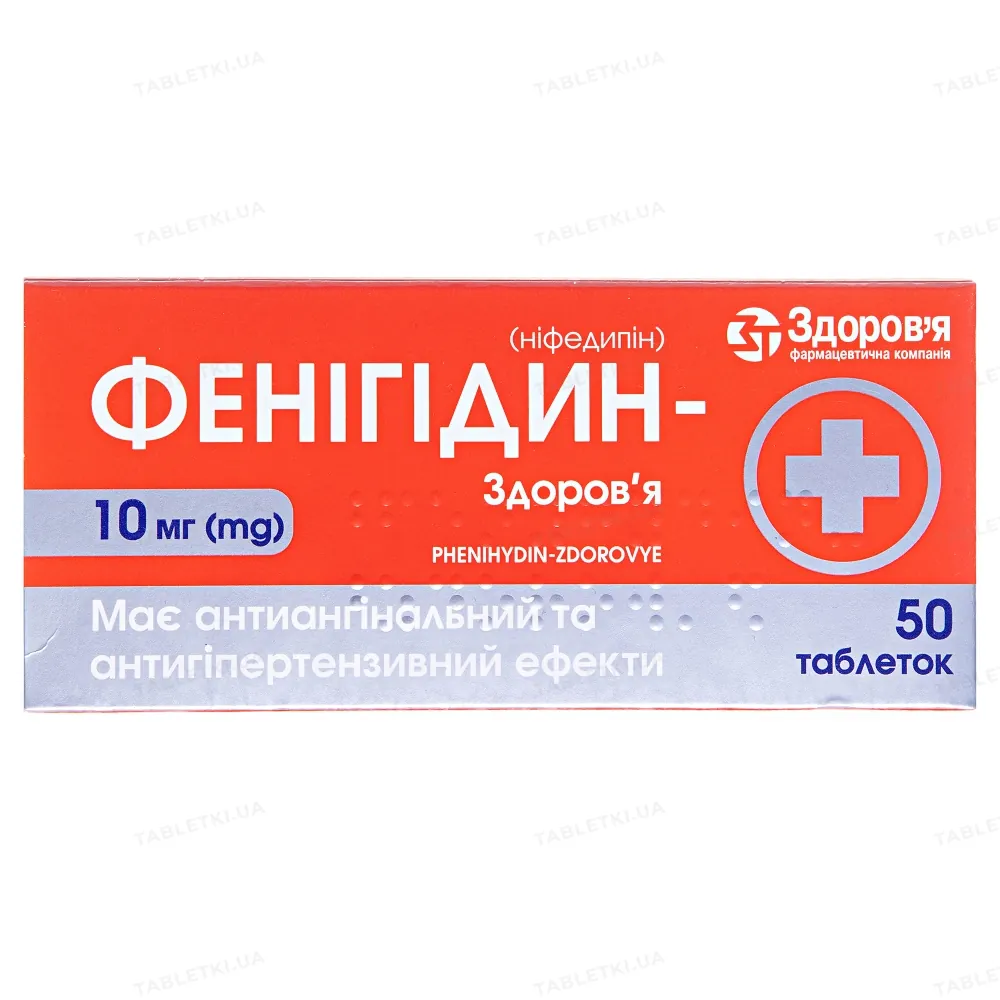
Fenigidin-Zdorovye, 10 mg tablets, No. 50 (10 x 5)
Composition
Active ingredient: nifedipine;
1 tablet contains 10 mg of nifedipine;
inactive ingredients: potato starch, lactose monohydrate, refined sugar, calcium stearate, polysorbate 80.
Dosage Form
Tablets.
Main physical and chemical properties: yellow or greenish-yellow tablets, flat-cylindrical in shape with a beveled edge.
Pharmacotherapeutic group
Selective calcium channel blockers with a predominant effect on blood vessels. Dihydropyridine derivatives. ATC code C08C A05.
Pharmacological properties
Pharmacodynamics.
Nifedipine—the active ingredient of the drug—is a selective calcium channel blocker, a dihydropyridine derivative. It exhibits antianginal and antihypertensive effects. It inhibits the influx of calcium into cardiomyocytes and vascular smooth muscle cells. It reduces vascular smooth muscle tone. It dilates the coronary and peripheral arteries, reduces total peripheral vascular resistance, blood pressure, and, to a minor extent, myocardial contractility; it also reduces afterload and myocardial oxygen demand. It improves coronary blood flow. It does not impair myocardial conduction. With long-term use, nifedipine may prevent the formation of new atherosclerotic plaques in the coronary arteries. At the start of treatment with nifedipine, transient reflex tachycardia and an increase in cardiac output may occur, which do not compensate for the vasodilation caused by the drug. Nifedipine increases the excretion of sodium and fluid from the body. In Raynaud’s syndrome, the drug may prevent or alleviate vasospasm in the extremities.
Pharmacokinetics.
After oral administration, nifedipine is rapidly and almost completely absorbed. Bioavailability, due to presystemic metabolism in the liver, is 50%. Maximum plasma concentration (Tmax) is reached 1–3 hours after administration.
Nifedipine is metabolized in the intestinal wall and in the liver via the cytochrome P450 3A4 system. The metabolites exhibit no pharmacological activity. It is excreted from the body as metabolites primarily by the kidneys and approximately 5–15% via the intestines in bile. Trace amounts of unchanged drug (less than 0.1%) have been detected in urine.
The half-life (T1/2) of nifedipine in plasma is 2–5 hours.
Indications
Hypertension; ischemic heart disease: chronic stable angina, vasospastic angina (Prinzmetal angina).
Contraindications
Hypersensitivity to nifedipine, other dihydropyridine derivatives, or other components of the drug; cardiogenic shock; severe aortic stenosis; unstable angina; acute myocardial infarction (within the first 4 weeks); ileostomy; colostomy; use in combination with rifampicin (due to the inability to achieve effective plasma concentrations of nifedipine).
Drug Interactions and Other Interactions
Nifedipine is metabolized by the cytochrome P450 3A4 system, which is located in the intestinal mucosa and the liver. Therefore, drugs that inhibit or induce this enzyme system may alter the “first-pass effect” (following oral administration) or the clearance of nifedipine.
When this drug is used concomitantly with other medications, the following interactions are possible:
with quinopristin/dalfopristin, cimetidine, and cisapride—due to inhibition of cytochrome P450 3A4, the concentration of nifedipine in blood plasma increases; when these drugs are used concomitantly, it is recommended to monitor blood pressure and, if necessary, reduce the dose of nifedipine;
with the following inhibitors of the cytochrome P450 3A4 system: macrolide antibiotics, HIV protease inhibitors, azole antifungals, fluoxetine, nefazodone, and valproic acid—no clinical studies have been conducted on the interaction between these drugs and nifedipine. It is known that drugs in this class inhibit the cytochrome P450 3A4-mediated metabolism of nifedipine; therefore, when used concomitantly, an increase in nifedipine plasma concentrations cannot be ruled out; It is recommended to monitor blood pressure and, if necessary, reduce the dose of nifedipine;
with rifampicin—due to the induction of cytochrome P450 3A4, the bioavailability and efficacy of nifedipine are significantly reduced; concomitant use of these drugs is contraindicated;
With phenytoin—due to induction of cytochrome P450 3A4, the bioavailability and efficacy of nifedipine are reduced; when the drugs are used concomitantly, it is recommended to monitor the clinical response to nifedipine therapy and, if necessary, increase the dose; if the nifedipine dose was increased during concomitant use, a corresponding dose reduction should be considered after discontinuation of phenytoin;
with the following cytochrome P450 3A4 inducers: carbamazepine, phenobarbital—no clinical studies have been conducted on the interaction between the aforementioned drugs and nifedipine. It is known that both drugs, due to induction of cytochrome P450 3A4, reduce the plasma concentration of the structurally similar calcium channel blocker nimodipine; therefore, when used concomitantly with nifedipine, an increase in its plasma concentration cannot be ruled out;
with antihypertensive agents (diuretics, α- and β-blockers, ACE inhibitors, calcium channel blockers, AT-1 receptor antagonists, PDE-5 inhibitors, methyldopa, magnesium sulfate)—the hypotensive effect may be potentiated; when nifedipine is used concomitantly with β-blockers, careful monitoring of the patient is required, as there have been isolated reports of exacerbation of heart failure;
with digoxin—a decrease in digoxin clearance and an increase in its plasma concentration are possible; it is recommended to monitor the patient for symptoms of digoxin overdose and, if necessary, adjust the dose;
with quinidine—a decrease in quinidine concentrations has been reported, and upon discontinuation of nifedipine, a sharp increase in quinidine concentrations in plasma has been reported; It is recommended to monitor quinidine plasma concentrations and adjust the dose if necessary; additionally, some authors have reported increased nifedipine plasma concentrations when these drugs are used concomitantly;
with tacrolimus—increased tacrolimus plasma concentrations have been reported; it is recommended to monitor tacrolimus plasma concentrations and adjust the dose if necessary.
Grapefruit juice inhibits the cytochrome P450 3A4 system. Consumption of grapefruit juice while taking nifedipine leads to increased plasma concentrations of the drug and a prolonged duration of action of nifedipine due to reduced first-pass metabolism or decreased clearance. As a result, the drug’s antihypertensive effect may be enhanced. After regular consumption of grapefruit juice, this effect may persist for at least 3 days after the last intake of juice. Therefore, consumption of grapefruit or grapefruit juice should be avoided during nifedipine therapy.
Use of the drug may lead to falsely elevated results in spectrophotometric determination of vanillylmandelic acid concentration in urine (however, this effect is not observed when using high-performance liquid chromatography).
Use of this medication may lead to false-positive results during X-ray examinations using a barium contrast agent (for example, filling defects may be interpreted as polyps).
Special Considerations for Use
The drug may be used in combination with other antihypertensive agents. However, the possibility of postural hypotension should be considered.
When this drug is used concomitantly with β-blockers, it is recommended to monitor the patient’s condition, as this may result in a more pronounced decrease in blood pressure and a weakening of cardiac function.
This medication should not be used in patients experiencing an acute episode of stable angina.
This medication should not be used if there is a possible association between prior use of nifedipine and ischemic pain. In patients with angina, episodes may occur more frequently, and their duration and intensity may increase, especially at the start of treatment.
Use this medication with caution in patients with severe hypotension (systolic blood pressure below 90 mm Hg), severe heart failure, severe cerebrovascular disorders, diabetes mellitus, or impaired liver function. It is recommended to monitor the patient’s condition and adjust the nifedipine dose as necessary.
Use the drug with extreme caution in patients undergoing hemodialysis, or in cases of malignant hypertension or hypovolemia, as vasodilation may cause a significant decrease in blood pressure in these patients.
Use the drug with caution in patients who are concurrently taking cytochrome P450 3A4 inhibitors. It is recommended to monitor blood pressure and adjust the nifedipine dose if necessary.
Use this medication with caution in patients with severe narrowing of the gastrointestinal tract due to the potential for obstructive symptoms. Cases of obstructive symptoms have been reported in patients with no history of gastrointestinal disorders. The formation of bezoars may occur, which may require surgical intervention.
Some in vitro studies have shown an association between the use of calcium channel blockers, particularly nifedipine, and reversible biochemical changes in sperm that impair their fertilization capacity. If in vitro fertilization attempts prove unsuccessful and no other explanations are available, calcium channel blockers, such as nifedipine, may be considered as a possible cause of this phenomenon.
This medication contains lactose and refined sugar; therefore, if a patient has been diagnosed with an intolerance to certain sugars, they should consult a doctor before taking this medication.
Use during pregnancy or breastfeeding.
Animal studies have shown that the drug is embryotoxic, fetotoxic, and teratogenic.
There are no results from relevant, well-controlled studies on the use of this medication in pregnant women. There have been reports of an increased incidence of perinatal asphyxia, cesarean delivery, as well as preterm birth and intrauterine growth restriction. It has not been definitively established whether these reports are a consequence of the presence of hypertension, its treatment, or a specific effect of the drug. There is insufficient information to rule out serious adverse effects on the fetus or newborns.
The use of nifedipine is contraindicated during pregnancy up to the 20th week. The use of nifedipine during pregnancy after the 20th week requires a careful assessment of the risk-benefit ratio. Treatment with this drug should be considered only if no alternative treatment options are available. When nifedipine is administered concurrently with intravenous magnesium sulfate, careful monitoring of blood pressure is required due to the possibility of a significant drop in blood pressure, which could harm the mother and the fetus.
Nifedipine passes into breast milk. Breastfeeding should be discontinued while taking this medication.
Effect on reaction time when driving or operating machinery. Side effects that may affect reaction time while driving or operating machinery may occur during treatment, especially at the start of therapy or when switching to another medication.
Dosage and Administration
This medication is for oral use in adults. Take the tablets at the same time each day, regardless of meals, without chewing, and with a sufficient amount of liquid (except grapefruit juice). The recommended interval between doses is 12 hours (but not less than 6 hours).
The dose and duration of treatment are determined on an individual basis, taking into account the severity of the condition and the patient’s response to treatment.
Hypertension.
Administer the medication at a dose of 20 mg twice daily.
Ischemic heart disease.
Administer the drug at a dose of 20 mg twice daily. If necessary, the dose of nifedipine may be increased to 60 mg/day. The dose should be increased gradually.
Patients concurrently taking cytochrome CYP 3A4 inhibitors or inducers. When used concurrently with cytochrome CYP 3A4 inhibitors or inducers, dose adjustment or discontinuation of the drug may be necessary.
The drug should be discontinued gradually, especially when high doses are used.
Children. Do not use this medication in children.
Overdose
Symptoms of acute intoxication: impaired consciousness up to the development of coma, decreased blood pressure, tachycardia/bradycardia, hyperglycemia, metabolic acidosis, hypoxia, and cardiogenic shock accompanied by pulmonary edema.
Treatment. Emergency measures should be directed primarily toward removing the drug from the body and restoring stable hemodynamics. After oral administration, it is recommended to completely empty the stomach, if necessary in combination with gastric and small bowel lavage. In the event of bradycardia, the use of β-sympathomimetics is recommended. In cases of life-threatening bradycardia, the use of an artificial pacemaker is recommended. Hypotension resulting from cardiogenic shock and vasodilation can be corrected with calcium preparations (administer 10–20 mL of a 10% solution of calcium chloride or gluconate intravenously slowly, then repeated as needed). As a result, serum calcium levels may reach the upper limit of normal or be slightly elevated. If calcium administration is not sufficiently effective, it is advisable to use sympathomimetics such as dopamine or norepinephrine. Doses of these drugs should be adjusted based on the therapeutic effect achieved. Additional fluid administration should be approached with great caution, as it increases the risk of cardiac overload. Since nifedipine is characterized by a high degree of binding to plasma proteins and a relatively small volume of distribution, hemodialysis is ineffective; however, plasmapheresis is recommended.
Side Effects
Blood and lymphatic system: anemia, leukopenia, thrombocytopenia (sometimes with purpura), agranulocytosis.
Nervous system and mental disorders: headache, migraine, dizziness/vertigo, tremor, paresthesia, dysesthesia, hypesthesia, sleep disturbances, drowsiness, anxiety.
Ocular disorders: visual disturbances, eye pain.
Cardiovascular system: tachycardia, palpitations, hypotension, edema, vasodilation, hyperemia, collapse, chest pain (including typical angina attacks), loss of consciousness.
Respiratory system, thoracic, and mediastinal disorders: nosebleeds, nasal congestion, dyspnea.
Gastrointestinal system: nausea, vomiting, dyspepsia, diarrhea, constipation, flatulence, gastrointestinal discomfort/pain, abdominal pain, intestinal obstruction, intestinal ulcer, gastroesophageal sphincter insufficiency, bezoar, dry mouth, gingival hyperplasia, dysphagia.
Hepatobiliary system: transient elevation of liver enzymes, jaundice, cholestasis.
Metabolism and nutrition disorders: hyperglycemia.
Urinary system: polyuria, dysuria; in patients with renal insufficiency—worsening of renal function.
Musculoskeletal and connective tissue disorders: myalgia, arthralgia, muscle cramps, joint swelling.
Reproductive system and mammary glands: erectile dysfunction, gynecomastia (in elderly men).
Immune system, skin, and subcutaneous tissue disorders: hypersensitivity reactions, including rash, itching, hives, allergic edema/angioedema, including laryngeal edema; anaphylactic/anaphylactoid reactions; erythema, photosensitivity, purpura, exfoliative dermatitis, toxic epidermal necrolysis (Lyell’s syndrome).
Other: malaise, increased fatigue, chills, nonspecific pain; fever may occur with prolonged use.
In patients with malignant hypertension and hypovolemia who are undergoing hemodialysis, a significant decrease in blood pressure may occur due to vasodilation.
Shelf life
3 years.
Storage conditions
Store in the original packaging at a temperature not exceeding 25 °C.
Keep out of reach of children.
Packaging
Tablets, 10 x 5, in blister packs inside a box.
Manufacturer
LIMITED LIABILITY COMPANY “CORPORATION ‘ZDOROV’YA’”.
Address
Ukraine, 61013, Kharkiv Oblast, city of Kharkiv, 22 Shevchenko Street.