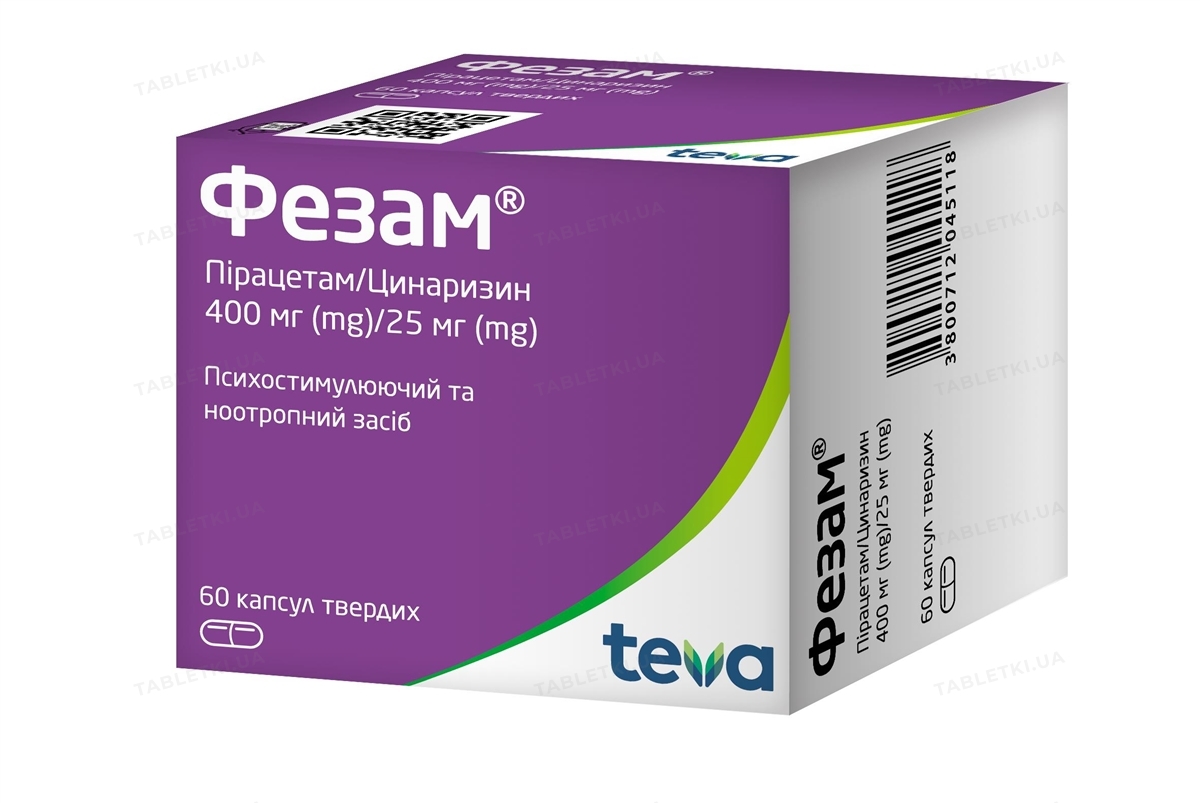
Fezam Hard Capsules, No. 60 (10 x 6)
Composition
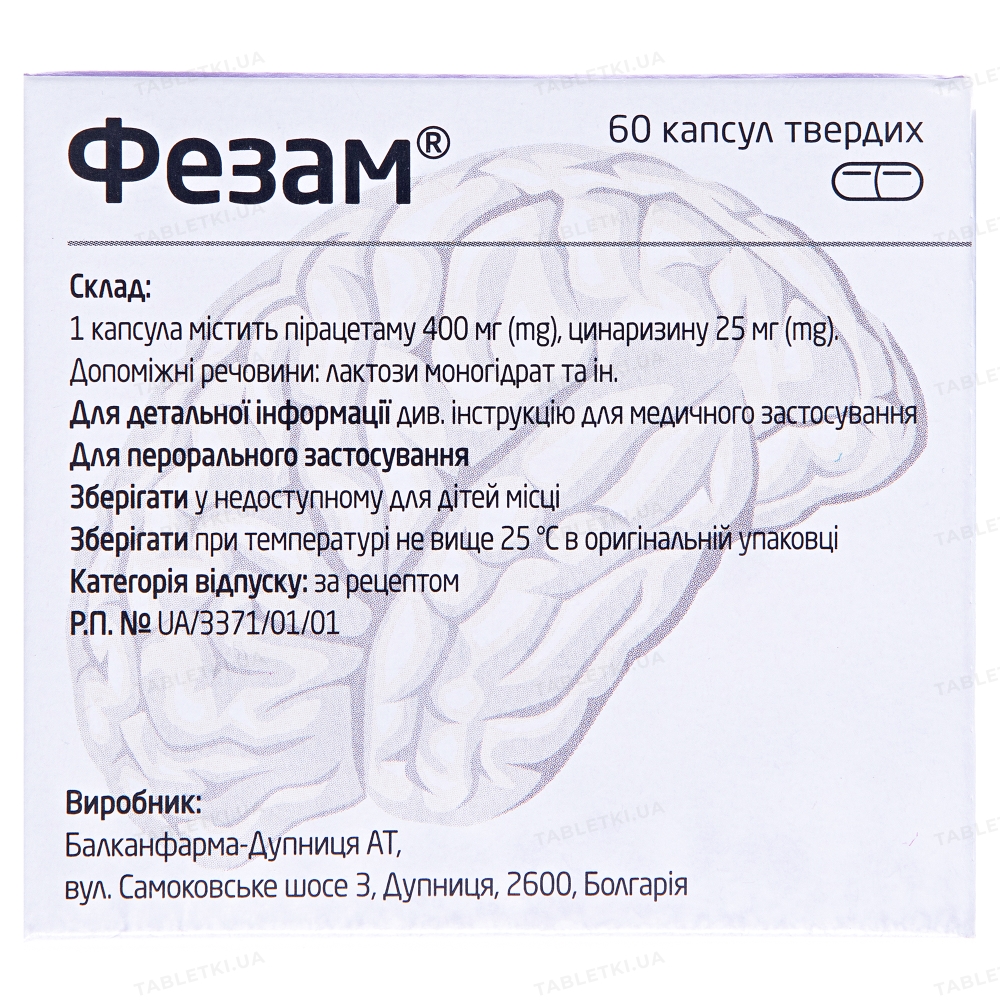
Active ingredients: 1 capsule contains 400 mg of piracetam and 25 mg of cinnarizine;
Excipients: lactose monohydrate, colloidal anhydrous silicon dioxide, magnesium stearate; hard gelatin capsules: gelatin, titanium dioxide (E 171).
Dosage Form
Hard capsules.
Main physical and chemical properties: hard, cylindrical, white gelatin capsules filled with a white or pale cream-colored powder mixture; agglomerates may be present.
Pharmacotherapeutic group
Psychostimulants and nootropics.
ATC code N06B X.
Pharmacological properties
Pharmacodynamics.
Fezam® is a combination drug. The active ingredients are piracetam, a cyclic derivative of γ-aminobutyric acid, and cinnarizine, a selective calcium channel antagonist.
Piracetam is a nootropic agent that acts on the brain, improving cognitive functions such as learning ability, memory, attention, and mental performance. There are likely several mechanisms by which the drug affects the central nervous system: altering the speed of nerve impulse transmission in the brain; enhancing metabolic processes in nerve cells; and improving microcirculation by affecting the rheological properties of blood without causing vasodilation. It improves connections between the cerebral hemispheres and synaptic conduction in neocortical structures. After prolonged use of the drug, patients with impaired brain function show improved cognitive function and attention.
Cinnarizine inhibits the contraction of vascular smooth muscle cells by blocking calcium channels. In addition to its direct calcium-antagonist action, cinnarizine reduces the vasoconstrictive effects of vasoactive substances, such as norepinephrine and serotonin, by blocking the calcium channel receptors they regulate. The blockade of calcium entry into cells is tissue-specific and results in vasodilatory effects without affecting blood pressure or heart rate. Cinnarizine may further improve impaired microcirculation by increasing the elasticity of red blood cell membranes and reducing blood viscosity. Cellular resistance to hypoxia is increased. Cinnarizine inhibits stimulation of the vestibular system, resulting in the suppression of nystagmus and other autonomic disorders. Cinnarizine prevents the onset of acute episodes of dizziness.
Pharmacokinetics.
The drug is rapidly and completely absorbed in the gastrointestinal tract. Cinnarizine reaches peak plasma concentrations one hour after oral administration. It is completely metabolized. It is 91% bound to blood proteins. 60% is excreted unchanged in the feces; the remainder is excreted in the urine as metabolites.
The maximum plasma concentration of piracetam is reached in 2–6 hours. Piracetam freely crosses the blood-brain barrier and is excreted unchanged in the urine.
Indications
- Chronic and latent cerebral circulatory insufficiency associated with atherosclerosis and hypertension; angiodystonic ischemic stroke and the post-stroke condition.
- Post-traumatic cerebrasthenia.
- Encephalopathy of various origins.
- Psychoorganic syndrome characterized primarily by impaired memory and other cognitive functions.
- Labyrinthopathies—dizziness, tinnitus, nausea, vomiting, nystagmus.
- Ménière’s disease.
- Prevention of motion sickness.
Contraindications
Hypersensitivity to piracetam, cinnarizine, or any of the drug’s excipients; individual sensitivity to pyrrolidone derivatives.
Severe renal insufficiency, acute cerebrovascular accident (hemorrhagic stroke), Huntington’s chorea, parkinsonism, increased intraocular pressure; psychomotor agitation.
Pregnancy or breastfeeding.
Interactions with Other Medications and Other Types of Interactions
When alcohol is consumed concurrently with medications that depress the central nervous system (CNS) or tricyclic antidepressants, their sedative effects may be potentiated.
This medication potentiates the effects of nootropic, antihypertensive, and vasodilator agents. Concomitant use with vasodilators enhances its effect, while the presence of cinnarizine reduces the activity of antihypertensive agents.
Fezam® enhances the activity of thyroid hormones and may cause tremors and restlessness.
Diagnostic procedures: Due to its antihistamine effect, cinnarizine—a component of this medication—may mask positive reactions to skin reactivity factors during skin testing; therefore, its use should be discontinued 4 days prior to the test.
Antiepileptic drugs: No interactions have been reported with carbamazepine, phenytoin, phenobarbital, or sodium valproate (information based on available data from the use of piracetam at a dose of 20 mg/day daily for 4 weeks)
May enhance the effects of oral anticoagulants.
Acenocoumarol.
In patients with severe recurrent thrombosis, the use of piracetam at high doses (9.6 g/day) did not affect the acenocoumarol dosage required to achieve a prothrombin time (INR) of 2.5–3.5; however, when used concomitantly, a significant reduction was observed in platelet aggregation, fibrinogen levels, von Willebrand factors (coagulation activity (VIII: C); ristocetin cofactor (VIII: vW: Rco), and plasma protein (VIII: vW: Ag;)), as well as blood and plasma viscosity.
Pharmacokinetic interactions.
The likelihood of changes in the pharmacodynamics of piracetam under the influence of other drugs is low, since 90% of piracetam is excreted unchanged in the urine.
In vitro, piracetam does not inhibit the cytochrome P450 isoforms CYP1A2, 2B6, 2C8, 2C9, 2C19, 2D6, 2E1, and 4A9/11 at concentrations of 142, 426, and 1,422 μg/mL.
At a concentration of 1,422 μg/mL, slight inhibition of CYP2A6 (21%) and CYP4A9/11 (11%) was observed. However, the K_i values for these two CYP isomers are sufficient even at concentrations exceeding 1,422 μg/mL. Therefore, metabolic interactions with drugs that undergo biotransformation by these enzymes are unlikely.
Special Considerations for Use
Renal impairment.
Use this medication with caution in patients with kidney disease. In cases of mild or moderate renal insufficiency, it is recommended to reduce the therapeutic dose or increase the dosing interval, especially if creatinine clearance is < 60 mL/min.
Hepatic insufficiency.
Use this medication with caution in patients with liver disease. In patients with impaired liver function, liver enzyme levels should be monitored.
Elderly patients.
During long-term therapy in elderly patients, regular monitoring of renal function is recommended; if necessary, the dose should be adjusted based on creatinine clearance test results.
Passes through the filtration membranes of hemodialysis machines.
Use of this medication should be avoided in patients with porphyria.
Effect on laboratory tests.
This medication may cause false-positive results in doping tests for athletes, as well as in tests for radioactive iodine, due to the presence of iodine-containing dyes in the capsule shell.
Effect on platelet aggregation.
Since piracetam reduces platelet aggregation, the drug should be prescribed with caution to patients with hemostatic disorders or conditions that may be accompanied by bleeding (gastrictract), during major surgical procedures (including dental procedures), to patients with symptoms of severe bleeding, or to patients with a history of hemorrhagic stroke; as well as to patients taking anticoagulants or antiplatelet agents, including low doses of acetylsalicylic acid.
Like other antihistamines, Fezam® may cause epigastric irritation; taking it after meals may reduce gastric irritation.
Concomitant use of alcohol or antidepressants should be avoided, as the drug may cause drowsiness, especially at the very beginning of treatment (see the section “Interactions with Other Medications and Other Types of Interactions”).
Excipients.
This medication contains lactose. Therefore, patients with rare hereditary forms of galactose intolerance, lactase deficiency, or glucose-galactose malabsorption should not take this medication.
Use During Pregnancy or Breastfeeding
Do not use this medication during pregnancy or while breastfeeding.
If treatment with this medication is necessary, breastfeeding should be discontinued.
Effect on reaction time when driving or operating machinery
Caution should be exercised when driving or operating machinery, given the potential for adverse reactions affecting the central nervous system.
Dosage and Administration
Take Fezam® capsules orally after meals, without chewing, with water.
Adults
1–2 capsules 3 times daily.
The course of treatment is 1–3 months, depending on the severity of the condition.
Do not use for more than 3 months without a break! You may take 2–3 treatment courses per year.
Children
Do not use.
Overdose
Symptoms: increased severity of the drug’s side effects. In rare cases of acute overdose, dyspeptic symptoms (bloody diarrhea, abdominal pain), altered consciousness ranging from drowsiness to stupor and coma, vomiting, extrapyramidal symptoms, and hypotension. In children, overdose is characterized primarily by excitatory reactions—insomnia, restlessness, euphoria, irritability, tremor, and, rarely, nightmares, hallucinations, and seizures.
Treatment: gastric lavage (preferably within the first hour after oral ingestion), administration of activated charcoal. Provide symptomatic therapy. Hemodialysis may be indicated.
Side Effects
Neurological: hyperkinesia, ataxia, headache, insomnia, vestibular disorders, dizziness, increased frequency of epileptic seizures, balance disturbances/possible risk of worsening epilepsy, tremor, hypersomnia, lethargy, dyskinesia, parkinsonism, fatigue. Prolonged use in elderly patients may lead to the development of extrapyramidal symptoms.
Immune system: hypersensitivity, including anaphylaxis.
Gastrointestinal system: dry mouth, dyspepsia, abdominal pain, upper abdominal pain, epigastric discomfort, diarrhea, cholestatic jaundice, increased salivation, nausea, vomiting.
Skin disorders: angioedema, dermatitis, itching, rash, hives, photosensitivity, hyperhidrosis, lichen-like keratosis, erythematous lupus, and lichen planus.
Psychiatric disorders: increased excitability, nervousness, confusion, drowsiness, depression, anxiety, hallucinations.
Musculoskeletal system: muscle rigidity.
Other: asthenia, increased sweating, sexual arousal, hemorrhagic disorders.
In rare cases, weight gain may occur during long-term treatment.
Shelf life
3 years.
Storage Conditions
Store at a temperature not exceeding 25 °C in the original packaging.
Keep out of reach of children.
Packaging
10 capsules per blister pack; 2 or 6 blister packs per cardboard box.
Manufacturer
Balkanfarma-Dupnitsa JSC.
Address
3 Samokovsko Shose St., Dupnitsa, 2600, Bulgaria.