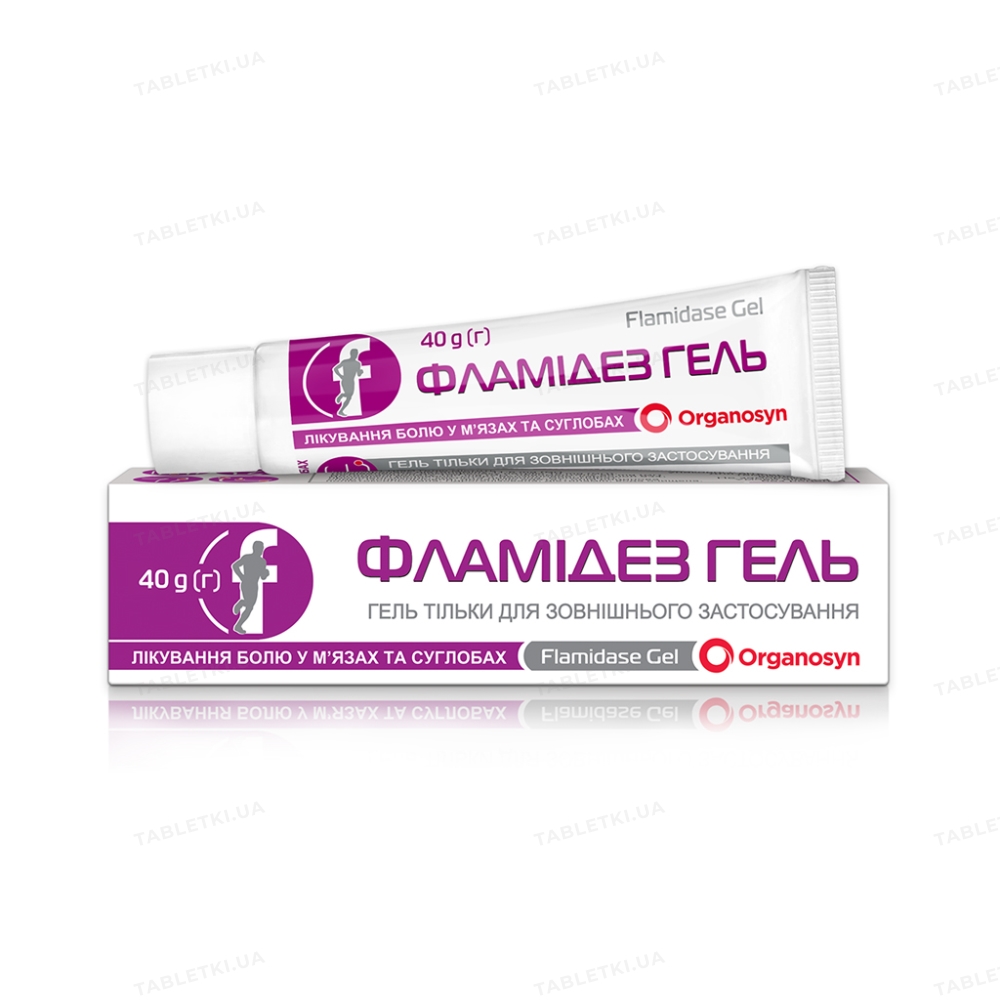
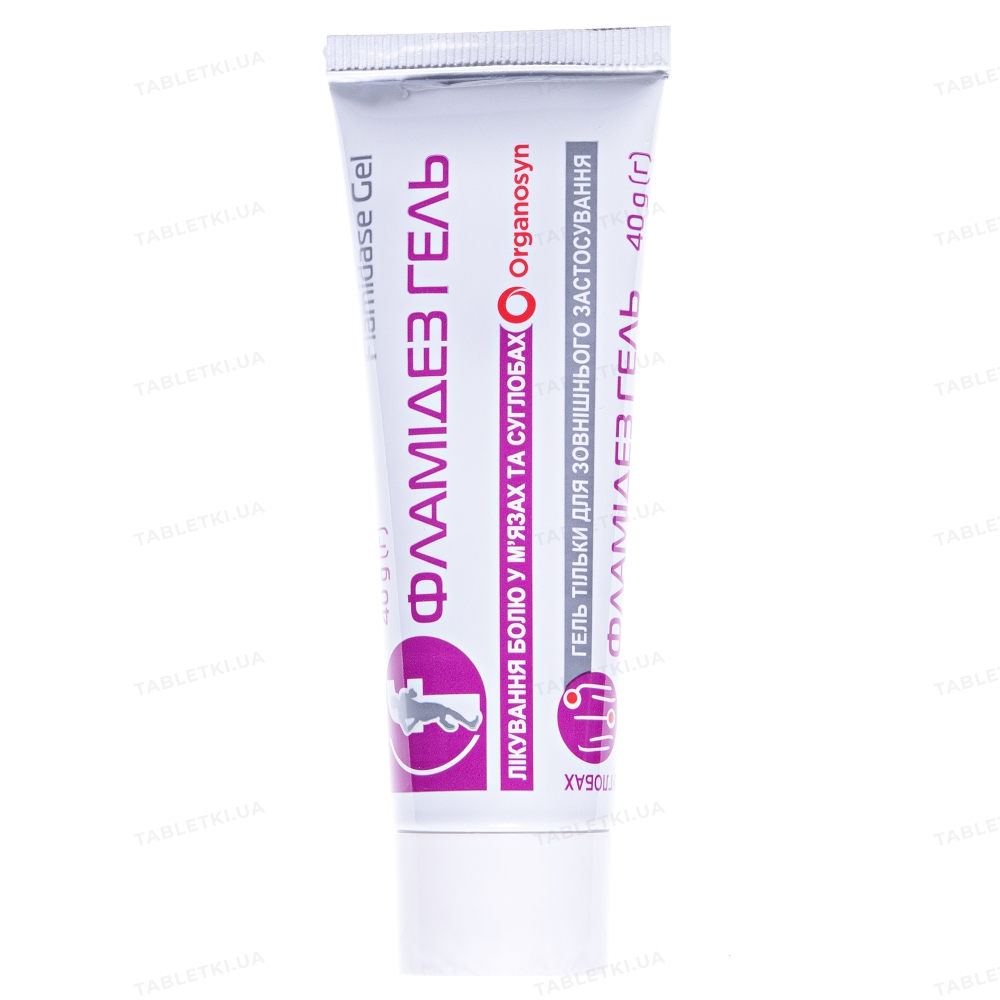
Flamidez gel, 40 g tubes
Ingredients
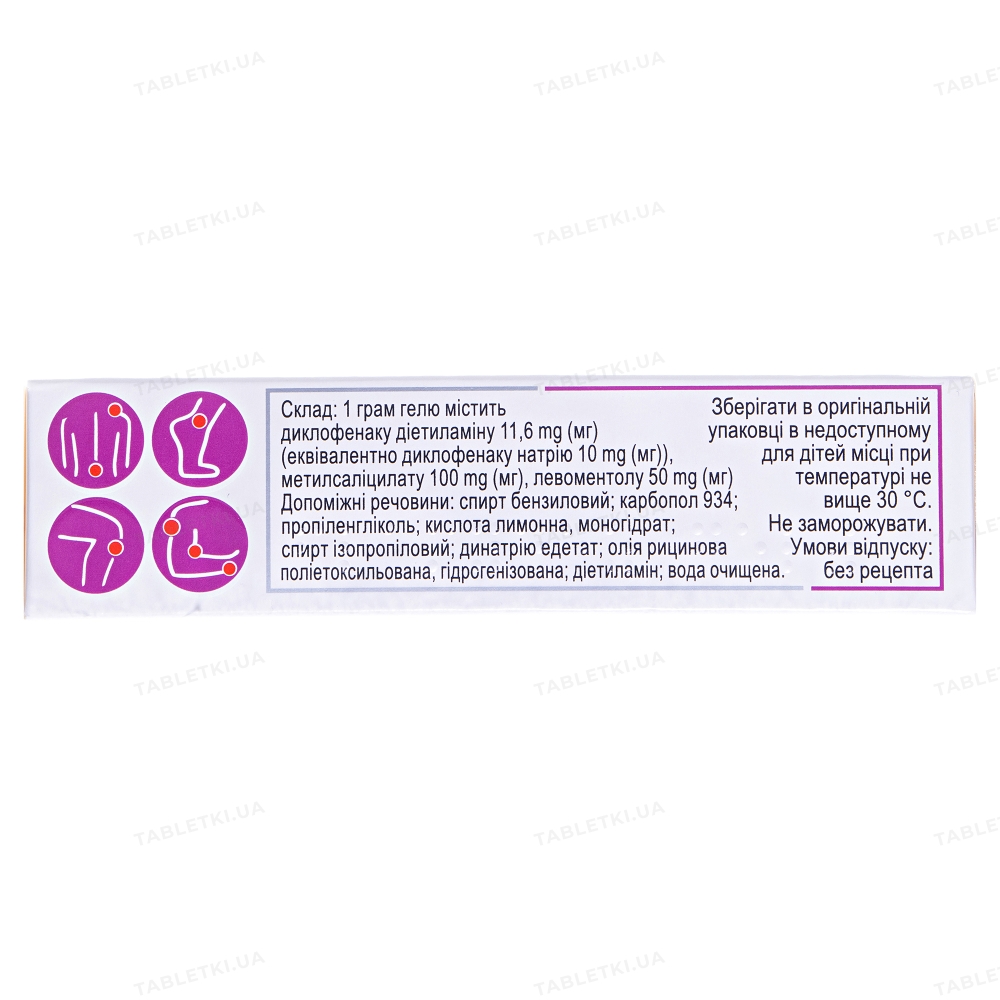
Active ingredients: diclofenac diethylamine (diclofenaci diethylaminum), methyl salicylate (methylii salicylas), levomenthol (levomentholum);
1 g of gel contains 11.6 mg of diclofenac diethylamine (equivalent to 10 mg of diclofenac sodium), 100 mg of methyl salicylate, and 50 mg of levomenthol;
excipients: benzyl alcohol; Carbopol 934; propylene glycol; citric acid monohydrate; isopropyl alcohol; disodium edetate; polyethoxylated, hydrogenated castor oil; diethylamine; purified water.
Dosage Form
Gel.
Main physical and chemical properties: white, soft mass.
Pharmacotherapeutic group
Topical agents for joint and muscle pain. ATC code M02A A65.
Pharmacological properties
Pharmacodynamics.
Flamidez Gel has local analgesic, anti-inflammatory, and anti-edematous effects. The pharmacological action of the drug is due to its active ingredients.
Diclofenac. Diclofenac is a nonsteroidal anti-inflammatory drug (NSAID) with pronounced analgesic, anti-inflammatory, antirheumatic, and antipyretic effects. The primary mechanism of action involves the inhibition of cyclooxygenases and the disruption of prostaglandin biosynthesis.
In cases of inflammation caused by trauma or rheumatic diseases, the use of diclofenac leads to a reduction in pain and tissue swelling, as well as a shorter recovery period for damaged joints, ligaments, tendons, and muscles.
Methylsalicylate. Methylsalicylate is a derivative of salicylic acid and has a local irritant effect. By irritating skin receptors, methyl salicylate triggers the production and release into the bloodstream of large amounts of biologically active substances that regulate pain sensitivity. Substance P is released from neurons. A reduction in the accumulation of substance P at nerve endings leads to a reduction in pain sensation. In addition, methyl salicylate, which belongs to the NSAID group, inhibits prostaglandin synthesis by suppressing cyclooxygenases, thereby reducing swelling and infiltration in inflamed tissues.
Levomenthol. Levomenthol stimulates cold receptors, exerts a vasodilatory and moderate analgesic effect, and provides a cooling sensation. It promotes better penetration of active ingredients through the skin.
Pharmacokinetics.
Diclofenac was detected in blood plasma following topical application of 2 g of the drug to the lower leg three times daily for 6 days. The mean pharmacokinetic parameters were: AUC0-t – 9 ng·h/mL, Cmax – 4 ng/mL, and Tmax – 4.5 hours. In contrast, following oral administration of 75 mg of diclofenac, the area under the pharmacokinetic curve (AUC) is 1,600 ng·h/mL. Thus, the systemic bioavailability of diclofenac following topical application is significantly lower than after oral administration, which reduces the risk of side effects.
Approximately 99% of diclofenac binds to plasma proteins.
Methylsalicylate is rapidly absorbed through the skin and is excreted primarily in the urine.
Levomenthol is excreted in the urine and bile as a glucuronide.
Indications
Topical treatment of myositis, fibrositis, sciatica, muscle and tendon strains, traumatic injuries of the musculoskeletal system, muscle and joint pain associated with strenuous physical activity, inflammatory and degenerative joint diseases, and rheumatic disorders of the musculoskeletal system: bursitis, arthritis, tenosynovitis, tendinitis.
Contraindications
- Individual hypersensitivity to diclofenac, acetylsalicylic acid, or other nonsteroidal anti-inflammatory drugs, or to any other component of the medication.
- A history of bronchial asthma attacks, hives, or acute rhinitis caused by the use of acetylsalicylic acid or other NSAIDs.
- Damage to the epidermis or open wounds at the application site.
- The third trimester of pregnancy.
- Children under 14 years of age.
Interactions with Other Medications and Other Types of Interactions
Due to the minimal systemic absorption of the drug when applied topically, interactions with other medications are unlikely. However, potential interactions known to occur with oral forms of diclofenac should be taken into account.
Although no adequately controlled interaction studies have been conducted, it cannot be ruled out that excessive use of topical salicylates may increase the effects of coumarin anticoagulants and antiplatelet agents. Therefore, patients taking coumarin anticoagulants and antiplatelet agents, including aspirin, should exercise caution.
Special Instructions for Use
Flamidez Gel is intended for external use only. Do not take this medication orally.
Consult a doctor before using the gel if you have a history of the following conditions: gastric and duodenal ulcers, impaired liver and kidney function, severe disorders of the hematopoietic system, bronchial asthma, nasal polyps, or allergic reactions.
After applying the gel, wash your hands to avoid contact with the eyes and mucous membranes.
This medication should be used with caution when taken concurrently with oral NSAIDs.
The likelihood of developing systemic side effects with topical application of diclofenac is low compared to that associated with oral administration, but it increases when the product is applied to relatively large areas of skin over a prolonged period.
If any skin rashes occur, discontinue use of the drug.
The drug should be applied only to intact skin, avoiding contact with inflamed, injured, or infected skin, as well as the eyes and other mucous membranes.
The product should not be used under an airtight occlusive dressing; however, its use under a non-occlusive dressing is permitted. In the case of a sprain, the affected area may be bandaged.
Flamidez Gel contains propylene glycol, which may cause mild local skin irritation in some patients.
If symptoms persist, consult a doctor.
Use during pregnancy or breastfeeding.
Since the effect of prostaglandin synthesis inhibition on the course of pregnancy following topical application of diclofenac has not been studied, the drug may be used during the first 6 months of pregnancy only if, in the doctor’s opinion, the expected benefit to the mother outweighs the risk to the fetus.
Use of the drug is contraindicated during the third trimester of pregnancy.
Effects on the mother and newborn, as well as late in pregnancy:
- possible prolongation of bleeding time; an antiplatelet effect, which may be observed even at very low doses;
- inhibition of uterine contractions, leading to delayed or prolonged labor.
Use of NSAIDs during pregnancy, starting from the 20th week, may cause rare but serious kidney disorders in the unborn child. As a result, a decrease in amniotic fluid levels and the development of complications are possible.
NSAIDs should not be used from the 20th to the 28th week of pregnancy without a doctor’s prescription. FLAMIDES GEL is contraindicated during the last trimester of pregnancy (from the 28th week until the end of pregnancy).
Breastfeeding.
During breastfeeding, the product may be used only if, in the doctor’s opinion, the expected benefit to the mother outweighs the risk to the fetus. In such cases, the product must not be applied to the breasts or to large areas of skin, nor should it be used for an extended period (more than 1 week).
If treatment is necessary, breastfeeding should be discontinued.
Female Fertility.
Like other NSAIDs, FLAMIDEZ GEL may adversely affect female fertility; therefore, it is not recommended to prescribe this medication to women who are planning to become pregnant. If a woman is having difficulty conceiving or is undergoing infertility testing, the appropriateness of discontinuing FLAMIDEZ GEL should be considered.
Effect on reaction time when driving or operating machinery.
When applied topically, Flamidez Gel does not affect the ability to operate vehicles or complex machinery.
Directions for Use and Dosage
For external use only.
For adults and children 14 years of age and older, apply a small amount of gel (2–4 g, approximately the size of a cherry or walnut) to the affected area, 3–4 times a day, gently rubbing it in until fully absorbed. It is advisable to avoid prolonged use of the gel on large areas of skin and in high doses. The gel may be used concurrently with oral diclofenac sodium tablets, provided that a doctor has been consulted beforehand.
Wash your hands after applying the gel, unless the area being treated was the application site.
The duration of treatment depends on the indications and the effectiveness of the treatment and is determined by the doctor. The gel should not be used for more than 14 days for soft tissue injuries and rheumatism or for more than 21 days for arthritis pain, unless otherwise recommended by a doctor.
Elderly patients may use the usual doses.
Children. Contraindicated in children under 14 years of age. If the medication is used in children 14 years of age or older for longer than 7 days, or if symptoms worsen, consult a doctor.
Overdose
Overdose is unlikely, as systemic absorption of diclofenac following topical application is very low. If accidentally ingested, systemic adverse reactions may occur.
In case of accidental ingestion, gastric lavage, administration of adsorbents, and symptomatic treatment using therapeutic measures for NSAID poisoning are indicated. The patient should seek medical attention. Symptomatic treatment is initiated upon the appearance of signs of complications, such as elevated blood pressure, renal failure, seizures, respiratory depression, or gastrointestinal complications.
Side Effects
Flamidez Gel is generally well tolerated by patients.
Immune system: isolated cases—redness, itching, burning, or rashes (including pustular rashes) at the application site, as well as eczema.
Skin and connective tissue disorders: very rare—skin allergic reactions; rarely—dermatitis, including contact dermatitis (e.g., localized skin rashes, itching, redness, swelling, or papules), bullous dermatitis; isolated cases—generalized skin reactions, urticaria, angioedema, photosensitivity, bronchospasm, bronchial asthma. Burns may occur at the application site.
Systemic reactions. If the gel is applied to large areas of skin for a prolonged period, the possibility of systemic adverse reactions cannot be ruled out. However, the likelihood of their occurrence following topical application of diclofenac is low compared to the frequency of adverse reactions during oral treatment with diclofenac. In the event of systemic reactions, refer to the information provided in the prescribing information for other dosage forms of diclofenac.
If any skin rashes appear, discontinue use of the medication.
If any other side effects or unusual reactions occur, consult a doctor.
Shelf life
2 years.
Storage conditions
Store in the original packaging, out of reach of children, at a temperature not exceeding 30 °C. Do not freeze.
Packaging
20 g, 30 g, 40 g, or 100 g in a laminated tube; 1 tube per cardboard box.
Dispensing Category
Available without a prescription.
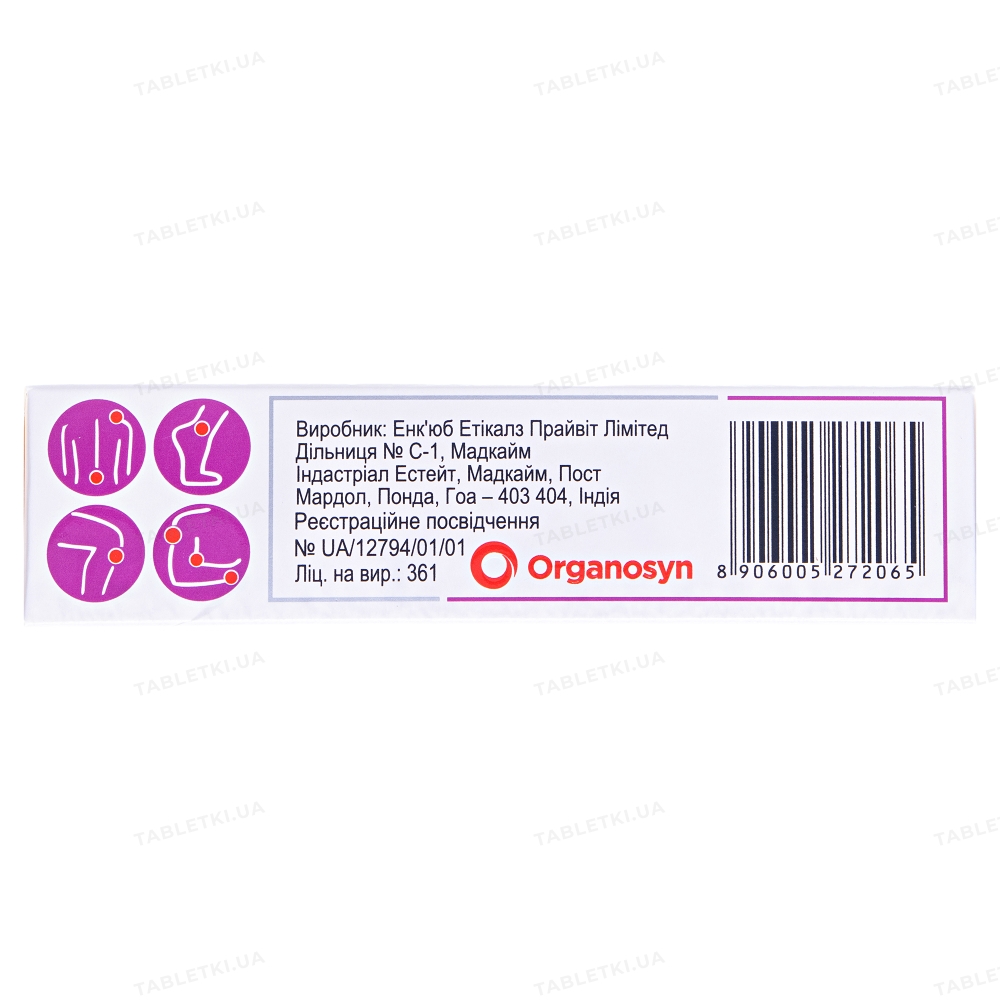
Manufacturer
Enkub Ethicals Private Limited.
Address
Lot No. C-1, Madkym Industrial Estate, Madkym, Post Mardol, Ponda, Goa – 403 404, India.