
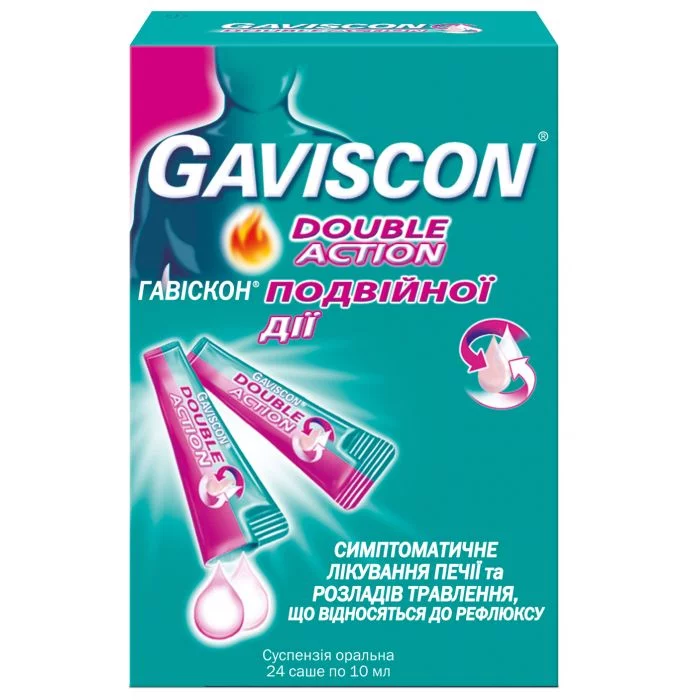
Gaviscon Double Action Suspension, 10 mL, Sachet No. 24
Instructions
Gaviscon Double Action: Instructions for Use
Composition
Active ingredients:
10 mL of suspension contains:
- 500 mg of sodium alginate
- 213 mg of sodium bicarbonate
- 325 mg of calcium carbonate
Inactive ingredients: carbomer 974P, methyl parahydroxybenzoate (E 218), propyl parahydroxybenzoate (E 216), sodium saccharin, peppermint flavor No. 2, sodium hydroxide, purified water.
Dosage Form
Oral suspension.
Main physical and chemical properties:
A viscous, opaque suspension ranging in color from nearly white to cream, with a minty odor.
Pharmacotherapeutic group
Medicinal products for the treatment of peptic ulcer and gastroesophageal reflux disease (GERD). ATC code A02B X.
Pharmacological properties
Pharmacodynamics.
The drug is a combination of two antacids (calcium carbonate and sodium bicarbonate) and sodium alginate, which has adsorbing and coating effects.
After administration, the drug rapidly reacts with stomach acid, forming a gel of alginic acid with a nearly neutral pH that coats the surface of the stomach contents, effectively preventing the symptoms of gastroesophageal reflux. In severe cases, the gel layer, preceding the stomach contents, rises into the esophagus and prevents its irritation. Calcium carbonate neutralizes stomach acid and provides rapid relief from indigestion and heartburn. This effect is enhanced by sodium bicarbonate, which also has a neutralizing effect. The total neutralizing capacity of the drug at the lowest dose of 10 mL is approximately 10 mEq H+
Pharmacokinetics.
The mechanism of action of this medication is physical and does not depend on absorption into the systemic circulation.
Indications
Treatment of symptoms of gastroesophageal reflux associated with the reflux of acidic stomach contents into the esophagus, such as acid regurgitation, heartburn, and indigestion, for example, after meals or during pregnancy.
Contraindications for Gaviscone Dual Action
This medication is contraindicated in patients with known or suspected hypersensitivity to the active ingredients or to any of the excipients, including methyl parahydroxybenzoate (E 218) and propyl parahydroxybenzoate (E 216).
Interactions with Other Medications and Other Types of Interactions.
Due to the presence of calcium carbonate, which acts as an antacid, a 2-hour interval must be observed between taking Gaviscon Dual Action Oral Suspension and taking other medications, especially:
- H2-antihistamines
- tetracyclines
- digoxin
- fluoroquinolones
- iron salts
- ketoconazole
- antipsychotics
- thyroxine
- penicillamine
- beta-blockers (atenolol, metoprolol, propanolol)
- glucocorticoids
- chloroquine
- bisphosphonates
- estramustine
Special Considerations for Use
20 mL of the drug contain 255.76 mg (11.12 mmol) of sodium, which is equivalent to 12.79% of the maximum daily sodium intake for adults recommended by the World Health Organization.
The maximum daily dose of this medication is equivalent to 51.15% of the maximum daily sodium intake recommended by the World Health Organization.
This medication has a high sodium content, which must be taken into account by patients on a low-sodium diet, particularly those with kidney disease or congestive heart failure.
20 mL of the suspension contains 260 mg (6.5 mmol) of calcium. Caution should be exercised when treating patients with hypercalcemia, nephrocalcinosis, and recurrent calcium-containing kidney stones.
If symptoms do not improve after 7 days of treatment, the clinical situation should be reevaluated.
Use of this medication may mask the symptoms of other serious diseases.
This medication contains methyl parahydroxybenzoate (E 218) and propyl parahydroxybenzoate (E 216), which may cause allergic reactions (possibly delayed).
Glass bottle—handle with care! Do not drink directly from the bottle.
Use during pregnancy or breastfeeding.
Gaviscon Dual Action, oral suspension, does not affect the course of pregnancy or the intrauterine and postnatal development of the child. The medication may be used by pregnant women and during breastfeeding.
Effect on reaction time when driving or operating machinery.
This medication does not affect the ability to drive or operate other complex machinery.
Directions for Use and Dosage of Gaviscon Dual Action
This medication is intended for oral use.
Adults and children 12 years of age and older should take 10–20 mL (2–4 teaspoons) after meals and before bedtime, up to 4 times daily. Shake well before use.
Special Patient Populations:
No dose adjustment is required for elderly patients.
Patients with impaired liver function do not require a dose adjustment.
Renal insufficiency: Use with caution in patients on a low-salt diet (see the “Special Considerations” section).
Children.
Not recommended for children under 12 years of age.
Overdose
Symptoms.
Symptoms are usually mild in cases of acute overdose. Overdose may manifest as abdominal discomfort and bloating. Milk-alkali syndrome has developed in individuals who took high daily doses of calcium carbonate over a prolonged period.
Treatment
In case of overdose, discontinue use of the medication and provide symptomatic treatment.
Side Effects of Gaviscone Dual Action
Adverse reactions are classified by frequency as follows:
- very common (1/10)
- common (1/100 to <1/10)
- uncommon (1/1,000 to <1/100)
- rare (1/10,000 to <1/1,000)
- very rare (<1/10,000)
- frequency unknown (cannot be estimated from the available data)
Immune system disorders.
Very rare:
- anaphylactic and anaphylactoid reactions
- hypersensitivity reactions, such as hives
Metabolic and digestive disorders.
Frequency unknown:
- alkalosis
- acidosis rebound
- hypercalcemia
- milk-alkali syndrome
Respiratory, thoracic, and mediastinal disorders.
Very rare:
- respiratory system manifestations, such as bronchospasm
Gastrointestinal system.
Frequency unknown:
- constipation
Description of specific adverse reactions.
1 These symptoms usually occur when the recommended dose is exceeded.
Shelf life
2 years.
Store for no more than 6 months after first opening the vial.
Do not use after the expiration date printed on the package.
Storage Conditions
Store at a temperature not exceeding 30 °C, out of reach of children. Do not refrigerate or freeze.
Packaging
150 mL in a vial with a pink film applied directly to the vial or in a vial with a pink coating, a polypropylene cap with a polyethylene tamper-evident band, and a multi-layer combined label containing the prescribing information; 10 mL per sachet, 10, 12, 20, or 24 sachets per cardboard box, along with the package insert.
Pharmacy dispensing category
Over-the-counter.







