
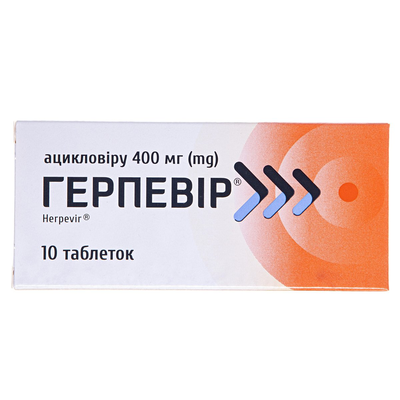
Herpevir 400 mg tablets, No. 10
Composition
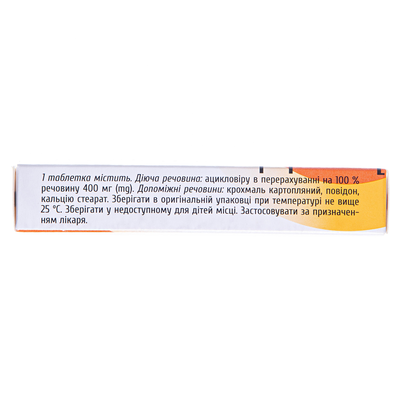
Active ingredient: Each tablet contains 200 mg or 400 mg of acyclovir, calculated as 100% active ingredient;
Excipients: potato starch, povidone, calcium stearate.
Dosage Form
Tablets.
Main physical and chemical properties:
200 mg tablets: white or almost white, round tablets with a flat surface and a beveled edge;
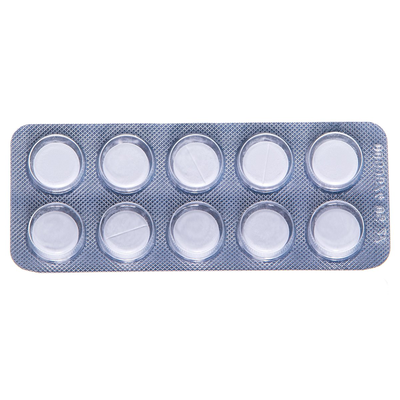
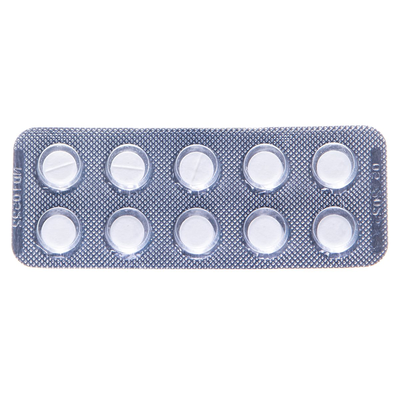
400 mg tablets: white or almost white, round tablets with a flat surface, a bevel, and a score line;
Pharmacotherapeutic group
Antiviral agents for systemic use.
ATC code J05A B01.
Pharmacological Properties
Pharmacodynamics.
Acyclovir is a synthetic purine nucleoside analog with inhibitory activity in vivo and in vitro against human herpesviruses, including herpes simplex virus types I and II, varicella-zoster virus, Epstein–Barr virus, and cytomegalovirus. In cell culture, acyclovir exhibits the greatest activity against herpes simplex virus type I, followed by in descending order of activity, against herpes simplex virus type II, varicella-zoster virus, Epstein–Barr virus, and cytomegalovirus.
The inhibitory activity of acyclovir against the aforementioned viruses is highly selective. The enzyme thymidine kinase in a normal, uninfected cell does not utilize acyclovir as a substrate; therefore, its toxic effect on host cells is minimal. However, thymidine kinase encoded in herpes simplex viruses, varicella-zoster viruses, herpes zoster viruses, and Epstein–Barr viruses converts acyclovir into acyclovir monophosphate — a nucleoside analog that is then sequentially converted to diphosphate and triphosphate by cellular enzymes. Following its incorporation into viral DNA, acyclovir triphosphate interacts with viral DNA polymerase, resulting in the termination of viral DNA chain synthesis.
During prolonged or repeated courses of treatment in severely ill patients with compromised immunity, some viral strains may become less sensitive and may not always respond to treatment with acyclovir. Most clinical cases of resistance are associated with a deficiency in viral thymidine kinase; however, there have been reports of damage to viral thymidine kinase and DNA. In vitro interaction of certain herpes simplex viruses with acyclovir may also lead to the emergence of less susceptible strains. The relationship between the in vitro susceptibility of individual herpes simplex viruses and clinical outcomes of acyclovir treatment has not been fully elucidated.
Pharmacokinetics.
Acyclovir is only partially absorbed in the intestine. The mean steady-state peak concentration (Cssmax) in plasma after administration of a 200-mg dose at 4-hour intervals is 3.1 μmol (0.7 μg/mL), and the corresponding plasma trough concentration (Cssmin) is 1.8 μmol (0.4 μg/mL). The corresponding Cssmax levels after doses of 400 mg and 800 mg administered at 4-hour intervals are 5.3 μmol (1.2 μg/mL) and 8 μmol (1.8 μg/mL), respectively, and the equivalent Cssmin levels were 2.7 μmol (0.6 μg/mL) and 4 μmol (0.9 μg/mL).
In adults, the terminal half-life following intravenous administration of acyclovir is approximately 2.9 hours. Most of the drug is excreted unchanged by the kidneys. The renal clearance of acyclovir is significantly higher than that of creatinine, indicating that renal excretion of the drug occurs not only via glomerular filtration but also via tubular secretion.
9-carboxymethoxymethylguanine is the only major metabolite of acyclovir that can be detected in urine, accounting for approximately 10–15% of the administered dose. If acyclovir is administered one hour after taking 1 g of probenecid, the terminal half-life and the area under the “concentration-time” curve increase by 18% and 40%, respectively.
In patients with chronic renal insufficiency, the mean terminal half-life is 19.5 hours. The mean half-life of acyclovir during hemodialysis is 5.7 hours. Plasma acyclovir levels are reduced by approximately 60% during dialysis.
The concentration of the drug in cerebrospinal fluid is approximately 50% of the corresponding concentration in plasma. The degree of plasma protein binding is relatively low (9% to 33%) and is not affected by interactions with other drugs.
No changes in the pharmacokinetics of these drugs were observed when acyclovir and zidovudine were administered concomitantly for the treatment of HIV-infected patients.
Indications
- Treatment of viral infections of the skin and mucous membranes caused by the herpes simplex virus, including primary and recurrent genital herpes.
- Suppression (prevention of recurrences) of infections caused by the herpes simplex virus in immunocompetent patients.
- Prevention of infections caused by the herpes simplex virus in immunocompromised patients.
- Treatment of infections caused by the Varicella zoster virus (chickenpox and shingles).
Contraindications
Hypersensitivity to acyclovir, valacyclovir, or any other components of the drug.
Drug Interactions and Other Interactions
No clinically significant interactions between acyclovir and other medications have been identified. Acyclovir is excreted primarily in an unchanged form by the kidneys via tubular secretion; therefore, any drugs with a similar excretion mechanism may increase the concentration of acyclovir in plasma. Probenecid and cimetidine prolong the half-life of acyclovir and increase the area under the “concentration-time” curve. When acyclovir is used concomitantly with the immunosuppressant mycophenolate mofetil—which is used to treat patients following organ transplantation— —plasma levels of acyclovir and the inactive metabolite of mycophenolate mofetil also increase; however, given acyclovir’s wide therapeutic index, no dose adjustment is necessary.
An experimental study of five men indicates that concomitant therapy with acyclovir increases the AUC of the total administered theophylline by approximately 50%. It is recommended to measure the plasma concentration of theophylline during concomitant therapy with acyclovir.
Special Considerations for Use
Acyclovir is primarily excreted via renal clearance; therefore, the dose should be reduced in patients with renal impairment (see “Dosage and Administration”). Elderly patients are also at high risk for impaired renal function; therefore, a dose reduction may be necessary for this patient group. Patients with renal impairment and elderly patients are at increased risk of neurological adverse reactions and should therefore be closely monitored for these adverse reactions. According to available data, such reactions are generally reversible upon discontinuation of treatment (see the “Adverse Reactions” section). Prolonged or repeated courses of acyclovir treatment in individuals with severely compromised immune systems may result in the emergence of viral strains with reduced susceptibility that may not respond to prolonged acyclovir therapy.
Special attention should be paid to maintaining adequate hydration in patients receiving high doses of acyclovir
The risk of kidney damage increases when acyclovir is used in combination with other nephrotoxic drugs.
Available clinical trial data are insufficient to conclude that treatment with acyclovir reduces the incidence of complications associated with chickenpox in immunocompetent patients.
Use During Pregnancy or Breastfeeding
There is no information regarding the effect of acyclovir on female fertility.
In a study of 20 male patients with normal sperm counts, oral administration of acyclovir at a dose of up to 1 g per day for six months showed no clinically significant effect on sperm count, motility, or morphology.
A postmarketing registry monitoring pregnant women has documented the outcomes of using various pharmaceutical forms of acyclovir in pregnant women.
No increase in the incidence of congenital malformations was observed in children whose mothers used acyclovir during pregnancy compared with the general population. However, Herpevir tablets should be used only when the potential benefit to the mother outweighs the possible risk to the fetus.
When 200 mg of acyclovir is taken orally 5 times a day, acyclovir passes into breast milk at concentrations ranging from 0.6% to 4.1% of the corresponding acyclovir level in blood plasma. Potentially, a baby fed this breast milk may absorb acyclovir at a dose of up to 0.3 mg/kg of body weight per day. Therefore, acyclovir should be prescribed with caution to breastfeeding women, taking into account the risk-benefit ratio.
Effect on reaction time when driving or operating machinery
When deciding whether to drive or operate machinery, the patient’s clinical status and the drug’s adverse reaction profile should be taken into account. No clinical studies have been conducted on the effect of acyclovir on reaction time when driving or operating machinery. Furthermore, the pharmacology of acyclovir does not suggest any adverse effects.
Dosage and Administration
The tablet should be swallowed whole with water. When using high doses of acyclovir, adequate hydration should be maintained.
Adults
Treatment of infections caused by the herpes simplex virus
To treat infections caused by the herpes simplex virus, take acyclovir tablets at a dose of 200 mg 5 times daily at approximately 4-hour intervals, excluding the nighttime period.
Treatment should last 5 days, but may be extended in cases of severe primary infection.
For patients with severe immunodeficiency (for example, following a bone marrow transplant) or for patients with impaired intestinal absorption, the dose may be doubled to 400 mg or an appropriate dose for intravenous administration may be used.
Treatment should be started as soon as possible after the onset of infection. In cases of recurrent herpes, it is best to begin treatment during the prodromal phase or after the first signs of skin lesions appear.
Prevention of Recurrences (Suppressive Therapy) of Infections Caused by the Herpes Simplex Virus
In patients with normal immune function, to prevent recurrences of infections caused by the herpes simplex virus, acyclovir tablets at a dose of 200 mg are taken 4 times daily at approximately 6-hour intervals.
For convenience, most patients may take 400 mg of acyclovir twice daily at approximately 12-hour intervals.
Treatment will remain effective even after reducing the dose of acyclovir tablets to 200 mg, taken three times a day at 8-hour intervals or even twice a day at 12-hour intervals.
In some patients, a marked improvement is observed after taking a total daily dose of 800 mg of acyclovir.
To monitor possible changes in the natural course of the disease, acyclovir therapy should be periodically interrupted at intervals of 6–12 months.
Prevention of Infections Caused by the Herpes Simplex Virus
To prevent infections caused by the herpes simplex virus, immunocompromised patients should take 200 mg of acyclovir tablets 4 times daily at approximately 6-hour intervals. For patients with severe immunodeficiency (for example, after bone marrow transplantation) or for patients with impaired intestinal absorption, the dose may be doubled to 400 mg or an appropriate dose for intravenous administration may be used.
The duration of prophylaxis depends on the duration of the risk period.
Treatment of Chickenpox and Shingles
To treat infections caused by the varicella-zoster virus, take acyclovir tablets at a dose of 800 mg 5 times daily at approximately 4-hour intervals, except at night. Treatment should last 7 days.
For patients with severe immunodeficiency (e.g., following bone marrow transplantation) or those with impaired intestinal absorption, intravenous administration is preferred.
Treatment should be started as soon as possible after the onset of the disease; the outcome will be better if treatment is started immediately after the rash appears.
Children
For the treatment of infections caused by the herpes simplex virus and the prevention of such infections in immunocompromised children aged 2 years and older, adult doses may be used. For the treatment of chickenpox in children aged 6 years and older, 800 mg of acyclovir is administered 4 times daily; children aged 2 to 6 years may receive 400 mg of acyclovir 4 times daily. The duration of treatment is 5 days.
More precisely, a single dose of the drug can be calculated based on the child’s body weight at 20 mg/kg of body weight (not to exceed 800 mg) of acyclovir four times daily.
There are no specific data on the use of acyclovir for the prophylaxis (prevention of recurrences) of infections caused by the herpes simplex virus, or for the treatment of infections caused by the varicella-zoster virus, in children with normal immune function.
For the treatment of infections caused by herpes viruses in newborns and infants under 3 months of age, Herpevir, a powder for solution for injection, is used.
Elderly patients
The possibility of impaired renal function in elderly patients should be considered, and the dose should be adjusted accordingly (see the “Renal Insufficiency” section below). Adequate hydration must be maintained in elderly patients receiving high doses of acyclovir.
Renal Insufficiency
Acyclovir should be used with caution in patients with renal insufficiency. Adequate hydration must be maintained.
For the prevention and treatment of infections caused by the herpes simplex virus, the recommended oral doses in patients with renal insufficiency do not result in acyclovir accumulation exceeding the safe level established for intravenous administration. However, for patients with severe renal insufficiency (creatinine clearance less than 10 mL/min), a dose of 200 mg twice daily at approximately 12-hour intervals is recommended.
When treating infections caused by the Varicella zoster virus (chickenpox and shingles), for patients with significantly compromised immunity, the recommended dose for severe renal insufficiency (creatinine clearance less than 10 mL/min) is 800 mg twice daily at approximately 12-hour intervals, and for patients with moderate renal insufficiency (creatinine clearance between 10 and 25 mL/min)—800 mg three times daily at approximately 8-hour intervals.
Children.
Acyclovir tablets are indicated for children 2 years of age and older.
Overdose
Symptoms. Acyclovir is only partially absorbed from the gastrointestinal tract. Accidental ingestion of up to 20 g of acyclovir by patients has not caused toxic effects. In the event of accidental repeated overdose of oral acyclovir over several days, gastrointestinal symptoms (such as nausea and vomiting) and neurological symptoms (headache and confusion) may occur. In cases of intravenous acyclovir overdose, serum creatinine and blood urea nitrogen levels rise, leading to renal failure. Neurological manifestations of overdose may include confusion, hallucinations, agitation, seizures, and coma.
Treatment. The patient should be thoroughly examined to identify symptoms of intoxication. Since acyclovir is readily removed by hemodialysis, this treatment should be used in cases of overdose.
Side Effects
Adverse reactions are classified by organ system and frequency of occurrence. Frequency categories: very common — ≥ 1/10, common — ≥ 1/100 and < 1/10, uncommon — ≥ 1/1,000 and < 1/100, rare — ≥ 1/10,000 and < 1/1,000, very rare — < 1/10,000.
Blood and Lymphatic System
Very rare: anemia, thrombocytopenia, leukopenia.
Immune system
Rare: anaphylaxis.
Psychiatric disorders and nervous system disorders
Common: headache, dizziness.
Very rare: agitation, confusion, tremor, ataxia, dysarthria, hallucinations, psychotic symptoms, seizures, drowsiness, encephalopathy, coma.
The neurological reactions listed above are generally reversible and usually occur in patients with renal insufficiency or other risk factors (see the “Special Considerations for Use” section).
Respiratory System and Chest
Rare: shortness of breath.
Gastrointestinal system
Common: nausea, vomiting, diarrhea, abdominal pain.
Hepatobiliary system
Rare: reversible elevation of bilirubin and liver enzymes.
Very rare: jaundice, hepatitis.
Skin and Subcutaneous Tissues
Common: itching, rash (including photosensitivity).
Uncommon: hives, accelerated diffuse hair loss. Since hair loss can be associated with a wide variety of diseases and medications, no clear link to acyclovir has been established.
Rare: angioedema.
Kidneys and Urinary System
Rarely: increased blood urea and creatinine levels.
Very rare: acute renal failure, renal pain.
Kidney pain may be associated with renal failure and crystalluria.
General disorders
Common: fatigue, fever.
Shelf life
5 years.
Storage conditions
Store in the original packaging at a temperature not exceeding 25 °C.
Keep out of reach of children.
Packaging
200 mg tablets, No. 10 per blister pack; 2 blister packs per package.
400 mg tablets, 10 per blister pack; 1 blister pack per package.
Dispensing Category
By prescription only.
Manufacturer
Kyivmedpreparat PJSC.







