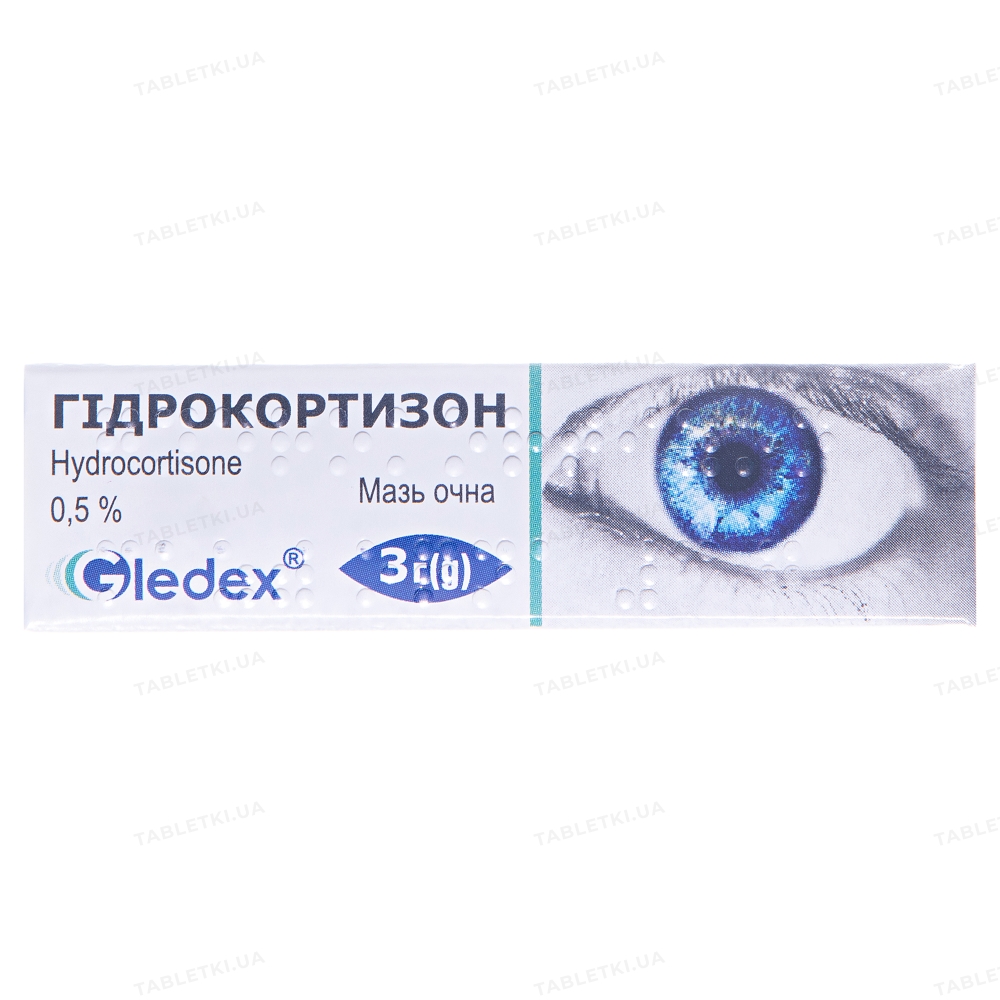
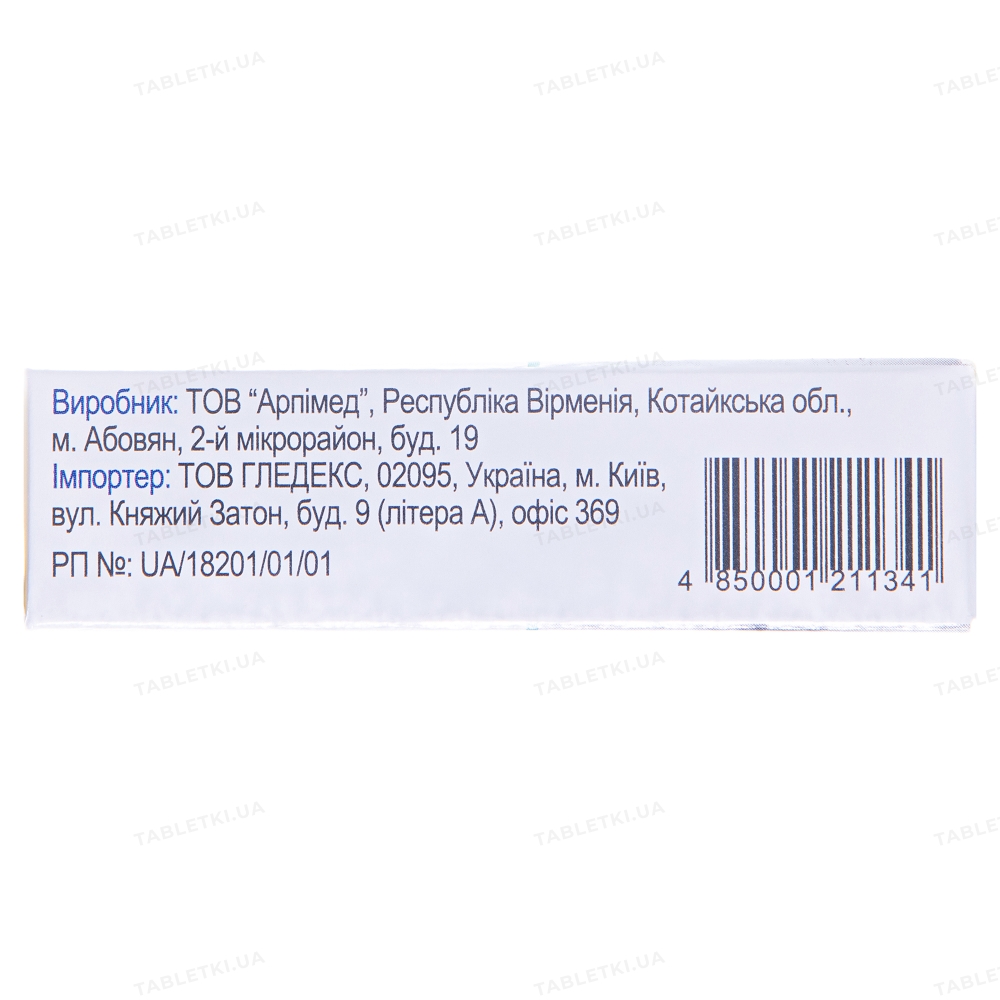
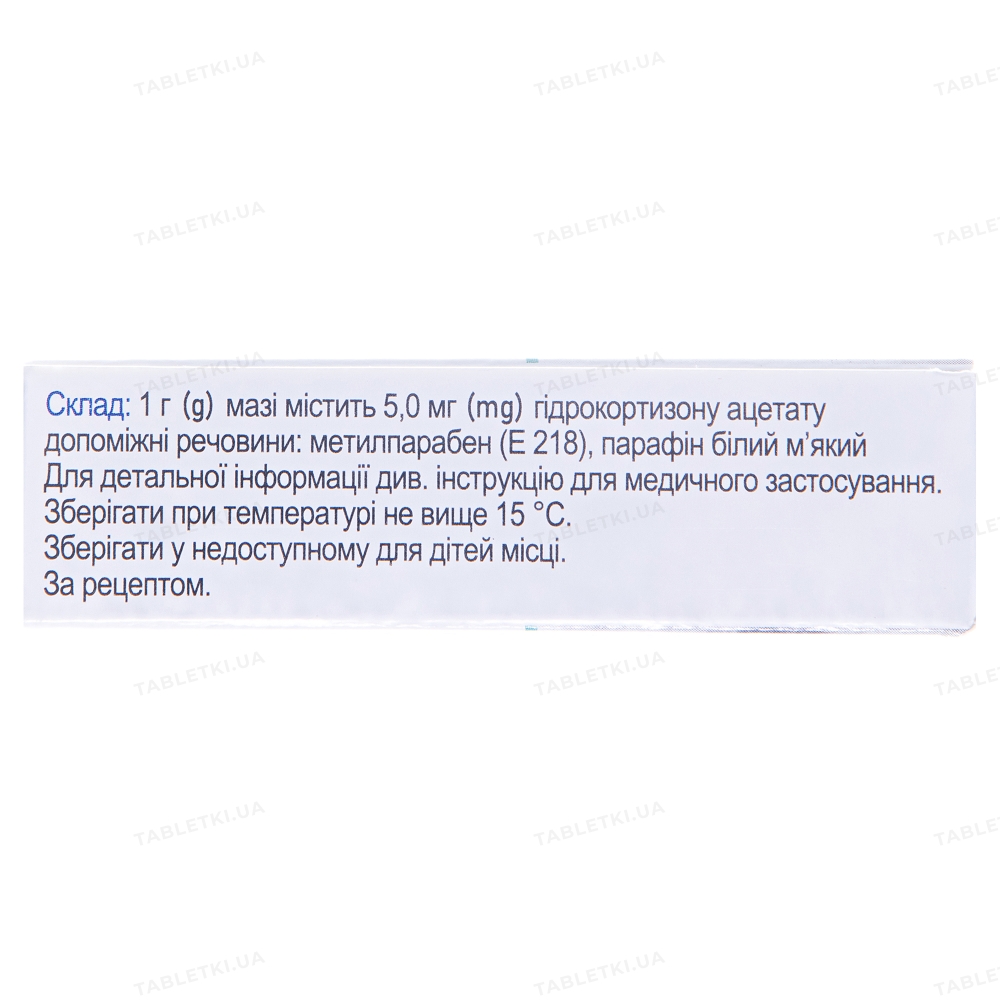
Hydrocortisone eye ointment, 0.5%, 3 g per aluminum tube.
Ingredients
Active ingredient: hydrocortisone;
1 g of ointment contains 5 mg of hydrocortisone acetate;
excipients: methylparaben (E 218), white soft paraffin.
Dosage Form
Eye ointment.
Main physical and chemical properties: a white or almost white, translucent, greasy, soft mass. The ointment should be homogeneous.
Pharmacotherapeutic group
Agents used in ophthalmology. Anti-inflammatory agents. Simple corticosteroids.
ATC code S01B A02.
Pharmacological properties
Pharmacodynamics.
The mechanism of action of corticosteroids has not yet been fully elucidated. It is likely that corticosteroids interact with protein receptors in the cytoplasm of sensitive cells to form a steroid-receptor complex. Following corresponding conformational changes, the steroid-receptor complex enters the nucleus, where it affects the cells’ genetic machinery in such a way that the synthesis of certain proteins responsible for chemotaxis and immunological reactions is inhibited. In addition, functional changes in leukocytes and macrophages lead to the inhibition of inflammatory and allergic reactions. The anti-inflammatory efficacy of hydrocortisone is due to the inhibition of phospholipase A2—an enzyme necessary for the synthesis of arachidonic acid, which is a precursor to pro-inflammatory substances such as prostaglandins and leukotrienes. Thus, corticosteroids are effective in treating inflammatory processes in mesenchymal tissues caused by infections, allergens, and trauma.
Pharmacokinetics.
The permeability of hydrocortisone acetate, which depends largely on the condition of the cornea, increases significantly in the presence of inflammation or damage to the ocular mucous membranes.
Indications
- Allergic conjunctivitis;
- acute and chronic iritis, iridocyclitis, uveitis, chorioretinitis;
- sympathetic ophthalmia, postoperative irritation;
- restoration of corneal transparency following keratitis or (chemical) burns;
- inhibition of neovascularization.
Contraindications
- Hypersensitivity to the active ingredient or to any of the drug’s excipients;
- epithelial herpetic keratitis or other viral eye diseases;
- bacterial eye infections;
- corneal wounds and ulcerative lesions;
- open-angle and closed-angle glaucoma;
- ocular tuberculosis or fungal infections of the eye.
Interactions with Other Medications and Other Types of Interactions
During treatment with Hydrocortisone, vaccination against smallpox and other forms of immunization are not recommended due to the absence of an immune response. Increased absorption of hydrocortisone into the bloodstream may reduce the activity of insulin, as well as that of oral hypoglycemic and antihypertensive medications; anticoagulants and medications that reduce blood salicylate levels, if used incorrectly or for too long. The risk of adverse reactions is higher when used concomitantly with oral contraceptives, anabolic steroids, neuroleptics, cholinergic receptor inhibitors, antihistamines, tricyclic antidepressants, nitrates, and cardiac glycosides. Due to bilateral inactivation, the drug must not be used in combination with medications containing lead or silver.
Concomitant use with other drugs that may increase intraocular pressure (e.g., atropine or other anticholinergic agents) may lead to a further increase in intraocular pressure in susceptible patients.
Concomitant use with CYP3A inhibitors, including medications containing cobicistat, increases the risk of systemic side effects.
This combination should be avoided unless the expected benefit outweighs the risk of systemic side effects from corticosteroid use; in such cases, patients should be monitored for the development of systemic side effects associated with corticosteroids.
When using this medication concurrently with other topical ophthalmic medications, a 15-minute interval should be observed between applications, with hydrocortisone acetate ointment applied last.
Special Considerations for Use
It is not recommended to prolong the duration of treatment. Since long-term treatment (lasting more than 2 weeks) with ophthalmic corticosteroid preparations may cause a reversible increase in intraocular pressure or irreversible cataract formation, intraocular pressure and the condition of the cornea and lens should be monitored regularly when the product is used for more than 2 consecutive weeks.
In cases of conditions that cause corneal thinning, use of the drug may lead to corneal perforation.
Use of this medication may increase the risk of developing fungal or viral (herpes simplex-induced keratitis) eye infections.
Topical corticosteroids should not be prescribed for undiagnosed red eye, as improper use of the medication may cause blindness.
Vision disturbances may occur with the use of systemic and topical corticosteroids.
If symptoms such as blurred vision or other visual disturbances occur, consult an ophthalmologist to evaluate possible causes, which include cataracts, glaucoma, or rare conditions such as central serous chorioretinopathy, which has been reported with the use of systemic and topical corticosteroids.
Do not wear contact lenses during treatment with hydrocortisone acetate eye ointment. Prolonged use may also lead to skin sensitivity and the development of resistance. Prolonged use may pose a risk of adrenal suppression in infants. Corticosteroid treatment should not be repeated or prolonged without regular examinations to rule out the possibility of increased intraocular pressure, cataract formation, or unexpected infections.
Infants born to mothers who used hydrocortisone acetate eye ointment during pregnancy should be carefully evaluated for adrenal insufficiency (hypoadrenalism).
Cases of hypertrophic cardiomyopathy have been reported following hydrocortisone use in premature newborns; therefore, diagnostic evaluation and monitoring of cardiac function and structure are recommended.
Use During Pregnancy or Breastfeeding
Pregnancy. Since significant amounts of the active ingredient may be absorbed into the body following the use of hydrocortisone acetate eye ointment, use of the medication during pregnancy should be avoided. If the use of hydrocortisone acetate eye ointment is absolutely necessary during this period, treatment should be as brief as possible and with the lowest possible doses.
Prolonged use of corticosteroids during pregnancy may result in intrauterine growth restriction of the fetus. In animal studies, corticosteroids have been shown to cause congenital cleft palate. In humans, the increased incidence of congenital cleft palate in infants resulting from maternal corticosteroid treatment during the first trimester of pregnancy is still under investigation. Based on the results of epidemiological studies and animal studies, there is ongoing discussion regarding a potential link between metabolic and cardiovascular diseases that develop in adulthood and the in utero exposure to corticosteroids. If corticosteroids are used late in pregnancy, the fetus may develop adrenal atrophy, which may require replacement therapy with a gradual reduction in dosage.
Breastfeeding. Corticosteroids may pass into breast milk. Side effects in infants are currently unknown. However, during breastfeeding, the drug should be used only when clearly indicated. Breastfeeding should be discontinued if higher doses of the drug are required for treatment.
Fertility. Currently, there is no information regarding an adverse effect of the drug on fertility.
Effect on reaction time when driving or operating machinery
After applying Hydrocortisone eye ointment, vision may be temporarily impaired due to the formation of a film on the cornea, which can slow reaction time while driving or operating machinery. Therefore, such patients are advised to apply the ointment only in the evening before bedtime.
Directions for Use and Dosage
Unless otherwise prescribed by a doctor, apply a strip of ointment approximately 1 cm long to the conjunctival sac several times a day. The duration of treatment should generally not exceed 2 weeks. The exact duration of treatment is determined by the doctor based on a comparison of data regarding treatment efficacy, possible side effects, and the clinical presentation of the disease.
When applying the eye ointment, avoid contact between the tip of the tube and the eye or skin.
Children
There is no experience with the use of this medication in children.
Overdose
When used as directed, no symptoms of overdose or toxicity are expected. To date, no cases of overdose with hydrocortisone-containing medications have been reported. Therefore, there is no information available regarding specific symptoms of overdose or its treatment.
Side Effects
Ocular: In cases of corneal epithelial injury, the drug may inhibit the healing process, with a risk of corneal perforation. It slows the healing of a damaged cornea. Long-term treatment may lead to the development of post-steroidal glaucoma. After several treatment cycles, glaucoma may recur.
Blurred vision may occur.
In conditions that cause thinning of the cornea, corneal perforation is possible.
Long-term treatment with ophthalmic medications containing glucocorticosteroids may cause irreversible cataract formation and a temporary increase in intraocular pressure in some patients.
Cardiovascular system: hypertrophic cardiomyopathy in premature infants (frequency unknown).
Metabolic disorders: weight gain (frequency unknown).
Infections: Secondary infections, particularly of viral origin, may occur.
Immune system disorders: development of hypersensitivity reactions, including itching, burning, and transient blurred vision; contact dermatitis, dermatoconjunctivitis, and eyelid eczema.
This medication contains methylparaben, which may cause allergic reactions (delayed-onset).
Shelf life
2 years.
Shelf life after first opening the tube: 4 weeks.
Storage Conditions
Store at a temperature not exceeding 25 °C.
Packaging
3 g of eye ointment per tube; 1 tube per cardboard box.
Manufacturer
Yelpa Pharmaceutical Plant A.T.