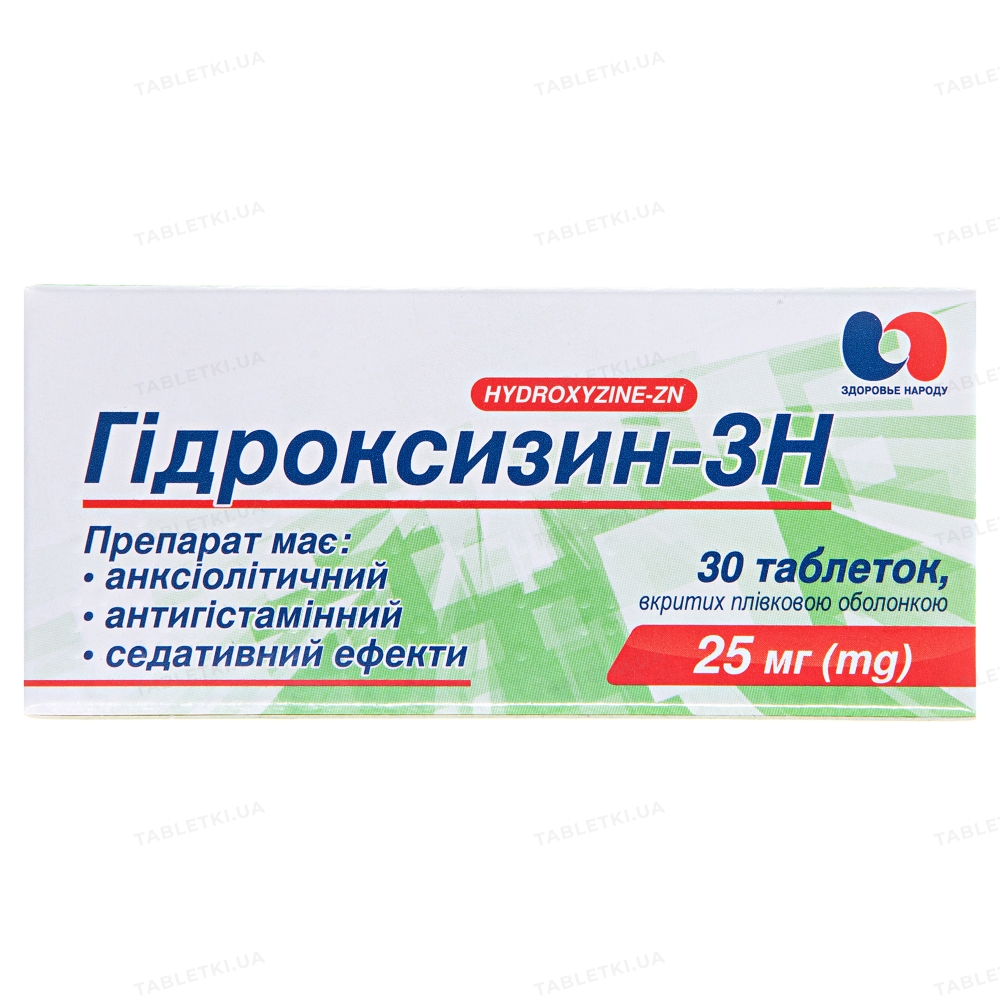
Hydroxyzine-ZN (Atarax) tablets, film-coated, 25 mg, No. 30 (10 x 3)
Ingredients
Active ingredient: hydroxyzine;
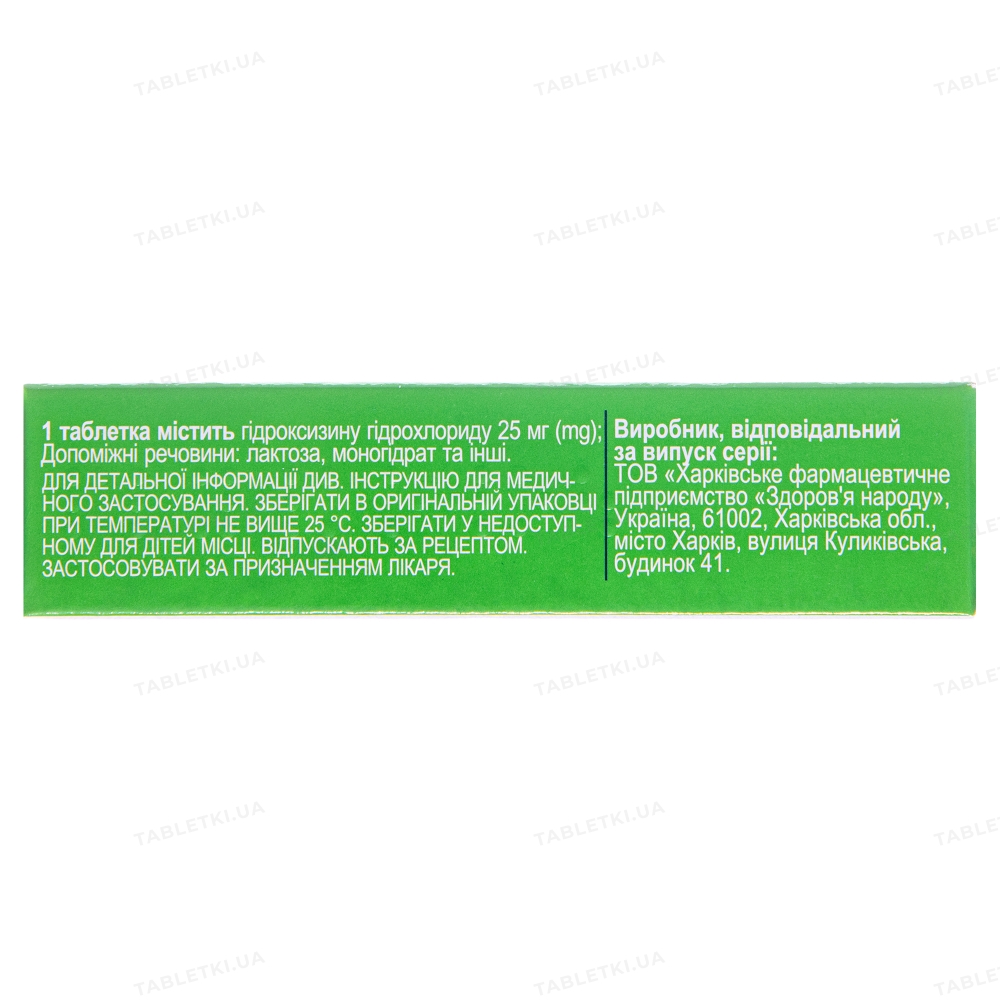
1 tablet contains 25 mg of hydroxyzine hydrochloride;
inactive ingredients: celactose 80 [a mixture of lactose monohydrate and powdered cellulose (75 : 25)], colloidal anhydrous silicon dioxide, magnesium stearate, hypromellose, polyethylene glycol 400, titanium dioxide (E 171).
Dosage Form
Film-coated tablets.
Main physical and chemical properties: film-coated tablets, almost white in color, round and cylindrical in shape with two convex surfaces and a score line on one side.
Pharmacotherapeutic group
Anxiolytics. Diphenylmethane derivatives.
ATC code N05B B01.
Pharmacological properties
Pharmacodynamics.
Hydroxyzine hydrochloride is a derivative of diphenylmethane, a compound chemically unrelated to phenothiazines, reserpine, meprobamate, or benzodiazepines.
Mechanism of Action
Hydroxyzine hydrochloride is not a central nervous system depressant, but its action may be associated with the inhibition of activity in certain key areas of the subcortical region of the central nervous system.
Pharmacodynamic Effects
Antihistamine and bronchodilator effects have been demonstrated experimentally and confirmed clinically. The antiemetic effect has been demonstrated in both the apomorphine and veriloid tests. Pharmacological and clinical studies indicate that hydroxyzine, at therapeutic doses, does not increase gastric secretion or acidity and, in most cases, exhibits mild antisecretory activity. A reduction in wheals and erythema was demonstrated in healthy adult volunteers and in children following intradermal injections of histamine or antigens. Hydroxyzine has also proven effective in relieving itching associated with various forms of hives, eczema, and dermatitis.
In patients with impaired liver function, the antihistamine effect of a single dose may last up to 96 hours after administration.
EEG data from healthy volunteers demonstrate the drug’s anxiolytic and sedative profile. The anxiolytic effect was confirmed in patients using various classical psychometric tests. Polysomnography data from patients with anxiety and patients suffering from insomnia indicate an increase in total sleep time, a reduction in the total duration of nighttime awakenings, and a reduction in sleep latency following a single or repeated daily doses of 50 mg. A reduction in muscle tone was demonstrated in patients with anxiety when administered a daily dose of 3 × 50 mg.
No memory impairments were observed. There were no symptoms or signs of withdrawal after 4 weeks of treatment in patients with anxiety.
When administered orally, the antihistamine effect begins approximately 1 hour after dosing. The sedative effect begins 5–10 minutes after administration of oral liquid formulations and 30–45 minutes after administration of tablets. Hydroxyzine also exhibits antispasmodic and sympatholytic effects. It has a weak affinity for muscarinic receptors. Hydroxyzine exerts a mild analgesic effect.
Pharmacokinetics.
Absorption. Hydroxyzine is rapidly absorbed from the gastrointestinal tract. Maximum plasma concentration (Cmax) is reached approximately 2 hours after oral administration. Following single oral doses of 25 mg and 50 mg in adults, Cmax concentrations are typically 30 and 70 ng/mL, respectively. With repeated once-daily administration, concentrations increase by 30%. The bioavailability of hydroxyzine following oral administration, compared to intramuscular (IM) administration, is approximately 80%.
Distribution. Hydroxyzine is widely distributed throughout the body and typically reaches higher concentrations in tissues than in plasma. In adults, the apparent volume of distribution ranges from 7 to 16 L/kg. Hydroxyzine penetrates the skin following oral administration. After both single and multiple doses, concentrations of hydroxyzine in the skin are higher than those in blood serum. Hydroxyzine crosses the blood-brain and placental barriers, resulting in higher concentrations in the fetus than in the pregnant woman.
Biotransformation. Hydroxyzine is extensively metabolized. The formation of the major metabolite—cetirizine, a carboxylic acid metabolite (approximately 45% of the oral dose)—is stimulated by alcohol dehydrogenase. This metabolite is a potent peripheral H1 antagonist. Other identified metabolites include an N-dealkylated metabolite and an O-dealkylated metabolite with a half-life of 59 hours. These metabolic pathways are mediated primarily by CYP3A4/5.
Elimination. The half-life of hydroxyzine in adults is approximately 14 hours (range: 7–20 hours). The apparent total body clearance, as determined in clinical studies, is 13 mL/min/kg. Only 0.8% of the dose is excreted unchanged in the urine. The major metabolite, cetirizine, is excreted primarily unchanged in the urine (25% of orally administered hydroxyzine).
Special Populations
Elderly patients. The pharmacokinetics of hydroxyzine were studied in 9 healthy elderly volunteers (69.5 ± 3.7 years) following a single dose of 0.7 mg/kg. The half-life of hydroxyzine was prolonged to 29 hours, and the apparent volume of distribution increased to 22.5 L/kg. It is recommended to reduce the daily dose of hydroxyzine in elderly patients (see the “Dosage and Administration” section).
Children. The pharmacokinetics of hydroxyzine were evaluated in 12 children (6.1 ± 4.6 years; 22 ± 12 kg) following a single dose of 0.7 mg/kg. Apparent plasma clearance was approximately 2.5 times higher than in adults. The half-life was shorter than in adults. It was approximately 4 hours in 1-year-old patients and 11 hours in 14-year-old patients. When administered to children, the dose should be adjusted (see the “Dosage and Administration” section).
Hepatic impairment. In subjects with secondary hepatic dysfunction due to primary biliary cirrhosis, total clearance was approximately 66% of that observed in healthy volunteers. The half-life increased to 37 hours, and serum concentrations of the carboxylic metabolite of cetirizine were higher than in young patients with normal liver function. The daily dose or dosing frequency should be reduced in patients with impaired liver function (see the “Dosage and Administration” section).
Renal impairment. The pharmacokinetics of hydroxyzine were studied in 8 patients with severe renal impairment (creatinine clearance 24 ± 7 mL/min). The AUC (area under the pharmacokinetic curve) for hydroxyzine did not change significantly, whereas that for the carboxylic metabolite of cetirizine was increased. This metabolite is not effectively removed by hemodialysis.
To avoid any significant accumulation of the cetirizine metabolite following repeated doses of hydroxyzine, the daily dose of hydroxyzine should be reduced in patients with impaired renal function (see the “Dosage and Administration” section).
Indications
Given its sedative, tranquilizing, and antihistamine properties, hydroxyzine is indicated for:
- the symptomatic treatment of anxiety in adults;
- symptomatic treatment of allergic pruritus.
Contraindications
- Hypersensitivity to the active ingredient or to any of the drug’s excipients, cetirizine, other piperazine derivatives, aminophylline, or ethylenediamine;
- porphyria;
- diagnosed acquired or congenital QT interval prolongation;
- presence of risk factors for QT interval prolongation, including diagnosed cardiovascular diseases, significant electrolyte imbalances (hypokalemia, hypomagnesemia), a family history of sudden cardiac death, severe bradycardia, or concomitant use of medications that prolong the QT interval and/or induce “pirouette” polymorphic ventricular tachycardia (see sections “Special Considerations for Use” and “Drug Interactions and Other Interactions”);
- pregnancy or breastfeeding (see the section “Use During Pregnancy or Breastfeeding”).
Interactions with Other Medications and Other Types of Interactions
Contraindicated combinations
Concomitant administration of hydroxyzine with drugs that prolong the QT interval and/or induce polymorphic “pirouette” ventricular tachycardia, such as Class IA antiarrhythmic drugs (e.g., quinidine, disopyramide) and Class III antiarrhythmic drugs (e.g., amiodarone, sotalol), certain antihistamines, certain neuroleptics (e.g., haloperidol), certain antidepressants (e.g., citalopram, escitalopram), certain antimalarial drugs (e.g., mefloquine and hydroxychloroquine), certain antibiotics (e.g., erythromycin, levofloxacin, moxifloxacin), certain antifungal agents (e.g., pentamidine), certain gastrointestinal medications (e.g., prucalopride), certain medications used to treat cancer (e.g., toremifene, vandetanib), and methadone, which increase the risk of cardiac arrhythmia. Therefore, such combinations are contraindicated (see the “Contraindications” section).
Combinations Requiring Precautions
In cases of bradycardia, drugs that cause hypokalemia should be used with caution.
Hydroxyzine should be used with caution at doses exceeding the recommended ones or when used concomitantly with drugs capable of causing cardiac arrhythmias, such as quinidine, lithium, thioridazine, tricyclic antidepressants, atropine, and similar agents.
The potentiation of hydroxyzine’s effects should be taken into account when used concomitantly with medications that depress the central nervous system or have anticholinergic properties. In such cases, dosages should be adjusted on an individual basis. Alcohol also potentiates the effects of this medication.
Concomitant use with monoamine oxidase (MAO) inhibitors should be avoided.
If the patient is being treated with anticoagulants, hemostasis should be assessed before starting treatment.
The drug counteracts the pressor effect of epinephrine, acts as an antagonist to the anticonvulsant activity of phenytoin in rats, and also counteracts the effects of betahistine and cholinesterase inhibitors. If allergy tests or a methacholine bronchial challenge test are required, the drug must be discontinued 5 days prior to the tests to prevent interference with the test results.
Administration of hydroxyzine may interfere with the determination of 17-hydroxycorticosteroids in urine.
Cimetidine 600 mg twice daily increased serum hydroxyzine concentrations by 36% and reduced peak concentrations of the cetirizine metabolite by 20%.
Hydroxyzine is a CYP2D6 inhibitor (Ki: 3.9 μmol; 1.7 μg/mL) and, at high doses, may cause drug interactions with CYP2D6 substrates (metoprolol, propafenone, timolol, amitriptyline, clomipramine, desipramine, imipramine, paroxetine, haloperidol, risperidone, thioridazine, aripiprazole, codeine, dextromethorphan, duloxetine, flecainide, mexiletine, ondansetron, tamoxifen, tramadol, venlafaxine).
The drug has no inhibitory effect at a concentration of 100 μmol on the UDP-glucuronyltransferase 1A1 and 1A6 isoforms in human liver microsomes. It inhibits the cytochrome P450 isoforms 2C9/C10, 2C19, and 3A4 at concentrations that exceed peak plasma concentrations (IC50: 103–140 μmol; 46–52 μg/mL). Therefore, it is unlikely that this drug would interfere with the metabolism of medications that are substrates for these enzymes.
The metabolite cetirizine, at a concentration of 100 μmol, does not exhibit an inhibitory effect on human liver cytochrome P450 (1A2, 2A6, 2C9/C10, 2C19, 2D6, 2E1, and 3A4) or the isoforms of UDP-glucuronyltransferase.
Hydroxyzine is metabolized by alcohol dehydrogenase and CYP3A4/5; an increase in blood concentrations of hydroxyzine can be expected when hydroxyzine is administered concomitantly with drugs known to be potent inhibitors of these enzymes (telithromycin, clarithromycin, delavirdine, stiripentol, ketoconazole, voriconazole, itraconazole, posaconazole, and certain HIV protease inhibitors, including atazanavir, indinavir, nelfinavir, ritonavir, saquinavir, lopinavir/ritonavir, saquinavir/ritonavir, and tipranavir/ritonavir). However, when only one metabolic pathway is inhibited, other pathways may partially compensate for this.
Special Considerations for Use
Hydroxyzine should be prescribed with caution to patients prone to convulsive reactions.
Due to the drug’s anticholinergic effect, it should be prescribed with caution to patients with glaucoma, prostatic hypertrophy, difficulty urinating, reduced gastrointestinal motility, myasthenia gravis, or dementia.
For patients concurrently receiving treatment with other central nervous system (CNS) depressants or anticholinergic agents, the dose should be adjusted (see the section “Interactions with Other Medications and Other Types of Interactions”).
Alcohol or other sedative medications should be avoided during treatment with hydroxyzine (see the section “Interactions with Other Medications and Other Types of Interactions”).
Effects on the Cardiovascular System
The use of hydroxyzine has been associated with QT interval prolongation on the ECG. During postmarketing surveillance, cases of QT interval prolongation and polymorphic ventricular tachycardia of the “pirouette” type have been reported in patients taking hydroxyzine. Most of these patients had other risk factors, including electrolyte imbalances and concomitant medications, which may have contributed to the development of these symptoms (see the “Adverse Reactions” section).
Hydroxyzine should be used at the lowest effective dose and for the shortest possible duration. If signs or symptoms that may be related to cardiac arrhythmia occur, treatment with hydroxyzine must be discontinued, and patients should seek immediate medical attention.
Patients should be advised to report any cardiac symptoms immediately.
Skin Reactions
Life-threatening skin/immunological reactions, such as Stevens–Johnson syndrome, toxic epidermal necrolysis, acute generalized exanthematous pustulosis, or angioedema.
Patients should be informed of these signs and symptoms, and should be closely monitored for the development of skin/immunological reactions. The highest risk of developing Stevens–Johnson syndrome, toxic epidermal necrolysis, acute generalized exanthematous pustulosis, or angioedema occurs within a period ranging from several days to several weeks after the start of treatment.
If symptoms or signs of Stevens–Johnson syndrome, toxic epidermal necrolysis, acute generalized exanthematous pustulosis, or angioedema (such as a progressive skin rash, often accompanied by pain, blisters, or mucosal involvement, and sometimes fever), stop taking the medication and seek medical attention.
The best outcomes in the treatment of Stevens-Johnson syndrome, toxic epidermal necrolysis, acute generalized exanthematous pustulosis, or angioedema are achieved through early diagnosis and treatment, as well as immediate discontinuation of the suspected medication. Early discontinuation of the drug is associated with a better prognosis.
If a patient develops Stevens-Johnson syndrome, toxic epidermal necrolysis, acute generalized exanthematous pustulosis, or angioedema, such a patient must never take the drug again.
Elderly Patients
The use of hydroxyzine is not recommended in elderly patients due to reduced clearance of hydroxyzine in this population compared with younger patients and a higher risk of adverse reactions (e.g., anticholinergic effects) (see the “Dosage and Administration” and “Adverse Reactions” sections).
Hepatic and/or Renal Impairment
In patients with impaired liver function or with moderate to severe renal insufficiency, the dose should be reduced (see the “Dosage and Administration” section).
If a patient has been diagnosed with an intolerance to certain sugars, they should consult a doctor before taking this medication.
Pediatric population
Young children are more prone to developing adverse reactions affecting the central nervous system (see the “Adverse Reactions” section). Seizures have been observed more frequently in children than in adults.
Use during pregnancy or breastfeeding.
Pregnancy. Animal studies have demonstrated reproductive toxicity of the drug. Hydroxyzine crosses the placental barrier, resulting in higher concentrations in the fetus compared to the mother. Currently, there are no relevant epidemiological data regarding the effects of hydroxyzine during pregnancy; therefore, the drug is contraindicated during pregnancy.
In newborns whose mothers received the drug during late pregnancy and/or during labor, the following symptoms were observed immediately or several hours after birth: hypotonia, movement disorders, including extrapyramidal disorders, clonic movements, central nervous system depression, neonatal hypoxia, or urinary retention. Therefore, this medication is contraindicated during pregnancy.
Breastfeeding. Cetirizine, the major metabolite of hydroxyzine, passes into breast milk.
Although no formal study has been conducted on the excretion of hydroxyzine into breast milk, severe adverse effects have been observed in newborns/infants whose mothers were treated with hydroxyzine.
This medication is contraindicated during breastfeeding. If treatment with hydroxyzine is necessary, breastfeeding should be discontinued.
Fertility. There are no relevant data on the effect on human fertility.
Effect on reaction time when driving or operating machinery.
Hydroxyzine may impair the ability to react and concentrate. Patients should be aware of this and exercise caution when driving or operating machinery.
Concomitant use of this medication with alcohol or other sedatives should be avoided, as this enhances the effects mentioned above.
Dosage and Administration
The medication is taken orally.
Hydroxyzine should be used at the lowest effective dose and for the shortest possible duration.
Adults
For the symptomatic treatment of anxiety: 50–100 mg per day, i.e., 2–4 tablets of 25 mg or ½–1 tablet of 100 mg in the evening before bedtime if anxiety develops, especially insomnia.
For the symptomatic treatment of allergic pruritus: 25–100 mg per day, i.e., 1–4 tablets of 25 mg per day.
The maximum daily dose for adults and children weighing 40 kg or more is 100 mg.
The physician determines the duration of treatment based on symptoms and prescribes the lowest possible maintenance dose.
Since patients may respond differently to hydroxyzine, it is recommended to start treatment with low doses and gradually increase the dose until the optimal dose is reached, adjusted according to the patient’s response to therapy.
Children
For the symptomatic treatment of allergic pruritus:
Children and adolescents 12 years of age and older (weighing more than 40 kg): 25–100 mg/day, i.e., 1–4 tablets of 25 mg per day.
Children aged 9 to 12 years (weighing 28–40 kg): 25–75 mg/day, i.e., 1–3 tablets of 25 mg per day.
Children aged 7 to 9 years (weighing 23–28 kg): 25–50 mg/day, 1–2 tablets of 25 mg each per day.
Children aged 4 to 7 years (weighing 17–23 kg): 25–37.5 mg/day, i.e., 1–1½ 25-mg tablets per day.
Children aged 3 to 4 years (weighing 12.5–17 kg): 12.5–25 mg/day, i.e., ½–1 tablet of 25 mg per day.
The dose is calculated based on body weight, ranging from 1 mg/kg/day to a maximum of 2 mg/kg/day, administered in divided doses.
For children weighing up to 40 kg, the maximum daily dose is 2 mg/kg/day. For children weighing more than 40 kg, the maximum daily dose is 100 mg per day.
Special Populations
Elderly patients
The maximum daily dose for elderly patients is 50 mg per day (see the “Special Considerations” section).
Renal impairment
If a temporary effect is desired, the dose may be reduced by half. This may also apply to patients with renal insufficiency.
Hepatic impairment
Patients with impaired liver function are advised to reduce the daily dose by 33%.
Children.
The use of this medication in children is described in detail in the “Dosage and Administration” section.
Overdose
Symptoms
Symptoms observed following a significant overdose of the drug are primarily associated with excessive anticholinergic effects, central nervous system (CNS) depression, or paradoxical CNS stimulation. Symptoms of a significant overdose may include nausea, vomiting, tachycardia, hyperthermia, drowsiness, impaired pupillary reflex, tremor, confusion, or hallucinations. This may be followed by decreased level of consciousness, respiratory depression, seizures, hypotension, or cardiac arrhythmias, including bradycardia. The severity of coma may increase, and cardiorespiratory collapse may occur.
Treatment
Carefully monitor the airway, respiration, and circulation with continuous ECG recording and ensure an adequate oxygen supply. Continue monitoring cardiac parameters and blood pressure for 24 hours after the patient’s symptoms have resolved.
Patients with altered mental status should be evaluated for concurrent use of alcohol or other medications; if necessary, they should be administered oxygen, naloxone, glucose, and thiamine.
If a vasopressor effect is required, norepinephrine or metaraminol should be administered. Epinephrine should not be administered.
Ipecac syrup should not be administered to patients with symptoms or a predisposition to rapid loss of consciousness, coma, or seizures, as this may lead to aspiration pneumonia.
If a clinically significant amount of the drug is ingested, gastric lavage may be performed following endotracheal intubation. Activated charcoal may be used, but there is limited data supporting its efficacy. Hemodialysis or hemoperfusion is not recommended. There is no specific antidote.
Data from published studies indicate that in the presence of severe, life-threatening anticholinergic effects that are difficult to treat and do not respond to the drugs used for their treatment, trial therapeutic doses of physostigmine may be beneficial. Physostigmine should not be used solely to keep the patient conscious. If cyclic antidepressants have been taken concurrently, the use of physostigmine may lead to seizures and cardiac arrest that are difficult to treat. Physostigmine should not be prescribed in cases of cardiac conduction system disorders.
Side Effects
Side effects are primarily associated with central nervous system (CNS) depression or a paradoxical stimulatory effect on the CNS, anticholinergic activity, or hypersensitivity reactions.
The table below lists adverse effects reported during postmarketing use, as well as adverse reactions reported during placebo-controlled clinical trials with a frequency of at least 1% for hydroxyzine (735 subjects who received hydroxyzine at a dose of up to 50 mg daily and 630 subjects who received placebo). The frequency of adverse reactions in clinical trials is also given as a percentage where possible; for adverse effects reported during postmarketing use, the frequency cannot be reliably estimated.
The adverse reactions listed below, which were observed during use of the drug, are categorized by organ system according to MeDDRA [Medical Dictionary for Regulatory Activities] and by frequency as follows: very common (> 1/10); common (> 1/100 to < 1/10); uncommon (> 1/1,000 to < 1/100); rare (> 1/10,000 to < 1/1,000); very rare (< 1/10,000); frequency unknown (cannot be estimated from the available data).
Some adverse reactions were identified during clinical trials with the frequencies listed below. However, some adverse reactions have been reported spontaneously during postmarketing use. When the frequency cannot be estimated based on available data, it is listed as “unknown.”
| Adverse Reactions | Frequency (%) of adverse reactions |
| Immune system disorders: | |
| Hypersensitivity | rare |
| anaphylactic shock | very rare |
| Psychiatric disorders: | |
| Agitation | uncommon |
| confusion | uncommon |
| disorientation | Rarely |
| hallucinations | rarely |
| Neurological disorders: | |
| drowsiness | very common (13.74) |
| headache | common (1.63) |
| sedation | frequently |
| dizziness | uncommon |
| insomnia | uncommon |
| tremor | uncommon |
| convulsions | Rare |
| dyskinesia | rarely |
| loss of consciousness (syncope) | frequency unknown |
| Eye disorders: | |
| accommodation disorder | Rare |
| blurred vision | rare |
| Cardiovascular system: | |
| tachycardia | rare |
| QT interval prolongation (see “Special Considerations for Use”) | frequency unknown |
| ventricular arrhythmia (e.g., “pirouette” type) | frequency unknown |
| Vascular system: | |
| hypotension | rare |
| Respiratory, thoracic, and mediastinal disorders: | |
| bronchospasm | very rare |
| Gastrointestinal system: | |
| dry mouth | common (1.22) |
| nausea | uncommon |
| constipation | rarely |
| vomiting | rarely |
| Hepatobiliary system: | |
| abnormal liver function tests | rare |
| hepatitis | frequency unknown |
| Skin and subcutaneous tissue disorders: | |
| Itching | rare |
| erythematous rash | rare |
| maculopapular rash | rare |
| hives | rare |
| dermatitis | rare |
| angioedema | very rare |
| excessive sweating | very rare |
| drug-induced erythema | very rare |
| acute generalized exanthematous pustulosis | very rare |
| Erythema multiforme | very rare |
| Stevens–Johnson syndrome | very rare |
| bullous conditions (e.g., toxic epidermal necrolysis, pemphigoid) | frequency unknown |
| Urinary system: | |
| urinary retention | Rare |
| General disorders: | |
| increased fatigue | common (1.36) |
| general weakness | uncommon |
| fever | rarely |
| Changes in laboratory test results: | |
| weight gain | frequency unknown |
Description of selected adverse reactions
The following adverse reactions are associated with cetirizine, the major metabolite of hydroxyzine: thrombocytopenia, aggression, depression, tics, dystonia, paresthesia, oculogyric crisis, diarrhea, dysuria, urinary incontinence, weakness, edema, weight gain—and may therefore potentially occur with the use of hydroxyzine.
Reporting of Adverse Reactions
Reporting suspected adverse reactions after a drug’s approval is important. This allows for continued monitoring of the drug’s benefit-risk profile. Healthcare professionals should report any suspected adverse reactions through the national reporting system.
Shelf Life
5 years.
Storage conditions
Store in the original packaging at a temperature not exceeding 25 °C.
Keep out of the reach of children.
Packaging
10 tablets per blister; 1 or 3 blisters per box. 10 tablets per blister.
Manufacturer
Limited Liability Company “Kharkiv Pharmaceutical Enterprise ‘Zdorov’ya Narodu’,” Ukraine.
Manufacturer’s location and business address.
Ukraine, 61002, Kharkiv Oblast, city of Kharkiv, 41 Kulykivska Street.