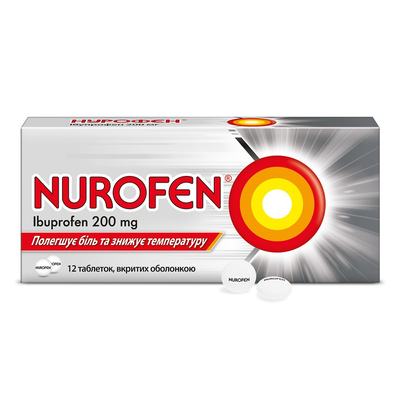
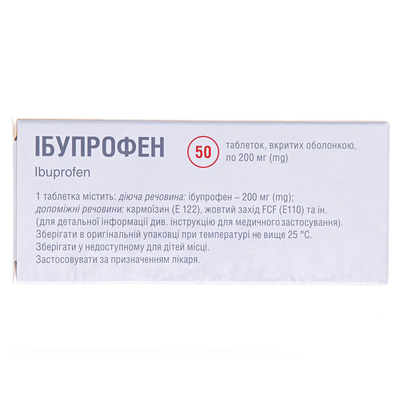


Ibuprofen tablets, enteric-coated, 200 mg, No. 50 (10 x 5)
Ingredients
Active ingredient: ibuprofen;
1 tablet contains 200 mg of ibuprofen;
inactive ingredients: potato starch, magnesium stearate, povidone, Opadry II Pink 85F34660 (a mixture of: polyvinyl alcohol, titanium dioxide E 171, polyethylene glycol 3350, talc, carmoisine E 122, sunset yellow FCF E 110).
Dosage Form
Film-coated tablets.
Main physical and chemical properties: round, film-coated tablets with a biconvex surface, ranging in color from light pink to dark pink. When viewed under a magnifying glass, the fracture surface reveals a core surrounded by a single continuous layer.
Pharmacotherapeutic group
Nonsteroidal anti-inflammatory and antirheumatic agents. Propionic acid derivatives. ATC code M01A E01.
Pharmacological Properties
Pharmacodynamics.
Ibuprofen is a nonsteroidal anti-inflammatory drug (NSAID), a propionic acid derivative, which has demonstrated its efficacy by inhibiting prostaglandin synthesis. In humans, ibuprofen reduces pain associated with inflammation, swelling, and fever. It exerts pronounced analgesic, antipyretic, and anti-inflammatory effects. In addition, ibuprofen reversibly inhibits platelet aggregation.
Experimental data indicate that ibuprofen may competitively inhibit the effect of low-dose aspirin (acetylsalicylic acid) on platelet aggregation when these drugs are administered concomitantly. Some pharmacodynamic studies show that when single doses of 400 mg of ibuprofen are administered within 8 hours before or within 30 minutes after administration of immediate-release aspirin (acetylsalicylic acid) immediate-release (81 mg), a reduction in the effect of aspirin (acetylsalicylic acid) on thromboxane formation or platelet aggregation was observed. Although there is uncertainty regarding the extrapolation of these data to the clinical setting, the possibility cannot be ruled out that regular, long-term use of ibuprofen may reduce the cardioprotective effect of low-dose acetylsalicylic acid. With occasional use of ibuprofen, such a clinically significant effect is considered unlikely.
Pharmacokinetics.
After administration, ibuprofen is rapidly absorbed in the gastrointestinal tract and binds to plasma proteins.
Maximum plasma concentrations of the active ingredient are reached 45 minutes after administration on an empty stomach, and in synovial fluid—3 hours after administration. When this medication is taken with food, peak levels are observed 1–2 hours after administration. Ibuprofen is metabolized in the liver and excreted by the kidneys either unchanged or as metabolites. The half-life is approximately 2 hours.
No significant differences in the pharmacokinetic profile are observed in elderly patients.
Indications
Symptomatic treatment of headaches and toothaches, dysmenorrhea, neuralgia, back, joint, and muscle pain, rheumatic pain, as well as symptoms of the common cold and flu.
Contraindications
- Hypersensitivity to ibuprofen or to any of the other ingredients in the medication.
- Allergic reactions (e.g., bronchial asthma, rhinitis, angioedema, or hives) following the use of ibuprofen, acetylsalicylic acid (aspirin), or other nonsteroidal anti-inflammatory drugs (NSAIDs) in the medical history.
- Gastric or duodenal ulcer, active bleeding, or a history of recurrence (two or more significant episodes of confirmed ulcer disease or bleeding).
- A history of gastrointestinal bleeding or gastrointestinal perforation associated with the use of NSAIDs.
- Severe heart failure (NYHA Class IV), severe hepatic impairment, or severe renal impairment.
- The third trimester of pregnancy.
- Active inflammatory bowel disease.
- Hemorrhagic diathesis or other coagulation disorders.
Drug Interactions and Other Interactions
In general, caution should be exercised when using NSAIDs in combination with other medications that may increase the risk of gastrointestinal ulcers, gastrointestinal bleeding, or worsening renal function.
Ibuprofen, like other nonsteroidal anti-inflammatory drugs (NSAIDs), should not be used in combination with:
- acetylsalicylic acid (aspirin), as this increases the risk of adverse reactions, except when aspirin (at a dose not exceeding 75 mg per day) has been prescribed by a physician.
Experimental data suggest that when used concomitantly, ibuprofen may competitively inhibit the effect of low-dose aspirin (acetylsalicylic acid) on platelet aggregation. Although there is uncertainty regarding the extrapolation of these data to the clinical setting, the possibility cannot be ruled out that regular, long-term use of ibuprofen may reduce the cardioprotective effect of low doses of acetylsalicylic acid. With occasional use of ibuprofen, such a clinically significant effect is considered unlikely;
- other NSAIDs, including selective cyclooxygenase-2 inhibitors. Concomitant use of two or more NSAIDs should be avoided, as this increases the incidence of adverse effects.
Ibuprofen should be used with caution in combination with the following medications:
- anticoagulants: nonsteroidal anti-inflammatory drugs may enhance the effect of anticoagulants such as warfarin;
- antihypertensives (ACE inhibitors and angiotensin II antagonists) and diuretics: NSAIDs may reduce the therapeutic effect of these drugs. In some patients with impaired renal function (e.g., patients with dehydration or elderly patients with impaired renal function), the concomitant use of an ACE inhibitor or angiotensin II antagonist and medications that inhibit cyclooxygenase may lead to further deterioration of renal function, including possible acute renal failure, which is usually reversible. These interactions should be taken into account in patients taking a coxib concomitantly with ACE inhibitors or angiotensin II antagonists. Therefore, such combinations should be used with caution, especially in the elderly. If treatment is necessary, ensure the patient is adequately hydrated and consider the need to monitor renal function at the start of combination therapy, as well as at regular intervals thereafter. Diuretics increase the risk of NSAID-induced nephrotoxicity;
- corticosteroids: increase the risk of ulcers and bleeding in the gastrointestinal tract;
- antiplatelet agents and selective serotonin reuptake inhibitors: increase the risk of gastrointestinal bleeding;
- cardiac glycosides: NSAIDs may exacerbate heart failure, reduce glomerular filtration rate, and increase plasma levels of glycosides;
- lithium and methotrexate: there is evidence of a potential increase in plasma levels of lithium and methotrexate;
- cyclosporine: increased risk of nephrotoxicity;
- mifepristone: NSAIDs should not be taken for 8–12 days after mifepristone administration, as this may reduce the effectiveness of mifepristone;
- tacrolimus: increased risk of nephrotoxicity when NSAIDs are used concomitantly with tacrolimus;
- zidovudine: increased risk of hematologic toxicity when zidovudine is used concomitantly with NSAIDs. There is evidence of an increased risk of hemarthrosis and hematoma in HIV-infected patients with hemophilia when zidovudine and ibuprofen are used concomitantly;
- quinolone antibiotics: Concomitant use of ibuprofen and quinolone antibiotics increases the risk of seizures.
Special Considerations for Use
The incidence of ibuprofen-related adverse effects can be reduced by using the minimum effective dose for the shortest duration necessary to treat symptoms.
Elderly patients have an increased incidence of adverse reactions to NSAIDs, particularly gastrointestinal bleeding and perforations, which can be fatal.
Effects on the respiratory system.
Bronchospasm may occur in patients with bronchial asthma, patients with allergic diseases, and patients with a history of bronchospasm.
Other NSAIDs.
Concomitant use of ibuprofen with other NSAIDs, including selective cyclooxygenase-2 inhibitors, should be avoided, as it increases the risk of adverse reactions.
Systemic lupus erythematosus and mixed connective tissue disease.
Ibuprofen should be used with caution in patients with systemic lupus erythematosus and mixed connective tissue disease due to an increased risk of aseptic meningitis.
Cases of aseptic meningitis have been reported in association with ibuprofen use. Although this effect is more likely in patients with systemic lupus erythematosus and other connective tissue diseases, such cases have also been reported in some patients without chronic diseases; therefore, this should be taken into account when using this medication.
Effects on the Cardiovascular and Cerebrovascular Systems.
Patients with a history of hypertension and/or heart failure should begin treatment with caution (consultation with a physician is required), since during therapy with ibuprofen, as with other NSAIDs, cases of fluid retention, hypertension, and edema have been reported.
The use of ibuprofen, especially at high doses (2,400 mg daily), as well as long-term use, slightly increases the risk of arterial thrombotic complications (e.g., myocardial infarction or stroke). However, there is no evidence of a link between the use of low doses of ibuprofen (e.g., less than 1,200 mg daily) and an increased risk of myocardial infarction.
Patients with uncontrolled hypertension, congestive heart failure (NYHA Class II–III), diagnosed ischemic heart disease, peripheral arterial disease, and/or cerebrovascular disease should be treated with ibuprofen only after a thorough evaluation of their clinical condition. High doses (2,400 mg per day) should be avoided.
The clinical picture should also be carefully evaluated before initiating long-term treatment in patients with risk factors for cardiovascular complications (e.g., hypertension, hyperlipidemia, diabetes mellitus, smoking), especially if high doses of ibuprofen (2,400 mg per day) are required.
Effects on the kidneys/liver.
Caution should be exercised in patients with renal insufficiency due to the possibility of worsening renal function. Ibuprofen should be used with caution in patients with kidney or liver disease, and especially during concomitant therapy with diuretics, as prostaglandin inhibition may lead to fluid retention and subsequent worsening of kidney function. Such patients should receive the lowest possible dose of ibuprofen, and renal function should be monitored regularly. In cases of dehydration, adequate fluid intake should be ensured. There is a risk of renal failure in children (aged 6 years and older) and adolescents who are dehydrated.
In general, the systematic use of analgesics, especially combinations of different pain relievers, may lead to long-term kidney damage with a risk of renal failure (analgesic nephropathy). The highest risk of this reaction exists in elderly patients, patients with renal insufficiency, heart failure, and hepatic insufficiency, as well as in those receiving therapy with diuretics or ACE inhibitors. After discontinuation of NSAID therapy, a return to the pre-treatment state is usually achieved.
Like other NSAIDs, ibuprofen may cause a slight, temporary increase in certain liver function tests, as well as a significant increase in AST and ALT levels. If these levels rise significantly, treatment should be discontinued.
During long-term use of ibuprofen, liver function, kidney function, and hematological parameters should be monitored regularly.
Effects on female fertility.
There is insufficient evidence that drugs that inhibit cyclooxygenase/prostaglandin synthesis can cause impaired reproductive function in women due to their effect on the ovulation process. This effect is reversible after discontinuation of treatment.
Effects on the gastrointestinal tract.
NSAIDs should be used with caution in patients with a history of gastrointestinal disorders (ulcerative colitis, Crohn’s disease), as their condition may worsen.
There have been reports of gastrointestinal bleeding, perforation, and ulcers—which may be fatal—occurring at any stage of NSAID treatment, regardless of the presence of warning symptoms or a history of severe gastrointestinal disorders.
The risk of gastrointestinal bleeding, perforation, or ulcers increases with higher doses of NSAIDs in patients with a history of peptic ulcer disease, especially when complicated by bleeding or perforation, and in the elderly. Elderly patients are at increased risk of serious consequences due to side effects. These patients should begin treatment with the lowest possible dose. For these patients, as well as for patients who require concomitant use of low doses of acetylsalicylic acid or other medications that may increase the risk of gastrointestinal complications, combination therapy with protective agents (e.g., misoprostol or proton pump inhibitors).
Patients with a history of gastrointestinal toxicity, particularly elderly patients, should report any unusual abdominal symptoms related to the gastrointestinal tract (especially gastrointestinal bleeding), particularly at the start of treatment.
Prolonged use of analgesics in high doses may cause headaches that cannot be treated by increasing the dose of the medication. Prolonged use of any analgesic for the treatment of headaches may worsen this condition. In such cases, consult a doctor and discontinue treatment. The possibility of medication-overuse headaches should be considered in patients who experience frequent or daily headaches despite (or because of) the regular use of headache medications.
Use the drug with caution in patients receiving concomitant therapy with medications that increase the risk of ulcers or bleeding, particularly oral corticosteroids, anticoagulants (e.g., warfarin), selective serotonin reuptake inhibitors, or antiplatelet agents (e.g., acetylsalicylic acid).
In the event of gastrointestinal bleeding or an ulcer in patients receiving ibuprofen, treatment should be discontinued immediately.
Skin and subcutaneous tissue disorders.
Very rarely, severe skin reactions, which may be fatal, including exfoliative dermatitis, Stevens-Johnson syndrome, and toxic epidermal necrolysis, may occur in association with the use of NSAIDs. The highest risk of these reactions occurs at the start of treatment, with the first signs appearing in most cases within the first month of treatment. There has also been a reported case of acute generalized exanthematous pustulosis following the use of medications containing ibuprofen.
At the first signs of a skin rash, abnormal changes in the mucous membranes, or any other signs of hypersensitivity, ibuprofen should be discontinued.
In rare cases, chickenpox can cause severe infectious complications involving the skin and soft tissues. At this time, the potential for NSAIDs to exacerbate these infections cannot be ruled out; therefore, it is recommended to avoid using ibuprofen in cases of chickenpox.
Masking of symptoms of underlying infections.
Ibuprofen may mask the symptoms of an infectious disease, which can delay the initiation of appropriate treatment and, thus, complicate the course of the disease. This has been observed in cases of community-acquired bacterial pneumonia and bacterial complications of chickenpox. When ibuprofen is used to treat a fever or to relieve pain associated with an infection, it is recommended to monitor the infectious disease. In outpatient settings, the patient should consult a doctor if symptoms persist or worsen.
This medication contains the colorants carmoisine E 122 and sunset yellow FCF E 110, which may cause allergic reactions.
Use during pregnancy or breastfeeding.
Inhibition of prostaglandin synthesis may adversely affect pregnancy and/or the development of the embryo/fetus. Data from epidemiological studies indicate an increased risk of miscarriage, congenital heart defects, and gastroschisis following the use of prostaglandin synthesis inhibitors in early pregnancy. The absolute risk of cardiovascular defects increased from less than 1% to approximately 1.5%. It is believed that the risk increases with higher doses and longer duration of therapy.
In animals, the use of prostaglandin synthesis inhibitors resulted in an increase in the incidence of pre- and post-implantation miscarriages and embryo/fetal mortality. In addition, an increased incidence of various developmental abnormalities, including cardiovascular defects, has been reported in animals treated with prostaglandin synthesis inhibitors during organogenesis.
Use of this medication should be avoided during the first and second trimesters of pregnancy. NSAIDs should not be used during the first and second trimesters of pregnancy unless the potential benefit to the patient outweighs the potential risk to the fetus. Women trying to conceive, as well as during the first and second trimesters of pregnancy, should use the lowest possible dose for the shortest possible period of time.
All prostaglandin synthesis inhibitors pose risks when used during the third trimester of pregnancy:
- to the fetus: cardiopulmonary toxicity (characterized by premature closure of the ductus arteriosus and pulmonary hypertension); impaired renal function, which may progress to renal failure accompanied by oligohydramnios;
- for the mother and newborn: prolonged bleeding time, an antiplatelet effect that may develop even at very low doses; inhibition of uterine contractions, leading to delayed or prolonged labor.
The drug is contraindicated during the third trimester of pregnancy.
In limited studies, ibuprofen was detected in breast milk at very low concentrations; therefore, it is unlikely to have an adverse effect on a breastfed infant.
Effect on reaction time when driving or operating machinery.
When used in accordance with the recommended doses and duration of treatment, the drug does not affect reaction time while driving or operating machinery.
Dosage and Administration
For short-term oral use only. Swallow the tablets whole with water without chewing.
The lowest effective dose should be used for the shortest time necessary to relieve symptoms (see the “Special Instructions for Use” section). If treatment is required for more than 5 days (if symptoms persist or worsen), consult a doctor.
The drug is indicated for adults and children weighing more than 20 kg (ages 6 and older). The recommended daily dose is 20–30 mg/kg of body weight. Do not exceed a dose of 30 mg/kg of body weight per day.
For children weighing 20 to 30 kg (ages 6 to 11 years)—200 mg (1 tablet) per dose. Administer a repeat dose as needed after 6 hours, but in any case, do not exceed 600 mg (3 tablets) per day.
Adults and children weighing more than 30 kg: 200–400 mg (1–2 tablets) per dose. Administer a repeat dose as needed every 4–6 hours. Do not exceed a dose of 1,200 mg (6 tablets) within 24 hours.
Elderly patients do not require a special dosage.
Children. Do not use in children weighing less than 20 kg or under 6 years of age.
Overdose
Most reported cases of overdose were asymptomatic. The risk of symptoms arises at ibuprofen doses exceeding 80–100 mg/kg.
Administration of the drug to children at doses exceeding 400 mg/kg may cause symptoms of intoxication. In adults, the dose-response effect is less pronounced. The half-life in cases of overdose is 1.5–3 hours.
Symptoms. Symptoms of overdose occur within 4 hours after administration. In most patients, the administration of clinically significant amounts of nonsteroidal anti-inflammatory drugs caused only nausea, vomiting, epigastric pain, or, very rarely, diarrhea. Tinnitus, headache, and gastrointestinal bleeding may also occur. In more severe cases of poisoning, toxic effects on the central nervous system may occur, manifesting as vertigo, dizziness, lethargy, drowsiness, and occasionally nervous agitation, ataxia, disorientation, or coma. Seizures are occasionally observed in patients. In more severe cases of poisoning, hyperkalemia, metabolic acidosis, and prolonged prothrombin time/INR (international normalized ratio), presumably due to interaction with blood clotting factors circulating in the bloodstream. Rarely, moderate-to-severe symptoms have been observed, such as acute renal failure, liver damage, hypotension, hypothermia, cyanosis, dyspnea/acute respiratory distress syndrome, and brief episodes of apnea (in children following administration of large doses of the drug). Patients with bronchial asthma may experience an exacerbation of their asthma. Nystagmus, blurred vision, and loss of consciousness are possible.
Treatment. There is no specific antidote. Treatment should be symptomatic and supportive, and should include ensuring airway patency and monitoring cardiac function and vital signs until the patient’s condition normalizes. When small amounts of the drug are ingested (less than 50 mg/kg of ibuprofen), drinking water is recommended to minimize gastrointestinal disturbances. Oral administration of activated charcoal or gastric lavage is recommended within 1 hour after ingestion of a potentially toxic dose of the drug. If ibuprofen has already been absorbed, alkaline agents may be administered to promote the excretion of acidic ibuprofen in the urine. The benefit of measures such as forced diuresis, hemodialysis, and hemoperfusion has not been established, as ibuprofen has a high degree of plasma protein binding. In cases of frequent or prolonged muscle spasms, diazepam or lorazepam should be administered intravenously. In cases of bronchial asthma, bronchodilators should be used. Seek medical attention.
Side Effects
The side effects listed below have been observed with short-term use of ibuprofen at over-the-counter doses. Other side effects may occur during treatment of chronic conditions or with long-term use. The most common side effects were gastrointestinal in nature. For the most part, side effects are dose-dependent; in particular, the risk of gastrointestinal bleeding depends on the dose and duration of treatment.
Adverse reactions associated with the use of ibuprofen are classified by organ system and frequency. Frequency is defined as follows: very common – (≥1/10); common – (≥1/100 and ˂1/10); uncommon – (≥1/1,000 and ˂1/100); rare – (≥1/10,000 and ˂1/1,000); very rare – (˂1/10,000); frequency unknown (cannot be estimated from the available data). Within each frequency group, adverse reactions are listed in order of decreasing severity.
Blood and lymphatic system disorders:
very rare: hematopoietic disorders (anemia, leukopenia, thrombocytopenia, pancytopenia, agranulocytosis). Early signs include fever, sore throat, superficial mouth ulcers, flu-like symptoms, severe exhaustion, unexplained bleeding, and bruises of unknown cause.
Immune system disorders:
hypersensitivity reactions¹; uncommon: hives and itching; very rare: severe hypersensitivity reactions, symptoms of which may include swelling of the face, tongue, and larynx, shortness of breath, tachycardia, and hypotension (anaphylactic reaction, angioedema, or severe shock); frequency unknown: airway reactivity, including bronchial asthma, exacerbation of asthma, bronchospasm, or shortness of breath.
Nervous system disorders:
uncommon: headache; very rare: aseptic meningitis2.
Cardiovascular system:
frequency unknown: heart failure, edema.
Clinical trial and epidemiological data suggest that the use of ibuprofen, especially at high doses of 2,400 mg per day and during long-term treatment, may be associated with a slightly increased risk of arterial thrombotic complications (such as myocardial infarction or stroke).
Vascular system:
frequency unknown: hypertension.
Gastrointestinal system:
uncommon: abdominal pain, nausea, dyspepsia; rare: diarrhea, flatulence, constipation, and vomiting; very rare: gastric and duodenal ulcers, perforations, or gastrointestinal bleeding, melena, bloody vomiting, sometimes fatal (especially in elderly patients), ulcerative stomatitis, gastritis;
frequency unknown: exacerbation of colitis and Crohn’s disease.
Hepatic disorders:
very rare: liver dysfunction.
Skin and subcutaneous tissue disorders:
uncommon: various skin rashes; very rare: severe forms of skin reactions may occur, such as bullous reactions, including Stevens-Johnson syndrome, erythema multiforme, and toxic epidermal necrolysis;
frequency unknown: acute generalized exanthematous pustulosis, photosensitivity reactions.
Respiratory tract and mediastinal disorders:
frequency unknown: airway reactivity, including asthma, bronchospasm, or dyspnea.
Renal and urinary system disorders:
very rare: acute renal impairment, papillary necrosis—particularly with long-term use—associated with elevated serum urea levels, and edema; frequency unknown: renal failure.
Laboratory tests:
very rare: decreased hemoglobin levels.
Description of specific adverse reactions.
1 There have been reports of hypersensitivity reactions following treatment with ibuprofen. These reactions include (a) nonspecific allergic reactions and anaphylaxis, (b) respiratory tract reactions, including bronchial asthma, exacerbation of asthma, bronchospasm, or shortness of breath; or (c) various skin disorders, including rashes of various types, itching, urticaria, purpura, angioedema, and, less commonly, exfoliative and bullous dermatoses (including epidermal necrolysis and erythema multiforme).
2 The pathogenesis of drug-induced aseptic meningitis is not fully understood. However, available data on drug-induced aseptic meningitis associated with NSAID use suggest a hypersensitivity reaction (based on the temporal relationship to drug administration and the resolution of symptoms after discontinuation of the medication). In particular, during treatment with ibuprofen in patients with existing autoimmune disorders (such as systemic lupus erythematosus or mixed connective tissue disease), isolated cases of symptoms of aseptic meningitis (such as neck stiffness, headache, nausea, vomiting, fever, or disorientation).
Shelf life
3 years.
Storage Conditions
Store in the original packaging at a temperature not exceeding 25 °C.
Keep out of reach of children.
Packaging
10 tablets per blister pack; 1, 3, or 5 blister packs per package.
Dispensing Category
Available without a prescription.
Manufacturer
JSC “VITAMINS.”