
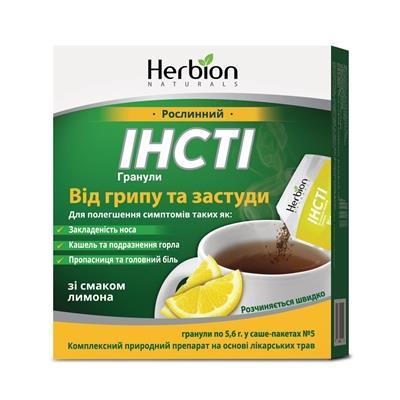
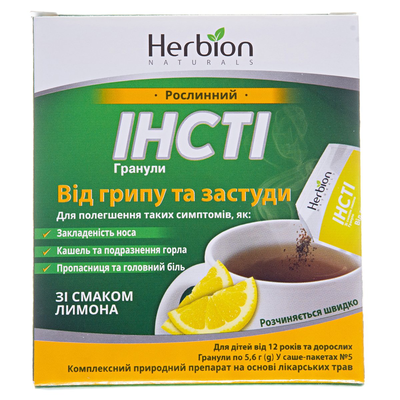
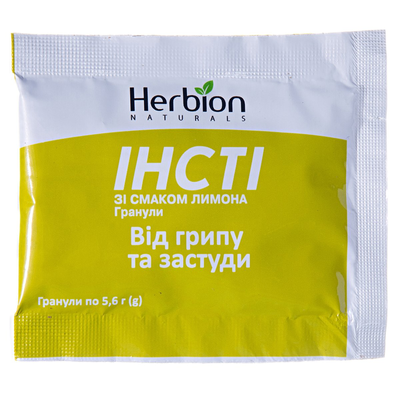
Insti with lemon flavor, 5.6 g granules, No. 5, in a sachet
Composition
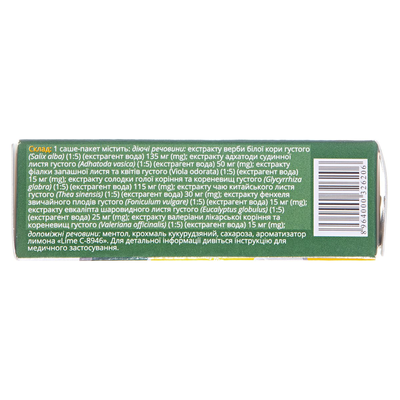
Active ingredients: 1 sachet contains: white willow bark extract (Salix alba) (1:5) (extractant: water) 135 mg; Adhatoda vasica leaf extract (1:5) (water extract) 50 mg; extract of sweet violet leaves and flowers (Viola odorata) (1:5) (extraction solvent: water) 15 mg; concentrated extract of licorice (Glycyrrhiza glabra) root and rhizome (1:5) (extraction solvent: water) 115 mg; concentrated extract of Chinese tea leaves (Thea sinensis) (1:5) (extractant: water) 30 mg; extract of common fennel fruit (Foeniculum vulgare) (1:5) (extractant: water) 15 mg; Eucalyptus globulus leaf extract (1:5) (solvent: water) 25 mg; Valerian officinalis root and rhizome extract (Valeriana officinalis) (1:5) (water extractant) 15 mg;
excipients: menthol, corn starch, sucrose, “Lime C-8946” lemon flavoring.
Dosage Form
Granules.
Main physical and chemical properties: brown granules with a faint lemon odor when crushed.
Pharmacotherapeutic group
Combination preparations used for coughs and colds.
ATC code R05X.
Pharmacological properties
A complex natural preparation based on medicinal herbs that, when combined, have a broad spectrum of antimicrobial activity (disinfectant, antiseptic, and anti-inflammatory properties).
White willow. White willow bark contains salicin and is used to treat pain and fever. Salicin enhances the product’s analgesic, antipyretic, disinfectant, and antiseptic properties.
Adhatoda vasica. It contains the bitter, non-volatile alkaloid vasicine, which has antiseptic properties and acts as an expectorant.
Sweet violet. It has antihistamine, expectorant, and antipyretic properties.
Licorice root. Reduces irritation and has expectorant and antispasmodic effects by stimulating the secretion of tracheal mucus.
Chinese tea (tea leaves). Has a bronchodilatory effect and exhibits astringent and stimulating properties.
Common fennel. Helps with respiratory conditions such as bronchial asthma and bronchitis due to its secretolytic and antispasmodic properties.
Eucalyptus globulus. Has antiseptic and expectorant effects.
Valerian. Has a sedative effect and helps with headaches, coughs, and fever.
Indications
Symptomatic treatment of influenza, the common cold, and viral respiratory tract infections accompanied by cough, fever, sore throat, nasal congestion, and headache.
Contraindications
Hypersensitivity to any of the drug’s components. Hypersensitivity to salicylates, plants of the Apiaceae family (celery family), or atenolol.
Severe liver or kidney dysfunction.
Interactions with Other Medications and Other Types of Interactions
Concomitant use of this medication with other antitussives, as well as with medications that reduce sputum production, is not recommended.
Concomitant use with cardiac glycosides, antiarrhythmic drugs (quinidine), thiazide and loop diuretics, adrenocorticosteroids, and laxatives may exacerbate hypokalemia. Excessive doses of medications containing fennel may, due to their estrogenic activity, affect the results of hormone therapy and the use of birth control pills. This medication enhances the effects of alcohol, sedatives, hypnotics, antihypertensives, anxiolytics, and antispasmodics.
If concurrent use of any other medications is necessary, consult a doctor.
Special Safety Precautions
Use with caution in cases of glomerulonephritis, hepatitis, organic heart disease,
hypertension, coagulation disorders, impaired liver and kidney function, hypokalemia, severe obesity, bronchial asthma, bronchospasm, whooping cough, and pseudocroup; or depression.
When used for a long time and in large quantities, the drug impairs digestion, causes headaches, stimulates the nervous system, and impairs heart function.
If the temperature rises above 38°C, the cough worsens, wheezing occurs in the lungs, purulent sputum is present, or there is rhinorrhea with purulent discharge or tonsillitis, discontinue use of the medication and consult a physician.
The granules contain sucrose, which patients with diabetes mellitus or those on a low-calorie diet should take into account. Additionally, due to the sucrose content in the medication, it should not be used by patients with rare hereditary disorders such as fructose intolerance or sucrase-isomaltase deficiency
Special Considerations for Use
Use with caution in cases of glomerulonephritis, hepatitis, organic heart disease,
hypertension, coagulation disorders, impaired liver and kidney function, hypokalemia, severe obesity, bronchial asthma, bronchospasm, whooping cough, and pseudocroup; or depression.
When used for a prolonged period or in large doses, the drug impairs digestion, causes headaches, stimulates the nervous system, and impairs heart function.
If a fever develops (over 38 °C), if the cough worsens, if wheezing or purulent sputum appears, or if there is rhinorrhea with purulent discharge or tonsillitis, discontinue use of the medication and consult a doctor.
The granules contain sucrose, which patients with diabetes mellitus and those on a low-calorie diet should be aware of. Also, due to its sucrose content, this medication should not be used by patients with rare hereditary disorders such as fructose intolerance or sucrase-isomaltase deficiency.
Use During Pregnancy or Breastfeeding
If use of the drug is necessary during breastfeeding, it is recommended to discontinue breastfeeding. Use of the drug during pregnancy is contraindicated.
Effect on reaction time when driving or operating machinery
While taking this medication, you should refrain from driving or operating complex machinery.
Dosage and Administration
Consult a doctor before using this medication.
Administer 1 sachet 2–3 times daily. Dissolve the contents of the sachet in a cup of hot water or tea and drink in small sips.
The duration of treatment is determined individually by a doctor and usually lasts 5 to 7 days. The maximum dose is 1 sachet 3 times a day.
Children
This medication is not prescribed for children under 12 years of age.
Overdose
Side effects may be exacerbated.
Symptoms include: nausea, vomiting, diarrhea, allergic skin rashes, and disturbances in water and electrolyte balance, which may lead to the development of hypokalemic myopathy and myoglobinuria; feelings of depression, increased fatigue, drowsiness, dizziness, headache, bradycardia, and increased blood clotting.
Treatment: gastric lavage, symptomatic therapy.
Side Effects
Possible allergic reactions, including skin rash, itching, skin flushing, hives, and angioedema; gastrointestinal disorders (including nausea, vomiting, diarrhea, abdominal cramps, and bowel dysfunction); increased blood pressure, hypokalemia; respiratory disorders; sleep disturbances and signs of a paradoxical stimulatory effect, headache, bradycardia, arrhythmia, weakness, drowsiness, lethargy, decreased performance; disturbances in water and electrolyte balance (development of edema).
If any unusual reactions occur, stop taking the medication and be sure to consult a doctor.
Shelf life
3 years.
Storage Conditions
Store in the original packaging at a temperature not exceeding 25 °C.
Keep out of reach of children.
Packaging
5 or 10 sachets per cardboard box.
Dispensing Category
Over-the-counter.







