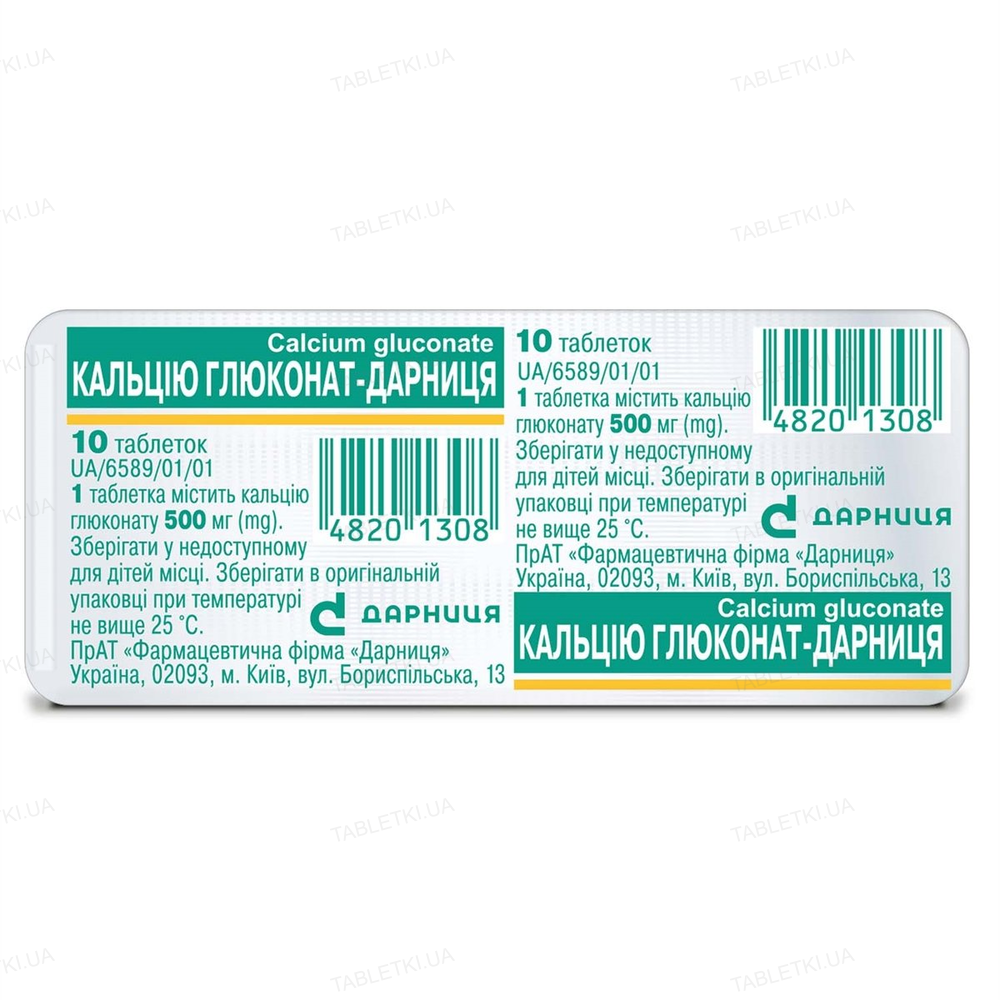
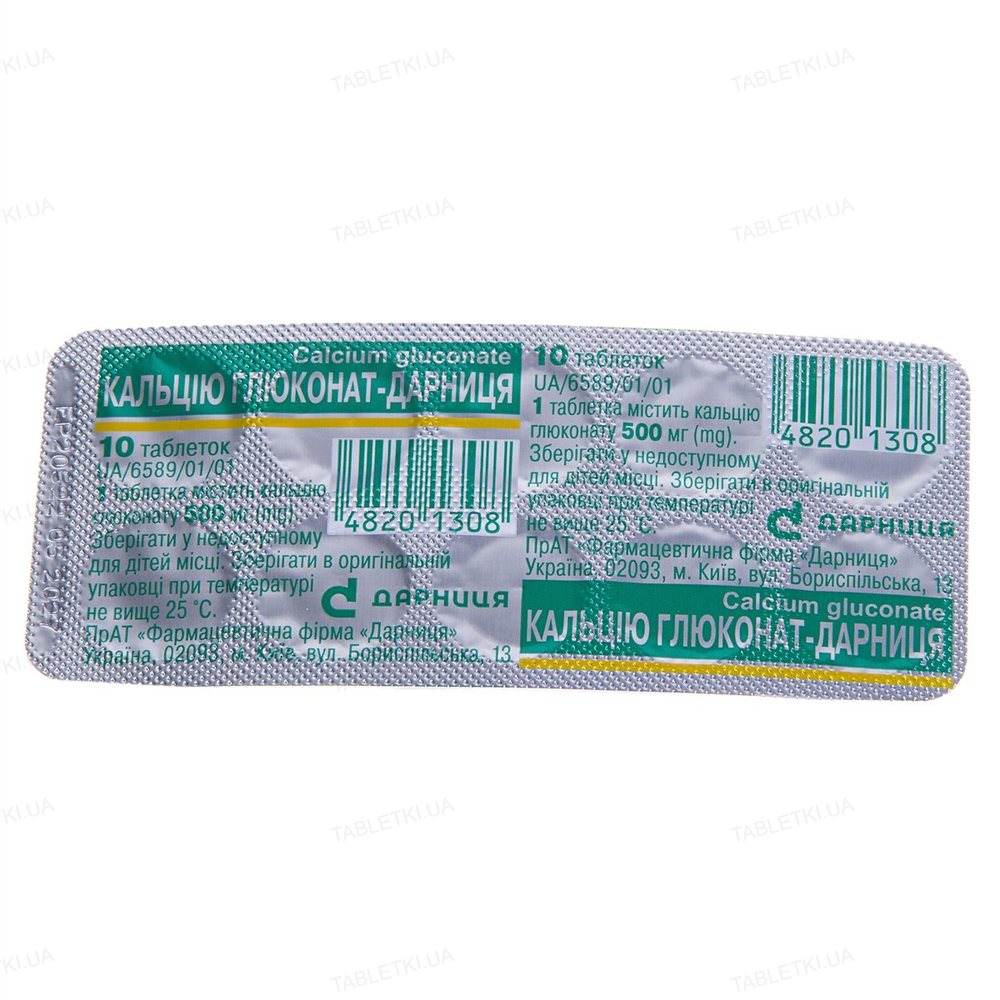
Calcium Gluconate-Darnitsa, 500 mg tablets, No. 10
Ingredients
Active ingredient: calcium gluconate;
1 tablet contains 500 mg of calcium gluconate;
Inactive ingredients: potato starch, colloidal anhydrous silicon dioxide, calcium stearate.
Dosage Form
Tablets.
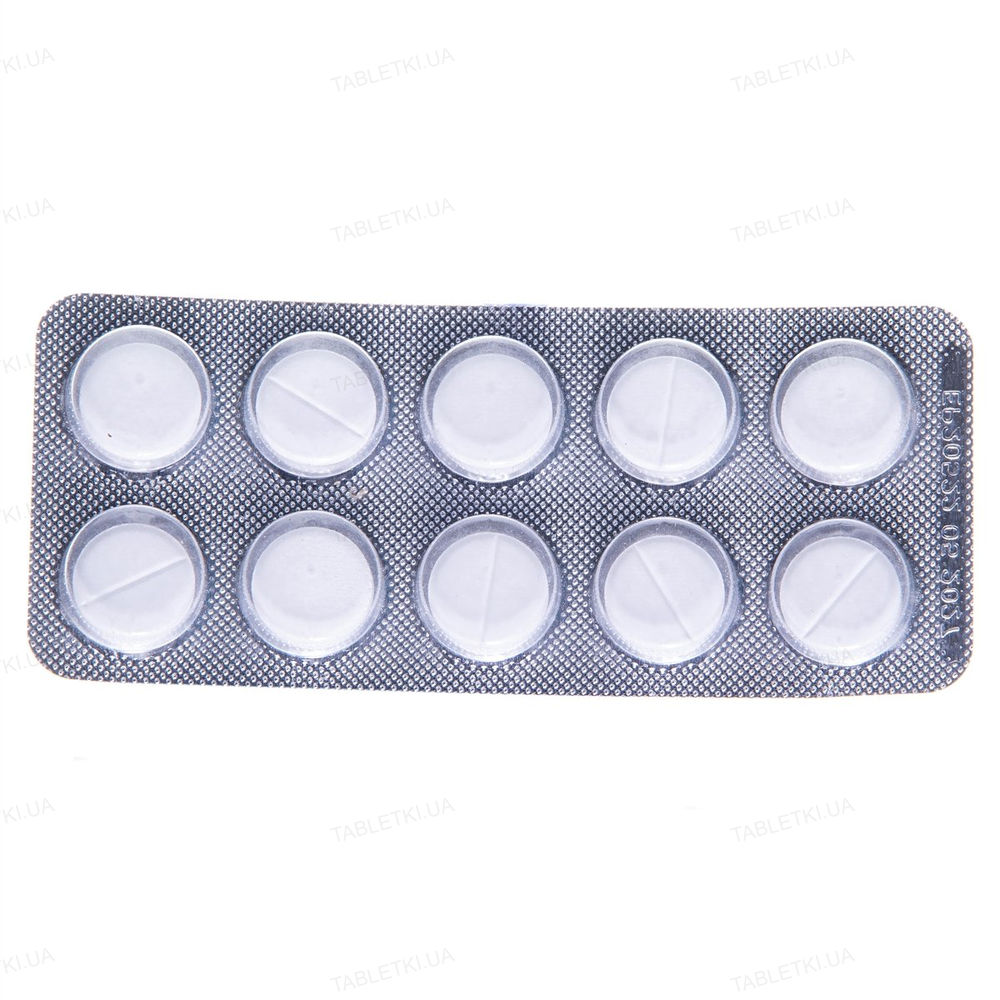
Main physical and chemical properties: white or white with a slightly yellowish tint tablets, flat-cylindrical in shape, with a bevel and a score line.
Pharmacotherapeutic group
Mineral supplements. Calcium preparations.
Calcium gluconate. ATC code A12A A03.
Pharmacological properties
Pharmacodynamics.
Calcium gluconate is the calcium salt of gluconic acid, containing 9% calcium. Calcium ions are involved in the transmission of nerve impulses, the contraction of smooth and skeletal muscles, myocardial function, and blood clotting; they are essential for bone formation and the normal functioning of other systems and organs. The concentration of calcium ions in the blood decreases in many pathological conditions; severe hypocalcemia contributes to the development of tetany. Calcium gluconate, in addition to correcting hypocalcemia, reduces vascular permeability, exerts antiallergic, anti-inflammatory, and hemostatic effects, and also reduces exudation. Calcium ions serve as a building block for the skeleton and teeth, participate in various enzymatic processes, and regulate the speed of nerve impulse conduction and the permeability of cell membranes. Calcium ions are essential for neuromuscular transmission and for maintaining myocardial contractility. Unlike calcium chloride, calcium gluconate has a milder local irritant effect.
Pharmacokinetics.
When taken orally, calcium gluconate is partially absorbed, mainly in the small intestine. Maximum plasma concentration is reached after 1.2–1.3 hours. The half-life of ionized calcium in blood plasma is 6.8–7.2 hours. It crosses the placental barrier and passes into breast milk. It is excreted from the body in urine and feces.
Indications
Conditions accompanied by hypocalcemia, increased permeability of cell membranes, and impaired nerve impulse conduction in muscle tissue.
Hypoparathyroidism (latent tetany, osteoporosis), vitamin D metabolism disorders (rickets, spasmophilia, osteomalacia), and hyperphosphatemia in patients with chronic renal failure.
Increased calcium requirements (periods of rapid growth in children and adolescents; pregnancy, breastfeeding), insufficient dietary calcium intake, impaired calcium metabolism in postmenopausal women, and bone fractures.
Increased calcium excretion (prolonged bed rest, chronic diarrhea, hypocalcemia due to long-term use of diuretics, antiepileptic drugs, or glucocorticosteroids).
As part of combination therapy: bleeding of various etiologies; allergic diseases (serum sickness, urticaria, fever syndrome, pruritic dermatoses, angioedema); bronchial asthma, dystrophic alimentary edema, pulmonary tuberculosis, eclampsia, parenchymal hepatitis, toxic liver damage, nephritis.
As an antidote for poisoning with magnesium salts, oxalic acid, and soluble fluoride salts (when calcium gluconate reacts with these, it forms insoluble and non-toxic calcium oxalate and calcium fluoride).
Contraindications
Hypersensitivity to the drug’s components, hypercalcemia, severe hypercalciuria, hypercoagulation, tendency toward thrombosis, severe atherosclerosis, increased blood clotting, nephro-urolithiasis (calcium), severe renal insufficiency, sarcoidosis, and use of digitalis preparations.
Interactions with Other Medications and Other Types of Interactions
This medication slows the absorption of estramustine, etidronate, and other bisphosphonates, quinolones, tetracycline-class antibiotics, oral iron preparations, and fluoride preparations (the interval between doses should be at least 3 hours). Calcium gluconate reduces the bioavailability of phenytoin. When taken concomitantly with vitamin D or its derivatives, calcium absorption increases. Cholestyramine reduces calcium absorption in the gastrointestinal tract. When this medication is used concomitantly with cardiac glycosides, the cardiotoxic effects of the latter are potentiated. When combined with thiazide diuretics, the risk of hypercalcemia may increase. Calcium gluconate may reduce the effect of calcitonin in hypercalcemia, the bioavailability of phenytoin, and the effect of calcium channel blockers. When used concomitantly with quinidine, intraventricular conduction may be slowed and quinidine toxicity may increase. It forms insoluble or poorly soluble calcium salts with carbonates, salicylates, and sulfates.
Calcium absorption from the gastrointestinal tract may be reduced by certain foods (spinach, rhubarb, bran, grains).
Special Considerations for Use
When administered to patients receiving cardiac glycosides and/or diuretics, as well as during long-term treatment, blood calcium and creatinine levels should be monitored. If these levels rise, the dose of the medication should be reduced or its use temporarily discontinued. Since vitamin D3 increases calcium absorption from the gastrointestinal tract, intake of vitamin D3 and calcium from other sources must be taken into account to avoid calcium overdose.
Use caution and monitor urinary calcium excretion regularly when prescribing to patients with moderate hypercalciuria exceeding 300 mg/day (7.5 mmol/day), who do not have severe renal impairment or a history of urolithiasis. If necessary, the dose of the drug should be reduced or the drug discontinued. Patients prone to the formation of stones in the urinary tract are advised to increase their fluid intake during treatment.
While taking this medication, high doses of vitamin D or its derivatives should be avoided unless specifically indicated.
An interval of at least 3 hours should be observed between taking calcium gluconate tablets and oral preparations of estramustine, etidronate and other bisphosphonates, phenytoin, quinolones, tetracycline antibiotics, oral iron preparations, and fluoride preparations.
Use during pregnancy or breastfeeding.
Use of the drug is permissible, taking into account the benefit to the woman versus the risk to the fetus (infant), as determined by the physician.
When taking calcium supplements while breastfeeding, the drug may pass into breast milk.
Effect on reaction time when driving or operating machinery.
This medication does not affect reaction time when driving or operating machinery.
Directions for Use and Dosage
The tablet must be chewed or crushed.
Calcium gluconate is taken orally before meals.
Single doses: adults and children 14 years of age and older—1–3 g (2–6 tablets), children aged 3 to 4 years—1 g (2 tablets), aged 5 to 6 years—1–1.5 g (2–3 tablets), aged 7 to 9 years—1.5–2 g
(3–4 tablets), ages 10 to 14 – 2–3 g (4–6 tablets). Take 2–3 times daily.
The daily dose for elderly patients should not exceed 2 g (4 tablets).
The duration of treatment is determined by the doctor on an individual basis, depending on the patient’s condition.
Children.
This medication is indicated for children 3 years of age and older.
Overdose
With prolonged use at high doses, hypercalcemia may occur, accompanied by the deposition of calcium salts in the body. The likelihood of developing hypercalcemia increases with concomitant treatment with high doses of vitamin D or its derivatives.
Symptoms of hypercalcemia include drowsiness, weakness, loss of appetite, abdominal pain, vomiting, nausea, constipation, polydipsia, polyuria, increased fatigue, irritability, malaise, depression, dehydration, possible cardiac arrhythmias, myalgia, arthralgia, and hypertension.
Treatment: discontinuation of the drug; in severe cases – parenteral calcitonin at a dose of 5–10 IU/kg of body weight per day (diluted in 500 mL of 0.9% sodium chloride solution), administered intravenously by drip over 6 hours. Slow intravenous bolus administration 2–4 times daily is also possible.
Side Effects
The drug is generally well tolerated, but the following side effects may occasionally occur:
Gastrointestinal tract: nausea, vomiting, constipation, diarrhea, epigastric pain; with prolonged use at high doses—formation of calcium stones in the intestines;
Renal and urinary system: impaired renal function (frequent urination, swelling of the lower extremities);
Metabolic side effects: hypercalcemia, hypercalciuria;
Cardiovascular system: bradycardia;
Immune system: hypersensitivity reactions, including allergic reactions.
These symptoms resolve quickly after reducing the dose or discontinuing the medication.
Shelf life
5 years.
Storage conditions
Store in the original packaging at a temperature not exceeding 25 °C.
Keep out of reach of children.
Packaging
10 tablets per blister pack; 3 or 10 blister packs per carton; 10 tablets in blister packs.
Dispensing Category
Over-the-counter – No. 10, No. 30; by prescription – No. 100.
Manufacturer
PJSC “Darnitsa Pharmaceutical Company.”