
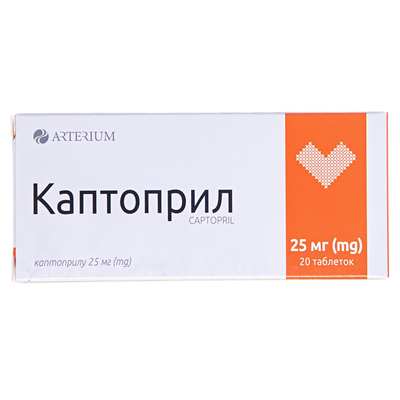
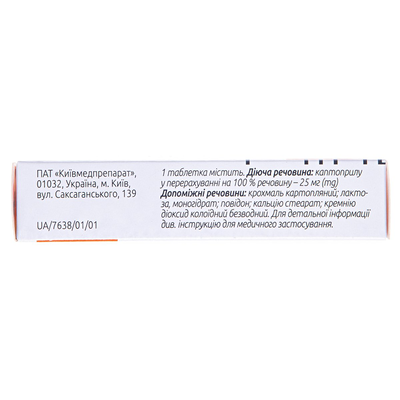
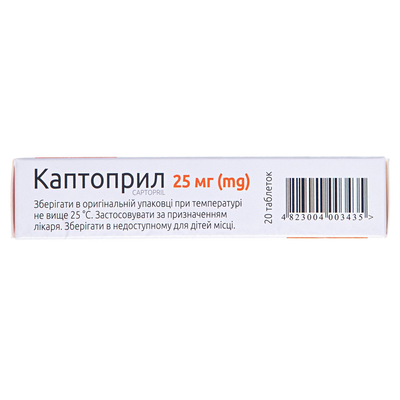
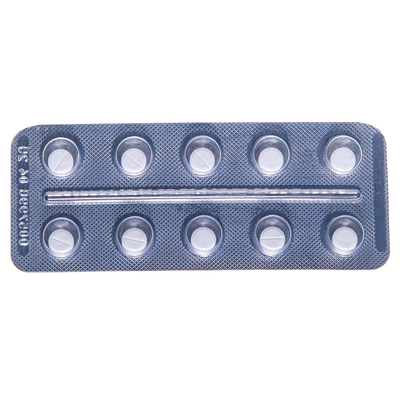
Captopril 25 mg tablets, No. 20 (10 x 2)
Composition
Active ingredient: captopril;
1 tablet contains 25 mg of captopril, calculated as 100% active ingredient;
Excipients: potato starch; lactose monohydrate; povidone; calcium stearate; colloidal anhydrous silicon dioxide.
Dosage Form
Tablets.
Main physical and chemical properties: white or almost white tablets with a flat surface, one or two score lines, and a beveled edge.
Pharmacotherapeutic group
Agents acting on the renin-angiotensin system. Angiotensin-converting enzyme (ACE) inhibitors, single-component.
ATC code C09A A01.
Pharmacological Properties
Pharmacodynamics.
The beneficial effects of ACE inhibitors are primarily due to the inhibition of the plasma renin-angiotensin-aldosterone system. Renin is an endogenous enzyme synthesized by the kidneys that enters the systemic circulation, where it converts angiotensinogen into angiotensin I, a relatively inactive decapeptide. Angiotensin I is then converted by ACE, a peptidyl dipeptidase, into angiotensin II. Angiotensin II is a potent vasoconstrictor responsible for constricting arterial blood vessels and increasing blood pressure, as well as for stimulating the adrenal glands to produce aldosterone. Inhibition of ACE leads to a decrease in plasma angiotensin-II levels, which reduces vasopressor activity and aldosterone production. Although the decrease in aldosterone levels is small, a slight increase in serum potassium concentrations may occur, accompanied by sodium and fluid loss. The elimination of the negative feedback loop between angiotensin II and renin production leads to an increase in plasma renin activity.
Another function of the converting enzyme is the degradation of the potent vasodilator bradykinin into inactive metabolites. Therefore, ACE inhibition leads to an increase in the activity of the kallikrein-kinin system, which is involved in the dilation of peripheral blood vessels through activation of the prostaglandin system; This mechanism may be involved in the hypotensive effect of ACE inhibitors and may be responsible for certain adverse reactions.
A decrease in blood pressure usually occurs within 60–90 minutes after oral administration of an individual dose of captopril. The duration of the effect depends on the dose. The reduction in blood pressure may be progressive, and several weeks of therapy may be required to achieve the maximum therapeutic effect. The blood-pressure-lowering effects of captopril and thiazide diuretics are complementary.
With long-term use, captopril reduces the severity of left ventricular myocardial hypertrophy, prevents the progression of heart failure, and slows the development of left ventricular dilation. It reduces the tone of the efferent arterioles of the renal glomeruli, thereby improving intraglomerular hemodynamics, and prevents the development of diabetic nephropathy.
Pharmacokinetics.
Captopril is an orally active drug that does not require biotransformation to exert its effect. The mean bioavailability is approximately 75%. Peak plasma concentrations are reached within 60–90 minutes. The presence of food in the gastrointestinal tract reduces absorption by approximately 30–40%. Protein binding, primarily to albumin, is approximately 25–30%. The apparent half-life of unchanged captopril in the blood is approximately 2 hours. More than 95% of the absorbed dose is excreted in the urine within 24 hours; 40–50% of this is unchanged drug, and the remainder consists of inactive disulfide metabolites (captopril disulfide and captopril cysteine disulfide). Impaired renal function may lead to drug accumulation. Therefore, for patients with impaired renal function, the dose should be reduced and/or the dosing intervals should be extended (see the “Dosage and Administration” section).
Animal studies indicate that captopril does not cross the blood-brain barrier to a significant extent.
Breastfeeding. Data indicate that in women who took 100 mg of captopril orally three times daily, the mean peak concentration in breast milk was 4.7 μg/L 3.8 hours after dosing. Based on these data, the maximum daily dose an infant may receive is less than 0.002% of the mother’s daily dose. Captopril can be removed from the systemic circulation by hemodialysis and peritoneal dialysis. Clearance by hemodialysis ranges from 4.8 to 7.2 L/h, depending on the filters used. During a 4-hour hemodialysis session, 30–40% of captopril is removed from the blood, while the removal of metabolites is slightly lower.
The disulfide metabolites of captopril are excreted by the kidneys more slowly than captopril itself. Since the disulfide metabolites are converted back to captopril in the body, captopril accumulation can be expected in patients with renal insufficiency. The accumulation of captopril metabolites in patients with renal insufficiency results in a more pronounced pharmacodynamic effect and prolonged action. Therefore, captopril doses in such patients should be adjusted according to renal function.
In patients with impaired liver function, the renin-angiotensin system functions normally. Since captopril is a drug and not a prodrug, its effect is comparable to that observed in patients with hypertension without impaired liver function.
In patients with heart failure, the elimination of captopril is slowed. Therefore, patients with heart failure should be treated with a lower initial dose of captopril, and doses should be adjusted according to the therapeutic effect achieved.
The pharmacokinetics of captopril in healthy elderly volunteers are the same as in younger healthy volunteers. Therefore, elderly patients with hypertension and normal renal function may be administered the usual daily doses of captopril.
Indications
- Hypertension.
- Heart failure. Captopril is indicated for the treatment of chronic heart failure with reduced left ventricular systolic function, as well as in combination with diuretics and, if necessary, with digoxin and beta-blockers.
- Myocardial infarction:
- for short-term (4-week) treatment, captopril may be administered within 24 hours after a myocardial infarction in patients in a stable condition;
- for long-term prevention of symptomatic heart failure, the drug is indicated for clinically stable patients with asymptomatic left ventricular dysfunction (ejection fraction ≤ 40%).
- Diabetic nephropathy in patients with type 1 diabetes mellitus, manifested by macroproteinuria.
Contraindications
- Hypersensitivity to captopril, to any excipient, or to other ACE inhibitors;
- Quincke’s edema (including a history of such, following ACE inhibitor use, hereditary, or idiopathic);
- bilateral renal artery stenosis affecting hemodynamics, or stenosis of the artery to a single kidney affecting hemodynamics;
- porphyria;
- galactose intolerance, lactase deficiency, glucose-galactose malabsorption syndrome;
- pregnancy; also contraindicated in women planning to become pregnant (see section “Use During Pregnancy or Breastfeeding”);
- breastfeeding (see the section “Use During Pregnancy or Breastfeeding”);
- concomitant use of captopril with aliskiren-containing medications; patients with diabetes mellitus or patients with renal insufficiency (glomerular filtration rate ˂ 60 mL/min/1.73 m²).
Drug Interactions and Other Interactions
Potassium-sparing diuretics or dietary supplements containing potassium. ACE inhibitors reduce the loss of potassium caused by diuretics. Potassium-sparing diuretics (e.g., spironolactone, triamterene, or amiloride), potassium supplements, or potassium-containing salt substitutes may lead to hyperkalemia. When prescribed concomitantly due to existing hypokalemia, they should be used with great caution and with frequent monitoring of serum potassium levels.
Diuretics (thiazide or loop diuretics). Prior treatment with high-dose diuretics may lead to a decrease in circulating blood volume and an increased risk of significant hypotension (see the “Special Considerations for Use” section). The hypotensive effect can be reduced by discontinuing the diuretic, increasing salt and fluid intake, or initiating therapy with a low dose of captopril. However, no clinically significant interactions with hydrochlorothiazide or furosemide have been identified.
Other antihypertensive drugs. Concomitant use of captopril with other antihypertensive drugs (e.g., beta-blockers and long-acting calcium channel blockers) is safe, and concomitant use of such drugs may enhance the antihypertensive effect of captopril. Treatment with nitroglycerin, other nitrates, or other medications should be administered with caution.
Data from clinical trials have shown that dual blockade of the renin-angiotensin-aldosterone system (RAAS) through the combined use of ACE inhibitors, angiotensin II receptor blockers, or aliskiren is associated with a higher incidence of adverse reactions, such as hypotension, hyperkalemia, and impaired renal function (including acute renal failure) compared with the separate use of drugs that act on the RAAS.
Treatment of acute myocardial infarction. Captopril may be administered concomitantly with acetylsalicylic acid (at cardiological doses), thrombolytics, beta-blockers, and/or nitrates in patients with myocardial infarction.
Lithium. Concomitant use of ACE inhibitors and lithium may cause a temporary increase in serum lithium levels and lithium toxicity. Concomitant use of ACE inhibitors and thiazide diuretics may further increase serum lithium levels and raise the risk of lithium toxicity. Therefore, the concomitant use of captopril with lithium is not recommended. If such a combination of medications is necessary, serum lithium levels should be carefully monitored.
Tricyclic Antidepressants/Antipsychotics. Concomitant use of certain tricyclic antidepressants and neuroleptics with ACE inhibitors may lead to an additional decrease in blood pressure (see the “Special Considerations for Use” section). Postural hypotension may occur.
Allopurinol, procainamide, cytostatic, or immunosuppressive agents. Concomitant use of these agents with ACE inhibitors increases the risk of leukopenia, especially when the latter are used at doses exceeding the recommended ones.
Nonsteroidal anti-inflammatory drugs (NSAIDs). It has been reported that ACE inhibitors and NSAIDs have an additive effect on increasing serum potassium levels, which may lead to impaired renal function. This effect is usually reversible. Acute renal failure is rarely possible, especially in patients with impaired renal function, such as the elderly or dehydrated patients. Long-term use of NSAIDs may reduce the antihypertensive effect of ACE inhibitors.
Sympathomimetics. These may reduce the antihypertensive effect of ACE inhibitors; therefore, the patient’s blood pressure should be closely monitored.
Antidiabetic drugs. ACE inhibitors, including captopril, may enhance the antoglycemic effect of insulin and other oral antidiabetic drugs (sulfonylureas) in patients with diabetes mellitus. This effect is very rare, but if it occurs, it may be necessary to reduce the dose of antidiabetic medications during concomitant treatment with ACE inhibitors.
Special Considerations for Use
Dual RAAS blockade: the combined use of ACE inhibitors, angiotensin II receptor blockers, or aliskiren increases the risk of hypotension, hyperkalemia, and leads to impaired renal function (including acute renal failure). Therefore, dual blockade of the renin-angiotensin-aldosterone system (RAAS) through the combined use of ACE inhibitors, angiotensin II receptor blockers, or aliskiren is not recommended.
If dual blockade therapy is absolutely necessary, it should be administered under medical supervision with frequent monitoring of renal function, electrolyte levels, and blood pressure.
ACE inhibitors and angiotensin II receptor blockers must not be used concomitantly in patients with diabetic nephropathy.
Hypotension. Hypotension may rarely occur in patients with hypertension who have reduced blood volume and/or low sodium levels due to diuretic therapy, restricted salt intake, or as a result of diarrhea, vomiting, or hemodialysis. Before prescribing ACE inhibitors, circulating blood volume (CBV) should be corrected, and the lowest effective dose of the drug should be determined.
Patients with heart failure are also at risk of developing symptomatic hypotension when taking ACE inhibitors. Therefore, it is recommended that such patients be prescribed a lower initial dose of captopril. Dose increases of ACE inhibitors and diuretics should be carried out under close medical supervision.
Excessive lowering of blood pressure in patients with cerebrovascular disease and ischemic heart disease increases the risk of myocardial infarction and stroke. If hypotension occurs, the patient should be placed in a supine position (on their back), and if necessary, blood volume should be increased by administering a 0.9% sodium chloride solution.
Renovascular hypertension. There is an increased risk of hypotension and renal failure when patients with bilateral renal artery stenosis or stenosis of the artery to a single kidney take ACE inhibitors. In such cases, renal failure may occur with minimal fluctuations in serum creatinine levels; therefore, it is recommended to initiate treatment in such patients with low doses of captopril under close medical supervision, and to titrate the dose and continuously monitor renal function during treatment.
Impaired renal function. Patients with impaired renal function (creatinine clearance ≤ 40 mL/min) require dosage adjustment based on creatinine clearance (see the “Dosage and Administration” section). While taking captopril, serum potassium and creatinine levels should be monitored continuously in these patients.
Angioedema. Rarely, during treatment with ACE inhibitors—particularly during the first few weeks of therapy—angioedema of the extremities, face, lips, mucous membranes, tongue, larynx, and/or glottis may develop. However, angioedema may develop extremely rarely as a result of long-term treatment with ACE inhibitors. In such cases, treatment should be discontinued immediately. Angioedema of the tongue, glottis, and/or larynx can be life-threatening; therefore such reactions must be treated immediately, the patient must be hospitalized, and the patient must be monitored for at least 12–24 hours until symptoms have completely resolved.
Cough. There have been reports of cough occurring during treatment with ACE inhibitors. The cough was characterized as persistent, dry, and nonproductive, and resolved after discontinuation of therapy.
Hepatic failure. ACE inhibitors have, in rare cases, been associated with a syndrome that begins with cholestatic jaundice, progresses to acute necrotizing hepatitis, and sometimes results in death. The mechanism underlying this syndrome remains unclear. Therefore, if jaundice or elevated liver enzymes occur during treatment with ACE inhibitors, therapy should be discontinued immediately and the patient’s condition closely monitored.
Hyperkalemia. During treatment with ACE inhibitors, including captopril, blood potassium levels may increase in some patients. The risk of hyperkalemia is increased in patients with renal insufficiency, diabetes mellitus, those taking potassium-sparing diuretics, potassium supplements, or potassium-containing salt substitutes, or other medications that may cause hyperkalemia (e.g., heparin). If concomitant use of the aforementioned medications is deemed necessary, regular monitoring of serum potassium levels is recommended.
Aortic or mitral valve stenosis/hypertrophic cardiomyopathy. ACE inhibitors should be used with caution in patients with aortic or mitral valve stenosis and left ventricular outflow tract obstruction. Captopril should be avoided in cases of cardiogenic shock and significant hemodynamic disturbances.
Lithium. The combination of lithium and captopril is not recommended (see the section “Interactions with Other Medications and Other Types of Interactions”).
Neutropenia/agranulocytosis. There have been reports of neutropenia/agranulocytosis, thrombocytopenia, and anemia in patients taking ACE inhibitors. In patients with normal renal function and no other complicating factors, neutropenia occurs rarely.
Captopril should be used with caution in patients with vascular involvement in collagenoses (e.g., systemic lupus erythematosus, scleroderma), in cases of concomitant therapy with antidepressants, allopurinol, or procainamide, or when these factors are combined, especially if renal impairment is already present. Some of these patients may develop a serious infection that sometimes does not respond to intensive antibiotic therapy.
If captopril is administered to such patients, it is recommended to monitor the white blood cell count and perform a complete blood count before starting treatment, every 2 weeks during the first 3 months of treatment, and periodically thereafter. Patients should be instructed to immediately notify their doctor of any signs of infection (e.g., sore throat, fever) and to have a blood test with a complete blood count. Captopril and any other concomitant medication (see the section “Interactions with Other Medications and Other Types of Interactions”) should be discontinued immediately if neutropenia (neutrophil count less than 1,000/mm³) is detected or suspected.
In most patients, the neutrophil count quickly returns to normal after discontinuation of captopril.
Proteinuria. Proteinuria may occur in patients with impaired renal function or when taking high doses of ACE inhibitors.
Total urinary protein levels exceeding 1 g per day were observed in approximately 0.7% of patients taking captopril. Most of these patients had kidney disease or were taking relatively high doses of captopril (more than 150 mg per day), or both of these factors were present. Nephrotic syndrome is observed in 1 in 5 patients with proteinuria. In most cases, proteinuria decreases or resolves within 6 months regardless of captopril treatment. In patients with proteinuria, renal function parameters such as serum urea and creatinine levels rarely change.
In patients with a history of kidney disease, urine protein levels (test strip analysis of the first morning urine sample) should be measured before starting treatment and periodically thereafter.
Anaphylactoid reactions may occur in patients receiving desensitization with hymenoptera venom allergens while concurrently taking ACE inhibitors; in rare cases, these reactions may be life-threatening. Such reactions can be avoided by temporarily discontinuing ACE inhibitor therapy before each desensitization session; however, reactions may recur upon accidental re-exposure to the antigen through the medication. Therefore, it is recommended to use ACE inhibitors with caution in patients undergoing such desensitization procedures.
There have been reports of anaphylactoid reactions occurring in patients during dialysis using high-permeability membranes or low-density lipoprotein apheresis with dextran sulfate. A decision should be made to use a different type of dialysis, membrane, or a different class of medication for such patients.
Surgery/anesthesia. During major surgery under anesthesia, patients may experience arterial hypotension. If blood pressure drops, fluid replacement is recommended.
Diabetes mellitus. In patients with diabetes mellitus who are taking oral antidiabetic agents or insulin, blood glucose levels should be carefully monitored during the first month of concomitant use of ACE inhibitors.
Ethnic considerations. Like other ACE inhibitors, captopril is a less effective antihypertensive agent in Black patients, possibly due to the higher prevalence of low-renin essential hypertension.
Use During Pregnancy or Breastfeeding.
Pregnancy. This medication is contraindicated in pregnant women or women planning to become pregnant. If pregnancy is confirmed during treatment with this medication, its use must be discontinued immediately and replaced with another medication approved for use in pregnant women.
Epidemiological findings regarding the risk of teratogenicity associated with angiotensin-converting enzyme (ACE) inhibitors during the first trimester of pregnancy are inconclusive. A slight increase in risk cannot be ruled out. If continued therapy with angiotensin-converting enzyme inhibitors is not considered necessary, patients planning a pregnancy should be switched to an alternative antihypertensive treatment with an established safety profile for use during pregnancy.
It is known that the use of angiotensin-converting enzyme inhibitors during the second and third trimesters of pregnancy may cause fetal toxicity (decreased renal function, oligohydramnios, delayed ossification of the skull) and neonatal toxicity (renal failure, hypotension, hyperkalemia).
If an ACE inhibitor was used during the second trimester of pregnancy, an ultrasound examination of renal and cranial function is recommended.
Infants whose mothers took ACE inhibitors should be closely monitored for hypotension (see also the “Contraindications” and “Special Precautions for Use” sections).
Breastfeeding. Captopril is contraindicated during breastfeeding.
Effect on reaction time when driving or operating machinery. Caution is advised when driving or performing other tasks requiring increased attention, as reaction time may be impaired, particularly at the start of treatment, when the dosage is changed, or when alcohol is consumed concurrently. These effects vary from person to person and depend on the patient’s individual characteristics.
Dosage and Administration
The dosage should be adjusted depending on the nature of the patient’s condition (see the “Special Considerations for Use” section) and the blood pressure response to treatment.
Hypertension
The recommended initial dose of captopril is 25–50 mg per day, divided into 2 doses. After 2–4 weeks of treatment, the dose may be titrated, depending on the achieved blood pressure, up to 100–150 mg per day, divided into two doses. Captopril may be used alone or in combination with other antihypertensive agents, particularly thiazide diuretics. A once-daily dosing regimen may be used when a concomitant antihypertensive agent, such as a thiazide diuretic, is added.
For patients with increased activity of the renin-angiotensin-aldosterone system (hypovolemia, renovascular hypertension, decompensated heart failure) should preferably begin therapy with a single dose of 6.25 mg or 12.5 mg. If captopril is prescribed at a dose less than 12.5 mg, other captopril formulations available in such dosages should be used. Treatment should be initiated under close medical supervision, followed by twice-daily administration. The dose may be gradually increased to 50 mg or 100 mg per day, taken in 1 or 2 doses.
Heart Failure
Treatment of heart failure with captopril should be initiated under close medical supervision. The initial dose is 6.25–12.5 mg 2 or 3 times daily. Titration to a maintenance dose (75–150 mg per day) should be based on the patient’s response to treatment, clinical status, and tolerability, up to a maximum dose of 150 mg per day in two divided doses. The dose should be increased gradually, at intervals of at least 2 weeks, to assess the patient’s response to treatment.
Myocardial infarction
- Short-term treatment: Treatment with captopril should be initiated in a hospital setting as soon as possible after the onset of symptoms in patients with stable hemodynamics. A test dose of 6.25 mg should be administered, followed by a 12.5 mg dose 2 hours later, and a 25 mg dose 12 hours later. Starting the next day, captopril should be administered at a dose of 100 mg/day in two divided doses for 4 weeks, provided there are no adverse hemodynamic reactions. At the end of the 4-week treatment period, the patient’s condition should be reevaluated to determine the course of treatment following a myocardial infarction.
- Long-term treatment: If captopril treatment is not initiated within the first 24 hours of the acute myocardial infarction phase, it is recommended to initiate treatment between the 3rd and 16th days after the infarction, once the necessary conditions for treatment are met (stable hemodynamics and treatment of any residual ischemia). Treatment should be initiated in a hospital setting under close monitoring (particularly of blood pressure) until a dose of 75 mg per day is reached. The initial dose of the drug should be low (see the “Special Considerations for Use” section), particularly if the patient has normal or low blood pressure at the start of therapy. Treatment should begin with a dose of 6.25 mg, followed by 12.5 mg three times daily for 2 days, and then 25 mg three times daily in the absence of adverse hemodynamic reactions. The recommended dose for effective cardioprotection during long-term treatment is 75–150 mg daily, divided into 2 or 3 doses. In cases of symptomatic hypotension, as with heart failure, the dosage of diuretics and/or other concomitant vasodilators may be reduced to achieve a stable dose of captopril. If necessary, the captopril dose should be adjusted according to the patient’s clinical response. Captopril may be used in combination with other treatments for myocardial infarction, such as thrombolytic agents, beta-blockers, and acetylsalicylic acid.
Diabetic nephropathy in patients with type 1 diabetes: captopril is administered at a dose of 75–100 mg per day in two divided doses. If necessary, it is combined with other antihypertensive medications.
Renal impairment: Since captopril is primarily excreted by the kidneys, the dose should be reduced or the dosing interval extended for patients with renal impairment. If concomitant diuretic therapy is necessary for patients with severe renal impairment, loop diuretics (furosemide) should be preferred over thiazide diuretics.
The following daily doses are recommended for patients with impaired renal function to prevent the accumulation of captopril in the body.
| Creatinine clearance
(mL/min/1.73 m²) |
Initial daily dose (mg) | Maximum
daily dose (mg) |
| > 40 | 25–50 | 150 |
| 21–40 | 25 | 100 |
| 10–20 | 12.5 | 75 |
| < 10 | 6.25 | 37.5 |
Elderly patients: As with other antihypertensive agents, treatment with captopril should be initiated at a dose of 6.25 mg twice daily, since elderly patients may have impaired renal function as well as impaired function of other organs and systems.
The dose should be titrated based on the blood pressure response to the drug, while prescribing the lowest dose necessary to adequately control blood pressure.
Children: The efficacy and safety of captopril in children have not been sufficiently studied. Treatment with captopril in children should be initiated under close medical supervision. The recommended starting dose is 0.3 mg/kg of body weight. For patients requiring special caution (children with renal insufficiency, preterm infants, newborns, and infants—due to the immaturity of the urinary system), the initial dose should be only 0.15 mg/kg of body weight. Captopril is usually administered to children 3 times a day, but the dosing interval should be adjusted individually, depending on the patient’s response to the medication.
Directions for Use
Captopril is taken orally before, during, or after meals.
The medication should be taken regularly at the same time each day. If a dose is missed, it should be taken as soon as possible; however, if there are only a few hours left before the next scheduled dose, take the next dose as scheduled and skip the missed dose. Do not take two doses of captopril at the same time.
Children. The efficacy and safety of captopril in children have not been sufficiently studied. Captopril should be used in children only under close medical supervision.
Overdose
Manifests as severe hypotension with possible development of shock, stupor, bradycardia, electrolyte imbalance, and renal failure.
Treatment. To prevent absorption of a large dose of captopril, gastric lavage should be performed as soon as possible, and sorbents and sodium sulfate should be administered within 30 minutes after captopril ingestion. If symptoms of hypotension occur, the patient should be placed in a supine position, and plasma volume and salt balance should be corrected immediately.
Angiotensin II may be administered. Bradycardia or excessive systemic reactions should be treated with atropine. The use of a pacemaker should be considered. Hemodialysis is effective.
Side Effects
Cardiovascular system: tachycardia, tachyarrhythmia, angina pectoris, hypotension, Raynaud’s syndrome, flushing, facial pallor, cardiac arrest, cardiogenic shock.
Respiratory system, thoracic organs, and mediastinum: dry, irritating (nonproductive) cough and shortness of breath. The dry cough usually resolves within a few weeks after discontinuation of captopril therapy. Bronchospasm, rhinitis, and allergic alveolitis/eosinophilic pneumonia may also occur.
Gastrointestinal system: nausea, vomiting, gastric irritation, abdominal pain, diarrhea, constipation, dry mouth, stomatitis/appearance of aphthous ulcers, glossitis, peptic ulcer, pancreatitis.
Hepatobiliary system: liver dysfunction, cholestasis (including jaundice), hepatitis (including necrotizing hepatitis), elevated liver enzymes and bilirubin levels. Liver dysfunction usually resolves after discontinuation of captopril therapy.
Neurological disorders: taste disturbances, dizziness, drowsiness, headache, paresthesias, cerebrovascular events, ataxia, including stroke and loss of consciousness.
Blood and lymphatic system disorders: leukopenia, neutropenia/agranulocytosis, pancytopenia (particularly in patients with impaired renal function), anemia (including aplastic and hemolytic), thrombocytopenia, lymphadenopathy, eosinophilia.
Immune system disorders: autoimmune diseases and/or a positive antinuclear antibody test.
Metabolic and digestive disorders: anorexia, acidosis, hypoglycemia.
Psychiatric disorders: sleep disturbances, confusion, depression.
Eye disorders: blurred vision.
Skin and subcutaneous tissue disorders: pruritus, rash, alopecia, angioedema (see “Special Precautions for Use”), urticaria, Stevens-Johnson syndrome, erythema multiforme, photosensitivity, erythroderma, pemphigoid reactions, and exfoliative dermatitis.
Musculoskeletal and connective tissue disorders: myalgia, arthralgia.
Urinary tract disorders: renal dysfunction, including renal failure, polyuria, oliguria, and frequent urination; nephrotic syndrome.
Reproductive system and mammary glands: impotence, gynecomastia.
General disorders: chest pain, fatigue, weakness, fever.
Laboratory findings: proteinuria, hyperkalemia, hyponatremia (most commonly observed when following a salt-restricted diet while taking diuretics), elevated levels of urea, creatinine, and bilirubin in serum, as well as decreased hemoglobin and hematocrit levels, increased erythrocyte sedimentation rate, leukopenia, thrombocytopenia, eosinophilia, and elevated antinuclear antibody titers. Captopril may cause a false-positive result in a urine test for acetone.
Angioedema of the face, eyelids, and tongue, as well as peripheral edema, occurred in approximately one in 1,000 patients.
Interstitial angioedema has been observed in patients treated with ACE inhibitors.
Shelf life
3 years.
Storage conditions
Store in the original packaging at a temperature not exceeding 25 °C. Keep out of reach of children.
Packaging
10 tablets per blister pack, 2 blister packs per package.
Dispensing Category
By prescription only.
Manufacturer
Kyivmedpreparat PJSC.







