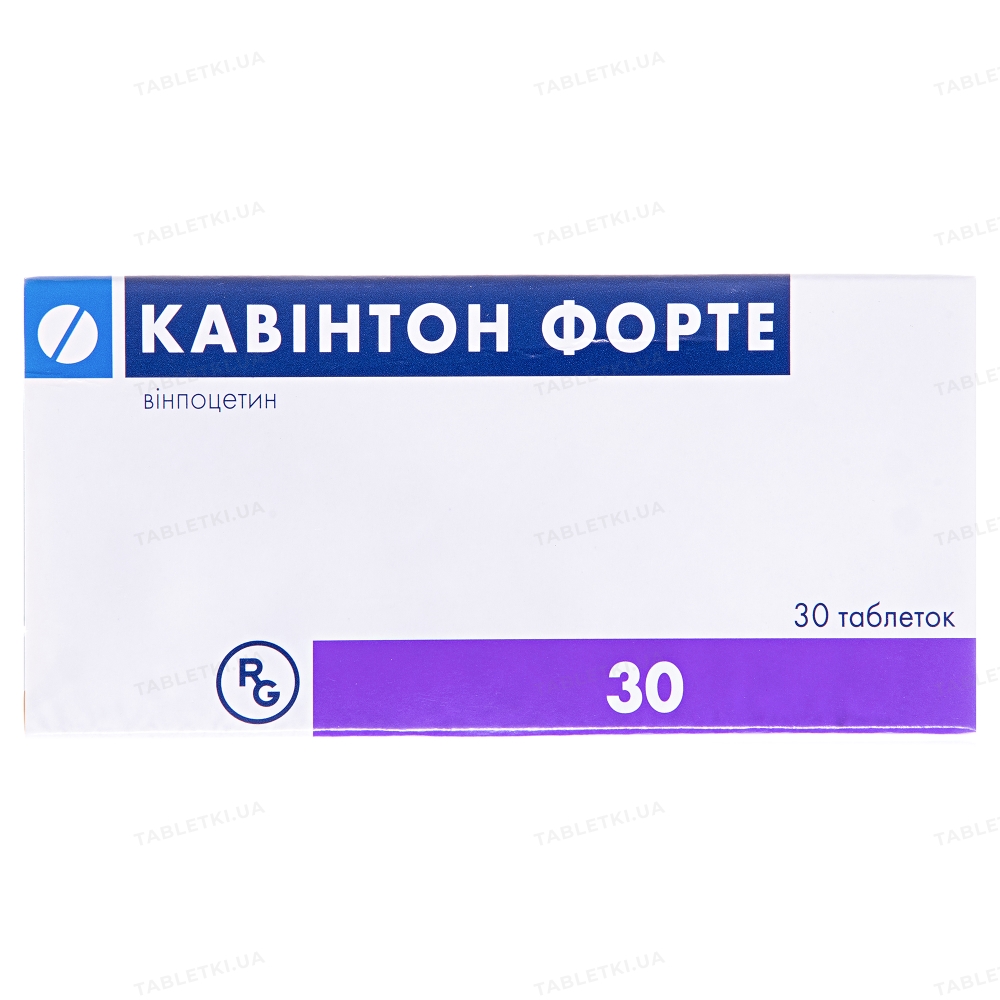
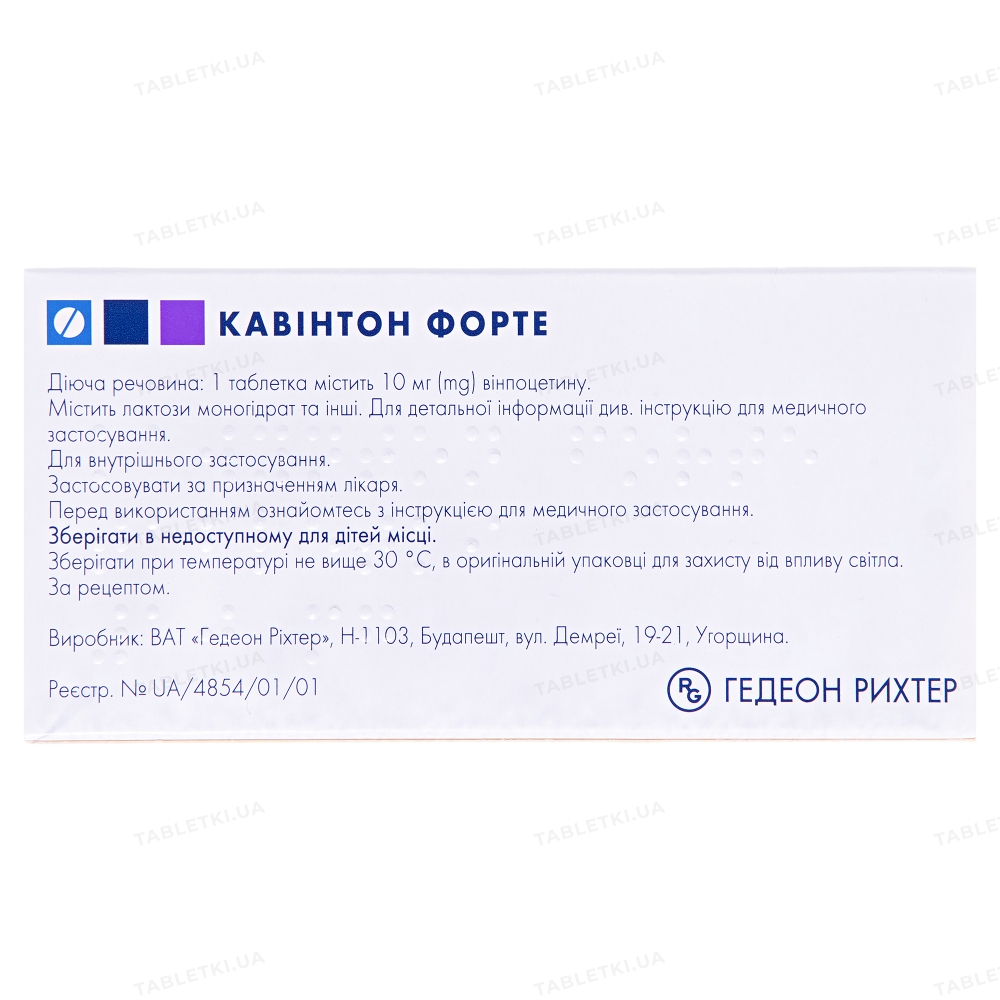
Cavinton Forte 10 mg tablets, No. 30 (15 x 2)
Ingredients
Active ingredient: vinpocetine;
1 tablet contains 10 mg of vinpocetine;
inactive ingredients: magnesium stearate; colloidal anhydrous silicon dioxide; talc; lactose monohydrate; corn starch.
Dosage Form
Tablets.
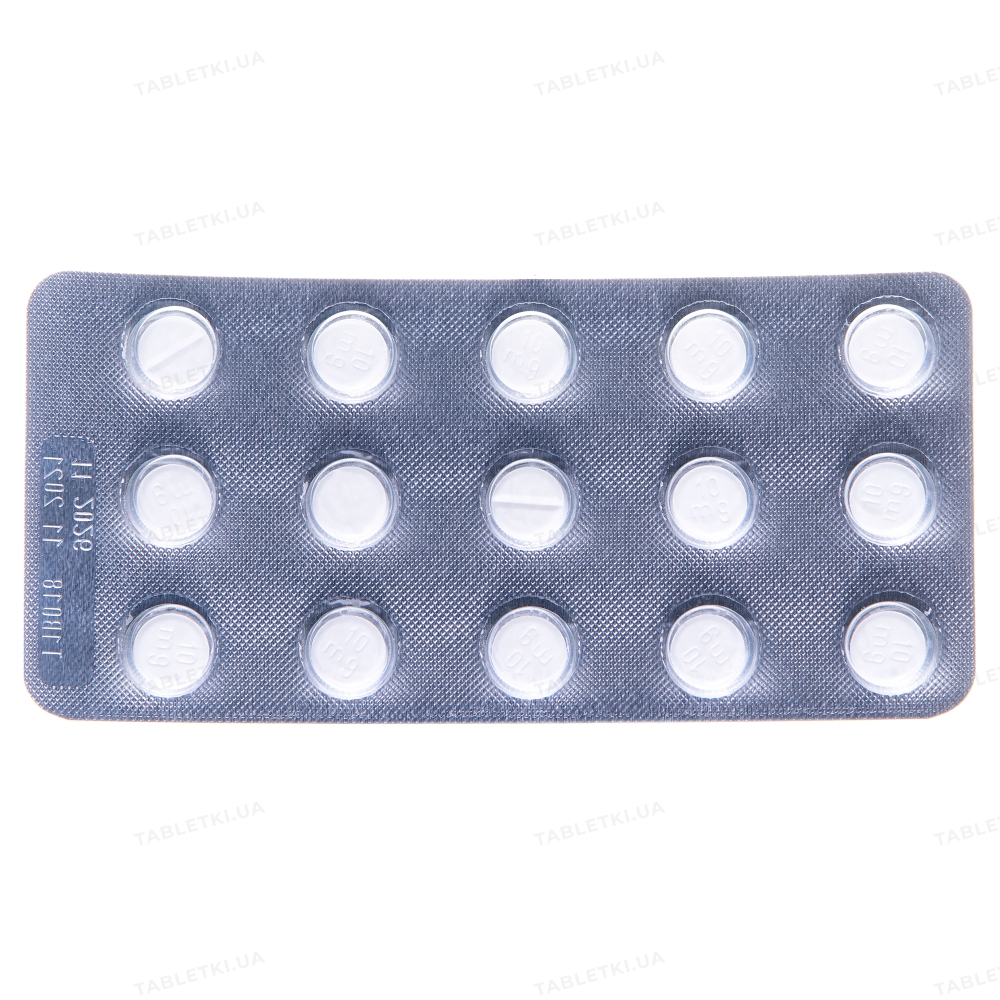
Main physical and chemical properties: white or almost white, flat, round tablets with a beveled edge, approximately 8.0 mm in diameter, with “10 mg” engraved on one side and a score line on the other.
Pharmacotherapeutic group
Psychostimulants and nootropics. Vinpocetine. ATC code N06B X18.
Pharmacological properties
Pharmacodynamics.
Vinpocetine is a compound with a complex mechanism of action that has a beneficial effect on metabolism in the brain, improves cerebral blood flow, and enhances blood rheological properties.
Vinpocetine exhibits neuroprotective effects: the drug mitigates the harmful effects of cytotoxic reactions caused by excitatory amino acids. The drug inhibits voltage-gated Na+ and Ca2+ channels, as well as NMDA and AMPA receptors. The drug enhances the neuroprotective effect of adenosine.
Vinpocetine stimulates cerebral metabolism: the drug increases the uptake of glucose and O2 and their consumption by brain tissue. The drug increases the brain’s resistance to hypoxia; it enhances the transport of glucose—the brain’s exclusive energy source—across the blood-brain barrier; shifts glucose metabolism toward the more energetically favorable aerobic pathway; selectively inhibits the Ca²⁺-calmodulin-dependent enzyme cGMP phosphodiesterase (PDE); and increases the levels of cAMP and cGMP in the brain. The drug increases ATP concentration and the ATP/AMP ratio; enhances the metabolism of norepinephrine and serotonin in the brain; stimulates the ascending noradrenergic system; possesses antioxidant activity; as a result of all the aforementioned effects, vinpocetine exerts a cerebroprotective effect.
Vinpocetine improves microcirculation in the brain: the drug inhibits platelet aggregation, reduces pathologically elevated blood viscosity, increases the deformability of red blood cells, and inhibits adenosine uptake; it improves O₂ transport in tissues by reducing the affinity of O₂ for red blood cells.
Vinpocetine selectively increases blood flow in the brain: the drug increases the cerebral fraction of cardiac output; reduces vascular resistance in the brain without affecting systemic circulation parameters (blood pressure, cardiac output, heart rate, total peripheral resistance); the drug does not cause a “steal effect.” Furthermore, while taking the drug, blood flow to damaged (but not yet necrotic) areas of ischemia with low perfusion improves (“reverse steal effect”).
Pharmacokinetics.
Absorption. Vinpocetine is rapidly absorbed, with peak plasma concentrations reached 1 hour after oral administration. The primary site of absorption for vinpocetine is the proximal gastrointestinal tract. The compound is not metabolized as it passes through the intestinal wall.
Distribution. In studies involving oral administration of the drug in rats, radioactively labeled vinpocetine was found in the highest concentrations in the liver and the gastrointestinal tract. Maximum concentrations in tissues were detected 2–4 hours after administration. The concentration of the radioactive tracer in the brain did not exceed the concentration in the blood.
In humans: protein binding is 66%. The absolute bioavailability of vinpocetine following oral administration is 7%. The volume of distribution is 246.7 ± 88.5 L, indicating significant tissue binding of the substance. The plasma clearance of vinpocetine (66.7 L/h) exceeds its hepatic clearance (50 L/h), indicating extrahepatic metabolism of the compound.
Elimination. With repeated oral administration of the drug at doses of 5 mg and 10 mg, vinpocetine exhibits linear kinetics; steady-state plasma concentrations are 1.2 ± 0.27 ng/mL and 2.1 ± 0.33 ng/mL, respectively. The half-life in humans is 4.83 ± 1.29 hours. Studies conducted using a radioactively labeled compound revealed that the primary route of elimination is via the kidneys and intestines in a ratio of 60:40%. In rats and dogs, the highest concentration of the radioactive tracer was found in bile, but no significant enterohepatic circulation was observed. Apovincaminic acid is excreted by the kidneys via simple glomerular filtration; the half-life of this substance varies depending on the dose and route of administration of vinpocetine.
Metabolism. The major metabolite of vinpocetine is apovincaminic acid (AVA), which is formed in humans at a rate of 25–30%. Following oral administration, the area under the curve (“plasma concentration versus time”) for AVK is twice that observed after intravenous administration of the drug, indicating the formation of AVK during the presystemic metabolism of vinpocetine. Other identified metabolites include hydroxyvinpocetine, hydroxy-AVK, dihydroxy-AVK-glycinate, and their conjugates with glucuronides and/or sulfates. In all of the species studied, the amount of vinpocetine excreted unchanged accounted for only a few percent of the administered dose.
An important and significant property of vinpocetine is that there is no need for special dose adjustment in patients with liver or kidney disease, given the drug’s metabolism and the absence of accumulation.
Changes in pharmacokinetic properties under specific circumstances (e.g., at a certain age, in the presence of comorbidities). Since vinpocetine is indicated for the treatment of predominantly elderly patients, in whom changes in drug kinetics are observed—reduced absorption, different distribution and metabolism, and reduced excretion—it was necessary to conduct studies to evaluate the drug’s kinetics specifically in this age group, particularly during long-term use. The results of these studies demonstrated that the pharmacokinetics of vinpocetine in elderly patients do not differ significantly from those in younger individuals; furthermore, there is no accumulation. In cases of impaired liver or kidney function, standard doses of the drug may be used, as vinpocetine does not accumulate in the bodies of such patients, allowing for long-term use of the drug.
Indications
Neurology. For the treatment of various forms of cerebrovascular pathology: conditions following a cerebrovascular accident (stroke), vertebrobasilar insufficiency, vascular dementia, cerebral atherosclerosis, post-traumatic and hypertensive encephalopathy. Helps reduce psychological and neurological symptoms associated with cerebrovascular disease.
Ophthalmology. For the treatment of chronic vascular pathology of the choroid and retina. Otorhinolaryngology. For the treatment of age-related sensorineural hearing loss, Meniere’s disease, and tinnitus.
Contraindications
- Pregnancy, breastfeeding, and use in women of reproductive age who are not using a reliable method of contraception.
- Hypersensitivity to the active ingredient or to any of the excipients.
- Use of this medication in children is contraindicated (due to the lack of relevant clinical data).
Interactions with Other Medications and Other Types of Interactions
In clinical studies, no interactions were observed between vinpocetine and beta-blockers such as cloranolol and pindolol, nor between vinpocetine and clopamide, glibenclamide, digoxin, acenocoumarol, or hydrochlorothiazide, no interactions between these medications were observed. In isolated cases, a slight additive effect was observed with the concomitant use of alpha-methyldopa and vinpocetine; therefore, blood pressure should be monitored regularly when this combination of drugs is used.
Although clinical trial data have not confirmed any interactions, caution is recommended when vinpocetine is used concomitantly with medications that affect the central nervous system, as well as in cases of concomitant antiarrhythmic and anticoagulant therapy.
Special Considerations for Use
In cases of increased intracranial pressure, when antiarrhythmic agents are administered, as well as in cases of arrhythmias and long QT syndrome, the drug may be prescribed after careful consideration of the benefits and risks of therapy.
ECG monitoring is recommended in cases of long QT syndrome or when taking a medication that prolongs the QT interval concurrently.
In cases of lactose intolerance, it is important to note that the drug contains lactose: each Cavinton Forte tablet (10 mg) contains 83 mg of lactose.
Mutagenicity. Vinpocetine has no mutagenic effect.
Carcinogenicity. Vinpocetine is not carcinogenic.
Use During Pregnancy or Breastfeeding.
The use of vinpocetine is contraindicated during pregnancy, while breastfeeding, and in women of reproductive age who are not using a reliable method of contraception.
Reproductive studies. According to study results, vinpocetine did not affect fertility in male or female animals. Oral administration of vinpocetine to animals during pregnancy caused developmental toxicity, including malformations, at clinically relevant exposures calculated on a mg/m² body surface area basis. In addition, embryo-fetal mortality was observed in animals at high doses.
Pregnancy. Vinpocetine crosses the placenta, but its concentrations in the placenta and fetal blood are lower than those in the mother’s blood. Reproductive toxicity, including developmental defects, has been observed in animal studies. In animal studies, the administration of high doses of vinpocetine was accompanied in some cases by placental hemorrhage and miscarriage, primarily as a result of increased placental blood flow.
Breastfeeding. Vinpocetine is excreted into breast milk. In studies using labeled vinpocetine, the radioactivity in breast milk was 10 times higher than in the mother’s blood. The amount excreted into breast milk within 1 hour is 0.25% of the administered dose. Since vinpocetine is excreted in breast milk and there are no data on its effects on the newborn, the use of vinpocetine during breastfeeding is contraindicated.
Effect on reaction time when driving or operating machinery.
No studies have been conducted to investigate the effect on the ability to drive or operate machinery; however, the possibility of drowsiness, dizziness, and vertigo occurring during use of the drug should be taken into account.
Dosage and Administration
The usual dose is 5–10 mg three times daily (15–30 mg per day). The tablets should be taken after meals.
No special dose adjustment is required for patients with kidney or liver disease.
The duration of treatment is determined by the physician on an individual basis.
Children.
The use of Cavinton Forte is contraindicated in children.
Overdose
Long-term use of vinpocetine at a daily dose of 60 mg is also safe. Even a single oral dose of 360 mg of vinpocetine did not cause any clinically significant adverse effects on the cardiovascular system or other effects.
Side Effects
Cavinton Forte is a safe medication, as confirmed by safety studies that included data on tens of thousands of patients and demonstrated that even the most common adverse effects did not fall into the “common (> 1/100)” category as defined by MedDRA; that is, the side effects most likely to occur were reported at a frequency of less than 1%. For this reason, the “common” category is not included in the table below.
Adverse reactions are listed below, categorized by organ system and with incidence rates reported according to MedDRA terminology:
| Organ System Class
(MedDRA 12.1) |
Uncommon
(≥1/1,000 — <1/100) |
Rare
(≥1/10,000 — <1/1,000) |
Very rare
(<1/10,000) |
| Blood and lymphatic system | Leukopenia
Thrombocytopenia |
Anemia
Red blood cell agglutination |
|
| Immune system disorders | Hypersensitivity | ||
| Metabolic and nutritional disorders | Hypercholesterolemia | Decreased appetite
Anorexia Diabetes |
|
| Mental disorders | Insomnia
Sleep disturbances Restlessness Agitation |
Euphoria
Depression |
|
| Nervous system | Headache | Dizziness
Dysgeusia Stupor Hemiparesis Drowsiness Amnesia |
Tremor
Seizures |
| Ocular | Optic disc edema | Conjunctival hyperemia | |
| Hearing and labyrinth disorders | Vertigo | Hyperacusis
Hypoacusis Tinnitus |
|
| Cardiac | Ischemia/myocardial infarction Exertional angina Bradycardia
Tachycardia Extrasystole Heart palpitations |
Arrhythmia
Atrial fibrillation
|
|
| Vascular system | Hypotension | Hypertension
Hot flashes Thrombophlebitis |
Fluctuations in blood pressure |
| Gastrointestinal | Abdominal discomfort
Dry mouth Nausea |
Abdominal pain
Constipation Diarrhea Indigestion Vomiting |
Dysphagia
Stomatitis |
| Skin and subcutaneous tissue disorders | Erythema
Hyperhidrosis Itching Urticaria Rash |
Dermatitis
|
|
| General disorders | Asthenia
Weakness Feeling of heat |
Chest discomfort
Hypothermia |
|
| Results of laboratory and diagnostic tests | Low blood pressure | Increased blood pressure
Elevated blood triglyceride levels ST-segment depression on the electrocardiogram Increase/decrease in eosinophil count Changes in liver enzyme activity |
Increase/decrease in white blood cell count
Decrease in red blood cell count Decreased prothrombin time Increase in body weight |
Shelf life
5 years.
Storage conditions
Store at a temperature not exceeding 30 °C in the original packaging to protect from light.
Keep this product out of the reach of children!
Packaging
15 tablets per blister pack. 2 or 6 blister packs per cardboard box.
Manufacturer
Gedeon Richter JSC.
Address
H-1103, Budapest, Demreyi Street 19–21, Hungary.