
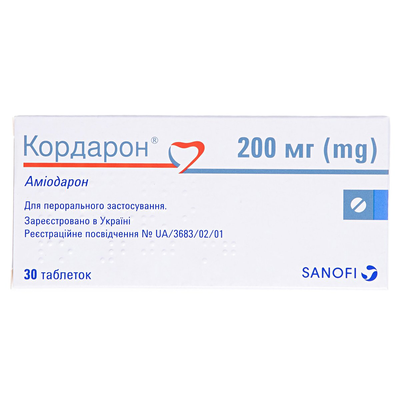
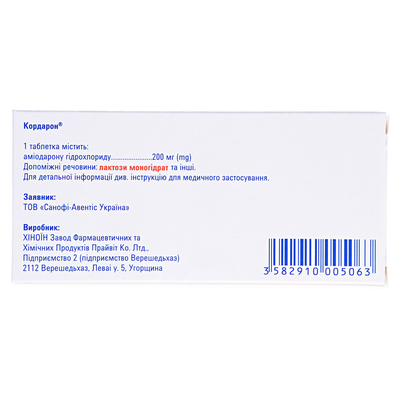
Cordaron 200 mg tablets, No. 30 (15 x 2)
Composition
Active ingredient: amiodarone;
1 tablet contains 200 mg of amiodarone hydrochloride;
excipients: corn starch, lactose monohydrate, magnesium stearate, povidone, colloidal anhydrous silicon dioxide.
Dosage Form
Tablets
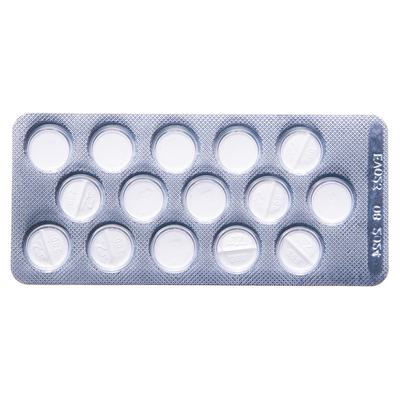
Main physical and chemical properties: round tablets ranging in color from white to slightly cream-colored, with a score line and an engraving of a heart symbol and “200” on one side.
Pharmacotherapeutic group
Class III antiarrhythmic drugs. ATC code C01B D01.
Pharmacological Properties
Pharmacodynamics.
Antiarrhythmic properties. Prolongation of phase 3 of the myocardial action potential, primarily due to inhibition of potassium channels (Class III according to the Vogen-Williams classification).
Slowing of the heart rate due to inhibition of sinus node automaticity. This effect is not blocked by atropine.
Non-competitive alpha- and beta-adrenergic blocking action.
Slowing of sinoatrial, atrial, and nodal conduction, which becomes more pronounced as the heart rate increases.
No changes in intraventricular conduction.
Prolongation of the refractory period and decreased myocardial excitability at the atrial, nodal, and ventricular levels.
Slowing of conduction and prolongation of refractory periods in accessory atrioventricular conduction pathways.
Other effects. Decreased oxygen consumption due to a moderate reduction in peripheral vascular resistance and a decrease in heart rate.
Increased coronary blood flow due to a direct effect on the smooth muscle of myocardial blood vessels and maintenance of cardiac output despite reduced blood pressure and peripheral vascular resistance, and in the absence of negative inotropic effects.
A meta-analysis was performed of data from 13 prospective, randomized, controlled trials involving 6,553 patients who had recently suffered a myocardial infarction (78%) or had chronic heart failure (22%).
The mean duration of follow-up ranged from 0.4 to 2.5 years. The mean daily maintenance dose of the drug ranged from 200 to 400 mg.
This meta-analysis demonstrated that amiodarone statistically significantly reduces the total number of deaths by 13% (95% CI: 0.78–0.99; p = 0.030) and the number of deaths caused by arrhythmias by 29% (95% CI: 0.59–0.85; p = 0.0003).
However, these results should be interpreted with caution due to the heterogeneity of the various studies (differences are primarily related to the study populations, the duration of patient follow-up, the methodology used, and the study outcomes).
The percentage of patients who discontinued the medication was higher in the amiodarone group (41%) than in the placebo group (27%).
Hypothyroidism developed in 7% of patients taking amiodarone, compared with 1% in the placebo group. Hyperthyroidism was diagnosed in 1.4% of patients in the amiodarone group, compared with 0.5% in the placebo group.
Interstitial pneumonitis developed in 1.6% of patients in the amiodarone group compared with 0.5% in the placebo group.
Pediatric Population. No controlled clinical trials have been conducted in children. According to the literature, the safety of amiodarone was studied in 1,118 children with various types of arrhythmias.
In clinical studies involving children, the following dosages were used:
- loading dose: 10–20 mg/kg/day for 7–10 days (i.e., 500 mg/m²/day based on body surface area);
- maintenance dose: the minimum effective dose should be used; based on individual response, it may range from 5 to 10 mg/kg/day (i.e., 250 mg/m²/day based on body surface area).
Pharmacokinetics.
Amiodarone is a compound characterized by slow transport and high tissue affinity.
Its bioavailability following oral administration ranges from 30% to 80% (average 50%), depending on individual patient characteristics. After a single dose, peak plasma concentrations are reached within 3–7 hours.
Therapeutic activity typically becomes apparent within one week of starting treatment (ranging from a few days to two weeks).
The half-life of amiodarone is long and is characterized by significant interindividual variability (ranging from 20 to 100 days). During the first few days of treatment, the drug accumulates in most body tissues, particularly in adipose tissue. Elimination begins after a few days, and the drug’s intake-to-elimination ratio reaches equilibrium within one or several months, depending on the patient.
These characteristics justify the use of loading doses to rapidly achieve the level of tissue uptake necessary for the drug to exert its therapeutic effect.
A portion of the iodine is released from the compound and excreted in the urine as iodide; when amiodarone is administered at a daily dose of 200 mg, iodine excretion is 6 mg/24 hours. The remainder of the compound—and, consequently, most of the iodine—is excreted in the feces following hepatic metabolism.
Since only a small amount of the drug is eliminated in the urine, patients with renal insufficiency may be given standard doses.
After discontinuation of the drug, its elimination continues for several months. It should be noted that residual activity of the drug may persist for a period ranging from 10 days to 1 month.
Amiodarone is primarily metabolized by cytochrome CYP3A4, as well as by cytochrome CYP2C8. Amiodarone and its metabolite, desethylamiodarone, are potential inhibitors of cytochromes CYP1A1, CYP1A2, CYP2C9, CYP2C19, CYP2D6, CYP3A4, CYP2A6, CYP2B6, and CYP2C8. Amiodarone and desethylamiodarone may also inhibit the function of transport proteins such as P-glycoprotein and organic cation transporter 2 (OCT2). Results from one study indicate a 1.1% increase in creatinine concentration (an OCT2 substrate).
In vivo study data indicate an interaction between amiodarone and substrates of CYP3A4, CYP2C9, CYP2D6, and P-glycoprotein.
Pediatric Population. No controlled clinical studies have been conducted in children. The limited data available do not indicate any differences in pharmacokinetic parameters between adults and children.
Preclinical data. The results of a 2-year carcinogenicity study in animals showed that amiodarone leads to an increase in the number of follicular thyroid tumors (adenomas and/or carcinomas) in animals of both sexes at clinically relevant exposures.
Since the results of the mutagenicity study were negative, the development of this type of tumor is more likely due to an epigenetic rather than a genotoxic mechanism.
The results of animal studies do not indicate the development of any carcinomas; however, dose-dependent follicular hyperplasia of the thyroid gland was observed. These effects on the thyroid gland in animals may have been caused by amiodarone’s influence on the synthesis and/or release of thyroid hormones. These findings have limited relevance to the use of the drug in humans.
Indications
Prevention of recurrence:
- life-threatening ventricular tachycardia: treatment must be initiated in a hospital setting with continuous monitoring of the patient’s condition;
- symptomatic ventricular tachycardia (documented) that results in disability;
- supraventricular tachycardia (documented) requiring treatment, and in cases where other medications are ineffective or contraindicated;
- ventricular fibrillation.
Treatment of supraventricular tachycardia: slowing or reducing atrial fibrillation or flutter.
Ischemic heart disease and/or left ventricular dysfunction (see the “Pharmacodynamics” section).
Contraindications
Sinus bradycardia, sinoatrial block, except in cases where an implantable pacemaker is present.
Sinus node dysfunction (risk of sinus node arrest), except in cases where an implantable pacemaker is present.
Severe atrioventricular conduction disturbances, except in cases where an implantable pacemaker is present.
Hyperthyroidism, due to the possibility of exacerbation when taking amiodarone.
Known hypersensitivity to iodine, amiodarone, or any of the excipients.
The second and third trimesters of pregnancy.
Lactation.
Combination with drugs capable of inducing paroxysmal ventricular tachycardia of the “torsades de pointes” type (except for antiparasitic agents, neuroleptics, and methadone):
- Class Ia antiarrhythmic agents (quinidine, hydroquinidine, disopyramide);
- Class III antiarrhythmic drugs (sotalol, dofetilide, ibutilide);
- other medications, such as arsenic compounds, bepridil, cisapride, citalopram, escitalopram, difemanil, dolasetron IV, domperidone, dronedarone, intravenous erythromycin, levofloxacin, mequitazine, mizolastine, moxifloxacin, prucalopride, intravenous spiramycin, toremifene, intravenous vincamine (see the section “Interactions with Other Medications and Other Types of Interactions”);
- telaprevir;
- cobicistat.
Interactions with Other Medications and Other Types of Interactions
Antiarrhythmic drugs.
Many antiarrhythmic drugs inhibit cardiac automaticity, conduction, and myocardial contractility.
Concomitant use of antiarrhythmic drugs belonging to different classes may be beneficial, but treatment with such a combination most often requires careful clinical and ECG monitoring. The concurrent use of antiarrhythmic drugs that can induce “torsades de pointes” (such as amiodarone, disopyramide, quinidine derivatives, sotalol, and others) is contraindicated.
Concomitant use of antiarrhythmic drugs from the same class is not recommended, except in exceptional cases, as such treatment increases the risk of cardiac side effects.
Concomitant use of amiodarone with drugs that have a negative inotropic effect promotes bradycardia and/or slows atrioventricular conduction; therefore, it requires careful clinical and ECG monitoring.
Drugs that may induce “torsades de pointes.”
This serious arrhythmia can be induced by certain medications, regardless of whether they are antiarrhythmic drugs or not. Predisposing factors include hypokalemia (see the subsection “Drugs That Lower Potassium Levels”), bradycardia (see the subsection “Drugs That Slow the Heart Rate”) or congenital or acquired pre-existing QT interval prolongation.
Drugs that may cause “torsades de pointes” include, in particular, Class Ia and III antiarrhythmic drugs and certain neuroleptics. For dolasetron, erythromycin, spiramycin, and vincamine, this interaction occurs only when intravenous formulations are used.
Concomitant use of two drugs, each of which is known to promote the development of “torsades de pointes,” is generally contraindicated.
However, methadone, antiparasitic drugs (halofantrine, lumefantrine, pentamidine), and antipsychotics, the use of which is considered absolutely necessary, are not contraindicated, but their concurrent use with other agents that may induce “torsades de pointes” is not recommended.
Drugs that slow the heart rate.
Many medications can cause bradycardia, including Class Ia antiarrhythmic drugs, beta-blockers, certain Class III antiarrhythmic drugs, certain calcium channel blockers, digitalis preparations, pilocarpine, and anticholinesterase drugs.
Effects of amiodarone on other medications.
Amiodarone and/or its metabolite, desethylamiodarone, inhibit CYP1A1, CYP1A2, CYP3A4, CYP2C9, CYP2D6, and P-glycoprotein and may increase the exposure of their substrates. Given the long duration of action of amiodarone, such interactions may persist for several months after discontinuation of amiodarone therapy.
Effects of other drugs on amiodarone.
CYP3A4 and CYP2C8 inhibitors may potentially inhibit the metabolism of amiodarone and, thus, increase its exposure.
CYP3A4 inhibitors (e.g., grapefruit juice and certain medications) should generally not be used during treatment with amiodarone.
Contraindicated combinations (see the “Contraindications” section).
Medications that may induce “torsades de pointes” (with the exception of antiparasitic drugs, neuroleptics, and methadone; see the subsection “Combinations Not Recommended”):
- Class Ia antiarrhythmic drugs (quinidine, hydroquinidine, disopyramide);
- Class III antiarrhythmics (dofetilide, ibutilide, sotalol);
- other medications, such as: arsenic compounds, bepridil, cisapride, citalopram, escitalopram, difemanil, dolasetron IV, domperidone, dronedarone, intravenous erythromycin, levofloxacin, mequitazine, mizolastine, intravenous vincamine, moxifloxacin, prucalopride, intravenous spiramycin, toremifene.
Increased risk of ventricular arrhythmias, particularly “torsades de pointes.”
Telaprevir. Disturbances in the automaticity and conduction of cardiomyocytes, with a risk of excessive bradycardia
Cobicistat. There is a risk of an increased incidence of amiodarone-induced adverse effects due to reduced metabolism.
Combinations not recommended (see the “Special Considerations for Use” section).
Sofosbuvir. Concomitant use of amiodarone with medications containing sofosbuvir may cause severe symptomatic bradycardia. Use only if no alternative treatments are available. Close monitoring is recommended when these drugs are used concomitantly (see the “Special Precautions for Use” section).
CYP3A4 Substrates. Amiodarone is a CYP3A4 inhibitor and increases plasma concentrations of CYP3A4 substrates, which may lead to an increase in the toxicity of these substrates.
Cyclosporine. Increased serum concentrations of cyclosporine due to reduced hepatic metabolism, with a risk of nephrotoxic effects.
During treatment with amiodarone, cyclosporine blood levels should be quantified, renal function monitored, and the cyclosporine dose adjusted.
Diltiazem for injection. Risk of bradycardia and atrioventricular block.
If this combination cannot be avoided, close clinical supervision and continuous ECG monitoring should be performed.
Fingolimod. Potentiation of bradycardia-induced effects, possibly with fatal consequences. This is particularly relevant for beta-blockers, which inhibit adrenergic compensatory mechanisms. After administration of the first dose, clinical monitoring and continuous ECG monitoring should be performed for 24 hours.
Verapamil for injection. Risk of bradycardia and atrioventricular block.
If this combination cannot be avoided, it is extremely important to conduct careful clinical monitoring and continuous ECG monitoring.
Antiparasitic drugs that may induce “torsades de pointes” (halofantrine, lumefantrine, pentamidine). Increased risk of ventricular arrhythmias, particularly “torsades de pointes.” If possible, one of the two drugs should be discontinued. If this combination cannot be avoided, it is extremely important to perform a preliminary assessment of the QT interval and to monitor the ECG.
Antipsychotics that may induce “torsades de pointes” (amisulpride, chlorpromazine, cyamemazine, droperidol, flupenthixol, fluphenazine, haloperidol, levomepromazine, pimozide, pipamperone, pipothiazine, sertindole, sulpiride, sultopride, tiapride, zuclopenthixol). Increased risk of ventricular arrhythmias, particularly torsades de pointes.
Methadone. Increased risk of ventricular arrhythmias, particularly torsades de pointes.
Fluoroquinolones, except for levofloxacin and moxifloxacin (contraindicated combinations). Increased risk of ventricular arrhythmias, particularly torsades de pointes.
Stimulant laxatives. Increased risk of ventricular arrhythmias, particularly torsades de pointes (with hypokalemia acting as a precipitating factor). Before administering the drug, any hypokalemia must be corrected, and ECG monitoring and clinical observation must be performed along with monitoring of electrolyte levels.
Fidaxomicin. Increased plasma concentrations of fidaxomicin.
Combinations Requiring Precautions.
P-glycoprotein substrates. Amiodarone is a P-glycoprotein inhibitor. Concomitant use with P-glycoprotein substrates is expected to increase their blood concentrations.
Digitalis preparations. Inhibition of automaticity (excessive bradycardia) and disturbances in atrioventricular conduction.
When digoxin is administered, increased blood levels of digoxin are observed due to reduced digoxin clearance, which requires monitoring of the ECG and clinical status. If necessary, blood digoxin levels should be monitored and the digoxin dose adjusted.
Dabigatran. Increased plasma concentrations of dabigatran with an increased risk of bleeding events. If dabigatran is administered following surgery, clinical monitoring is required, and the dabigatran dose should be adjusted as necessary, but not to exceed 150 mg/day.
Because amiodarone has a long half-life, interactions may occur for several months after discontinuation of amiodarone therapy.
CYP 2C9 substrates. Amiodarone increases plasma concentrations of substances that are CYP 2C9 substrates, such as vitamin K antagonists or phenytoin, by inhibiting cytochrome P450 2C9 enzymes.
Vitamin K antagonists. Enhanced effects of vitamin K antagonists and increased risk of bleeding. Monitoring of the international normalized ratio (INR) should be performed more frequently. The dose of the vitamin K antagonist should be adjusted during treatment with amiodarone and for 8 days after treatment is completed.
Phenytoin (by extrapolation, also fosphenytoin). Increased plasma concentrations of phenytoin with signs of overdose, particularly neurological signs (inhibition of phenytoin metabolism in the liver). Clinical monitoring should be performed, plasma phenytoin concentrations should be monitored, and, if necessary, the phenytoin dose should be adjusted.
CYP2D6 substrates:
- Flecainide. Amiodarone increases plasma concentrations of flecainide by inhibiting CYP2D6. Therefore, the flecainide dose should be adjusted.
CYP3A4 substrates: Amiodarone is an inhibitor of CYP3A4 and increases the plasma concentrations of substrates of this cytochrome, thereby increasing the toxic effects of these substrates.
- Statins (simvastatin, atorvastatin, lovastatin). When amiodarone is used concomitantly with statins metabolized by CYP3A4, such as simvastatin, atorvastatin, and lovastatin, the risk of muscle toxicity (e.g., rhabdomyolysis) increases. When used concomitantly with amiodarone, it is recommended to use statins that are not metabolized by CYP3A4.
Other drugs metabolized by CYP3A4 (lidocaine, tacrolimus, sildenafil, midazolam, dihydroergotamine, ergotamine, colchicine, triazolam). Amiodarone is a CYP3A4 inhibitor and increases the plasma concentrations of these molecules, which may lead to an increase in their toxicity.
Lidocaine. There is a risk of increased plasma concentrations of lidocaine, which may lead to neurological and cardiac side effects due to amiodarone-induced inhibition of hepatic metabolism. Clinical and ECG monitoring should be performed, as well as, if necessary, quantitative determination of lidocaine plasma concentrations. If necessary, the lidocaine dose should be adjusted during treatment with amiodarone and after its discontinuation.
Tacrolimus. Increased blood concentrations of tacrolimus due to inhibition of its metabolism by amiodarone. Quantitative determination of tacrolimus blood concentrations, monitoring of renal function, and adjustment of the tacrolimus dose should be performed during concomitant use with amiodarone and after discontinuation of the latter.
Beta-blockers, except for sotalol (combination contraindicated) and esmolol (combination requiring precautions during use). Impaired automaticity and conduction (inhibition of compensatory sympathetic mechanisms). ECG and clinical monitoring are recommended.
Beta-blockers used for heart failure (bisoprolol, carvedilol, metoprolol, nebivolol). Impaired myocardial automaticity and conduction with a risk of excessive bradycardia. Increased risk of ventricular arrhythmias, particularly “torsades de pointes.” Regular clinical and ECG monitoring is recommended.
Esmolol. Impaired contractility, automaticity, and conduction (inhibition of compensatory sympathetic mechanisms). ECG and clinical monitoring are recommended.
Diltiazem for oral use. Risk of bradycardia or atrioventricular block, especially in elderly patients. ECG and clinical monitoring are recommended.
Verapamil for oral use. Risk of bradycardia and atrioventricular block, especially in elderly patients. ECG and clinical monitoring are recommended.
Certain macrolides (azithromycin, clarithromycin, roxithromycin). Increased risk of ventricular arrhythmias, particularly “torsades de pointes.” ECG monitoring and clinical monitoring are recommended when these drugs are used concomitantly with amiodarone.
Drugs that lower potassium levels: potassium-depleting diuretics (alone or in combination), stimulant laxatives, amphotericin B (when administered intravenously), glucocorticoids (when administered systemically), tetracosactide.
Increased risk of ventricular arrhythmias, particularly “torsades de pointes” (hypokalemia is a contributing factor). Hypokalemia must be corrected before administering the drug, and ECG monitoring, electrolyte levels, and clinical monitoring should be performed.
Drugs that slow the heart rate. Increased risk of ventricular arrhythmias, particularly “torsades de pointes.” Clinical and ECG monitoring is recommended.
Orlistat. Risk of reduced plasma concentrations of amiodarone and its active metabolite. Clinical monitoring and, if necessary, ECG monitoring are recommended.
Tamsulosin. Risk of increased tamsulosin-related adverse effects due to inhibition of its hepatic metabolism. Clinical monitoring should be performed, and, if necessary, the tamsulosin dose should be adjusted during treatment with the enzyme inhibitor and after discontinuation of the enzyme inhibitor.
Voriconazole. Increased risk of ventricular arrhythmias, particularly “torsades de pointes” ventricular tachycardia, as a reduction in amiodarone metabolism may occur. Clinical supervision and ECG monitoring are required, and, if necessary, the amiodarone dose should be adjusted.
Combinations Requiring Special Attention.
Pilocarpine. Risk of excessive bradycardia (additive effects of drugs that slow the heart rate).
Special Considerations for Use
Cardiac effects. An ECG should be performed before starting treatment
In elderly patients, the drug may exacerbate a slowing of the heart rate.
Amiodarone induces ECG changes. These changes include QT interval prolongation due to prolonged repolarization, with the possible appearance of a U wave. This is a sign of the drug’s therapeutic effect, not its toxicity.
The occurrence of second- or third-degree AV block, sinoatrial block, or bifascicular block during treatment requires discontinuation of the drug. The development of first-degree AV block requires closer monitoring of the patient.
Cases of new arrhythmias or worsening of pre-existing arrhythmias being treated have been reported (see the “Adverse Reactions” section).
This proarrhythmic effect may be particularly evident in the presence of factors that contribute to QT interval prolongation, including the use of certain drug combinations and hypokalemia (see the “Adverse Reactions” and “Drug Interactions and Other Interactions” sections). The risk of drug-induced torsades de pointes tachycardia with amiodarone is considered lower compared to other antiarrhythmic drugs in patients with the same degree of QT interval prolongation.
Thyroid disorders. This medication contains iodine and therefore affects the results of certain thyroid function tests (radioactive iodine uptake, protein-bound iodine levels). However, the interpretation of thyroid function tests—T3, T4, and high-sensitivity TSH—remains subject to interpretation.
Amiodarone may cause thyroid dysfunction, especially in patients with a history of thyroid dysfunction. Quantitative measurement of TSH levels is recommended in all patients before starting treatment, and then regularly during treatment and for several months after discontinuation of the drug, as well as in cases of clinically suspected thyroid dysfunction (see the “Adverse Reactions” section).
Pulmonary disorders. The onset of dyspnea or a nonproductive cough—whether isolated or associated with a deterioration in the patient’s general condition—should be considered a possible sign of pulmonary toxicity from the drug, such as the development of interstitial pneumonitis, and requires radiographic evaluation of the patient (see the “Adverse Reactions” section).
Hepatic disorders. Regular monitoring of liver function is recommended at the start of treatment and periodically thereafter during treatment with amiodarone (see the “Adverse Reactions” section).
Neuromuscular disorders. Amiodarone may cause peripheral sensory-motor or mixed neuropathy and myopathy (see the “Adverse Reactions” section).
Ocular disorders. If blurred vision or decreased visual acuity occurs, a complete ophthalmological examination, including ophthalmoscopy, must be performed immediately. The development of amiodarone-induced neuropathy or optic neuritis requires discontinuation of the drug, as continued treatment may lead to progression of the disorders to blindness (“Adverse Reactions”).
Severe skin reactions. Life-threatening or even fatal skin reactions, such as Stevens–Johnson syndrome or toxic epidermal necrolysis, may occur. If signs or symptoms indicative of these conditions appear (e.g., a progressive skin rash with blistering or mucosal lesions), treatment with amiodarone should be discontinued immediately.
Severe bradycardia and cardiac conduction disturbances. Cases of severe, potentially life-threatening bradycardia and conduction disturbances have been reported in patients taking amiodarone in combination with sofosbuvir and other direct-acting antiviral agents (DAAs) for the treatment of hepatitis C, such as daclatasvir, simeprevir, or ledipasvir.
Bradycardia typically developed within a period ranging from several hours to several days; however, cases of symptoms appearing after a longer period have been observed, mostly within 2 weeks after the start of antiviral treatment for hepatitis C (HCV).
Patients receiving treatment with sofosbuvir-containing medications should take amiodarone only if they are intolerant to or have contraindications to other antiarrhythmic agents.
If concomitant use of amiodarone with these medications is necessary, patients are recommended to undergo cardiac monitoring in a hospital setting during the first 48 hours of concomitant use of these medications, after which outpatient monitoring or self-monitoring of heart rate should be performed daily for at least the first 2 weeks of treatment.
Given the long half-life of amiodarone, the cardiac monitoring described above must also be performed in patients who have stopped taking amiodarone within the last few months and are about to begin treatment with sofosbuvir-containing medications, either alone or in combination with other direct-acting antivirals (DAAs).
All patients who are currently taking or have recently taken amiodarone in combination with sofosbuvir-containing medications should be warned about the symptoms of bradycardia and cardiac conduction disturbances, and they should be advised to seek immediate medical attention if such symptoms occur.
Adverse events related to drug interactions. Combinations (see the section “Drug Interactions and Other Interactions”) with drugs such as:
- beta-blockers, except for sotalol (combination contraindicated) and esmolol (combination requiring precautions during use),
- verapamil and diltiazem
should be considered only for the prevention of life-threatening ventricular arrhythmias.
Concomitant use of amiodarone is not recommended with the following medications:
cyclosporine, diltiazem (for injection), or verapamil (for injection), certain antiparasitic agents (halofantrine, lumefantrine, and pentamidine), certain antipsychotics (amisulpride, chlorpromazine, cyamemazine, droperidol, flupenthixol, fluphenazine, haloperidol, levomepromazine, pimozide, pipamperone, pipothiazine, sertindole, sulpiride, sultopride, tiapride, zuclopenthixol), fluoroquinolones (except for levofloxacin and moxifloxacin), stimulant laxatives, methadone, or fingolimod (see the section “Interactions with Other Medications and Other Types of Interactions”).
Problems related to excipients. This medication contains lactose and is therefore not recommended for patients with galactose intolerance, lactase deficiency, or glucose-galactose malabsorption (rare hereditary disorders).
Electrolyte disturbances, particularly hypokalemia: It is important to consider any situation in which a patient may be at risk of developing hypokalemia, as hypokalemia may trigger proarrhythmic effects. Hypokalemia must be corrected before starting amiodarone therapy.
The adverse effects listed below are most often associated with excessive drug intake; they can be avoided or minimized by strictly adhering to the minimum maintenance dose.
During treatment with this medication, patients are advised to avoid sun exposure or take protective measures against sun exposure.
The safety and efficacy of amiodarone in children have not been evaluated in controlled clinical trials.
Due to a possible increase in the defibrillation threshold and/or pacing threshold in patients with implanted cardiac defibrillators or pacemakers, these thresholds must be checked before starting amiodarone and several times after initiation of therapy, as well as each time the dose is adjusted.
Anesthesia. The anesthesiologist must be informed prior to surgery that the patient is taking amiodarone.
Side effects of chronic amiodarone therapy may exacerbate the hemodynamic risks associated with general or regional anesthesia. These effects include, in particular, bradycardia, arterial hypotension, reduced cardiac output, and cardiac conduction disturbances.
In addition, some cases of acute respiratory distress syndrome have been observed in the early postoperative period in patients receiving amiodarone. Therefore, it is recommended that such patients be closely monitored during mechanical ventilation (see the “Adverse Reactions” section).
Transplantation
In retrospective studies of transplant recipients, the use of amiodarone prior to heart transplantation was associated with an increased risk of primary graft dysfunction (PGD).
PIT is a life-threatening complication following heart transplantation that manifests within the first 24 hours after transplantation as left ventricular dysfunction, the right ventricle, or both ventricles, for which no secondary cause can be identified (see the “Special Considerations for Use” section). Severe PTD may be irreversible.
The possibility of prescribing an alternative antiarrhythmic drug as early as possible prior to transplantation should be considered for patients awaiting a heart transplant.
Use during pregnancy or breastfeeding.
Pregnancy. Animal studies have not revealed any teratogenic effects; therefore, malformations are not expected in humans. To date, substances known to cause birth defects in humans have been shown to be teratogenic in animals in well-conducted studies in two species.
There are insufficient clinical data to assess the potential teratogenic or fetotoxic effects of amiodarone when administered at therapeutic doses during the first trimester of pregnancy.
Since the fetal thyroid gland begins to bind iodine as early as the 14th week, no effect on the embryonic thyroid gland is expected if the drug was administered prior to that time.
Excessive amounts of iodine entering the body during treatment with this drug may lead to hypothyroidism in the fetus or even to the development of clinical signs of fetal hypothyroidism (goiter).
Given the effect of amiodarone on the fetal thyroid gland, this drug is contraindicated starting in the second trimester of pregnancy.
Breastfeeding. Amiodarone and its metabolites, along with iodine, are excreted into breast milk in greater quantities than are present in the mother’s plasma. Given the risk of hypothyroidism in the infant, breastfeeding is contraindicated during treatment with amiodarone.
Effect on reaction time when driving or operating machinery. The possibility of adverse reactions affecting the nervous system and vision should be taken into account.
Dosage and Administration
Initial treatment. The usual recommended dose is 200 mg (1 tablet) 3 times daily for 8–10 days. In some cases, patients may require higher doses (4–5 tablets per day), but always for a short period of time and under electrocardiographic monitoring.
Maintenance therapy. The minimum effective dose should be used, which will vary for each patient and may range from ½ tablet per day (1 tablet every 2 days) to 2 tablets per day.
Children. The safety and efficacy of amiodarone in children have not been established; therefore, the use of this medication in children is not recommended. Currently available data are provided in the “Pharmacological Properties” section.
Overdose
Cases of acute amiodarone overdose following oral administration are insufficiently documented. Several cases of sinus bradycardia, ventricular arrhythmias (particularly “torsades de pointes”), and liver damage have been reported. Treatment should be symptomatic. Given the pharmacokinetic profile of this drug, it is recommended to monitor the patient’s condition, particularly cardiac function, for a sufficiently long period.
Amiodarone and its metabolites are not removed by dialysis.
Side Effects
Side effects are classified by organ system and frequency of occurrence:
very common (≥ 10%); common (≥ 1%, < 10%); uncommon (≥ 0.1%, < 1%); rare (≥ 0.01%, < 0.1%); very rare (< 0.01%); frequency unknown (cannot be estimated from the available data).
Eye disorders.
Very common. Microdeposits in the cornea, present in nearly all adults, are usually confined to the area beneath the pupil and do not require discontinuation of amiodarone. In exceptional cases, they are associated with colored halos in bright light or blurred vision.
Microdeposits in the cornea are complex lipid deposits and are always completely reversible after discontinuation of the drug.
Very rare. Optic nerve neuropathy (optic neuritis), with blurred vision and visual impairment, as well as, according to fundus examination findings, optic disc edema, which may progress to a more or less severe reduction in visual acuity. A causal relationship between this adverse event and amiodarone use has not yet been established. However, in the absence of other obvious causes for this adverse event, it is recommended to discontinue amiodarone.
Skin and subcutaneous tissue disorders.
Very common. Photosensitivity. It is recommended to avoid exposure to sunlight (and ultraviolet radiation in general) during treatment with this medication.
Common. Bluish or bluish-gray skin pigmentation that occurs with long-term use of high daily doses of the drug and gradually resolves after discontinuation (within 10–24 months).
Very rare. Erythema associated with radiation therapy. Skin rashes, usually nonspecific. Exfoliative dermatitis, although a causal relationship between this adverse event and drug use has not yet been clearly established. Alopecia.
Frequency unknown: Eczema. Severe, sometimes fatal, skin reactions, including toxic epidermal necrolysis (Lyell’s syndrome) and Stevens-Johnson syndrome. Bullous dermatitis. DRESS syndrome (drug rash with eosinophilia and systemic symptoms).
Endocrine disorders.
Endocrine system disorders.
Side effects involving the thyroid gland.
Very common. Except in cases where clinical signs of thyroid dysfunction are present, “drug-unrelated” changes in thyroid hormone levels in the blood (elevated T4 levels, normal or slightly decreased T3 levels) do not require discontinuation of the drug.
Common. Hypothyroidism causes typical symptoms: weight gain, intolerance to cold, apathy, and drowsiness. A significant increase in TSH levels confirms this diagnosis. After discontinuation of the drug, normal thyroid function gradually returns over a period of 1 to 3 months. Discontinuation of the drug is not mandatory: if amiodarone use is necessary, treatment with this drug may be continued in combination with thyroid hormone replacement therapy using levothyroxine. L-thyroxine doses may be adjusted based on TSH levels.
Hyperthyroidism is more difficult to diagnose: symptoms are less pronounced (slight, unexplained weight loss; insufficient efficacy of antianginal and/or antiarrhythmic medications); in elderly patients, psychiatric symptoms may be observed, including thyrotoxicosis.
A significant decrease in high-sensitivity TSH levels confirms this diagnosis. In such cases, it is essential to discontinue amiodarone, which is usually sufficient to restore clinical normality within 3–4 weeks. Since severe cases of this adverse effect can be fatal, appropriate therapy must be initiated immediately.
When thyrotoxicosis is the cause of the problems (either directly or through its effect on the delicate balance of the myocardium), the variable efficacy of synthetic antithyroid drugs necessitates the recommendation of high-dose corticosteroids (1 mg/kg) for a sufficiently long period (3 months). Cases of hyperthyroidism lasting up to several months after discontinuation of amiodarone have been reported.
Other endocrine disorders.
Very rare cases of SIADH (syndrome of inappropriate antidiuretic hormone secretion), especially when amiodarone is used concomitantly with medications that may induce hyponatremia. See also “Study Results.”
Respiratory, thoracic, and mediastinal disorders.
Common. Cases of diffuse interstitial or alveolar pneumonitis and obliterative bronchiolitis with sclerotic-type pneumonia have been reported, sometimes with fatal outcomes. The onset of shortness of breath during physical exertion or a dry cough, whether isolated or associated with a deterioration in general condition (increased fatigue, weight loss, and a slight increase in body temperature), requires a chest X-ray and, if necessary, discontinuation of the drug, as these lung diseases can lead to pulmonary fibrosis.
Early discontinuation of amiodarone, with or without corticosteroid therapy, leads to a gradual resolution of symptoms. Clinical signs usually resolve within 3–4 weeks; improvement in the X-ray findings and lung function occurs more slowly (over several months).
Several cases of pleurisy, usually associated with interstitial pneumonopathy, have been reported.
Very rare. Bronchospasm in patients with acute respiratory failure, especially in patients with bronchial asthma. Acute respiratory distress syndrome, in isolated cases with fatal outcome, sometimes in the early postoperative period (a possible interaction with high doses of oxygen was suspected) (see the “Special Considerations for Use” section).
Frequency unknown (cannot be estimated from the available data). Cases of pulmonary hemorrhage have been reported, which in some instances may manifest as hemoptysis. These pulmonary adverse effects are often associated with amiodarone-induced pneumopathy.
Nervous system disorders.
Common. Tremor or other extrapyramidal symptoms. Sleep disturbances, including nightmares. Peripheral sensory-motor or mixed peripheral neuropathy.
Uncommon. Myopathy. Peripheral sensory, motor, or mixed neuropathy and myopathy may develop after several months of treatment, but sometimes they occur several years later. These side effects are generally reversible after discontinuation of treatment. However, recovery may be incomplete, very slow, and may not occur until several months after discontinuation of the drug.
Very rare. Cerebellar ataxia. Benign intracranial hypertension, headache. If isolated headache occurs, an examination should be performed to determine its possible cause.
Frequency unknown:
Parkinsonism, parosmia.
Liver and biliary tract disorders.
Cases of liver damage have been reported; these cases were diagnosed based on elevated serum transaminase levels. The following adverse events have been reported:
Very common. Usually a moderate and isolated increase in transaminase levels (1.5–3 times the upper limit of normal), which resolved after a reduction in the drug dose or even spontaneously.
Common. Acute liver injury with elevated serum transaminase levels and/or jaundice, including liver failure—sometimes fatal—requiring discontinuation of the drug.
Very rare. Chronic liver damage requiring long-term treatment. Histological changes are consistent with pseudo-alcoholic hepatitis or liver cirrhosis. Since clinical and laboratory signs are not clearly defined (variable hepatomegaly, elevated blood transaminase levels 1.5–5 times the normal range), regular monitoring of liver function is indicated. If elevated blood transaminase levels—even moderate ones—occur after taking the drug for more than 6 months, chronic liver damage should be suspected. These clinical and biological changes usually resolve after discontinuation of the drug. Several reversible cases of such changes have been reported.
Cardiac disorders.
Common. Bradycardia, usually mild and dose-dependent.
Uncommon. Myocardial conduction disturbances (sinoatrial block, AV block of varying degrees).
Very rare. Severe bradycardia and, in exceptional cases, sinus node failure, which have been reported in a few cases (against a background of sinus node dysfunction, in elderly patients). Onset or worsening of an existing arrhythmia, sometimes accompanied by cardiac arrest.
Frequency unknown. Paroxysmal ventricular tachycardia of the “torsade de pointes” type.
Gastrointestinal disorders.
Very common. Mild gastrointestinal disturbances (nausea, vomiting, dysgeusia), which usually occur at the start of treatment and resolve after a dose reduction.
Frequency unknown. Pancreatitis/acute pancreatitis, dry mouth, constipation.
Breast and reproductive system disorders.
Very rare. Epididymitis. A causal relationship between this adverse event and the use of this drug has not yet been clearly established.
Frequency unknown: decreased libido.
Vascular disorders.
Very rare. Vasculitis.
Study results.
Rare. Rare cases of hyponatremia may indicate the development of CNSAG.
Very rare. Renal impairment with elevated serum creatinine levels.
Blood and lymphatic system disorders.
Very rare. Thrombocytopenia.
Frequency unknown:
Neutropenia, agranulocytosis.
Immune system disorders.
Frequency unknown (cannot be estimated from the available data). Cases of angioedema and/or urticaria have been reported.
General disorders.
Frequency unknown. Cases of granuloma, primarily bone marrow granuloma, have been reported.
Metabolic and nutritional disorders
Frequency unknown: Decreased appetite.
Psychiatric disorders
Frequency unknown: Confusion, delirium, hallucinations.
Musculoskeletal and connective tissue disorders:
Frequency unknown: systemic lupus erythematosus.
Injuries, poisonings, and complications from procedures.
Frequency unknown: Primary graft dysfunction following heart transplantation, potentially fatal (see “Special Precautions for Use”).
Reporting of Suspected Adverse Reactions
Reporting suspected adverse reactions after a drug’s approval is an important procedure. This allows for continued monitoring of the benefit-risk profile of this drug. Healthcare professionals are asked to report all suspected adverse reactions through the national pharmacovigilance system.
Shelf Life
3 years.
Storage Conditions
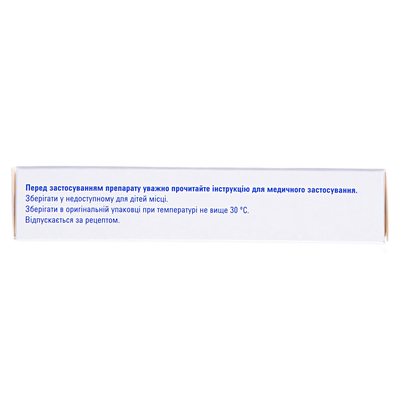
Keep out of reach of children. Store in the original packaging at a temperature not exceeding 30 °C.
Packaging
No. 30 (10×3): 10 tablets per blister pack, 3 blister packs per cardboard box.
No. 30 (15×2): 15 tablets per blister pack, 2 blister packs per cardboard box.
Dispensing Category
By prescription.







