
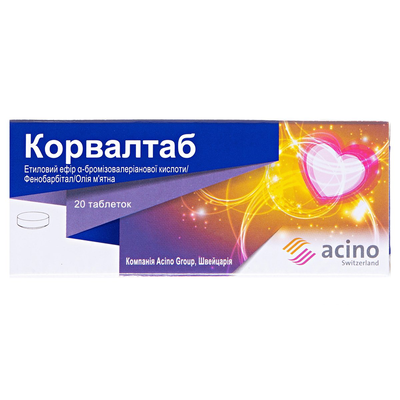
Corvaltab Tablets, No. 20 (10 x 2)
Ingredients
Active ingredients: ethyl ester of α-bromovaleric acid, phenobarbital, peppermint oil;
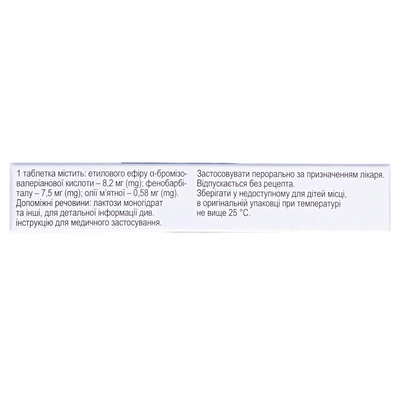
1 tablet contains α-bromovaleric acid ethyl ester – 8.2 mg; phenobarbital – 7.5 mg; peppermint oil – 0.58 mg;
Excipients: β-cyclodextrin, potato starch, lactose monohydrate, microcrystalline cellulose, magnesium stearate.
Dosage Form
Tablets.
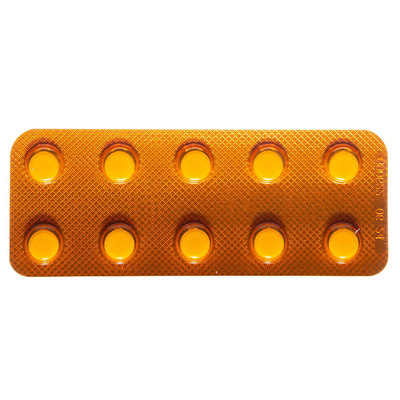
Main physical and chemical properties: white or off-white tablets with inclusions, round in shape, with a flat surface and beveled edges, and a characteristic odor.
Pharmacotherapeutic group
Hypnotics and sedatives.
ATC code N05C B02.
Pharmacological properties
Sedative, vasodilator, antispasmodic. Helps reduce the excitability of the central nervous system, has a calming effect, and promotes the onset of natural sleep. The α-bromovaleric acid ethyl ester contained in the drug exerts a sedative and antispasmodic effect similar to that of valerian extract; in high doses, it also has a mild hypnotic effect. Phenobarbital has a sedative and moderate antispasmodic effect. Peppermint oil has a reflex, vasodilatory, and antispasmodic effect.
Indications
- Neuroses with increased irritability;
- insomnia;
- as part of complex therapy for hypertension and vegetative-vascular dystonia;
- mild coronary vasospasms, tachycardia;
- intestinal spasms resulting from neurovegetative disorders (as an antispasmodic).
Contraindications
Hypersensitivity to any component of the drug; severe liver and/or kidney dysfunction; acute hepatic porphyria; severe heart failure, marked arterial hypotension, acute myocardial infarction, diabetes mellitus, depression and depressive disorders with a tendency toward suicidal behavior, myasthenia gravis, alcoholism, drug addiction, respiratory diseases with shortness of breath, and obstructive syndrome. Pregnancy and lactation. Pediatric use.
Drug Interactions and Other Interactions
Phenobarbital induces liver enzymes and, consequently, may accelerate the metabolism of certain drugs metabolized by liver enzymes (including acetaminophen, salicylates, indirect anticoagulants, cardiac glycosides (digitoxin), antimicrobials (chloramphenicol, doxycycline, metronidazole, rifampin, sulfanilamide), antiviral and antifungal agents (griseofulvin, itraconazole), antiepileptic and anticonvulsant drugs, psychotropic drugs (tricyclic antidepressants), oral hypoglycemic agents, and hormonal (estrogens, progestins, corticosteroids, thyroid hormones), immunosuppressants (glucocorticosteroids, cyclosporine, cytostatics), antiarrhythmics, antihypertensives (β-blockers, calcium channel blockers), and others.
Phenobarbital potentiates the effects of analgesics, local anesthetics, neuroleptics, and tranquilizers. Phenobarbital may accelerate the metabolism of oral contraceptives, leading to a loss of efficacy. When this medication is used concomitantly with other drugs that depress the central nervous system, a synergistic effect may occur, which may be accompanied by respiratory depression. The drug’s effects are enhanced when used with valproic acid or alcohol. Alcohol enhances the drug’s effects and may increase its toxicity. Changes in blood levels of phenytoin, as well as carbamazepine and clonazepam, may occur. This drug increases the toxicity of methotrexate. Acidic substances (such as ascorbic acid and ammonium chloride) and drugs containing valproic acid enhance the effects of barbiturates. MAO inhibitors prolong the effects of phenobarbital. Rifampin may reduce the effects of phenobarbital.
Concomitant use of phenobarbital with gold-based drugs increases the risk of kidney damage. With prolonged concomitant use with nonsteroidal anti-inflammatory drugs, there is a risk of stomach ulcers and bleeding.
Concomitant use of phenobarbital with zidovudine increases the toxicity of both drugs.
Special Considerations
While taking this medication, it is not recommended to engage in activities requiring increased attention or rapid mental and motor responses.
Alcohol should be avoided while taking this medication.
Phenobarbital is contraindicated in patients with depressive disorders who are prone to suicidal behavior.
Life-threatening skin reactions, such as Stevens-Johnson syndrome or toxic epidermal necrolysis (Lyell’s syndrome), have been reported with phenobarbital use, most likely occurring during the first weeks of treatment. Therefore, if characteristic symptoms appear (e.g., a progressive skin rash, often with blisters, or mucosal lesions), the drug should be discontinued, and under no circumstances should medications containing phenobarbital be used. Early diagnosis and immediate discontinuation of the drug that may have caused symptoms of Stevens-Johnson syndrome or toxic epidermal necrolysis can lead to the best treatment outcomes.
Long-term use is not recommended due to the risk of drug dependence, possible accumulation of bromine in the body, and the development of bromine poisoning. Barbiturates are associated with withdrawal syndrome.
If chest pain persists after taking the medication, consult a doctor to rule out acute coronary syndrome. The medication should be prescribed with caution in cases of decompensated heart failure (see the “Contraindications” section), hypotension, hyperkinesis, hyperthyroidism, adrenal insufficiency, acute and chronic pain, and acute drug intoxication.
Patients with rare hereditary forms of galactose intolerance, lactase deficiency, or glucose-galactose malabsorption should not take this medication due to its lactose content.
Pregnancy and Lactation
Pregnancy
Use of this medication during pregnancy is contraindicated.
Barbiturates increase the risk of fetal abnormalities. Use of phenobarbital during the third trimester of pregnancy may result in physical dependence, leading to neonatal withdrawal syndrome, which manifests as seizures, agitation, and coagulation disorders. Use of phenobarbital during labor may cause respiratory depression in the newborn.
Breastfeeding
Use of this medication during breastfeeding is contraindicated.
Phenobarbital passes into breast milk in significant amounts and may depress the infant’s central nervous system.
Effects on the Ability to Operate Vehicles and Machinery
This medication may cause impaired coordination, slowed psychomotor reactions, drowsiness, and dizziness; therefore, patients are advised not to operate hazardous machinery or drive vehicles during treatment.
Method of Administration and Dosage
The dosage and duration of treatment are determined by the doctor on an individual basis for each patient.
Adults are typically prescribed 1–2 tablets 2–3 times a day before meals.
In cases of tachycardia and coronary spasms, a single dose may be increased to 3 tablets.
Children
There is no experience with the use of this medication in children; therefore, it should not be used in pediatric practice.
Overdose
Overdose is possible with frequent or prolonged use of the drug, due to the accumulation of its components. Prolonged and continuous use may lead to dependence, withdrawal syndrome, and psychomotor agitation.
Symptoms of mild or moderate acute barbiturate poisoning include dizziness, rapid fatigue, and deep sleep from which the patient cannot be awakened. Hypersensitivity reactions may occur, such as angioedema, itching, and rash (including urticaria).
Symptoms of acute severe barbiturate poisoning: central nervous system depression, up to a deep coma, accompanied by tissue hypoxia; shallow breathing, initially rapid, then slow; respiratory depression, up to respiratory arrest; cardiovascular depression, including arrhythmias; decreased blood pressure, up to a collapse-like state; decreased body temperature, decreased urine output, tachycardia or bradycardia, weakened or absent reflexes, nystagmus, headache, nausea, and weakness.
If left untreated, poisoning can be fatal due to circulatory failure, respiratory paralysis, or pulmonary edema.
Treatment: symptomatic therapy (primarily monitoring of vital signs: respiration, pulse, and blood pressure). Cases of acute drug poisoning should be treated in the same manner as poisoning with other hypnotics and barbiturates, depending on the severity of the symptoms. Patients may require intensive care. It is necessary to stabilize and normalize respiration and circulation. Respiratory failure is managed with artificial ventilation, and shock is treated with infusions of plasma and plasma substitutes. If a short time has elapsed since the drug was taken (no more than 6 hours), gastric lavage should be performed, followed by the administration of a sorbent (activated charcoal) and sodium sulfate. To rapidly eliminate the barbiturate from the body, forced diuresis with alkalis, as well as hemodialysis and/or hemoperfusion, may be performed.
Long-term use of medications containing bromine can lead to bromine poisoning.
Symptoms of bromine poisoning: central nervous system depression, depression, confusion, ataxia, apathy, conjunctivitis, rhinitis, lacrimation, acne, and purpura.
Treatment: The elimination of bromide ions from the body can be accelerated by administering a significant amount of a sodium chloride solution along with diuretics.
If hypersensitivity reactions occur, desensitizing agents should be prescribed.
Side Effects
Corvaltab is generally well tolerated.
In rare cases, the following side effects may occur:
Immune system: hypersensitivity reactions, including angioedema, allergic reactions (including skin rash, itching, and hives).
Nervous system: asthenia, weakness, ataxia, impaired coordination, nystagmus, hallucinations, paradoxical excitement, decreased concentration, rapid fatigue, slowed reactions, headache, cognitive impairment, insomnia (primarily in elderly patients), confusion, drowsiness, dizziness, depression.
Gastrointestinal disorders: nausea, vomiting, constipation, a feeling of heaviness in the epigastric region; with long-term use—liver dysfunction.
Hematologic disorders: anemia, thrombocytopenia, agranulocytosis, megaloblastic anemia.
Cardiovascular disorders: hypotension, bradycardia.
Respiratory system: difficulty breathing.
Skin and subcutaneous tissue disorders: increased skin photosensitivity (photosensitization), polymorphic exudative erythema, Stevens-Johnson syndrome, toxic epidermal necrolysis (Lyell’s syndrome), exfoliative dermatitis.
Musculoskeletal disorders: With long-term use of medications containing phenobarbital, there is a risk of impaired osteogenesis. Decreased bone mineral density, osteopenia, osteoporosis, and fractures have been reported in patients receiving phenobarbital over a long period. The mechanism by which phenobarbital affects bone metabolism has not been established.
Other: fever, lymphadenopathy, leukocytosis, lymphocytosis, leukopenia, collapse.
With long-term use of phenobarbital, folic acid deficiency, impotence, drug dependence, and withdrawal syndrome may develop; withdrawal syndrome typically occurs upon abrupt discontinuation of the drug and is accompanied by nightmares and nervousness.
Shelf life
2 years.
Storage conditions
Store out of the reach of children in the original packaging at a temperature not exceeding 25 °C.
Packaging
10 tablets per blister; 2 or 10 blisters per cardboard package.
Manufacturer
Pharma Start, LLC.







