
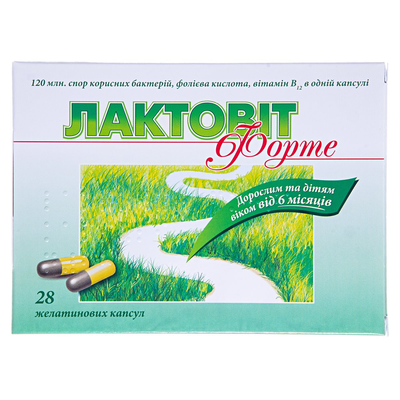

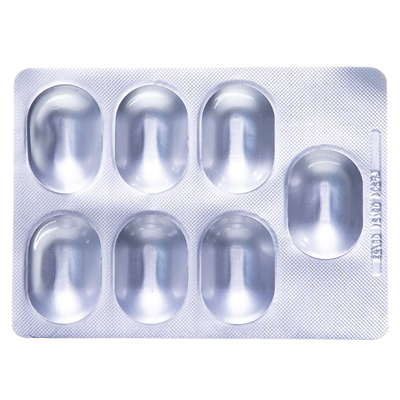

Lactovit Forte Capsules No. 28 (7x4)
Ingredients
Active ingredients: folic acid, vitamin B12, Lactic Acid Bacillus (Bacillus coagulans (Lb. sporogenes));
1 capsule contains 1.5 mg of folic acid, 15 mcg of vitamin B12, and 120 million spores of Lactic Acid Bacillus (Bacillus coagulans (Lb. sporogenes));
Excipients: colloidal anhydrous silicon dioxide, talc, lactose monohydrate; capsule composition: gelatin, purified water, sodium lauryl sulfate, methylparaben (E 218), propylparaben (E 216), brilliant blue (E 133), carmoisine (E 122), tartrazine (E 102), titanium dioxide (E 171).
Dosage Form
Capsules.
Main physical and chemical properties: Hard gelatin capsules with a yellow body and a gray cap, containing a crystalline powder with granules of varying sizes ranging in color from light yellow to yellow and/or pink.
Pharmacotherapeutic group
Antidiarrheal microbial preparations. Lactic acid-producing bacteria; combinations.
ATC Code A07F A51.
Pharmacological Properties
Pharmacodynamics.
Lactovit Forte is a combination drug containing Lactic Acid Bacillus (Bacillus coagulans (Lb. sporogenes)), folic acid, and vitamin B12.
The therapeutic effect of Lactovit Forte is due to lactic acid-producing bacteria that exhibit antagonistic activity against pathogenic and opportunistic microorganisms. The bacterial spores are activated in the stomach, then transform into a live vegetative form in the duodenum and create favorable conditions for the development of beneficial intestinal microflora by producing L(+) lactic acid. Lactobacilli activate the enzymatic breakdown of proteins, fats, and complex carbohydrates (including in cases of lactase deficiency in children) and promote the regeneration of the intestinal mucosa.
Folic acid (vitamin B9) is essential for normal leukopoiesis and erythropoiesis, as well as for the synthesis of amino acids, nucleic acids, purines, and pyrimidines.
Vitamin B12 (cyanocobalamin) participates in the metabolism of carbohydrates, proteins, and lipids, as well as in the synthesis of nucleic acids; it helps restore impaired nervous system functions and stimulates erythropoiesis.
Pharmacokinetics.
Not studied.
Indications
Lactovit Forte is indicated for the treatment of adults and children aged 6 months and older suffering from chronic colitis of various etiologies, including nonspecific ulcerative colitis; in cases of somatic diseases complicated by dysbiosis resulting from the use of antibiotics, sulfonamide drugs, or other causes; for the treatment of patients with intestinal disorders who have suffered from acute intestinal infections caused by pathogenic and opportunistic bacteria; It is also used in obstetric and gynecological practice for nonspecific inflammatory diseases of the genital tract and for prenatal preparation of high-risk pregnant women with vaginal discharge abnormalities up to grades III–IV.
For maintenance therapy in cases of urticaria, eczema, infantile diathesis, and atopic dermatitis.
Contraindications
Hypersensitivity to any of the drug’s components. Erythremia, erythrocytosis, thromboembolism, malignant neoplasms, pernicious anemia, untreated cobalamin deficiency; phenylketonuria; Leber’s disease (hereditary optic atrophy).
Interactions with Other Medications and Other Types of Interactions
Folic acid.
The absorption of folic acid is reduced when taken concomitantly with analgesics, anticonvulsants, antacids, chloramphenicol, neomycin, polymyxins, antibiotics, sulfonamides, and cytostatics.
When taken together, folic acid reduces the effects of phenytoin, primidone, para-aminosalicylic acid, sulfazoline, oral hormonal contraceptives, and chloramphenicol.
Folic acid increases the metabolism of phenytoin.
In patients with folate deficiency, the use of folic acid may lower plasma levels of phenobarbital, phenytoin, and primidone and trigger a seizure.
Oral contraceptives, ethanol, sulfasalazine, cycloserine, glutethimide, and methotrexate may affect folate metabolism.
Acetylsalicylic acid may increase the elimination of folic acid. Folates enhance the efficacy of lithium. Nitrous oxide may cause acute folic acid deficiency. Folic acid deficiency may be caused by medications such as antituberculosis drugs and folic acid antagonists, including pyrimethamine, triamterene, and trimethoprim.
Do not use in combination with mineral acids, alkaline substances, or reducing agents, as this leads to the inactivation of folic acid.
Reduced or altered absorption may occur with the concurrent use of cholestyramine and folic acid. Therefore, the medication should be taken 1 hour before or 4–6 hours after taking cholestyramine.
Folic acid may reduce the absorption of zinc in the intestine.
Avoid concomitant use with fluorouracil. Antacids containing aluminum or magnesium may reduce the absorption of folic acid; therefore, patients should be advised to take antacids 2 hours after taking folic acid.
Cyanocobalamin.
Aminoglycosides, salicylates, antiepileptic drugs, colchicine, and potassium-containing medications reduce the absorption of cyanocobalamin and affect its kinetics. When used concomitantly with kanamycin, neomycin, polymyxins, or tetracyclines, the absorption of cyanocobalamin is reduced.
When used concomitantly with thiamine, the risk of thiamine-induced allergic reactions is increased.
Chloramphenicol reduces the hematopoietic response to the drug.
When used concomitantly with cytamen, the effect of cytamen is reduced.
Oral contraceptives reduce the concentration of cyanocobalamin in the blood.
Special Instructions for Use
To preserve the viability of the drug’s components, it is recommended not to take Lactovit Forte with hot beverages.
For children aged 6 months and older, the medication may be administered immediately before feeding.
Due to the high antibiotic resistance of lactic acid-producing bacteria, use of this medication does not interfere with antibiotic therapy.
Lactovit Forte therapy may be prescribed following a course of treatment with bacteriophages.
When vitamin B12 is administered, the clinical picture as well as laboratory test results for funicular myelosis or pernicious anemia may lose their specificity.
Patients with neoplasms, except in cases accompanied by megaloblastic anemia and vitamin B12 deficiency, should not use this medication. This medication should not be used in cases of severe or acute cardiac decompensation or angina pectoris.
Inactive ingredients.
If you have been diagnosed with an intolerance to certain sugars, consult your doctor before taking this medication, as it contains lactose.
Tartrazine (E 102), carmoisine (E 122), methylparaben (E 218), and propylparaben (E 216), which are contained in the medication, may cause allergic reactions (possibly delayed).
Use During Pregnancy or Breastfeeding.
If there are indications for the use of Lactovit Forte during pregnancy and breastfeeding, take the medication in the usual daily doses after consulting a doctor.
Effect on reaction time when driving or operating machinery.
Caution should be exercised when operating vehicles, as dizziness may occasionally occur with use of this medication.
Dosage and Administration
For colitis, dysbiosis, and intestinal disorders, the medication should be administered to adults and children aged 6 months and older twice daily, 40 minutes before a meal or immediately before eating or breastfeeding.
For use in children under 2 years of age, open the capsule and dissolve the contents in 10 mL of breast milk or boiled water at room temperature (the water should not be hot) until a suspension forms; The single dose is 5 mL of the suspension.
For children 2 years of age and older and adults, the single dose is 1 capsule; the daily dose is 2 capsules.
For adults, the maximum single dose is 2 capsules, and the maximum daily dose is 4 capsules.
In obstetric and gynecological practice, Lactovit Forte should be taken orally at the usual doses.
For prenatal preparation of high-risk pregnant women, the drug should be taken orally at a dose of 2 capsules once daily for 5–8 days.
Duration of treatment:
The course of treatment depends on the nature and course of the disease.
In the presence of intestinal disorders, treatment should be continued for at least 4–6 weeks;
for chronic colitis of various etiologies, treatment should be continued for up to 1.5–2 months;
for dysbiosis resulting from the use of antibiotics, sulfonamide drugs, or other causes, treatment should be continued for 3–4 weeks.
To consolidate the clinical effect achieved, 10–14 days after the end of the treatment course, if the microflora has not fully normalized, maintenance doses of the drug (half the daily dose) are prescribed for 1–1.5 months.
For conditions characterized by relapses, repeat courses of treatment are recommended. In such cases, a repeat microflora analysis is required before prescribing the medication.
Children.
Used to treat children aged 6 months and older. For children under 6 years of age, it is recommended to use other dosage forms of the drug (powder for oral suspension).
Overdose
To date, no cases of Lactovit Forte overdose have been reported. An overdose of folic acid may mask a vitamin B12 deficiency. Very high doses of folic acid (15 mg/day) may cause gastrointestinal disturbances (nausea, flatulence, bloating, bitter taste in the mouth).
An overdose of cyanocobalamin may cause pulmonary edema, congestive heart failure, peripheral vascular thrombosis, and benign acne. With long-term use at high doses, abnormalities in liver enzyme activity, pain in the cardiac region, and hypercoagulation may occur.
Side effects may be exacerbated when using this medication.
Treatment: Discontinuation of the drug; symptomatic therapy.
Side Effects
Gastrointestinal: dyspepsia, nausea, vomiting, flatulence, abdominal discomfort, loss of appetite, loose stools, diarrhea, bitter taste in the mouth.
Skin and subcutaneous tissue disorders: skin redness, itching, skin rashes, exanthema, hives, acne, bullous rashes, dermatitis.
Immune system disorders: hypersensitivity reactions (including anaphylaxis, anaphylactic shock, angioedema, bronchospasm), edema, respiratory distress, and attacks of suffocation.
Nervous system disorders: headache, dizziness, nervous agitation, sleep disturbances, convulsions; hypotension.
Cardiac: chest pain, tachycardia, peripheral vascular thrombosis.
Renal and urinary tract disorders: hypertrophy of epithelial cells in the renal tubules and impaired renal function.
Blood disorders: hypercoagulation.
Metabolic disorders: disturbances in purine metabolism.
General disorders: hot flashes, general weakness, malaise, sweating, hyperthermia, fever.
Shelf life
2 years.
Storage conditions
Store at a temperature not exceeding 25 °C in the original packaging and out of the reach of children.
Packaging
7 capsules per blister pack, 2 blisters per cardboard box; or 7 capsules per blister, 4 blisters per cardboard box; or 10 capsules per blister, 3 blisters per cardboard box.
Dispensing Category
Available without a prescription.







