
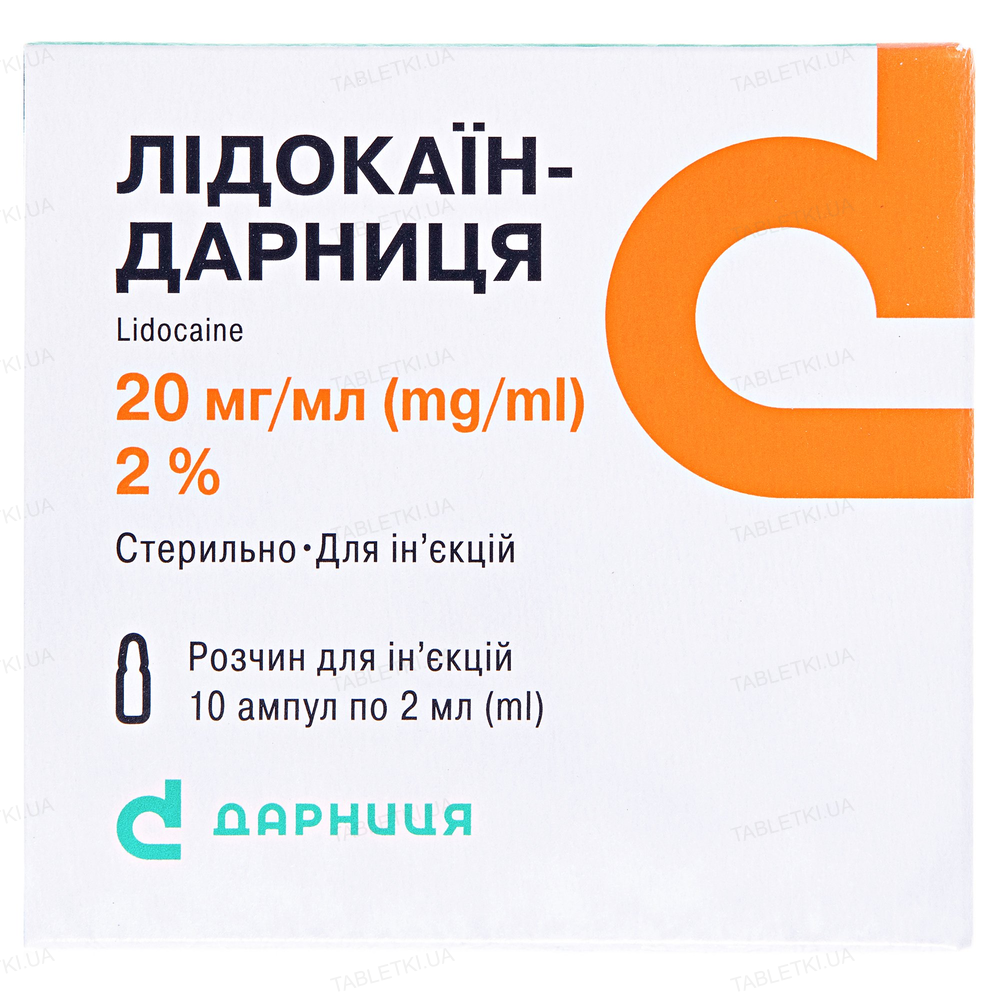
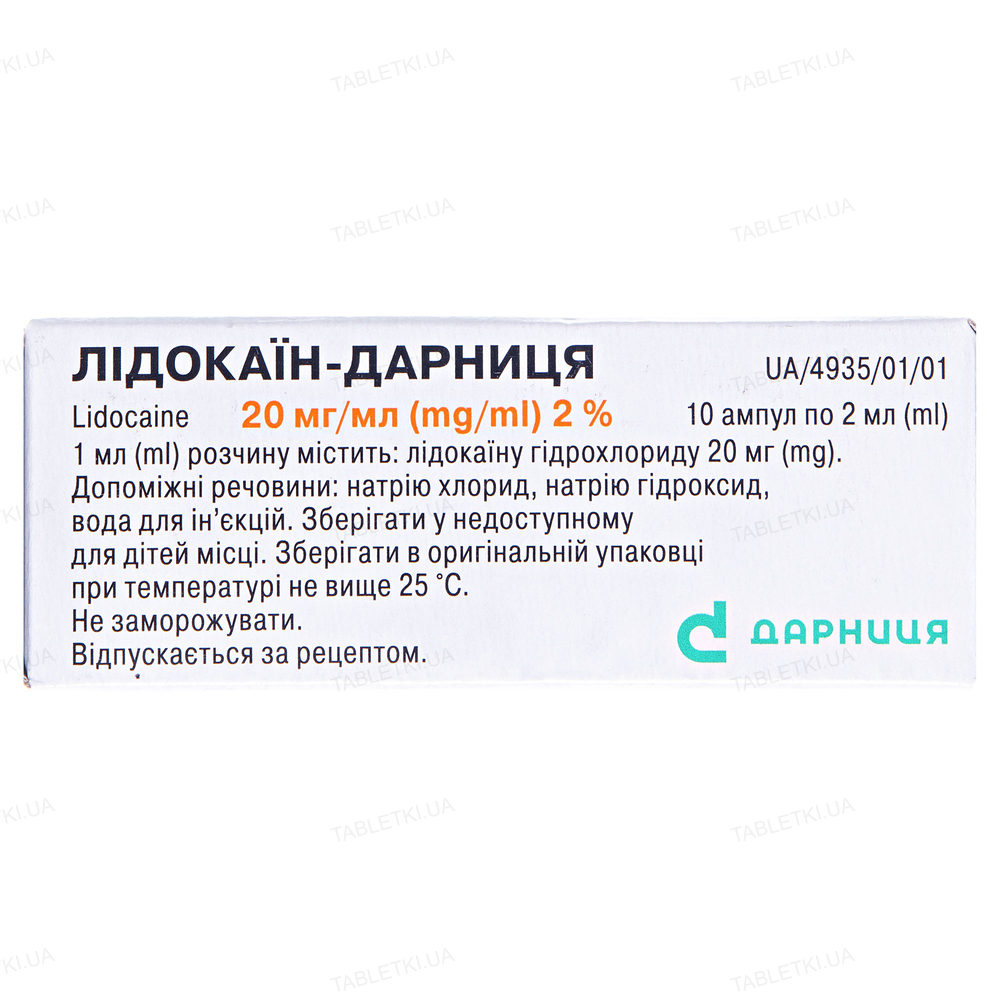
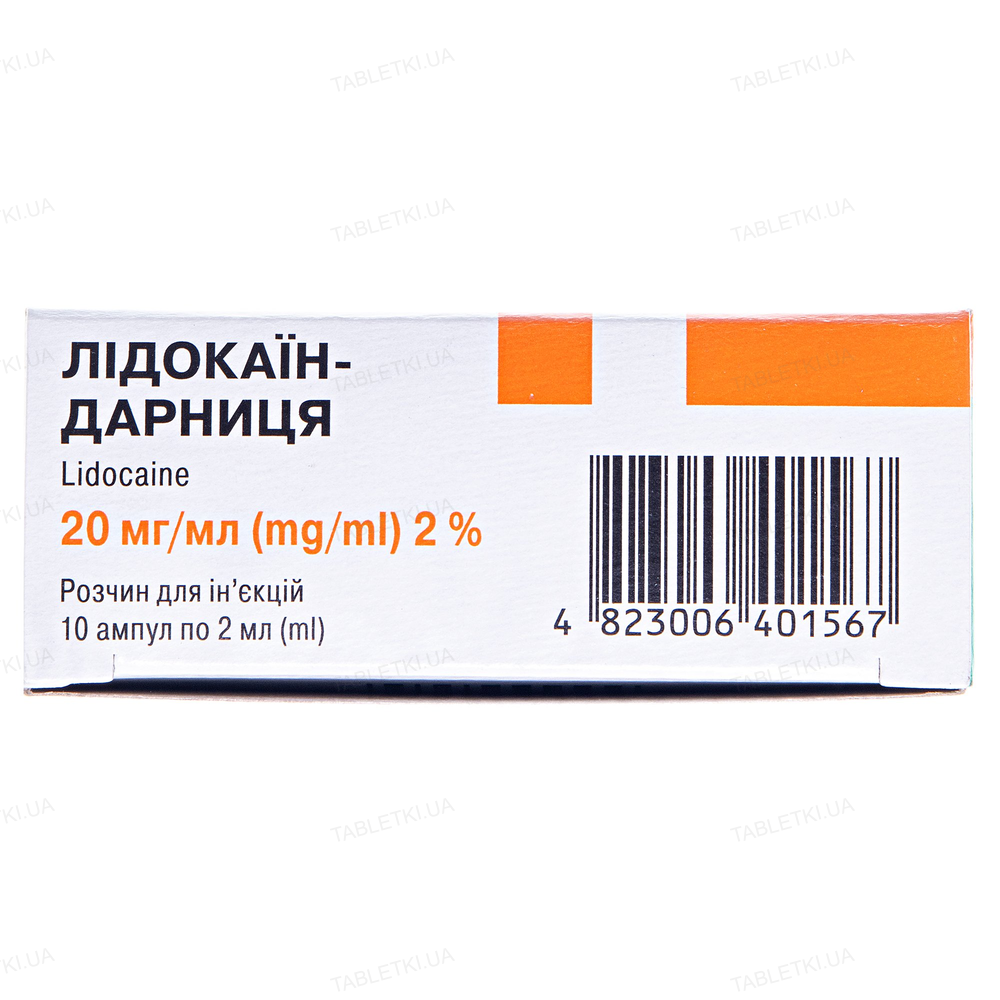
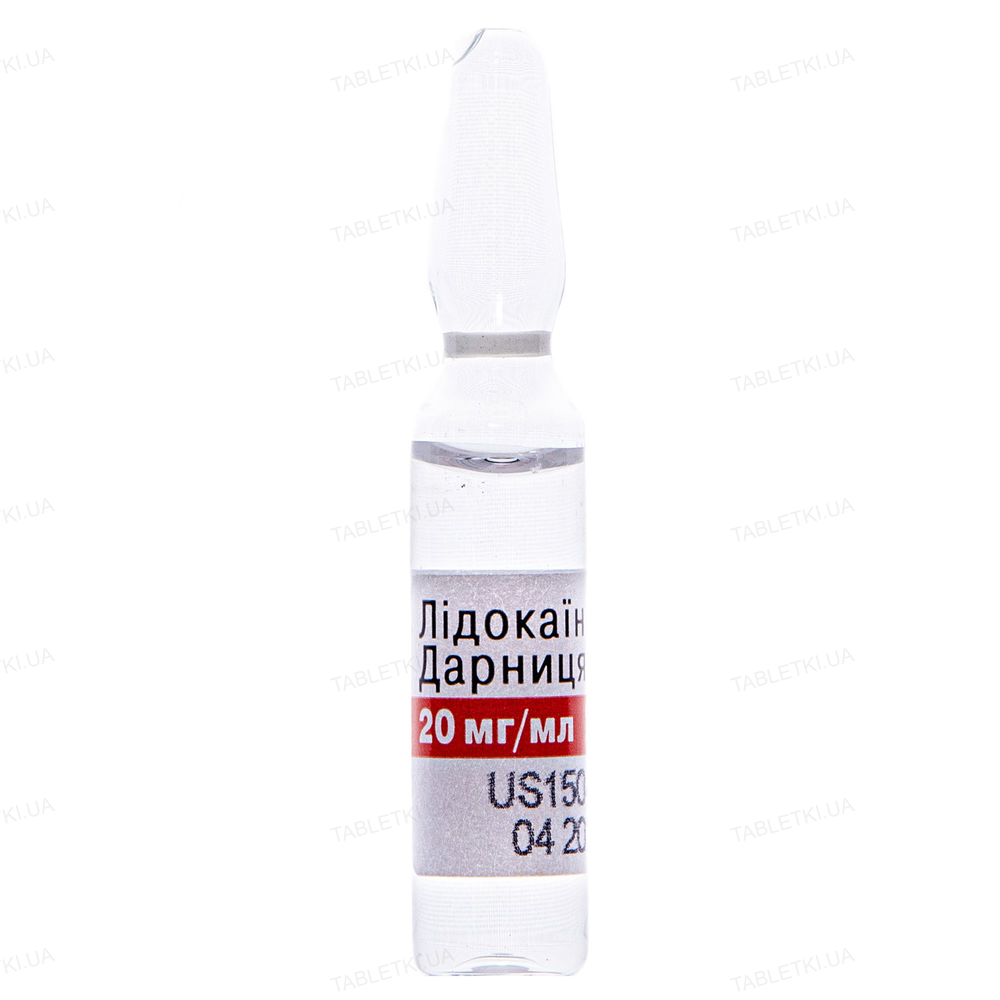
Lidocaine-Darnitsa Solution for Injection, 20 mg/mL, 2 mL, No. 10 (5 x 2) in ampoules
Ingredients
Active ingredient: lidocaine;
1 mL of solution contains 20 mg of lidocaine hydrochloride;
Excipients: sodium chloride, sodium hydroxide, water for injection.
Dosage Form
Solution for injection.
Main physical and chemical properties: a clear, colorless, or slightly tinted liquid.
Pharmacotherapeutic group
Local anesthetics. Lidocaine. ATC code N01B B02.
Pharmacological properties
Pharmacodynamics.
A local anesthetic used for nerve-end, infiltration, and conduction anesthesia. The relative toxicity of lidocaine hydrochloride depends on the concentration of the solution. At low concentrations (0.5%), its toxicity is essentially no different from that of novocaine; as the concentration increases (1% and 2%), toxicity increases.
Pharmacokinetics.
When applied topically to mucous membranes, lidocaine is absorbed to varying degrees depending on the dose and site of application (maximum concentration is reached in 10–20 minutes); absorption is influenced by the rate of perfusion through the mucous membrane. When administered intramuscularly, maximum concentration is reached in 5–15 minutes. Plasma protein binding is 60–80% (depending on the dose).
It easily crosses histohematological barriers, including the blood-brain barrier. It first penetrates well-perfused tissues (heart, lungs, brain, liver, spleen), then adipose and muscle tissues. It crosses the placenta; 40–55% of the drug concentration administered to the mother is detected in the newborn’s body.
It is metabolized 90% in the liver via oxidative N-demethylation to form active metabolites: monoethylglycylsilidine and glycylsilidine, which have half-lives of 2 and 10 hours, respectively. It exhibits a “first-pass” effect.
In cases of impaired liver function, the half-life may increase more than twofold. Between 5% and 20% is excreted unchanged in the urine.
Indications
Local anesthesia (terminal, infiltration, conduction) in surgery, ophthalmology, dentistry, and otolaryngology; blockade of peripheral nerves and nerve plexuses for various pain syndromes.
Contraindications
Individual hypersensitivity to the drug’s components, as well as to other amide-type local anesthetics; a history of epileptiform seizures associated with the administration of lidocaine hydrochloride; Second- and third-degree AV block, complete transverse heart block; sick sinus syndrome; Wolff-Parkinson-White syndrome, Adams-Stokes syndrome; severe forms of heart failure (Classes II–III); severe arterial hypotension; marked bradycardia; cardiogenic shock; myasthenia gravis; hypovolemia; porphyria; severe renal and/or hepatic insufficiency; retrobulbar administration to patients with glaucoma; coagulation disorders, anticoagulant therapy; infections at the injection site; non-contact patients.
Drug Interactions and Other Interactions
Chlorpromazine, pethidine, bupivacaine, quinidine, disopyramide, amitriptyline, imipramine, nortriptyline—when used concomitantly with lidocaine, the plasma concentration of lidocaine decreases.
Antiarrhythmic drugs (including amiodarone, verapamil, quinidine, disopyramide, Aymalin)—when used in combination with lidocaine, the cardiodepressive effect is enhanced; in particular, QT interval prolongation occurs, and, in rare cases, AV block or ventricular fibrillation may develop. Concomitant use with amiodarone may lead to the development of Sud.
Procainamide—when used in combination with lidocaine, delirium and hallucinations may occur.
Novocaine, novocaineamide—when used in combination with lidocaine, central nervous system stimulation and hallucinations may occur.
Curare-like agents—when taken together with lidocaine, muscle relaxation is enhanced (paralysis of the respiratory muscles is possible).
Ethanol—when used in combination with lidocaine, it enhances the latter’s respiratory depressant effect.
Vasoconstrictors (epinephrine, methoxamine, phenylephrine)—when used in combination with lidocaine, they slow the absorption of lidocaine and prolong its duration of action.
Cimetidine—when used concomitantly, reduces the hepatic clearance of lidocaine (decreased metabolism due to inhibition of microsomal oxidation) and increases its concentration and the risk of toxic effects.
Guanadrel, guanethidine, mecamylamine, trimetaphan—when used in combination with lidocaine for spinal and epidural anesthesia, they increase the risk of severe hypotension and bradycardia.
β-adrenergic blockers—when used concomitantly, they slow the metabolism of lidocaine in the liver, potentiate the effects of lidocaine (including toxic effects), and increase the risk of bradycardia and arterial hypotension. When β-blockers and lidocaine are used concomitantly, the dose of lidocaine must be reduced.
Cardiac glycosides—when used concomitantly with lidocaine, the cardiotonic effect of cardiac glycosides is attenuated.
Digitalis glycosides—in cases of digitalis intoxication, lidocaine may exacerbate the severity of AV block.
Hypnotics or sedatives—when used concomitantly with lidocaine, the depressant effect of hypnotics and sedatives on the central nervous system may be potentiated.
Opioid analgesics (morphine)—when used concomitantly with lidocaine, the analgesic effect of opioid analgesics is enhanced, but respiratory depression is also increased.
Monoamine oxidase inhibitors (furazolidone, procarbazine, selegiline)—when used in combination with lidocaine, the risk of developing arterial hypotension increases, and the local anesthetic effect of lidocaine is prolonged. Lidocaine should not be administered parenterally during treatment with monoamine oxidase inhibitors.
Anticoagulants (including ardeparine, daltaparin, danaparoid, enoxaparin, heparin, warfarin)—when used in combination with lidocaine, they increase the risk of bleeding.
Anesthetics—when used in combination with lidocaine, the latter enhances the depressant effect of anesthetics on the respiratory center (hexobarbital, sodium thiopental administered intravenously).
Polymyxin B—when used in combination with lidocaine, monitoring of respiratory function is necessary.
Rifampicin—when used in combination with lidocaine, the concentration of lidocaine in the blood may decrease.
Propafenone—concomitant use with lidocaine may increase the duration and severity of central nervous system side effects.
Prenylamine—when used in combination with lidocaine, the risk of developing “pirouette”-type ventricular arrhythmias increases.
Anticonvulsants, barbiturates (phenytoin)—when taken together with lidocaine, lidocaine metabolism in the liver may be accelerated, blood concentrations may decrease, and the cardiodepressive effect may be enhanced.
Isadrine, glucagon—when used in combination with lidocaine, the clearance of lidocaine increases.
Norepinephrine, mexiletine—when used in combination with lidocaine, the clearance of lidocaine is reduced (toxicity is increased); hepatic blood flow is reduced.
Acetazolamide, thiazide, and loop diuretics—when used concomitantly with lidocaine, they reduce the effect of lidocaine as a result of the development of hypokalemia.
Midazolam—when used in combination with lidocaine, the concentration of lidocaine in plasma increases.
Drugs that block neuromuscular transmission—when used in combination with lidocaine, the effects of these neuromuscular-blocking agents are enhanced, as they reduce the conduction of nerve impulses.
Special Considerations for Use
Lidocaine may only be prescribed by healthcare professionals.
When the injection site is treated with disinfectant solutions containing heavy metals, the risk of a local reaction, such as pain and swelling, increases.
ECG monitoring is mandatory during lidocaine administration. In cases of sinus node dysfunction, prolongation of the P-Q interval, widening of the QRS complex, or the development of a new arrhythmia, the dose should be reduced or the drug discontinued.
Before using lidocaine in patients with heart disease (hypokalemia reduces the effectiveness of lidocaine), blood potassium levels must be normalized.
When performing elective subarachnoid anesthesia, monoamine oxidase inhibitors should be discontinued at least 10 days prior to anesthesia.
When performing local anesthesia, special caution should be exercised when administering the drug to areas containing numerous blood vessels. Contact with blood vessels should be avoided during injection.
An aspiration test is recommended when administering the drug into vascularized tissues.
Before administering high doses of lidocaine, it is recommended to administer barbiturates.
Care should be taken to avoid accidental subdural or intravascular administration of the drug. Strict monitoring of the drug’s systemic toxic effects on the cardiovascular and central nervous systems is required (since the doses prescribed for epidural anesthesia are always higher than those for subdural anesthesia).
Particular caution should be exercised when administering anesthesia to the paravertebral region of the spine in patients with neurological disorders, spinal deformities, septicemia, and severe hypertension.
Lower doses of the drug should be administered to the head and neck region, including retrobulbar and dental administration, as well as for stellate ganglion blocks, as systemic toxic effects of the drug may enter the cerebral circulation via retrograde flow.
Extreme caution should be exercised when administering the drug retrobulbar, as severe side effects are possible: collapse, shortness of breath, seizures, and reversible blindness.
It should be remembered that lidocaine has a pronounced antiarrhythmic effect and may itself act as an arrhythmogenic factor. Therefore, before administering the drug, a medical history should be taken to assess for signs of arrhythmia, and the drug should be used with caution in patients with a history of arrhythmias.
Use with caution and at lower doses in patients with moderate heart failure, moderate hypotension, incomplete atrioventricular block, intraventricular conduction disturbances, moderate hepatic and renal dysfunction (creatinine clearance of at least 10 mL/min), respiratory dysfunction, epilepsy, following heart surgery, in patients with a genetic predisposition to hyperthermia, in debilitated patients, and in elderly patients.
Intramuscular administration of lidocaine may increase creatinine levels, which could lead to a misdiagnosis of acute myocardial infarction.
When performing local anesthesia on highly vascularized tissues (e.g., the neck during thyroid surgery), extreme caution should be exercised to avoid injection into blood vessels.
The safety of amide-type anesthetics is questionable in patients prone to malignant hyperthermia; therefore, their use should be avoided in such cases.
Particular caution should be exercised when using lidocaine in patients with circulatory insufficiency, hypovolemia, arterial hypotension, or hepatic and renal insufficiency.
Caution is advised in patients with central nervous system disorders who are taking medications, as sudden adverse cardiac effects may occur. During long-term use, blood electrolyte levels must be monitored. Use with caution in patients prone to seizures, in a state of shock, or experiencing hypoxia.
Pregnancy and lactation.
Use of this medication during pregnancy is contraindicated.
If use of the drug is necessary, breastfeeding should be discontinued.
Affects the ability to operate vehicles and machinery.
After taking this medication, do not engage in activities requiring rapid psychomotor reactions.
Dosage and Administration
Before using lidocaine hydrochloride, a skin test for hypersensitivity to the drug must be performed; hypersensitivity is indicated by swelling and redness at the injection site.
For local anesthesia, it is administered by injection (subcutaneously, intramuscularly) or topically to mucous membranes. Intravascular administration of the drug should be avoided.
For nerve block anesthesia (including anesthesia of the brachial and sacral plexuses), 5–10 mL of the solution (100–200 mg of the drug) is administered.
For anesthesia of the fingers, nose, and ears, 2–3 mL of the solution (40–60 mg of the drug) is administered. The maximum dose for adults when used for conduction anesthesia is 10 mL (200 mg of lidocaine hydrochloride).
For all types of injection anesthesia, lidocaine may be combined with epinephrine (1:50,000–1:100,000; prepared ex tempore by adding 1 drop of a 0.1% epinephrine solution to 5–10 mL of a 2% lidocaine solution), except in cases where the systemic effects of epinephrine are undesirable (hypersensitivity to epinephrine, hypertension, diabetes mellitus, glaucoma) or a short-term analgesic effect is required. Adrenaline slows the absorption of lidocaine and prolongs its effect.
For anesthesia in ophthalmology, instill 2 drops of the solution into the conjunctival sac 2–3 times at 30–60-second intervals immediately before an examination or surgery.
For terminal anesthesia, apply a lidocaine solution in a volume of no more than 20 mL to the mucous membranes; for adults, the dose is up to 2 mg/kg of body weight, with the duration of anesthesia being 15–30 minutes. The maximum dose of the solution for adults is 20 mL.
For children undergoing any type of peripheral anesthesia, the total dose of lidocaine hydrochloride should not exceed 3 mg/kg of body weight.
Children.
This medication is not indicated for children under 12 years of age.
Overdose
The main symptoms associated with central nervous system and cardiovascular depression include: general weakness, drowsiness, depression, dizziness, disorientation, tonic-clonic seizures, coma, tremor, visual disturbances, tinnitus, atrioventricular block, asphyxia, nausea, vomiting, euphoria, psychomotor agitation, asthenia, apnea, bradycardia, low blood pressure, and collapse. The first symptoms of overdose in healthy individuals occur when the concentration of lidocaine hydrochloride in the blood exceeds 0.006 mg/kg; seizures occur at 0.01 mg/kg.
Treatment: discontinuation of the drug, oxygen therapy, vasoconstrictors (norepinephrine, mezaton), anticonvulsants, and anticholinergic agents. The patient should be kept in a horizontal position; ensure a supply of fresh air, oxygen, and/or artificial respiration. Symptoms affecting the central nervous system should be managed with benzodiazepines or short-acting barbiturates. If an overdose occurs during anesthesia, a short-acting muscle relaxant should be used. Atropine (0.5–1 mg intravenously) is used to treat bradycardia and conduction disturbances; for arterial hypotension, sympathomimetics are used in combination with β-adrenergic receptor agonists. In the event of cardiac arrest, immediate resuscitation is indicated. Intubation and mechanical ventilation may be necessary. In the acute phase of a lidocaine overdose, dialysis is not very effective. There is no specific antidote.
Side Effects
The following adverse reactions may occur with the use of this medication:
cardiovascular disorders: decreased blood pressure, tachycardia—when a vasoconstrictor is administered, bradycardia, peripheral vasodilation, collapse, tachycardia, rapid heartbeat, chest pain, heart pain, arrhythmia, slowed cardiac conduction, complete heart block, ventricular fibrillation, cardiac arrest; very rarely—hypertension;
Central and peripheral nervous system: central nervous system stimulation (when used in high doses), anxiety, dizziness, confusion, drowsiness, sleep disturbances, headache, weakness, motor restlessness, euphoria, nystagmus, loss of consciousness, sensory disturbances, paresthesias, numbness of the tongue and lips (when used in dentistry); in patients with hypersensitivity—euphoria, tremor, trismus, muscle twitching, motor restlessness, seizures (the risk of their development increases against a background of hypercapnia and acidosis); persistent anesthesia, paresis or weakness of the lower extremities, as well as loss of sphincter control (e.g., cauda equina syndrome)—causes motor and sensory block, dysarthria, dysphagia, and coma more frequently than other local anesthetics;
Ocular effects: visual disturbances, blurred vision, diplopia, nystagmus, flashing “floaters” before the eyes, dilated pupils, photophobia, reversible blindness, conjunctivitis;
Hearing disorders: hearing impairment, tinnitus, hyperacusis;
Psychiatric disorders: anorexia, irritability, restlessness, hallucinations, depression, anxiety, sleep disturbances, agitation;
Respiratory, thoracic, and mediastinal disorders: rhinitis, shortness of breath, dyspnea, suffocation, respiratory depression, bronchospasm, respiratory muscle paralysis, respiratory paralysis (more common with subarachnoid anesthesia), respiratory arrest;
Gastrointestinal disorders: nausea, vomiting, involuntary defecation, abdominal pain;
Urinary system: involuntary urination;
Skin and subcutaneous tissue disorders: erythema, pruritus, rash, urticaria;
Reproductive system: decreased libido and/or potency;
Immune system: hypersensitivity reactions, including angioedema, generalized exfoliative dermatitis, anaphylactic shock, anaphylactic reaction; immunosuppression;
reactions at the injection site: mild burning sensation, which subsides as the anesthetic effect takes hold (within 1 minute), swelling, redness, itching, rash, thrombophlebitis, localized nerve damage at the injection site; with spinal or epidural anesthesia, pain may occur in the back, legs, partial/complete spinal block accompanied by a drop in blood pressure, bowel dysfunction, involuntary urination, impotence, loss of sensation in the perineum (the likelihood of these effects increases at higher doses or in the event of accidental administration of lidocaine into the subarachnoid space, when the dose intended for administration into the epidural space enters the subarachnoid space); In some cases, following such a procedure, the recovery of motor, sensory, and/or autonomic functions is slow (taking several months) or incomplete;
General disorders: persistent anesthesia, hypothermia, sensation of heat, cold, or numbness in the extremities, malignant hyperthermia, increased sweating, pallor of the skin, edema syndrome, weakness.
Shelf life
3 years.
Storage conditions
Store in the original packaging at a temperature not exceeding 25 °C. Do not freeze.
Keep out of reach of children.
Incompatibility
This medication should not be mixed with other medications in the same container, except for the solvents listed in the “Directions for Use and Dosage” section.
Lidocaine precipitates when mixed with amphotericin, methohexitone, or sulfadiazine. Depending on the pH of the solution, lidocaine may be incompatible with ampicillin.
Packaging
2 mL per ampoule; 5 ampoules per blister pack; 2 blister packs per package.
Conditions of Sale
By prescription only.
Manufacturer
Darnitsa Pharmaceutical Company, PJSC.
Address
Ukraine, 02093, Kyiv, 13 Boryspilskaya St.







