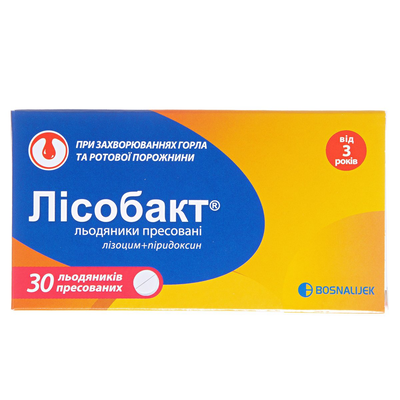
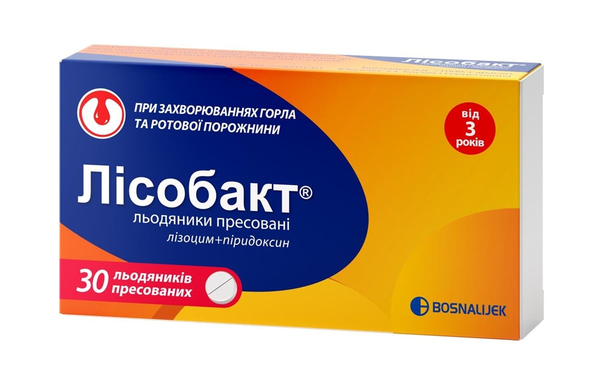
Lisobakt Lozenges, Pack No. 30 (10 x 3)
Composition
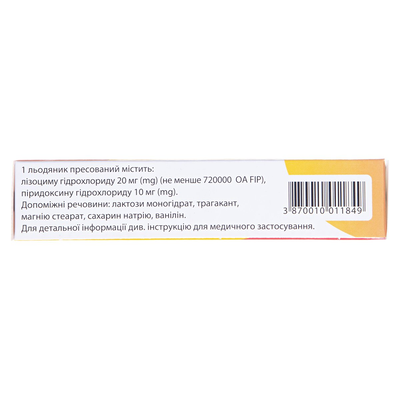
Active ingredients: Each compressed lozenge contains 20 mg of lysozyme hydrochloride (not less than 720,000 FIP units) and 10 mg of pyridoxine hydrochloride;
Inactive ingredients: lactose monohydrate, tragacanth, magnesium stearate, sodium saccharin, vanillin.
Dosage Form
Compressed lozenges.
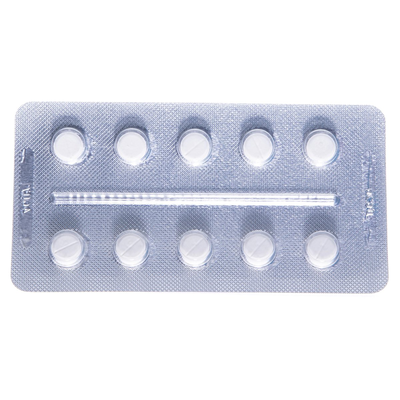
Main physical and chemical properties: round lozenges 8 mm in diameter, white or nearly white in color, with a smooth surface and a dividing line on one side.
Pharmacotherapeutic group
Preparations used for throat disorders. Antiseptics.
ATC code R02A A20.
Pharmacological properties
Pharmacodynamics.
Lysozyme is a mucopolysaccharide that is effective against Gram-positive bacteria by converting insoluble cell wall polysaccharides into soluble mucopeptides. It is also effective against Gram-negative bacteria, viruses, and fungi. Lysozyme exhibits local anti-inflammatory activity and increases the body’s nonspecific resistance. Pyridoxine has a protective effect on the oral mucosa and an anti-aphthous effect.
Pharmacokinetics.
No data available.
Indications
Adjunctive local treatment of diseases of:
- the oral mucosa, including aphthous stomatitis;
- the throat: acute tonsillitis (tonsillitis), chronic tonsillitis, pharyngitis;
- during the postoperative period (after tonsillectomy or cryodestruction of the palatine tonsils).
Contraindications
Hypersensitivity to any component of the drug, including allergy to lysozyme or egg white.
Interactions with Other Medications and Other Types of Interactions
LISOBACT® should not be used concurrently with other medications containing antiseptics, nor if other medications containing pyridoxine hydrochloride have been prescribed.
Lysozyme enhances the effectiveness of antibacterial drugs such as penicillin and chloramphenicol.
Isoniazid, penicillamine, pyrazinamide, hydralazine, immunosuppressants, and estrogens (including oral contraceptives containing estrogens) may increase the need for pyridoxine, because they act as pyridoxine antagonists or increase its renal excretion.
Pyridoxine hydrochloride enhances decarboxylation and reduces the efficacy of levodopa in the treatment of Parkinson’s disease.
Special Instructions for Use
This medication is not intended for long-term use.
To prevent disruption of the normal oral microflora, the drug should not be used for more than 5 days.
This medication contains lactose; therefore, patients with rare hereditary forms of galactose intolerance, Lapp lactase deficiency, or glucose-galactose malabsorption should not use this medication. Patients with known intolerance to certain sugars should consult a doctor before taking this medication.
If symptoms such as severe sore throat, headache, nausea, vomiting, or high fever occur, or if symptoms do not resolve within 5 days of treatment with this medication, consult a doctor.
In the case of a bacterial infection, consult a doctor regarding the appropriateness of systemic antibiotic therapy.
Long-term use of high doses of pyridoxine (more than 200 mg per day) over an extended period (from several months to a year) may cause deterioration in liver and kidney function, sensory neuropathy, which usually resolves after discontinuation of treatment. Therefore, the use of LISOBACT® is not recommended for patients with impaired liver or kidney function who are also taking other medications containing pyridoxine hydrochloride.
Since an increase in gastric acidity is possible when pyridoxine is used at a dose exceeding 30 mg/day, the drug should be used with caution in patients with gastric or duodenal ulcers.
Use during pregnancy or breastfeeding.
Pyridoxine: Adequate and well-controlled studies in pregnant women indicate no teratogenic effects or effects on fetal development.
Lysozyme: Animal studies have shown that lysozyme has no teratogenic effects. There are insufficient data on the effects of lysozyme on the fetus. Therefore, use of the drug during pregnancy is not recommended.
Due to insufficient data on the excretion of lysozyme in breast milk and the high pyridoxine content, use of this medication during breastfeeding is not recommended.
Ability to affect reaction time when operating motor vehicles or other machinery.
No effect.
Dosage and Administration
This medication is intended for adults and children 3 years of age and older.
Adults and children 12 years of age and older: 2 lozenges 3–4 times daily.
Children aged 3 to 7 years: 1 lozenge no more than 3 times a day.
Children 7 to 12 years of age: 1 lozenge no more than 4 times a day.
Slowly let the lozenges dissolve, holding the resulting solution in your mouth for a short time. Allow at least 1 hour between doses. Duration of treatment: 5 days.
Children.
Do not use this medication in children under 3 years of age.
Overdose
No clinically significant consequences are expected when LISOBACT® is used in doses significantly exceeding the recommended ones.
The drug contains pyridoxine; therefore, long-term use of pyridoxine (more than 6–12 months) in doses exceeding 200 mg may lead to peripheral sensory neuropathy, which usually resolves after discontinuation of treatment.
Side Effects
Immune system: anaphylactic shock, anaphylactic reactions, angioedema.
Skin: hives, rash, itching, photosensitivity.
Gastrointestinal system: Gastric acidity may occasionally increase.
Healthcare professionals, patients, and pharmacists are asked to report any suspected adverse reactions or lack of therapeutic effect to the Bosnalek d.d. representative office at office@bosnalijek.com.ua.
Shelf life
5 years.
Storage conditions
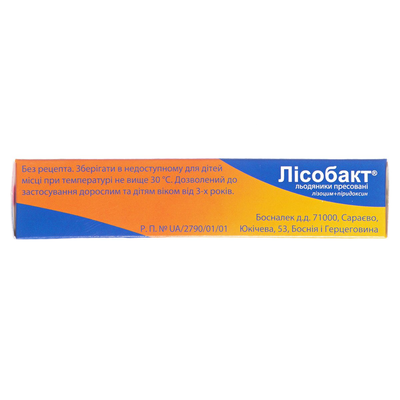
Store out of the reach of children at a temperature not exceeding 30 °C.
Packaging
10 lozenges pressed into a blister pack, No. 10 (10×1) or No. 30 (10×3) in a cardboard box.
Dispensing Category
Over-the-counter.