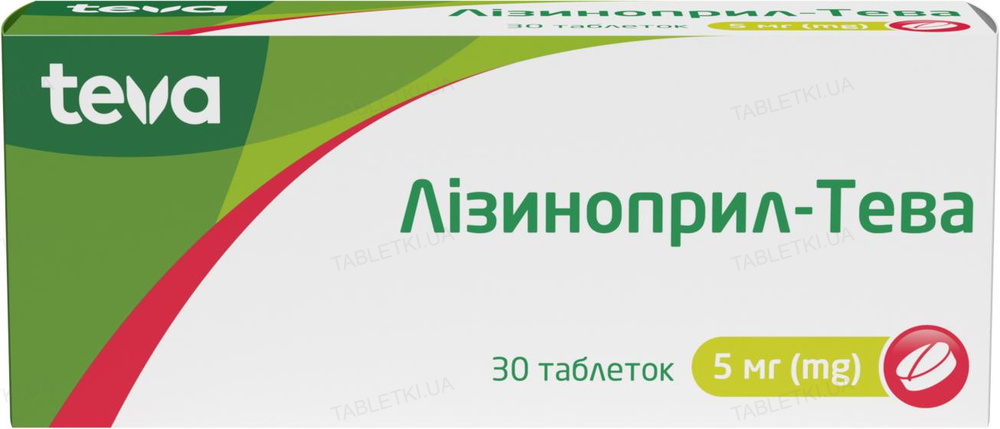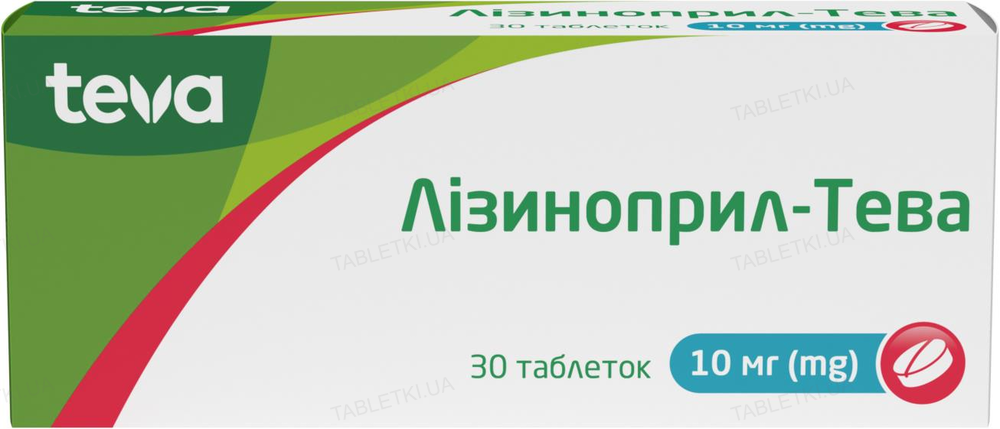
Lisinopril-Teva 10 mg tablets, No. 30 (10 x 3)
Composition
Active ingredient: lisinopril;
1 tablet contains 5 mg, 10 mg, or 20 mg of lisinopril as lisinopril dihydrate;
Excipients: mannitol (E 421), calcium hydrophosphate, pregelatinized corn starch, croscarmellose sodium, magnesium stearate; For 10 mg and 20 mg tablets: yellow iron oxide (E 172), black iron oxide (E 172), red iron oxide (E 172).
Dosage Form
Tablets.
Main physical and chemical properties:
5 mg tablets: white, round, biconvex, with a score line on one side;
10 mg tablets: light pink, unevenly colored, speckled, round, biconvex, with a break line on one side;
20 mg tablets: grayish-red, mottled, round, biconvex, with a break line on one side.
Pharmacotherapeutic group
Simple angiotensin-converting enzyme (ACE) inhibitors. ATC code C09A A03.
Pharmacological properties
Pharmacodynamics.
Lisinopril is a peptidyl dipeptidase inhibitor. It inhibits ACE, which catalyzes the conversion of angiotensin I into the vasoconstrictor peptide angiotensin II. Angiotensin II also stimulates the secretion of aldosterone by the adrenal cortex. Inhibition of ACE leads to a decrease in angiotensin II concentration, which results in reduced vasoconstrictive activity and aldosterone secretion. A decrease in aldosterone secretion may lead to an increase in serum potassium levels. Lisinopril lowers blood pressure primarily by inhibiting the renin-angiotensin-aldosterone system (RAAS). At the same time, lisinopril exerts an antihypertensive effect even in patients with low renin levels. ACE is identical to kininase II, an enzyme that promotes the breakdown of bradykinin. It has been demonstrated that the overall profile of adverse reactions in patients receiving high or low doses of lisinopril was similar in nature and frequency. Patients receiving lisinopril experienced a greater reduction in urinary albumin excretion rate compared with those receiving a calcium channel blocker, which resulted in a similar reduction in blood pressure. This suggests that lisinopril’s inhibitory effect on ACE leads to a reduction in microalbuminuria through a direct effect on renal tissue, in addition to its ability to lower blood pressure. Lisinopril therapy did not affect blood glucose control, as evidenced by its negligible effect on glycated hemoglobin (HbA1c).
Pharmacokinetics.
When taken orally, lisinopril is an active, sulfhydryl-free ACE inhibitor.
Absorption. After oral administration of lisinopril, maximum serum concentration (Cmax) is reached after 7 hours, although patients with acute myocardial infarction tend to experience a slight delay in reaching peak concentrations. As indicated by urinary excretion, the mean absorption of lisinopril is approximately 25%, with interpatient variability ranging from 6% to 60% within the studied dose range (5–80 mg). In patients with heart failure, absolute bioavailability is reduced by approximately 16%. Food intake does not affect the absorption of the drug.
Distribution. Lisinopril does not bind to serum proteins other than circulating ACE. Studies in rats have shown that lisinopril crosses the blood-brain barrier to a limited extent.
Excretion. Lisinopril is not metabolized and is excreted unchanged in the urine. The half-life in patients receiving multiple doses is 12.6 hours. The clearance of lisinopril in healthy volunteers is approximately 50 mL/min. The decline in serum concentrations exhibits a prolonged terminal phase that is not associated with drug accumulation. This terminal phase likely indicates saturated binding to ACE and is not dose-proportional.
Patients with hepatic impairment. In patients with liver cirrhosis, hepatic insufficiency leads to a decrease in the absorption of lisinopril (by approximately 30%), but due to reduced clearance, the effect is increased (by approximately 50%) compared with healthy volunteers.
Renal impairment. Renal insufficiency reduces the renal elimination of lisinopril, but this reduction is clinically significant only when the glomerular filtration rate (GFR) is below 30 mL/min. In patients with mild to moderate renal insufficiency (creatinine clearance 30–80 mL/min), the mean area under the pharmacokinetic “concentration-time” (AUC) increases by only 13%, whereas in severe renal insufficiency (creatinine clearance 5–30 mL/min), the mean AUC increases 4.5-fold. Lisinopril can be removed by dialysis. During 4 hours of hemodialysis, the plasma concentration of lisinopril decreases by an average of 60% at a dialysis clearance of 40–55 mL/min.
Heart failure. Patients with heart failure experience a greater effect of lisinopril compared to healthy volunteers (an average increase in AUC of 125%); but, as evidenced by the amount of lisinopril detected in urine, absorption is reduced by approximately 16% compared with healthy volunteers.
Elderly patients. Elderly patients have higher blood levels and a higher AUC (an increase of approximately 60%) compared with younger patients.
Indications
Hypertension.
Heart failure (symptomatic treatment).
Acute myocardial infarction (short-term treatment (6 weeks) of hemodynamically stable patients no later than 24 hours after an acute myocardial infarction).
Renal complications of diabetes mellitus (treatment of kidney disease in patients with hypertension and type 2 diabetes mellitus and early-stage nephropathy).
Contraindications
- Hypersensitivity to lisinopril, excipients, or other ACE inhibitors.
- History of angioedema associated with ACE inhibitors.
- Concomitant use with sacubitril/valsartan. Treatment with Lisinopril-Teva may be initiated only 36 hours after the last dose of sacubitril/valsartan (see the sections “Interactions with Other Medications and Other Interactions” and “Special Instructions and Precautions for Use”).
- Hereditary or idiopathic angioedema.
- Second and third trimesters of pregnancy (see the sections “Special Instructions and Precautions for Use” and “Use During Pregnancy or Breastfeeding”).
- Concomitant use with aliskiren-containing medications in patients with diabetes mellitus or renal insufficiency (eGFR <60 mL/min/1.73 m²).
Drug Interactions and Other Interactions
Antihypertensive agents. Concomitant use with other antihypertensive drugs (e.g., nitroglycerin, other nitrates, or other vasodilators) may further lower blood pressure.
Data from clinical studies have shown that dual RAAS blockade with the concurrent use of ACE inhibitors, angiotensin II receptor blockers, or aliskiren is associated with a higher incidence of adverse reactions, such as hypotension, hyperkalemia, and renal impairment (including acute renal failure) compared with monotherapy.
Drugs that increase the risk of angioedema. Concomitant use of ACE inhibitors with sacubitril/valsartan is contraindicated due to an increased risk of angioedema (see the “Contraindications” and “Special Warnings and Precautions for Use” sections). Concomitant use of ACE inhibitors with mammalian target of rapamycin (mTOR) inhibitors (e.g.,temsirolimus, sirolimus, everolimus) or neutral endopeptidase (NEP) inhibitors (e.g.,racecadotril), vildagliptin, or tissue plasminogen activator may lead to an increased risk of angioedema (see the section “Special Warnings and Precautions for Use”).
Diuretics. The antihypertensive effect is usually enhanced when diuretics are prescribed to patients in addition to lisinopril therapy. In patients already receiving diuretics, especially those who have recently started treatment, an excessive decrease in blood pressure may occasionally occur after the addition of lisinopril. The likelihood of developing symptomatic hypotension with lisinopril may be reduced if diuretic therapy is discontinued prior to initiating lisinopril therapy.
Potassium supplements, potassium-sparing diuretics, potassium-containing salt substitutes, and other medications that may increase serum potassium levels. Although serum potassium levels usually remain within the normal range, hyperkalemia may occur in some patients taking this medication. The use of potassium-sparing diuretics (such as spironolactone, triamterene, or amiloride), potassium-containing dietary supplements, or potassium-containing salt substitutes may lead to a significant increase in serum potassium levels, especially in patients with impaired renal function. Caution should also be exercised when lisinopril is used concomitantly with other drugs that increase serum potassium levels, such as trimethoprim and co-trimoxazole (trimethoprim/sulfamethoxazole), since trimethoprim is known to act as a potassium-sparing diuretic, similar to amiloride. Therefore, the combination of lisinopril with the aforementioned medications is not recommended. If concomitant use of such drugs is indicated, treatment should be administered with caution and serum potassium levels should be monitored frequently. If lisinopril is used concomitantly with potassium-wasting diuretics, the hypokalemia caused by the diuretic may be attenuated.
Cyclosporine. Concomitant use of ACE inhibitors with cyclosporine may cause hyperkalemia. Monitoring of serum potassium levels is recommended.
Heparin. Concomitant use of ACE inhibitors with heparin may cause hyperkalemia. Monitoring of serum potassium levels is recommended.
Lithium preparations. Reversible increases in serum lithium concentrations and toxic reactions have been reported with the concomitant use of lithium and ACE inhibitors. Concomitant use of thiazide diuretics may increase the risk of lithium toxicity and exacerbate pre-existing intoxication. Concomitant use of lisinopril and lithium is not recommended; however, if necessary, serum lithium levels should be carefully monitored.
Nonsteroidal anti-inflammatory drugs (NSAIDs), including acetylsalicylic acid at a dose of ≥3 g/day. Concomitant use of ACE inhibitors with NSAIDs (acetylsalicylic acid at doses that produce an anti-inflammatory effect, cyclooxygenase-2 (COX-2) inhibitors, and nonselective NSAIDs) may reduce the antihypertensive effect. Concomitant use of NSAIDs and ACE inhibitors may lead to an increased risk of renal failure, including possible acute renal failure, and an increase in serum potassium levels, especially in patients with pre-existing renal impairment. These effects are generally reversible. The combination should be prescribed with caution, especially in elderly patients. Patients should receive adequate fluid intake, and attention should be paid to monitoring renal function after initiation of concomitant therapy and periodically thereafter.
Gold preparations. Nitrite reactions (symptoms of vasodilation, including flushing, nausea, dizziness, and hypotension, which can be very severe) following injections of gold preparations (e.g., sodium aurothiomate) have been observed more frequently in patients receiving ACE inhibitors.
Tricyclic antidepressants/neuroleptics/anesthetics. Concomitant use of certain analgesics, tricyclic antidepressants, and neuroleptics with ACE inhibitors may lead to a further decrease in blood pressure.
Sympathomimetic agents. Sympathomimetics may reduce the antihypertensive effect of ACE inhibitors.
Antidiabetic drugs. Concomitant use of ACE inhibitors and antidiabetic drugs (insulin, oral hypoglycemic agents) may enhance the reduction in blood glucose levels, increasing the risk of hypoglycemia. This effect usually occurs during the first few weeks of combination therapy and in patients with renal insufficiency.
Acetylsalicylic acid, thrombolytic agents, β-blockers, nitrates. Lisinopril may be used concomitantly with acetylsalicylic acid (at cardiac doses), thrombolytic agents, β-blockers, and/or nitrates.
Special Considerations
Symptomatic hypotension. Symptomatic hypotension has rarely been observed in patients with uncomplicated hypertension. In patients with hypertension receiving lisinopril, symptomatic hypotension is more likely to occur in the presence of fluid and electrolyte imbalances, such as those caused by diuretic therapy, dialysis, salt restriction, diarrhea, or vomiting, or in cases of severe renin-dependent hypertension. In patients with heart failure (renal) no symptomatic hypotension was observed. The likelihood of hypotension is higher in patients with severe heart failure who are taking high doses of loop diuretics, have hyponatremia, or have functional renal insufficiency. In patients at increased risk of symptomatic hypotension, the initiation of therapy and subsequent dose increases should be carefully monitored. The same precautions apply to patients with ischemic heart disease or cerebrovascular disorders, in whom an excessive decrease in blood pressure may lead to myocardial infarction or stroke.
If hypotension occurs, the patient should be placed in a supine position; if necessary, an intravenous infusion of normal saline should be administered. Transient hypotension is not a contraindication to continued use of the drug; it can usually be taken without complications once blood pressure has risen following an increase in fluid volume in the body.
In some patients with heart failure who have normal or low blood pressure, a further decrease in systemic blood pressure may occur during treatment with lisinopril. This effect is predictable and usually does not require discontinuation of lisinopril therapy. If hypotension becomes symptomatic, a dose reduction or discontinuation of lisinopril may be necessary.
Hypotension in Acute Myocardial Infarction. In acute myocardial infarction, treatment with lisinopril should not be initiated if there is a risk of further serious hemodynamic disturbances following treatment with a vasodilator. This applies to patients with a systolic blood pressure of 100 mmHg or lower and to patients who develop cardiogenic shock. During the first 3 days after a myocardial infarction, the dose should be reduced if the systolic blood pressure is 120 mm Hg or lower. If systolic blood pressure is 100 mm Hg or lower, maintenance doses should be reduced to 5 mg or, temporarily, to 2.5 mg. If prolonged hypotension occurs after taking lisinopril (systolic blood pressure remains below 90 mm Hg for more than 1 hour), treatment with lisinopril should be discontinued.
Aortic and mitral valve stenosis/hypertrophic cardiomyopathy. As with other ACE inhibitors, caution should be exercised when using lisinopril in patients with mitral stenosis or left ventricular outflow tract obstruction (aortic stenosis or hypertrophic cardiomyopathy).
Renal impairment. For patients with renal impairment (creatinine clearance <80 mL/min), the initial dose of lisinopril should be adjusted based on creatinine clearance (see the table in the “Dosage and Administration” section), and then based on the patient’s response to treatment. Creatinine and potassium levels should be monitored regularly in these patients.
In patients with heart failure, hypotension occurring at the start of treatment with ACE inhibitors may lead to impaired renal function. In such cases, acute renal failure, usually reversible, has been reported.
In some patients with bilateral renal artery stenosis or stenosis of the renal artery of a single kidney, ACE inhibitors increase blood urea and serum creatinine levels; these effects usually resolve after discontinuation of the medication. The likelihood of such events is particularly high in patients with renal insufficiency. The presence of renovascular hypertension increases the risk of severe hypotension and renal failure. Treatment of these patients should be initiated under medical supervision, starting with low doses and carefully titrating them. Since diuretics may exacerbate the clinical course described above, they should be discontinued during the first few weeks of treatment with lisinopril, and renal function should be closely monitored.
In some patients with hypertension without obvious renal vascular disease, the use of lisinopril—especially when taken with diuretics—causes an increase in blood urea and serum creatinine levels; these changes are usually minor and temporary. They are more likely to occur in patients with impaired renal function. In such cases, a dose reduction and/or discontinuation of diuretics and/or lisinopril may be necessary.
In cases of acute myocardial infarction, lisinopril should not be initiated in patients with impaired renal function (serum creatinine >177 μmol/L and/or proteinuria >500 mg/day). If renal failure develops during treatment with lisinopril (serum creatinine >265 μmol/L or doubles compared to baseline), discontinuation should be considered.
Hypersensitivity/Angioedema. Angioedema of the face, extremities, lips, tongue, glottis, and/or larynx has rarely been reported in patients receiving ACE inhibitors, including lisinopril. Angioedema may occur at any time during treatment. In such cases, the drug should be discontinued immediately, appropriate therapy initiated, and the patient monitored until symptoms have completely resolved. Even in cases where When the edema is confined to the tongue and does not lead to respiratory failure, the patient may require prolonged monitoring, as antihistamine and corticosteroid therapy may be insufficient.
Deaths due to angioedema of the larynx or tongue have been reported very rarely. If the swelling spreads to the tongue, glottis, or larynx, obstructive respiratory distress may develop, especially in patients who have previously undergone airway surgery. In such cases, emergency treatment should be initiated immediately, which may include, among other measures, epinephrine and/or airway management. The patient should remain under close observation until symptoms have completely and permanently resolved.
ACE inhibitors cause angioedema in Black patients more frequently than in other patients.
Patients with a history of angioedema not related to the use of an ACE inhibitor may be at increased risk of angioedema in response to treatment with this class of drugs.
Concomitant use of ACE inhibitors with sacubitril/valsartan is contraindicated due to an increased risk of angioedema. Treatment with sacubitril/valsartan may be initiated only 36 hours after the last dose of lisinopril. Treatment with lisinopril may be initiated no earlier than 36 hours after the last dose of sacubitril/valsartan (see the “Contraindications” and “Drug Interactions and Other Interactions” sections).
Concomitant use of ACE inhibitors with racecadotril, mTOR inhibitors (e.g., sirolimus, everolimus, temsirolimus), and vildagliptin may increase the risk of angioedema (e.g., swelling of the airways or tongue, with or without respiratory failure) (see the “Interactions with Other Medications and Other Forms of Interactions” section). Caution should be exercised when initiating treatment with racecadotril, mTOR inhibitors (e.g., sirolimus, everolimus, temsirolimus), and vildagliptin in patients already taking an ACE inhibitor.
Anaphylactoid reactions in patients undergoing hemodialysis. Anaphylactoid reactions have been reported in patients undergoing hemodialysis with high-flux membranes (e.g., AN69) who were simultaneously receiving an ACE inhibitor. These patients should be advised to switch to a different type of dialysis membrane or to use an antihypertensive drug from a different class.
Anaphylactoid reactions occurring during low-density lipoprotein (LDL) apheresis. Rarely, life-threatening anaphylactoid reactions have been observed in patients taking ACE inhibitors during LDL apheresis with dextran sulfate. These reactions can be avoided by temporarily discontinuing ACE inhibitor therapy before each apheresis session.
Desensitization. Patients taking ACE inhibitors develop persistent anaphylactoid reactions during desensitization therapy (e.g., for hymenoptera venom). These reactions were successfully avoided in these patients by temporarily discontinuing ACE inhibitors, but they recurred following inadvertent re-administration of the drug.
Hepatic failure. Very rarely, ACE inhibitors have been associated with a syndrome that begins with cholestatic jaundice and progresses to fulminant necrosis and (sometimes) death. The mechanism of this syndrome is unknown. If jaundice develops or a marked elevation in liver enzymes is observed in patients taking lisinopril, lisinopril should be discontinued and appropriate medical care provided.
Neutropenia/agranulocytosis. Cases of neutropenia/agranulocytosis, thrombocytopenia, and anemia have been reported in patients receiving ACE inhibitors. In patients with normal renal function and in the absence of other complicating factors, neutropenia is rare. Neutropenia and agranulocytosis are reversible upon discontinuation of the ACE inhibitor. Extreme caution should be exercised when prescribing lisinopril to patients with collagenosis, as well as when prescribing immunosuppressive therapy, during treatment with allopurinol or procainamide, or a combination of these complicating factors, especially in the presence of impaired renal function. Some of these patients develop severe infections that do not always respond to intensive antibiotic therapy. When using this medication in these patients, periodic monitoring of white blood cell count is recommended, and patients should be advised to report any signs of infection.
Dual RAAS blockade. It has been reported that the concomitant use of ACE inhibitors, angiotensin II receptor blockers, or aliskiren increases the risk of hypotension, hyperkalemia, and renal dysfunction (including acute renal failure). Therefore, dual RAAS blockade through the simultaneous use of ACE inhibitors, angiotensin II receptor blockers, or aliskiren is not recommended.
If dual blockade therapy is absolutely necessary, it should be administered under the supervision of a specialist, and renal function, electrolyte levels, and blood pressure should be monitored regularly. The concurrent use of ACE inhibitors and angiotensin II receptor blockers is not recommended for patients with diabetic nephropathy.
Race. ACE inhibitors cause angioedema in Black patients more frequently than in other patients. Like other ACE inhibitors, lisinopril may be less effective in lowering blood pressure in Black patients compared to other patients, possibly due to a higher prevalence of low-renin hypertension among Black patients.
Cough. Cough has been reported with ACE inhibitors. The cough is characterized as nonproductive, persistent, and resolves after discontinuation of therapy. When performing a differential diagnosis of cough, it should be kept in mind that the onset of cough may be caused by treatment with ACE inhibitors.
Surgery/Anesthesia. In patients who have undergone major surgery or anesthesia with agents that induce hypotension, lisinopril may block the formation of angiotensin II, which is secondary to compensatory renin release. If hypotension occurs due to this mechanism, it can be corrected by increasing circulating blood volume.
Hyperkalemia. ACE inhibitors may cause hyperkalemia because they inhibit the release of aldosterone. This effect is usually mild in patients with normal renal function. However, in patients with impaired renal function, diabetes mellitus, and/or those taking dietary supplements containing potassium (including salt substitutes), potassium-sparing diuretics (e.g., spironolactone, triamterene, amiloride), other medications that increase serum potassium levels (e.g., heparin, trimethoprim, or co-trimoxazole, also known as trimethoprim/sulfamethoxazole), and especially aldosterone antagonists or angiotensin receptor blockers, hyperkalemia may occur. Caution should be exercised when using potassium-sparing diuretics and angiotensin receptor blockers in patients taking ACE inhibitors. In such patients, serum potassium levels and renal function should be monitored (see the section “Interactions with Other Medications and Other Interactions”).
Patients with diabetes mellitus. In patients with diabetes mellitus taking oral antidiabetic agents or insulin, careful glycemic control should be maintained during the first month of therapy with ACE inhibitors.
Lithium. As a general rule, the concomitant use of lithium and lisinopril is not recommended.
Pregnancy. Therapy with ACE inhibitors should not be initiated during pregnancy (see the sections “Contraindications” and “Use During Pregnancy or Lactation”).
Excipients
Sodium. This medication contains less than 1 mmol of sodium (23 mg) per tablet, i.e., it is essentially sodium-free.
Pregnancy and lactation.
Pregnancy. The use of ACE inhibitors is not recommended during the first trimester of pregnancy (see the “Special Warnings and Precautions for Use” section). The use of ACE inhibitors is contraindicated during the second and third trimesters of pregnancy (see the sections “Contraindications” and “Special Warnings and Precautions for Use”).
Epidemiological evidence regarding the risk of teratogenicity following exposure to ACE inhibitors during the first trimester of pregnancy is inconclusive; however, even a slight increase in risk cannot be ruled out. If continued treatment with ACE inhibitors is not considered essential, patients planning a pregnancy should be switched to alternative antihypertensive agents with a known safety profile for use during pregnancy. If pregnancy is confirmed, treatment with ACE inhibitors should be discontinued immediately and, if necessary, alternative treatment should be initiated. It is known that exposure to ACE inhibitors during the second and third trimesters of pregnancy can cause fetal toxicity (decreased renal function, oligohydramnios, delayed ossification of the skull) and neonatal toxicity (renal failure, hypotension, hyperkalemia). If ACE inhibitors are used during the second trimester of pregnancy, it is recommended to monitor renal function and skull ossification via ultrasound. Infants whose mothers took ACE inhibitors should be closely monitored for hypotension.
Breastfeeding. Since there is no information on the safety of lisinopril use during breastfeeding, the use of lisinopril while breastfeeding is not recommended. During this period, it is advisable to use an alternative treatment with a better-understood safety profile, especially if the infant is a newborn or a preterm infant.
Effects on the ability to drive and operate machinery.
When operating vehicles or other machinery, keep in mind that dizziness or fatigue may occasionally occur.
Dosage and Administration
Lisinopril should be taken orally once daily. Like other once-daily medications, lisinopril should be taken at approximately the same time each day. Food does not affect the absorption of lisinopril tablets. The dose should be determined individually based on the patient’s clinical data and blood pressure readings.
Hypertension
Lisinopril may be used either as monotherapy or in combination with other classes of antihypertensive medications.
Starting Dose
The recommended starting dose for patients with hypertension is usually 10 mg. In patients with highly active RAAS (including renovascular hypertension, increased excretion of salt (sodium chloride) from the body and/or a decrease in interstitial fluid volume, heart failure, or severe hypertension), an excessive decrease in blood pressure may occur after the initial dose. For such patients, the recommended initial dose is 2.5–5 mg, and treatment should be initiated under direct medical supervision. A reduced initial dose is also recommended in cases of renal insufficiency (see table below).
Dose
The usual effective maintenance dose is 20 mg once daily. If this dose does not produce a sufficient therapeutic effect within 2–4 weeks, it may be increased. The maximum dose used in long-term controlled clinical trials was 80 mg per day.
Patients taking diuretics
Symptomatic hypotension may occur after initiation of treatment with lisinopril. This is more likely in patients taking diuretics during treatment with lisinopril. Therefore, such patients are advised to use the drug with caution due to the potential for increased excretion of salt (sodium chloride) from the body and/or a reduction in interstitial fluid volume. If possible, diuretics should be discontinued 2–3 days before starting lisinopril therapy. For patients with hypertension who cannot discontinue diuretics, lisinopril therapy should be initiated at a starting dose of 5 mg. Renal function and serum potassium levels should be monitored. Subsequent doses of lisinopril should be adjusted according to the blood pressure response. If necessary, diuretic therapy may be resumed.
Dose Adjustment for Patients with Impaired Renal Function
Dosage for patients with impaired renal function should be based on creatinine clearance, as shown in the table below.
Dosage Adjustment for Patients with Impaired Renal Function
| Creatinine Clearance (mL/min) | Initial dose (mg/day) |
| Less than 10 mL/min (including patients on dialysis) | 2.5 mg* |
| 10–30 mL/min | 2.5–5 mg |
| 31–80 mL/min | 5–10 mg |
* The dosage and/or frequency of administration should be determined based on blood pressure readings.
The dose may be gradually increased until blood pressure is controlled or until a maximum dose of 40 mg per day is reached.
Use in children with hypertension aged 6 to 16 years
The recommended starting dose is 2.5 mg/day for patients weighing 20 to <50 kg and 5 mg/day for patients weighing ≥50 kg. The dose should be individually adjusted up to a maximum of 20 mg/day for patients weighing 20 to <50 kg and up to 40 mg/day for patients weighing ≥50 kg. Doses exceeding 0.61 mg/kg (or more than 40 mg) have not been studied in children.
Children with impaired renal function should be given a lower initial dose or have their dosing interval extended.
Heart Failure
Patients with heart failure should take lisinopril as adjunctive therapy to diuretics, digitalis preparations, or β-blockers. Treatment with lisinopril may be initiated at a dose of 2.5 mg once daily; the drug should be taken under medical supervision to monitor its initial effect on blood pressure.
The dose of lisinopril should be increased:
- by no more than 10 mg at a time;
- the intervals between dose increases should be at least 2 weeks;
- up to the maximum dose tolerated by the patient—up to 35 mg once daily.
Dosage selection should be based on each individual patient’s clinical response. Patients at high risk for symptomatic hypotension, such as patients with increased salt (sodium chloride) excretion, with or without hyponatremia, patients with hypovolemia, or patients undergoing intensive diuretic therapy, should correct these conditions before starting lisinopril therapy, if possible. Renal function and serum potassium levels should be monitored.
Acute myocardial infarction
Patients should receive, as appropriate, standard recommended treatments, such as thrombolytic therapy, acetylsalicylic acid, and β-blockers. Intravenous or transdermal nitroglycerin may be used in conjunction with lisinopril.
Initial dose (first 3 days after a heart attack)
Treatment with lisinopril may be initiated within the first 24 hours after the onset of symptoms. Treatment should not be initiated if the systolic blood pressure is less than 100 mm Hg. The initial dose of lisinopril is 5 mg orally; 5 mg is administered again after 24 hours, 10 mg after 48 hours, and thereafter 10 mg once daily. Patients with low systolic blood pressure (≤120 mmHg) should be prescribed a lower dose of 2.5 mg orally at the start of treatment or during the first 3 days after a heart attack.
In cases of renal insufficiency (creatinine clearance below 80 mL/min), the initial dose of lisinopril should be adjusted according to the patient’s creatinine clearance (see table above).
Dosage
The maintenance dose is 10 mg once daily. If hypotension occurs (systolic blood pressure ≤100 mmHg), the maintenance dose may be reduced to 5 mg daily, with a temporary reduction to 2.5 mg if necessary. In the event of prolonged hypotension (systolic blood pressure <90 mmHg for more than 1 hour), lisinopril should be discontinued.
Treatment should continue for 6 weeks, after which the patient’s condition should be reevaluated. Patients who develop symptoms of heart failure should continue treatment with lisinopril.
Renal Complications in Diabetes
For patients with type 2 diabetes mellitus, early-stage nephropathy, and hypertension, the dose of lisinopril is 10 mg once daily. If necessary, the dose may be increased to 20 mg once daily to achieve a diastolic blood pressure below 90 mm Hg while sitting.
In cases of impaired renal function (creatinine clearance <80 mL/min), the initial dose of lisinopril should be adjusted according to the patient’s creatinine clearance (see table above).
Elderly Patients
Clinical studies have not revealed any age-related differences in terms of efficacy and safety. However, upon reaching an age associated with reduced renal function, the initial dose of lisinopril should be adjusted according to the table above. Thereafter, the dose should be titrated based on the blood pressure response.
Use in Patients with Kidney Transplants
There is no experience with the use of lisinopril to treat patients who have recently undergone a kidney transplant. Therefore, treatment with lisinopril is not recommended for such patients.
Children.
There is limited experience regarding the efficacy and safety of lisinopril in children over 6 years of age with hypertension, but there is no experience with other indications. Lisinopril is not recommended for use in children for indications other than hypertension.
Lisinopril is not recommended for use in children under 6 years of age or in children with severe renal insufficiency (eGFR <30 mL/min/1.73 m²).
Overdose
Data on overdose in humans are limited. Symptoms associated with an ACE inhibitor overdose may include hypotension, circulatory shock, electrolyte imbalance, renal failure, hyperventilation, tachycardia, palpitations, bradycardia, dizziness, restlessness, and cough.
The recommended treatment for overdose is an intravenous infusion of normal saline. In cases of hypotension, the patient should be placed in a supine position with the legs elevated. If possible, an infusion of angiotensin II and/or intravenous catecholamines may be administered. If the drug was taken recently, measures should be taken to remove lisinopril from the body (e.g., induce vomiting, perform gastric lavage, use absorbents, and administer sodium sulfate). Lisinopril can be removed from the systemic circulation by hemodialysis (see the “Special Instructions and Precautions for Use” section). Use of a pacemaker is indicated in cases of therapy-resistant bradycardia. Vital signs, electrolyte levels, and serum creatinine should be monitored frequently.
Side Effects
Adverse reactions reported during treatment with lisinopril and other ACE inhibitors are listed below in order of frequency: very common (≥1/10); common (≥1/100, <1/10); uncommon (≥1/1,000, <1/100); rare (≥1/10,000, <1/1,000); very rare (<1/10,000); frequency unknown (cannot be estimated from the available data).
Blood and lymphatic system disorders: rare—decreased hemoglobin, decreased hematocrit; very rare – bone marrow suppression, anemia, thrombocytopenia, leukopenia, neutropenia, agranulocytosis, hemolytic anemia, lymphadenopathy, autoimmune diseases.
Immune system disorders: frequency unknown—anaphylactic/anaphylactoid reaction.
Metabolic and nutritional disorders: very rare—hypoglycemia.
Nervous system and psychiatric disorders: common—dizziness, headache; uncommon – mood changes, paresthesias, dizziness, taste disturbances, sleep disturbances, hallucinations; rare – confusion, impaired sense of smell; unknown – symptoms of depression, syncope.
Cardiovascular disorders: common—orthostatic effects (including hypotension); uncommon – myocardial infarction or stroke (possibly as a complication of excessive hypotension in high-risk patients), palpitations, tachycardia, Raynaud’s syndrome.
Respiratory, thoracic, and mediastinal disorders: common—cough; uncommon—rhinitis; very rare—bronchospasm, sinusitis, allergic alveolitis/eosinophilic pneumonia.
Gastrointestinal disorders: common—diarrhea, vomiting; uncommon—nausea, abdominal pain, dyspepsia; rare—dry mouth; very rare – pancreatitis, angioedema of the intestine, hepatitis (hepatocellular or cholestatic), jaundice, hepatic failure.
Skin and subcutaneous tissue disorders: uncommon—rash, itching; rarely – urticaria, alopecia, psoriasis, hypersensitivity/angioedema (angioedema of the face, extremities, lips, tongue, glottis, and/or larynx); very rarely – increased sweating, pemphigus, toxic epidermal necrolysis, Stevens-Johnson syndrome, erythema multiforme, cutaneous pseudolymphoma.
A syndrome has been reported that may include one or more of the following: fever, vasculitis, myalgia, arthralgia/arthritis, positive antinuclear antibodies (ANA), elevated erythrocyte sedimentation rate (ESR), eosinophilia and leukocytosis, rash, photosensitivity, or other dermatological manifestations.
Renal and urinary disorders: common—impaired renal function; rare—uremia, acute renal failure; very rare—oliguria/anuria.
Endocrine disorders: rarely—syndrome of inappropriate antidiuretic hormone secretion.
Reproductive system and breast disorders: uncommon—impotence; rare—gynecomastia.
General disorders: uncommon—increased fatigue, asthenia.
Laboratory tests: uncommon—elevated blood urea nitrogen, elevated serum creatinine, elevated liver enzymes, hyperkalemia; rare—elevated serum bilirubin, hyponatremia.
Safety data from clinical trials indicate that lisinopril is generally well tolerated in pediatric patients with hypertension and that the safety profile in this age group is comparable to that observed in adults.
Reporting of Suspected Adverse Reactions. All cases of suspected adverse reactions and insufficient efficacy of the drug should be reported via the following link: https://aisf.dec.gov.ua/.
Shelf Life
4 years.
Storage conditions
This medication does not require special storage conditions. Keep out of the reach of children.
Packaging
10 tablets per blister pack; 3 or 6 blister packs per box.
Manufacturer
Merkle GmbH.
Manufacturer’s location and business address: Ludwig-Merkle-Straße 3, 89143 Blaubeuren, Germany.