
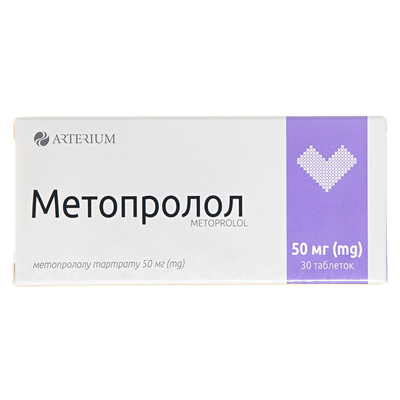
Metoprolol 50 mg tablets, No. 30 (10 x 3)
Composition
Active ingredient: metoprolol;
1 tablet contains metoprolol tartrate, equivalent to 25 mg, 50 mg, or 100 mg of the active ingredient;
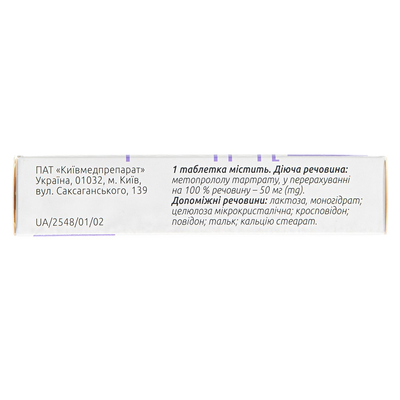
Excipients: lactose monohydrate; microcrystalline cellulose; crospovidone; povidone; talc; calcium stearate.
Dosage Form
Tablets.
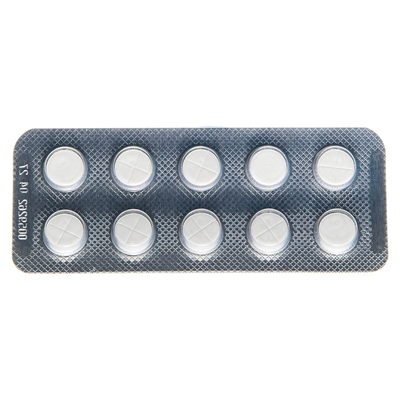
Main physical and chemical properties: round tablets with a flat surface, white or white with a cream tint, with two perpendicular intersecting lines and a bevel.
Pharmacotherapeutic group
Selective beta-adrenoreceptor blockers.
ATC code C07A B02.
Pharmacological properties
Pharmacodynamics.
Metoprolol is a cardioselective β₁-adrenergic receptor blocker. It has no membrane-stabilizing effect and no intrinsic sympathomimetic activity.
It inhibits the cardiac effects of increased sympathetic activity, significantly reducing heart rate, cardiac contractility, cardiac output, and blood pressure.
In patients with hypertension, metoprolol lowers blood pressure both when standing and when lying on the back. The drug’s prolonged antihypertensive effect is associated with a gradual reduction in total peripheral vascular resistance.
In patients with hypertension, long-term use of the drug leads to a statistically significant reduction in left ventricular mass and an improvement in left ventricular diastolic function.
In men with mild to moderate hypertension, metoprolol reduces mortality from cardiovascular disease (primarily the incidence of sudden death, fatal myocardial infarction, and stroke).
By lowering systemic blood pressure, reducing heart rate, and decreasing the heart’s contractile force, metoprolol reduces the myocardium’s oxygen demand. By reducing the heart rate and thereby prolonging diastole, metoprolol improves perfusion and oxygenation of areas of the myocardium with impaired blood supply.
In addition, the drug reduces the number, duration, and severity of angina attacks, as well as asymptomatic ischemia, and increases exercise tolerance.
In cases of myocardial infarction, metoprolol reduces mortality by lowering the risk of sudden death. This effect is primarily due to the prevention of ventricular fibrillation. The reduction in mortality is observed regardless of whether metoprolol was prescribed in the early or late stages of the disease, as well as in high-risk cases and in patients with diabetes.
When metoprolol is prescribed after a myocardial infarction, it reduces the risk of a recurrent heart attack.
In congestive heart failure resulting from dilated cardiomyopathy, metoprolol, initially prescribed at a low dose (2 × 5 mg daily), which was then gradually increased, improved cardiac function, quality of life, and physical performance in patients; The number of readmissions due to heart failure and the need for heart transplantation decreased.
In cases of supraventricular tachycardia, atrial fibrillation, and ventricular extrasystoles, metoprolol reduces the ventricular rate and the number of extrasystoles.
At therapeutic doses, the peripheral vasoconstrictive and bronchoconstrictive effects of metoprolol are less pronounced than those of nonselective β-blockers.
Compared with nonselective β-blockers, metoprolol has a significantly smaller effect on insulin secretion and carbohydrate metabolism. It only slightly alters the cardiovascular response to hypoglycemia or prolongs the duration of a hypoglycemic episode.
In short-term clinical studies, metoprolol induced a slight increase in triglyceride levels and a slight decrease in free fatty acid levels in serum. In some cases, a slight decrease in HDL-C (high-density lipoprotein cholesterol) levels was also observed, but it was less pronounced than with nonselective beta-blockers. However, a long-term clinical study demonstrated a significant reduction in total serum cholesterol levels after several years of treatment with metoprolol.
Pharmacokinetics.
Metoprolol is rapidly and almost completely absorbed in the gastrointestinal tract. The pharmacokinetic parameters of metoprolol are linear within the therapeutic dose range.
Maximum plasma concentration is reached 1.5–2 hours after administration. After absorption, metoprolol undergoes first-pass metabolism. The bioavailability of metoprolol is nearly 50% after a single dose and nearly 70% after repeated administration.
Concomitant food intake may increase the bioavailability of metoprolol by 30–40%.
Plasma protein binding is low, approximately 5–10%.
Metoprolol is widely distributed in tissues and has a large apparent volume of distribution (5.6 L/kg).
Metoprolol is metabolized in the liver by cytochrome P450 enzymes. The metabolites do not contribute to the clinical effect.
The half-life (t1/2) averages 3.5 hours (ranging from 1 to 9 hours).
Total plasma clearance is approximately 1 L/min.
More than 95% of the dose is excreted in the urine; 5% is excreted unchanged. In some cases, the latter value may increase to 30%.
In elderly patients, the pharmacokinetic parameters of metoprolol do not change significantly.
Renal insufficiency does not affect the systemic bioavailability and elimination of metoprolol. However, in such cases, the excretion of metabolites is reduced. Significant accumulation of metabolites has been observed in critically ill patients with renal insufficiency (glomerular filtration rate of 5 mL/min). However, the accumulation of metabolites does not increase the degree of β-blockade.
Hepatic insufficiency has little effect on the pharmacokinetic parameters of metoprolol. However, in severe liver cirrhosis and following surgery to remove a portocaval anastomosis, the bioavailability of metoprolol may be increased, and total clearance may be reduced. In patients who have undergone portocaval anastomosis, total body clearance decreased to approximately 0.3 L/min, and the area under the concentration-time curve increased approximately 6-fold compared with healthy subjects.
Indications
- Hypertension.
- Angina pectoris (including post-myocardial infarction).
- Arrhythmia (including supraventricular tachycardia).
- Prevention of cardiac death and recurrent myocardial infarction following the acute phase of myocardial infarction.
- As part of complex therapy for thyrotoxicosis.
- Prevention of migraine attacks.
Contraindications
- Hypersensitivity to any component of the drug or to other beta-blockers;
- second- and third-degree atrioventricular (AV) block, sinoatrial block;
- sinus node dysfunction;
- decompensated heart failure (pulmonary edema, hypoperfusion syndrome, or hypotension); long-term or intermittent isotropic therapy with β-receptor agonists;
- severe bradycardia (heart rate (HR) ≤ 45 beats per minute);
- cardiogenic shock;
- severe peripheral circulatory disorders with pain or trophic changes;
- hypotension (systolic blood pressure < 100 mm Hg);
- metabolic acidosis;
- untreated pheochromocytoma;
- prolonged or intermittent inotropic therapy with β-receptor agonists;
- concomitant therapy with monoamine oxidase-A inhibitors;
- severe bronchial asthma, severe chronic obstructive pulmonary disease;
- The use of metoprolol is contraindicated in patients receiving intravenous calcium channel blockers, such as verapamil and diltiazem, or other antiarrhythmic drugs (e.g., disopyramide).
Metoprolol should not be prescribed to patients with suspected acute myocardial infarction who have a heart rate of less than 45 beats per minute, a P-Q interval > 0.24 s, or a systolic blood pressure < 100 mm Hg.
Note: In patients with decompensated heart failure who tolerate other medications well, metoprolol may be used with individualized dose titration.
Drug Interactions and Other Interactions
Metoprolol is a substrate of the CYP 2D6 enzyme. Plasma concentrations of metoprolol may be affected by drugs that inhibit CYP 2D6, such as quinidine, terbinafine, paroxetine, fluoxetine, sertraline, celecoxib, propafenone, and diphenhydramine. At the start of treatment with these drugs, a reduction in the metoprolol dose may be necessary.
Barbituric acid derivatives: Barbiturates (particularly pentobarbital) stimulate the metabolism of metoprolol by inducing the enzyme.
Concomitant use of metoprolol with the following drugs should be avoided
Patients should be closely monitored if they are taking ganglion blockers, other β-blockers (e.g., eye drops), or monoamine oxidase inhibitors (MAOIs) concurrently with metoprolol.
Propafenone: Concomitant use with propafenone should be avoided. It is known that in 4 patients receiving metoprolol, plasma concentrations of metoprolol increased 2- to 5-fold after administration of propafenone, and in 2 patients, side effects characteristic of metoprolol occurred. This interaction was confirmed in 8 healthy volunteers. This interaction may be due to the fact that propafenone, like quinidine, inhibits the metabolism of metoprolol via cytochrome P450 2D6. The outcome of this combination is unpredictable, as propafenone also possesses β-blocking properties.
Concomitant use of metoprolol with the following medications may require dose adjustment
Clonidine: Sudden discontinuation of clonidine during treatment with β-blockers may lead to an increase in blood pressure. If concomitant clonidine therapy must be discontinued, β-blockers should be discontinued several days before clonidine is discontinued.
Negative inotropic and chronotropic effects may occur in patients taking verapamil-type calcium channel blockers or diltiazem and/or antiarrhythmic drugs concomitantly with metoprolol. Patients taking β-blockers should not receive intravenous verapamil due to the risk of cardiac arrest. β-blockers may potentiate the negative inotropic and chronotropic effects of antiarrhythmic drugs (quinidine or amiodarone analogs).
Amiodarone: Clinical cases confirm that patients taking amiodarone may develop severe sinus bradycardia when metoprolol is administered concomitantly. Amiodarone has an extremely long half-life (approximately 50 days), which means that interactions may occur for a long time after discontinuation of this drug.
Class I antiarrhythmics: Class I antiarrhythmics and Class I beta-blockers have additive negative inotropic effects, which may lead to serious hemodynamic side effects in patients with impaired left ventricular function. This combination should also be avoided in cases of sick sinus syndrome and atrioventricular conduction disturbances. This interaction is best illustrated by the example of disopyramide.
Nonsteroidal anti-inflammatory/antirheumatic drugs (NSAIDs): NSAIDs have been shown to counteract the antihypertensive effect of beta-blockers. Indomethacin has been the primary focus of these studies. Presumably, no such interaction occurs with sulindac. A study has been conducted on an adverse interaction with diclofenac.
In patients receiving beta-blockers, inhaled anesthetics enhance the cardiodepressive effect. Inducers or inhibitors of metabolism may affect the plasma concentration of metoprolol.
Plasma concentrations of metoprolol decrease when rifampicin is taken and may increase when cimetidine, phenytoin, alcohol, hydralazine, and serotonin reuptake inhibitors (paroxetine, fluoxetine, and sertraline).
Concomitant treatment with indomethacin or other drugs that inhibit prostaglandin synthase may reduce the antihypertensive effect of β-blockers.
Cardioselective β-blockers have a significantly smaller effect on blood pressure when epinephrine is administered to patients than nonselective β-blockers.
Diltiazem: Diltiazem and β-receptor blockers have an additive inhibitory effect on AV conduction and sinus node function. In this case, marked bradycardia may occur.
Epinephrine: Following administration of epinephrine (adrenaline) to patients receiving nonselective beta-blockers (including pindolol and propranolol), severe hypertension and bradycardia developed (approximately 10 reports). In addition, it has been suggested that epinephrine, which is classified as a local anesthetic, may trigger these reactions when administered intravascularly. The risk is likely to be lower when used with cardioselective beta-blockers.
Phenylpropanolamine: Phenylpropanolamine (norephedrine) at a single dose of 50 mg can cause an abnormal increase in diastolic blood pressure in healthy volunteers. Propranolol usually counteracts the increase in blood pressure caused by phenylpropanolamine. Beta-blockers may provoke paradoxical hypertensive reactions in patients receiving high doses of phenylpropanolamine. Two cases of hypertensive crisis have been reported during treatment with phenylpropanolamine alone.
Patients receiving β-blockers may require readjustment of the dose of oral antidiabetic agents. Concomitant use of β-blockers with insulin or oral antidiabetic agents may enhance or prolong their effects. In such cases, symptoms of hypoglycemia (especially tachycardia and tremor) may be masked or disappear. In such cases, blood glucose levels should be monitored regularly.
Concomitant use with barbiturates should be avoided, as barbiturates (as studied with pentobarbital) stimulate the metabolism of metoprolol by inducing enzymes.
Drugs that inhibit CYP 2D6, such as quinidine, terbinafine, paroxetine, fluoxetine, sertraline, celecoxib, propafenone, and diphenhydramine, may affect metoprolol plasma concentrations. At the start of treatment with these drugs, a reduction in metoprolol dosage may be necessary.
Digitalis glycosides: Concomitant use of digitalis glycosides and β-receptor blockers may prolong atrioventricular conduction time and cause bradycardia.
Diphenhydramine: Diphenhydramine reduces (by a factor of 2.5) the clearance of metoprolol to α-hydroxymetoprolol via the CYP 2D6 system in patients with rapid hydroxylation. The effect of metoprolol is enhanced. It is possible that diphenhydramine may inhibit the metabolism of other CYP 2D6 substrates.
Rifampicin: Rifampicin may stimulate the metabolism of metoprolol, leading to a decrease in plasma levels.
Caution should be exercised when combining with nitrates due to the risk of hypotension and/or bradycardia.
Patients receiving sympathetic ganglion blockers concomitantly with metoprolol should be closely monitored.
Metoprolol may inhibit the elimination of lidocaine.
Caution should be exercised when prescribing metoprolol to patients using β₂-receptor and β₁-receptor agonists, as well as dihydropyridines.
Caution should be exercised when metoprolol is used concomitantly with ergotamine.
Caution should be exercised when combining metoprolol with other drugs that have a hypotensive effect.
Special Considerations for Use
When taking metoprolol tartrate, as with other β-blockers, heart rate (HR) and blood pressure (BP) must be monitored (initially daily, then once a month).
Patients taking β-blockers should not receive intravenous calcium channel blockers of the verapamil class.
As a rule, β₂-agonists (in tablet or aerosol form) are prescribed concurrently in the treatment of patients with bronchial asthma. When these patients begin taking this medication, an increase in the dose of β₂-agonists may be required. The risk of the drug affecting β₂-receptors is lower than with conventional non-selective β₁-blockers in tablet form.
Particularly careful medical supervision is required when treating patients with diabetes (monitoring of blood glucose levels), patients with unstable blood glucose levels, or those on a strict fasting diet. During treatment with metoprolol, there is a minimal risk of effects on glucose metabolism or masked hypoglycemia compared with treatment with non-selective β-blockers.
Metoprolol may mask certain clinical manifestations of thyrotoxicosis (e.g., tachycardia). Abrupt discontinuation of the drug is contraindicated in patients with thyrotoxicosis due to the potential for worsening symptoms.
Patients undergoing treatment for heart failure should continue treatment for this condition prior to starting metoprolol and throughout the course of treatment.
In very rare cases, pre-existing AV conduction disturbances may be complicated by more severe AV block. Patients with first-degree AV block should be treated with this drug with extreme caution.
Abrupt discontinuation of beta-blockers is dangerous, especially for high-risk patients, and may exacerbate chronic heart failure as well as increase the risk of myocardial infarction and sudden death. Therefore, discontinuation of metoprolol for any reason must be gradual, over a period of at least 2 weeks, with the dose halved at each stage until the final dose of 12.5 mg (half a 25-mg tablet) is reached. The final dose should be taken at least 4 days before the drug is completely discontinued. If symptoms recur, it is recommended to slow down the dose reduction.
Metoprolol should be used with caution in patients with myasthenia gravis.
Metoprolol may exacerbate pre-existing bradycardia. If bradycardia develops (heart rate less than 50–55 beats per minute) during metoprolol therapy, the dose should be reduced and/or the drug should be gradually discontinued.
Due to its hypotensive effect, the drug may exacerbate symptoms of peripheral circulatory disorders, such as intermittent claudication.
If the drug is used in patients with pheochromocytoma, an α-sympatholytic agent should be administered concurrently.
Before general anesthesia is administered, the anesthesiologist must be informed that the patient is taking metoprolol. In the event of surgery, the anesthesiologist must be informed that the patient is taking metoprolol. Discontinuation of beta-blocker therapy is not recommended for patients who have undergone surgery. If discontinuation of metoprolol is deemed necessary, it should, if possible, occur at least 48 hours before general anesthesia. The urgent administration of high doses of metoprolol should be avoided in patients who have undergone extracardiac surgery, as this is associated with the development of bradycardia, hypotension, and stroke, including fatal outcomes in patients with risk factors for cardiovascular disease.
However, for some patients, the use of beta-blockers as premedication is advisable. In such cases, an anesthetic with a minimal negative inotropic effect should be selected to minimize the risk of myocardial depression.
Metoprolol may cause a slight increase in triglyceride levels and a decrease in free fatty acid levels in the blood. In some cases, a slight decrease in low-density lipoprotein (LDL) levels has been observed, and this decrease was significantly smaller compared to treatment with nonselective β₂-blockers. However, one long-term study showed a significant reduction in total cholesterol levels following several years of treatment with metoprolol.
There is insufficient experience with the use of metoprolol in patients with heart failure and the following concomitant conditions: unstable heart failure (NYHA Class IV [according to the New York Heart Association classification]); acute myocardial infarction or unstable angina within the previous 28 days; impaired renal or hepatic function; patients older than 80 years or younger than 40 years; hemodynamically significant valvular heart disease; hypertrophic obstructive cardiomyopathy; during or within 4 months after heart surgery. Such patients should be treated by physicians with specialized skills and experience.
In patients with Prinzmetal angina, the frequency and severity of angina attacks may increase due to α-receptor-mediated coronary vasoconstriction. Therefore, nonselective β-blockers should not be prescribed to such patients, and selective β₁-blockers should be used with caution.
In patients receiving β-blockers, epinephrine may increase blood pressure and cause (reflex) bradycardia; this reaction is less likely with selective β-blockers.
Very rarely, pre-existing moderate atrioventricular conduction disturbances may be exacerbated, sometimes leading to the development of atrioventricular block.
Anaphylactic shock is severe in patients receiving β-blockers.
Patients with a history of severe allergic reactions should exercise caution when treated with metoprolol. Special attention should also be given to patients with allergic reactions who are undergoing immunotherapy (desensitization therapy). The usual doses of epinephrine may be ineffective.
Patients who wear contact lenses should be aware that this medication may reduce tear production.
Treatment with metoprolol should be prescribed to patients with a history of psoriasis or depression only after a thorough assessment of the benefit-risk ratio.
The bioavailability of metoprolol may be increased in patients with liver cirrhosis.
Special attention should be given to patients with severe renal insufficiency, severe acute conditions accompanied by metabolic acidosis, and patients receiving combination therapy with digitalis preparations.
This medication contains lactose and should therefore not be prescribed to patients with hereditary lactase deficiency, galactose intolerance, or glucose-galactose malabsorption.
Pregnancy and Lactation
Metoprolol, like other medications, should not be used during pregnancy or lactation unless absolutely necessary. Like other beta-blockers, metoprolol may cause side effects such as bradycardia and hypoglycemia in the fetus and newborn or in an infant during breastfeeding.
Generally, β-blockers reduce placental blood flow, which may cause fetal growth restriction. Metoprolol may cause bradycardia, hypotension, hypoglycemia, and respiratory depression in newborns; therefore, it should be discontinued 48–72 hours before the expected onset of labor. If this is not possible, the infant should be closely monitored for 48–72 hours after birth.
On the other hand, the amount of metoprolol that an infant receives through breast milk to produce a potential β-adrenergic receptor-blocking effect is negligible, provided that the doses of metoprolol received by the mother are within the normal therapeutic range. Breastfed infants should be closely monitored for possible effects of β-blockade.
Effects on the Ability to Drive and Operate Machinery
The use of metoprolol may affect activities requiring rapid mental and physical reactions and quick decision-making (e.g., driving, operating machinery, working at heights); therefore, such activities should be avoided during treatment.
Dosage and Administration
Metoprolol is intended for daily administration, preferably in the morning. The tablets should be taken regardless of meals. The tablet should be swallowed whole with a sufficient amount of drinking water. The dose should be determined individually, increasing it gradually to avoid excessive bradycardia. Heart rate should be monitored during dose adjustment to prevent bradycardia. The maximum daily dose is 400 mg.
Hypertension. The recommended dose is 100 mg (as a single dose in the morning or divided into two doses—morning and evening). If the therapeutic effect is not achieved at this dosage, the daily dose may be increased to 200 mg (as a single dose in the morning or divided into two doses—morning and evening) or the drug should be combined with other antihypertensive medications.
Angina. The recommended dose is 50–100 mg 2–3 times daily. If necessary, the drug may be combined with other medications for the treatment of angina.
Arrhythmia. The recommended dose is 50 mg 2–3 times daily. If necessary, the daily dose may be increased to 300 mg, divided into 2–3 doses.
In the case of myocardial infarction (treatment should preferably begin within the first 12 hours after the onset of chest pain). The recommended dose is 50 mg every 6 hours for 48 hours; the recommended maintenance daily dose is 200 mg, divided into two doses. The course of treatment is at least 3 months.
Hyperthyroidism (thyrotoxicosis). The recommended dose is 50 mg 4 times daily. Once a therapeutic effect is achieved, the dose should be gradually reduced.
Prevention of migraine attacks. The recommended daily dose is 100–200 mg per day, divided into 2 doses.
Patients with impaired renal function. No dose adjustment is necessary.
Patients with hepatic impairment. Dose adjustment (reduction of the metoprolol dose) is usually necessary in patients with impaired liver function (e.g., patients with cirrhosis).
Elderly patients. No dose adjustment is necessary.
Hypertension: For mild to moderate hypertension, the initial dose is 25 mg.
Children
Use of this medication is contraindicated in children.
Overdose
Toxicity. In an adult, a dose of 7.5 g caused fatal intoxication. Ingestion of 100 mg of the drug by a 5-year-old child was not accompanied by symptoms of intoxication after gastric lavage. A dose of 450 mg in a 12-year-old child and a dose of 1.4 g in an adult caused moderate intoxication; a dose of 2.5 g caused severe intoxication in an adult, while a 7.5-gram dose caused very severe intoxication.
Symptoms. Cardiovascular symptoms are the most severe, but in some cases, especially in children and young adults, central nervous system symptoms and respiratory depression may predominate. Hypotension, sinus bradycardia, first- to third-degree AV block, QT interval prolongation (an exceptional case), heart failure, cardiogenic shock, asystole, nausea, vomiting, bronchospasm, cyanosis, hypoglycemia, loss of consciousness, coma, and in some cases, hypokalemia. Respiratory depression, respiratory arrest.
Other: fatigue, confusion, fine tremor, seizures, sweating, paresthesias, bronchospasm, nausea, vomiting, possible esophageal spasm, hypoglycemia (especially in children) or hyperglycemia, hyperkalemia. Effects on the kidneys. Transient myasthenic syndrome. The first signs of an overdose may appear 20 minutes to 2 hours after taking an excessive dose.
Concurrent use of alcohol, antihypertensive medications, quinidine, or barbiturates may worsen the patient’s condition.
Treatment. Intensive care and close monitoring of the patient are required (circulatory and respiratory parameters, renal function, blood glucose levels, and serum electrolytes). If the drug was taken recently, its further absorption can be reduced by gastric lavage, induction of vomiting, or administration of activated charcoal.
Important! Atropine (0.25–0.5 mg intravenously for adults, 10–20 μg/kg of body weight for children) should be administered before gastric lavage (due to the risk of vagus nerve stimulation). Intubation and mechanical ventilation may be required; adequate volume replacement; glucose infusion; ECG monitoring; and repeated intravenous administration of atropine at a dose of 1–2 mg (primarily for vagal symptoms). In cases of myocardial depression: infusion of dobutamine or dopamine and calcium globionate 9 mg/mL, 10–20 mL.
Glucagon may be administered intravenously at a dose of 50–150 μg/kg of body weight over 1 minute, as well as amrinone. In some cases, the addition of epinephrine (adrenaline) has proven effective.
An infusion of sodium (chloride or bicarbonate) is indicated for QRS complex prolongation and arrhythmias. A pacemaker may be used. In the event of cardiac arrest, resuscitation measures may be required for several hours. For bronchospasm, terbutaline (injectable or inhaled) is prescribed. Symptomatic therapy.
Side Effects
Metoprolol is well tolerated by patients, and any side effects that occur are generally mild and transient.
The table below lists adverse reactions to metoprolol according to the MedDRA organ system classification:
Table
| MedDRA System Organ Class | Side Effect |
| Blood and Lymphatic System Disorders | thrombocytopenia, agranulocytosis, leukopenia, decreased high-density lipoprotein (HDL) cholesterol levels, and increased triglyceride levels with normal total cholesterol levels |
| Metabolic and Nutritional Disorders | Weight |
| Mental disorders | Sleep disturbances, drowsiness, insomnia, nightmares, depression, impaired concentration, memory disturbances, amnesia, confusion, hallucinations, nervousness, anxiety |
| Nervous system disorders | Dizziness, headache, paresthesia, taste disturbances, fatigue, muscle cramps |
| Eye disorders | visual disturbances, dry eyes, or conjunctivitis* |
| Hearing and balance disorders | Hearing impairment, tinnitus |
| Heart disorders | postural disturbances (very rarely accompanied by dizziness), cold extremities, bradycardia, first-, second-, or third-degree atrioventricular block, pericardial pain, chest pain, transient worsening of heart failure symptoms, palpitations, arrhythmias, cardiac conduction disturbances, hypotension, cardiogenic shock in patients with acute myocardial infarction |
| Vascular disorders | orthostatic hypotension (which in very rare cases is accompanied by syncope), Raynaud’s syndrome, gangrene in patients with existing severe peripheral circulatory disorders |
| Diseases of the respiratory system, chest, and mediastinum | shortness of breath on exertion, bronchospasm in patients with bronchial asthma or asthma-related conditions, rhinitis |
| Gastrointestinal disorders | Allergic skin reactions, including erythema, itching, and skin rash; nausea, vomiting, abdominal pain, diarrhea, constipation, dry mouth, heartburn, and bloating |
| Hepatobiliary disorders | Hepatitis |
| Skin and subcutaneous tissue disorders* | Allergic skin reactions (including erythema, itching, skin rash), increased sweating, exacerbation of psoriasis, urticaria, dystrophic skin changes, hair loss, photosensitivity, psoriasis; Lipid metabolism disorders |
| Musculoskeletal and connective tissue disorders | muscle spasms, arthralgia, worsening of intermittent claudication symptoms, muscle weakness |
| Diseases of the reproductive system and mammary glands | impotence/sexual dysfunction, Peyronie’s disease |
| General disorders and injection site reactions | increased fatigue, peripheral edema, |
| Test results | abnormal liver function tests, appearance of antinuclear antibodies (not associated with systemic lupus erythematosus), metoprolol may mask symptoms of thyrotoxicosis, manifestations of latent diabetes mellitus |
* The incidence of side effects, such as skin reactions or eye irritation, is low, and symptoms usually resolve after discontinuation of therapy.
Shelf life
5 years.
Storage conditions
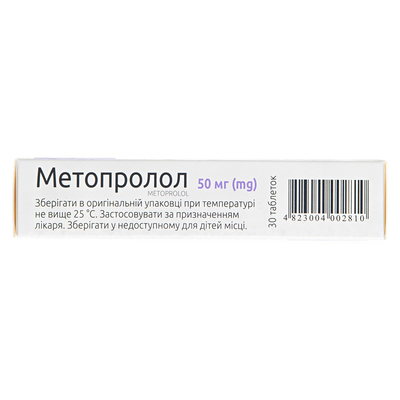
Store in the original packaging at a temperature not exceeding 25 °C. Keep out of the reach of children.
Packaging
10 tablets per blister pack. 3 blister packs per box.
Manufacturer
Kyivmedpreparat PJSC.







