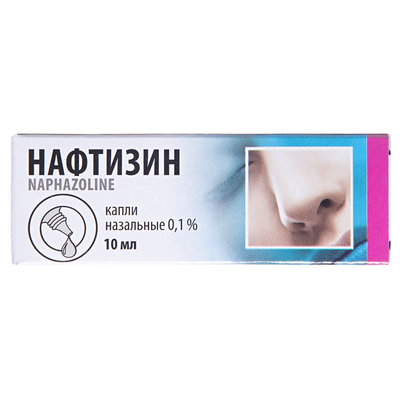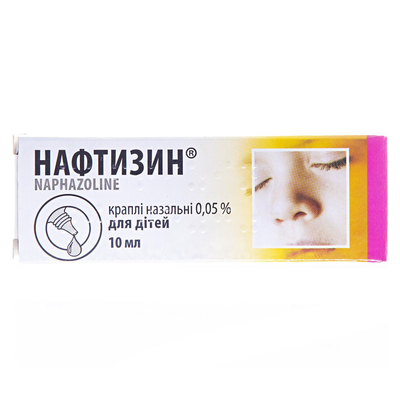
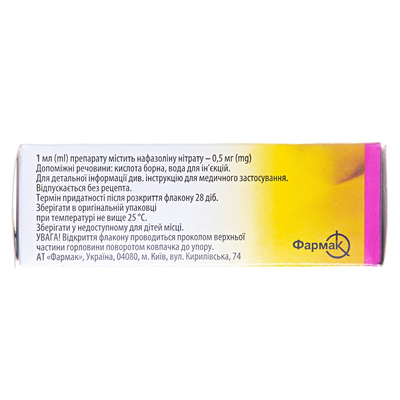
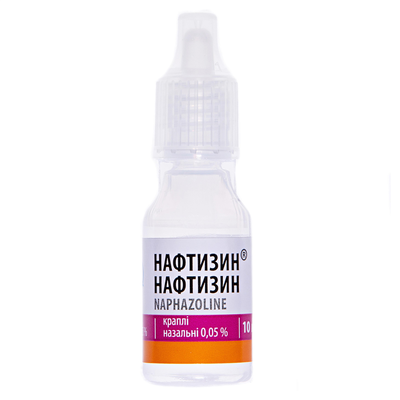
Naftizin oral drops, 0.05%, 10 mL per polyethylene bottle with dropper.
Ingredients
Active ingredient: naphazoline;
1 mL of the product contains 0.5 mg or 1 mg of naphazoline nitrate;
excipients: boric acid, water for injection.
Dosage Form
Nasal drops.
Main physical and chemical properties: a clear, colorless, or slightly yellowish liquid.
Pharmacotherapeutic group
Decongestants and other topical preparations for diseases of the nasal cavity. Sympathomimetics. ATC code R01A A08.
Pharmacological properties
Pharmacodynamics.
Naphthyzin® exerts a pronounced vasoconstrictive effect on peripheral blood vessels by acting on α-adrenoreceptors. When applied to mucous membranes, it reduces swelling, hyperemia, and exudation, which helps relieve nasal breathing in cases of rhinitis. Naphazoline helps open and dilate the ostia of the paranasal sinuses and Eustachian tubes, which improves the drainage of secretions and prevents bacterial colonization.
Pharmacokinetics.
When applied topically, naphazoline is completely absorbed.
The therapeutic effect begins within 5 minutes and lasts 4–6 hours following intranasal administration.
Indications
Acute rhinitis. As an adjunctive treatment for inflammation of the paranasal sinuses and the middle ear. To reduce mucosal edema during diagnostic procedures.
Contraindications
Hypersensitivity to any component of the medication.
Dry inflammation of the nasal mucosa.
Interactions with Other Medications and Other Types of Interactions
Concomitant use of Naphthyzin® with monoamine oxidase (MAO) inhibitors, tricyclic antidepressants, or maprotiline—or within a few days after discontinuation of these medications—may cause an increase in blood pressure.
Special Considerations for Use
Use this medication with extreme caution in patients with severe cardiovascular diseases (hypertension, ischemic heart disease), in patients with diabetes mellitus, hyperthyroidism, pheochromocytoma, or when used concomitantly with MAO inhibitors or other medications that may have a hypertensive effect. Caution is required during general anesthesia with the use of anesthetics that increase myocardial sensitivity to sympathomimetics (e.g., halothane), as well as in cases of bronchial asthma.
When high doses of the drug are used, the following side effects affecting the cardiovascular and nervous systems may occur: palpitations, hypertension, arrhythmia, headache, dizziness, drowsiness, or insomnia.
It is important to avoid long-term use and overdose, especially in children. Long-term use of medications intended to relieve mucosal edema may lead to edema and subsequent atrophy of the nasal mucosa.
Use during pregnancy or breastfeeding.
There are no data on whether naphazoline crosses the placental barrier or passes into breast milk. Therefore, before prescribing this medication to women who are pregnant or breastfeeding, all potential risks and benefits of treatment should be carefully considered, and the medication should be prescribed only if absolutely necessary.
Effect on reaction time when operating motor vehicles or other machinery.
Use of Naftizin® at the recommended doses does not affect the ability to operate vehicles or machinery. Exceeding the recommended doses may cause dizziness and drowsiness.
Directions for Use and Dosage
Naftizin® is instilled into each nostril by tilting the head slightly backward and turning it to the right when instilling into the right nostril, and to the left when instilling into the left nostril.
For therapeutic use. Adults and children 15 years of age and older: 1–3 drops of a 0.05%–0.1% solution in each nostril.
For children aged 3–6 years, instill 1–2 drops of a 0.05% solution into each nostril;
children aged 6–15 years: 2 drops in each nostril.
Use Naphthyzin® 3 times a day, but no more frequently than every 4 hours.
Naftizin® should not be used for more than 5 days in adults or more than 3 days in children.
Naphthyzin® may be used again only after several days.
In case of a nosebleed, use cotton swabs moistened with a 0.05% solution of the medication.
For diagnostic purposes (e.g., for the diagnosis and treatment of nasal polyps) After clearing the nasal cavity, instill 3–4 drops of a 0.05%–0.1% solution into each nostril or insert a swab moistened with a 0.05%–0.1% solution for 2–3 minutes.
In case of vocal cord edema, instill 1–2 mL of the medication using a laryngeal syringe.
Children.
Naftizin® 0.05% may be used in children aged 3 to 15 years.
Children aged 15 years and older may use Naphthyzin® 0.1%.
Overdose
Overdose or accidental ingestion of the medication may cause systemic side effects: nervousness, excessive sweating, headache, tremor, tachycardia, palpitations, and hypertension. Cyanosis, nausea, fever, convulsions, cardiac arrest, pulmonary edema, mental disturbances, pallor, and heart attack may occur.
Depressant effects on the central nervous system manifest as symptoms such as a decrease in body temperature; bradycardia; excessive sweating; drowsiness; shock resembling hypotensive shock; apnea; and coma. The risk of overdose is higher in children, who are more vulnerable to adverse effects than adults.
Treatment is symptomatic.
Side Effects
When used at the recommended doses, Naftizin® is generally well tolerated. In patients with hypersensitivity, the drug may occasionally cause a burning sensation and dryness of the nasal mucosa. In rare cases, a sensation of severe nasal congestion may occur.
Systemic side effects occur only in rare cases (most often with overdose):
Immune system: allergic reactions, including angioedema, burning sensation;
nervous system: nervousness, headache, tremor;
Cardiovascular system: tachycardia, palpitations;
vascular system: hypertension;
skin and subcutaneous tissue: increased sweating.
Prolonged (longer than 5 days for adults and longer than 3 days for children) or frequent use of the drug may lead to tolerance, accompanied by severe swelling of the nasal mucosa, which occurs relatively soon after administration. Long-term use of the drug may lead to damage to the mucosal epithelium, inhibition of ciliary activity, and cause irreversible damage to the mucosa and the development of dry rhinitis.
Shelf life
3 years.
Once the vial is opened, the product is stable for 28 days.
Do not use the product after the expiration date indicated on the packaging.
Storage Conditions
Store in the original packaging at a temperature not exceeding 25 °C. Keep out of the reach of children.
Packaging
10 mL in a polyethylene vial, or in a polyethylene vial with a dispenser, or in a polyethylene vial with a dropper cap. One vial per pack.
Dispensing Category
Available without a prescription.
Manufacturer
Farmak JSC.