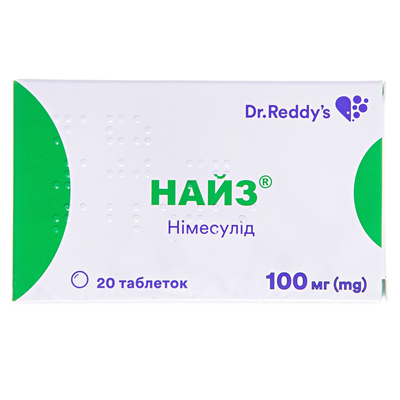

Nayz tablets, 100 mg, No. 20 (10 x 2)
Ingredients
Active ingredient: nimesulide;
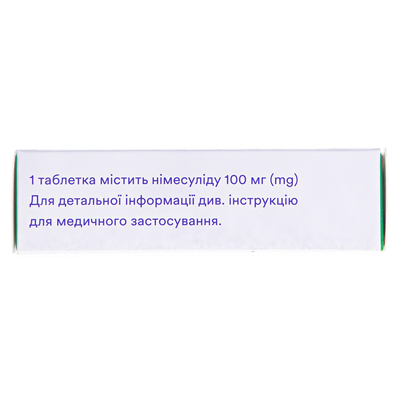
1 tablet contains 100 mg of nimesulide;
inactive ingredients: calcium hydrophosphate, microcrystalline cellulose, corn starch, sodium starch glycolate (type A), colloidal anhydrous silicon dioxide, talc, magnesium stearate.
Dosage Form
Tablets.
Main physical and chemical properties: round, smooth, biconvex tablets ranging in color from nearly white to yellow.
Pharmacotherapeutic group
Nonsteroidal anti-inflammatory and antirheumatic drugs.
ATC code M01A X17.
Pharmacological properties
Pharmacodynamics.
Nimesulide is a nonsteroidal anti-inflammatory drug (NSAID) of the methanesulfonanilide group that exhibits anti-inflammatory, analgesic, and antipyretic effects. The therapeutic effect of nimesulide is due to its interaction with the arachidonic acid cascade. Nimesulide selectively inhibits COX-II (cyclooxygenase II) and suppresses prostaglandin synthesis at the site of inflammation.
Nimesulide inhibits the release of the enzyme myeloperoxidase and also suppresses the formation of oxygen free radicals without affecting the processes of phagocytosis and chemotaxis, and inhibits the formation of tumor necrosis factor and other inflammatory mediators.
Pharmacokinetics.
After oral administration, nimesulide is rapidly absorbed from the gastrointestinal tract. Maximum plasma concentration is reached in 2–3 hours. Up to 97.5% of nimesulide binds to plasma proteins.
The drug is actively metabolized in the liver by CYP2C9, an isoenzyme of cytochrome P450. The main metabolite is hydroxynimesulide, a pharmacologically active substance. The half-life ranges from 3.2 to 6 hours. Nimesulide is excreted in the urine—approximately 50% of the administered dose. Approximately 29% of the administered dose is excreted in the feces in a metabolized form. Only 1–3% is excreted from the body unchanged. The pharmacokinetic profile in elderly patients remains unchanged.
Indications
Treatment of acute pain. Treatment of primary dysmenorrhea.
Nimesulide should be used only as a second-line treatment.
The decision to prescribe nimesulide should be based on an assessment of all risks for the individual patient.
Contraindications
Hypersensitivity to nimesulide, to any other NSAID, or to any component of the medication. History of hypersensitivity reactions (bronchospasm, rhinitis, urticaria) associated with the use of acetylsalicylic acid or other nonsteroidal anti-inflammatory drugs.
A history of hepatotoxic reactions to nimesulide.
Concomitant use of other substances with potential hepatotoxicity.
Alcoholism and drug dependence.
Suspected acute surgical pathology.
A history of gastrointestinal bleeding or perforation associated with previous use of nonsteroidal anti-inflammatory drugs.
Active gastric or duodenal ulcer; history of ulcer, perforation, or gastrointestinal bleeding.
A history of cerebrovascular hemorrhage or other hemorrhages, as well as diseases associated with bleeding tendencies.
Severe coagulation disorders.
Severe heart failure.
Severe renal impairment.
Liver dysfunction.
Elevated body temperature and/or flu-like symptoms.
Patients under 12 years of age.
Third trimester of pregnancy and breastfeeding.
Interactions with other medications and other types of interactions
Pharmacodynamic interactions.
Corticosteroids: increased risk of gastrointestinal ulcers or bleeding. Antiplatelet agents and selective serotonin reuptake inhibitors (SSRIs): increased risk of gastrointestinal ulcers or bleeding.
Anticoagulants: NSAIDs may enhance the effects of anticoagulants, such as warfarin or acetylsalicylic acid; therefore, this combination is contraindicated in patients with severe coagulation disorders. If such combination therapy cannot be avoided, blood coagulation parameters must be closely monitored.
Diuretics, angiotensin-converting enzyme (ACE) inhibitors, and angiotensin II antagonists: NSAIDs may reduce the effects of diuretics and other antihypertensive medications. In some patients with impaired renal function (e.g., patients with dehydration or the elderly), the concomitant use of ACE inhibitors, angiotensin II antagonists, or agents that inhibit the cyclooxygenase system may lead to further deterioration of renal function and the development of acute renal failure, which is generally reversible. These interactions should be taken into account when a patient is taking nimesulide in combination with ACE inhibitors or angiotensin II antagonists. Extreme caution should be exercised when using this combination, especially in elderly patients. Patients should receive adequate fluid intake, and renal function should be closely monitored after initiating this combination. Nimesulide temporarily reduces the effect of furosemide on sodium excretion and, to a lesser extent, on potassium excretion, and also reduces the diuretic effect. Caution is advised when co-administering furosemide and nimesulide to patients with impaired renal or cardiac function.
In healthy individuals, nimesulide rapidly reduces the sodium-excreting effect of furosemide and, to a lesser extent, its potassium-excreting effect, and also reduces the diuretic effect. Concomitant use of nimesulide and furosemide leads to a decrease (by approximately 20%) in the area under the “concentration-time” curve (AUC) and a reduction in the cumulative excretion of furosemide without altering its renal clearance.
Other NSAIDs. Concomitant use of medications containing nimesulide (see the “Clinical Characteristics” section), with other NSAIDs, including acetylsalicylic acid at anti-inflammatory doses (≥ 1 g as a single dose or ≥ 3 g per day), is not recommended.
Pharmacokinetic interactions with other medications.
There have been reports that NSAIDs reduce lithium clearance, leading to increased plasma lithium levels and lithium toxicity. When prescribing nimesulide to patients receiving lithium therapy, plasma lithium levels should be monitored frequently.
There are no clinically significant interactions with glibenclamide, theophylline, warfarin, digoxin, cimetidine, or antacids (a combination of aluminum and magnesium hydroxide). Nimesulide inhibits the activity of the CYP2C9 enzyme. When drugs that are substrates of this enzyme are used concomitantly with nimesulide, their plasma concentrations may increase.
Caution is advised when nimesulide must be administered less than 24 hours before or less than 24 hours after methotrexate administration, as this may lead to increased serum levels of methotrexate and increased toxicity.
Due to their effect on renal prostaglandins, synthetase inhibitors—a class to which nimesulide belongs—may increase the nephrotoxicity of cyclosporins.
Effects of Other Drugs on Nimesulide.
Tolbutamide, salicylic acid, and valproic acid displace nimesulide from its binding sites. However, despite a possible effect on plasma drug levels, these interactions are not considered clinically significant.
Special Considerations for Use
Nimesulide should be used only as a second-line treatment. The decision to prescribe nimesulide must be based on an assessment of all risks for the individual patient.
To reduce the risk of side effects, the lowest effective dose should be used for the shortest possible duration of treatment. If treatment is ineffective (failure to alleviate symptoms), therapy with this drug should be discontinued.
There have been reports of severe liver reactions, including fatal cases, associated with the use of nimesulide. If liver enzyme levels rise or signs of liver damage are detected (e.g., anorexia, nausea, vomiting, abdominal pain, excessive fatigue, or dark-colored urine) or if liver function test results deviate from normal, the drug should be discontinued. Re-administration of nimesulide to such patients is contraindicated.
During treatment with nimesulide, it is recommended to avoid concomitant use of hepatotoxic drugs, analgesics, and other nonsteroidal anti-inflammatory drugs (NSAIDs), including selective cyclooxygenase-2 (COX-2) inhibitors, as well as to refrain from alcohol consumption.
Elderly patients have an increased incidence of adverse reactions to NSAIDs; this is particularly true for potential gastrointestinal bleeding and perforations, which can be life-threatening. An ulcer, bleeding, or perforation in the gastrointestinal tract can be life-threatening, especially if the patient has a history of such events while taking any other NSAIDs (regardless of how long ago). The risk of such events increases with higher doses of NSAIDs in patients with a history of gastrointestinal ulcers, particularly those complicated by bleeding or perforation, as well as in elderly patients. Treatment in such patients should be initiated at the lowest effective dose. For these patients, as well as for those concurrently taking low doses of acetylsalicylic acid or other medications that increase the risk of gastrointestinal complications, the use of combination therapy with protective agents, such as misoprostol or proton pump inhibitors, should be considered.
Patients with toxic gastrointestinal damage, especially the elderly, should be advised to report any unusual symptoms occurring in the gastrointestinal tract, particularly bleeding. This is especially important during the initial stages of treatment. Patients taking concomitant medications that may increase the risk of ulcers or bleeding, such as corticosteroids, anticoagulants, selective serotonin reuptake inhibitors, or antiplatelet agents (acetylsalicylic acid), should be advised to exercise caution when using nimesulide.
If a patient receiving nimesulide develops gastrointestinal bleeding or an ulcer, treatment with the drug should be discontinued.
NSAIDs should be prescribed with caution to patients with Crohn’s disease or a history of nonspecific ulcerative colitis, as nimesulide may lead to exacerbation of these conditions.
Concomitant use of nimesulide with other medications, such as oral contraceptives, anticoagulants, and antiplatelet agents, may cause exacerbation of Crohn’s disease and other gastrointestinal disorders.
Patients with hypertension and/or a history of heart failure, as well as patients with fluid retention and edema resulting from NSAID use, require appropriate monitoring and medical consultation.
Clinical studies and epidemiological data suggest that some NSAIDs, especially at high doses and with long-term use, may be associated with a small risk of arterial thrombotic events, such as myocardial infarction and stroke. There is insufficient data to rule out the risk of such events with the use of nimesulide. In patients with uncontrolled hypertension, acute heart failure, established ischemic heart disease, peripheral arterial disease, and/or cerebrovascular disease, nimesulide should be prescribed only after a thorough evaluation of their condition. Patients with risk factors for cardiovascular disease—such as hypertension, hyperlipidemia, diabetes mellitus, or smoking—should also be carefully evaluated before the drug is prescribed.
In patients with renal or heart failure, the drug should be prescribed with caution due to the potential for worsening renal function. If the patient’s condition worsens, treatment should be discontinued. Elderly patients should be closely monitored due to the potential for gastrointestinal bleeding and perforation, as well as worsening kidney, liver, or heart function. Since nimesulide may affect platelet function, it should be prescribed with caution to patients with hemorrhagic diathesis. However, nimesulide is not a substitute for acetylsalicylic acid in the prevention of cardiovascular diseases.
The use of nonsteroidal anti-inflammatory drugs (NSAIDs) may mask a fever associated with an underlying bacterial infection. If a patient taking nimesulide develops a fever or flu-like symptoms, the medication should be discontinued.
There have been reports of rare cases of severe skin reactions associated with the use of NSAIDs; some of these can be fatal, such as exfoliative dermatitis, Stevens-Johnson syndrome, and toxic epidermal necrolysis. Patients are at very high risk for such reactions if, during a previously prescribed course of treatment, the reaction occurred within the first month of treatment in most cases. Nimesulide must be discontinued at the first signs of a skin rash, mucosal lesions, or other allergic manifestations.
The use of nimesulide may impair female fertility and is not recommended for women planning to become pregnant. Nimesulide is not recommended for women who have difficulty conceiving or who are undergoing evaluation for infertility.
Use during pregnancy or breastfeeding.
Inhibition of prostaglandin synthesis may adversely affect pregnancy and/or fetal development. Data from epidemiological studies suggest that, in early pregnancy, the use of drugs that inhibit prostaglandin synthesis may increase the risk of spontaneous abortion, as well as fetal heart defects and gastroschisis. The absolute risk of cardiovascular anomalies has increased from less than 1% to approximately 1.5%. It is believed that the risk increases with higher doses and longer duration of use.
Starting from the 20th week of pregnancy, the use of NSAIDs may cause oligohydramnios due to fetal renal dysfunction. This condition may occur shortly after the start of treatment and is usually reversible after discontinuation of treatment. In addition, there have been reports of narrowing of the fetal ductus arteriosus following NSAID treatment during the second trimester of pregnancy, which in most cases resolved after discontinuation of treatment. Therefore, nimesulide should not be taken during the first and second trimesters of pregnancy unless absolutely necessary. If use of the drug is necessary in women trying to conceive or during the first and second trimesters of pregnancy, the lowest possible dose and the shortest possible duration of treatment should be selected.
It may be advisable to monitor for oligohydramnios and narrowing of the ductus arteriosus following exposure to the drug for several days, starting from the 20th week of gestation. Use of the drug should be discontinued if oligohydramnios or ductus arteriosus stenosis is detected.
In the third trimester of pregnancy, all prostaglandin synthesis inhibitors may lead to the development of the following in the fetus:
- pneumocardiac toxic syndrome (with premature narrowing/closure of the ductus arteriosus and hypertension in the pulmonary artery system);
- renal dysfunction, which may progress to renal failure with the development of oligohydramnios.
In the mother late in pregnancy and in the fetus, the following may occur:
- an increase in bleeding time and an antiplatelet effect, which may occur even with very low doses of the drug;
- inhibition of uterine contractions, which may lead to delayed or prolonged labor.
Therefore, nimesulide is contraindicated during the third trimester of pregnancy.
The use of nimesulide may impair fertility in women; therefore, the drug is not recommended for women who are trying to conceive. Women who are having difficulty conceiving or undergoing infertility testing should discontinue use of nimesulide. If pregnancy is confirmed while taking nimesulide, the doctor must be informed.
As an NSAID that inhibits prostaglandin synthesis, nimesulide may cause premature closure of the ductus arteriosus, pulmonary hypertension, oliguria, and oligohydramnios. There is an increased risk of bleeding, weak labor, and peripheral edema. There have been isolated reports of renal failure in infants whose mothers used nimesulide late in pregnancy. Animal studies have demonstrated atypical reproductive toxicity of the drug, but there are no reliable data on the use of nimesulide in pregnant women.
Since it is unknown whether nimesulide passes into breast milk, its use is contraindicated during breastfeeding.
Effect on reaction time when driving or operating machinery. The effect of nimesulide on the ability to drive or perform tasks requiring increased attention has not been studied. However, patients who experience dizziness, vertigo, or drowsiness after taking nimesulide should refrain from driving or operating machinery.
Dosage and Administration
To minimize potential adverse effects, use the lowest effective dose for the shortest possible duration.
The maximum duration of treatment is 15 days.
Adults: 1 tablet (100 mg) twice daily—in the morning and in the evening.
Elderly patients. No dose adjustment is necessary.
Children 12 years of age and older. No dose adjustment is necessary.
Patients with impaired renal function. For patients with mild or moderate renal impairment (creatinine clearance 30–80 mL/min), no dose adjustment is necessary, whereas severe renal impairment (creatinine clearance < 30 mL/min) is a contraindication to use.
Take the medication orally after a meal with sufficient liquid.
Adverse effects can be minimized by limiting treatment to the shortest duration necessary to control symptoms.
Children. This medication is contraindicated in children under 12 years of age.
Overdose
Symptoms of acute overdose with nonsteroidal anti-inflammatory drugs (NSAIDs) are usually limited to the following manifestations: apathy, drowsiness, nausea, vomiting, and epigastric pain. These symptoms are generally reversible with supportive therapy. Gastrointestinal bleeding, hypertension, acute renal failure, respiratory depression, and coma may occur; however, such events are rare. There have been reports of anaphylactoid reactions with the use of therapeutic doses of NSAIDs and with their overdose. There is no specific antidote. Treatment of overdose is symptomatic and supportive. There are no data on the removal of nimesulide via hemodialysis; however, given the high degree of nimesulide’s binding to plasma proteins (up to 97.5%), it is unlikely that dialysis would be effective. If symptoms of overdose are present or after administration of a large dose of the drug, within 4 hours of ingestion, patients may be prescribed: induced vomiting, and/or activated charcoal (60–100 g for adults), and/or an osmotic laxative. Forced diuresis, increasing urine alkalinity, hemodialysis, and hemoperfusion may be ineffective due to the high degree of nimesulide’s binding to plasma proteins. Renal and hepatic function should be monitored.
Side Effects
Blood system: anemia, eosinophilia, thrombocytopenia, pancytopenia, purpura.
Immune system: hypersensitivity reactions, anaphylaxis.
Metabolic disorders: hyperkalemia.
Psychiatric: anxiety, nervousness, nightmares.
Nervous system disorders: dizziness, headache, drowsiness, encephalopathy (Reye’s syndrome).
Eye disorders: blurred vision, visual disturbances.
Ear and vestibular system disorders: vertigo (dizziness).
Cardiovascular system: tachycardia, hemorrhage, labile blood pressure, hot flashes, hypertension.
Respiratory system: shortness of breath, asthma, bronchospasm.
Gastrointestinal system: diarrhea, nausea, vomiting, constipation, flatulence, gastritis, abdominal pain, dyspepsia, stomatitis, black stools, gastrointestinal bleeding, duodenal or gastric ulcer, and perforation.
Hepatobiliary system: hepatitis, fulminant hepatitis (including fatal cases), jaundice, cholestasis, elevated liver enzymes.
Skin disorders: pruritus, skin rashes, increased sweating, erythema, dermatitis, urticaria, angioedema, facial swelling, polymorphic erythema, Stevens-Johnson syndrome, toxic epidermal necrolysis.
Skin and subcutaneous tissue disorders: itching, skin rashes, fixed drug eruption (see the “Special Considerations for Use” section), increased sweating, erythema, dermatitis, urticaria, angioedema, facial edema, polymorphic erythema, Stevens–Johnson syndrome, toxic epidermal necrolysis.
Urinary system: dysuria, hematuria, urinary retention, edema, renal failure, oliguria, interstitial nephritis.
General disorders: edema, malaise, asthenia, hypothermia.
Laboratory findings: elevated liver enzyme levels.
Adverse reactions involving the gastrointestinal tract are most commonly observed with the use of nonsteroidal anti-inflammatory drugs (NSAIDs). Peptic ulcers, perforations, or bleeding in the gastrointestinal tract may occur, which are sometimes life-threatening, especially in elderly patients. The following adverse reactions have been reported following the use of this class of drugs: nausea, vomiting, diarrhea, bloating, constipation, dyspepsia, abdominal pain, black stools, vomiting with blood, ulcerative stomatitis, exacerbation of colitis and Crohn’s disease, gastritis, the development of edema, hypertension, and heart failure, as well as skin reactions such as blistering, Stevens-Johnson syndrome, and toxic epidermal necrolysis.
Clinical and epidemiological studies indicate that some NSAIDs, especially at high doses and with long-term use, may lead to a slight increase in the risk of arterial thrombotic complications, such as myocardial infarction or stroke.
Shelf life
3 years.
Storage conditions
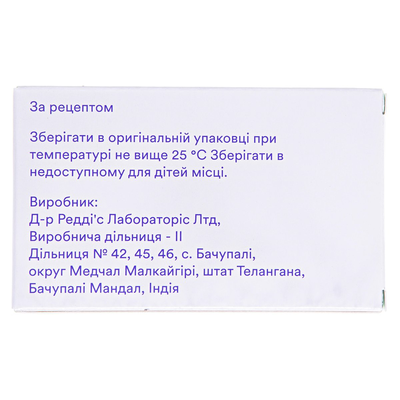
Store in the original packaging at a temperature not exceeding 25 °C.
Keep out of reach of children.
Packaging
10 tablets per blister pack; 2 blister packs per cardboard box.
Manufacturer
Manufacturer 1.
Dr. Reddy’s Laboratories Ltd., FTO – II
Manufacturer’s location and address of operations.
Plots No. 42r, 43, 44r, 45r, 46r, 53, 54, 83, village Bachupali, Bachupali Mandal, Medchal Malkaygiri District – 500090, Telangana State, India
Manufacturer 2.
Dr. Reddy’s Laboratories Limited
Manufacturer’s location and address of the manufacturing site.
Production Site - VI, Khol Village, Nalagar Road, Baddi, Solan District, Himachal Pradesh, 173205, India
To report an adverse reaction or lack of efficacy when using this medication, please call:
+380 44 207 51 97 or +380 50 414 39 39; or via email at: DrugSafetyUa@drreddys.com