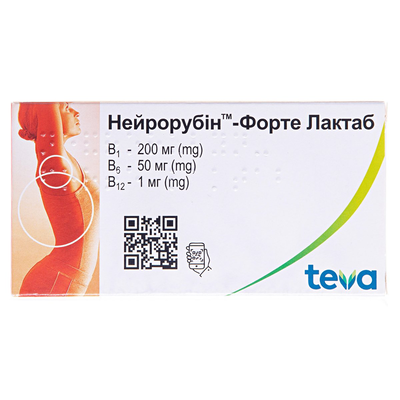
Neurorubin-Forte Lactab Tablets, film-coated, No. 20 (10 x 2)
Composition
Active ingredients: thiamine nitrate (vitamin B1), pyridoxine hydrochloride (vitamin B6), cyanocobalamin (vitamin B12);
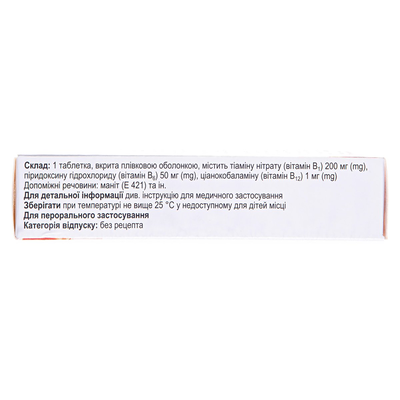
1 film-coated tablet contains 200 mg of thiamine nitrate (vitamin B1), 50 mg of pyridoxine hydrochloride (vitamin B6), 1 mg of cyanocobalamin (vitamin B12);
excipients: methylcellulose, mannitol (E 421), powdered cellulose, microcrystalline cellulose, pregelatinized starch, magnesium stearate, anhydrous colloidal silicon dioxide, hypromellose, polyethylene glycol 6000, talc, titanium dioxide (E 171), erythrosine (E 127).
Dosage Form
Film-coated tablets.
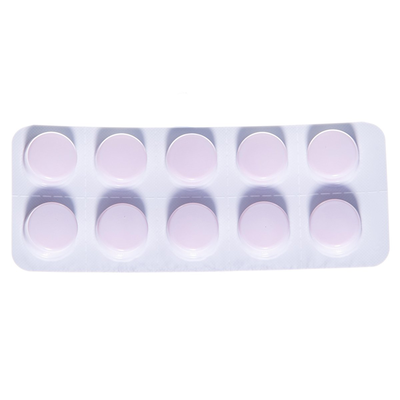
Main physical and chemical properties: pink, round, biconvex film-coated tablets, embossed with “TR” on one side.
Pharmacotherapeutic group
Vitamin B1 preparations in combination with vitamin B6 and/or vitamin B12. ATC code A11D B.
Pharmacological properties
Pharmacodynamics.
Neurorubin™-Forte Lactab combines high doses of three vitamins—B1, B6, and B12—which play a major role in the normal functioning of the nervous system. Each of these vitamins is essential for ensuring optimal metabolism in nerve cells. In addition, when taken in high doses, these vitamins have an analgesic effect.
Like all other vitamins, they are essential nutrients that cannot be synthesized directly by the body.
Therapeutic administration of vitamins B1, B6, and B12 compensates for insufficient dietary intake of these vitamins, ensuring that the body has the necessary amount of coenzymes. B vitamins are components of enzyme systems that regulate the metabolism of proteins, fats, and carbohydrates. However, each B vitamin plays a specific biological role. Their presence in the body in balanced amounts is essential for normal metabolic function.
The therapeutic use of these vitamins in various diseases of the nervous system is aimed, on the one hand, at compensating for a concurrent deficiency (possibly due to an increased need in the body caused directly by the disease) and, on the other hand, to stimulate the body’s natural recovery mechanisms.
Vitamins B1, B6, and B12 have very low toxicity and pose no potential risk to humans. Currently, there are no data regarding the carcinogenic, mutagenic, or teratogenic properties of these vitamins.
Pharmacokinetics.
Thiamine nitrate (vitamin B1) is absorbed in the small intestine, duodenum, and colon via an active transport system. After administration, the active ingredient penetrates the intestinal mucosa and is then transported via the portal vein to the liver. A certain amount of absorbed thiamine undergoes enterohepatic recirculation. The main products of thiamine excretion are thiamine carboxylic acid and pyramine (2,5-dimethyl-4-aminopyrimidine), as well as a relatively small amount of thiamine that is excreted unchanged.
Pyridoxine hydrochloride (vitamin B6) is rapidly absorbed in the intestine. In the body, pyridoxine is oxidized to pyridoxal or aminated to pyridoxamine. For it to function as a coenzyme, phosphorylation must occur at the CH₂OH group in the fifth position, resulting in the formation of pyridoxal-5-phosphate (PALP). In the blood, approximately 80% of PALP is bound to proteins. Pyridoxine is primarily stored in muscles as PALP. The main excretion product is 4-pyridoxic acid.
Cyanocobalamin (vitamin B12). In a healthy person, the absorption of cyanocobalamin is limited and depends on the concentration of the “Castle’s intrinsic factor.” A small amount of vitamin B12 is absorbed in its free form, but the majority is absorbed only after binding to “Castle’s intrinsic factor.”
After absorption in the intestine, vitamin B12 binds in blood serum to specific proteins: B12-binding beta-(transcobalamin) and B12-binding-alpha-1-globulin. Vitamin B12 is stored primarily in the liver. The half-life in blood plasma is 5 days; from the liver, it is approximately one year.
Indications
Adjuvant therapy for pain syndromes caused by:
- acute or chronic neuritis, polyneuropathy, and neuralgia;
- toxic damage to nerve tissue associated with alcoholism, diabetic polyneuropathy, and drug intoxication.
Contraindications
Hypersensitivity to any component of the drug.
Vitamin B1 is contraindicated in patients with allergic diseases.
Vitamin B6 is contraindicated in cases of gastric and duodenal ulcers during the acute phase (as it may increase gastric acidity).
Vitamin B12 is contraindicated in cases of erythremia, erythrocytosis, and thromboembolism.
Interactions with Other Medications and Other Types of Interactions
The action of thiamine is inactivated by 5-fluorouracil, as the latter competitively inhibits the phosphorylation of thiamine to thiamine pyrophosphate.
The toxicity of isoniazid may increase.
Antacids, alcohol, and tea slow the absorption of vitamin B1.
Loop diuretics, such as furosemide, which inhibit tubular reabsorption, may cause increased thiamine excretion during long-term therapy and, thus, reduce thiamine levels.
Concomitant use with pyridoxine antagonists (e.g., isoniazid, hydralazine, penicillamine, or cycloserine) or oral contraceptives may increase the need for vitamin B6.
Pyridoxine may reduce the effectiveness of altretamine.
Concomitant use with levodopa is contraindicated, as vitamin B6 may reduce the antiparkinsonian effect of levodopa. Concomitant use with pyridoxine antagonists (e.g., isoniazid, hydralazine, penicillamine, or cycloserine) or oral contraceptives may increase the need for vitamin B6.
Special Considerations for Use
Due to hypersensitivity to vitamins B1, B6, and B12, skin and subcutaneous tissue reactions may occur during therapy.
Pyridoxine may trigger the onset of acne or acne-like skin rashes, or exacerbate existing ones.
When vitamin B12 is administered, the clinical picture and laboratory test results for funicular myelosis or pernicious anemia may lose their specificity.
Consumption of alcohol and black tea reduces the absorption of thiamine.
Consumption of beverages containing sulfites (e.g., wine) increases the breakdown of thiamine.
Since the drug contains vitamin B6, it should be used with caution in patients with a history of peptic ulcers of the stomach and duodenum, or severe renal or hepatic impairment.
Patients with neoplasms, except in cases accompanied by megaloblastic anemia and vitamin B12 deficiency, should not use this medication.
Do not use this medication in cases of severe or acute cardiac decompensation or angina.
Use during pregnancy or breastfeeding.
The drug may be prescribed only after a careful assessment of the benefit-risk ratio, as there are insufficient data on the safety of the drug during pregnancy.
Vitamins B1, B6, and B12 are excreted into breast milk. High concentrations of vitamin B6 may inhibit milk production. No studies have been conducted on the extent of vitamin secretion into breast milk. The decision to discontinue breastfeeding or to use the drug should be made based on the importance of the drug to the mother. If use of the drug is necessary, breastfeeding should be discontinued for that period.
Effect on reaction time when driving or operating machinery.
This medication does not affect the ability to drive or operate complex machinery.
If dizziness occurs during treatment with this medication, you should refrain from driving or operating machinery.
Dosage and Administration
Take orally before or during meals, without chewing, with a sufficient amount of water. The usual dose for adults is 1–2 tablets per day. The course of treatment is 4 weeks. Consult a doctor for further treatment.
Children
This medication should not be administered to children, as there is no experience with its use in pediatric practice.
Overdose
Vitamin B1: has a wide therapeutic range. Very high doses (more than 10 g) produce a curare-like effect, inhibiting the conduction of nerve impulses.
Vitamin B6: has very low toxicity.
With long-term use (more than 6–12 months) of daily doses exceeding 50 mg of vitamin B6, as well as with short-term use (more than 2 months) of more than 1 g of vitamin B6 per day, neuropathies have been observed.
Neuropathies with ataxia and sensory disturbances, cerebral seizures with EEG abnormalities, as well as, in isolated cases, hypochromic anemia and seborrheic dermatitis have been reported following administration of >2 g per day. Therefore, regular monitoring is recommended during long-term use.
Vitamin B12: Following parenteral administration (and, in rare cases, oral administration) of the drug at doses higher than recommended, allergic reactions, eczematous skin lesions, and a benign form of acne have been observed.
With prolonged use at high doses, abnormalities in liver enzyme activity, pain in the cardiac region, and hypercoagulation may occur.
Treatment for oral intoxication: removal of the toxic substance (induce vomiting, perform gastric lavage), measures to reduce absorption (administration of activated charcoal).
Side Effects
Immune system: hypersensitivity reactions, anaphylactic shock, anaphylaxis. Allergic reactions are quite rare.
Endocrine system: Prolactin secretion is inhibited.
Nervous system: restlessness; long-term use (more than 6–12 months) of vitamin B6 at doses >50 mg daily may lead to peripheral sensory neuropathy, nervousness, malaise, dizziness, and headache.
Cardiovascular system: tachycardia, collapse.
Respiratory, thoracic, and mediastinal system: cyanosis, pulmonary edema, respiratory distress.
Gastrointestinal system: gastrointestinal disorders, including nausea, vomiting, diarrhea, abdominal pain, increased gastric acidity, and hemorrhage.
Liver and gallbladder disorders: when used in high doses, elevated levels of serum glutamic-oxaloacetic transaminase (SGOT).
Skin and subcutaneous tissue disorders: rash, skin reactions, including itching, hives, common acne, acne vulgaris, and erythema multiforme.
Renal and urinary system: chromaturia.
Other disorders: increased sweating, weakness, dizziness, malaise, sensation of tightness in the throat.
Shelf life
2 years.
Storage conditions
Store at a temperature not exceeding 25 °C, out of reach of children.
Packaging
10 film-coated tablets per blister pack; 2 blister packs per cardboard box.
Dispensing Category
Available without a prescription.
Manufacturer
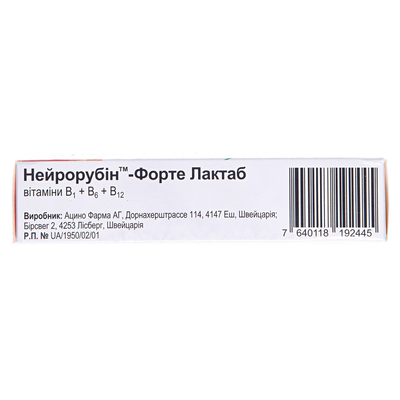
Acino Pharma AG.