
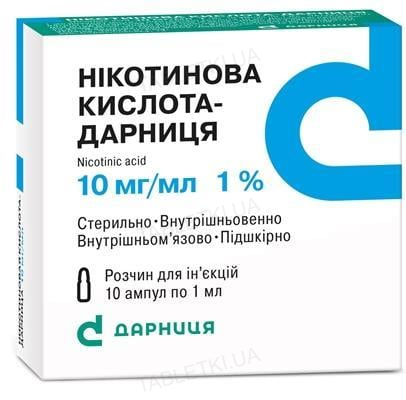
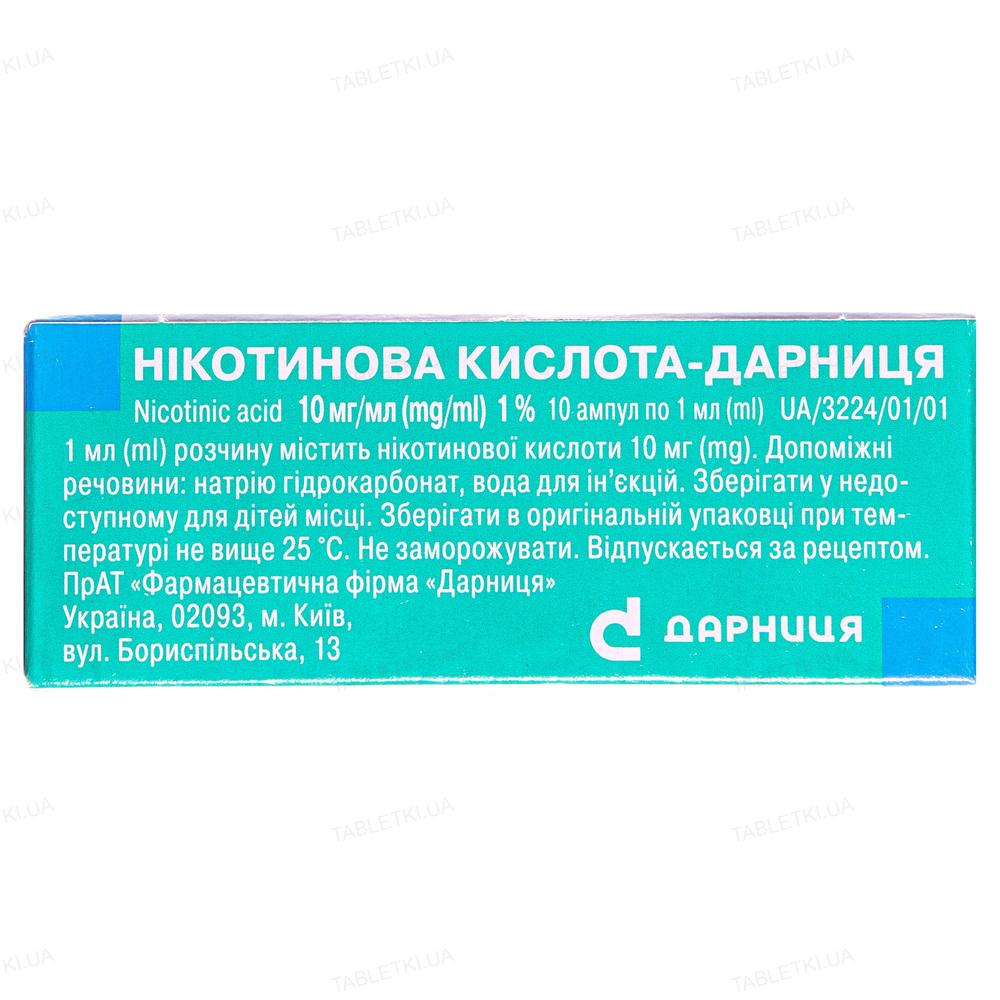
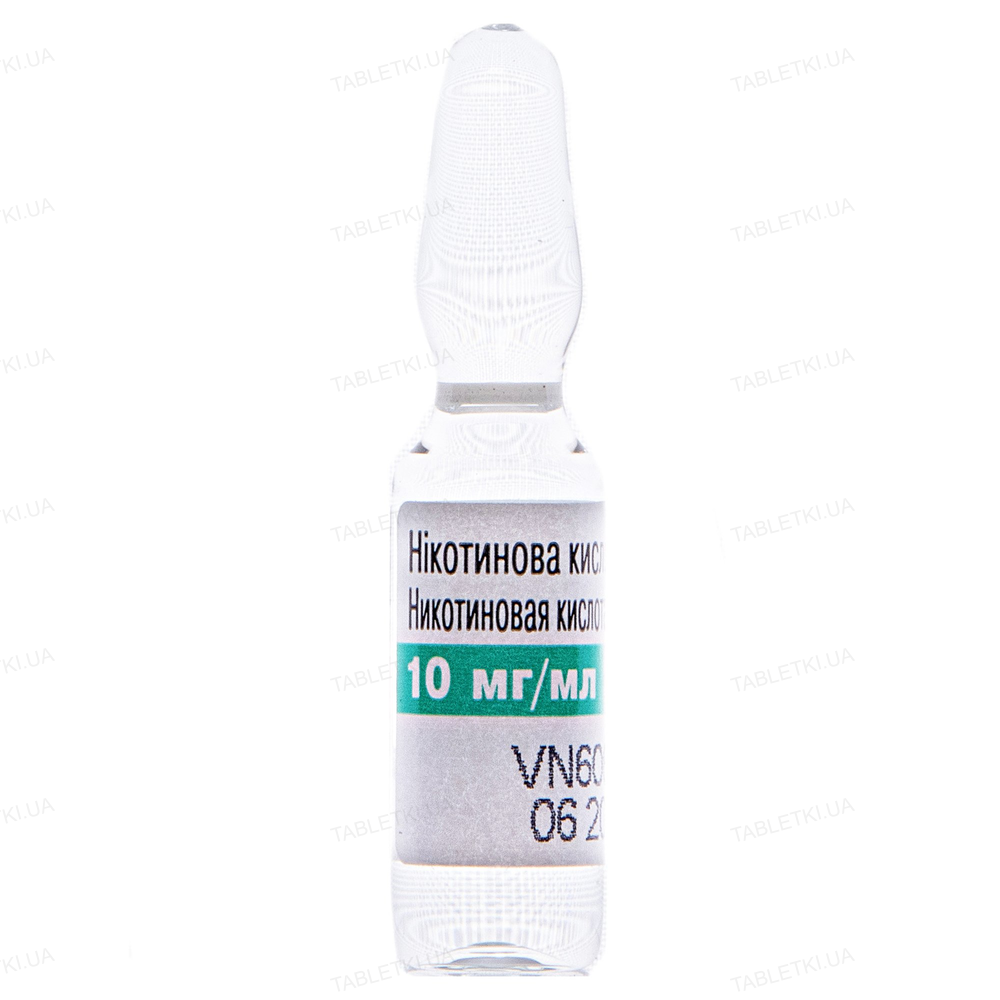
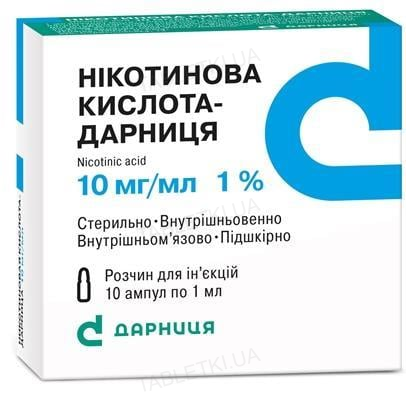
Nicotinic Acid-Darnitsa Solution for Injection, 10 mg/mL, 1 mL, No. 10 (5×2) in ampoules
Ingredients
Active ingredient: nicotinic acid;
1 mL of solution contains 10 mg of nicotinic acid;
excipients: sodium bicarbonate, water for injection.
Dosage Form
Solution for injection.
Main physical and chemical properties: clear, colorless liquid.
Pharmacotherapeutic group
Peripheral vasodilators. Nicotinic acid and its derivatives. ATC code C04A C01.
Pharmacological properties
Pharmacodynamics.
Nicotinic acid (vitamin PP) and its amide serve as prosthetic groups for the enzymes co-dehydrogenase I (diphosphopyridine nucleotide—NAD) and co-dehydrogenase II (triphosphopyridine nucleotide—NADP), which mediate hydrogen transfer in redox reactions as well as phosphate transfer.
By participating in metabolism, tissue respiration, and synthesis processes, nicotinic acid normalizes the levels of lipoproteins and triglycerides in the blood.
It has a vasodilatory effect at the level of prearterioles and arterioles (including those in the brain), thereby improving microcirculation.
It exerts a mild anticoagulant effect (increases the fibrinolytic activity of the blood) and has detoxifying properties due to its enhancement of the detoxification function of the liver and kidneys.
It corrects vitamin PP deficiency and is a specific anti-pellagra agent.
Pharmacokinetics.
Nicotinic acid is rapidly absorbed from the site of administration when given parenterally. It is evenly distributed throughout all organs and tissues. It is inactivated primarily by methylation and, to a lesser extent, by conjugation. Metabolites are excreted in the urine. Nicotinic acid may be detected in the urine in its active form if an elevated amount is administered to the body.
Indications
Treatment of pellagra (vitamin PP deficiency).
Ischemic disorders of cerebral circulation. Spasm of the peripheral blood vessels (obliterative endarteritis, Raynaud’s disease). Spasm of the renal blood vessels.
Wounds and ulcers that do not heal for a long time. Complications of diabetes mellitus (diabetic polyneuropathy, microangiopathy).
Hypoacidic gastritis, enterocolitis, colitis. Liver diseases (acute and chronic hepatitis).
Facial nerve neuritis.
Intoxications of various origins: occupational, alcohol-related, and drug-induced (aniline derivatives, barbiturates, antituberculosis drugs, sulfonamides).
Contraindications
Hypersensitivity to any component of the drug. Gastric and duodenal ulcers (in the acute phase), gout, hyperuricemia, severe hepatic insufficiency (including cirrhosis), severe forms of hypertension and atherosclerosis (intravenous administration), decompensated diabetes mellitus, recent myocardial infarction, history of sudden decrease in peripheral vascular resistance.
Drug Interactions and Other Interactions
Oral contraceptives and isoniazid reduce the conversion of tryptophan to nicotinic acid and may therefore increase the need for nicotinic acid.
Nicotinic acid reduces the efficacy and increases the toxicity of probenecid, neomycin, barbiturates, antituberculosis drugs, and sulfonamides.
Antibiotics may exacerbate the skin flushing caused by nicotinic acid.
Acetylsalicylic acid reduces the skin flushing caused by nicotinic acid.
It is not recommended to combine ciprofibrate with nicotinic acid.
Lovastatin and pravastatin are not recommended for use with nicotinic acid due to an increased risk of adverse reactions. There have been reports of rhabdomyolysis when nicotinic acid is used with lovastatin.
Caution is advised when combining this medication with antihypertensive agents (potential potentiation of the antihypertensive effect), anticoagulants, and acetylsalicylic acid (due to the risk of hemorrhage).
This medication potentiates the effects of fibrinolytic agents, antispasmodics, and cardiac glycosides, as well as the toxic effects of alcohol on the liver.
Special Considerations for Use
Since long-term use may lead to hepatic steatosis, to prevent this, patients’ diets should include foods rich in methionine, or methionine and lipoic acid should be prescribed. Liver function should be monitored during treatment. If hypersensitivity to the drug occurs (except when used as a vasodilator), it may be replaced with nicotinamide.
Use the drug with caution in cases of hyperacid gastritis, gastric and duodenal ulcers (outside the acute phase), hemorrhage, glaucoma, renal insufficiency, moderate arterial hypotension, alcohol abuse, and unstable angina (in patients taking nitrates, calcium channel blockers, β-blockers).
Use of this medication may lead to an increased need for insulin in patients with diabetes mellitus. It is not recommended for the treatment of dyslipidemia in patients with diabetes mellitus.
Glucose levels should be monitored regularly due to a possible decrease in glucose tolerance, as well as serum uric acid levels due to a possible increase resulting from long-term therapy.
Important information about excipients.
This medication contains less than 1 mmol (23 mg) of sodium per dose, meaning it is essentially sodium-free.
Use during pregnancy or breastfeeding.
This medication is contraindicated during pregnancy. If use of the medication is necessary, breastfeeding should be discontinued.
Effect on reaction time when driving or operating machinery.
No studies have been conducted on the effect of this medication on reaction time; however, if dizziness or drowsiness occurs during treatment, patients should refrain from operating complex machinery.
Dosage and Administration
Administer to adults and children 15 years of age and older intravenously (slowly), intramuscularly, or subcutaneously (intramuscular and subcutaneous injections are painful).
For intravenous bolus administration, dilute a single dose of the drug in 10 mL of 0.9% sodium chloride solution; administer over at least 5 minutes (no more than 2 mg of nicotinic acid per minute).
For intravenous infusion, dilute a single dose of the drug in 100–200 mL of a 0.9% sodium chloride solution; the infusion rate should be 30–40 drops per minute.
Pellagra. Administer intravenously or intramuscularly at a dose of 10 mg (1 mL) 1–2 times daily. The course of treatment is 10–15 days.
Ischemic disorders of cerebral circulation. Administer 10 mg (1 mL) intravenously (slowly).
Other indications. Administer subcutaneously or intramuscularly at a dose of 10 mg (1 mL) once daily for 10–15 days. May be added to an infusion solution: 10 mg (1 mL) of nicotinic acid per 100–200 mL of infusion solution.
Higher doses for intravenous administration: single dose—100 mg (10 mL); daily dose—300 mg (30 mL).
Children.
This medication is indicated for children 15 years of age and older.
Overdose
Symptoms: increased cardiovascular side effects—hypotension, headache, possible loss of consciousness, dizziness, flushing.
Treatment: discontinuation of the medication, detoxification therapy, and symptomatic treatment. There is no specific antidote.
Side Effects
Nervous system: dizziness, paresthesia, headache.
Cardiovascular system: flushing, which may be accompanied by shortness of breath, tachycardia, palpitations, increased sweating, chills, edema, tingling, and burning sensations; arrhythmias; with rapid intravenous administration—a significant drop in blood pressure, orthostatic hypotension, collapse.
Skin and subcutaneous tissue disorders: flushing of the face and upper half of the trunk with a tingling and burning sensation, dryness of the skin and the mucous membranes of the eyes; rarely, retinal edema; very rarely in patients with ischemic heart disease, acanthosis. These symptoms are transient and resolve after discontinuation of the drug. Hypersensitivity reactions, including those affecting the respiratory system, urticaria, pruritus, and rash.
General disorders and administration site conditions: tenderness and swelling at the site of subcutaneous and intramuscular injections.
With prolonged use in high doses—hyperuricemia, decreased glucose tolerance, liver dysfunction, fatty liver, jaundice, elevated levels of aspartate aminotransferase, lactate dehydrogenase, alkaline phosphatase, and uric acid; hypophosphatemia; decreased platelet count, prolonged prothrombin time, hyperpigmentation, hyperkeratosis, convulsions, diarrhea, nausea, vomiting, anorexia, exacerbation of gastric ulcer, amblyopia, insomnia, myalgia, decreased blood pressure, rhinitis, blurred vision, eyelid edema, myopathy, exfoliative dermatitis.
Reporting Suspected Adverse Reactions.
Reporting suspected adverse reactions after a drug’s approval is an important procedure. It allows for continued monitoring of the benefit-risk profile of the drug in question. Healthcare professionals must report any suspected adverse reactions through the national reporting system.
Shelf life
5 years.
Storage Conditions
Store in the original packaging at a temperature not exceeding 25 °C. Do not freeze.
Keep out of reach of children.
Incompatibility
Do not mix with solutions of thiamine chloride (thiamine is destroyed), pyridoxine hydrochloride, cyanocobalamin, euphilin, salicylates, tetracycline, sympathomimetics, or hydrocortisone.
Packaging
1 mL per ampule; 5 ampules per blister pack; 2 blister packs per carton.
Manufacturer
PJSC “Pharmaceutical Firm “Darnitsa.”
Address
Ukraine, 02093, Kyiv, 13 Boryspilskaya St.







