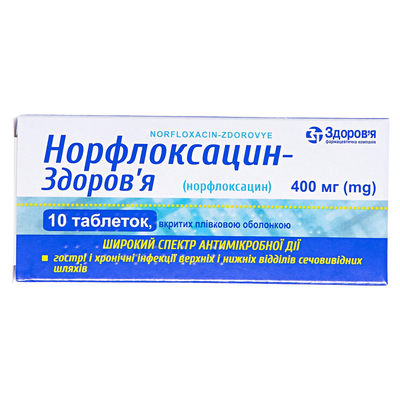
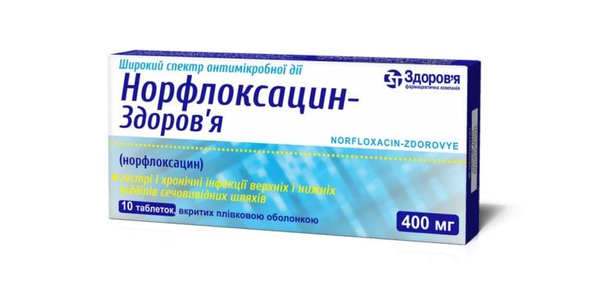
Norfloxacin-Zdorovye Tablets, film-coated, 400 mg, No. 10
Composition
Active ingredient: norfloxacin;
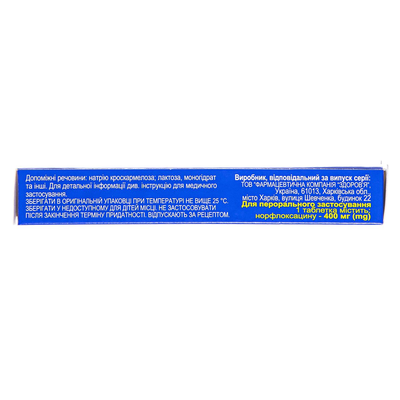
1 tablet contains 400 mg of norfloxacin;
Excipients: microcrystalline cellulose; croscarmellose sodium; potato starch; crospovidone; calcium hydrogen phosphate; talc; calcium stearate; hypromellose; coclavon; lactose monohydrate; polyethylene glycol 4000; titanium dioxide (E 171).
Dosage Form
Film-coated tablets.
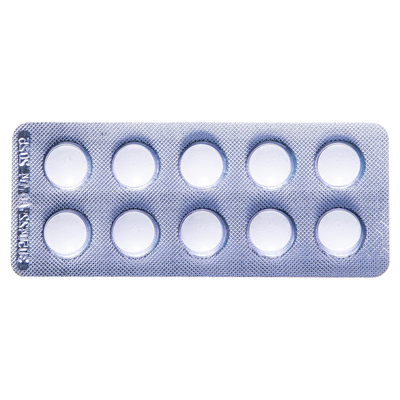
Main physical and chemical properties: film-coated tablets, white to off-white in color with a yellowish tint. Two layers are visible on the cross-section.
Pharmacotherapeutic group
Antimicrobials for systemic use. Antibacterial agents of the quinolone group. Norfloxacin. ATC code J01M A06.
Pharmacological Properties
Pharmacodynamics.
A synthetic fluoroquinolone antibacterial agent with a broad spectrum of antimicrobial activity.
The mechanism of action is based on the inhibition of bacterial deoxyribonucleic acid (DNA) synthesis through the inhibition of the enzyme DNA gyrase.
The main part of norfloxacin’s spectrum of activity is against Neisseria gonorrhoeae (including penicillinase-producing strains).
Norfloxacin is generally effective against pathogens that cause urinary tract infections, such as Escherichia coli, Enterobacter spp., Klebsiella, Proteus spp., Pseudomonas aeruginosa, and Serratia marcescens. In addition, norfloxacin may be effective against pathogens that cause inflammation of the small intestine, such as Escherichia coli, Salmonella enteritis, and Campylobacter spp.
Norfloxacin is moderately active against certain strains of Ureaplasma urealyticum. Higher levels of resistance to Enterococcus faecalis and Enterococcus faecium should be expected.
Norfloxacin is ineffective against obligate anaerobic pathogens such as Actinomyces spp., Bacteroides spp., Clostridium spp. (with the exception of some strains of C. perfringens) and Peptostreptococcus spp., as well as against Stenotrophomonas maltophilia and Chlamydia trachomatis. Partial cross-resistance between norfloxacin and other fluoroquinolones has been observed. There is no cross-resistance with structurally unrelated drugs, such as penicillins, cephalosporins, tetracyclines, macrolide antibiotics, aminoglycosides, sulfonamides, and 2, 4-dihydropyrimidines or combinations of these substances (e.g., co-trimoxazole).
Methicillin-resistant staphylococci are generally resistant to fluoroquinolones.
Pharmacokinetics.
Norfloxacin is rapidly absorbed in the gastrointestinal tract after oral administration; the absolute bioavailability of the drug is 30–40%. Food intake slows absorption. Peak plasma concentrations are reached within 1–2 hours after administration. The half-life (T1/2) of norfloxacin is nearly 4 hours; it may be prolonged in patients with renal insufficiency. Approximately 14% of the dose is bound to plasma proteins. Norfloxacin reaches high concentrations in the tissues of the genitourinary tract, urine, and bile. Nearly 30% of the dose is excreted unchanged in the urine within 24 hours. Approximately 30% of the administered dose of norfloxacin is excreted via the gastrointestinal tract.
Indications
- Uncomplicated acute cystitis—only if other antibacterial agents commonly prescribed for the treatment of this infection prove to be ineffective or unsuitable.
- Urethritis, especially that caused by susceptible strains of Neisseria gonorrhoeae.
- Complicated urinary tract infections (except for complicated pyelonephritis).
- Complicated acute cystitis.
- Uncomplicated acute pyelonephritis.
- Prevention of bacterial infections in patients with neutropenia.
Official guidelines on the proper use of antibacterial agents should be followed.
Contraindications
Hypersensitivity to the drug’s components or quinolone derivatives.
History of tendinitis or tendon ruptures associated with quinolone derivatives.
Drug Interactions and Other Interactions
Norfloxacin inhibits the CYP1A2 isoenzyme, which may lead to interactions with other drugs metabolized by this isoenzyme.
Nitrofurantoin. In vitro antagonism has been demonstrated between norfloxacin and nitrofurantoin; therefore, their concurrent use should be avoided.
Probenecid. Probenecid reduces the urinary excretion of norfloxacin but does not affect its normal serum concentration.
Theophylline. Increased plasma levels of theophylline may occur in patients when it is used concomitantly with norfloxacin, as well as an increased incidence of side effects caused by norfloxacin. Therefore, when norfloxacin and theophylline are used concomitantly, theophylline plasma concentrations should be monitored and the dosage adjusted as necessary.
Caffeine. Norfloxacin, like other quinolones, inhibits the metabolism of caffeine, which may lead to reduced excretion and an increase in the half-life (T1/2) of caffeine in plasma. This should be taken into account when consuming coffee, as well as when taking medications containing caffeine (pain relievers).
Cyclosporine. Concomitant use with norfloxacin may increase serum cyclosporine concentrations. Therefore, serum cyclosporine concentrations should be monitored and, if necessary, the dosage adjusted accordingly.
Warfarin. Norfloxacin, like other quinolones, may potentiate the effects of the oral anticoagulant warfarin or its derivatives (e.g., fenprocoumon, acenocoumarol), therefore, when these drugs are used concomitantly, prothrombin time or other blood clotting parameters should be carefully monitored.
Hormonal contraceptives. The contraceptive efficacy of oral contraceptives may, in rare cases, be compromised during antibiotic therapy; therefore, when norfloxacin is used concomitantly with oral contraceptives, the use of nonhormonal methods of contraception is additionally recommended.
Fenbufen. Experimental studies have shown that the concurrent use of quinolones with fenbufen may cause epileptic seizures; therefore, the use of quinolones together with fenbufen should be avoided.
Clozapine, ropinirole. If treatment with norfloxacin is initiated or discontinued, the dose of clozapine or ropinirole may need to be adjusted for patients already taking these medications.
Tizanidine. Concomitant use of tizanidine and norfloxacin is not recommended.
Glibenclamide. Concomitant use of quinolones, including norfloxacin, with glibenclamide (a sulfonylurea) may cause severe hypoglycemia. Therefore, monitoring blood glucose levels is recommended when these drugs are taken together.
Didanosine. Didanosine-containing medications should not be taken together with norfloxacin or within 2 hours after taking norfloxacin, as these medications may interfere with each other’s absorption, leading to low concentrations of norfloxacin in serum and urine.
Nonsteroidal anti-inflammatory drugs (NSAIDs). Concomitant use of NSAIDs with quinolones, including norfloxacin, may increase the risk of central nervous system stimulation and seizures. Therefore, norfloxacin should be used with caution by individuals who are also taking NSAIDs.
Various medications (iron supplements, antacids, and medications containing magnesium, aluminum, calcium, and zinc). Calcium supplements and multivitamins containing calcium should not be taken with norfloxacin, as this may reduce the absorption of norfloxacin, leading to lower concentrations in the blood serum and urine. This also applies to oral nutritional solutions and most dairy products (milk or natural dairy products, such as yogurt).
Special Considerations
The use of norfloxacin should be avoided in patients with a history of serious adverse reactions to quinolones or fluoroquinolones. Treatment of such patients with norfloxacin should be initiated only if there are no alternative treatment options and after a thorough benefit-risk assessment.
As with other quinolone medications, increased photosensitivity may occur during treatment; therefore, prolonged and intense exposure to sunlight should be avoided. Tanning beds should also not be used during this period. If signs of photosensitivity appear, treatment should be discontinued.
Tendinitis and tendon rupture. When using norfloxacin, as with other quinolones, cases of tendinitis and/or tendon rupture (particularly, but not limited to, the Achilles tendon) may occur, sometimes bilateral, which may occur as early as 48 hours after the start of treatment with quinolones and fluoroquinolones and, as reported, may even occur several months after treatment has been discontinued. The risk of tendinitis and tendon rupture is increased in elderly patients, patients with renal impairment, organ transplant recipients, and patients receiving corticosteroid therapy. Therefore, concomitant use of corticosteroids should be avoided. At the first signs of tendinitis (e.g., painful swelling, inflammation), treatment with norfloxacin should be discontinued and alternative treatment considered. Proper management of the affected limb (e.g., immobilization) and consultation with a physician are necessary.
This medication should be used only when there is a compelling clinical need in patients with known epilepsy or conditions that lower the seizure threshold. Seizures have been reported in rare cases in patients receiving norfloxacin. Norfloxacin may exacerbate and worsen symptoms in patients with known or suspected psychiatric disorders, hallucinations, and/or confusion. If seizures occur, treatment with norfloxacin should be discontinued.
Malignant myasthenia (not diagnosed prior to treatment) may occur during use of the drug, which can cause life-threatening respiratory muscle failure.
If shortness of breath occurs during treatment with norfloxacin, appropriate emergency measures should be taken.
Hemolytic reactions may occur with the use of norfloxacin, as well as other quinolones, in patients with latent or severe glucose-6-phosphate dehydrogenase deficiency.
Very rarely, some quinolones may cause a prolongation of the QT interval on an electrocardiogram and infrequent cases of arrhythmias (including extremely rare cases of ventricular flutter). As with other drugs that may prolong the QT interval, norfloxacin should be used with caution in patients with uncorrected electrolyte imbalances (e.g., hypokalemia, hypomagnesemia), heart disease (e.g., heart failure, myocardial infarction, bradycardia), congenital long QT syndrome, or in patients receiving concomitant treatment with Class Ia or III antiarrhythmic drugs.
Some quinolones, including norfloxacin, should be used with caution in patients taking cisapride, macrolides, neuroleptics, tricyclic antidepressants, or who have a personal or family history of QT prolongation.
Elderly patients and women may be more sensitive to drugs that prolong the QT interval. Therefore, caution should be exercised in these populations when using fluoroquinolones, including norfloxacin.
In patients with severe renal insufficiency, the risk-benefit ratio of norfloxacin should be carefully weighed on a case-by-case basis. Urinary concentrations of norfloxacin may be reduced in patients with severe renal insufficiency, as norfloxacin is primarily excreted by the kidneys.
During long-term treatment, patients should be monitored for the development of crystalluria. Although crystalluria is not expected under normal conditions at a dosage of 400 mg twice daily, as a precaution, the recommended daily dose should not be exceeded, and adequate fluid intake should be ensured to maintain proper hydration and adequate urinary output.
The occurrence of severe and persistent diarrhea during or after therapy may indicate pseudomembranous colitis, which is very rare. In such cases, the drug should be discontinued immediately and appropriate therapy initiated (e.g., vancomycin, 4 × 250 mg orally). Drugs that suppress peristalsis are contraindicated.
Cholestatic hepatitis is commonly reported during treatment with norfloxacin. Patients should be advised to discontinue treatment and consult a physician if signs and symptoms of liver disease develop, such as anorexia, jaundice, dark urine, itching, or abdominal pain on palpation.
Aortic aneurysm and aortic dissection, as well as cardiac valve regurgitation/insufficiency. There is evidence of an increased risk of aortic aneurysm and aortic dissection, particularly in elderly patients, as well as aortic and mitral valve regurgitation following the use of fluoroquinolones. Cases of aortic aneurysm and aortic dissection have been reported in patients treated with fluoroquinolones, sometimes complicated by rupture (including fatal cases) and regurgitation/insufficiency of any of the heart valves (see Section 4.4).
Therefore, fluoroquinolones should be used only after a careful benefit-risk assessment and after considering other treatment options in patients with a family history of aneurysm or congenital heart valve disease, or in patients with a diagnosed aortic aneurysm and/or aortic dissection, or with heart valve disease, or in the presence of other risk factors or predisposing conditions
- such as those associated with aortic aneurysm and aortic dissection, as well as those associated with heart valve regurgitation or insufficiency (e.g., in connective tissue disorders such as Marfan syndrome or Ehlers-Danlos syndrome, Turner syndrome, Behçet’s disease, hypertension, or rheumatoid arthritis) or additionally
- in cases of aortic aneurysm and aortic dissection (e.g., vascular diseases such as Takayasu’s arteritis or giant-cell arteritis, known atherosclerosis, or Sjögren’s syndrome) or additionally
- in cases of cardiac valve regurgitation/insufficiency (e.g., infective endocarditis). The risk of aortic aneurysm, dissection, and rupture may be increased in patients concurrently receiving systemic corticosteroids.
In the event of sudden abdominal, chest, or back pain, patients should immediately seek medical attention at an emergency department.
Patients should be advised to seek immediate medical attention in the event of acute shortness of breath, a new episode of palpitations, or the development of abdominal or lower limb edema.
This medication contains lactose. If a patient has a known intolerance to certain sugars, they should consult a doctor before taking this medication.
Norfloxacin should be taken 2 hours before or 4 hours after calcium supplements, calcium-containing multivitamins, oral nutritional solutions, and dairy products.
Long-lasting, disabling, and potentially irreversible serious adverse reactions. Very rare cases of long-lasting (months or years) disabling and potentially irreversible serious adverse reactions affecting various, and sometimes multiple body systems (the musculoskeletal system, the nervous system, the mental health, and the sensory organs) in patients receiving quinolones and fluoroquinolones, regardless of their age and pre-existing risk factors.
Treatment with “Norfloxacin” should be discontinued immediately upon the first signs or symptoms of any serious adverse reaction, and patients should be advised to seek medical attention.
Peripheral neuropathy. Cases of sensory or sensorimotor polyneuropathy leading to paresthesia, hypoesthesia, dysesthesia, or weakness have been reported in patients receiving quinolones and fluoroquinolones. Patients taking norfloxacin should inform their doctor before continuing treatment if symptoms of neuropathy, such as pain, burning, tingling, numbness, or weakness, develop, in order to prevent the development of a potentially irreversible condition.
Pregnancy and lactation.
This medication is contraindicated during pregnancy. Norfloxacin, like other quinolones, passes into breast milk; therefore, breastfeeding should be discontinued if use of the medication is necessary.
Effects on the ability to drive and operate machinery.
During treatment with this medication, patients should refrain from driving or operating machinery.
Dosage and Administration
Adults should take the medication on an empty stomach with water or with food. It is best to take the medication twice daily (in the morning and in the evening), but it may also be taken once daily (at the same time each day).
The dosage depends on the susceptibility of the pathogens and the severity of the disease; therefore, the pathogen’s susceptibility to norfloxacin should be tested before starting treatment. However, treatment may be initiated before the results of susceptibility testing are available. In this case, before starting routine therapy, a specimen must be collected for laboratory testing so that treatment can be adjusted if the pathogens are not susceptible to norfloxacin.
Dosage
| Diagnosis | Dosage | Duration
Administration |
| Uncomplicated acute cystitis | 1 tablet (400 mg) twice daily | 3 days |
| Urethritis, especially caused by susceptible strains of Neisseria gonorrhoeae.
Uncomplicated acute pyelonephritis. |
1 tablet (400 mg) twice daily | 7–10 days* |
| Complicated urinary tract infections (except for complicated pyelonephritis).
Complicated acute cystitis. |
1 tablet (400 mg) twice daily | 2–3 weeks* |
| Prevention of bacterial infections in patients with neutropenia. | 1 tablet (400 mg) 2–3 times a day | Throughout the entire period
neutropenia** |
* Some symptoms of a urinary tract infection (burning during urination, fever, pain) may resolve within 1–2 days, but treatment should be continued as recommended.
**Data on treatment duration exceeding 8 weeks are not yet available.
Dosage for patients with renal impairment. The drug may be used in patients with renal impairment. If creatinine clearance is less than or equal to 30 mL/min, the recommended dose should not exceed 1 tablet (400 mg) per day.
Dosage for elderly patients. In the absence of renal insufficiency, no dose adjustment is necessary.
Children.
This medication is contraindicated for use in children.
Overdose
Symptoms: fever, shortness of breath, leukopenia, thrombocytopenia, acute hemolytic anemia, allergic reactions, gastrointestinal disturbances, renal insufficiency.
Treatment: In the event of an acute overdose, the patient should immediately drink a calcium-containing solution to convert norfloxacin into a calcium complex, which is absorbed from the gastrointestinal tract in very small amounts. The patient should be thoroughly examined, and supportive symptomatic treatment should be administered as needed. Adequate fluid replacement must be ensured.
Side Effects
Cardiovascular disorders**: tachycardia, arrhythmia; Very rarely, when taking certain quinolone drugs, including norfloxacin, QT interval prolongation and ventricular arrhythmia (including pirouette ventricular tachycardia) may occur; decreased blood pressure, fainting, vasculitis.
Blood and lymphatic system disorders: leukopenia, eosinophilia, neutropenia, decreased hematocrit, hemolytic anemia, thrombocytopenia.
Nervous system*: headache, drowsiness, hallucinations, fatigue, mood changes, paresthesia, disorientation, polyneuropathy, including Guillain-Barré syndrome, epileptiform seizures, hypoesthesia, tremor, myoclonus.
Psychiatric disorders*: insomnia, depression, anxiety, irritability, euphoria, confusion, psychotic reactions.
Gastrointestinal disorders: anorexia, bitter taste in the mouth, nausea, vomiting, abdominal pain, diarrhea, pseudomembranous enterocolitis (with long-term use), moderate gastralgia, heartburn, pancreatitis.
Urinary system disorders: crystalluria, glomerulonephritis, interstitial nephritis, dysuria, polyuria, albuminuria, urethral bleeding, hypercreatininemia.
Skin and subcutaneous tissue disorders: pruritus, rash, edema, exanthema, petechiae, hemorrhagic blisters, and crusted papules as manifestations of vascular involvement (vasculitis).
Musculoskeletal and connective tissue disorders*: arthralgia, tendinitis, tendovaginitis, tendon ruptures, myalgia, arthritis. Very rare: inflammation of the Achilles tendon, which may lead to rupture of the Achilles tendon.
Immune system disorders: hypersensitivity reactions, urticaria, anaphylaxis, angioedema; in rare cases—exfoliative dermatitis, Stevens-Johnson syndrome, Lyell’s syndrome, erythema multiforme, photosensitivity.
Hepatobiliary system: hepatitis, elevated liver transaminases, jaundice.
Eye disorders*: farsightedness, increased tearing.
Ear and labyrinth disorders*: dizziness, tinnitus, hearing loss.
Changes in laboratory test results: elevated levels of glutamate-oxaloacetate transaminase, glutamate-pyruvate transaminase, and serum alkaline phosphatase.
Other: vaginal candidiasis, shortness of breath, dysgeusia.
* Very rare cases of prolonged (up to several months or years) disability and potentially irreversible serious adverse reactions affecting various, sometimes minor, body systems (including reactions such as tendinitis, tendon rupture, arthralgia, pain in the extremities, gait disturbances, neuropathies associated with paresthesia, depression, fatigue, memory impairment, disturbances of sleep, hearing, vision, taste, and smell) associated with the use of quinolones and fluoroquinolones in some cases, regardless of existing risk factors.
** Cases of aortic aneurysm and aortic dissection, sometimes complicated by rupture (including fatal cases), as well as regurgitation/insufficiency of any of the heart valves (see Section 4.4).
Pseudomembranous colitis. If pseudomembranous colitis occurs, the physician should consider, depending on the indications, discontinuing treatment with norfloxacin and immediately initiating appropriate treatment for the adverse reaction (e.g., use of appropriate antibiotics/chemotherapeutic agents with clinically proven efficacy). At the same time, drugs that inhibit peristalsis should not be used.
Severe hypersensitivity reactions (e.g., anaphylaxis). If such reactions occur, treatment with norfloxacin should be discontinued immediately, and appropriate emergency measures should be taken (e.g., administration of antihistamines, corticosteroids, sympathomimetics, and, if necessary, mechanical ventilation).
Occurrence of epileptiform seizures. In such cases, standard appropriate emergency measures should be taken (e.g., maintaining a clear airway, administering anticonvulsants such as diazepam or barbiturates).
Shelf life
3 years.
Storage conditions
Store in the original packaging at a temperature not exceeding 25 °C.
Keep out of the reach of children.
Packaging
10 tablets in a blister pack inside a box.