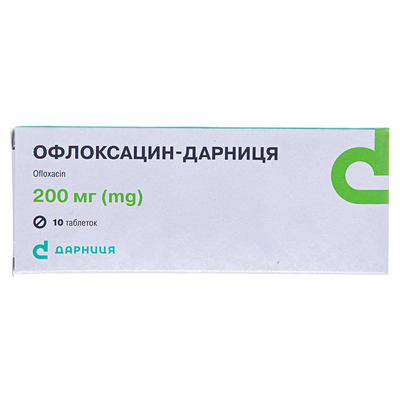
Ofloxacin-Darnitsa 200 mg tablets, No. 10
Ingredients
Active ingredient: ofloxacin;
1 tablet contains 200 mg of ofloxacin;
inactive ingredients: potato starch, hydroxypropyl cellulose, povidone, croscarmellose sodium, calcium stearate.
Dosage Form
Tablets.
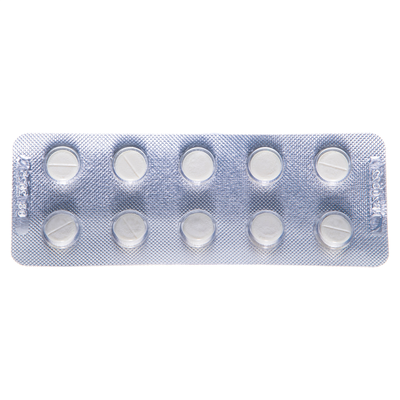
Main physical and chemical properties: white or white with a yellowish tint tablets, flat-cylindrical in shape with a bevel and a score line.
Pharmacotherapeutic group
Antibacterial agents of the quinolone group. Fluoroquinolones. Ofloxacin. ATC code J01M A01.
Pharmacological Properties
Pharmacodynamics.
The active ingredient of the drug is ofloxacin, a synthetic broad-spectrum fluoroquinolone antimicrobial agent.
The bactericidal mechanism of action of the drug is associated with the inhibition of DNA gyrase activity, which leads to the cessation of bacterial DNA replication.
Ofloxacin is active against most Gram-negative bacteria: Escherichia coli, Klebsiella, Proteus, Salmonella, Shigella, Enterobacter, Citrobacter, Providencia, Pseudomonas, Hafnia, as well as Staphylococcus (including strains resistant to methicillin and other antibiotics). Neisseria, Mycoplasma, Chlamydia, Campylobacter, Brucella, Vibrio, Aeromonas, Plesiomonas, Haemophilus influenzae, and Versinia are also susceptible to ofloxacin.
The following organisms exhibit variable susceptibility to ofloxacin: enterococci, streptococci (S. pyogenes, S. pneumoniae, S. viridans), Serratia marcescens, Pseudomonas aeruginosa, Acinetobacter, Mycoplasma (M. hominis, M. pneumoniae), Mycobacterium tuberculosis, and Mycobacterium fortuitum.
In most cases, the following are not susceptible to ofloxacin: Ureaplasma urealyticum, Nocardia asteroides, and anaerobic bacteria (e.g., Bacteroides spp., peptococci, peptostreptococci, Eubacterium spp., Fusobacterium spp., Clostridium difficile).
Ofloxacin is ineffective against Treponema pallidum.
Pharmacokinetics.
Absorption.
After oral administration, ofloxacin is rapidly and completely absorbed in the gastrointestinal tract. Bioavailability is nearly 100%.
The time to reach maximum plasma concentration (Tmax) is 0.5–3 hours. The maximum plasma concentration (Cmax) following a single dose of 200–400 mg of the drug is 2 and 5 mg/mL, respectively. Plasma protein binding is 25%.
Distribution.
It crosses the placenta, enters breast milk, and distributes to all tissues and organs. The volume of distribution ranges from 1.5 to 2.5 L/kg.
Metabolism.
A limited amount (up to 5%) is metabolized by the liver to dimethyl-ofloxacin and ofloxacin-A-oxide. Dimethyl-ofloxacin has moderate antimicrobial activity.
Excretion.
It is excreted from the body primarily by the kidneys via tubular secretion and glomerular filtration: 75–80% of the administered dose is excreted unchanged within 24–48 hours, and less than 5% is excreted as metabolites. 4–8% of the administered dose is excreted in the feces.
The half-life (T1/2) is 4–6 hours. The elimination of ofloxacin is slowed in patients with severe hepatic impairment and in patients with renal impairment (depending on the degree of impairment—up to 15–60 hours).
Indications
Infectious and inflammatory diseases caused by pathogens susceptible to ofloxacin:
- exacerbations of chronic obstructive pulmonary disease (including chronic bronchitis)*, community-acquired pneumonia*;
- uncomplicated acute cystitis*, urethritis*, acute pyelonephritis, and complicated urinary tract infections;
- complicated skin and soft tissue infections*;
- gonococcal urethritis and cervicitis caused by susceptible strains of Neisseria*.
Official recommendations regarding the proper use of antibacterial agents should be followed.
*When other antibacterial agents commonly used to treat this infection cannot be used.
Contraindications
- Hypersensitivity to the active ingredient, other components of the drug, or to other fluoroquinolones.
- Epilepsy, central nervous system disorders with a lowered seizure threshold (following traumatic brain injury, stroke, or inflammatory processes of the brain and meninges).
- History of tendinitis.
- Glucose-6-phosphate dehydrogenase deficiency.
Do not use this medication in patients with QT interval prolongation, uncompensated hypoglycemia, or in patients concurrently taking medications known to prolong the QT interval (Class IA and III antiarrhythmic drugs, tricyclic antidepressants, macrolides, antipsychotics).
Interactions with Other Medications and Other Types of Interactions
When this medication is used concomitantly with other medications, the following interactions may occur:
with antacids containing aluminum/magnesium, sucralfate, zinc, or iron preparations—reduced absorption of ofloxacin; it should be taken 2 hours before taking these medications;
with medications excreted via tubular secretion (e.g., probenecid, cimetidine, furosemide, methotrexate)—impaired excretion and increased plasma levels of ofloxacin;
with medications capable of prolonging the QT interval (e.g., Class IA and III antiarrhythmics, tricyclic antidepressants, macrolides, antipsychotics)—further prolongation of the QT interval; Concomitant use of these drugs is contraindicated;
with nonsteroidal anti-inflammatory drugs (NSAIDs) or drugs that lower the seizure threshold (e.g., theophylline)—further lowering of the brain’s seizure threshold; If seizures occur, ofloxacin should be discontinued. It is believed that ofloxacin, unlike other fluoroquinolones, does not interact pharmacokinetically with theophylline;
with antidiabetic medications—fluctuations in blood glucose levels (hypoglycemia or hyperglycemia); blood glucose levels should be monitored during concomitant use;
with indirect anticoagulants – prolonged bleeding time; when used concomitantly, coagulation test results should be carefully monitored;
with glibenclamide—a slight increase in plasma levels of glibenclamide; during concomitant use, the patient’s condition should be closely monitored.
Effects on Laboratory Test Results.
During treatment with ofloxacin, false-positive results for opiates or porphyrins in urine may occur. It may be necessary to confirm positive test results for opiates or porphyrins using more specific methods.
Vitamin K antagonists: Coagulation test results should be carefully monitored in patients taking vitamin K antagonists due to a possible increase in the effect of coumarin derivatives.
When ofloxacin is used concomitantly with warfarin or its derivatives, prothrombin time should be monitored or other appropriate tests performed to assess blood coagulation status.
Ofloxacin may inhibit the growth of Mycobacterium tuberculosis and produce false-negative results in bacteriological tests for the diagnosis of tuberculosis.
When high doses of the drug are administered, its concentration in serum may increase.
When ofloxacin is used with caffeine, theophylline, cimetidine, cyclosporine, oral anticoagulants, and drugs metabolized by cytochrome P450, side effects may be exacerbated.
Special Considerations for Use
Ofloksacin should be avoided in patients who have had serious adverse reactions in the past while taking quinolones or fluoroquinolones (see the “Adverse Reactions” section). Treatment of these patients with ofloxacin should be initiated only if there are no alternative treatment options and after a careful benefit-risk assessment (see also the “Contraindications” section).
While taking this medication, patients should drink sufficient amounts of water to prevent the development of crystalluria.
Ofloxacin is not the drug of first choice for the treatment of community-acquired pneumonia caused by pneumococci or mycoplasmas, or acute tonsillitis caused by β-hemolytic streptococci.
While taking this medication, avoid exposure to intense sunlight and ultraviolet radiation (mercury-quartz lamps, tanning beds).
Fluoroquinolones are recommended only for patients who have no alternative treatment options for acute bacterial sinusitis, exacerbations of chronic bronchitis of bacterial etiology, and uncomplicated urinary tract infections, as the benefits for such patients do not outweigh the risks.
Fluoroquinolone antibiotics should not be used:
- for the treatment of infections that are not severe and may resolve without antibiotic therapy (e.g., upper respiratory tract infections);
- in the treatment of nonbacterial infections, such as nonbacterial (chronic) prostatitis;
- to prevent traveler’s diarrhea or recurrent lower urinary tract infections (infections that do not spread beyond the bladder);
- for the treatment of moderate bacterial infections when other commonly recommended antibiotics cannot be used;
- in patients with acute bacterial sinusitis, exacerbations of chronic bronchitis of bacterial origin, and uncomplicated urinary tract infections, provided that other (alternative) medications can be used.
Aortic aneurysm and dissection, and cardiac valve regurgitation/insufficiency.
Epidemiological studies report an increased risk of aortic aneurysm and dissection, particularly in elderly patients, and aortic and mitral valve regurgitation following the use of fluoroquinolones. Cases of aortic aneurysm and dissection have been reported, sometimes complicated by rupture (including fatal cases), as well as regurgitation or insufficiency of any of the heart valves in patients receiving fluoroquinolones (see the “Adverse Reactions” section).
Therefore, fluoroquinolones should be used only after a careful assessment of the benefit-risk ratio and after considering other therapeutic options in patients with a positive family history of aneurysm or congenital heart valve disease, or in patients with an existing diagnosis of aortic aneurysm and/or aortic dissection, or heart valve disease, or in the presence of other risk factors or predisposing conditions:
- as well as for aortic aneurysms and dissections, and in cases of heart valve regurgitation/insufficiency (e.g., connective tissue disorders such as Marfan syndrome or Ehlers-Danlos syndrome, Turner syndrome, Takayasu arteritis, giant-cell arteritis, Behçet’s disease, hypertension, rheumatoid arthritis, known atherosclerosis) or additionally
- in cases of aortic aneurysm and dissection (e.g., vascular disorders such as Takayasu arteritis or giant-cell arteritis, or known atherosclerosis, or Sjögren’s syndrome), or additionally
- in cases of cardiac valve regurgitation/insufficiency (e.g., infective endocarditis).
The risk of aortic aneurysm and dissection, as well as their rupture, may be increased in patients who are concurrently receiving systemic corticosteroids.
If sudden pain occurs in the abdomen, chest, or back, patients should immediately seek medical attention at an emergency department.
Patients should be advised to seek immediate medical attention in the event of acute shortness of breath, a new episode of palpitations, or the development of abdominal or lower extremity edema.
Patients with impaired renal function.
Use this medication with caution in patients with impaired renal function. Adjust the dose and timing of administration, taking into account the drug’s delayed elimination.
Patients with hepatic impairment.
Use this medication with caution in patients with hepatic impairment. Cases of fulminant hepatitis, potentially leading to liver failure (including fatal cases), have been reported during treatment with fluoroquinolones.
If symptoms of liver disease such as anorexia, jaundice, dark urine, itching, or abdominal tenderness on palpation (see the “Adverse Reactions” section), patients are advised to discontinue use of the medication and consult a physician.
Patients with central nervous system disorders.
Use this medication with caution in patients with central nervous system disorders (severe atherosclerosis of the cerebral vessels, history of acute cerebral ischemia), patients with myasthenia gravis, and patients with a history of peripheral neuropathy.
Myasthenia gravis.
Fluoroquinolones, including ofloxacin, have a neuromuscular blocking effect and may exacerbate muscle weakness in patients with myasthenia gravis. In the postmarketing period, serious adverse reactions, including fatalities and conditions requiring respiratory support, have been associated with the use of fluoroquinolones in patients with myasthenia gravis.
Ofloxacin is not recommended for patients with a history of myasthenia gravis.
Patients with a history of psychotic disorders.
Use this medication with caution in patients with mental illness or a history of psychotic disorders. Psychotic reactions have been reported in patients taking fluoroquinolones. In some cases, these reactions progressed to suicidal thoughts or self-destructive behavior, including suicide attempts, sometimes even after a single dose of the drug.
If such reactions occur, the drug should be discontinued and appropriate therapeutic measures taken.
Hypoglycemia.
Changes in blood glucose levels, including both hypoglycemia and hyperglycemia, have been reported with the use of all quinolones (see the “Adverse Reactions” section).
Use this medication with caution in patients with diabetes who are receiving concomitant treatment with oral hypoglycemic agents (e.g., glibenclamide) or insulin, due to the potential for hypoglycemia. Cases of hypoglycemic coma have been reported. Patients with diabetes mellitus should have their blood glucose levels closely monitored.
Patients with glucose-6-phosphate dehydrogenase deficiency.
Use this medication with caution in patients with latent or confirmed glucose-6-phosphate dehydrogenase deficiency due to a potential predisposition to hemolytic reactions during treatment with fluoroquinolones.
QT interval prolongation.
In very rare cases, QT interval prolongation has been reported in patients taking fluoroquinolones.
Use this medication with caution in patients with risk factors for QT interval prolongation, which include:
- advanced age;
- uncorrected electrolyte imbalances (hypokalemia, hypomagnesemia);
- congenital long QT syndrome;
- acquired QT prolongation;
- heart disease (heart failure, myocardial infarction, bradycardia).
Elderly patients and women may be more sensitive to drugs that prolong the QT interval. Therefore, caution should be exercised when prescribing fluoroquinolones, including ofloxacin, to these patient groups.
In rare cases, QT interval prolongation has been reported in patients taking fluoroquinolones.
Patients taking vitamin K antagonists.
Use this medication with caution in patients who are concurrently taking vitamin K antagonists. There have been reports of possible increases in coagulation test values (prothrombin time/international normalized ratio) and/or bleeding in patients taking fluoroquinolones (including ofloxacin) in combination with vitamin K antagonists (e.g., warfarin). Coagulation test results should be monitored closely.
Methicillin-resistant Staphylococcus aureus (MRSA).
Methicillin-resistant Staphylococcus aureus is likely to exhibit cross-resistance to fluoroquinolones, particularly to ofloxacin. Therefore, ofloxacin is not recommended for the treatment of known or suspected MRSA infections, except in cases where laboratory test results have confirmed the pathogen’s susceptibility to ofloxacin.
Infections caused by Escherichia coli.
Resistance of E. coli—the most common causative agent of urinary tract infections—to fluoroquinolones varies across different countries in the European Union. Physicians prescribing therapy are advised to take into account the local prevalence of E. coli resistance to fluoroquinolones.
Infections caused by Neisseria gonorrhoeae.
Due to the increasing resistance of N. gonorrhoeae, ofloxacin should not be used as an empirical approach to antimicrobial therapy for suspected gonococcal infections (gonococcal urethritis, inflammatory diseases of the pelvic organs, and epididymo-orchitis), except in cases where the pathogen has been identified and its susceptibility to ofloxacin has been confirmed. If no clinical improvement is observed after 3 days of treatment, the therapy should be reconsidered.
Inflammatory diseases of the pelvic organs.
For the treatment of inflammatory diseases of the pelvic organs, ofloxacin should be used only in combination with drugs active against anaerobic microorganisms.
Diseases caused by Clostridium difficile.
Diarrhea during or after treatment with ofloxacin (including several weeks after treatment), especially if severe, prolonged, and/or bloody, may be a symptom of pseudomembranous colitis (caused by Clostridium difficile). The severity of Clostridium difficile-associated diseases ranges from mild to life-threatening, with pseudomembranous colitis being the most severe form (see the “Adverse Reactions” section). Therefore, it is important to consider this diagnosis in patients who develop severe diarrhea during or after treatment with ofloxacin.
If pseudomembranous colitis is suspected, the drug should be discontinued immediately and appropriate specific antibiotic therapy should be initiated (e.g., oral vancomycin, oral teicoplanin, or metronidazole). In this clinical situation, medications that inhibit intestinal peristalsis are contraindicated.
Patients prone to seizures.
Quinolones may lower the seizure threshold and trigger seizures. Ofloxacin is contraindicated in patients with a history of epilepsy (see the “Contraindications” section). Like other quinolones, it should be used with extreme caution in patients prone to seizures and during concomitant treatment with active substances that lower the seizure threshold, such as theophylline (see the “Interactions with Other Medications and Other Types of Interactions” section).
If seizures occur, discontinue use of the drug.
Prevention of photosensitivity.
Cases of photosensitivity have been reported with the use of ofloxacin (see the “Adverse Reactions” section). Patients taking ofloxacin should avoid exposure to intense sunlight and ultraviolet radiation (mercury-quartz lamps, tanning beds) unless absolutely necessary during treatment and for 48 hours after discontinuing the drug.
Tendinitis and tendon rupture.
In rare cases, tendinitis may develop during treatment with ofloxacin, which may lead to tendon rupture, particularly of the Achilles tendon. Tendinitis and tendon rupture, sometimes bilateral, may occur within 48 hours after the start of treatment with quinolones and fluoroquinolones and have been reported to occur even several months after discontinuation of treatment. The risk of this condition is increased in elderly patients, organ transplant recipients, patients with renal insufficiency, and patients receiving concomitant corticosteroids. Therefore, concomitant use of corticosteroids should be avoided.
The daily dose is calculated based on creatinine clearance (see the “Dosage and Administration” section). If tendinitis is suspected (e.g., swelling or inflammation of the joints), discontinue use of the medication immediately, consult your doctor, and take appropriate therapeutic measures for the affected tendon (e.g., immobilization). Corticosteroids should not be used if signs of tendinopathy occur.
Hypersensitivity reactions.
During treatment with ofloxacin, allergic reactions and hypersensitivity reactions have been reported following administration of the initial dose of fluoroquinolones. Anaphylactic and anaphylactoid reactions may progress to life-threatening shock, even after administration of the initial dose. In such cases, the drug should be discontinued immediately and appropriate therapeutic measures taken. Use of the drug should be avoided in patients with a history of severe adverse reactions (tendinitis, severe neurological reactions) to other quinolones, due to an increased risk of similar reactions to ofloxacin. Treatment of these patients should be initiated only if there are no alternative treatment options and after a careful benefit-risk assessment.
Severe bullous reactions.
Cases of severe bullous skin reactions, such as Stevens-Johnson syndrome and toxic epidermal necrolysis, have been reported with the use of ofloxacin (see the “Adverse Reactions” section). If skin and/or mucosal reactions occur, patients should be advised to contact their doctor immediately before continuing treatment.
Prolonged, disabling, and potentially irreversible serious adverse reactions.
With the use of quinolones and fluoroquinolones, regardless of the patient’s age or pre-existing risk factors, very rare, prolonged (lasting months or years), and potentially irreversible and sometimes combined, adverse reactions affecting tendons, muscles, joints, the senses, peripheral nerves, the central nervous system, and mental health, which may lead to disability. If these disorders or their initial symptoms occur (tendinitis, tendon rupture, arthralgia, pain in the extremities, gait disturbance, muscle weakness, neuropathy, paresthesia (tingling or numbness in the hands or feet), depression, fatigue, confusion, and hallucinations, memory impairment, sleep disturbances, hearing impairment, visual disturbances, and disturbances of taste and smell), you should immediately stop taking the medication and consult a doctor regarding the possibility of switching to other antibacterial medications to complete the course of treatment.
Peripheral neuropathy.
During treatment with ofloxacin, cases of peripheral sensory or sensorimotor polyneuropathy have been reported, leading to paresthesia or hypoesthesia, dysesthesia, or weakness, in patients receiving quinolones and fluoroquinolones (including ofloxacin). Patients undergoing treatment with Ofloxacin-Darnitsa should be advised to discontinue treatment if symptoms of neuropathy (pain, burning, tingling, numbness, and/or weakness in the arms or legs) occur, in order to prevent the development of an irreversible condition.
Visual disturbances
If any visual disturbances or adverse reactions affecting the eyes occur while taking ofloxacin, consult an ophthalmologist immediately (see the sections “Ability to Affect Reaction Time When Driving or Operating Machinery” and “Adverse Reactions”).
Other Important Information.
Treatment with antibacterial agents (including ofloxacin), especially over a prolonged period, may lead to increased growth of resistant microorganisms. The patient’s condition should be monitored, and appropriate therapeutic measures should be taken if a secondary infection occurs.
Consumption of alcoholic beverages is not recommended during treatment with ofloxacin.
Important information about excipients.
This medication contains sodium; therefore, patients on a sodium-restricted diet should exercise caution when using it.
Use During Pregnancy or Breastfeeding.
Animal studies have shown damage to articular cartilage in immature animals, but no teratogenic effects were observed. Therefore, ofloxacin is contraindicated during pregnancy or breastfeeding.
Ofloxacin is excreted into breast milk in small amounts. Due to the potential for arthropathy and other serious types of toxicity in a breastfed infant, breastfeeding should be discontinued during treatment with ofloxacin.
Effect on reaction time when driving or operating machinery.
Patients should refrain from driving or operating machinery due to the potential for dizziness, impaired coordination, drowsiness, visual disturbances, and other nervous system reactions. These effects may be exacerbated by alcohol consumption.
Dosage and Administration
Administer the medication orally. Swallow the tablets whole with liquid. The interval between taking ofloxacin and taking sucralfate, zinc or iron preparations, or antacids containing aluminum or magnesium should be at least 2 hours, as the absorption of ofloxacin may be reduced when taken concurrently with these medications.
Dosage.
The dose of the medication depends on the type and severity of the infectious disease. The dosage range for adults is 200 mg to 800 mg per day. Doses up to 400 mg may be taken as a single dose, preferably in the morning, while higher doses should be divided into two equal doses and taken at equal intervals.
Exacerbations of chronic obstructive pulmonary disease (including chronic bronchitis), community-acquired pneumonia: administer the medication at a dose of 400 mg once daily; if necessary, up to 400 mg twice daily.
Complicated skin and soft tissue infections: Administer 400 mg twice daily.
Urinary tract infections: Dosages and administration schedules, depending on the indication, are provided in Table 1.
Table 1
| Indications | Daily Dosage Regimen
(based on severity) |
Duration of treatment
(based on severity) |
| Complicated urinary tract infections | 200 mg twice daily
(may be increased to 400 mg twice daily) |
7–21 days |
| Acute pyelonephritis | 200 mg twice daily
(may be increased to 400 mg twice daily) |
7–10 days (may be extended to 14 days) |
| Acute prostatitis
Chronic bacterial prostatitis |
200 mg twice daily
(may be increased to 400 mg twice daily) |
2–4 weeks*
4–8 weeks* |
| Epididymo-orchitis | 200 mg twice daily
(may be increased to 400 mg twice daily) |
14 days |
| Inflammatory diseases of the pelvic organs | 400 mg twice daily | 14 days |
| Uncomplicated acute cystitis | 200 mg twice daily or
400 mg once daily |
3 days
1 day |
| Complicated cystitis | 200 mg twice daily | 7–14 days |
| Nongonococcal urethritis and cervicitis | 300 mg twice daily | 7 days |
| Urethritis caused by
Neisseria gonorrhoeae (see the “Special Considerations for Use” section) |
400 mg as a single dose | 1 day |
*In cases of prostatitis, the need to extend the duration of treatment may be considered following a thorough re-evaluation of the patient.
Ofloxacin may also be used to complete a course of therapy in patients who show improvement following initial treatment with intravenous ofloxacin.
Patients with impaired renal function.
Administer the drug at the usual initial dose, but subsequent doses should be reduced based on creatinine clearance (ClCr):
Table 2
| Creatinine Clearance (Plasma Creatinine Level) | Initial
dose of the drug |
Subsequent
doses of the drug |
| 20–50 mL/min
(ClCr – 1.5–5 mg/dL) |
Usual | 100–200 mg
per day |
| < 20 mL/min
(ClCr – >5 mg/dL) |
normal | 100 mg
per day |
| Hemodialysis/
peritoneal dialysis |
usual | 50–100 mg
per day |
Serum ofloxacin concentrations should be monitored in patients with severe renal impairment and in patients on dialysis.
In cases where creatinine clearance cannot be measured, it can be calculated from serum creatinine levels using the Cockcroft formula for adults provided below:
| For men: ClCr (mL/min) = | Weight (kg) × (140 – age (years)) |
| 72 × serum creatinine (mg/dL) |
or
| ClCr (mL/min) = | Weight (kg) × (140 – age (years)) | |
| 0.814 × serum creatinine (μmol/L) | ||
For women: ClCr (mL/min) = 0.85 × (value for men)
Patients with impaired liver function.
Drug clearance may be reduced in patients with severe hepatic impairment. Therefore, a daily dose exceeding 400 mg is not recommended.
Elderly patients.
No dose adjustment is necessary (see the “Special Considerations” section), except in cases related to the patient’s liver or kidney function.
Duration of treatment.
The duration of treatment depends on the severity of the infection and the patient’s response to therapy.
The treatment course usually lasts 5–10 days, except in cases of uncomplicated gonorrhea, when a single 400 mg dose is recommended.
The duration of treatment should not exceed 2 months.
Children.
This medication is contraindicated in children.
Overdose
Symptoms: The most significant expected signs of acute overdose are central nervous system symptoms, including confusion, dizziness, altered consciousness, and seizures, hallucinations, tremor, as well as gastrointestinal reactions such as nausea and erosive damage to the mucous membranes.
Treatment: Take measures to remove unabsorbed ofloxacin (e.g., gastric lavage, administration of adsorbents and magnesium sulfate, if possible, within the first 30 minutes after overdose), monitoring of electrocardiogram parameters due to the possibility of QT interval prolongation. Fractions of ofloxacin may be removed from the body by hemodialysis. Peritoneal dialysis and chronic ambulatory peritoneal dialysis are not effective for removing ofloxacin from the body. There is no specific antidote for this drug. The elimination of ofloxacin from the body can be enhanced by forced diuresis.
Antacids are recommended to protect the gastric mucosa.
Side Effects
Ocular system*: irritation of the ocular mucosa, conjunctivitis, nystagmus, decreased visual acuity, visual disturbances (including diplopia, photophobia), color blindness, uveitis.
Ear and vestibular system*: dizziness, tinnitus, decreased hearing acuity, hearing loss, impaired coordination.
Respiratory system, thoracic organs, and mediastinum: cough, nasopharyngitis, shortness of breath, bronchospasm, allergic pneumonitis, rhinorrhea, wheezing, allergic pneumonitis, sensation of shortness of breath, respiratory arrest, dyspnea, severe shortness of breath.
Gastrointestinal system: anorexia, abdominal pain, nausea, vomiting, diarrhea, enterocolitis (sometimes hemorrhagic), pseudomembranous colitis, dryness or burning sensation in the mouth, dyspepsia, heartburn, flatulence, constipation, intestinal colic, intestinal perforation, intestinal hemorrhage, pancreatitis.
Hepatic and biliary tract disorders: elevated levels of liver enzymes (alanine aminotransferase, aspartate aminotransferase, lactate dehydrogenase, gamma-glutamyltransferase, and/or alkaline phosphatase), and elevated plasma bilirubin levels; jaundice (including cholestatic and parenchymal jaundice); hepatitis; necrosis. Severe liver damage has been reported, including cases of fatal acute liver failure, particularly in patients with severe underlying liver disease.
Renal and urinary system: increased plasma creatinine levels, acute renal failure, acute interstitial nephritis, polyuria, dysuria, anuria, frequent urination, urinary retention, hematuria, albuminuria, candiduria, and formation of kidney stones.
Metabolism and nutrition disorders: hyperglycemia, hypoglycemia in patients with diabetes mellitus who are taking hypoglycemic medications, increased levels of triglycerides, cholesterol, and potassium in plasma, acidosis, hypoglycemic coma (see the “Special Considerations for Use” section).
Neurological disorders*: headache, drowsiness, paresthesia, dysgeusia, parosmia, peripheral sensory neuropathy, peripheral sensorimotor neuropathy, convulsions, exacerbation of myasthenia gravis, extrapyramidal disorders or other disturbances of muscle coordination, memory impairment, development of epileptic seizures, ataxia, tremor, slowed reaction time, increased intracranial pressure, vertigo.
Psychiatric*: agitation, sleep disturbances, insomnia, psychotic disorders (including hallucinations, paranoia, manic thoughts), restlessness, confusion, nightmares, depression, psychotic disorders and depression with self-destructive behavior, including suicidal thoughts or suicide attempts; euphoria, phobias, irritability, anxiety, spatial disorientation, delirium.
Cardiovascular system**: tachycardia, hypotension, ventricular arrhythmias, polymorphic ventricular tachycardia of the “pirouette” type (these reactions have been observed primarily in patients with risk factors for QT interval prolongation); QT interval prolongation on the ECG, hypertension, cerebral thrombosis, cardiac arrest, shock.
Blood and lymphatic system disorders: anemia, hemolytic anemia, leukopenia, neutropenia, eosinophilia, thrombocytopenia, agranulocytosis, suppression of bone marrow hematopoiesis (which resolves after discontinuation of the drug), pancytopenia. Development of pinpoint hemorrhages (petechiae), hematomas, and nosebleeds.
Immune system disorders: hypersensitivity reactions, including anaphylactic/anaphylactoid reactions, angioedema, anaphylactic/anaphylactoid shock.
Skin and subcutaneous tissue disorders: rashes (including pustular and hemorrhagic), pruritus, urticaria, hot flashes, hyperhidrosis, erythema, Lyell’s syndrome, photosensitivity reactions, drug-induced dermatitis, vascular purpura, vasculitis, which may lead, in exceptional cases, to skin necrosis; Stevens-Johnson syndrome, generalized exanthematous pustulosis, drug rashes, exfoliative dermatitis, skin hyperpigmentation, discoloration or delamination of the nails.
Musculoskeletal and connective tissue disorders*: tendinitis, arthralgia, myalgia, tendon ruptures (including the Achilles tendon), which may be bilateral and occur within 48 hours after the start of treatment, rhabdomyolysis and/or myopathy, muscle weakness, muscle cramps, muscle strains, muscle tears, tendon pain, arthritis.
Reproductive system and breast disorders: irritation, burning, and painful rashes on the external genitalia in women; vaginitis; dysmenorrhea; hypermenorrhea; metrorrhagia.
Congenital and familial/genetic disorders: acute porphyria attacks in patients with porphyria.
Infectious and parasitic diseases: superinfection, development of secondary infections (including fungal infections), development of resistance in pathogenic microorganisms.
General disorders*: general weakness, increased fatigue, decreased appetite, malaise, asthenia, edema (including pulmonary edema), back pain, fever, chills, increased sensitivity to pain, weight loss, and disturbances in taste and smell.
*There have been reports of a few cases of very rare, prolonged (lasting months or years), disabling, and potentially irreversible serious adverse reactions affecting multiple (sometimes in combination) organ systems and senses (including reactions such as tendinitis, tendon rupture, arthralgia, pain in the extremities, gait disturbances, neuropathies associated with paresthesia, depression, fatigue, memory impairment, sleep disturbances, hearing impairment, visual disturbances, and taste and smell disturbances) associated with the use of quinolones and fluoroquinolones, regardless of existing risk factors (see the “Special Considerations for Use” section).
**In patients receiving fluoroquinolones, cases of aortic aneurysm and aortic dissection, sometimes complicated by rupture (including fatal cases), and regurgitation/insufficiency of any of the heart valves have been reported (see the “Special Considerations for Use” section).
Reporting of Suspected Adverse Reactions.
Reporting suspected adverse reactions after a drug’s approval is an important procedure. It allows for continued monitoring of the benefit-risk profile of the drug in question. Healthcare professionals should report any suspected adverse reactions through the national reporting system.
Shelf Life
3 years.
Storage conditions
Store in the original packaging at a temperature not exceeding 25 °C. Keep out of the reach of children.
Packaging
10 tablets per blister pack; 1 blister pack per package.
Dispensing Category
By prescription only.