
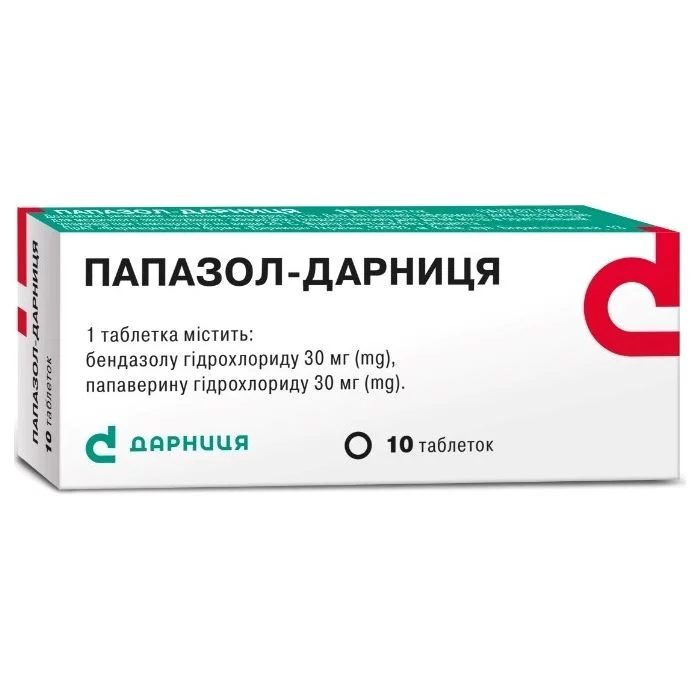
Papazol Darnitsa Tablets No. 10
Instructions for Papazol-Darnitsa Tablets
Composition
Active Ingredients in Papazol: Each tablet contains 30 mg of bendazol hydrochloride and 30 mg of papaverine hydrochloride;
Inactive ingredients in Papazol: lactose monohydrate, microcrystalline cellulose, potato starch, croscarmellose sodium, calcium stearate.
Dosage Form
Tablets.
Main physical and chemical properties:
White tablets with a grayish tint, flat-cylindrical in shape, with a beveled edge.
Pharmacotherapeutic group
Peripheral vasodilators. ATX code S04A X.
Pharmacological properties
Pharmacodynamics.
The combination drug Papazol contains the alkaloid papaverine and the imidazole derivative bendazole.
Papaverine is a myotropic antispasmodic. It is an inhibitor of the enzyme phosphodiesterase, which causes intracellular accumulation of cyclic 3',5'-adenosine monophosphate (cAMP). The accumulation of cAMP leads to a disruption of the contractile capacity of smooth muscle and relaxation in spastic conditions. It reduces tone, decreases the contractile activity of smooth muscle, and produces vasodilatory and antispasmodic effects. Papaverine has a weak effect on the central nervous system; only at high doses does it exhibit some sedative effect.
Bendazol is a myotropic antispasmodic. It directly affects the state of the smooth muscle in the vascular wall and internal organs by acting on imidazole receptors. It lowers blood pressure and the level of free calcium in smooth muscle, relieves spasms of the smooth muscle in the abdominal organs, and stimulates spinal cord function. It enhances the tissues’ ability to withstand hypoxia and increases the synthesis of nucleic acids and proteins.
Indications
- Spasms of the smooth muscles of internal organs (pylorospasm, spastic colitis, cholecystitis, peptic ulcer disease of the stomach and duodenum, intestinal colic, renal colic, and spasm of the urinary tract);
- transient cerebral vasospasm;
- moderate spasm of peripheral blood vessels;
- An adjunctive agent as part of a comprehensive treatment regimen for hypertension.
Contraindications
Hypersensitivity to the active ingredient or to other components of the drug Papazol; atrioventricular conduction disorders; severe heart failure; arterial hypotension; conditions characterized by decreased muscle tone; convulsive syndrome; obstructive airway syndrome; bleeding gastric and duodenal ulcers; hypotonic colitis; chronic constipation; traumatic brain injury; severe hepatic and renal failure; chronic nephritis with edema and impaired renal nitrogen excretion; diabetes; hypothyroidism; adrenal insufficiency; prostatic hypertrophy; glaucoma.
In cases of rare hereditary disorders that may cause incompatibility with an excipient in the drug (see the “Special Precautions” section), use of the drug is contraindicated.
Interactions with Other Medications and Other Forms of Interaction
Concomitant use of Papazol with other medications poses a risk of:
with antihypertensive drugs of various classes, tricyclic antidepressants, thiazide diuretics, procainamides, reserpine, quinidine, and phentolamine—enhancement of the antihypertensive effect; With long-term use with β-blockers, Papazol prevents the increase in total peripheral resistance caused by β-blockers;
with anticholinergic agents—potentiation of the anticholinergic effect;
With barbiturates—mutual potentiation of effects;
With levodopa and methyldopa—the effects of these drugs are weakened;
with drugs that depress the central nervous system—this combination increases the toxicity of these drugs and is not recommended;
with cardiac glycosides—a marked increase in myocardial contractility due to a decrease in total peripheral vascular resistance;
with adsorbents, astringents, and coating agents—reduced absorption of the drug from the gastrointestinal tract.
The drug’s effectiveness is reduced by tobacco smoking.
Special Considerations
Papazol should be prescribed with caution and at doses below the average therapeutic dose, in cases of severe heart disease, supraventricular tachycardia, respiratory depression, reduced intestinal motility, shock, in debilitated patients, and in elderly patients.
Papazol is not recommended for long-term treatment of hypertension, especially in elderly patients.
Orthostatic hypotension may develop while taking Papazol.
If symptoms of liver dysfunction appear—such as gastrointestinal disturbances, jaundice, eosinophilia, or elevated liver enzymes—discontinue use of the medication.
Inform your doctor if you experience the following symptoms: hot flashes, sweating, headache, fatigue, jaundice, skin rashes, nausea, stomach discomfort, or constipation.
Smoking reduces the drug’s effectiveness.
While taking this medication, you should avoid alcohol and drugs that depress the central nervous system.
Papazol contains lactose; therefore, patients with rare hereditary forms of galactose intolerance, lactase deficiency, or glucose-galactose malabsorption should not take Papazol.
Pregnancy and Lactation
Papazol is contraindicated during pregnancy or lactation.
Effects on the Ability to Drive and Operate Machinery
During treatment with Papazol, patients should refrain from driving or operating other complex machinery.
Dosage and Administration
Papazol should be administered to adults orally 2 hours before or after meals, 1 tablet 2–3 times a day. The maximum single dose is 1 Papazol tablet; the maximum daily dose is 4 tablets.
The duration of treatment is determined by the doctor based on the nature and course of the disease, as well as the effectiveness of therapy.
Children
Papazol should not be used in children.
Overdose
Symptoms of Papazol poisoning result from a combination of an overdose of papaverine and bendazol.
Symptoms of bendazol poisoning: hypotension, arrhythmia, excessive sweating, fever, dizziness, nausea, headache, weakness, and decreased tissue perfusion.
Symptoms of papaverine poisoning: restlessness, lethargy, drowsiness, weakness, headache, sweating, visual disturbances, diplopia, difficulty breathing, ataxia, nystagmus, central nervous system depression, sinus tachycardia, partial or complete atrioventricular block, hypotension, collapse, coma, cyanosis, metabolic acidosis, hyperventilation, hyperglycemia, hyperkalemia, nausea, vomiting, constipation, gastrointestinal disturbances, skin rashes.
Treatment: Discontinue the drug; perform gastric lavage until the lavage fluid is clear, using a saline laxative or activated charcoal. Symptomatic treatment. There is no specific antidote.
Adverse Reactions
When using Papazol, some patients may experience side effects characteristic of papaverine and bendazol preparations.
Respiratory, thoracic, and mediastinal disorders: dry cough, runny nose, shortness of breath.
Gastrointestinal disorders: nausea, constipation, stomach discomfort.
Liver and biliary tract disorders: elevated liver transaminases, jaundice.
Nervous system disorders: headache, drowsiness, weakness, dizziness.
Cardiovascular disorders: AV block, arrhythmias, decreased myocardial contractility, arterial hypotension, orthostatic hypotension, palpitations, chest pain, hot flashes, ventricular extrasystoles, tachycardia; with long-term use—deterioration of ECG parameters due to reduced cardiac output.
Blood and lymphatic system: eosinophilia.
Immune system disorders: hypersensitivity reactions, including rash, itching, hives, and angioedema.
General disorders: increased sweating, flushing, sensation of heat.
If any side effects occur, the patient should consult a doctor!
Shelf life
5 years.
Do not use Papazol after the expiration date printed on the package.
Storage conditions
Store Papazol out of the reach of children in its original packaging at a temperature not exceeding 25 °C.
Packaging
10 Papazol tablets in a blister pack; 1 blister pack per package.
Sales Conditions
Available without a prescription.







