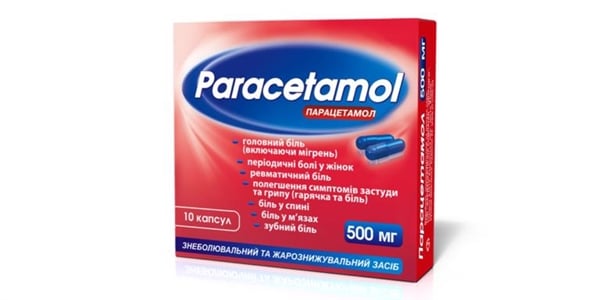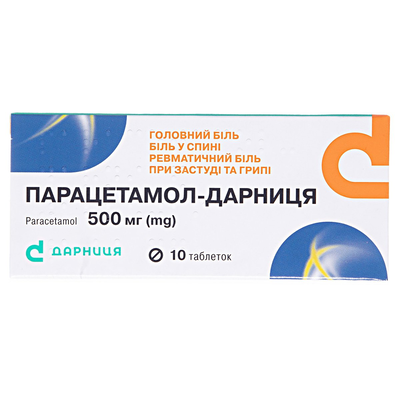
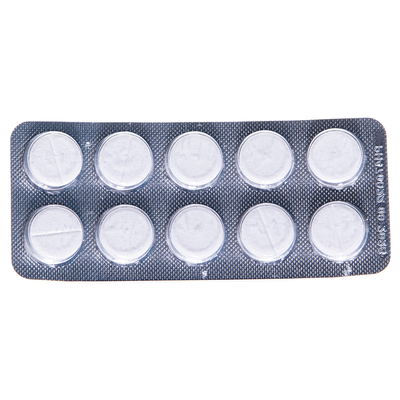
Paracetamol-Darnitsa 500 mg tablets, No. 10
Ingredients
Active ingredient: paracetamol;
1 tablet contains 500 mg of paracetamol;
inactive ingredients: pregelatinized starch, povidone, microcrystalline cellulose, croscarmellose sodium, calcium stearate.
Dosage Form
Tablets.
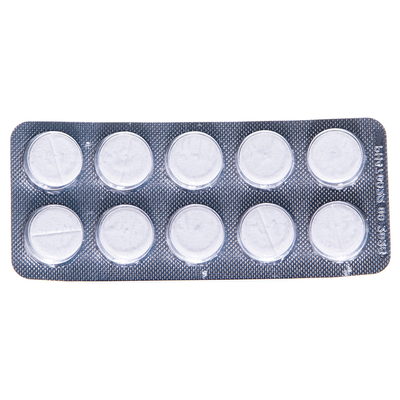
Main physical and chemical properties: white or almost white tablets, flat-cylindrical in shape, with a bevel and a score line. A grayish tint is permissible.
Pharmacotherapeutic group
Analgesics and antipyretics. Anilides. Paracetamol. ATC code N02B E01.
Pharmacological properties
Pharmacodynamics.
Non-narcotic analgesic. Non-selectively inhibits cyclooxygenase (COX), affecting the pain and thermoregulatory centers. In inflamed tissues, cellular peroxidases neutralize the effect of paracetamol on COX, which explains its negligible anti-inflammatory effect. It has no effect on prostaglandin synthesis in peripheral tissues, which explains why acetaminophen has no adverse effect on water-salt metabolism (sodium and water retention) or on the mucous membrane of the gastrointestinal tract. The formation of methemoglobin and sulfhemoglobin is unlikely.
Pharmacokinetics.
Absorption is high, practically 100%. In the systemic circulation, 15% of the absorbed drug binds to plasma proteins. The time to reach maximum blood concentration (TCmax) is 20–30 minutes. A therapeutically effective concentration of paracetamol in blood plasma is achieved when administered at a dose of 10–15 mg/kg. It crosses the blood-brain barrier and passes into breast milk. The amount of the drug in breast milk is less than 1% of the dose of paracetamol taken by the nursing mother. It is metabolized in the liver: 80% undergoes conjugation with glucuronic acid and sulfates to form inactive metabolites. 17% of the drug undergoes hydroxylation to form active metabolites, which conjugate with glutathione to form inactive metabolites. In the absence of glutathione, these metabolites can inhibit the enzymatic systems of hepatocytes and cause their necrosis. The half-life (T1/2) of paracetamol is 2–3 hours. In elderly patients, drug clearance decreases and T1/2 increases. It is excreted by the kidneys—3% in its unchanged form.
Indications
Headaches, including migraines and tension headaches; toothaches; back pain; rheumatic pain; muscle pain; menstrual cramps; moderate pain associated with arthritis; relief of fever and pain associated with the common cold and influenza.
Contraindications
Hypersensitivity to any component of the medication, severe liver and/or kidney dysfunction, congenital hyperbilirubinemia, glucose-6-phosphate dehydrogenase deficiency, alcoholism, blood disorders, Gilbert’s syndrome, severe anemia, leukopenia.
Interactions with Other Medications and Other Types of Interactions
The rate of paracetamol absorption may increase with the use of metoclopramide and domperidone and decrease with the use of cholestyramine.
Paracetamol should be taken 1 hour before or 4–6 hours after taking cholestyramine.
The anticoagulant effect of warfarin and other coumarins, which increases the risk of bleeding, may be enhanced with concomitant long-term use of paracetamol. Intermittent use has no significant effect.
Barbiturates reduce the antipyretic effect of acetaminophen.
Anticonvulsants (including phenytoin, barbiturates, and carbamazepine), which stimulate the activity of hepatic microsomal enzymes, may increase the toxic effect of acetaminophen on the liver by increasing the extent to which the drug is converted into hepatotoxic metabolites. When paracetamol is used concomitantly with hepatotoxic agents, the toxic effects of these drugs on the liver are increased. Concomitant use of high doses of paracetamol with isoniazid increases the risk of developing hepatotoxic syndrome.
Probenecid halves the clearance of paracetamol by blocking its conjugation with glucuronic acid; therefore, the dose of paracetamol should be reduced when used in combination therapy with probenecid.
Paracetamol should be used with caution in combination with chloramphenicol due to the prolongation of the latter’s half-life and increased toxic effects.
Caution is advised when paracetamol is used concomitantly with flucloxacillin, as concomitant use is associated with metabolic acidosis with a high anion gap, particularly in patients with risk factors.
Paracetamol reduces the effectiveness of diuretics.
Do not use concomitantly with alcohol.
Special Instructions for Use
Do not exceed the recommended doses. Do not take this medication with other products containing acetaminophen—this may lead to an overdose. Paracetamol overdose can cause liver failure, which may lead to the need for a liver transplant or death.
Note that patients with non-cirrhotic alcohol-induced liver damage are at increased risk of paracetamol-induced hepatotoxicity.
Cases of impaired liver function/liver failure have been reported in patients with reduced glutathione levels, such as those with severe malnutrition, anorexia, a low body mass index, chronic alcoholism, or sepsis.
Consult a doctor regarding the possibility of using this medication:
- patients with impaired kidney or liver function;
- patients taking warfarin or similar medications with anticoagulant effects;
- patients taking analgesics for mild arthritis;
- if headaches become persistent.
In patients with severe infections, such as sepsis, which are accompanied by decreased glutathione levels, taking acetaminophen increases the risk of metabolic acidosis. Symptoms of metabolic acidosis include deep, rapid, or labored breathing, nausea, vomiting, and loss of appetite. If these symptoms occur, seek medical attention immediately.
Caution is advised when paracetamol is used concomitantly with flucloxacillin due to an increased risk of metabolic acidosis with a high anion gap, particularly in patients with severe renal insufficiency, sepsis, malnutrition, and other causes of glutathione deficiency (e.g., chronic alcoholism), as well as in those taking the maximum daily doses of paracetamol. Close monitoring is recommended, including measurement of 5-oxoproline in urine.
This medication may affect the results of laboratory tests for blood glucose and uric acid levels.
Do not consume alcoholic beverages while taking acetaminophen.
If symptoms persist, consult a doctor.
Use during pregnancy or breastfeeding.
Pregnancy. This medication may be prescribed during these periods only if the expected benefit to the mother outweighs the potential risk to the fetus or infant.
As with other medications, consult a doctor before taking paracetamol during pregnancy. Extensive data on pregnant women indicate neither teratogenicity nor fetal/neonatal toxicity. Epidemiological studies on the development of the nervous system in children exposed to paracetamol in utero have not yielded conclusive results. If clinically necessary, acetaminophen may be used during pregnancy; however, it should be administered at the lowest effective dose for the shortest possible duration and as infrequently as possible.
Breastfeeding. Paracetamol passes into breast milk, but in clinically insignificant amounts. Available published data do not indicate any contraindications regarding breastfeeding.
Effect on reaction time when operating motor vehicles or other machinery.
No effect.
Dosage and Administration
This medication is intended for oral administration.
Adults and children 12 years of age and older: 1–2 tablets 4 times daily as needed. Do not take more than 8 tablets (4,000 mg) within a 24-hour period.
Children (6–12 years): ½–1 tablet 3–4 times daily as needed.
A single dose of paracetamol is 10–15 mg/kg of body weight; the maximum daily dose is 60 mg/kg of body weight. Do not take more than 4 doses within 24 hours.
The maximum duration of use for children without consulting a doctor is 3 days.
The interval between doses should be at least 4 hours.
Do not exceed the recommended dose.
Do not take with other medications containing acetaminophen.
Children.
Do not use in children under 6 years of age.
Overdose
A paracetamol overdose can cause liver failure, which may lead to the need for a liver transplant or death. Clinical signs of liver damage following a paracetamol overdose usually appear 24–48 hours after the overdose and peak after 4–6 days.
There is an increased risk of paracetamol poisoning, particularly in the elderly, children, patients with liver disease, chronic alcoholism, and chronic malnutrition.
Liver damage is possible in adults who have taken 10 g or more of acetaminophen and in children who have taken more than 150 mg/kg of body weight. In patients with risk factors (long-term use of carbamazepine, phenobarbital, phenytoin, primidone, rifampicin, St. John’s wort, or other drugs that induce liver enzymes; alcohol abuse; glutathione system deficiency, such as digestive disorders, cystic fibrosis, HIV infection, starvation, or cachexia), taking 5 g or more of acetaminophen may lead to liver damage.
Symptoms of overdose within the first 24 hours include pallor, nausea, vomiting, loss of appetite, and abdominal pain; however, an overdose may also be asymptomatic.
A single paracetamol overdose in adults and children can cause reversible or irreversible liver cell necrosis, which may lead to impaired glucose metabolism, metabolic acidosis, hepatocellular failure, encephalopathy, hemorrhages, hypoglycemia, coma, and death. At the same time, 12–48 hours after ingestion, elevated levels of liver transaminases (aspartate aminotransferase, alanine aminotransferase), lactate dehydrogenase, and bilirubin, as well as an increase in prothrombin levels.
Acute renal failure with acute tubular necrosis may manifest as severe lower back pain, hematuria, and proteinuria and may develop even in the absence of severe liver damage. Cardiac arrhythmia and pancreatitis have also been reported.
With prolonged use of the drug in high doses, aplastic anemia, pancytopenia, agranulocytosis, neutropenia, leukopenia, and thrombocytopenia may develop in the hematopoietic system. When taking high doses, the following may occur: dizziness, psychomotor agitation, and disorientation affecting the central nervous system; and nephrotoxicity (renal colic, interstitial nephritis, capillary necrosis) may occur in the urinary system.
Treatment: In case of overdose, immediate medical attention is required. The patient should be taken to a hospital immediately, even if there are no early symptoms of overdose, as liver damage may not develop immediately. Symptoms may be limited to nausea and vomiting and may not reflect the severity of the overdose or the risk of organ damage. Treatment with activated charcoal should be considered if an excessive dose of acetaminophen was taken within 1 hour. Plasma paracetamol concentrations should be measured 4 hours or more after ingestion (earlier measurements are unreliable). Treatment with N-acetylcysteine may be administered within 24 hours after paracetamol ingestion, but the maximum protective effect is achieved when administered within 8 hours after ingestion. The effectiveness of the antidote decreases sharply after this time. If necessary, N-acetylcysteine should be administered intravenously to the patient in accordance with current guidelines. In the absence of vomiting, methionine may be administered orally as a suitable alternative in remote areas outside of a hospital setting.
Symptomatic treatment should also be provided.
Side Effects
If side effects occur, discontinue use of the medication and consult a doctor immediately
Adverse reactions to acetaminophen are rare (< 1/10,000):
Respiratory system: bronchospasm in patients sensitive to acetylsalicylic acid and other nonsteroidal anti-inflammatory drugs.
Gastrointestinal system: nausea, epigastric pain.
Liver and biliary tract: liver dysfunction, elevated liver enzymes, usually without the development of jaundice.
Endocrine system: hypoglycemia, up to and including hypoglycemic coma.
Blood and lymphatic system disorders: thrombocytopenia, agranulocytosis, anemia, sulfhemoglobinemia, and methemoglobinemia (cyanosis, shortness of breath, chest pain), hemolytic anemia, bruising, or bleeding.
Immune system disorders: anaphylaxis, hypersensitivity reactions, including pruritus, rash on the skin and mucous membranes (usually generalized rash, erythematous rash, urticaria), angioedema, erythema multiforme (including Stevens-Johnson syndrome), toxic epidermal necrolysis (Lyell’s syndrome).
Reporting of Suspected Adverse Reactions.
Reporting suspected adverse reactions after a drug’s approval is an important procedure. It allows for continued monitoring of the benefit-risk profile of the drug in question. Healthcare professionals should report any suspected adverse reactions through the national reporting system.
Shelf life
4 years.
Storage Conditions
Store in the original packaging at a temperature not exceeding 25 °C.
Keep out of reach of children.
Packaging
10 tablets per blister pack; 1 blister pack per package; 10 tablets in blister packs.
Dispensing Category
Over-the-counter – 10-tablet packs.
Manufacturer
PJSC “Darnitsa Pharmaceutical Company.”