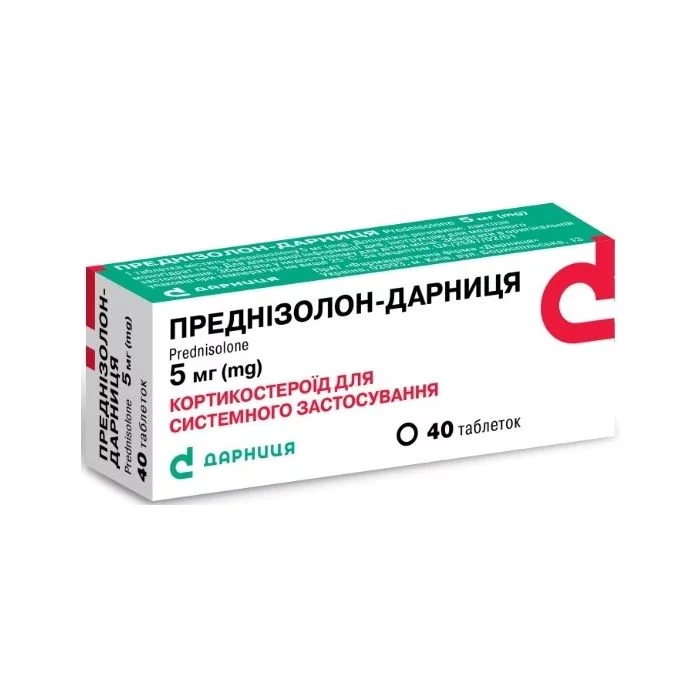
Prednisolone-Darnitsa 5 mg tablets, No. 40 (10 x 4)
Composition
Active ingredient: prednisolone;
Each tablet contains 5 mg of prednisolone;
excipients: lactose monohydrate, potato starch, calcium stearate.
Dosage Form
Tablets.
Main physical and chemical properties: white, flat-cylindrical tablets with a beveled edge.
Pharmacotherapeutic group
Hormonal preparations for systemic use. Simple corticosteroid preparations for systemic use. Glucocorticoids.
ATC code H02A B06.
Pharmacological properties
Pharmacodynamics.
Prednisolone is a dehydrogenated analog of hydrocortisone. It exerts anti-inflammatory, antiallergic, desensitizing, anti-shock, and immunosuppressive effects. When prednisolone is administered, its effects are mediated by the stabilization of cell membranes, inhibition of macrophage accumulation, reduced leukocyte migration, and decreased capillary permeability, which prevents the formation of edema. Prednisolone inhibits phagocytosis, affects arachidonic acid metabolism, and influences the synthesis and release of inflammatory mediators. The immunosuppressive effect of prednisolone is due to the suppression of T- and B-lymphocyte activity, a decrease in complement levels in the blood, and the suppression of interleukin-2 production and effects. It has a catabolic effect and increases blood glucose levels. It exhibits some mineralocorticoid activity, increases the reabsorption of Na+ and water in the renal tubules, and increases the excretion of K+ and Ca+ from the body, especially when their levels in blood plasma are elevated. Prednisolone inhibits the synthesis and secretion of adrenocorticotropic hormones by the pituitary gland and, secondarily, the secretion of glucocorticosteroids by the adrenal glands.
Pharmacokinetics.
It is rapidly absorbed from the gastrointestinal tract. It has high bioavailability. The time to reach maximum plasma concentration is 1–1.5 hours. A significant portion of the drug (90%) binds to cortisone-binding globulin (transcortin) and albumin. It is metabolized in the liver, kidneys, small intestine, and bronchi. The oxidized forms of prednisolone are glucuronidated or sulfated. The half-life (T1/2) is 2–4 hours. It is excreted by the kidneys mainly as metabolites, with up to 20% excreted unchanged.
Indications
Rheumatic fever, rheumatic carditis, chorea minor.
Systemic connective tissue diseases (systemic lupus erythematosus, scleroderma, nodular periarteritis, dermatomyositis).
Multiple sclerosis.
Acute and chronic inflammatory joint diseases (rheumatoid arthritis, juvenile arthritis, ankylosing spondylitis, gouty and psoriatic arthritis, polyarthritis, shoulder-scapular periarthritis, osteoarthritis (including post-traumatic), Still’s syndrome in adults, bursitis, nonspecific tendosynovitis, synovitis, epicondylitis).
Bronchial asthma, status asthmaticus.
Interstitial lung diseases (acute alveolitis, pulmonary fibrosis, stage II–III sarcoidosis), lung cancer (in combination with cytostatic agents), berylliosis, aspiration pneumonia (in combination with specific therapy), Leffler’s eosinophilic pneumonia, tuberculosis (pulmonary tuberculosis, tuberculous meningitis)—in combination with specific therapy.
Primary and secondary adrenal insufficiency (including conditions following adrenalectomy), congenital adrenal hyperplasia, adrenogenital syndrome, subacute thyroiditis.
Acute and chronic allergic diseases (drug and food allergies, serum sickness, hay fever, atopic dermatitis, contact dermatitis affecting a large area of the body, urticaria, allergic rhinitis, angioedema, Stevens-Johnson syndrome, toxicoderma).
Hepatitis.
Hypoglycemic conditions.
Autoimmune diseases (including acute glomerulonephritis).
Nephrotic syndrome.
Inflammatory diseases of the gastrointestinal tract (nonspecific ulcerative colitis, Crohn’s disease, localized enteritis).
Diseases of the blood and hematopoietic organs (agranulocytosis, panmyelopathy, multiple myeloma, acute lymphoid and myeloid leukemia, lymphogranulomatosis, thrombocytopenic purpura, secondary thrombocytopenia in adults, autoimmune hemolytic anemia, erythroblastopenia, congenital erythroid hypoplastic anemia).
Autoimmune and other skin diseases (eczema, seborrheic dermatitis, psoriasis, Lyell’s syndrome, bullous herpetiform dermatitis, pemphigus, exfoliative dermatitis).
Cerebral edema—postoperative, post-radiation, post-traumatic, or associated with a brain tumor (use after parenteral glucocorticosteroids).
Eye diseases, including allergic and autoimmune conditions (sympathetic ophthalmia, allergic forms of conjunctivitis, allergic corneal ulcer, non-purulent keratitis, iridocyclitis, iritis, severe slow-progressing anterior and posterior uveitis, choroiditis, optic neuritis).
Prevention of transplant rejection reactions.
Hypercalcemia associated with cancer.
For the prevention and treatment of nausea and vomiting during cytostatic therapy.
Contraindications
Hypersensitivity to the components of the drug.
Parasitic and infectious diseases of viral, fungal, or bacterial origin, whether currently present or recently contracted: herpes simplex, herpes zoster (viremic phase), chickenpox, measles; amebiasis, strongyloidiasis (confirmed or suspected); systemic mycosis; active or latent tuberculosis.
Post-vaccination period (10 weeks in duration: 8 weeks before and 2 weeks after vaccination), lymphadenitis following BCG vaccination.
Immunodeficiency states caused by HIV infection.
Gastrointestinal diseases: gastric and duodenal ulcers, esophagitis, gastritis, acute or latent peptic ulcer, recently created intestinal anastomosis, nonspecific ulcerative colitis with a risk of perforation or abscess formation, diverticulitis.
Cardiovascular diseases: recent myocardial infarction, decompensated chronic heart failure, hypertension, predisposition to thromboembolic disease.
Endocrine system disorders: diabetes mellitus and impaired glucose tolerance, thyrotoxicosis, hypothyroidism, Cushing’s syndrome.
Severe chronic renal and/or hepatic insufficiency; nephro-urolithiasis.
Hypoalbuminemia. Systemic osteoporosis. Myasthenia gravis. Acute psychosis. Obesity (stages III–IV). Poliomyelitis (except for the bulbar encephalitis form). Open-angle and closed-angle glaucoma.
Drug Interactions and Other Interactions
When prednisolone is used concomitantly with other medications, the following may occur:
with thyroid hormones, liver enzyme inducers (particularly barbiturates), phenytoin, pirimidone, carbamazepine, rifampicin—a reduction in the effects of prednisolone due to an increase in its systemic clearance;
with estrogens (including oral contraceptives containing estrogen), cyclosporine, CYP3A4 inhibitors, in particular erythromycin, clarithromycin, ketoconazole, diltiazem, aprepitant, itraconazole, and oleandomycin—enhancement of the therapeutic and toxic effects of prednisolone;
with antacids—decreased absorption of prednisolone;
with salicylic acid derivatives and other nonsteroidal anti-inflammatory drugs (NSAIDs)—increased risk of gastric mucosal ulcers; prednisolone reduces serum levels of salicylic acid derivatives by increasing their renal clearance; the drug increases the risk of paracetamol-induced hepatotoxic reactions due to the induction of liver enzymes and the formation of its toxic metabolite;
with cardiac glycosides—increased toxicity of the latter, and, as a result of the resulting hypokalemia, an increased risk of arrhythmias;
with hypoglycemic agents—inhibition of the hypoglycemic effect of oral hypoglycemic agents and insulin;
with antihypertensive drugs—reduced efficacy of the latter;
with tricyclic antidepressants—exacerbation of depression symptoms caused by prednisolone and increased intraocular pressure;
with immunosuppressants – increased risk of developing infections and lymphoma or other lymphoproliferative disorders associated with the Epstein-Barr virus;
with diuretics, laxatives, and amphotericin B—increased risk of hypokalemia; prednisolone increases the risk of osteoporosis when used concomitantly with amphotericin and carbonic anhydrase inhibitors;
with m-cholinoblockers, antihistamines, and nitrates—increased intraocular pressure and reduced efficacy of antihistamines;
with neuroleptics, carbamide, and azathioprine—increased risk of cataracts;
with estrogens, anabolic drugs, and oral contraceptives—manifestations of hirsutism and acne;
with live antiviral vaccines and in the context of other types of immunizations—increased risk of viral activation and the development of infections;
with muscle relaxants in the context of hypokalemia—increased severity and duration of muscle blockade during muscle relaxant use;
with anticholinesterase agents—the onset of muscle weakness in patients with myasthenia (especially in patients with myasthenia gravis);
with mitotane and other adrenal cortex inhibitors—may require an increase in the drug dose;
with antiemetics—enhanced antiemetic effect;
with isoniazid, mexiletine, praziquantel—decreased plasma concentrations of these drugs;
with somatotropin (at high doses)—a reduction in the effect of the latter;
with fluoroquinolones—tendon damage;
with cyclosporine—cases of seizures have been reported. Since concomitant administration of these drugs causes mutual inhibition of metabolism, it is likely that seizures and other side effects associated with the use of each of these drugs, whether as monotherapy or in combination, may occur more frequently. Concomitant use may lead to increased plasma concentrations of other drugs.
During long-term therapy, prednisolone increases folic acid levels.
This medication reduces the effect of vitamin D on the absorption of Ca2+ in the intestinal lumen.
Special Considerations for Use
Before starting treatment, the patient must be examined to identify any possible contraindications. The clinical examination should include an evaluation of the cardiovascular system, a chest X-ray, an examination of the stomach and duodenum, the urinary system, and the eyes. Laboratory tests should include: a complete blood count, blood and urine glucose levels, and plasma electrolyte levels.
During long-term treatment with glucocorticoids, it is recommended to regularly monitor blood pressure, measure glucose levels in urine and blood, perform a fecal occult blood test, assess blood clotting parameters, conduct X-ray monitoring of the spine, and an ophthalmological examination (once every 3 months).
Treatment with this medication, even at low doses, masks the signs and symptoms of pre-existing infections and those that develop during treatment (including opportunistic infections), and complicates their diagnosis. During treatment, contact with individuals who have colds or other infections should be avoided.
Children who have been in contact with patients with measles or chickenpox during treatment should be given specific immunoglobulins as a preventive measure (within 10 days of exposure).
Vaccinations should not be administered during treatment.
If patients experience unusual stressful situations during glucocorticoid therapy, it is recommended to increase the dose of fast-acting corticosteroids before, during, and after the stressful situation.
Alcohol should not be consumed during treatment with prednisolone.
Depending on the duration of treatment and the dose, the drug may have a negative effect on calcium metabolism. Prevention of osteoporosis is recommended, which is especially important if patients have risk factors (including family history, advanced age, postmenopause, insufficient protein and calcium intake, excessive smoking, excessive alcohol consumption, and reduced physical activity). Prevention is based on adequate intake of calcium and vitamin D and also includes physical activity.
To reduce the side effects of prednisolone therapy, prescribing an appropriate diet is justified.
When high doses of prednisolone are used over a prolonged period (30 mg daily for at least 4 weeks), reversible disturbances in spermatogenesis may occur, which persist for several months after discontinuation of the medication.
In patients who have received prednisolone doses higher than physiological levels (approximately 7.5 mg of prednisolone or equivalent) for more than 3 weeks, prednisolone therapy should be discontinued gradually. Treatment should be discontinued gradually, even if it lasted less than 3 weeks, in the following groups of patients:
- patients undergoing a repeat course of prednisolone treatment;
- patients for whom a repeat course of treatment was prescribed within one year following prolonged treatment (months, years);
- patients receiving more than 40 mg per day of prednisolone or its equivalent;
- patients with adrenal insufficiency not caused by exogenous corticosteroid use.
After discontinuation of treatment, withdrawal syndrome, adrenal insufficiency, and exacerbation of the underlying condition for which prednisolone was prescribed may occur. If functional adrenal insufficiency is observed after completion of prednisolone treatment, the drug should be resumed immediately, and the dose should be reduced very slowly and with caution (for example, the daily dose should be reduced by 2–3 mg over 7–10 days).
Adrenal cortical atrophy develops with long-term therapy and may persist for many years after discontinuation of treatment.
Steroid-induced secondary adrenal insufficiency can be minimized by gradually reducing the dose. This type of insufficiency may persist for several months after the end of therapy; therefore, in the event of any stressful situation during this period, corticosteroid therapy must be resumed.
With abrupt discontinuation, especially following prior use of high doses, withdrawal syndrome occurs, manifested by fever, loss of appetite, nausea, vomiting, diarrhea, lethargy, dizziness, generalized musculoskeletal pain, and asthenia.
Due to the risk of hypercortisolism, a new course of cortisone treatment following a previous prolonged course of prednisolone lasting several months should always be initiated with low initial doses (except in acute, life-threatening conditions).
In children during their growth period, glucocorticosteroids may be used only for absolute indications and under particularly close medical supervision.
In cases of intercurrent infections, septic conditions, and tuberculosis, concurrent antibiotic therapy is necessary.
If prednisolone must be used while a patient is taking oral hypoglycemic agents or anticoagulants, the dosing regimen for the latter must be adjusted.
Electrolyte balance should be monitored particularly closely when prednisolone is used in combination with diuretics. During long-term treatment with prednisolone, potassium supplements and an appropriate diet should be prescribed to prevent hypokalemia, due to the potential for increased intraocular pressure and the development of subcapsular cataracts.
Use in severe infectious diseases is possible only in conjunction with specific antimicrobial therapy.
Women going through menopause should undergo screening for the possible development of osteoporosis.
In Addison’s disease, concomitant use of barbiturates should be avoided due to the risk of acute adrenal insufficiency (Addisonian crisis).
If there is a history of psoriasis or seizures, prednisolone should be used only at the minimum effective doses.
This medication should be used with particular caution in patients with hepatic or renal insufficiency or migraine.
Special attention should be given to the use of systemic corticosteroids in patients with current or a history of severe affective disorders, including depressive and manic-depressive psychosis, and previous steroid-induced psychosis. Patients and/or caregivers should be warned about the possibility of serious psychiatric side effects. Symptoms usually appear within a few days or weeks after the start of treatment. The risk of these side effects is higher with high doses. Most reactions resolve after reducing the dose or discontinuing the medication, although specific treatment is sometimes necessary. If such symptoms develop, consult a doctor. Psychiatric disorders may also occur during glucocorticoid withdrawal.
Use during pregnancy or breastfeeding.
No controlled studies have been conducted in pregnant women. During pregnancy (especially in the first trimester), use is permissible if the benefit to the mother outweighs the risk to the fetus. When using this medication while breastfeeding, keep in mind that prednisolone passes into breast milk.
Effect on reaction time when driving or operating machinery.
During treatment, caution should be exercised when driving or engaging in other potentially hazardous activities that require increased concentration and rapid psychomotor reactions.
Dosage and Administration
The dosage is determined on an individual basis. When prescribing, the circadian rhythm of glucocorticoid secretion should be taken into account: the majority of the dose (2/3) or the entire dose should be taken in the morning, around 8 a.m., and 1/3 in the evening.
Adults.
In acute conditions and as replacement therapy, the drug should be prescribed at a dose of 20–30 mg per day, with a gradual transition to a maintenance daily dose of 5–10 mg. If necessary, the initial dose may be 15–100 mg per day, and the maintenance dose may be 5–15 mg per day.
Children.
The initial dose for children is 1–2 mg/kg per day, divided into 4–6 doses, and the maintenance dose is 300–600 μg/kg per day.
Take the medication orally without chewing, with a small amount of liquid.
Discontinue treatment gradually by slowly reducing the dose.
Children.
This medication may be used in pediatric practice.
Overdose
The risk of overdose increases with prolonged use of the medication, especially at high doses.
Symptoms: increased blood pressure, peripheral edema, and increased side effects.
Treatment of acute overdose: immediate gastric lavage or induction of vomiting. There is no specific antidote.
Treatment of chronic overdose: reduction of the drug dose.
Side Effects
The frequency and severity of side effects depend on the duration of use, the dose administered, and adherence to a circadian rhythm in dosing.
Ocular side effects: glaucoma, optic disc edema, cataracts, posterior subcapsular cataract, increased intraocular pressure with possible optic nerve damage, susceptibility to secondary bacterial, fungal, or viral eye infections, corneal trophic changes, exophthalmos.
Gastrointestinal system: unpleasant taste in the mouth, dyspepsia, esophageal candidiasis, nausea, vomiting, epigastric pain, diarrhea, pancreatitis, “steroid” gastric and duodenal ulcers, erosive esophagitis, gastrointestinal bleeding and perforation, increased or decreased appetite, flatulence, hiccups. In isolated cases—elevated levels of “liver” transaminases and alkaline phosphatase.
Renal and urinary system: increased risk of urate and urolith formation, increased white blood cell and red blood cell counts in the urine without evidence of kidney damage, leukocyturia.
Endocrine system: increased need for insulin and oral hypoglycemic agents, hyperlipidemia, postmenopausal bleeding, decreased glucose tolerance, “steroid” diabetes mellitus or manifestation of latent diabetes mellitus, suppression of the hypothalamic-pituitary-adrenal axis, menstrual cycle disorders, growth retardation in children and adolescents, delayed sexual development in children, Cushing’s syndrome (moon-shaped face, pituitary-type obesity, hirsutism, elevated blood pressure, dysmenorrhea, amenorrhea, myasthenia gravis, striae).
Metabolism: disturbances in mineral and electrolyte balance, hypocalcemia, negative nitrogen balance (increased protein breakdown), weight gain. Side effects caused by the glucocorticosteroid activity of prednisolone: fluid and Na+ retention (peripheral edema), hypernatremia, hypokalemic syndrome—arrhythmia, myalgia or muscle spasms, unusual weakness and fatigue.
Nervous system: peripheral neuropathies, paresthesias, autonomic disorders, headache, dizziness, cerebellar pseudotumor, increased intracranial pressure, seizures.
Psychiatric: irritability, sleep disturbances, euphobia, suicidal tendencies, increased concentration, psychological dependence, mania, exacerbation of schizophrenia, dementia, psychoses, epileptic seizures, cognitive dysfunction (including amnesia and impaired consciousness), delirium, disorientation, euphoria, hallucinations, manic-depressive psychosis, depression, paranoia, nervousness, restlessness, insomnia.
Cardiovascular system: hypotension, atherosclerosis, thrombosis, vasculitis, peripheral edema, arrhythmia, bradycardia, hypertension, development or worsening of chronic heart failure, ECG changes characteristic of hypokalemia. In patients with acute and subacute myocardial infarction—spread of the necrotic focus, delayed scar formation, which may lead to rupture of the heart muscle.
Blood and lymphatic system: an increase in the total white blood cell count accompanied by a decrease in the number of eosinophils, monocytes, and lymphocytes. The mass of lymphoid tissue decreases. Leukocyturia and hypercoagulation, leading to thrombosis and thromboembolism.
Immune system: hypersensitivity reactions, including rash, itching, erythema, urticaria, angioedema, and anaphylactic shock.
Skin and subcutaneous tissue disorders: skin atrophy, telangiectasia, acne, hirsutism, purpura, post-steroid panniculitis characterized by the appearance of erythema and hot subcutaneous thickening within 2 weeks after discontinuation of the drug, Kaposi’s sarcoma, delayed wound healing, petechiae, bruises, hematomas, ecchymoses, striae, skin thinning, hyper- or hypopigmentation, acne, and a predisposition to pyoderma.
Musculoskeletal and connective tissue disorders: slowed growth and ossification in children (premature closure of epiphyseal growth plates), osteoporosis, very rarely—pathological bone fractures, aseptic necrosis of the humeral or femoral head, muscle tendon ruptures, “steroid” myopathy, and decreased muscle mass (atrophy).
Infections and infestations: masking of symptoms of bacterial, viral, or fungal infections; opportunistic infections; decreased resistance to infections.
General disorders and administration site conditions: withdrawal syndrome, edema, aphthous ulcers, malaise, persistent hiccups when the drug is administered in high doses; adrenal insufficiency leading to hypotension; hypoglycemia and fatal cases in stressful situations, such as surgery, trauma, or infection, unless the prednisolone dose is increased.
Sudden discontinuation of the drug may result in withdrawal syndrome; the severity of symptoms depends on the degree of adrenal atrophy. Symptoms may include headache, nausea, abdominal pain, dizziness, anorexia, weakness, mood swings, lethargy, fever, myalgia, arthralgia, rhinitis, conjunctivitis, painful itching of the skin, and weight loss. In more severe cases: severe psychiatric disorders and increased intracranial pressure, steroid-induced pseudorheumatism in patients with rheumatism, and fatalities.
Shelf life
3 years.
Storage conditions
Store in the original packaging at a temperature not exceeding 25 °C. Keep out of reach of children.
Packaging
10 tablets per blister pack; 4 blister packs per package.
Manufacturer
PJSC “Darnitsa Pharmaceutical Company.”
Location of the manufacturer and its business address.
Ukraine, 02093, Kyiv, 13 Boryspilskaya St.