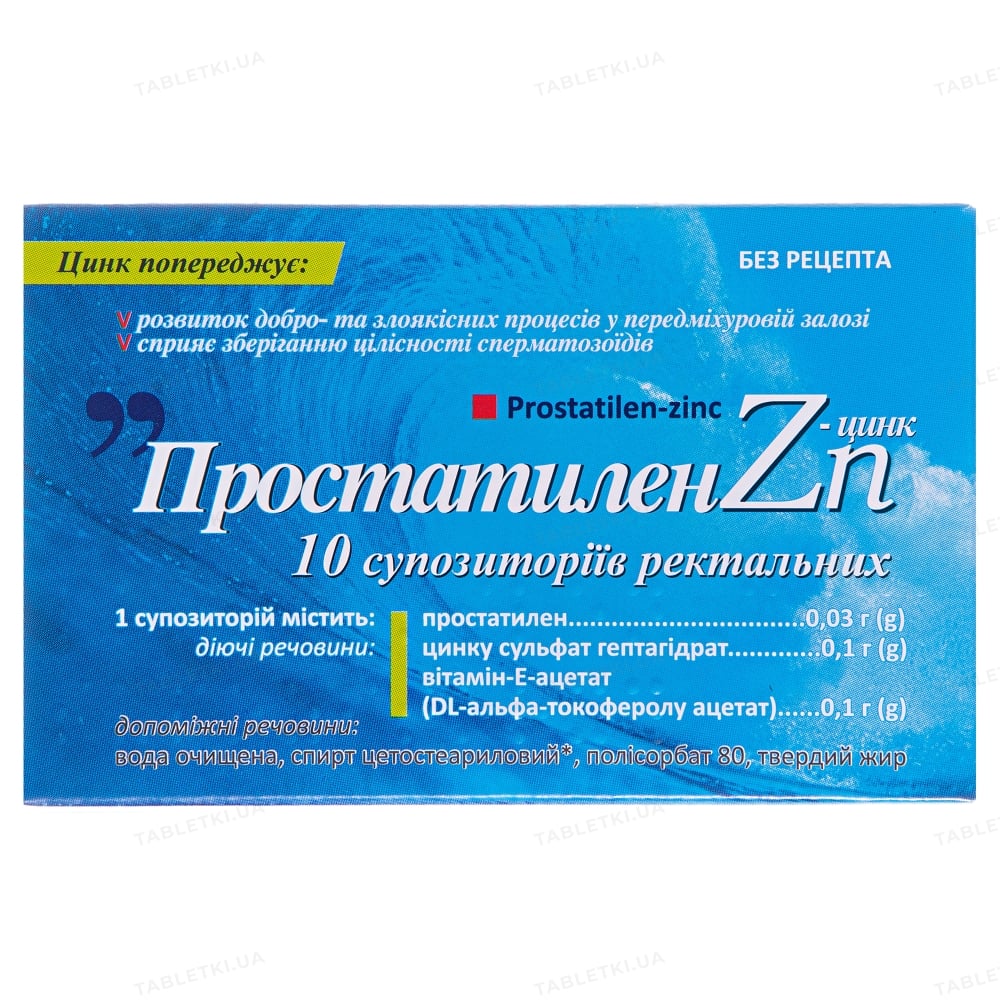
Prostatilen-Zinc Rectal Suppositories, No. 10 (5 x 2)
Ingredients
Active ingredients: prostatylen, zinc sulfate heptahydrate, vitamin E acetate (DL-alpha-tocopherol acetate);
1 suppository contains 30 mg (0.03 g) of prostatylen, 100 mg (0.1 g) of zinc sulfate heptahydrate, 100 mg (0.1 g) of vitamin E acetate (DL-alpha-tocopherol acetate);
excipients: purified water, cetostearyl alcohol, polysorbate 80, hard fat
Dosage form: Rectal suppositories.
Main physical and chemical properties: white suppositories with a yellowish or grayish tint, bullet-shaped. A slight coating on the surface of the suppository is permissible.
Pharmacotherapeutic group: Agents used in the treatment of benign prostatic hyperplasia. ATC code G04C X.
Pharmacological Properties
Pharmacodynamics.
A combination drug used to treat prostate disorders. Prostatilen, a component of the suppositories, exerts an organotropic effect on the prostate (prostate-protective effect), an anti-inflammatory effect by reducing edema and leukocyte infiltration of the gland, improves microcirculation and platelet-vascular hemostasis, and has a positive effect on sperm function. Prostatilen also stimulates the activity of the humoral immune system and certain factors of the body’s resistance, and affects bladder muscle tone, including detrusor tone.
Zinc prevents the development of benignand malignant processes in the prostate gland, helps preserve sperm integrity, increases libido, and acts as a factor in immune defense necessary for the maturation of specific immune cells, cytokine synthesis, and the body’s resistance. Zinc deficiency, which is particularly common among older adults, leads to impotence, atrophy of the male gonads and testicles, and a decrease in sperm count.
Vitamin E supports the biological activity of sperm, has anticoagulant properties, and prevents intravascular blood clotting; as it has the ability to bind prothrombin; it also exerts anti-inflammatory and pronounced antioxidant effects and prevents the development of atherosclerosis.
Pharmacokinetics.
The components of the drug are effectively absorbed in the intestine. Vitamin E in the blood binds to lipoproteins and, to a lesser extent, to albumin; it is stored in the adrenal glands, pituitary gland, testes, adipose and muscle tissues, and the liver. It is excreted primarily in bile. Zinc does not accumulate; it is excreted in feces (85%), as well as in urine and sweat. No information is available on the pharmacokinetics of Prostatilen. Rectal administration of the drug ensures its effective delivery into the local blood circulation of the pelvic organs and to the male reproductive organs.
Clinical Characteristics.
Indications
Treatment and prevention of chronic prostatitis and benign prostatic hyperplasia; complications following prostate surgery; as well as sexual dysfunction and male infertility.
Contraindications
Hypersensitivity to the drug’s components, renal failure, myocardial infarction, and cardiosclerosis. Hypersensitivity to bovine proteins.
Interactions with Other Medications and Other Types of Interactions.
Do not use together with iron or silver preparations, agents with an alkaline environment (sodium bicarbonate, trisamine), or indirect-acting anticoagulants (dicoumarin, neodicoumarin).
Vitamin E enhances the effects of steroid and nonsteroidal anti-inflammatory drugs (diclofenac sodium, ibuprofen, prednisolone); and reduces the toxic effects of cardiac glycosides (digitoxin, digoxin) and vitamins A and D. High-dose vitamin E supplementation may cause vitamin A deficiency. Vitamin E and its metabolites have an antagonistic effect on vitamin K. Vitamin E increases the effectiveness of antiepileptic drugs in patients with epilepsy. Cholestyramine, colestipol, and mineral oils reduce the absorption of vitamin E.
Special Considerations for Use
Use with caution in patients with atherosclerosis or an increased risk of thromboembolism.
When using this medication, it is essential to adhere to the dosage and duration of treatment prescribed by a doctor to prevent overdose and the development of vitamin E toxicity.
During long-term use of high doses of the drug, blood clotting time must be monitored.
Use During Pregnancy or Breastfeeding
This medication should not be used by women.
Effect on reaction time when operating motor vehicles or other machinery.
There are no data on the drug’s effect on the ability to drive or operate machinery. However, in some patients, the drug may cause dizziness and blurred vision; therefore, during treatment, it is recommended to refrain from activities requiring increased concentration and speed (including operating vehicles and machinery).
Directions for Use and Dosage
Before using the suppository, you must:
- tear off one suppository in its primary packaging along the perforation line of the blister pack;
- then pull on the edges of the film, tearing it apart in opposite directions, and remove the suppository from the primary packaging.
Adults should insert the suppository deeply into the rectum.
For treatment, use 1 suppository twice daily (morning and evening) for 5–10 days.
For preventive purposes, use 1 suppository once daily.
The duration of treatment is determined by the doctor depending on the nature and severity of the condition, the therapeutic effect achieved, and the type of therapy (monotherapy or combination therapy). If necessary, the course of treatment may be repeated after 1–6 months.
Children. Do not use this medication in children.
Overdose
No cases of overdose with Prostatilen suppositories have been reported. In the event of a zinc sulfate overdose, fever, impaired lung function, dehydration, electrolyte imbalance in blood plasma, and renal failure may occur.
When taking high doses of the drug (more than 400 mg per day for a prolonged period), the following may occur: dyspeptic disorders, fatigue, general weakness, headache, creatinuria, elevated creatine kinase levels, increased cholesterol and triglyceride concentrations, decreased serum thyroxine and triiodothyronine levels, and increased levels of estrogens and androgens in the urine. There is no specific antidote. Treatment is symptomatic.
Side Effects
Allergic reactions, including itching, skin flushing, skin rashes, and changes at the injection site, including a burning sensation. With long-term use of high doses of vitamin E, the following may occur: decreased blood clotting, gastrointestinal bleeding, enlarged liver, creatinuria, fatigue, weakness, headache, nausea, dizziness, and blurred vision.
Shelf life
3 years.
Storage Conditions
Store at a temperature not exceeding 25 °C.
Keep out of reach of children.
Manufacturer
Private Joint-Stock Company “Lekhim-Kharkiv.”
Manufacturer’s location and business address.
Ukraine, 61115, Kharkiv Oblast, city of Kharkiv, 36 Severina Pototskogo Street.