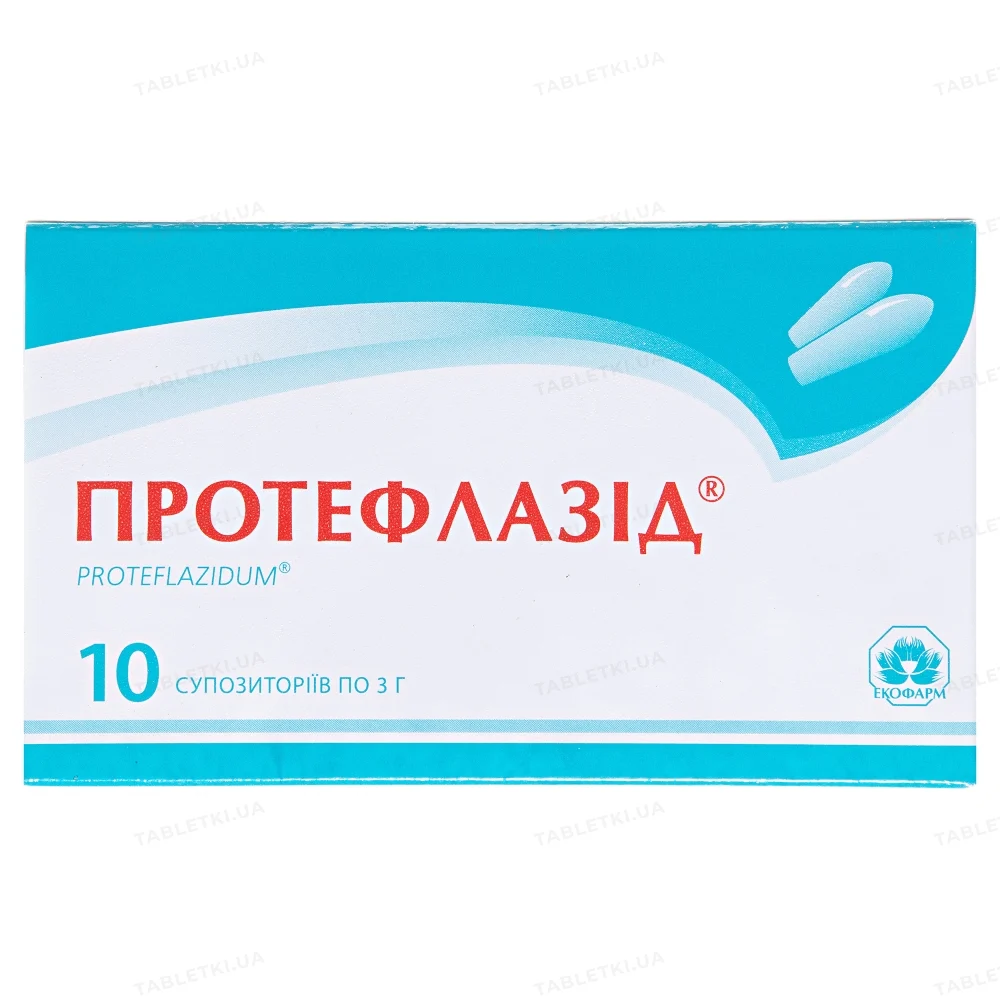

Proteflazid Suppositories, 3 g each, No. 10 (5 x 2)
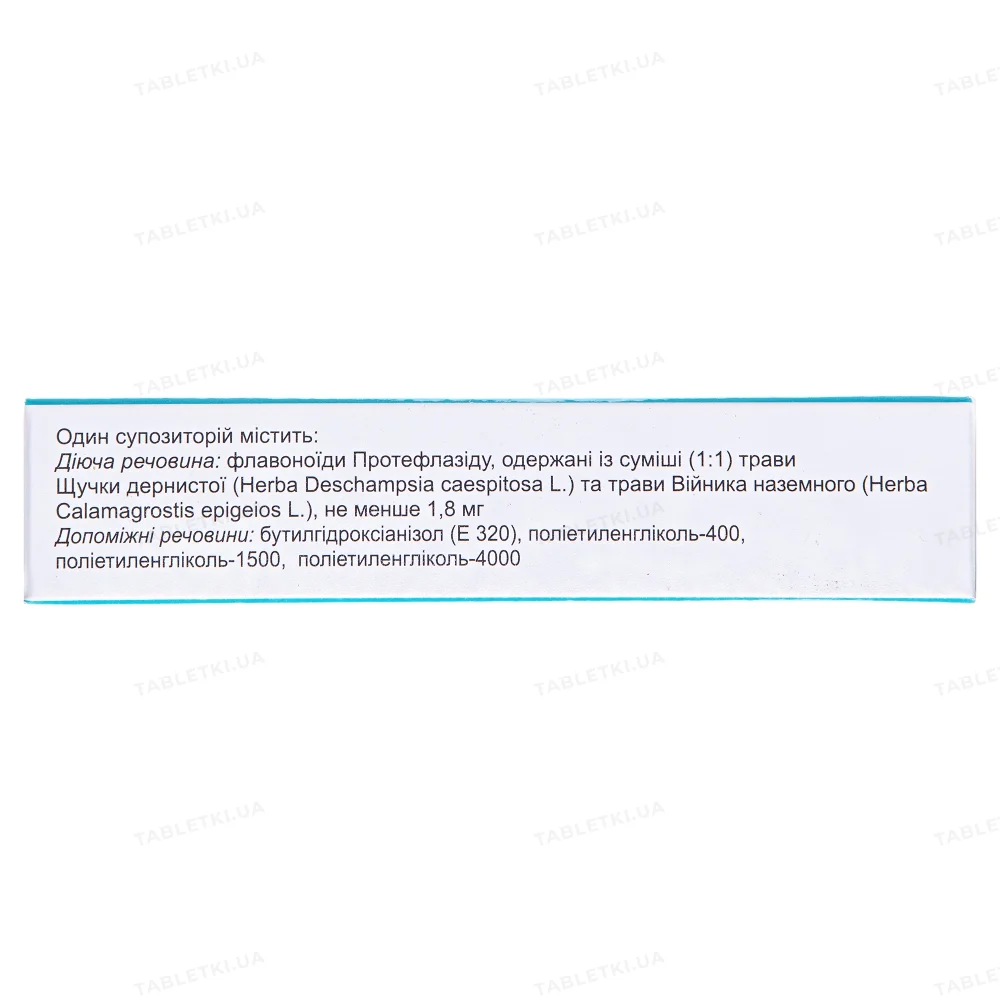
Composition
Active ingredient: 1 suppository contains Proteflazid flavonoids derived from a 1:1 mixture of Deschampsia caespitosa L. (Herba Deschampsia caespitosa L.) and the herb Calamagrostis epigeios (Herba Calamagrostis epigeios L.), not less than 1.8 mg;
excipients: butylhydroxyanisole (E 320), polyethylene glycol-400, polyethylene glycol-1500, polyethylene glycol-4000, to a total weight of 3 g.
Dosage Form
Suppositories.
Main physical and chemical properties: brownish-green, torpedo-shaped suppositories.
Pharmacotherapeutic group
Direct-acting antiviral agents. ATC code J05A X.
Other gynecological agents. ATC code G02C X.
Pharmacological properties
Pharmacodynamics.
The active ingredient of the drug (flavonoids) inhibits the synthesis of DNAand RNA viruses in infected cells by inhibiting the activity of virus-specific enzymes—RNA and DNA polymerases, thymidine kinase, and reverse transcriptase; and possesses immunotropic properties.
It has been established that the active ingredient promotes the synthesis of endogenous alphaand gamma interferons to physiologically active levels (without the development of refractoriness), which increases local nonspecific resistance to viral and bacterial infections.
Clinical studies have demonstrated that the drug PROTEFLASID® (suppositories) restores the protective function of the vaginal and cervical mucosa by normalizing local immune factors (sIgA, lysozyme, and the C3 complement component).
In in vitro experiments using experimental models of oncogenic human papillomaviruses, it has been shown that the active ingredient of the drug exhibits specific antiviral activity and inhibits the replication of human papillomavirus (HPV) by 2 lg ID50.
Cytological studies have shown that the active ingredient inhibits the proliferative and destructive effects of HPV on cells.
In the treatment of cervical epithelial dysplasia caused by papillomavirus infection, normalization of the cytological picture or regression of cervical intraepithelial neoplasia (CIN) class II (moderate dysplasia) to CIN-I (mild dysplasia).
In cases of genital herpes, the drug prevents the formation of new lesions, reduces the likelihood of dissemination and visceral complications, and accelerates the healing of lesions.
In cases of vaginosis, vaginitis, and inflammatory diseases of the cervix, the drug helps restore local immunity and facilitates faster and more effective elimination of the pathogen.
The drug helps correct dysbiotic imbalances in the genital tract microflora, restores the normal vaginal biotope, accelerates the regeneration of the cervical mucosal epithelium, and prevents disease recurrence.
The drug has antioxidant activity, inhibits free-radical processes, thereby preventing the accumulation of lipid peroxidation products and enhancing the antioxidant status of cells.
The drug acts as an apoptosis modulator, enhancing the action of apoptosis-inducing substances and activating caspase-9, which promotes the elimination of virus-infected cells and the primary prevention of chronic diseases arising from latent viral infections.
Pharmacokinetics.
When applied topically, the active ingredient enters the systemic circulation to a negligible extent and does not exert a systemic effect. Studies have shown that therapeutic concentrations of the drug are achieved locally upon vaginal application.
Indications
Treatment of diseases of the female reproductive organs caused by:
- herpes simplex viruses (HSV) types 1 and 2, cytomegalovirus, and Epstein–Barr virus;
- human papillomavirus (HPV), including oncogenic strains.
As part of a comprehensive treatment regimen for diseases of the female reproductive organs caused by:
- pathogens causing inflammatory diseases of mixed etiology (viruses, bacteria, pathogenic fungi, chlamydia, mycoplasma, ureaplasma).
Contraindications
Individual hypersensitivity to the components of the drug.
Special Safety Precautions
Do not take the suppositories orally.
The drug does not require any special safety precautions.
Interactions with Other Medications and Other Types of Interactions
PROTEFLASID® (suppositories) may be combined with other antiviral drugs and antibiotics for the treatment of viral-bacterial and viral-fungal infections of the pelvic organs. No adverse effects resulting from interactions with other medications have been identified.
If any reactions occur during combined use of medications, consult a doctor.
Special Instructions for Use
It is advisable to avoid sexual intercourse during treatment with suppositories.
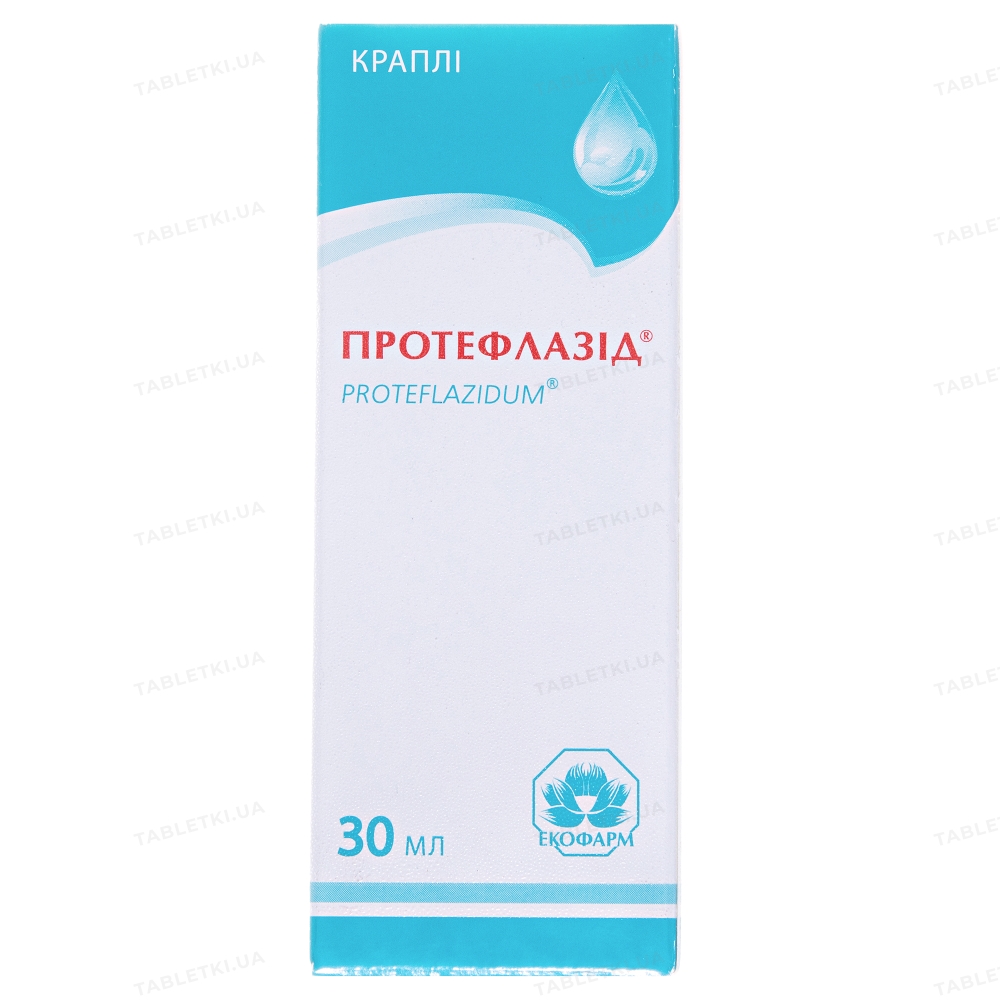
Etiopathogenetic therapy for the diseases listed in the “Indications” section, in addition to local treatment with PROTEFLASID® (suppositories), must be supplemented with oral administration of PROTEFLASID® (drops) according to the regimen and dosages specified in the corresponding instructions.
To achieve the desired therapeutic effect in the treatment of genital diseases caused by pathogens of viral, bacterial, and fungal infections and their combinations (chlamydia, mycoplasma, ureaplasma), simultaneous treatment of sexual partners is required. In this case, PROTEFLAZID® (drops) should be used to treat the partner according to the regimen and dosages specified in the corresponding instructions.
The drug contains butylhydroxyanisole (E 320) and may therefore cause local skin reactions (e.g., contact dermatitis) or irritation of the mucous membranes.
Use During Pregnancy or Breastfeeding.
In preclinical studies of the active ingredient in PROTEFLAZID®, no toxicological, teratogenic, mutagenic, embryotoxic, fetotoxic, or carcinogenic effects were observed. Clinical experience with PROTEFLASID® (drops) during the first through third trimesters of pregnancy and during breastfeeding has not revealed any adverse effects.
It is necessary to follow the guidelines for prescribing medications during pregnancy or breastfeeding, weighing the benefit-risk ratio. Use is permitted only as prescribed and under the supervision of a physician.
Effect on reaction time when operating motor vehicles or other machinery.
No adverse effects on the ability to engage in potentially hazardous activities requiring special attention and quick reactions have been identified.
Directions for Use and Dosage
Apply the suppositories vaginally.
Suppositories should be administered after personal hygiene procedures. Remove the protective plastic wrapper from the suppository before use. Insert the suppository deeply into the vagina. After inserting the suppository, it is recommended to remain lying down for at least 3 hours and to avoid sexual intercourse for at least 8 hours. It is recommended to begin treatment immediately after menstruation. Treatment should be paused during menstruation.
For the treatment of genital diseases caused by herpes viruses types 1 and 2, use 1 suppository once daily for 7–10 days or longer until symptoms resolve.
For the treatment of recurrent herpes infections, including those associated with cytomegalovirus and Epstein–Barr virus, use 1 suppository once daily for 10 days. The course of treatment should last 3 months (10 days each month).
In cases of papillomavirus infection and/or herpes infections combined with bacterial or fungal infections, use 1 suppository twice daily for 14 days. The treatment course should last 3 months (14 days each month).
Children.
The use of PROTEFLASID® suppositories in children has not been studied; therefore, the drug should not be prescribed to children.
Overdose
None reported. In the event of an overdose, consult a doctor immediately regarding further treatment.
Side Effects
When using this medication, mild local itching or a burning sensation of the mucous membrane may occur; these symptoms resolve on their own and do not require discontinuation of the medication.
Hypersensitivity reactions and allergic reactions are possible.
If allergic or any other adverse reactions occur, discontinue use of the suppositories and consult a doctor regarding further treatment of the condition.
Shelf life
2 years.
Storage conditions
Store in the original packaging at a temperature not exceeding 25 °C. Do not freeze!
Keep out of reach of children.
Packaging
5 suppositories per blister pack; 1, 2, or 3 blister packs per package.
Manufacturer
Ecofarm Scientific and Production Complex, LLC.
Manufacturer’s location and business address.
Ukraine, 30070, Khmelnytskyi Oblast, Shepetivka District, village of Ulashanivka, 116 Shevchenko Street.
Applicant
“NVK ‘Ekofarm’” LLC.
Location of the applicant.
Ukraine, 03045, Kyiv, Naberezhno-Korchuvatska St., 136-B