
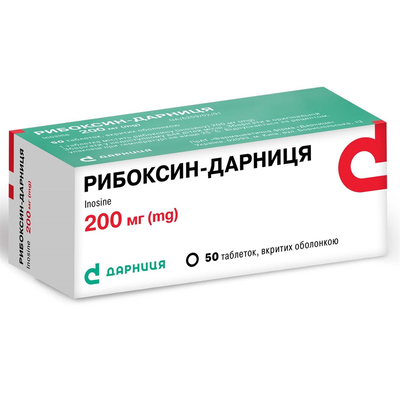
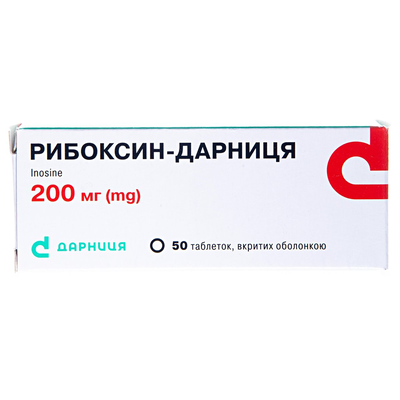
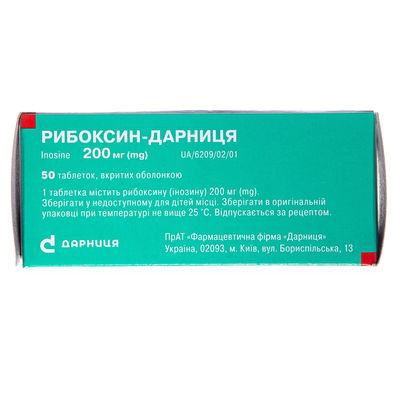
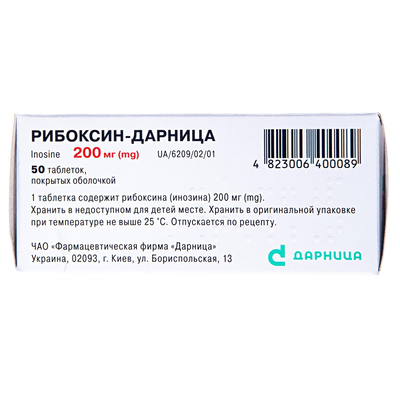
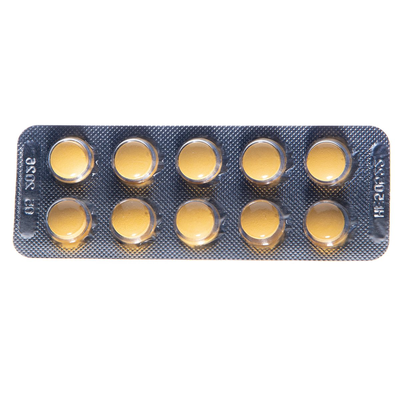
Riboxin-Darnitsa tablets, coated, 200 mg each, No. 50 (10 x 5)
Ingredients
Active ingredient: inosine;
1 tablet contains 200 mg of riboxin (inosine);
excipients: potato starch, crystalline sugar, methylcellulose, stearic acid, polysorbate 80, tropeol 0, titanium dioxide (E 171).
Dosage Form
Film-coated tablets.
Main physical and chemical properties: yellow, film-coated tablets with a biconvex surface. Two layers are visible on a cross-section.
Pharmacotherapeutic group
Cardiovascular drugs. ATC code C01E B.
Pharmacological properties
Pharmacodynamics.
Riboxin is an anabolic drug with antihypoxic and antiarrhythmic effects.
It is a precursor to ATP, plays a direct role in glucose metabolism, and helps boost metabolism under hypoxic conditions and in the absence of ATP. The drug activates pyruvic acid metabolism to ensure normal tissue respiration and also promotes the activation of xanthine dehydrogenase. Riboxin has a positive effect on metabolism in the myocardium; in particular, it improves cellular energy balance, stimulates nucleotide synthesis, and enhances the activity of several enzymes in the Krebs cycle. The drug normalizes myocardial contractile activity and promotes more complete relaxation of the myocardium during diastole due to its ability to bind calcium ions that have entered the cells during their excitation; it also activates tissue regeneration (particularly the myocardium and the mucous membrane of the gastrointestinal tract).
Pharmacokinetics.
It is well absorbed in the gastrointestinal tract. It is metabolized in the liver to form glucuronic acid, followed by its oxidation. It is excreted primarily in the urine and, to a lesser extent, in feces and bile.
Indications
Comprehensive treatment of ischemic heart disease (post-myocardial infarction, angina pectoris), cardiac arrhythmias, digitalis toxicity, treatment of cardiomyopathies of various etiologies, myocardial dystrophies (against a background of severe physical exertion, or of infectious or endocrine origin), and myocarditis; liver diseases (hepatitis, cirrhosis, fatty liver); urocoproporphyria.
Contraindications
Increased individual sensitivity to the active ingredient or to other components of the drug; gout; hyperuricemia. Renal insufficiency is a contraindication for the use of this drug.
Interactions with Other Medications and Other Types of Interactions
When this medication is used concomitantly with other medications, the following may occur:
with heparin—enhanced effects of heparin and prolonged duration of action;
with cardiac glycosides – prevention of arrhythmias, enhancement of the positive inotropic effect;
with uric acid-lowering agents – a reduction in the effects of uric acid-lowering agents.
When this medication is used concomitantly with β-blockers, the effect of Riboxin is not reduced.
Concomitant use with nitroglycerin, nifedipine, furosemide, and spironolactone is possible.
Special Considerations for Use
Riboxin should not be used for the emergency treatment of cardiac disorders.
If itching or skin redness occurs, treatment with this medication should be discontinued.
During treatment, blood and urine urea levels must be monitored. Renal insufficiency is a contraindication for the use of this medication. In cases of renal insufficiency, prescribing this medication is appropriate only when, in the physician’s opinion, the expected benefit outweighs the potential risk.
This medication contains crystalline sugar, which patients with diabetes should take into account.
Use during pregnancy or breastfeeding.
No studies have been conducted on the efficacy and safety of this medication in this patient group; therefore, this medication should not be used during pregnancy or while breastfeeding.
Effect on reaction time when operating motor vehicles or other machinery.
This medication does not affect neuromuscular conduction; at the recommended doses, it may be used by individuals who drive or operate complex machinery.
Dosage and Administration
Adults should take this medication orally before meals; do not chew the tablet and take it with a sufficient amount of water. The daily dose for adults is determined individually by a doctor and ranges from 600 to 2,400 mg per day. At the start of treatment, the medication is usually prescribed at a daily dose of 600–800 mg (1 tablet 3–4 times daily). If the medication is well tolerated, the dose should be gradually increased (over 2–3 days) to 1,200 mg per day (2 tablets 3 times a day), if necessary, up to 2,400 mg per day (4 tablets 3 times a day). The duration of treatment is 1–3 months.
For uroporphyria, the daily dose is 800 mg (1 tablet 4 times a day); the duration of treatment is 1–3 months.
Children.
Do not administer this medication to children due to a lack of safety data.
Overdose
No cases of overdose with this medication have been reported. If the dose is exceeded, side effects may be exacerbated.
Treatment: discontinuation of the drug, symptomatic therapy.
Side Effects
Metabolism: hyperuricemia, exacerbation of gout (with prolonged use of high doses).
Cardiovascular system: tachycardia, hypotension, which may be accompanied by headache, shortness of breath, dizziness, nausea, vomiting, and sweating.
Immune system: allergic/anaphylactic reactions, including rash, itching, skin flushing, hives, and anaphylactic shock.
General disorders: general weakness.
Laboratory findings: elevated blood uric acid levels.
If any adverse reactions occur, discontinue use of the medication.
Shelf life
4 years.
Do not use the medication after the expiration date printed on the package.
Storage conditions
Store in the original packaging at a temperature not exceeding 25 °C.
Keep out of reach of children.
Packaging
10 tablets per blister pack; 5 blister packs per carton.
Dispensing Category
By prescription only.
Manufacturer
PJSC “Darnitsa Pharmaceutical Company.”







