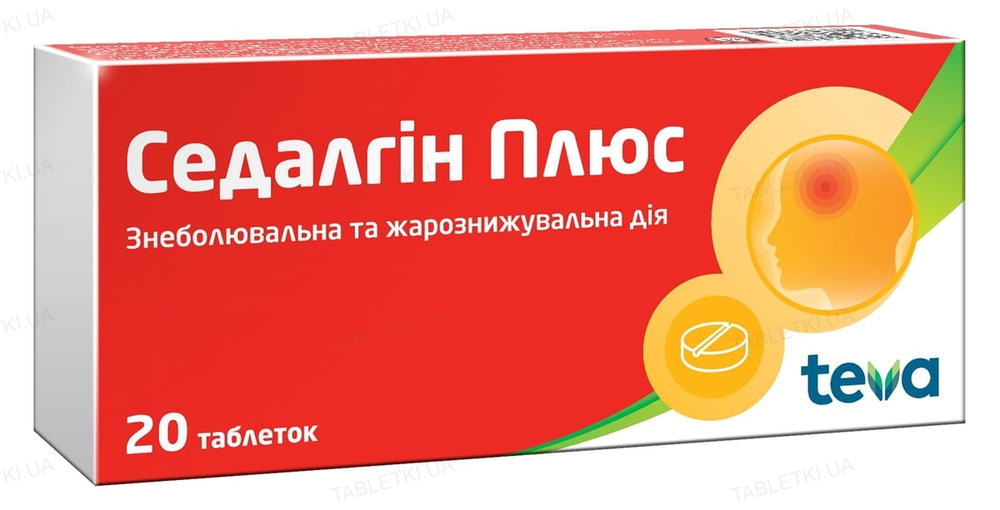
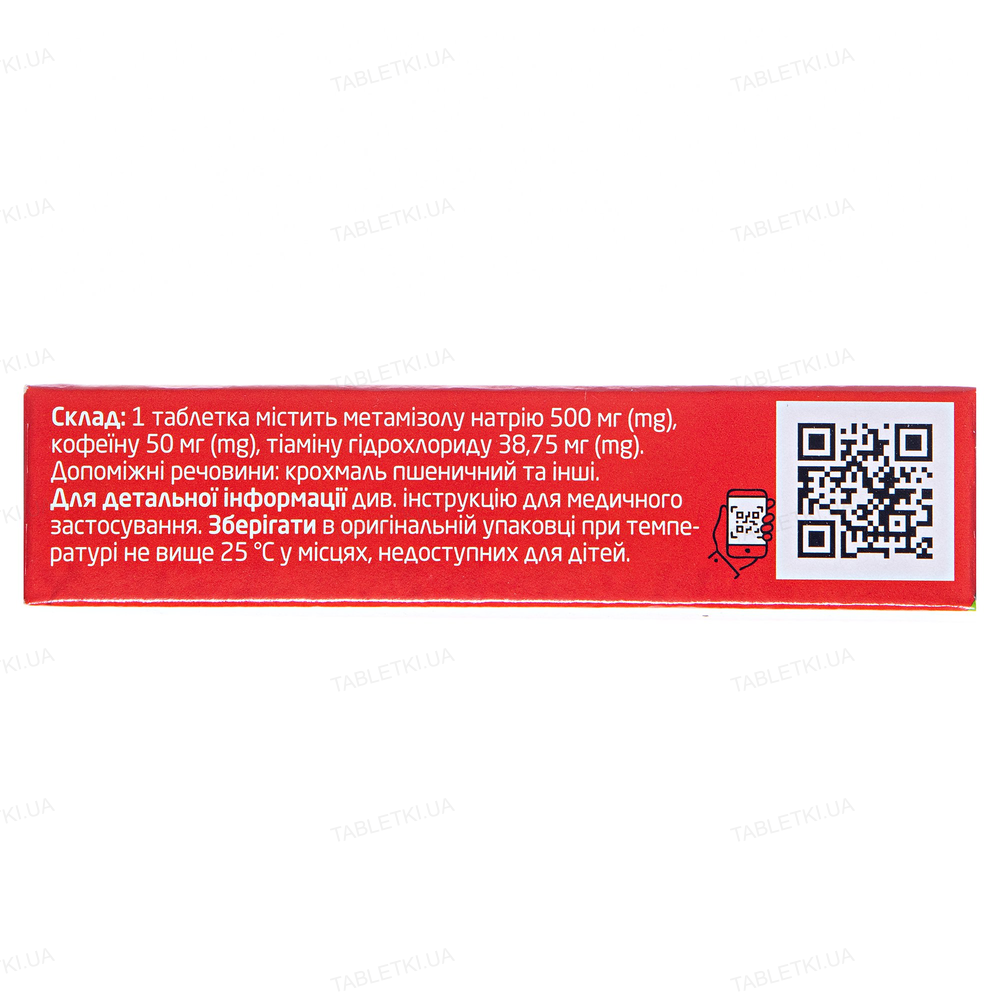
Sedalgin Plus Tablets, No. 20 (10 x 2)
1 tablet contains 500 mg of metamizole sodium, 50 mg of caffeine, and 38.75 mg of thiamine hydrochloride;
Excipients: microcrystalline cellulose, wheat starch, gelatin, colloidal anhydrous silicon dioxide, talc, magnesium stearate.
Dosage Form
Tablets.
Main physical and chemical properties: round, flat tablets that are white or nearly white in color, with a beveled edge and a score line on one side, 13 mm in diameter.
Pharmacotherapeutic group
Agents acting on the central nervous system. Other analgesics and antipyretics. ATC code N02B B52.
Pharmacological properties
Pharmacodynamics.
Metamizole sodium is a pyrazolone derivative and belongs to the group of non-narcotic analgesics. It has a pronounced analgesic and antipyretic effect. It does not have a sedative effect, does not depress the respiratory center, and does not cause euphoria or dependence. Metamizole exerts an analgesic effect both peripherally, by inhibiting the synthesis of endogenous algogens, and centrally, by inhibiting the activity of nociceptive neurons in the dorsal roots of the spinal cord. An important role in the pharmacological action of metamizole is played by its ability to inhibit the activity of cyclooxygenase-1 and, in particular, cyclooxygenase-2, which leads to a reduction in prostaglandin synthesis. Metamizole also has a membrane-stabilizing effect.
Caffeine has a mild stimulating effect on the central nervous system (CNS). The primary effect of caffeine is vasoconstriction, which affects certain types of headaches and hypotension. It is believed that in certain painful conditions, it exerts a direct analgesic effect. Caffeine potentiates the action of metamizole, facilitating its penetration into brain tissue. A synergistic effect occurs when caffeine is combined with analgesics.
Thiamine hydrochloride (vitamin B1) performs multifaceted functions in the body’s metabolism. It is a component of a number of enzymes and is a key part of the cocarboxylase molecule, which catalyzes the oxidation of pyruvic acid and facilitates the breakdown of carbohydrates. Through phosphorylation, thiamine is converted into its active form—thiamine pyrophosphate—which, as a coenzyme, participates in the pentose phosphate pathway, the decarboxylation of alpha-ketoacids, and the formation of acetyl-coenzyme A in the Krebs cycle. In the nervous system, about 90% of thiamine is found in the mitochondria of axons, and 10% is found in the axonal membranes. By promoting the decarboxylation of pyruvic acid, it has a positive effect on the resolution of inflammatory processes in the nervous system. Thiamine promotes the synthesis of the neurotransmitter acetylcholine and inhibits the enzyme that breaks it down—cholinesterase—thereby improving the conduction of nerve impulses. When taken in high doses, it exhibits a certain analgesic effect.
Due to the presence of metamizole, which affects the enzymes responsible for drug metabolism, the pharmacokinetics of the individual components used in the combination differ to some extent from the pharmacokinetics of the drugs when used separately.
Pharmacokinetics.
The combination drug Sedalgin Plus is rapidly absorbed, and its therapeutic effect becomes apparent within 1 hour.
Indications
Symptomatic treatment of pain in the following cases:
- migraines, tension headaches;
- inflammatory and degenerative diseases of the musculoskeletal system;
- postoperative conditions;
- diseases of the peripheral nervous system (radiculitis, plexitis, neuritis, neuralgia, polyneuritis, polyneuropathy);
- dysmenorrhea.
Contraindications
Hypersensitivity to the active ingredients or any excipients contained in the medication; hypersensitivity to pyrazolone or pyrazolidine derivatives (butadione, tribuzone, antipyrine) and xanthine; children under 12 years of age; the elderly; pregnancy or lactation; bronchial asthma; Leukopenia; anemia; thrombocytopenia; cytostatic or infectious neutropenia, agranulocytosis, hepatic porphyria; congenital glucose-6-phosphate dehydrogenase deficiency; marked elevation of blood pressure, organic diseases of the cardiovascular system, including severe atherosclerosis, severe hypertension, acute myocardial infarction; uncompensated heart failure, paroxysmal tachycardia; glaucoma; severe renal and hepatic insufficiency; increased excitability, insomnia; suspected acute surgical pathology; allergic diseases, individual intolerance. Do not use with monoamine oxidase inhibitors (MAOIs) or within 2 weeks after discontinuing MAOIs.
Drug Interactions and Other Interactions
Ethanol enhances the analgesic effect of the drug, while caffeine reduces the central nervous system depressant effect. Concomitant use of other hepatotoxic drugs and agents that suppress hematopoiesis should be avoided. Due to the induction of liver enzymes, the activity of coumarin anticoagulants is reduced. Tempidon enhances and prolongs their effect. The therapeutic effect is enhanced by tricyclic antidepressants, oral contraceptives, and allopurinol as a result of enzyme inhibition and slowed biotransformation of the drug. It does not affect the action of uterine and uterotonic agents. When used concomitantly with nonsteroidal anti-inflammatory drugs (NSAIDs), it enhances their effects and toxicity with respect to the gastrointestinal tract and hematopoiesis.
Combining Sedalgin Plus with other drugs requires special attention, as metamizole, one of its components, is an enzyme inducer. Metamizole can induce enzymes that metabolize drugs, including CYP2B6 and CYP3A4. Concomitant use of metamizole with bupropion, efavirenz, methadone, valproate, cyclosporine, tacrolimus, or sertraline may result in reduced plasma concentrations of these drugs, with a potential decrease in clinical efficacy. Therefore, caution is recommended when using metamizole concomitantly; if necessary, the clinical response and/or drug levels should be monitored.
Concomitant use with other antipyretic, analgesic, and anti-inflammatory drugs increases the risk of allergic reactions and side effects.
Metamizole may reduce the antithrombotic effect of low-dose acetylsalicylic acid when used concomitantly. Therefore, metamizole should be used with caution in patients taking low doses of acetylsalicylic acid for cardioprotection.
When Sedalgin Plus is used concomitantly with drugs that suppress bone marrow function (drugs containing gold salts, antineoplastic agents, chloramphenicol, etc.), there is a risk of leukocyte damage.
Antipsychotics and tranquilizers potentiate the analgesic effect of Sedalgin Plus. Concomitant use with chlorpromazine may lead to hypothermia.
Certain antidepressants, oral contraceptives, and allopurinol slow the metabolism of metamizole and may therefore increase the toxicity of Sedalgin Plus.
Concomitant use with sympathomimetics may lead to central nervous system (CNS) stimulation.
Caffeine may enhance the effects of ergotamine; it reduces the effects of opioid analgesics, anxiolytics, hypnotics, and sedatives. Caffeine is an antagonist of anesthetics and other CNS depressants, and a competitive antagonist of adenosine-based drugs. It enhances the absorption, effect, and toxicity of glycosides. When used with xanthine derivatives or psychostimulants, it potentiates their effects. An increase in thyroid stimulation is possible with the simultaneous use of caffeine and thyrotropic drugs. Cimetidine and isoniazid enhance the effects of caffeine. Caffeine reduces the concentration of lithium in the blood.
Special Considerations
Do not exceed the recommended doses of the drug.
This medication should be used with caution in patients with impaired kidney and/or liver function; in patients with active gastric or duodenal ulcers; gastric disorders (achalasia, gastroesophageal reflux, pyloric stenosis), inflammatory bowel diseases, including ulcerative colitis and Crohn’s disease; prostatic hyperplasia; chronic bronchitis and bronchospasm in the presence of hyperthyroidism; severe food or drug allergies and other atopic disorders; in cases of cardiac arrhythmias, ischemic heart disease, severe hypotension, cardiovascular insufficiency, severe headaches of unknown origin, or a history of chronic alcohol abuse.
This medication should not be used to relieve acute abdominal pain (until the cause has been determined). Since metamizole sodium has anti-inflammatory and analgesic properties, the drug may mask signs of infection, symptoms of non-infectious diseases, and pain-related complications, which may complicate their diagnosis.
The drug may affect patients’ mental and physical state when taken concurrently with alcohol or medications that depress the central nervous system. Therefore, patients should refrain from consuming alcoholic beverages while taking this medication.
The drug may affect the central nervous system, which may manifest as either stimulation or inhibition of nervous activity; it may also affect blood pressure and either stimulate or depress cardiac activity.
Do not use concurrently with other nonsteroidal anti-inflammatory drugs (NSAIDs) or metamizole.
When analgesics are used every other day or more frequently, headaches may develop or existing headaches may worsen after prolonged treatment with analgesics (more than 3 months). Headaches caused by excessive use of analgesics should not be treated by increasing the dose. In such cases, treatment should be discontinued after consulting a doctor.
While using this medication, avoid excessive consumption of coffee, strong tea, other stimulant beverages, and medications containing caffeine. This may cause sleep disturbances, tremors, tension, irritability, and rapid heartbeat.
When used in children, constant medical supervision is required. The qualitative and quantitative composition of peripheral blood must be monitored.
Regular, long-term use of this medication is not recommended due to the myelotoxicity of metamizole sodium.
When prescribing a longer course of treatment (more than 7 days), it is necessary to monitor blood counts, including the qualitative and quantitative composition of peripheral blood (especially the white blood cell differential), as well as kidney and liver function.
Patients should be advised before starting treatment that if they experience unexplained chills, fever, sore throat, difficulty swallowing, bleeding gums, pale skin, or asthenia, or if vaginitis or proctitis develops, the drug should be discontinued immediately. Use of the drug should also be discontinued if rashes appear on the skin or mucous membranes. If these symptoms occur, consult a doctor immediately.
Drug-induced liver injury. Cases of acute hepatitis, predominantly of a hepatocellular nature, have been reported in patients receiving metamizole, ranging from several days to several months after the start of treatment. Signs and symptoms included elevated serum liver enzymes, with or without jaundice, often in combination with other drug hypersensitivity reactions (e.g., skin rash, blood dyscrasia, fever, eosinophilia) or with signs of autoimmune hepatitis. Most patients recovered after discontinuing metamizole, but in rare cases, progression to acute liver failure requiring a liver transplant has been reported. The mechanism by which metamizole causes liver damage has not been fully elucidated, but the data suggest an immunoallergic nature. If symptoms of liver damage appear, patients should consult a physician. In such patients, metamizole should be discontinued and liver function assessed. If there is a history of liver damage during treatment with metamizole, and no other cause of liver damage has been identified, metamizole should not be used again.
Severe skin reactions. Severe skin adverse reactions have been reported, including Stevens-Johnson syndrome, toxic epidermal necrolysis, and drug reaction with eosinophilia and systemic symptoms (DRESS syndrome), which may be life-threatening or fatal, have been reported during treatment with metamizole.
Patients should be informed of the signs and symptoms and closely monitored for skin reactions. If signs and symptoms indicating these reactions appear, metamizole should be discontinued immediately, and treatment with metamizole should not be restarted.
Excipients. This medication contains wheat starch. It is suitable for patients with celiac disease. Patients with a wheat allergy (other than celiac disease) should not use this medication.
Effect on laboratory tests. Metamizole sodium metabolites may cause the urine to turn red, which is not clinically significant.
Caffeine may affect test results when adenosine or dipyridamole is used. Therefore, Sedalgin Plus should not be taken at least 12 hours before testing.
Caffeine may cause a false increase in plasma uric acid levels as determined by the Bittner method.
Caffeine may lead to a slight increase in the urinary concentrations of 5-hydroxyindoleacetic acid, vanillylmandelic acid, and catecholamines, which may result in false-positive test results for pheochromocytoma and neuroblastoma.
Pregnancy and lactation.
This medication is contraindicated during pregnancy, as its components may adversely affect the fetus (causing impaired kidney function and narrowing of the ductus arteriosus).
The drug is contraindicated during lactation, as its components pass into breast milk.
Affects the ability to operate vehicles and machinery.
During treatment, caution should be exercised when operating vehicles or working with complex machinery due to the possibility of adverse reactions affecting the nervous system.
Directions for Use and Dosage
Sedalgin Plus tablets should be taken orally after meals with water.
Recommended dose for adults and children over 16 years of age:
1 tablet 3 times a day.
The maximum dose should not exceed 6 tablets per day.
Recommended dose for children aged 12 to 16 years:
1/2 to 1 tablet 3 times a day.
The maximum dose should not exceed 4 tablets per day.
The course of treatment with Sedalgin Plus should not exceed 3 days.
Elderly patients, debilitated patients, and patients with reduced creatinine clearance.
In elderly patients, debilitated patients, and patients with reduced creatinine clearance, the dose should be reduced, as the elimination of metamizole metabolites may be prolonged.
Patients with impaired liver or kidney function.
Since the rate of metamizole elimination is reduced in patients with renal or hepatic impairment, repeated high doses of metamizole should be avoided. No dose reduction is required for short-term use. To date, there is insufficient experience with the long-term use of metamizole in patients with severe hepatic or renal insufficiency.
Children. Do not use in children under 12 years of age.
Overdose
If a large number of tablets are accidentally ingested, the following clinical symptoms may occur: bullous-urticarial and petechial rashes, sometimes morillous and abdominal rashes; in some cases, anaphylactic shock may occur; hallucinations, tremors, Meniere-like symptoms, comatose and tonic-clonic seizures, nausea, vomiting, agitation, insomnia, headache, dizziness, tinnitus, palpitations, weakness, melena and hematemesis; in more severe cases—oliguria progressing to anuria, epileptiform seizures, agranulocytosis, aplastic or hemolytic anemia, and hemorrhagic diathesis.
In cases of metamizole overdose, the following may also occur: hypothermia, a marked decrease in blood pressure, dysphagia, shortness of breath, gastralgia/gastritis, weakness, drowsiness, delirium, hemorrhagic syndrome, acute renal and hepatic failure, and respiratory muscle paralysis.
High doses of caffeine may cause epigastric pain, changes in urine output, rapid breathing, extrasystoles, tachycardia, or cardiac arrhythmia, and effects on the central nervous system (dizziness, insomnia, nervous excitement, irritability, emotional distress, anxiety, tremor, seizures).
Treatment. General measures to reduce absorption: administration of emetics, gastric lavage, activated charcoal, and laxatives. Symptomatic treatment is provided. There is no specific antidote.
Side Effects
Severe cutaneous adverse reactions, including Stevens-Johnson syndrome, toxic epidermal necrolysis, and drug reaction with eosinophilia and systemic symptoms (DRESS syndrome), during treatment with metamizole (see Section 4.4).
The following adverse reactions may occur.
Central nervous system: insomnia, dizziness, increased excitability, anxiety, restlessness, mild tremor, visual disturbances, headache, seizures, hyperreflexia, tachypnea. With prolonged, uncontrolled use of high doses of the drug—tolerance (diminished analgesic effect), dependence; upon abrupt discontinuation of the drug after prolonged use — increased effects on the central nervous system, increased fatigue, drowsiness, muscle tension, and depression.
Immune system: hypersensitivity reactions, including rashes on the skin and mucous membranes; conjunctivitis, itching, redness, hives, angioedema, bronchospasm, anaphylactic shock, Lyell’s syndrome, Stevens-Johnson syndrome, drug reaction with eosinophilia and systemic symptoms (DRESS syndrome), and other allergic reactions.
Cardiovascular disorders: chest tightness, arrhythmias, tachycardia, palpitations (fluttering), increased/decreased blood pressure.
Hematologic disorders: transient leukopenia; granulocytopenia, agranulocytosis, hemolytic and aplastic anemia, purpura, thrombocytopenia.
Gastrointestinal disorders: loss of appetite, nausea, gastrointestinal discomfort, vomiting, diarrhea, exacerbation of gastritis and peptic ulcers.
Hepatobiliary system: cholestasis, jaundice, drug-induced liver injury (including acute hepatitis, jaundice, and elevated serum liver enzymes) (see the section “Special Instructions and Precautions for Use”).
Urinary system: development of acute renal failure, interstitial nephritis, oliguria, anuria, increased diuresis/frequent urination, increased creatinine clearance, increased excretion of sodium and calcium, proteinuria, red urine.
Other: nasal congestion.
Effects on laboratory test results: hypo- or hyperglycemia; effects on laboratory tests (see the “Special Instructions and Precautions for Use” section).
Reporting of Suspected Adverse Reactions
It is important to report suspected adverse reactions after the drug has been approved. This allows for continued monitoring of the drug’s benefit-risk profile. Healthcare professionals should report suspected adverse reactions through national reporting systems.
Shelf Life
2 years.
Storage conditions
Store in the original packaging at a temperature not exceeding 25 °C, out of the reach of children.
Packaging
10 tablets per blister; 1, 2, or 5 blisters per cardboard pack.
20 tablets per blister pack; 1 blister pack per cardboard box.
Sales Conditions
Available without a prescription.
Manufacturer
Balkanfarma-Dupnitsa JSC.
Address
3 Samokovsko Shosse, Dupnitsa, 2600, Bulgaria.