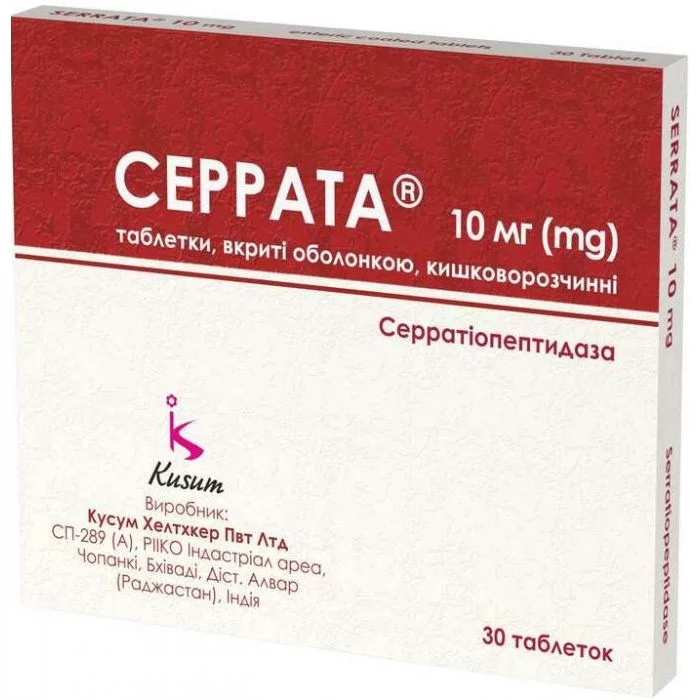
Serrata 10 mg, 30 tablets
Serrata Instructions for Use
Sosa
Active ingredient: serratiopeptidase;
1 tablet contains:
- 10 mg of serratiopeptidase;
excipients: lactose monohydrate, corn starch, light magnesium carbonate, sodium starch glycolate (type A), magnesium stearate, Opadry-YS-1-7027* coating, Opadry-OY-P-7171** coating.
* – Opadry-YS-1-7027 coating: hypromellose, titanium dioxide (E 171), triacetin.
** – Opadry-OY-P-7171 coating: polyvinyl acetate phthalate, titanium dioxide (E 171), diethyl phthalate, stearic acid.
Dosage Form
Film-coated tablets are enteric-coated.
Main physical and chemical properties: round, biconvex tablets coated with a white enteric coating.
Pharmacotherapeutic group
Drugs used in disorders of the musculoskeletal system. Enzymes. ATC code M09AB.
Pharmacological properties
Pharmacodynamics.
Serratiopeptidase is a proteolytic enzyme isolated from the nonpathogenic intestinal bacterium Serratia E15. It is characterized by fibrinolytic, anti-inflammatory, and anti-edematous activity. In addition to reducing inflammation, serratiopeptidase relieves pain by blocking the release of pain-inducing amines from inflamed tissues.
Serratopeptidase binds in a 1:1 ratio to α-2-macroglobulin in the blood, which masks its antigenicity but preserves its enzymatic activity. It is then gradually converted into exudate at the site of inflammation, and consequently, its blood levels decrease.
Serratiopeptidase directly reduces capillary dilation and regulates their permeability by hydrolyzing bradykinin, histamine, and serotonin. Serratiopeptidase also blocks plasmin inhibitors, thereby promoting plasmin’s fibrinolytic activity. By proteolysing the structural proteins of sputum, it improves the rheological properties of sputum and facilitates its expectoration.
The enzymatic activity of the drug is 10 times higher than that of α-chymotrypsin. At the site of chronic inflammation, serratiopeptidase helps reduce the levels of polypeptide-based inflammatory mediators (bradykinin) and fibrin, but has no significant effect on proteins in living organisms, such as albumin and α- and γ-globulin.
The drug penetrates well into sites of inflammation, lyses necrotic tissues and their breakdown products, reduces hyperemia, and accelerates the penetration and activity of antibiotics. The drug reduces the viscosity of saliva and nasal secretions, thereby facilitating their removal.
Pharmacokinetics.
The drug passes through the stomach unchanged and is absorbed in the intestine. The drug is not inactivated by gastric juice. Maximum plasma concentration is reached after 1 hour. Serratiopeptidase enters the bloodstream in its enzymatically active form; it is also excreted in its active form in bile and is found in small amounts in urine.
Clinical Characteristics.
Indications
- Surgical conditions: ligament sprains and tears, fractures and dislocations, and swelling caused by plastic surgery.
- Respiratory tract disorders: reduces sputum viscosity and facilitates its clearance from the respiratory tract.
- ENT disorders: facilitates the drainage of secretions from the paranasal sinuses.
- Skin conditions: acute inflammatory dermatoses.
- Diseases of the female reproductive organs and breasts: hematomas, stasis in the breasts.
Contraindications for Pilchaty
Hypersensitivity to serratiopeptidase or to any other component of the drug. Blood clotting disorders.
Interactions with Other Medications and Other Forms of Interaction
When used concomitantly, the drug potentiates the effects of anticoagulants (this combination of drugs should be used under close medical supervision) and accelerates the penetration of antibiotics and nonsteroidal anti-inflammatory drugs into inflamed tissues.
Special Considerations for Use
Since serratiopeptidase affects the blood coagulation system, the drug should be used with caution in the following conditions:
- risk of bleeding;
- blood clotting disorders;
- use of anticoagulants;
- severe liver disease;
- severe kidney disease.
This medication contains lactose. If you have a known intolerance to certain sugars, consult your doctor before taking this medication.
Pregnancy and Breastfeeding
Use of this medication during pregnancy or breastfeeding is not recommended due to a lack of clinical data.
Effects on the ability to drive and operate machinery
This has no effect.
Dosage and Administration of Serrata
The drug is administered orally to adults. Take 1 tablet 2–3 times a day after meals.
Tablets should be swallowed whole without chewing and taken with one glass of water.
The maximum daily dose is 30 mg.
The dose and duration of treatment depend on the nature and progression of the condition and are determined individually by a doctor in each case.
Children
This medication should not be used in children due to a lack of clinical data.
Overdose
Symptoms: nausea, vomiting, loss of appetite, epigastric discomfort, and in some cases, bleeding and streaks of blood in sputum.
Treatment: symptomatic therapy.
Side effects of Serrata
- Gastrointestinal system: diarrhea, nausea, vomiting, loss of appetite, epigastric discomfort, abdominal pain.
- Respiratory system: nosebleeds, sputum with blood, acute eosinophilic pneumonia.
- Immune system disorders: hypersensitivity reactions.
- Skin disorders: skin rashes, itching, skin flushing.
Shelf life
3 years.
Storage conditions
Store at a temperature not exceeding 25 °C.
Keep out of reach of children.
Packaging
- 10 tablets per strip; 1 strip per cardboard box;
- 10 tablets per strip; 1 strip per cardboard box, 10 packs per box;
- 10 tablets per strip; 3 strips per cardboard package;
- 30 tablets per blister or strip; 1 blister or strip per cardboard package;
- 30 tablets per strip; 5 strips per cardboard box.