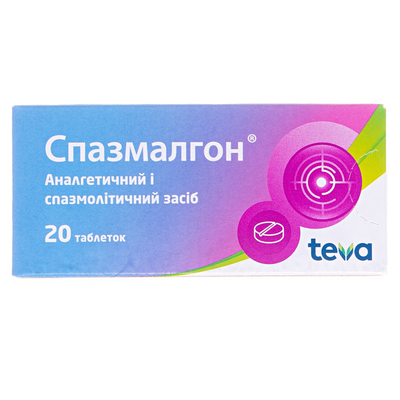
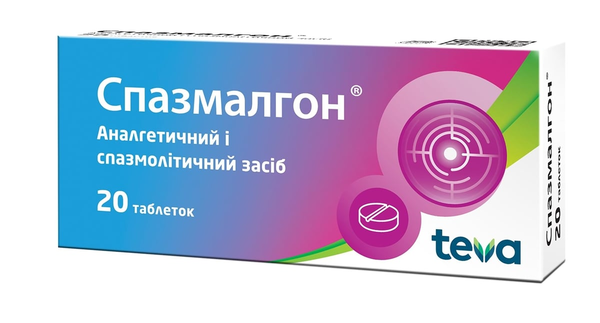
Spazmalgon Tablets No. 20 (10 x 2)
Composition
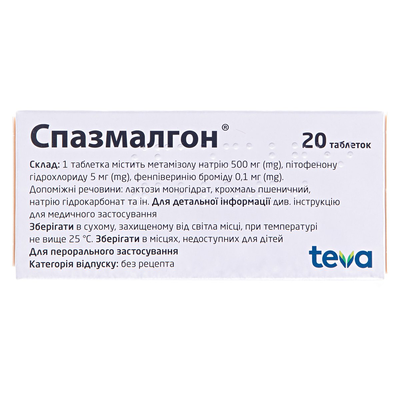
Active ingredients: metamizole sodium, pitophenone hydrochloride, fenpiverinium bromide;
1 tablet contains 500 mg of metamizole sodium, 5 mg of pitophenone hydrochloride, and 0.1 mg of fenpiverinium bromide;
Inactive ingredients: lactose monohydrate, wheat starch, talc, magnesium stearate, gelatin, sodium bicarbonate.
Dosage Form
Tablets.
Main physical and chemical properties: round, flat tablets with beveled edges, with a score line on one side, 13 mm in diameter; white or nearly white in color.
Pharmacotherapeutic group
Antispasmodics in combination with analgesics. Synthetic anticholinergics in combination with analgesics. Pitophenone and analgesics. ATC code A03D A02.
Pharmacological Properties
Pharmacodynamics.
Spazmalgon® exhibits analgesic, antispasmodic (papaverine-like), anticholinergic (atropine-like), and some anti-inflammatory activity.
Metamizole exerts a pronounced analgesic and antipyretic effect in combination with less pronounced anti-inflammatory and antispasmodic activity. Its effects result from the inhibition of prostaglandin and endogenous algogen synthesis, an increase in the threshold of excitability in the thalamus, and the conduction of exteroceptiveand interoceptive impulses in the CNS; it also affects the hypothalamus and the formation of endogenous pyrogens.
Fenpiverine exerts a moderate ganglion-blocking and parasympathetic effect, reducing the tone and motility of the smooth muscles of the stomach, intestines, biliary tract, and urinary tract.
Pitofenone exerts a papaverine-like effect on vascular and extravascular smooth muscle with a pronounced antispasmodic effect.
Pharmacokinetics.
Metamizole is characterized by rapid and complete absorption. Thirty minutes after oral administration, serum levels reach 50% of the maximum serum concentration. It is partially bound to plasma proteins. It undergoes extensive biotransformation in the body. Its major metabolites are pharmacologically active. It is eliminated in the urine as metabolites. Only 3% of the excreted amount is unchanged metamizole. The degree of biotransformation is also influenced by the genetically determined acetylation type. There is very little data in the available medical literature regarding the absorption and distribution of pitofenone and fenpiverinium. It is known that absorption occurs in the upper gastrointestinal tract and is incomplete. These chemical compounds undergo significant ionization and have low fat solubility, which results in poor penetration across the blood-brain barrier. Their plasma concentration profile is biphasic.
Pitofenone and fenpiverinium are metabolized in the liver, primarily by oxidation, with approximately 90% of the substance excreted in the urine as metabolites and approximately 10% excreted in the feces as the unchanged compound. Available data indicate that their half-life in blood plasma is 10 hours. Some components are excreted in breast milk.
Indications
Symptomatic treatment of mild to moderate pain associated with smooth muscle spasms of internal organs:
- renal colic and inflammatory diseases of the urinary tract accompanied by pain and dysuric disorders;
- stomach and intestinal spasms, hepatic colic, biliary tract dyskinesia;
- spastic dysmenorrhea.
Contraindications
- Hypersensitivity to metamizole, to pyrazolone or pyrazolidine derivatives, or to any other component of the medication.
- Gastrointestinal obstruction and megacolon.
- Atonia of the gallbladder or bladder.
- Severe renal and hepatic impairment.
- Blood disorders (agranulocytosis, leukopenia, anemia of any etiology, cytostatic or infectious neutropenia).
- Glucose-6-phosphate dehydrogenase deficiency.
- Porphyria.
- Angle-closure glaucoma.
- Suspected acute surgical pathology.
- Bronchial asthma.
- Collaptoid states.
- Tachyarrhythmia.
- Benign prostatic hyperplasia with a tendency toward urinary retention.
- Pregnancy and breastfeeding.
Interactions with other medications and other types of interactions
Metamizole increases plasma concentrations of chloroquine and decreases plasma concentrations and effects of coumarin anticoagulants and cyclosporine.
It enhances the hematotoxic effects of myelotoxic drugs and chloramphenicol.
Neuroleptics, sedatives, and tranquilizers enhance the analgesic effect of metamizole.
Tempidon, tricyclic antidepressants, oral contraceptives, and allopurinol slow the metabolism of metamizole and increase its toxicity.
Barbiturates, phenylbutazone, and other inducers of hepatic microsomal enzymes may reduce the effect of metamizole.
Concomitant use of Spazmalgon® with other analgesics and nonsteroidal anti-inflammatory drugs increases the risk of allergic reactions.
Combining Spazmalgon® with other medications requires special caution due to the presence of metamizole, which is an enzyme inducer. Metamizole may induce enzymes that metabolize drugs, including CYP2B6 and CYP3A4. Concomitant use of metamizole with bupropion, efavirenz, methadone, valproate, cyclosporine, tacrolimus, or sertraline may result in reduced plasma concentrations of these drugs, with a potential decrease in clinical efficacy. Therefore, caution is recommended when metamizole is used concomitantly; if necessary, the clinical response and/or drug levels should be monitored.
Special Considerations for Use
Use the drug with caution:
- in patients with impaired renal and/or hepatic function;
- in patients with gastric disorders (achalasia, gastroesophageal reflux, pyloric stenosis);
- in patients prone to hypotension and orthostatic reactions;
- in chronic bronchitis and bronchospasm (Spazmalgon® increases the viscosity of bronchial secretions);
- in cases of hyperthyroidism; prostatic hypertrophy;
- in cases of severe cardiac arrhythmias, ischemic heart disease (especially acute myocardial infarction), or chronic congestive heart failure;
- in cases of known hypersensitivity to nonsteroidal anti-inflammatory drugs and/or non-narcotic analgesics, or other manifestations of allergy (allergic rhinitis).
During long-term use of Spazmalgon®, peripheral blood counts and liver function should be monitored.
Headaches may develop or existing headaches may worsen after prolonged analgesic treatment (>3 months) when analgesics are taken every other day or more frequently.
Headaches caused by excessive use of analgesics should not be treated by increasing the dose. In such cases, analgesic treatment should be discontinued after consulting a doctor.
This medication may affect patients’ mental and physical state when used concomitantly with alcohol and medications that depress the central nervous system.
It is not recommended to use other medications containing metamizole concurrently with Spazmalgon®.
Drug-induced liver injury. Cases of acute hepatitis, predominantly of a hepatocellular nature, have been reported in patients receiving metamizole, occurring anywhere from a few days to several months after the start of treatment. Signs and symptoms included elevated serum liver enzymes, with or without jaundice, often in the context of other drug hypersensitivity reactions (e.g., skin rash, blood dyscrasias, fever, and eosinophilia) or with features of autoimmune hepatitis. Most patients recovered after discontinuing metamizole; however, in rare cases, progression to acute liver failure requiring liver transplantation has been reported. The mechanism by which metamizole causes liver damage is not fully understood, but the data suggest an immunoallergic nature. If symptoms of liver damage occur, patients should consult their physician. Such patients should discontinue metamizole and have their liver function evaluated. If there is a history of liver damage during treatment with metamizole, for which no other causes of liver damage were identified, the drug should not be re-administered.
Severe skin reactions. Severe skin adverse reactions have been reported during treatment with metamizole, including Stevens-Johnson syndrome, toxic epidermal necrolysis, and drug reaction with eosinophilia and systemic symptoms (DRESS), which may be life-threatening or fatal.
Patients should be informed of the signs and symptoms and should be closely monitored for skin reactions. If signs and symptoms indicating such reactions appear, metamizole should be discontinued immediately, and this medication should not be administered to the patient again.
Wheat starch, gluten. This medication contains a very small amount of gluten (considered gluten-free) and is unlikely to cause problems in patients with celiac disease. One tablet contains no more than 8.59 mcg of gluten. Patients with a wheat allergy (other than celiac disease) should not take this medication.
Lactose. This medication contains lactose. Patients with rare hereditary disorders of galactose intolerance, Lapp lactase deficiency, or glucose-galactose malabsorption should not take this medication.
Metabolites of metamizole sodium may cause the urine to turn red, which has no clinical significance.
Use During Pregnancy or Breastfeeding
Do not use during pregnancy or while breastfeeding.
Effect on reaction time when driving or operating machinery
While taking Spazmalgon®, exercise caution when driving or operating machinery, as its anticholinergic effect may cause dizziness and impaired accommodation with prolonged use of Spazmalgon® may cause dizziness and impaired accommodation.
Directions for Use and Dosage
Spazmalgon® tablets are taken orally after meals with water. The recommended daily dose for adults and children aged 15 years and older is 1–2 tablets per day; the maximum daily dose is 2 tablets.
The duration of Spazmalgon® treatment should not exceed 3 days.
For elderly patients, debilitated patients, and patients with reduced creatinine clearance, the dose should be reduced, as the elimination of metamizole metabolites may be prolonged.
Hepatic and renal insufficiency. Since the rate of metamizole elimination is reduced in patients with renal or hepatic insufficiency, repeated high doses of metamizole should be avoided. No dose reduction is necessary for short-term use. To date, there is insufficient experience with the long-term use of metamizole in patients with severe hepatic and renal insufficiency.
Children
Spazmalgon® is not indicated for children under 15 years of age.
Overdose
Symptoms. In case of overdose, symptoms of metamizole intoxication combined with anticholinergic effects predominate; these include impaired liver and kidney function and respiratory paralysis. The most common manifestations include a toxic-allergic syndrome, symptoms of hematopoietic dysfunction, gastrointestinal disturbances, and, in severe cases, symptoms of brain damage.
Treatment. If an overdose is suspected, discontinue the drug immediately and take measures to rapidly eliminate it from the body (induce vomiting, perform gastric lavage, and increase urine output). Symptomatic treatment is administered. There is no specific antidote.
Side Effects
Adverse reactions to Spazmalgon® are usually temporary and resolve after discontinuation of treatment.
Severe skin reactions, including Stevens-Johnson syndrome, toxic epidermal necrolysis, and drug reaction with eosinophilia and systemic symptoms (DRESS) have been reported during treatment with metamizole (see the “Special Precautions for Use” section).
Immune system disorders: urticaria, skin rashes, pruritus, conjunctivitis; rarely—bronchospasm, angioedema, anaphylactic shock, toxic epidermal necrolysis, and Stevens-Johnson syndrome, drug reaction with eosinophilia and systemic symptoms (DRESS).
Gastrointestinal system: discomfort, dry mouth, intestinal obstruction, exacerbation of gastritis and peptic ulcer disease of the stomach and duodenum.
Hepatobiliary system: drug-induced liver injury, including acute hepatitis, jaundice, and elevated serum liver enzymes (see the “Special Considerations for Use” section).
Cardiovascular system: palpitations, decreased blood pressure, tachycardia, and cardiac arrhythmias.
Nervous system: dizziness, visual disturbances.
Hematologic disorders: granulocytopenia, anemia, agranulocytosis, thrombocytopenia, leukopenia.
Urinary system: oliguria, anuria, urinary retention, proteinuria, red-colored urine, development of acute renal failure, and interstitial nephritis. With prolonged use of high doses, a decrease in renal function is possible (especially in patients with a history of kidney disease); in some cases, papillary necrosis may occur.
Other: decreased sweating.
Shelf life
2 years.
Storage conditions
Store in a dry place, protected from light, at a temperature not exceeding 25 °C.
Keep out of reach of children.
Packaging
Tablets No. 10×1, No. 10×2, No. 10×5, No. 20×1 in blister packs, per package.
Dispensing Category
Over-the-counter.
Manufacturer
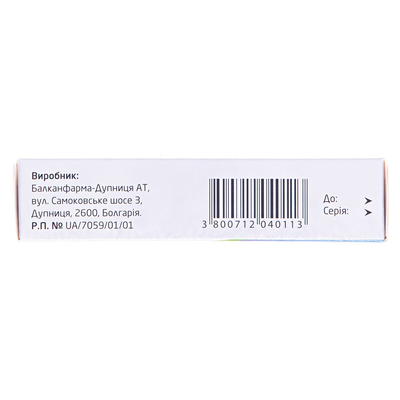
Balkanfarma-Dupnitsa JSC.