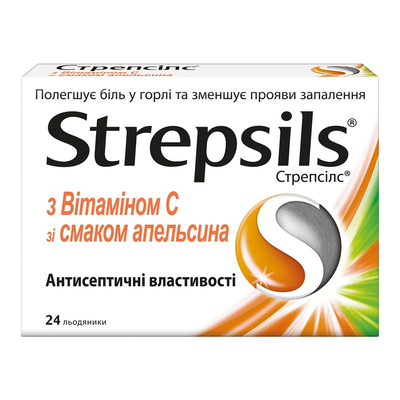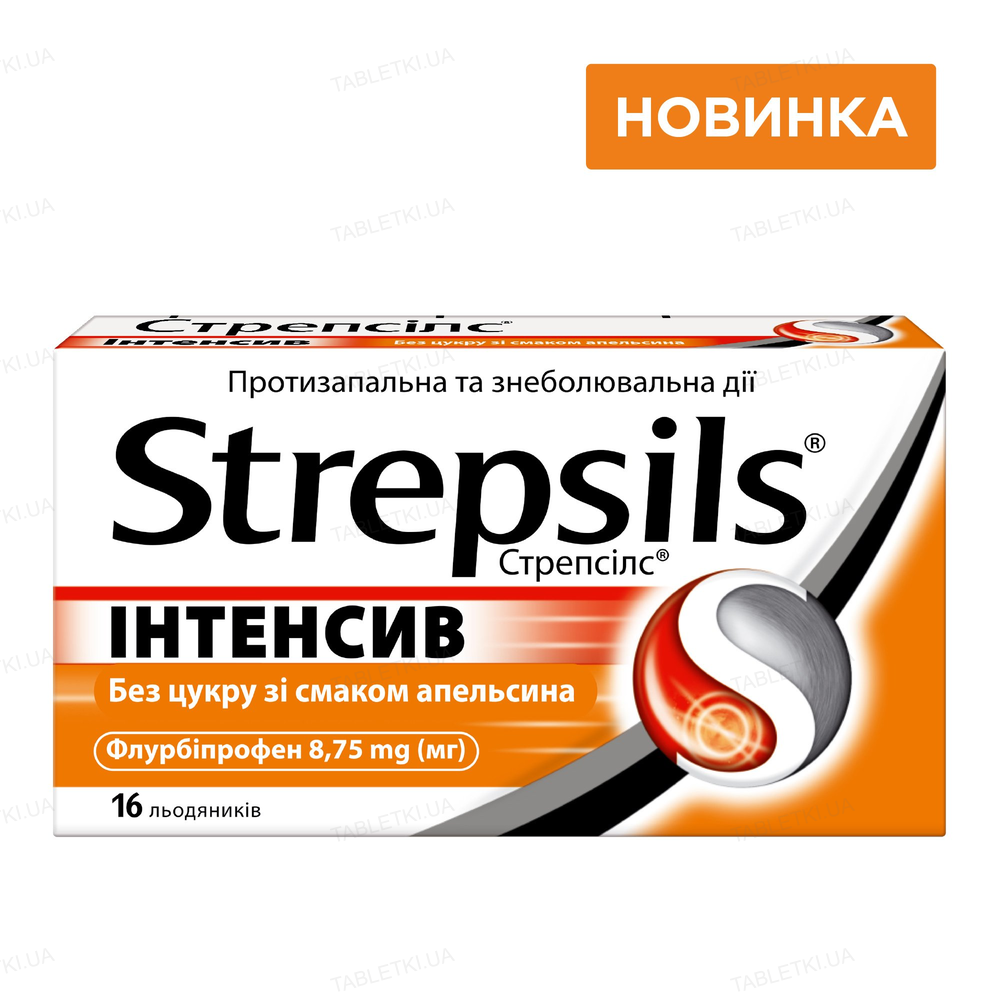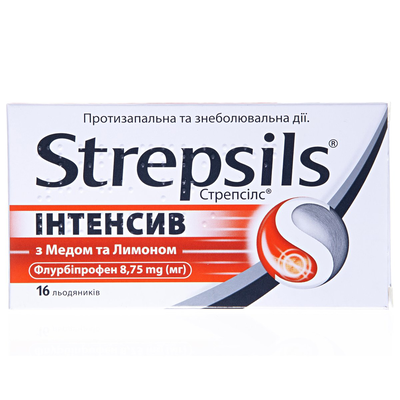

Strepsils Intensive with Honey and Lemon Lozenges, 8.75 mg each, No. 16 (8 x 2)
Ingredients
Active ingredient: flurbiprofen;
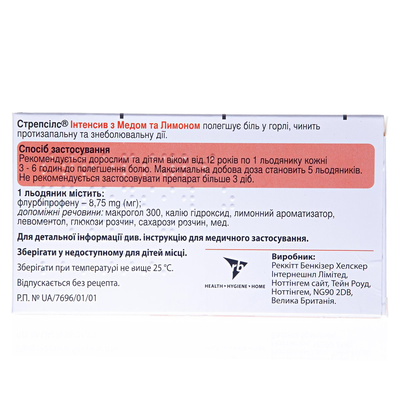
Each lozenge contains 8.75 mg of flurbiprofen;
inactive ingredients: polyethylene glycol 300, potassium hydroxide, lemon flavoring, levomenthol, glucose solution, sucrose solution, honey.
Dosage Form
Lozenges.
Main physical and chemical properties: round lozenges ranging in color from pale yellow to brown, embossed with the letter “S” on both sides.
Pharmacotherapeutic group
Medications used for throat conditions. Flurbiprofen. ATC code R02A X01.
Pharmacological properties
Pharmacodynamics. Flurbiprofen is a propionic acid derivative belonging to the group of nonsteroidal anti-inflammatory drugs (NSAIDs), which acts by inhibiting prostaglandin synthesis. In humans, flurbiprofen exerts potent analgesic, antipyretic, and anti-inflammatory effects.
It has been demonstrated that a dose of 8.75 mg, dissolved in artificial saliva, inhibits prostaglandin synthesis in cultured human airway cells. According to data from whole-blood studies, flurbiprofen is a mixed inhibitor of COX-1 and COX-2 with some selectivity for COX-1.
Data from preclinical studies suggest that the R(-) enantiomer of flurbiprofen—and other NSAIDs—may affect the central nervous system; the proposed mechanism of action involves the inhibition of COX-2-induced activity at the level of the spinal cord.
In an ex vivo model, the penetration of flurbiprofen in the form of 8.75 mg lozenges into human pharyngeal tissues, including deep layers, was demonstrated.
Significant pain relief was observed in patients on average after 42.9 minutes following administration of a single 8.75 mg dose of flurbiprofen, which was delivered locally to the throat as the lozenge was dissolved, with the first signs of pain relief (manifestation of the analgesic effect) noted on average after 13.2 minutes.
It was demonstrated that relief of throat pain, including swelling and inflammation of the throat mucosa, is achieved through a significant reduction (difference in mean values, calculated using the least squares method) in throat pain, beginning at the 22nd minute (-5.5 mm), peaking at 70 minutes (-13.7 mm) and remaining significant for 240 minutes (-3.5 mm), including in patients with streptococcal and non-streptococcal infections; a reduction in difficulty swallowing, beginning at the 20th minute (-6.7 mm), reaching a maximum after 110 minutes (-13.9 mm), and persisting for 240 minutes (-3.5 mm), as well as a reduction in the sensation of throat swelling after 60 minutes (-9.9 mm), which peaks at 120 minutes (-11.4 mm) and persists for 210 minutes (-5.1 mm).
The efficacy of multiple doses, measured as the sum of pain intensity differences (SPID) over 24 hours, demonstrated a significant reduction in throat pain intensity (from -473.7 mm*h to -529.1 mm*h), difficulty swallowing (from -458.4 mm*h to -575.0 mm*h), and throat swelling (from -482.4 mm*h to -549.9 mm*h) with a statistically more pronounced total reduction in pain at each time interval over 23 hours for all three parameters and a statistically significant, more pronounced relief of sore throat every hour during the 6-hour evaluation period. The efficacy of multiple doses 24 hours later and over a 3-day period was also demonstrated.
In patients taking antibiotics to treat a streptococcal infection, a statistically significant, more pronounced relief of sore throat was observed with flurbiprofen 8.75 mg therapy 7 hours after and thereafter following antibiotic administration. The analgesic effect of 8.75 mg flurbiprofen was not reduced when patients took antibiotics to treat streptococcal pharyngitis.
Two hours after the first dose of 8.75 mg flurbiprofen lozenges, significant relief was observed for some of the concomitant symptoms of sore throat present prior to the start of therapy, including cough (50% compared with 4%), loss of appetite (84% compared with 57%), and fever (68% compared with 29%).
The lozenge has been shown to be at least as effective as a topical flurbiprofen spray, based on differences in pain intensity before administration and 2 hours after administration of the medications.
The lozenge dissolves in the mouth within 5–12 minutes and provides a significant soothing and coating effect 2 minutes after administration.
Children
No specific studies involving children have been conducted. Studies on the efficacy and safety of 8.75 mg flurbiprofen lozenges were conducted in children aged 12–17 years; however, the small sample size precludes the drawing of statistically significant conclusions.
Pharmacokinetics.
The maximum concentration of flurbiprofen in blood plasma is observed 30–40 minutes after the lozenge has been dissolved in the mouth. Maximum concentrations of flurbiprofen are reached more quickly after using the lozenge than after swallowing an equivalent dose; however, concentration levels are similar in both cases. Flurbiprofen is rapidly distributed throughout the body. The drug is actively metabolized by methylation and hydroxylation, followed by renal excretion. The major metabolites of the drug are 4'-hydroxy-flurbiprofen and 3'-hydroxy-4'-methoxy-flurbiprofen. Approximately 70% of each dose is excreted in the urine within 24 hours. The half-life is 3–6 hours.
Indications
For short-term symptomatic relief of sore throat in adults and children 12 years of age and older.
Contraindications
- Hypersensitivity to flurbiprofen or to any of the drug’s excipients.
- A history of hypersensitivity reactions (e.g., bronchial asthma, bronchospasm, rhinitis, angioedema, or urticaria) following administration of acetylsalicylic acid or other nonsteroidal anti-inflammatory drugs (NSAIDs).
- A history of recurrent peptic ulcer disease/bleeding or an active phase of the disease (two or more episodes confirmed by characteristic clinical manifestations) and intestinal ulcers.
- History of gastrointestinal bleeding or perforation, severe colitis, or hemorrhagic or hematopoietic disorders associated with prior NSAID therapy.
- The third trimester of pregnancy.
- Severe heart failure, severe kidney failure, or severe liver failure.
Drug Interactions and Other Interactions
Concomitant use of flurbiprofen should be avoided with:
other NSAIDs, including selective cyclooxygenase-2 (COX-2) inhibitors: the concomitant use of two or more NSAIDs should be avoided, as this increases the risk of side effects (particularly gastrointestinal side effects, such as ulcers and bleeding);
acetylsalicylic acid (in low doses), unless aspirin has been prescribed by a doctor in low doses (no more than 75 mg per day), as this increases the risk of adverse reactions.
Flurbiprofen should be used with caution in combination with the following medications:
anticoagulants: NSAIDs may enhance the effect of anticoagulants such as warfarin;
antiplatelet agents: the risk of gastrointestinal ulcers or bleeding increases;
antihypertensive agents (diuretics, ACE inhibitors, and angiotensin II antagonists): NSAIDs may reduce the effect of diuretics and other antihypertensive agents, as well as increase nephrotoxicity caused by cyclooxygenase inhibition, especially in patients with impaired renal function. (Patients should receive adequate fluid intake);
alcohol: increases the risk of adverse reactions, particularly gastrointestinal bleeding;
cardiac glycosides: NSAIDs may exacerbate heart failure, reduce glomerular filtration rate, and increase plasma glycoside levels. Monitoring of the patient’s condition and, if necessary, dose adjustment are recommended;
Cyclosporine: increased risk of nephrotoxicity;
corticosteroids: increase the risk of adverse reactions, particularly in the gastrointestinal tract;
lithium: serum lithium levels may increase; appropriate monitoring and, if necessary, dose adjustment are required;
methotrexate: use of NSAIDs within 24 hours before or after methotrexate administration may lead to increased methotrexate concentrations and increased toxicity;
mifepristone: NSAIDs should not be taken for 8–12 days after mifepristone administration, as NSAIDs may reduce the effect of mifepristone;
oral antidiabetic agents: blood glucose levels may change (closer monitoring of blood glucose levels is recommended);
phenytoin: plasma phenytoin levels may increase; therefore, appropriate monitoring and, if necessary, dose adjustment are recommended;
potassium-sparing diuretics: concomitant use may cause hyperkalemia;
probenecid, sulfinpyrazone, and medications containing probenecid or sulfinpyrazone: may cause delayed release of flurbiprofen;
quinolone antibiotics: data from animal studies indicate that NSAIDs increase the risk of seizures associated with the use of quinolone antibiotics. Patients taking NSAIDs and quinolones are at increased risk of developing seizures;
selective serotonin reuptake inhibitors: increased risk of gastrointestinal ulcers or bleeding;
tacrolimus: a possible increased risk of nephrotoxicity when NSAIDs are used concomitantly with tacrolimus;
zidovudine: increased risk of hematologic toxicity when NSAIDs are used concomitantly with zidovudine.
Studies conducted to date have not revealed any interactions between flurbiprofen and tolbutamide or antacids.
Special Considerations for Use
Side effects can be minimized by using the lowest effective dose necessary to control symptoms for the shortest possible period of time.
In elderly patients, the frequency of adverse reactions caused by NSAIDs increases, particularly gastrointestinal bleeding or perforation, which can be fatal.
Effects on the respiratory system. Bronchospasm may occur in patients with bronchial asthma or allergic diseases, or who have a history of these conditions. Such patients should use flurbiprofen lozenges with caution.
Other NSAIDs. The use of flurbiprofen lozenges in combination with other NSAIDs, including selective cyclooxygenase-2 (COX-2) inhibitors, should be avoided.
Systemic lupus erythematosus and mixed connective tissue disease. Patients with systemic lupus erythematosus and mixed connective tissue disease are at increased risk of aseptic meningitis.
Cardiac, renal, and hepatic insufficiency. Nephrotoxicity. There have been reports that NSAIDs cause nephrotoxicity in various forms, including interstitial nephritis, nephrotic syndrome, and renal failure, particularly when multiple analgesic medications are used in combination and in cases of long-term habitual use. The use of NSAIDs can lead to a dose-dependent reduction in prostaglandin production and may trigger renal failure. The highest risk of this reaction exists in patients with renal failure, heart failure, liver dysfunction, patients taking diuretics, and elderly patients. Renal function should be monitored in such patients. However, this effect is not usually observed with short-term, limited use of medications such as flurbiprofen lozenges.
Effects on the cardiovascular and cerebrovascular systems. Caution should be exercised (after consulting a physician) when initiating treatment in patients with a history of high blood pressure and/or heart failure, as fluid retention, high blood pressure, and edema have been reported with the use of nonsteroidal anti-inflammatory drugs.
Clinical trials and epidemiological studies indicate that the use of certain NSAIDs (especially at high doses and for prolonged periods) increases the risk of arterial thrombotic complications (such as myocardial infarction or stroke). There is insufficient data to rule out such a risk when taking 5 lozenges per day.
Hepatic effects. Mild to moderate hepatic dysfunction.
Neurological effects. Analgesic-induced headache: with prolonged use of analgesics or failure to follow recommendations, a headache may develop, which should not be treated with increased doses of the medication.
Gastrointestinal side effects.
Gastrointestinal bleeding, ulcers, or perforations—which may be fatal—have been reported at any stage of treatment, regardless of the presence of warning symptoms or a history of severe gastrointestinal disorders. The risk increases with higher doses of NSAIDs, in patients with a history of peptic ulcer disease—especially when complicated by bleeding or perforation—and in elderly patients. These patients should begin treatment with the lowest available dose. For these patients, as well as for patients requiring concomitant use of low doses of acetylsalicylic acid or other medications that may increase the risk of gastrointestinal complications, combination therapy with protective agents (e.g., misoprostol or proton pump inhibitors). Patients should consult a physician if they experience any unusual gastrointestinal symptoms (especially gastrointestinal bleeding), particularly at the start of treatment. This medication should be used with caution in patients receiving concomitant therapy with drugs that increase the risk of peptic ulcer disease or bleeding, including oral corticosteroids, anticoagulants, such as warfarin, selective serotonin reuptake inhibitors, or antiplatelet agents such as acetylsalicylic acid. If gastrointestinal bleeding or an ulcer occurs in patients receiving flurbiprofen, treatment with the drug should be discontinued. NSAIDs should be used with caution in patients with a history of gastrointestinal diseases (ulcerative colitis, Crohn’s disease), as their condition may worsen.
Skin and subcutaneous tissue disorders. Very rarely, severe skin reactions, which may be fatal, may occur while taking NSAIDs, including exfoliative dermatitis, Stevens-Johnson syndrome, and toxic epidermal necrolysis. At the first signs of a skin rash, abnormal changes in the mucous membranes, or any other signs of hypersensitivity, flurbiprofen lozenges should be discontinued.
Infections. Since there have been isolated cases of exacerbation of infectious inflammation (e.g., development of necrotizing fasciitis) observed in temporal association with the use of systemic NSAIDs as a class, patients are advised to consult a physician immediately if signs of a bacterial infection or worsening of their condition occur during therapy with flurbiprofen lozenges. The need for antibiotic therapy should be considered.
Sugar intolerance. Patients with rare hereditary fructose intolerance, glucose-galactose malabsorption, or sucrase-isomaltase deficiency should not use this medication.
If symptoms worsen or if new symptoms develop, treatment should be reevaluated.
If oral irritation occurs, treatment should be discontinued.
Impaired fertility in women.
The use of flurbiprofen may impair fertility in women; therefore, this medication is not recommended for women who are trying to conceive. Consider discontinuing this medication in women who have difficulty conceiving or who are undergoing infertility evaluation.
Use during pregnancy or breastfeeding.
Pregnancy.
Inhibition of prostaglandin synthesis may adversely affect pregnancy and/or embryo/fetal development. Data from epidemiological studies indicate an increased risk of miscarriage and congenital heart defects and gastroschisis following the use of a prostaglandin synthesis inhibitor in early pregnancy. The absolute risk of heart defects increased from less than 1% to approximately 1.5%. It is believed that the risk increases with higher doses and longer duration of therapy. In animals, the use of a prostaglandin synthesis inhibitor during organogenesis led to an increase in the incidence of various developmental defects, including those affecting the cardiovascular system. Flurbiprofen should not be taken during the first two trimesters of pregnancy, unless absolutely necessary. If flurbiprofen is used by a woman trying to conceive, or during the first and second trimesters of pregnancy, the lowest possible dose should be used for the shortest possible period of time.
During the third trimester of pregnancy, all prostaglandin synthesis inhibitors may pose the following risks:
for the fetus: cardiopulmonary toxicity (characterized by premature closure of the ductus arteriosus and pulmonary hypertension); impaired renal function, which may progress to renal failure accompanied by oligohydramnios;
for the mother late in pregnancy and the newborn: prolonged bleeding time, an antiplatelet effect that may develop even at very low doses; inhibition of uterine contractions, leading to delayed or prolonged labor.
Therefore, flurbiprofen is contraindicated during the third trimester of pregnancy.
Breastfeeding.
In some studies, flurbiprofen has been detected in breast milk at very low concentrations. It is unlikely to have a negative effect on a breastfed infant. However, due to the potential adverse effects of NSAIDs on breastfed infants, “Strepsils® Intensive with Honey and Lemon” is not recommended for use by breastfeeding women.
Fertility.
There is some evidence that drugs that inhibit prostaglandin/cyclooxygenase synthesis may impair female fertility by affecting ovulation. This effect is reversible upon discontinuation of the drug.
Ability to affect reaction time while driving or operating machinery.
No studies have been conducted to assess the effect on reaction time when operating motor vehicles or other machinery.
Directions and Dosage
Allow the lozenges to dissolve completely in the mouth.
Adults and children 12 years of age and older should take 1 lozenge every 3 to 6 hours until pain is relieved. The maximum daily dose is 5 lozenges.
Use the lowest effective dose for the shortest duration necessary to relieve symptoms. If symptoms do not subside, worsen, or persist for more than 3 days, consult a doctor.
It is not recommended to use this medication for more than 3 days.
While dissolving the lozenge, move it around the entire mouth to prevent irritation of the mucous membrane at the site of dissolution.
Elderly patients: Due to limited clinical experience, no general dosage recommendations can be provided at this time. Elderly patients are at increased risk of severe adverse reactions.
Children.
Do not use in children under 12 years of age.
Overdose
Symptoms. In most patients, the use of clinically significant amounts of NSAIDs caused only nausea, vomiting, epigastric pain, or, less commonly, diarrhea. Tinnitus, headache, and gastrointestinal bleeding may also occur. In more severe cases of poisoning, toxic effects on the central nervous system may occur, such as drowsiness, and occasionally, agitation, visual disturbances, disorientation, or coma. In severe poisoning, metabolic acidosis and prolonged prothrombin time may occur, likely due to interaction with blood clotting factors circulating in the bloodstream. Acute renal failure and liver damage may occur. In patients with bronchial asthma, an exacerbation of asthma may occur.
Treatment. Treatment should be symptomatic and supportive, and should include ensuring airway patency and monitoring cardiac function and vital signs until the patient’s condition normalizes. Oral administration of activated charcoal is recommended within 1 hour after ingestion of a potentially toxic dose of the drug. In cases of frequent or prolonged muscle spasms, treatment should be administered via intravenous injection of diazepam or lorazepam. In cases of bronchial asthma, bronchodilators should be administered. There is no specific antidote for flurbiprofen.
Side Effects
Hypersensitivity reactions to NSAIDs have been reported, which may include:
- nonspecific allergic reactions and anaphylaxis;
- airway reactivity, such as bronchial asthma, exacerbation of bronchial asthma, bronchospasm, and shortness of breath;
- various skin reactions, such as pruritus, urticaria, angioedema, and, less commonly, exfoliative and bullous dermatoses (including epidermal necrolysis and erythema multiforme).
The following conditions have been reported in association with NSAID therapy: edema, hypertension, and heart failure. Clinical trials and epidemiological data indicate that the use of certain NSAIDs (especially at high doses and during long-term treatment) may be associated with a slightly increased risk of arterial thrombotic complications (such as myocardial infarction or stroke). There are insufficient data to rule out such a risk with the use of 8.75 mg flurbiprofen lozenges.
The adverse reactions listed below have been observed with short-term use of flurbiprofen at over-the-counter doses.
(Very common: ≥1/10; common: ≥1/100 to <1/10; uncommon: ≥1/1,000 to <1/100; rare: ≥1/10,000 to <1/1,000; very rare: <1/10,000; frequency unknown: cannot be estimated from the available data).
Blood and lymphatic system disorders: unknown: anemia, thrombocytopenia.
Immune system disorders: rare: anaphylactic reactions.
Psychiatric disorders: uncommon: insomnia.
Cardiovascular and cerebrovascular disorders: unknown: edema, hypertension, and heart failure.
Nervous system disorders: common: dizziness, headache, paresthesia; uncommon: drowsiness.
Respiratory, thoracic, and mediastinal disorders: common: throat irritation; uncommon: exacerbation of bronchial asthma and bronchospasm, shortness of breath, wheezing, blisters in the oropharynx, pharyngeal hypoesthesia.
Gastrointestinal system: common: diarrhea, mouth ulcers, nausea, oral pain, oral paresthesia, oropharyngeal pain, oral discomfort (sensation of warmth, burning, or tingling in the mouth); Uncommon: abdominal distension, abdominal pain, constipation, dry mouth, dyspepsia, flatulence, glossodynia, dysgeusia, oral dysesthesia, vomiting.
Hepatic and biliary tract disorders: frequency unknown: hepatitis.
Skin and subcutaneous tissue disorders: uncommon: various skin rashes, itching; unknown: severe forms of skin reactions, such as bullous reactions, including Stevens-Johnson syndrome and toxic epidermal necrolysis.
General disorders and administration site conditions: Uncommon: fever, pain.
If adverse reactions occur, discontinue treatment and consult a physician.
Shelf life
3 years.
Storage conditions
Store at a temperature not exceeding 25°C.
Keep out of reach of children.
Packaging
8 lozenges per blister pack; 2 blister packs per cardboard box.
Dispensing Category
Over-the-counter.
Manufacturer
Reckitt Benckiser Healthcare International Limited.