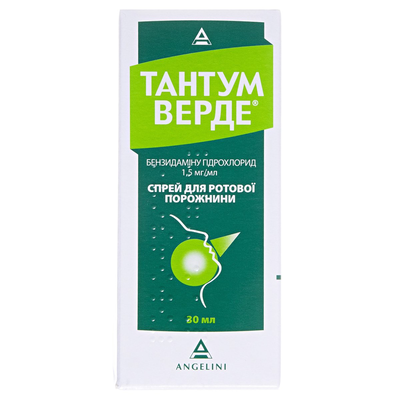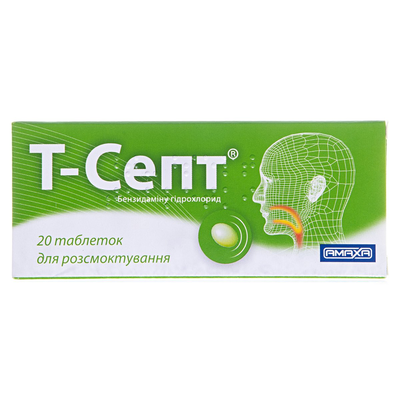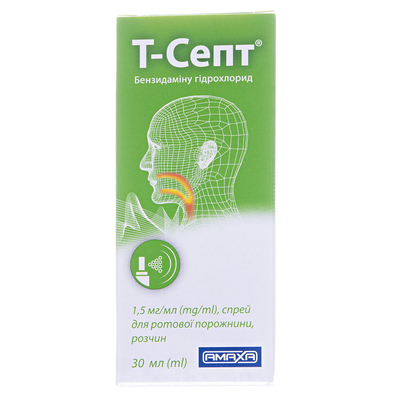
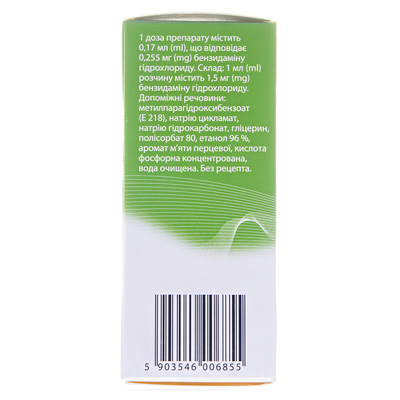
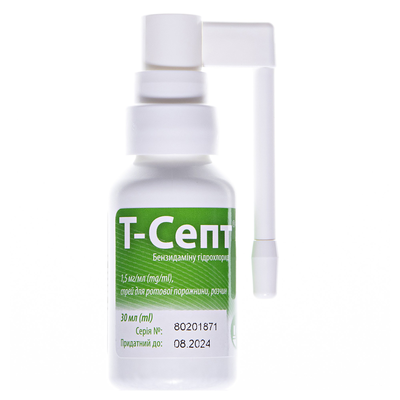
T-Sept oral spray, solution 1.5 mg/mL, 30 mL per bottle with a spray nozzle.
Ingredients
Active ingredient: benzidamine hydrochloride;
1 mL of solution contains 1.5 mg of benzidamine hydrochloride;
Excipients: methyl parahydroxybenzoate (E 218), sodium cyclamate, sodium bicarbonate, glycerin, polysorbate 80, 96% ethanol, peppermint flavor, concentrated phosphoric acid, purified water.
Dosage Form
Oral spray, solution.
Main physical and chemical properties: a clear, colorless solution with a characteristic odor.
Pharmacotherapeutic group
Products for use in dentistry. Other products for topical use in the oral cavity.
ATC code A01A D02.
Pharmacological properties
Pharmacodynamics.
Benzidamine is a nonsteroidal anti-inflammatory drug (NSAID) with analgesic and anti-exudative properties.
Clinical studies have shown that benzidamine is effective in relieving symptoms associated with localized inflammatory conditions in the oral cavity and pharynx. In addition, benzidamine exerts anti-inflammatory and local analgesic effects and has a local anesthetic effect on the oral mucosa.
Pharmacokinetics.
Absorption through the mucous membranes of the oral cavity and pharynx has been demonstrated by the presence of measurable amounts of benzidamine in human blood plasma. However, this is insufficient to produce any systemic pharmacological effect.
Excretion occurs primarily in the urine, mainly in the form of inactive metabolites or conjugated compounds.
With topical application, effective concentrations of benzidamine accumulate in inflamed tissues due to its ability to penetrate the mucous membrane.
Indications
Symptomatic treatment of irritation and inflammation of the oropharynx; pain caused by gingivitis, stomatitis, or pharyngitis; in dentistry following tooth extraction or for prophylactic purposes.
Contraindications
Hypersensitivity to the active ingredient or to any other components of the medication.
Interactions with Other Medications and Other Types of Interactions
No interaction studies have been conducted.
Special Instructions for Use
Avoid contact with the eyes.
In some patients, ulcers of the cheek or throat mucosa may be caused by serious underlying medical conditions. Therefore, patients whose symptoms have worsened or have not improved within 3 days, or who have developed a fever or other symptoms, should consult a physician or dentist, as appropriate.
Use of this medication may cause an allergic reaction. If such symptoms occur, discontinue use of the medication and consult a doctor regarding appropriate treatment.
Benzidamine is not recommended for patients with hypersensitivity to acetylsalicylic acid or other NSAIDs.
Use of this medication may cause bronchospasm in patients with bronchial asthma or a history of bronchial asthma. Such patients must be warned of this risk.
T-Sept® contains methyl parahydroxybenzoate (E 218), which may cause allergic reactions (including delayed reactions) and, rarely, bronchospasm.
This medication contains 81.40 mg of ethyl alcohol per 1 mL, which is equivalent to 13.84 mg per 0.17 mL (per spray). The amount of alcohol per spray (0.17 mL) of this medication is equivalent to less than 0.4 mL of beer or 0.2 mL of wine. The small amount of alcohol in this medication will not have a noticeable effect on the patient.
The product contains less than 1 mmol of sodium (23 mg) per spray (0.17 mL), meaning it is practically sodium-free.
For athletes: the use of medications containing ethyl alcohol may result in a positive doping test, given the limits established by certain sports federations.
Use During Pregnancy or Breastfeeding.
To date, there are no adequate data available regarding the use of benzidamine in pregnant or breastfeeding women. The ability of this product to pass into breast milk has not been studied. Animal studies are insufficient to draw any conclusions regarding the effects of this drug during pregnancy or breastfeeding. The potential risk to humans is unknown.
This medication should not be used during pregnancy or while breastfeeding.
Effect on reaction time when driving or operating machinery.
When used at the recommended doses, this medication has no effect on the ability to drive or operate machinery.
Directions for Use and Dosage
Pressing the pump releases an aerosol containing 1 spray dose—0.17 mL, which corresponds to 0.255 mg of benzidamine hydrochloride.
Before use, the spray device must be positioned correctly:
1) hold the spray device horizontally relative to the bottle (see Fig. 1);
2) if using the medication for the first time, press the spray nozzle with your thumb or index finger while holding the bottle upright until the medication is dispensed;
3) direct the tip of the spray device into the mouth and press down on the device from above (see Fig. 2)
Fig. 1 Fig. 2
Dosage
Adults: 4–8 sprays 2–6 times daily.
Children (6–12 years): 4 sprays 2–6 times a day.
Children (4–6 years): 1 spray per 4 kg of body weight, up to a maximum dose equivalent to 4 sprays 2–6 times a day.
Do not exceed the recommended dosages.
Children.
This medication may be used in children 4 years of age and older.
Overdose
Toxicity may occur only in the event of accidental ingestion of a large dose of benzidamine (>300 mg).
Symptoms associated with benzidamine overdose are primarily gastrointestinal and central nervous system symptoms. The most common gastrointestinal symptoms are nausea, vomiting, abdominal pain, and esophagitis. Central nervous system symptoms include dizziness, hallucinations, agitation, nervousness, and irritability.
In cases of acute overdose, only symptomatic treatment is possible. Patients require close monitoring, and supportive care is necessary. Adequate hydration must be maintained.
Side Effects
Within each frequency group, adverse effects are listed in order of decreasing severity.
Adverse reactions are classified by frequency of occurrence: very common (≥ 1/10); common (≥ 1/100 to < 1/10); uncommon (≥ 1/1,000 to < 1/100); rare (≥ 1/10,000 to < 1/1,000); very rare (< 1/10,000); frequency unknown (cannot be estimated from the available data).
Gastrointestinal disorders: rare—burning sensation in the mouth, dry mouth; frequency unknown—hypoesthesia of the oral cavity, nausea, vomiting, swelling and discoloration of the tongue, altered taste.
Immune system disorders: frequency unknown—anaphylactic reaction, hypersensitivity reaction.
Respiratory, thoracic, and mediastinal disorders: very rare—laryngospasm; frequency unknown—bronchospasm.
Skin and subcutaneous tissue disorders: uncommon—photosensitivity; very rare—angioedema; frequency unknown—rash, itching, hives.
Nervous system disorders: frequency unknown—dizziness, headache.
T-Sept® contains methyl parahydroxybenzoate, which may cause allergic reactions (including delayed reactions).
Shelf life
3 years.
Storage conditions
Store in the original packaging at a temperature not exceeding 25 °C.
Keep out of reach of children.
Packaging
30 mL of spray in a bottle with a spray nozzle, No. 1, in a cardboard box.
Dispensing Category
Available without a prescription.